
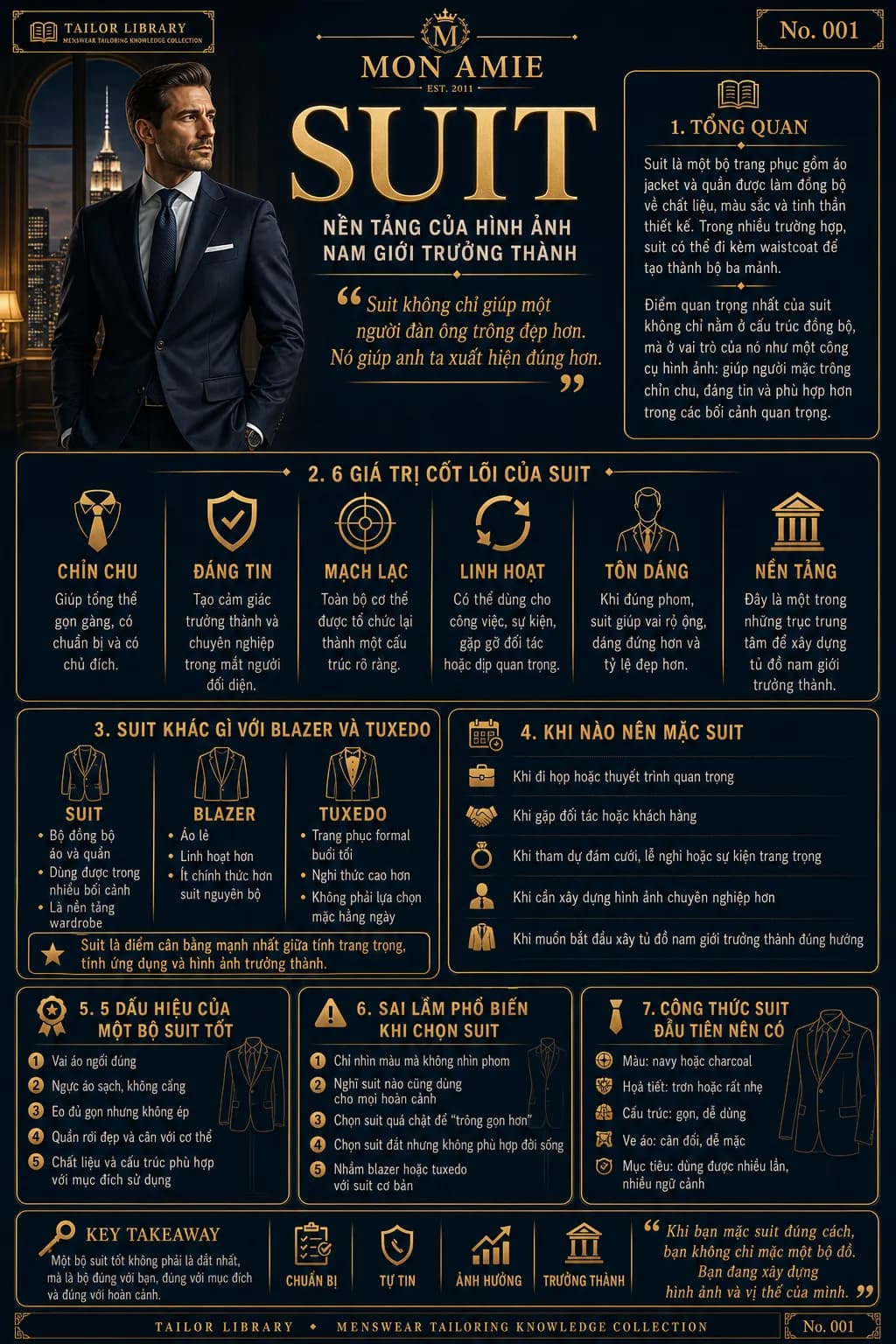
What Is a Suit? The Foundation of a Man's Image
What a suit is, how it differs from a blazer and a tuxedo, when to wear one, and how to choose your first suit — from the tailors at Mon Amie.
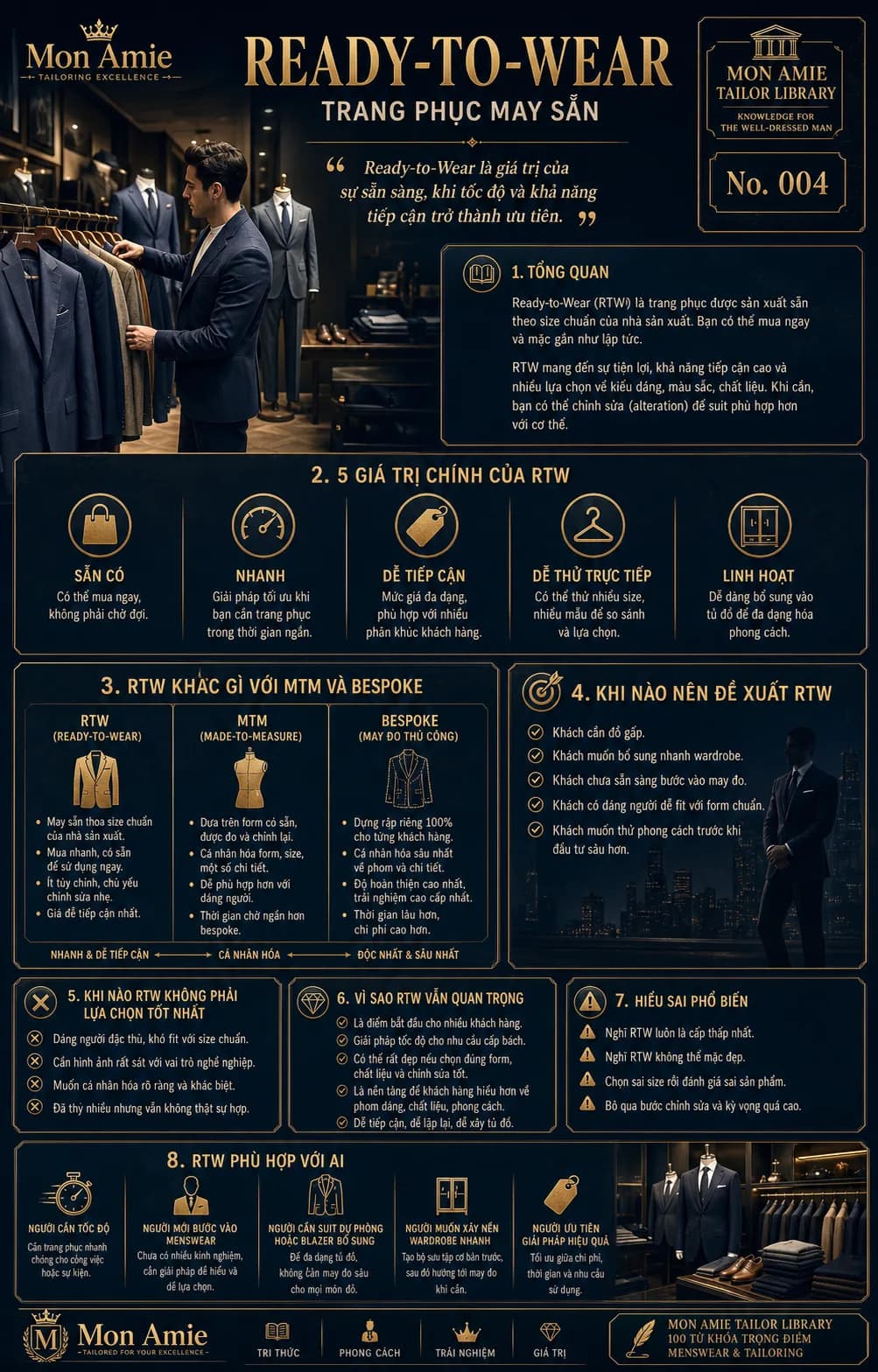
What Is Ready-to-Wear? Understanding Off-the-Peg Clothing
What ready-to-wear is, how it differs from made-to-measure and bespoke, and when an off-the-peg suit is the right call — explained by Mon Amie.
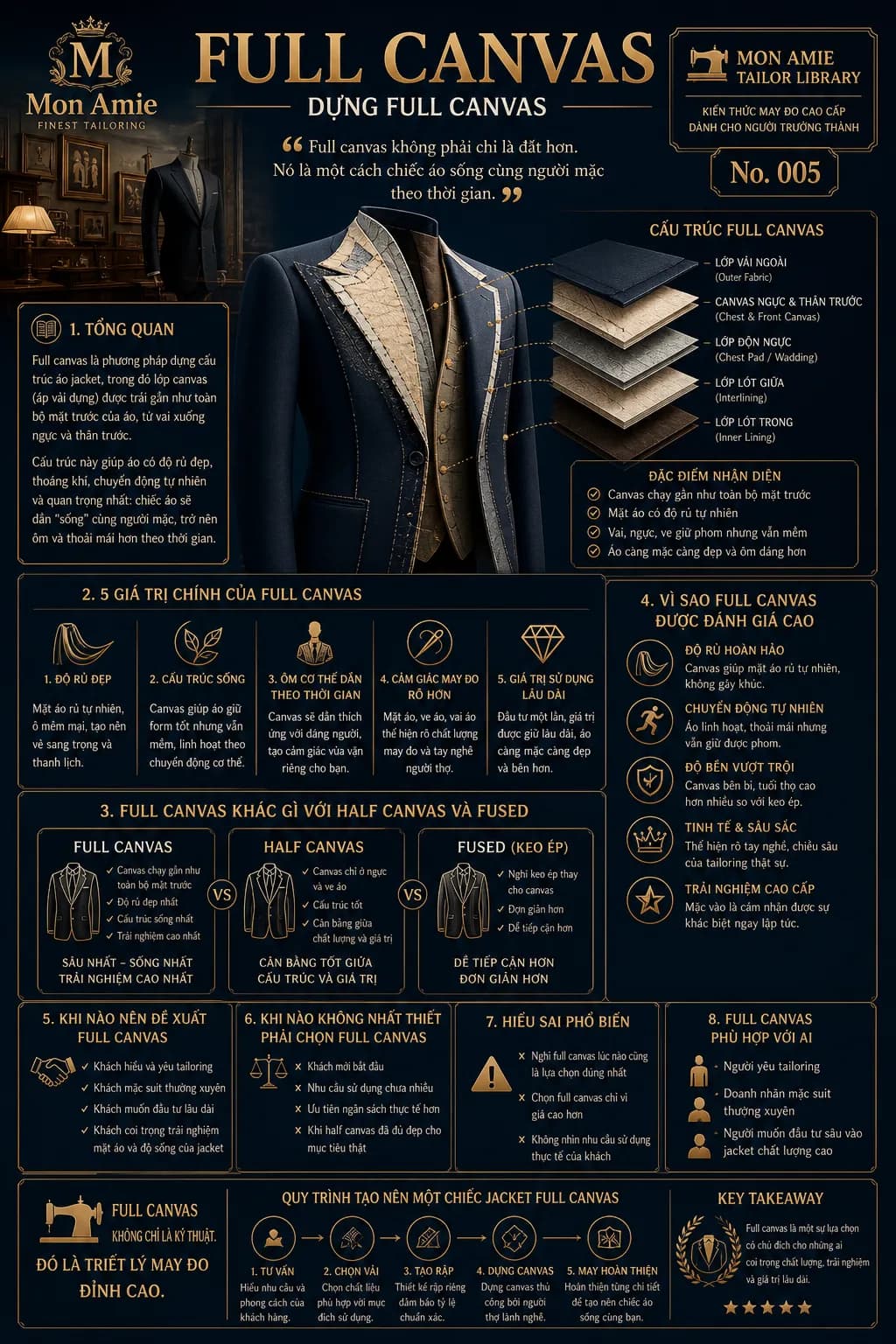
What Is Full Canvas? The Finest Jacket Construction
Full canvas is the finest way to build a jacket: beautiful drape, soft shape retention, and a fit that improves with wear. Know it before investing.
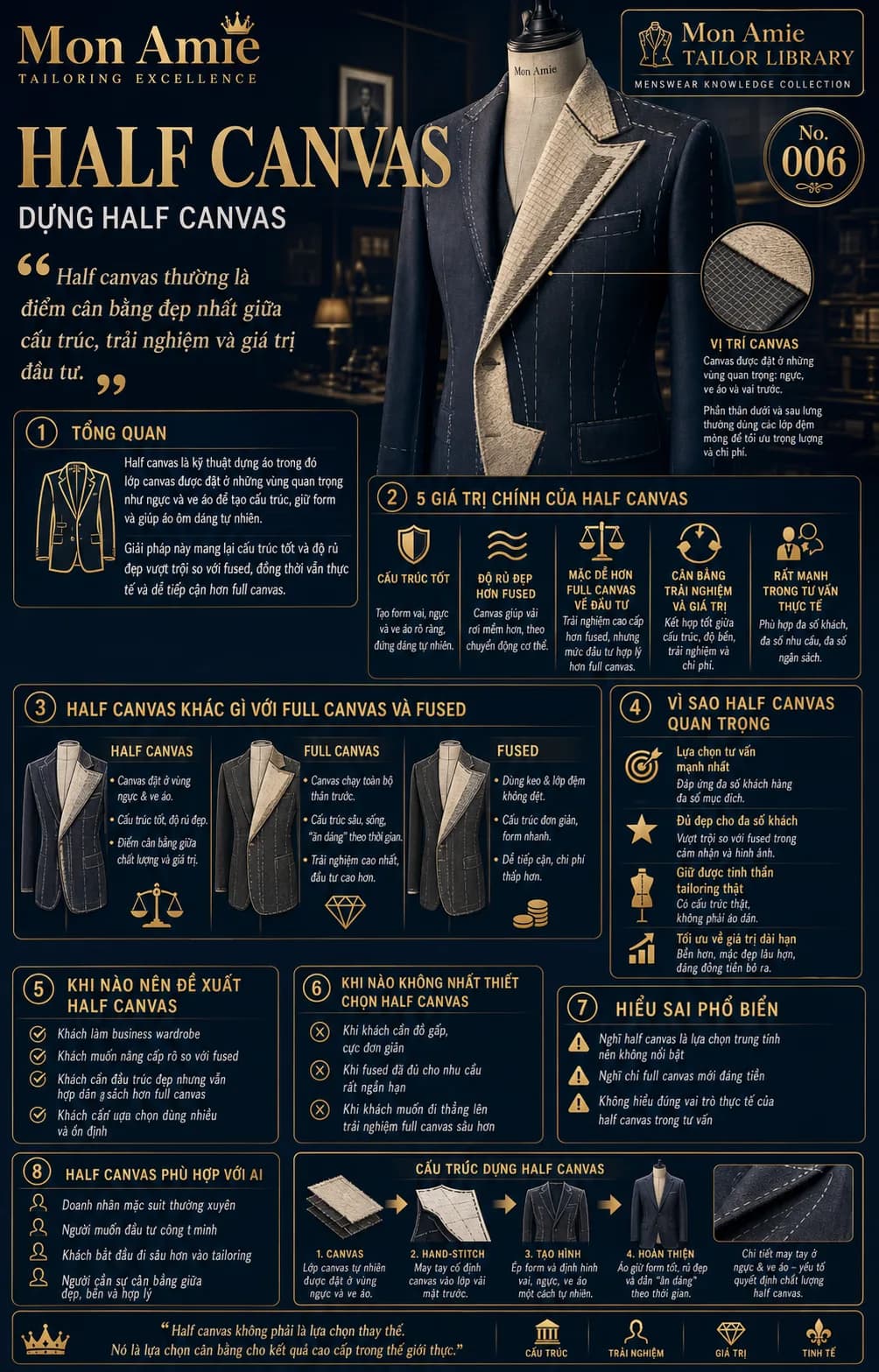
What Is Half Canvas? The Sweet Spot in Tailored Jackets
Half canvas places canvas at the chest and lapel — balancing structure, wearing comfort and cost against full canvas and fused construction.
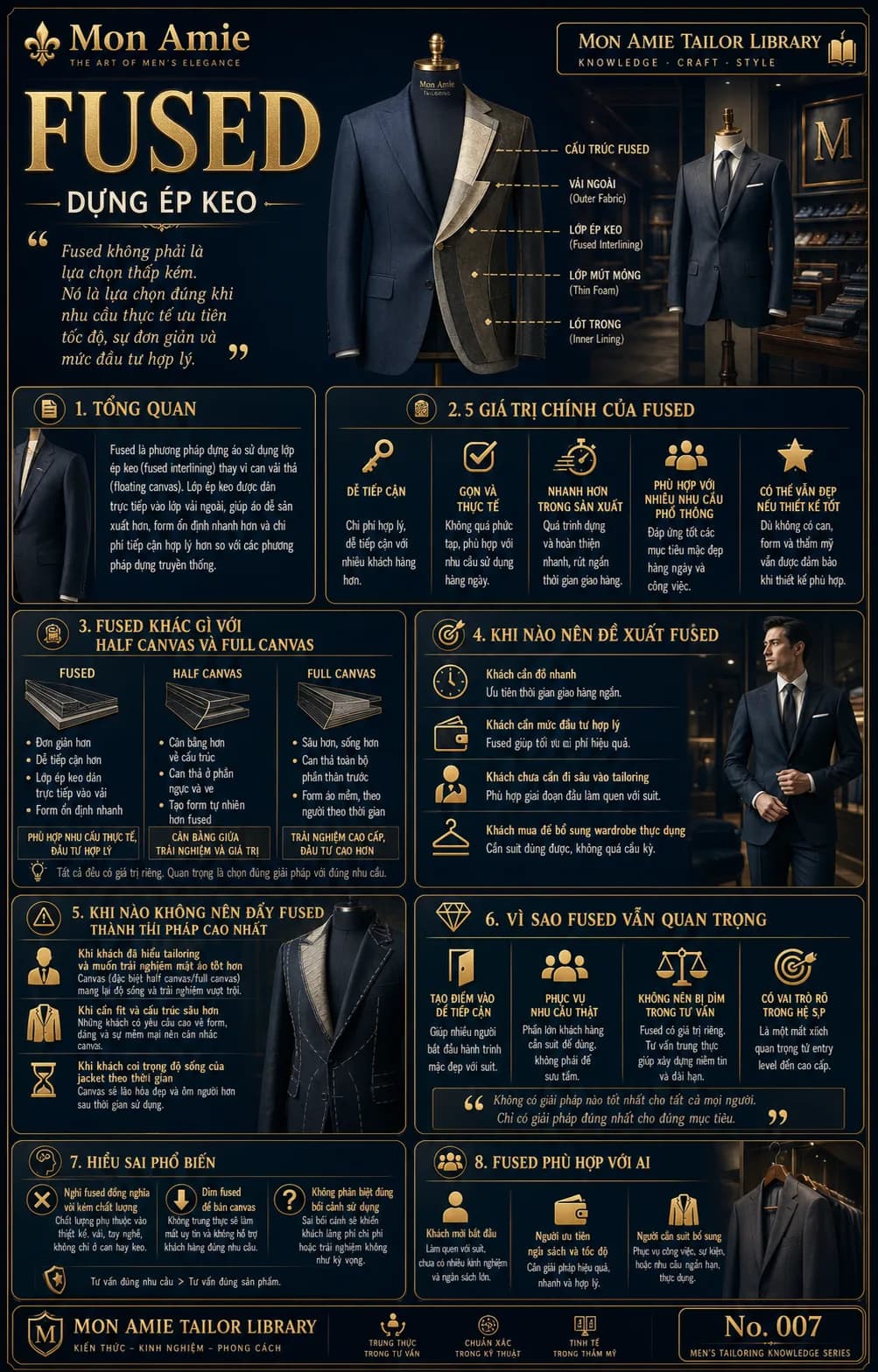
What Is Fused Construction? Understanding Glued Interlining
Fused construction is not an inferior choice — understand it properly and choose the suit that fits your needs, budget and timeline.
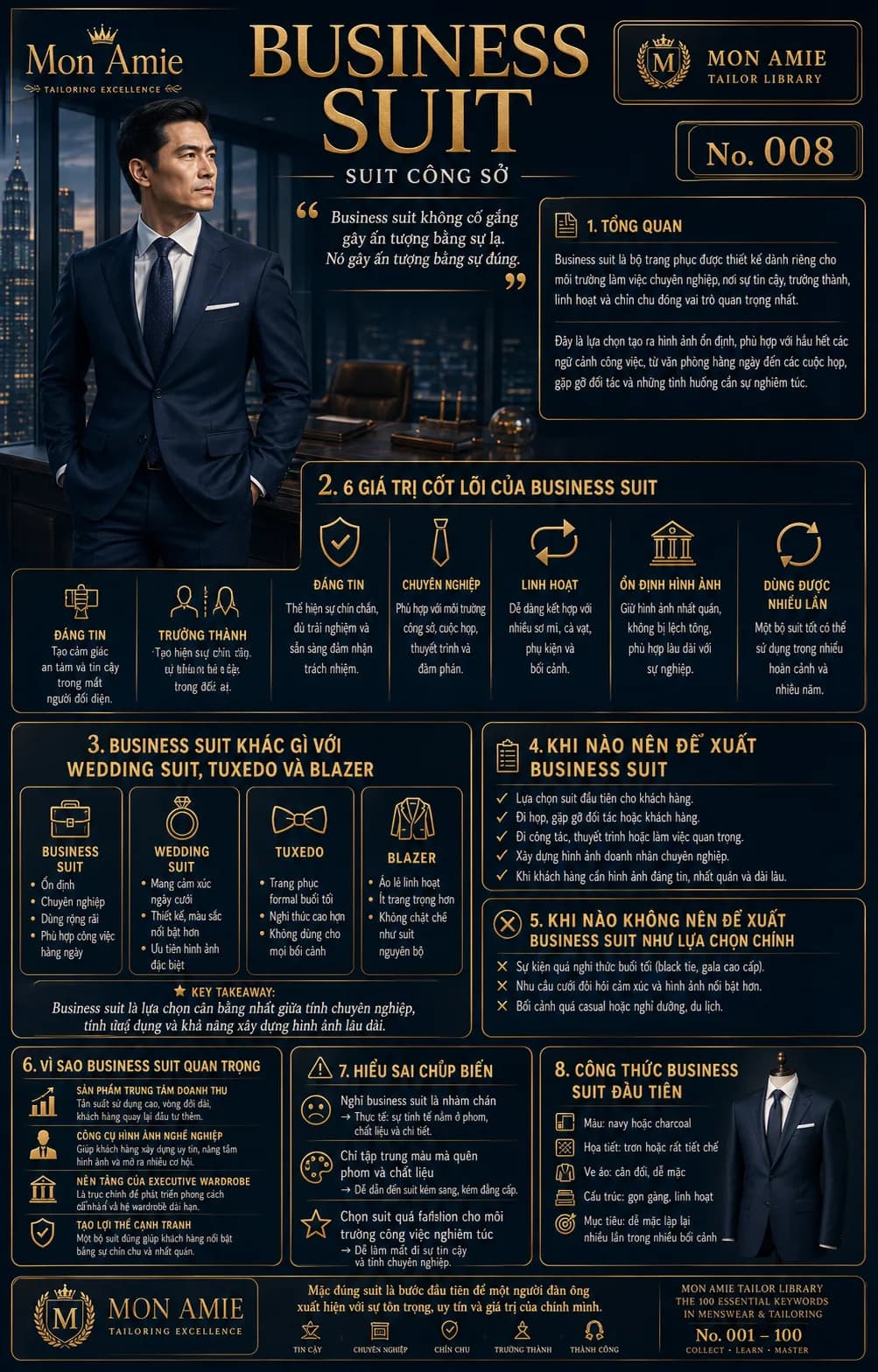
What Is a Business Suit? The Executive Standard Explained
How does a business suit differ from a wedding suit, tuxedo or blazer? When to choose one, and the formula for your first, from Mon Amie's artisans.
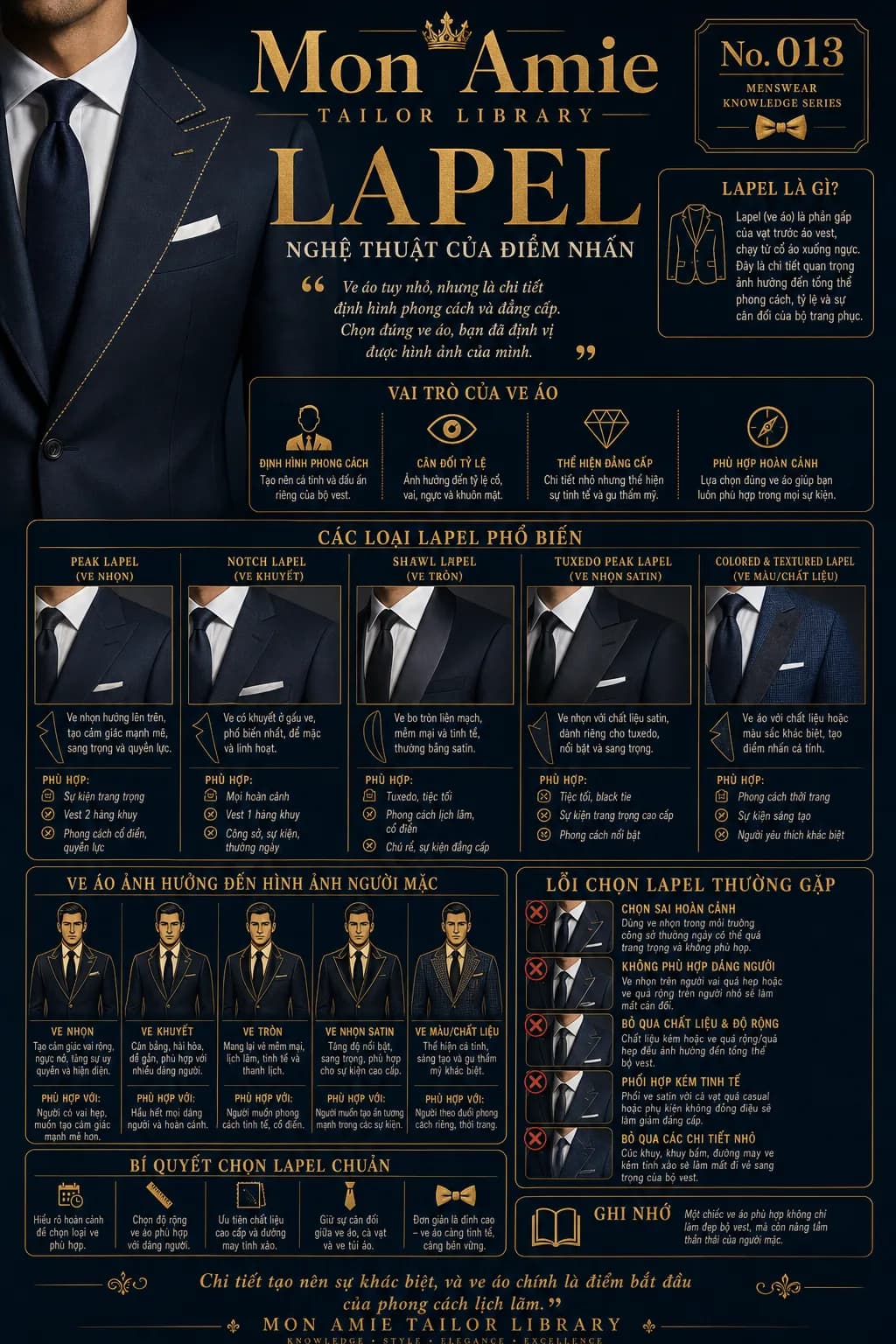
What Is a Lapel? Choosing the Right Suit Lapel Style
The lapel defines the character of a suit. Learn the five common lapel styles and how to choose the right one for your build and the occasion.
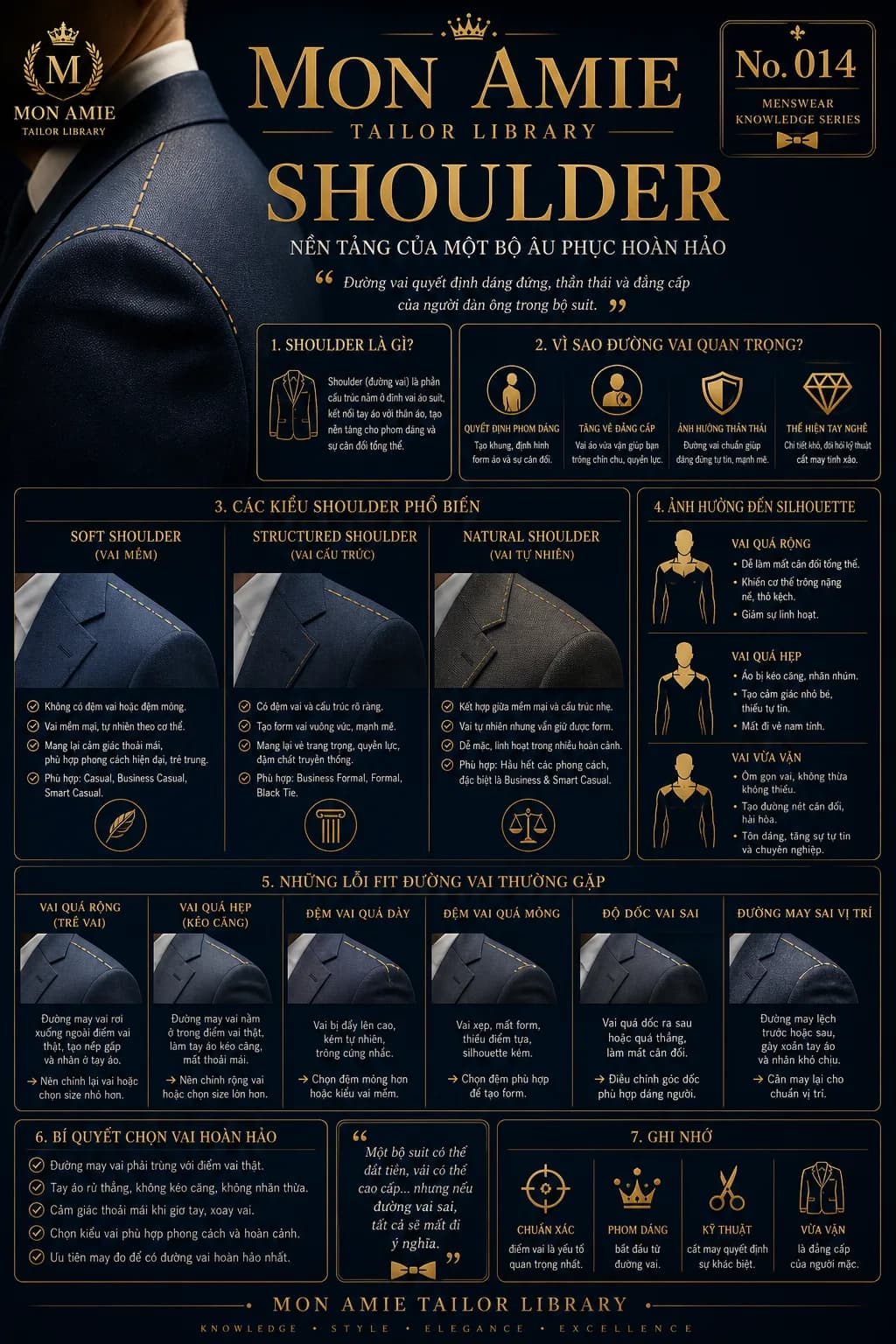
The Suit Shoulder: Foundation of the Whole Silhouette
The shoulder decides the silhouette, bearing and quality of a suit. Learn the shoulder styles, common fit faults and how to get it right.
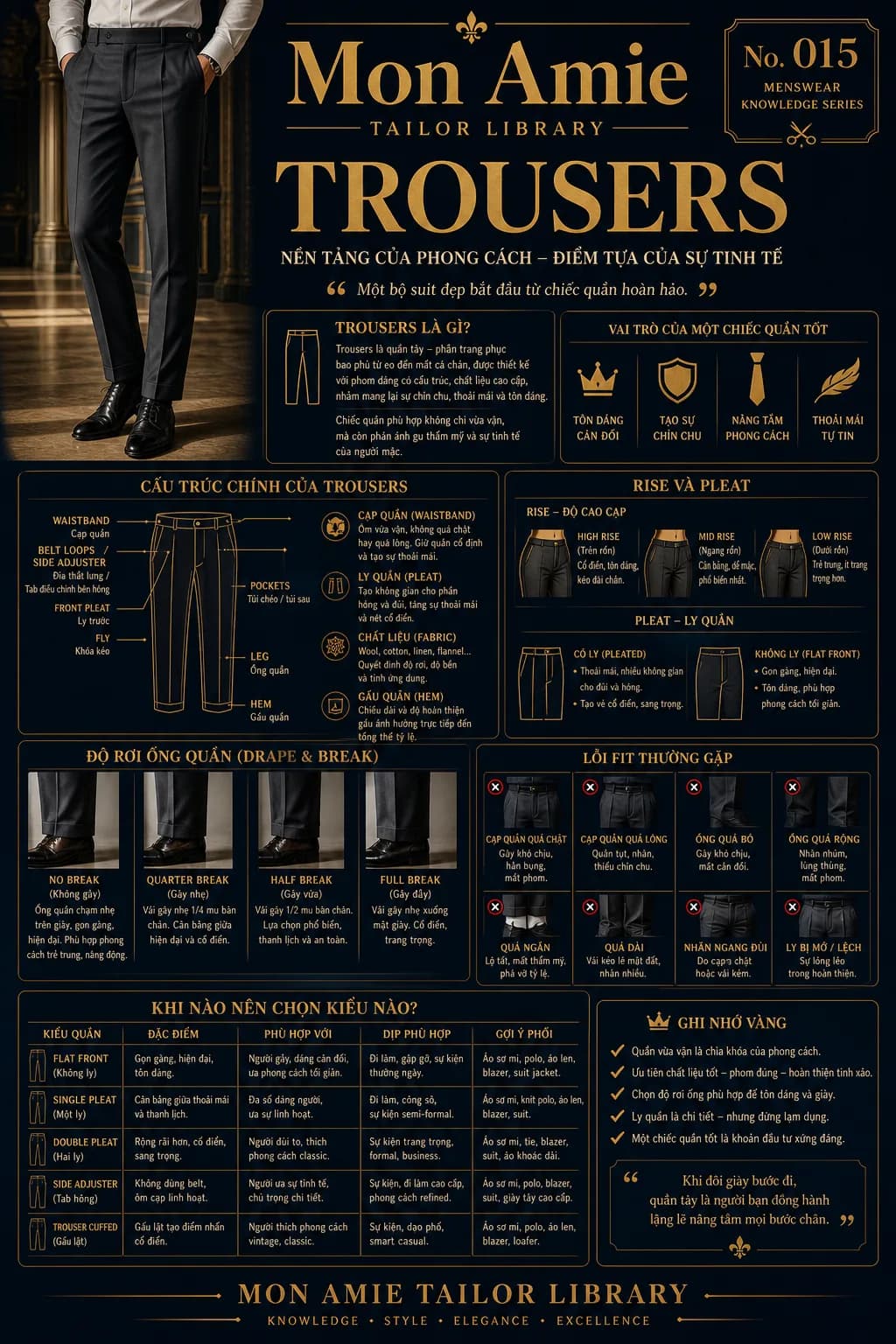
Suit Trousers: How to Choose Them Down to the Detail
Trousers are the foundation of style: construction, rise, pleats, break and the fit faults to avoid when choosing suit trousers.
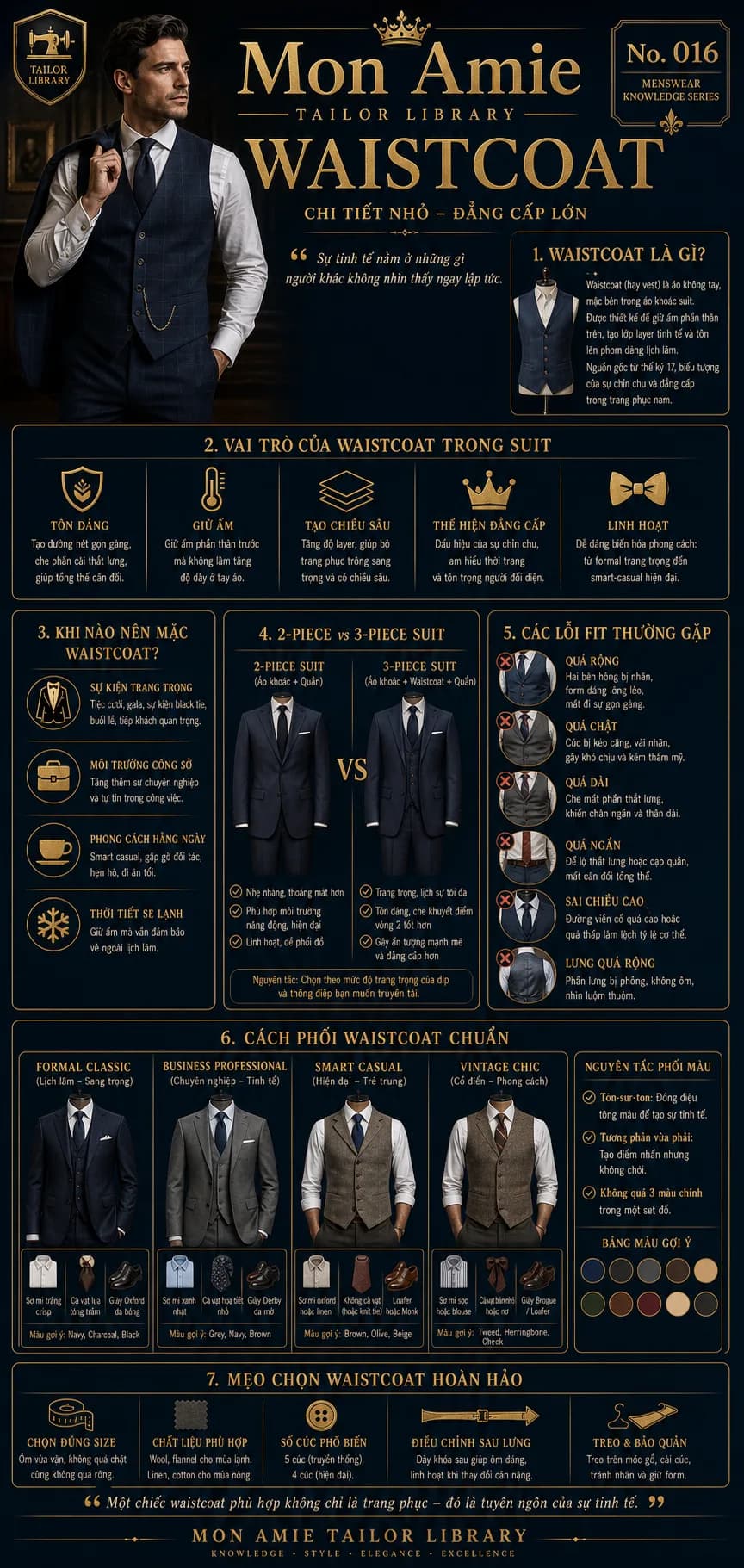
What Is a Waistcoat? The Third Piece, Worn Properly
The waistcoat is the third layer that makes a three-piece suit: its role, when to wear it, common fit faults and how Mon Amie styles it.
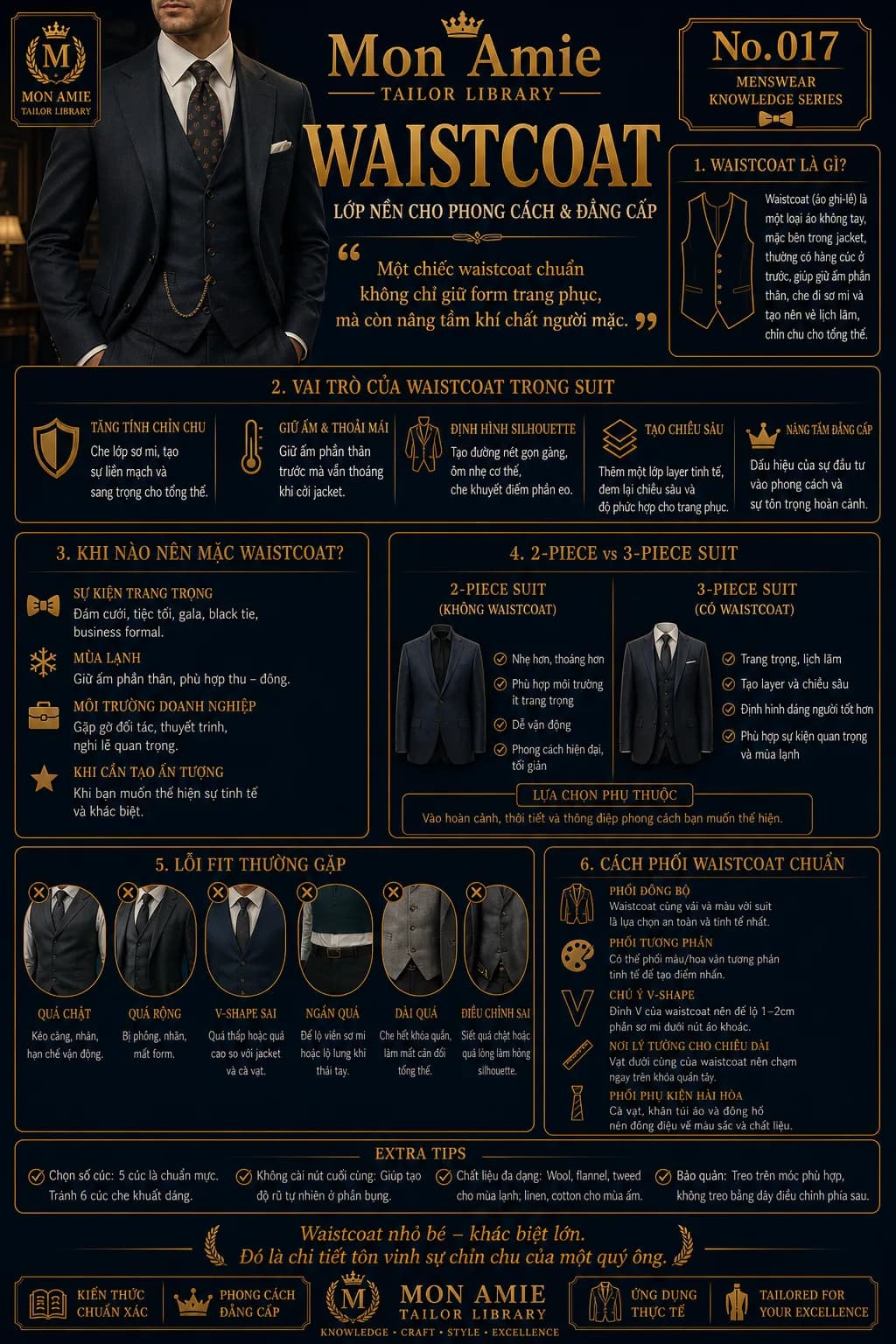
What Is a Waistcoat? The Foundation of Style and Standing
What a waistcoat is, its role in a three-piece suit, the fit faults to avoid and how to style it, according to Mon Amie's artisans.
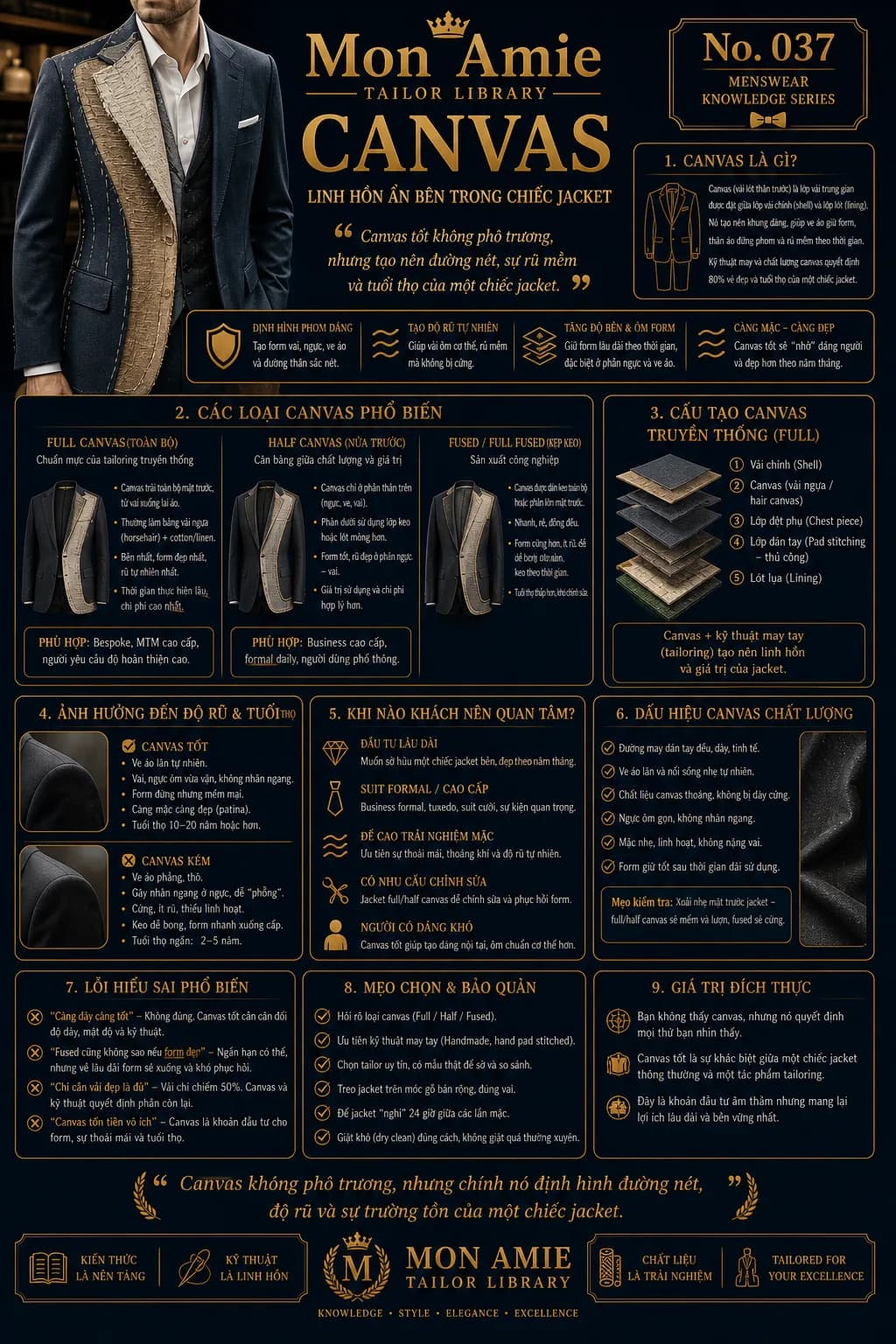
What Is Canvas? The Hidden Soul of a Tailored Jacket
Canvas is the interlining that governs 80% of a jacket's beauty and lifespan. Understand full, half and fused canvas before you commission a suit.
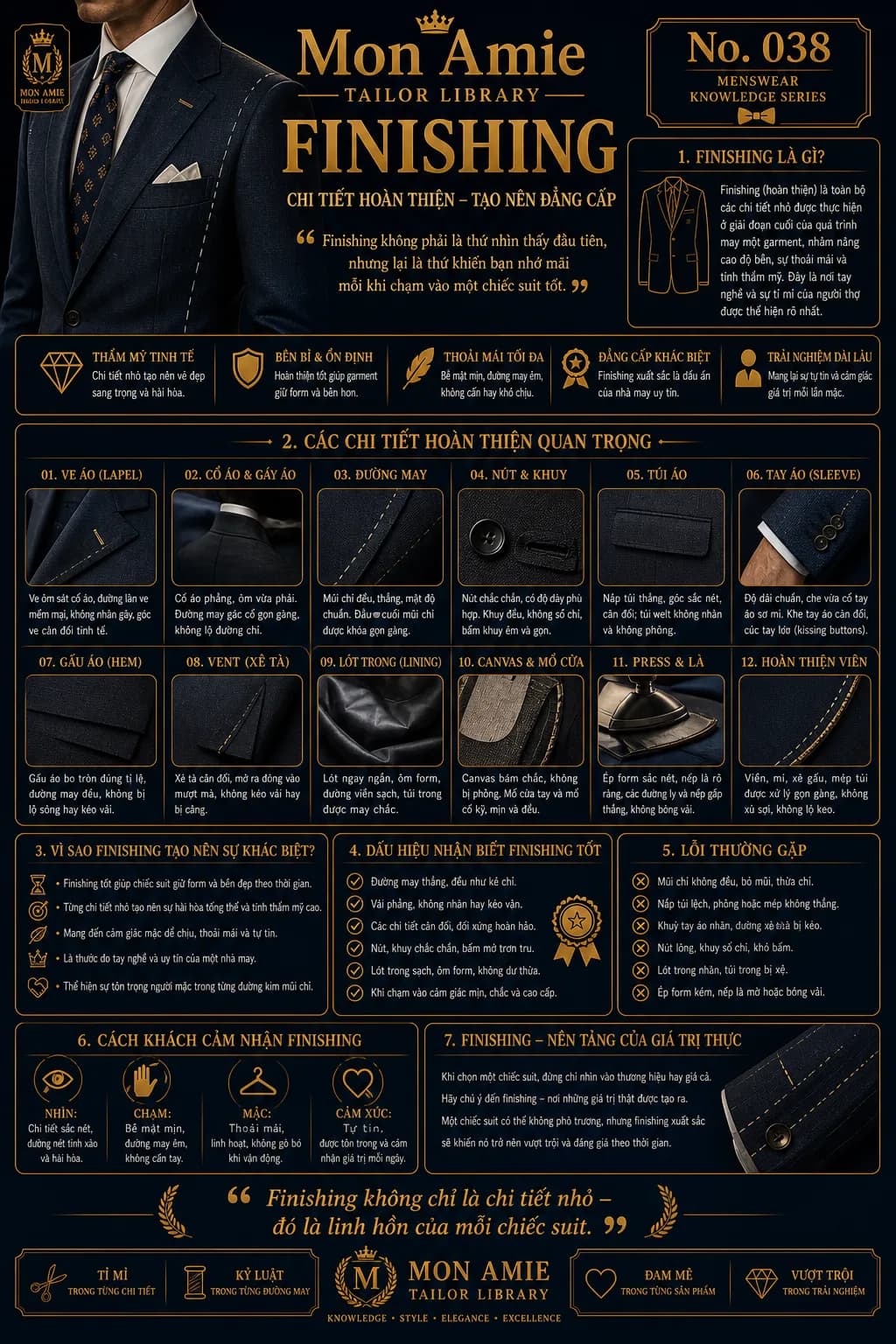
What Is Finishing? The Details That Define a Suit
Finishing is every closing detail in the making of a suit — where a tailor's skill and patience show most clearly.
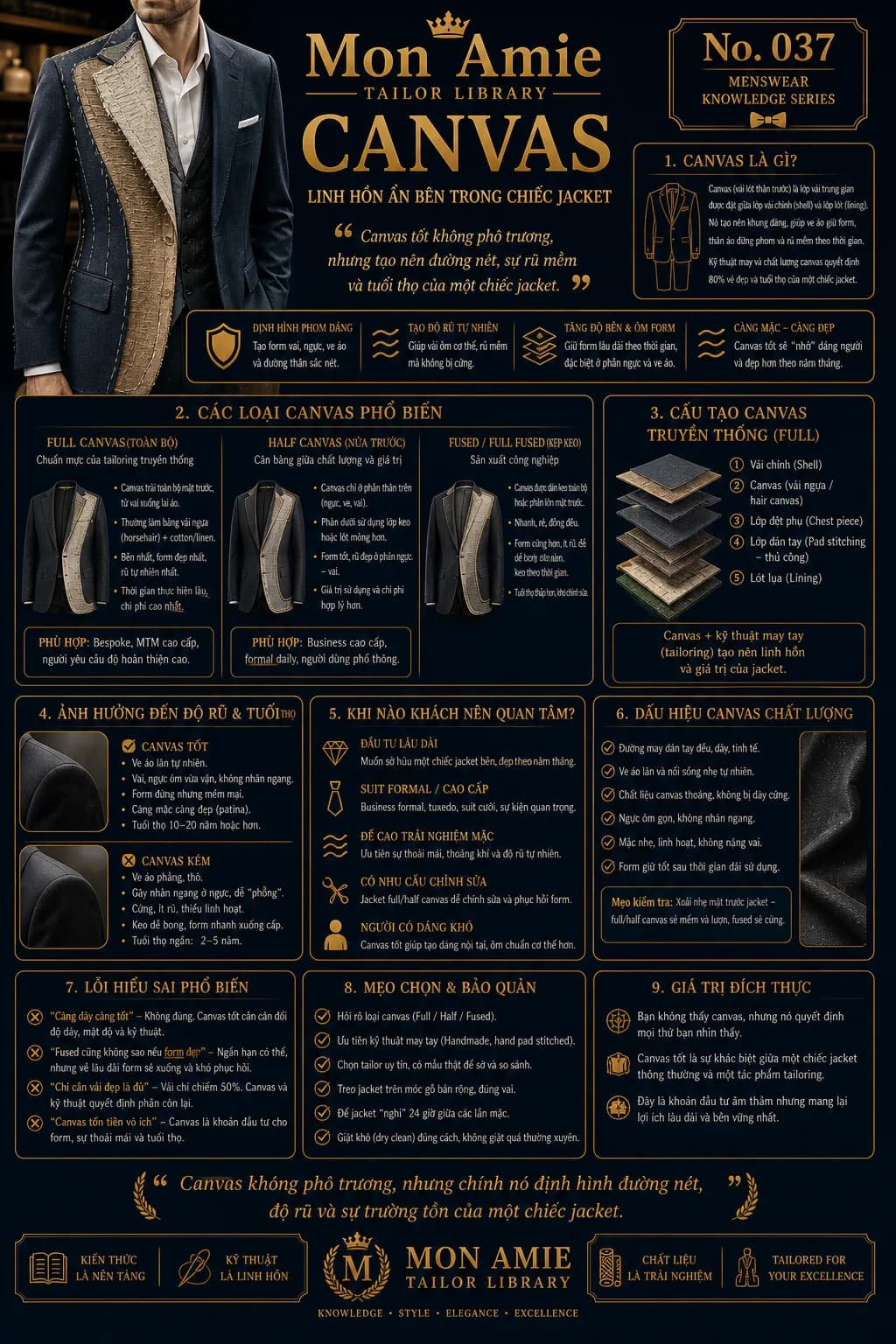
Full Canvas, Half Canvas or Fused: Which to Choose?
Comparing full canvas, half canvas and fused on durability, drape and cost — plus how to test canvas yourself before you commission a jacket.
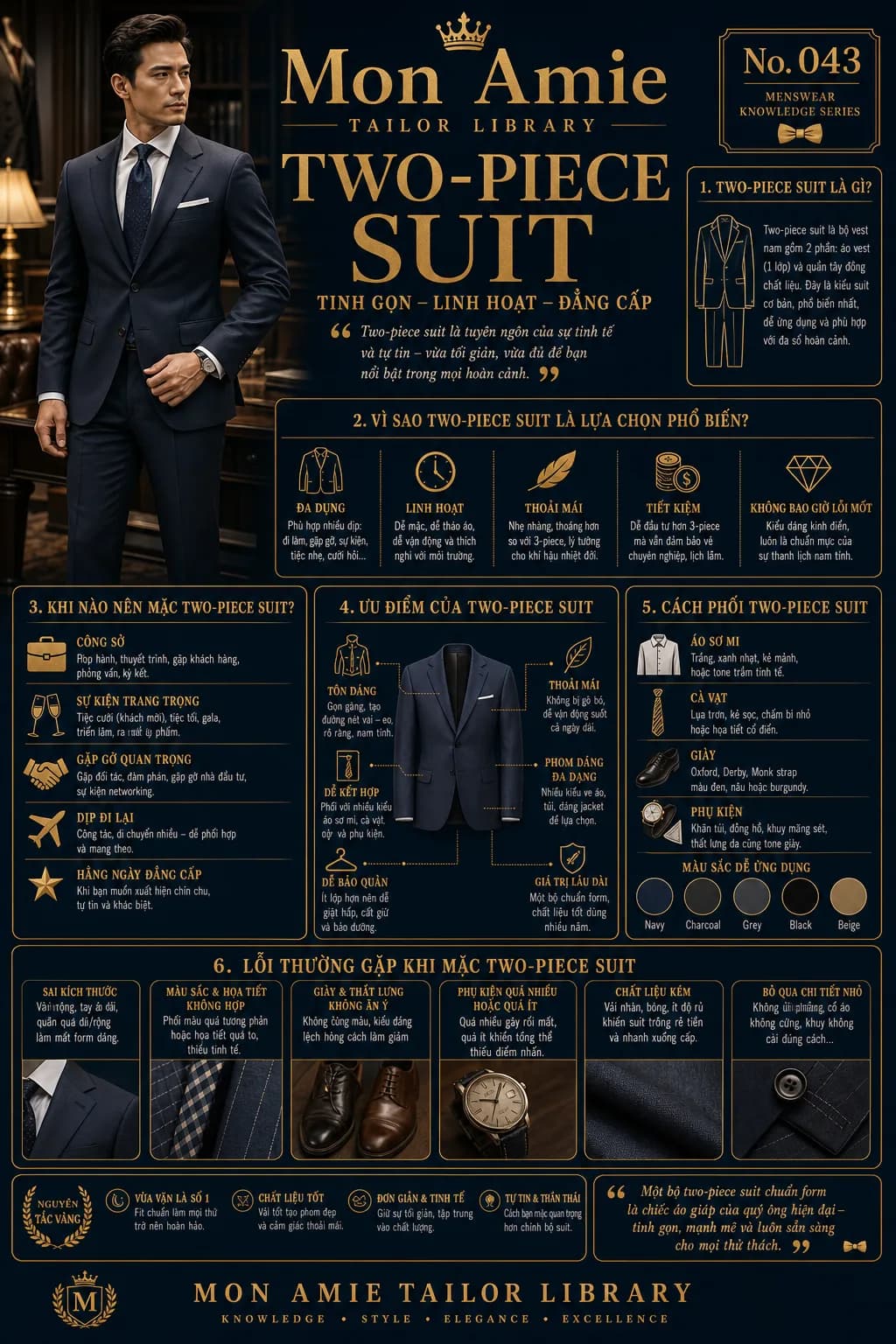
What Is a Two Piece Suit? The Gentleman's Classic
A two piece suit is a jacket and trousers cut from the same cloth — the most common suit of all. When to wear one, and how to style it well.
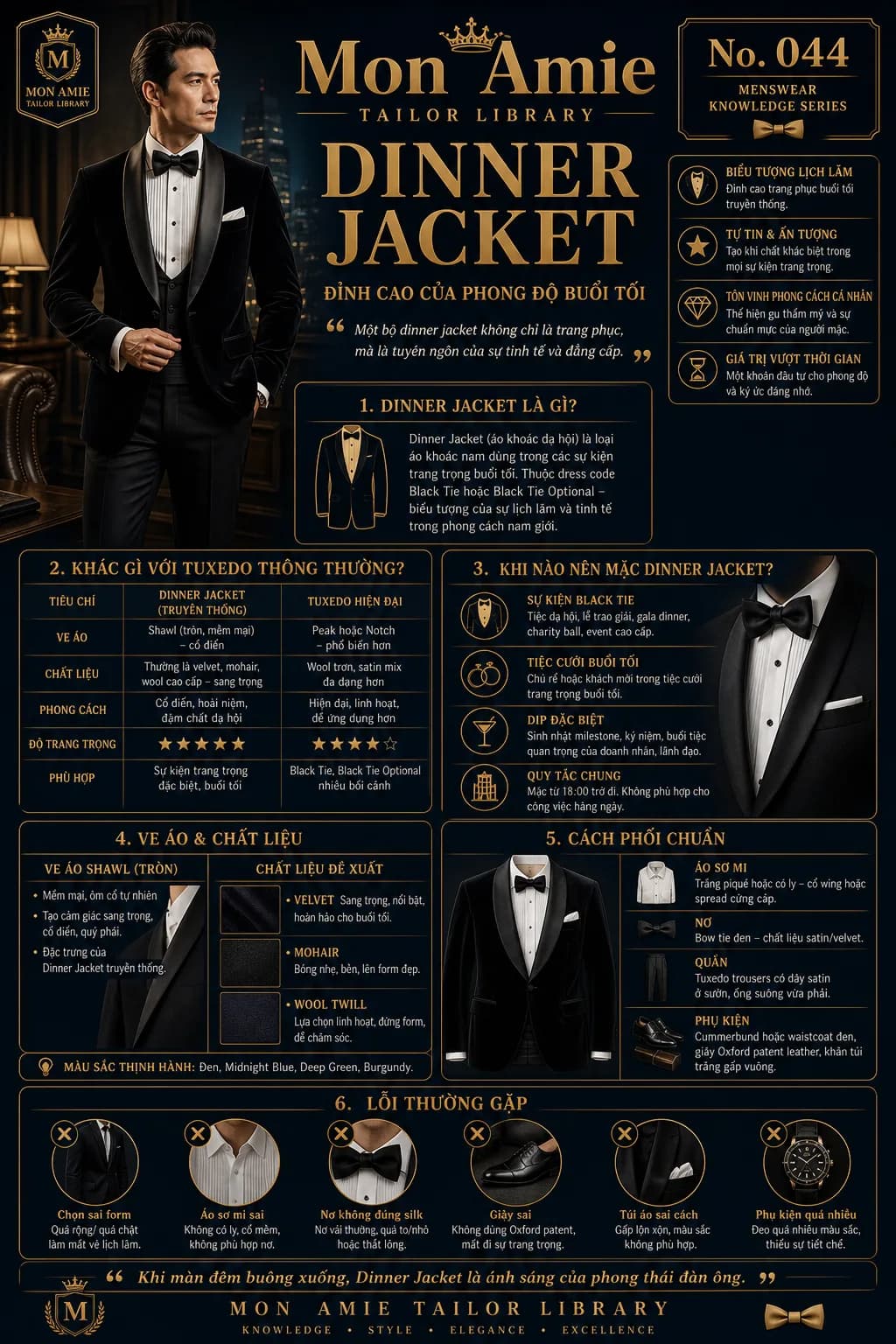
What Is a Dinner Jacket? The Height of Evening Style
What a dinner jacket is, how it differs from a tuxedo, when to wear one and how to style it for Black Tie — from Mon Amie's Tailor Library.
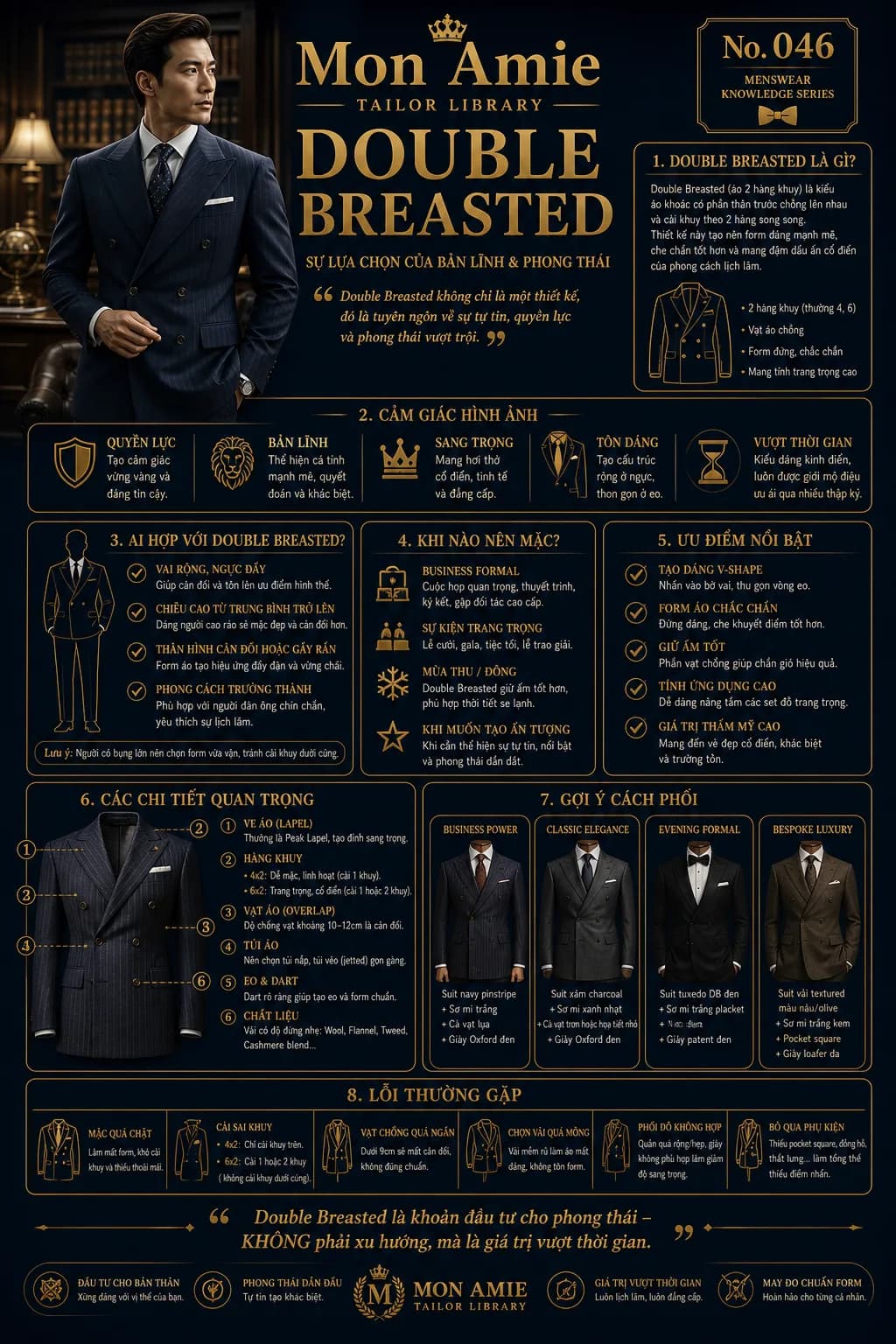
What Is a Double Breasted Suit? The Jacket of Presence
A double breasted suit has two parallel rows of buttons and an overlapping front — a classic cut that builds a V-shape for the confident man.
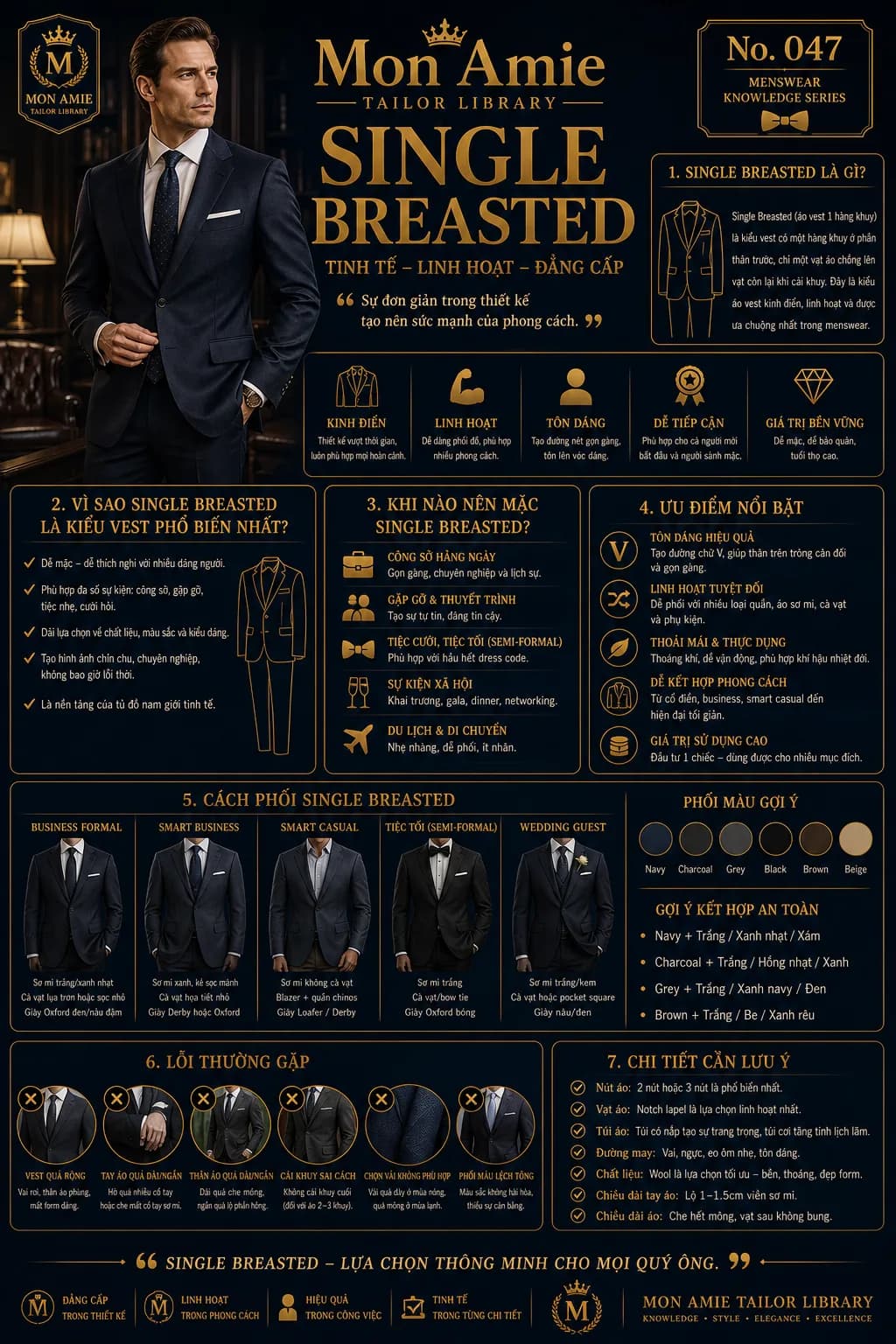
What Is a Single Breasted Suit? The Classic Everyday Cut
Single breasted — the classic one-row-of-buttons suit: why it is the most popular cut, when to wear it, how to combine colours and mistakes to avoid.
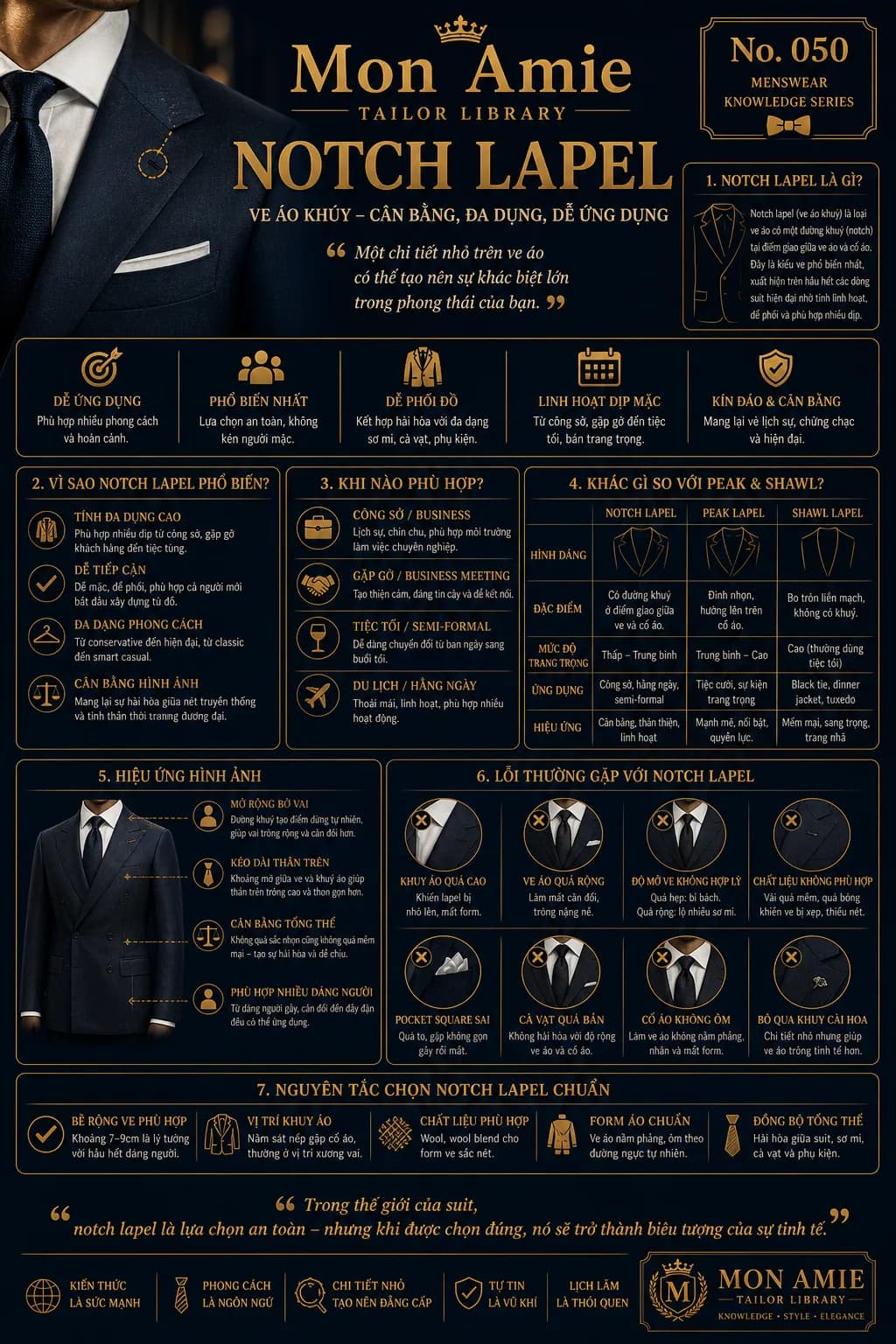
What Is a Notch Lapel? The Balanced, Everyday Lapel
Notch lapel — the most common lapel on modern suits: its character, when it works, how it differs from peak and shawl, and mistakes to avoid.
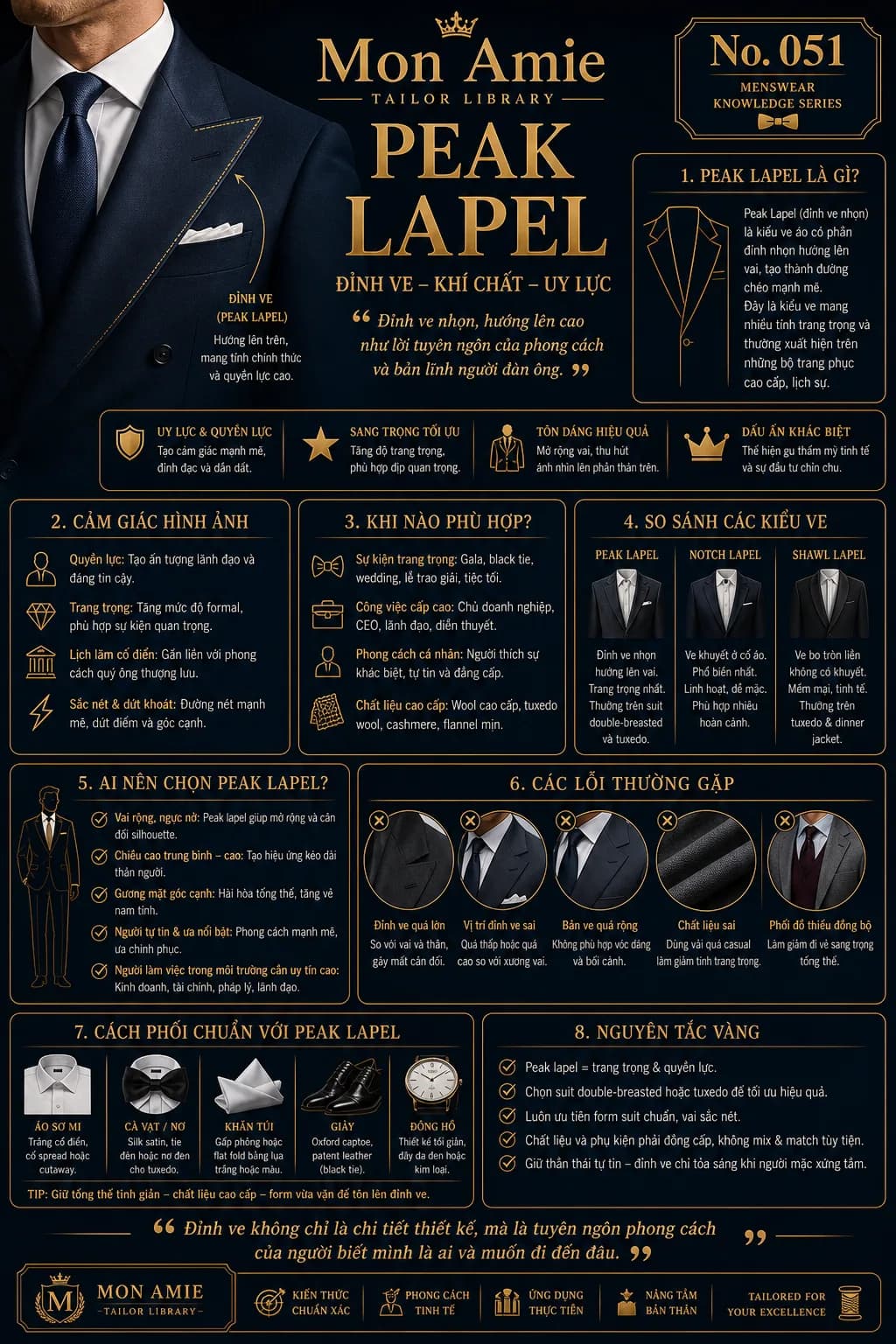
What Is a Peak Lapel? The Lapel of Authority
A peak lapel points upward toward the shoulder — the most formal and commanding of all lapels. Who should wear it, and how to style it well.
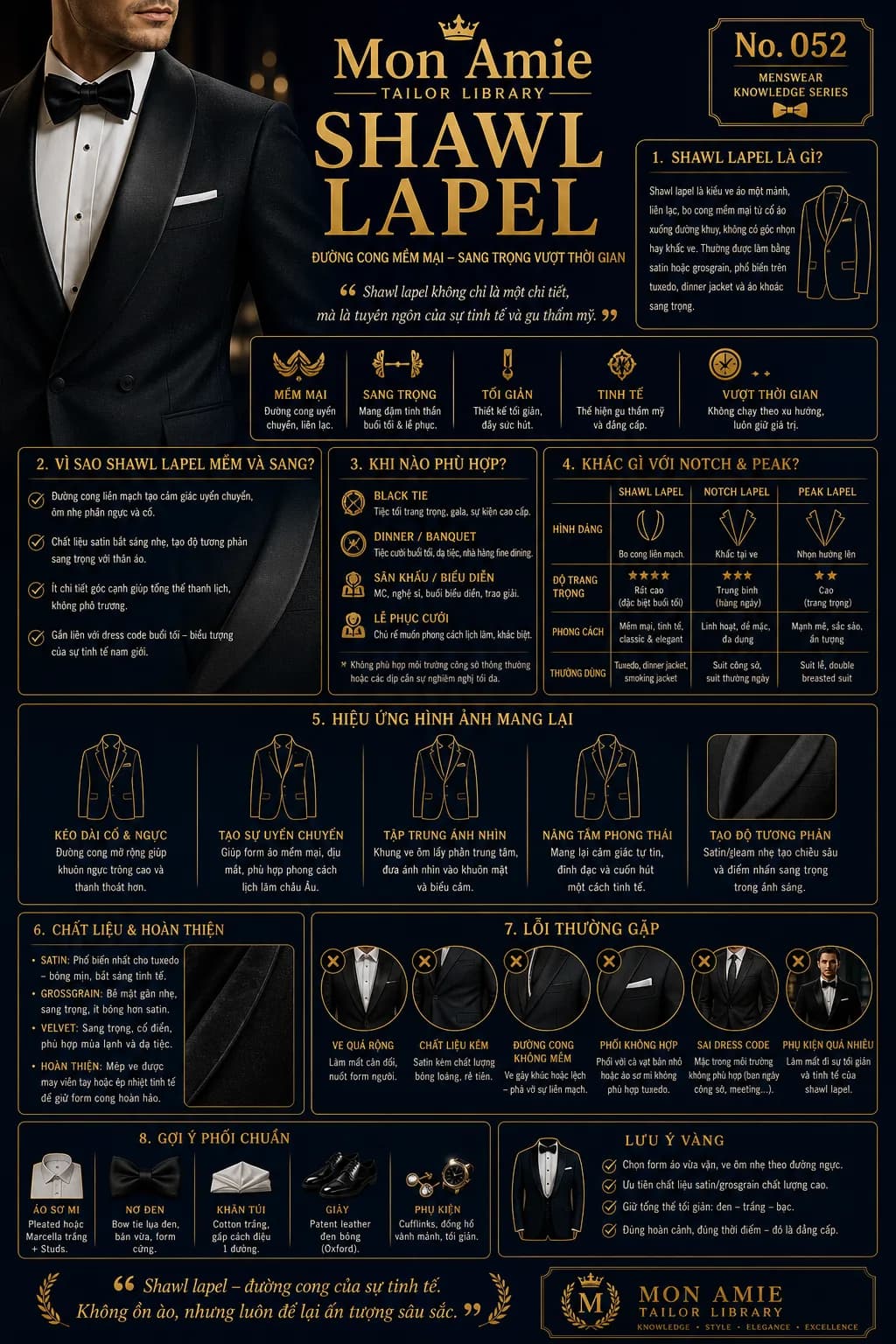
What Is a Shawl Lapel? The Curved Lapel of the Tuxedo
The shawl lapel is a single unbroken curve with no notch or peak — the signature of the tuxedo. How to choose and wear it well.
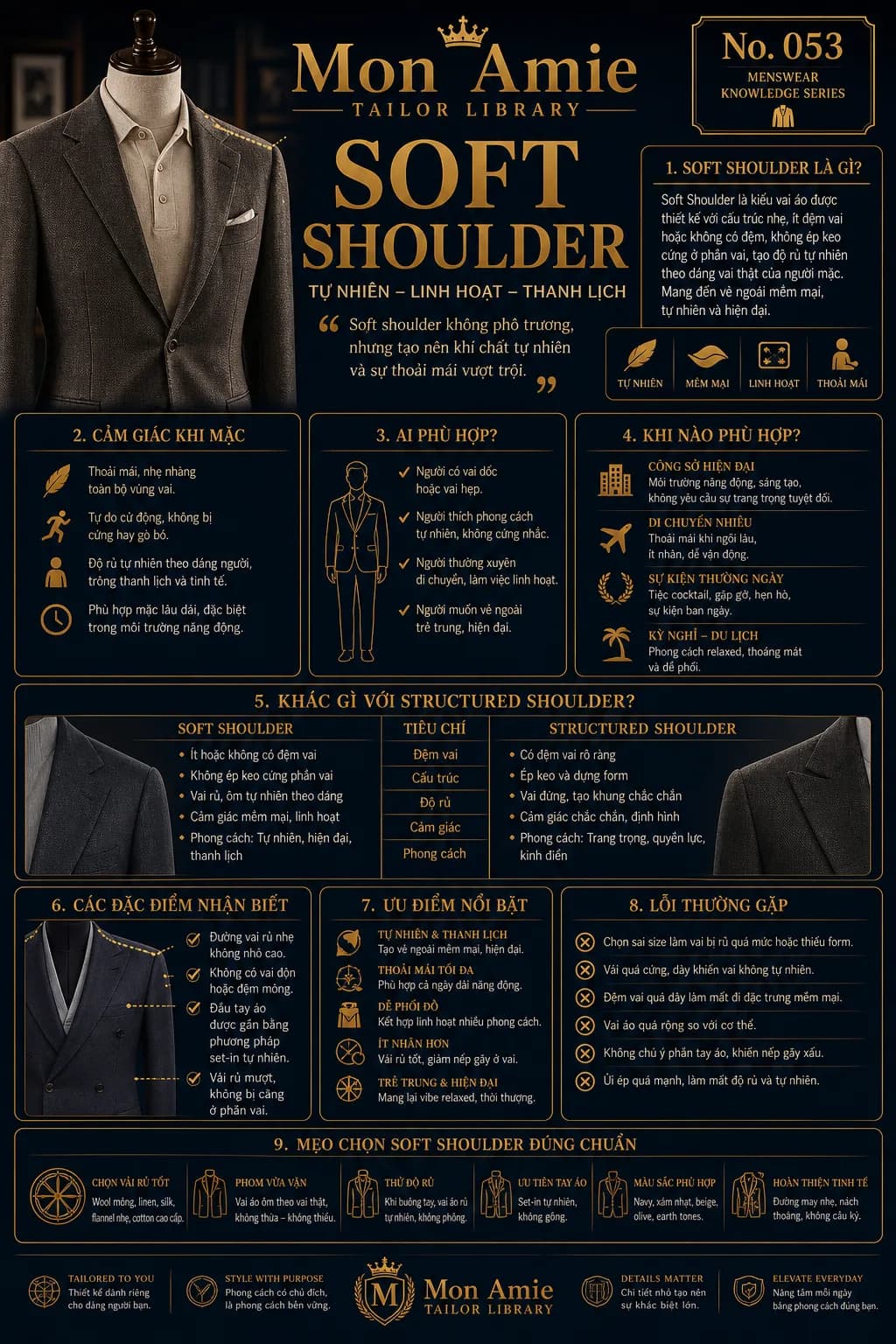
What Is a Soft Shoulder? The Relaxed Suit Shoulder
A soft shoulder uses little padding and no stiff fusing, falling naturally with your own shoulder line — supple, comfortable and modern.
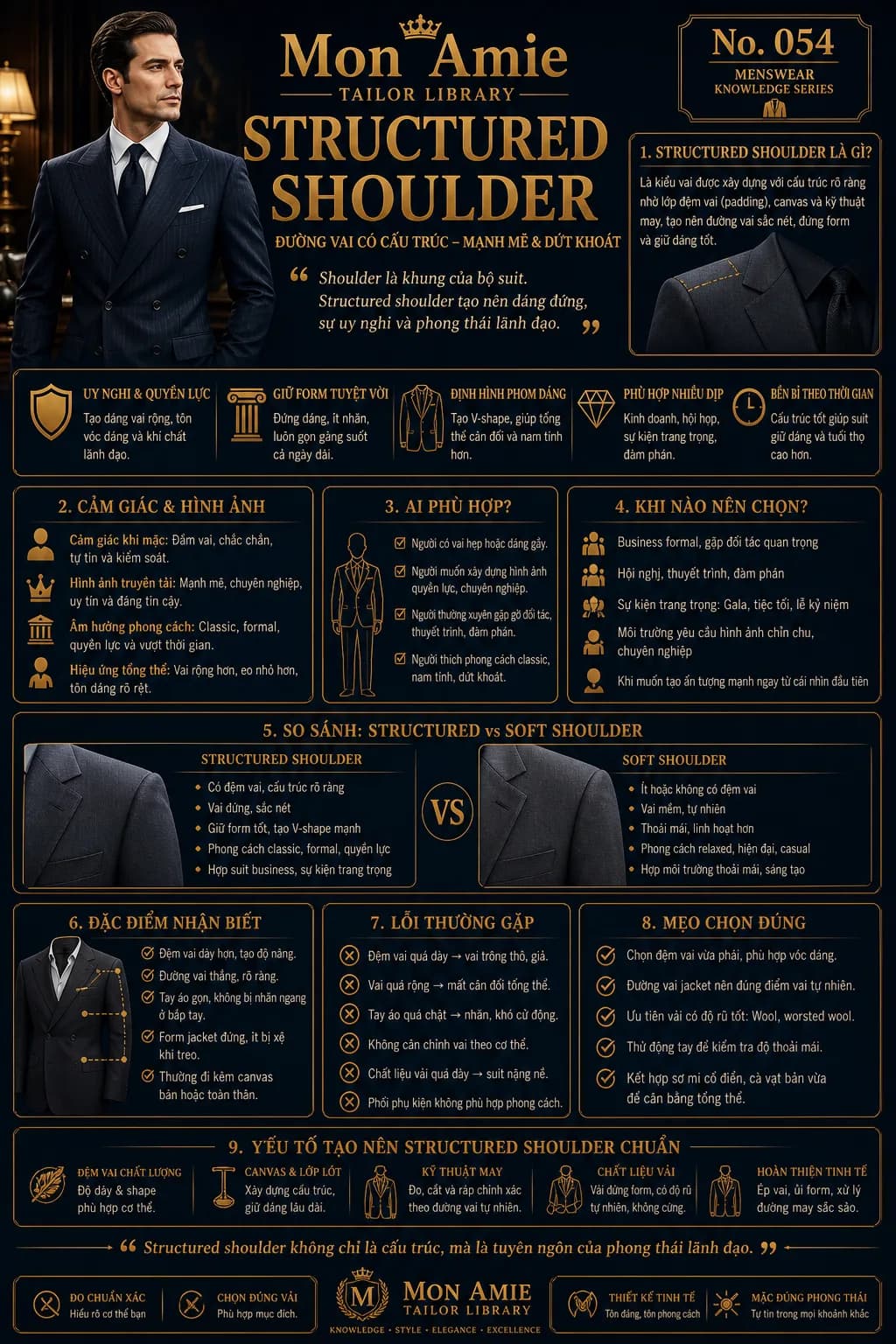
What Is a Structured Shoulder in a Suit Jacket?
A structured shoulder — built with padding and canvas — creates a standing shoulder line, a sharp silhouette and a commanding presence.
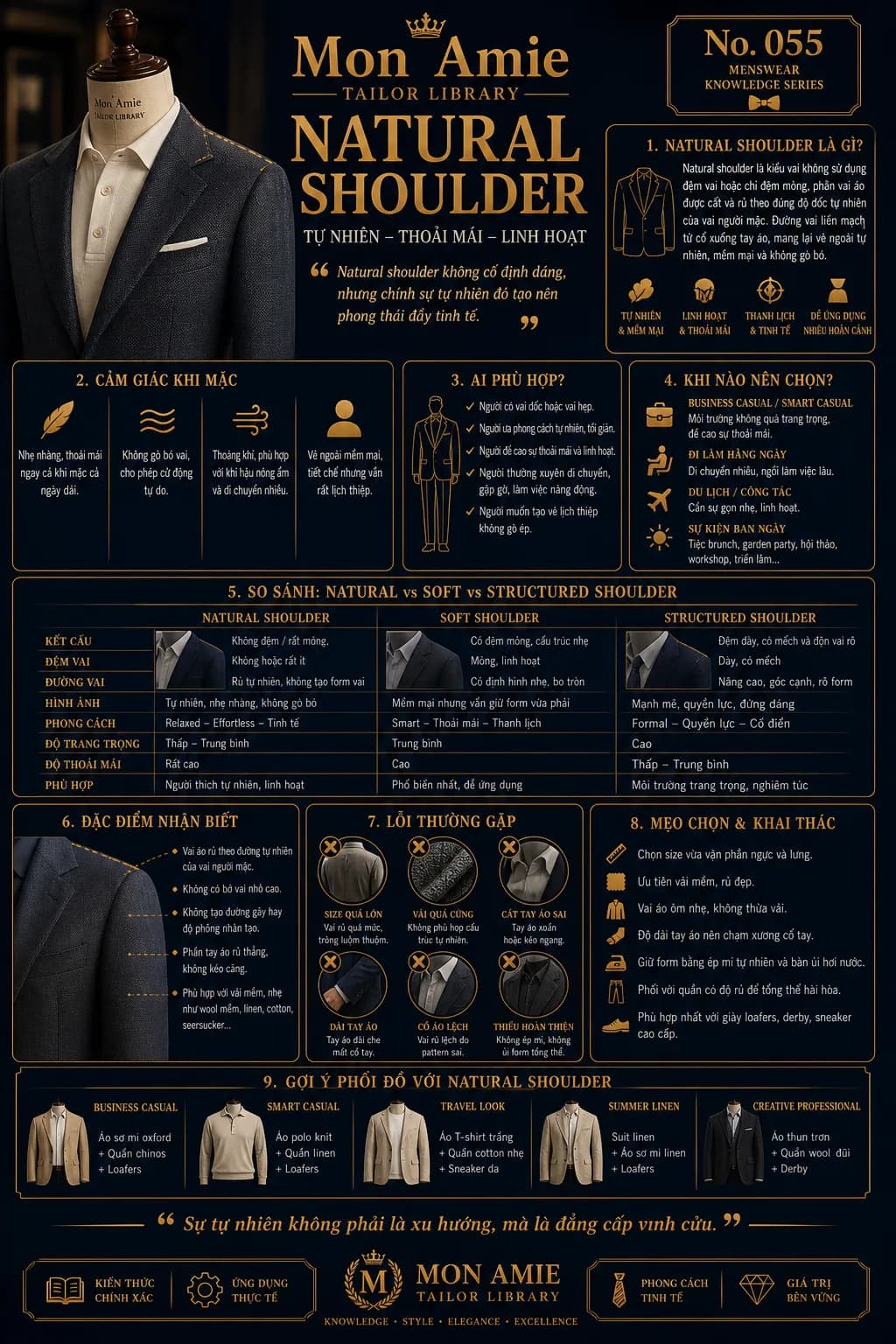
What Is a Natural Shoulder in a Tailored Suit?
A natural shoulder uses no padding, or almost none, following your true shoulder slope — supple, comfortable and quietly refined.
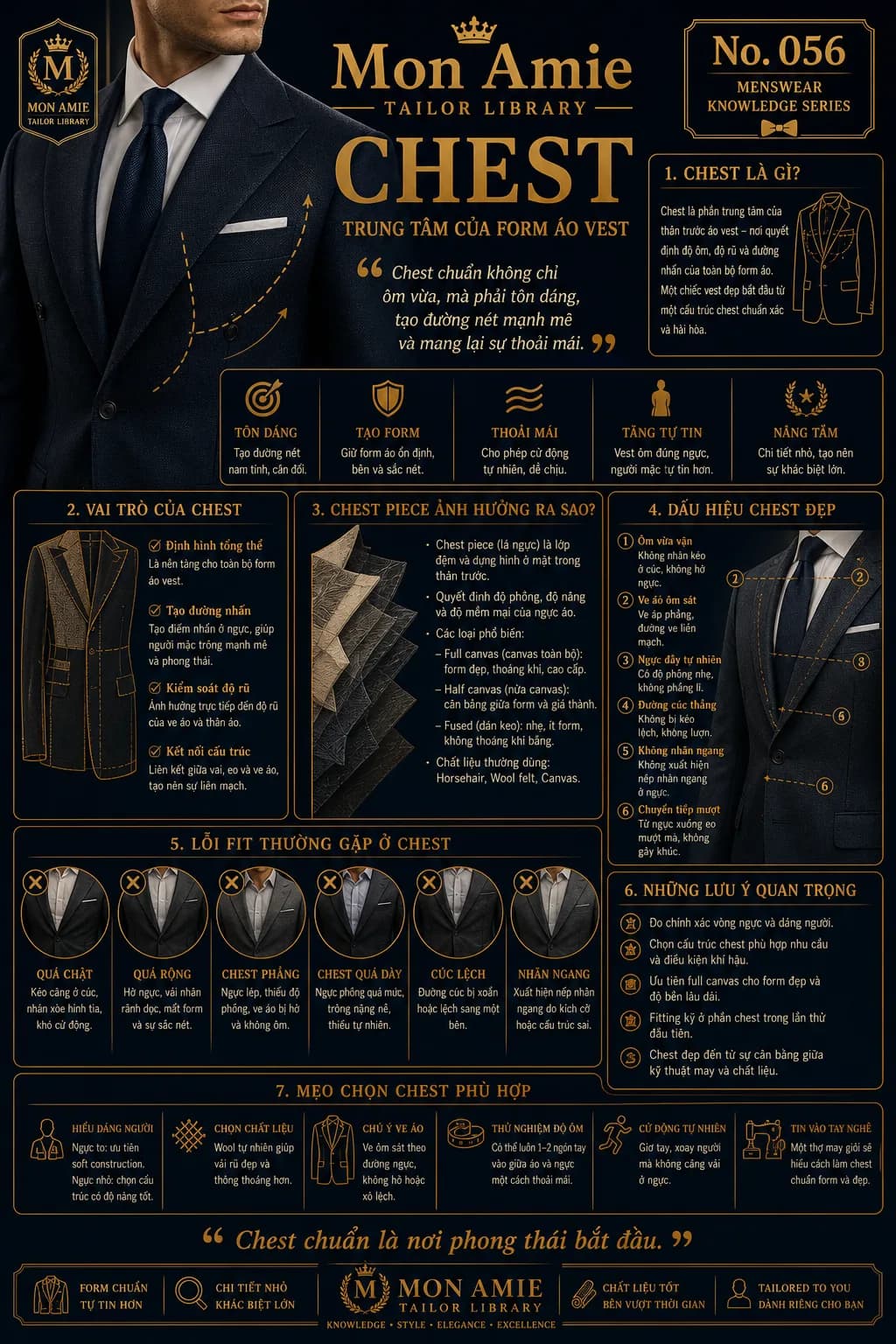
What Is the Chest of a Suit Jacket? Where Form Begins
The chest is the heart of a jacket's front, governing fit, drape and bearing. How to recognise a well-built chest and avoid common fit faults.
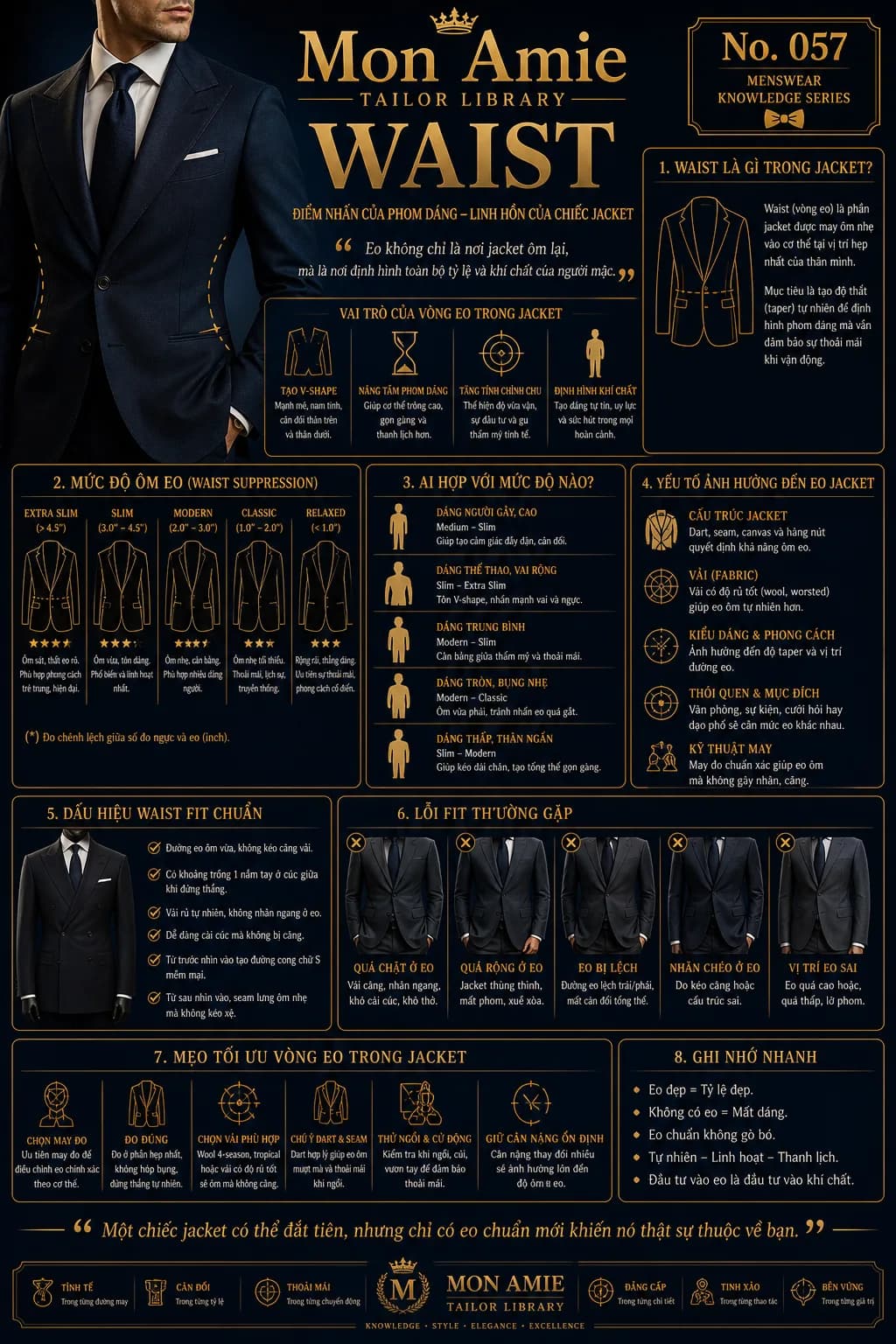
What Is Jacket Waist? The Soul of a Suit's Silhouette
The waist is where a jacket is gently shaped to the body, setting proportion and presence. How to choose the right degree of suppression for your figure.
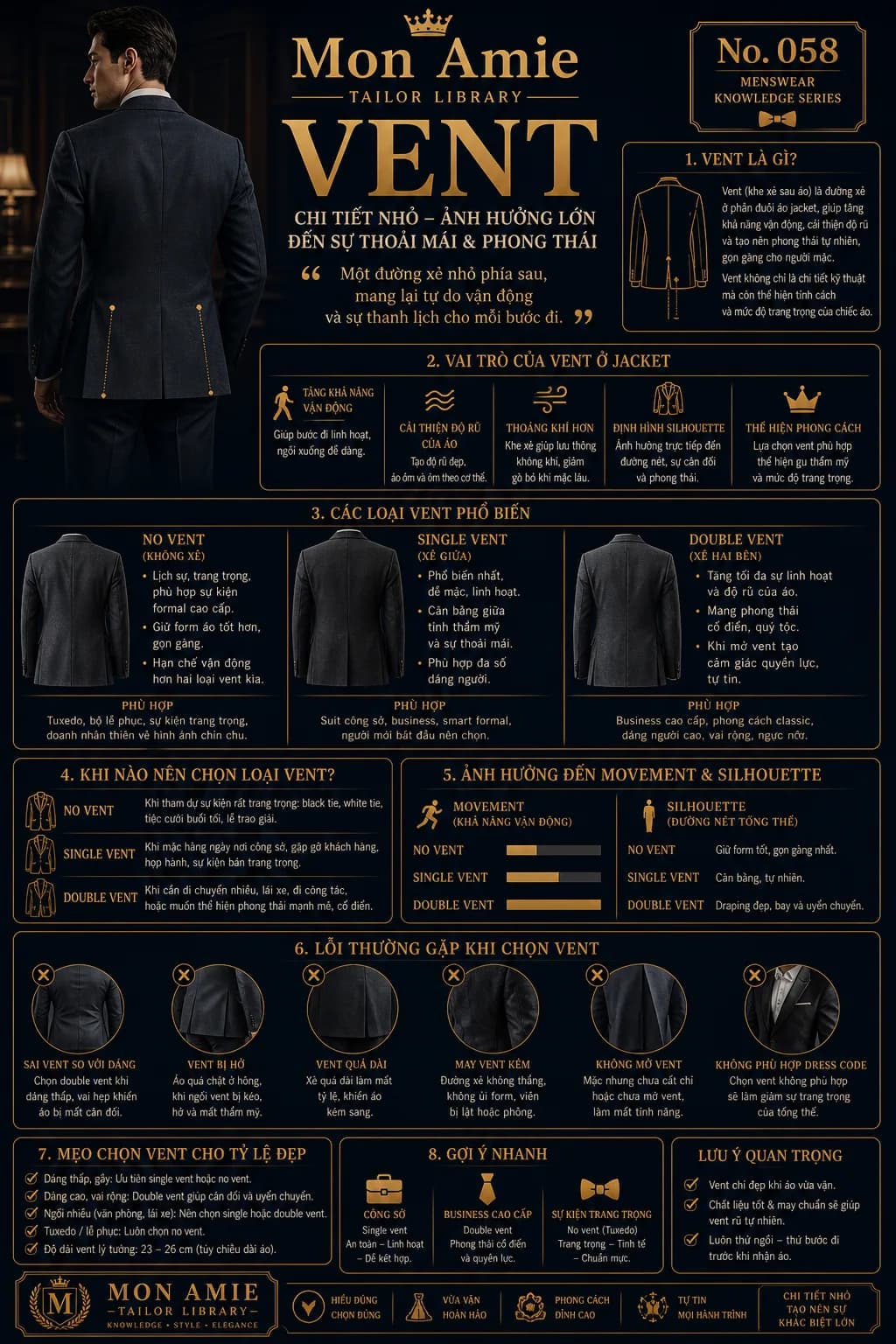
What Is a Vent? Choosing the Right Jacket Vent
The vent at the back of a jacket governs comfort, drape and bearing. Understand no vent, single vent and double vent, and choose for figure and occasion.
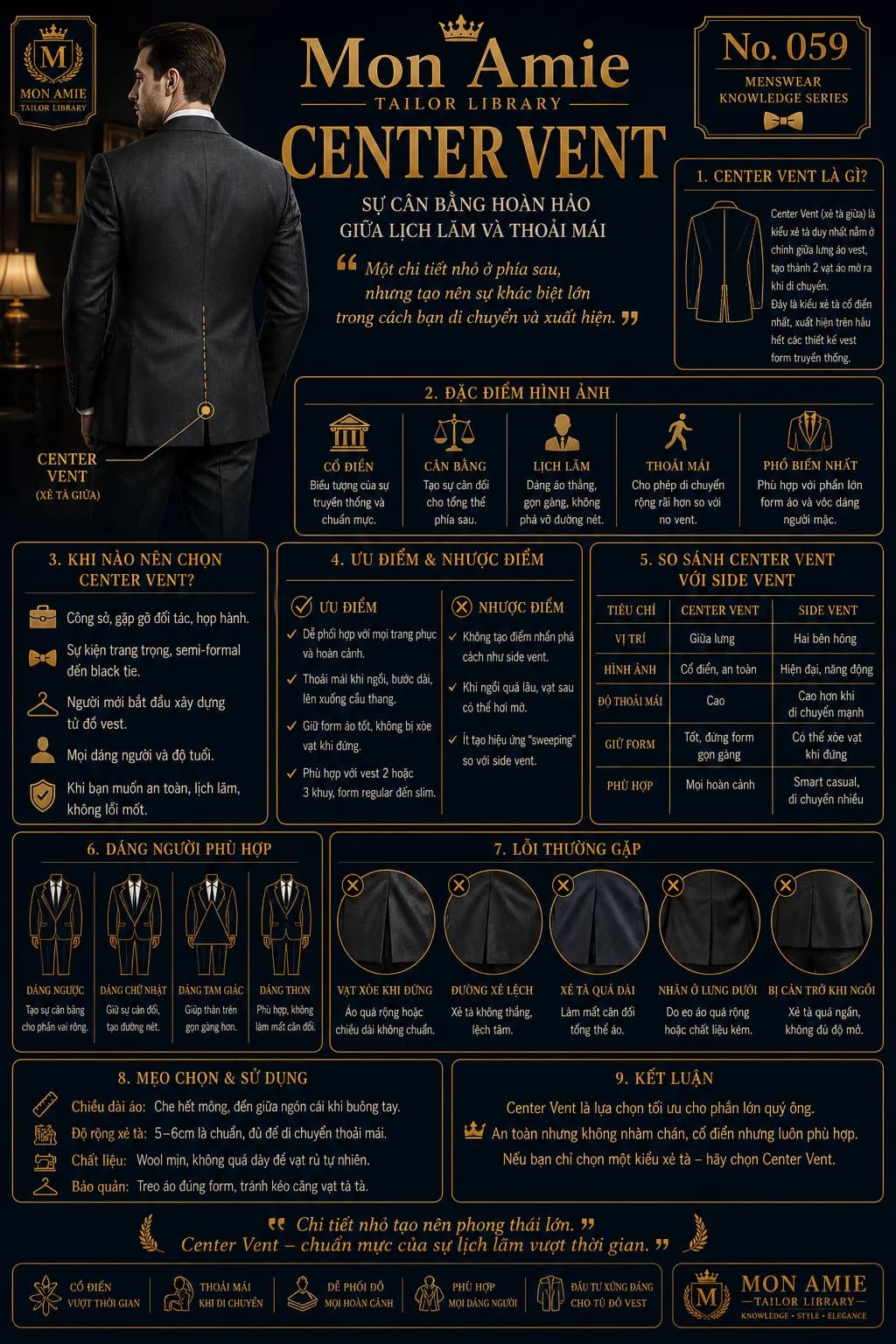
What Is a Centre Vent? The Classic Single Vent Explained
The centre vent is the most classic opening at the back of a jacket: its character, strengths and limits, how it compares to side vents, and how to choose.
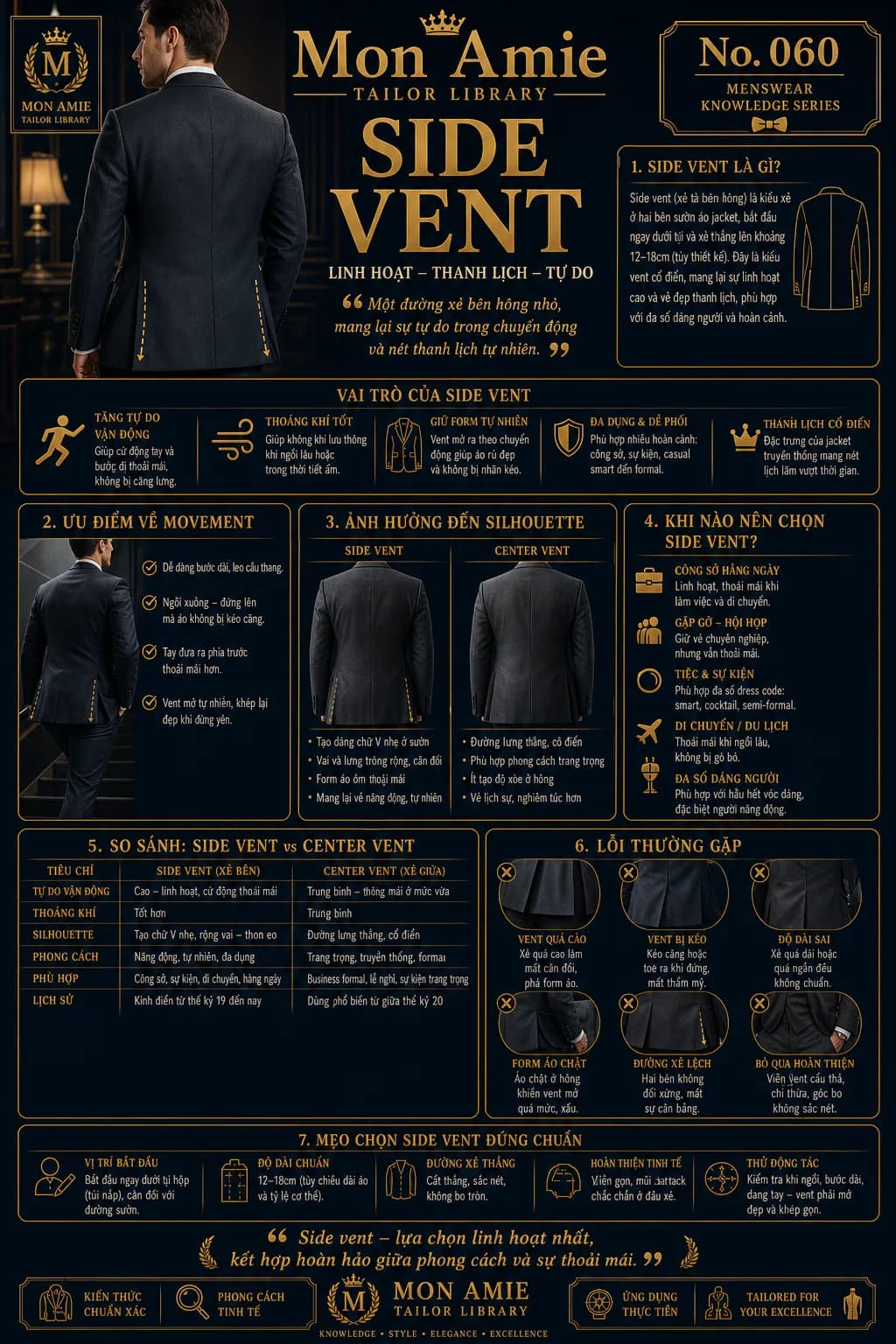
What Are Side Vents? The Versatile Choice for a Suit
Side vents are the twin openings at a jacket's hips, giving easy movement and natural shape. Their advantages, and how to have them cut correctly.
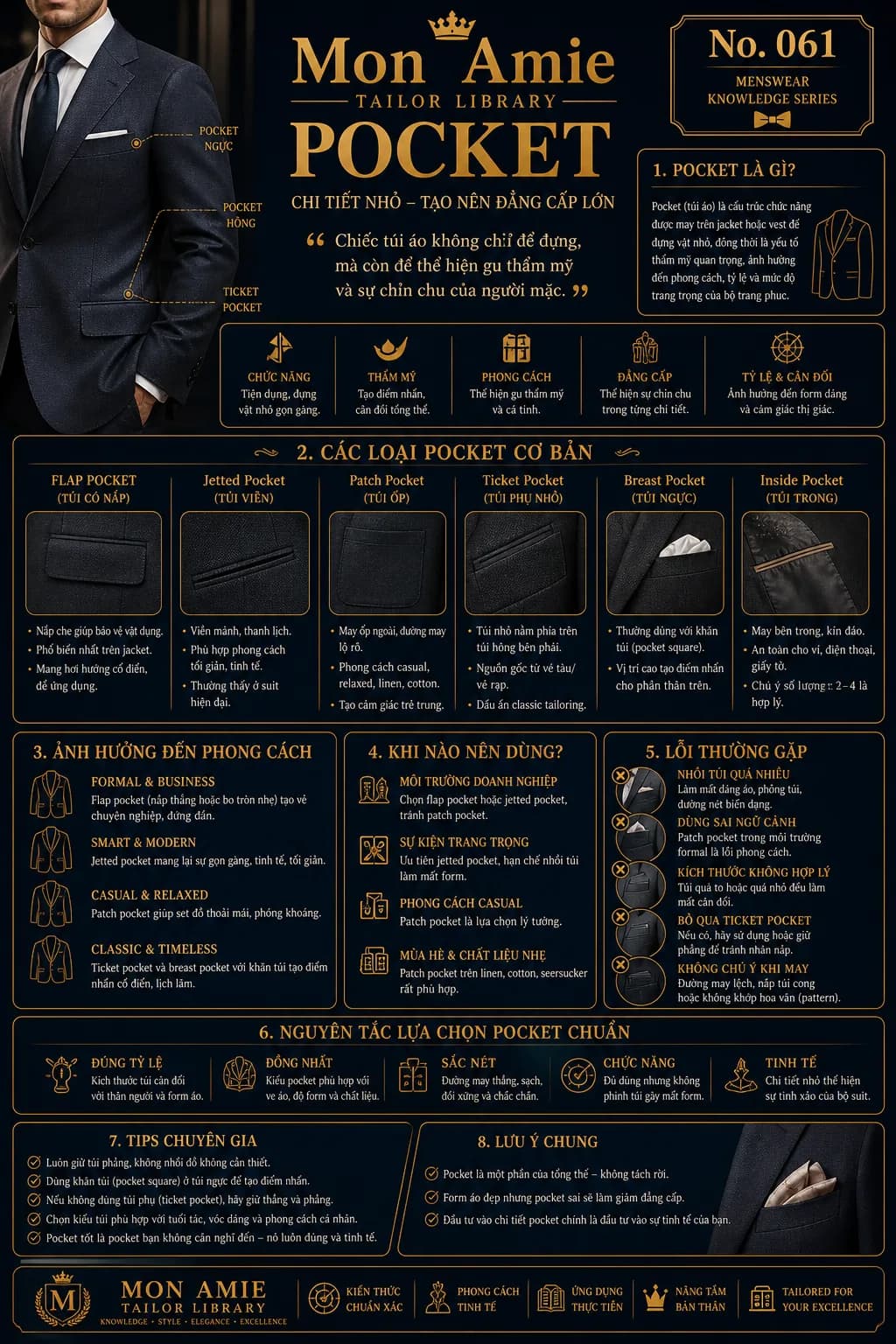
Suit Pockets Explained: 6 Types and How to Choose
A pocket does more than hold things. Discover the 6 essential suit pocket types, how each shapes your style, and Mon Amie's rules for choosing well.
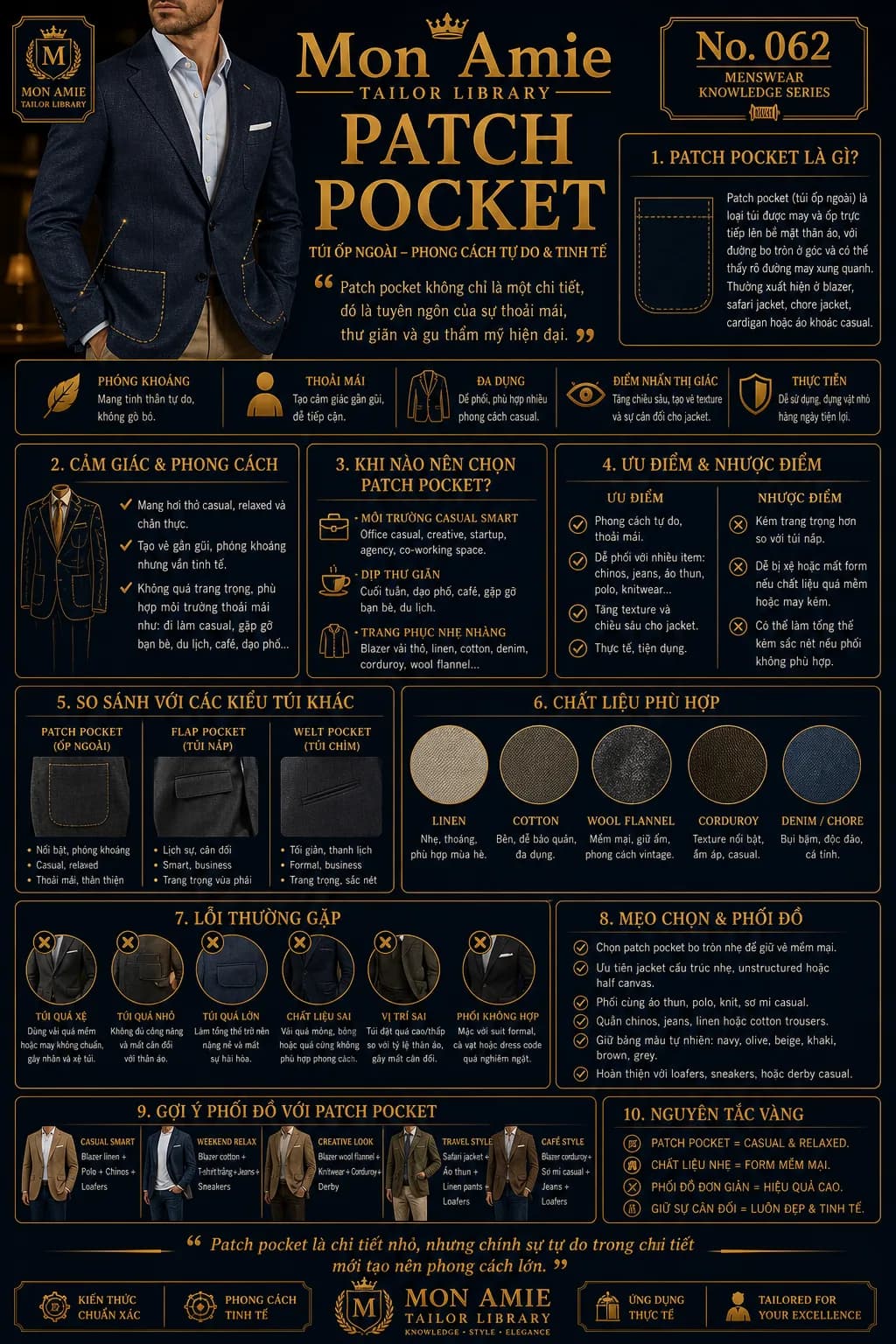
What Is a Patch Pocket? The Relaxed Jacket Detail
Patch pockets on a casual blazer: when to choose them, their strengths and limits, the right cloths, and how to wear them, from Mon Amie's artisans.
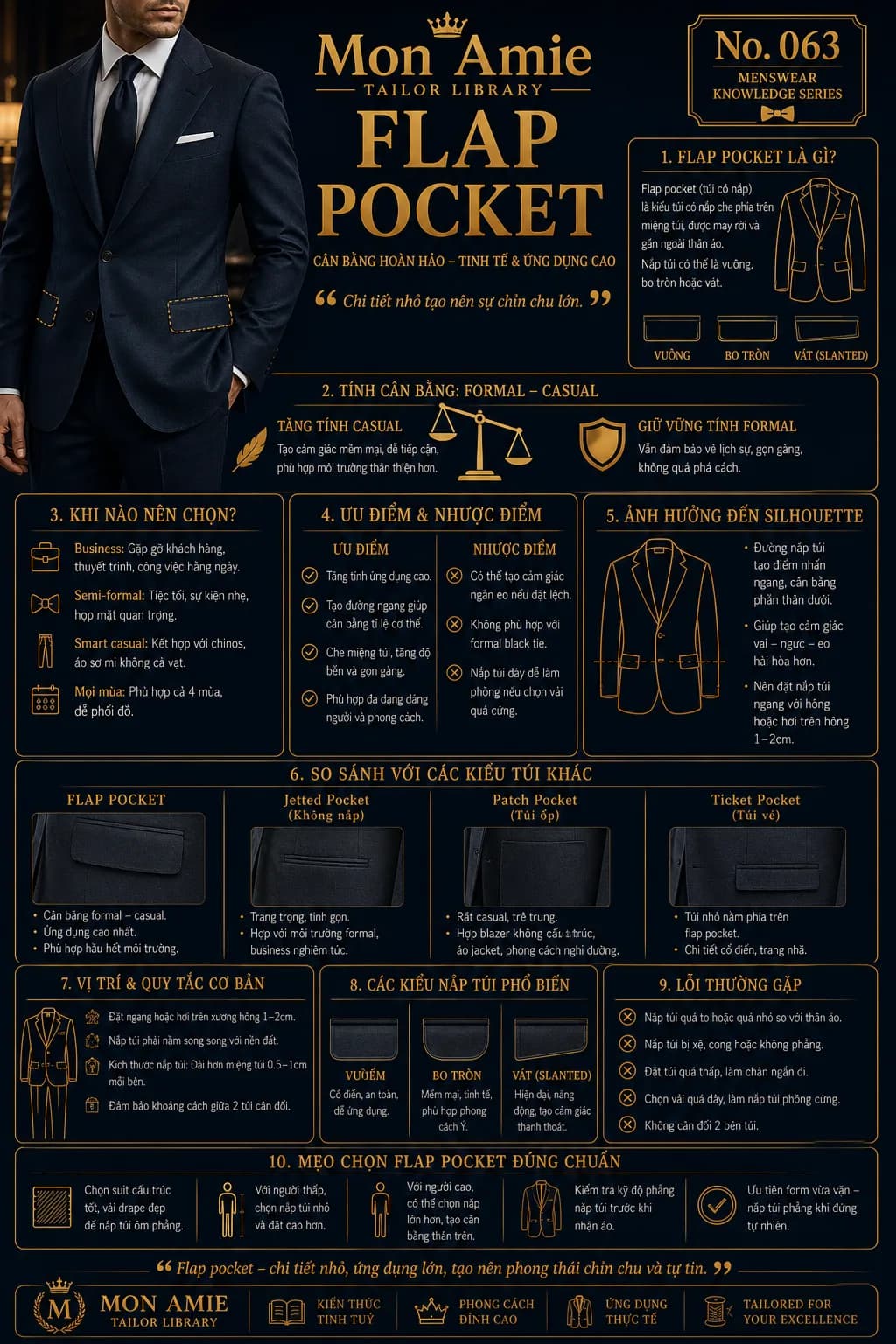
What Is a Flap Pocket? Balancing Formal and Casual
Flap pockets on a suit jacket: when to choose them, their strengths and limits, how they compare with jetted, patch and ticket pockets, and how to get them right.
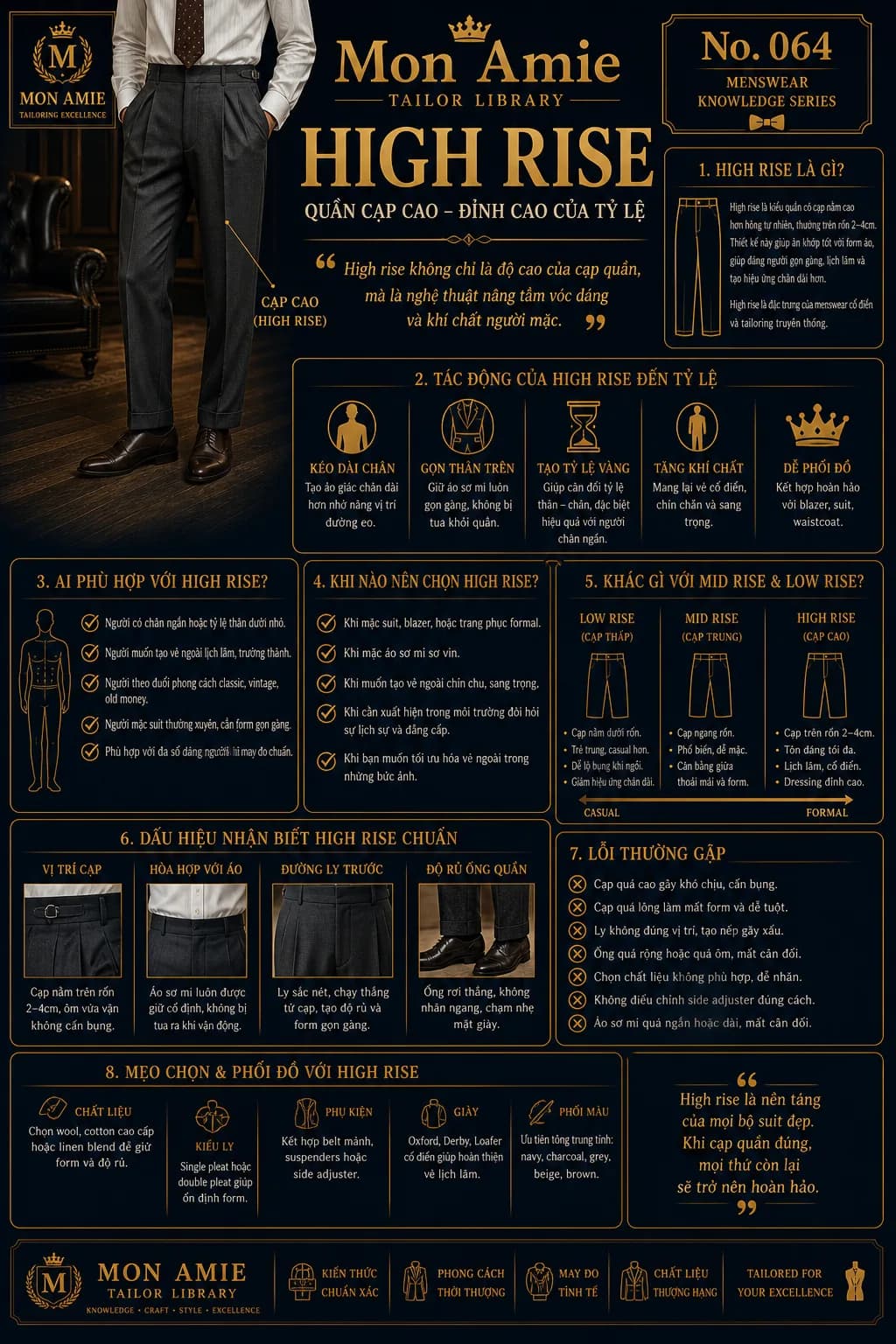
What Is High Rise? Trousers Built for Perfect Proportion
High rise trousers lengthen the leg, tidy the torso and lift your bearing. How to choose them, what marks a good pair, and the mistakes to avoid.
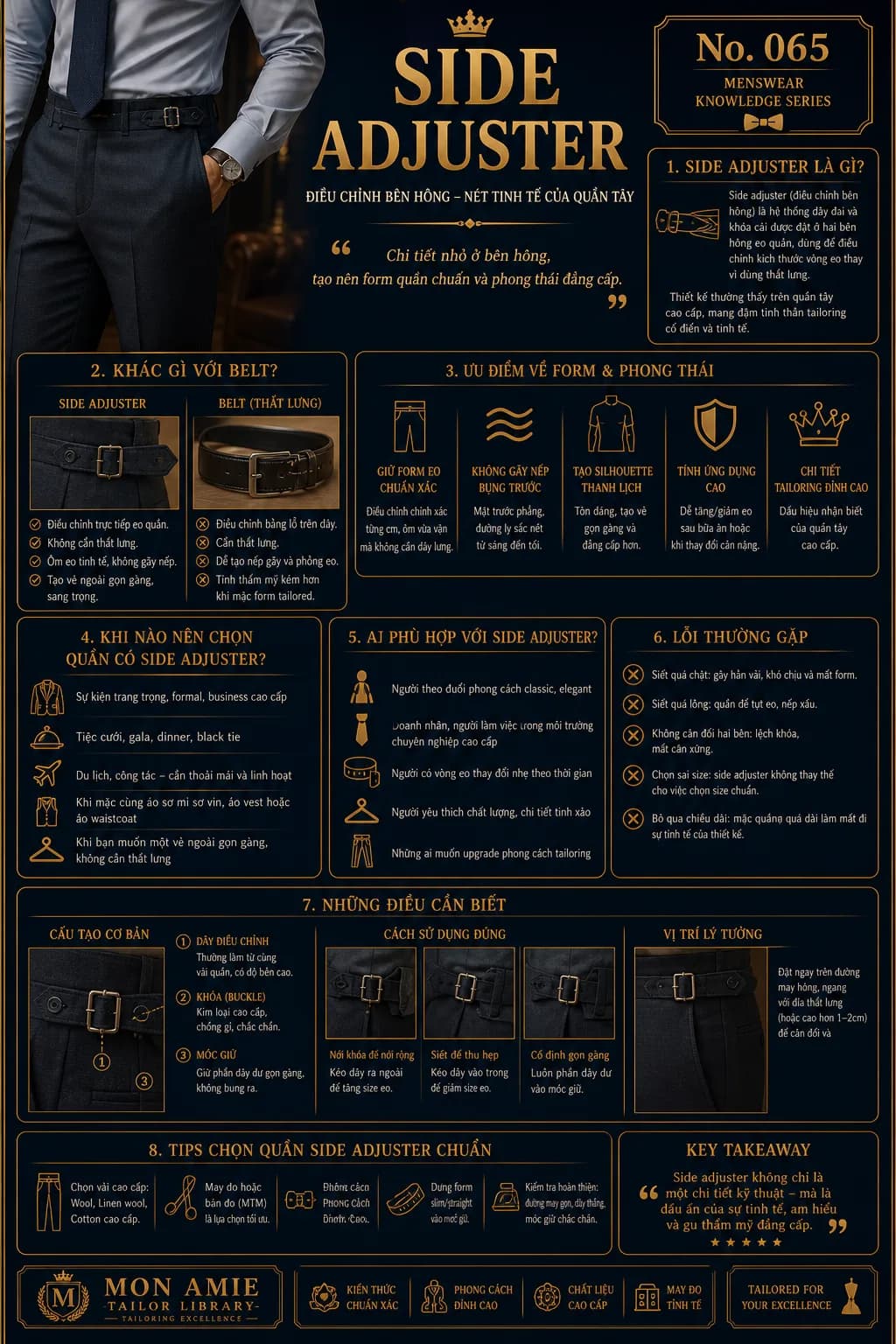
What Is a Side Adjuster? Fine-Tuning Trousers at the Waist
Side adjusters let fine trousers fit the waist precisely without a belt. Their advantages, how to use them, and the mistakes to avoid, with Mon Amie.
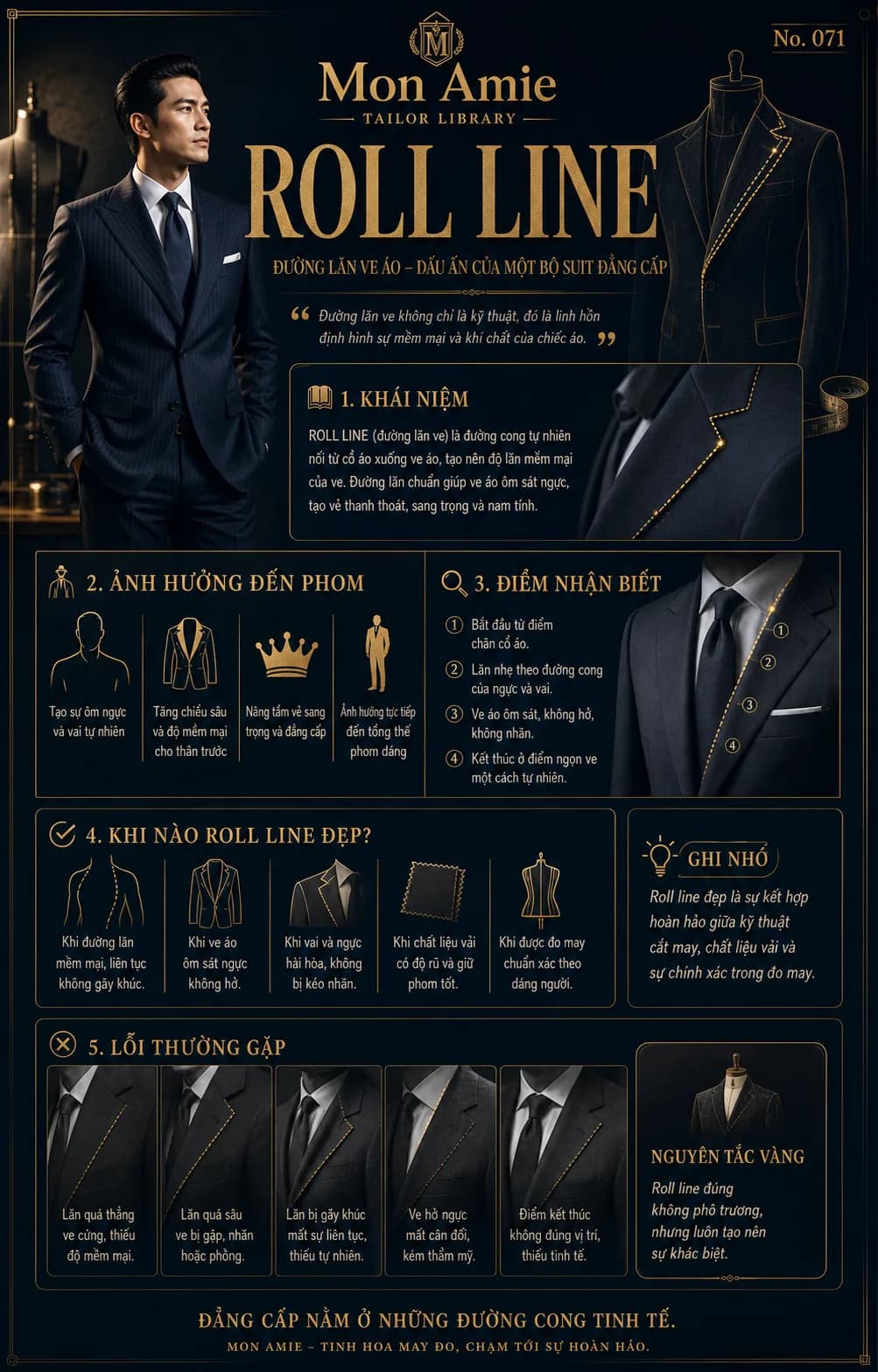
What Is a Roll Line? The Lapel Curve of a Fine Suit
The roll line decides how softly a lapel curves and how a suit carries itself. How to recognise a good roll line and the faults to avoid.
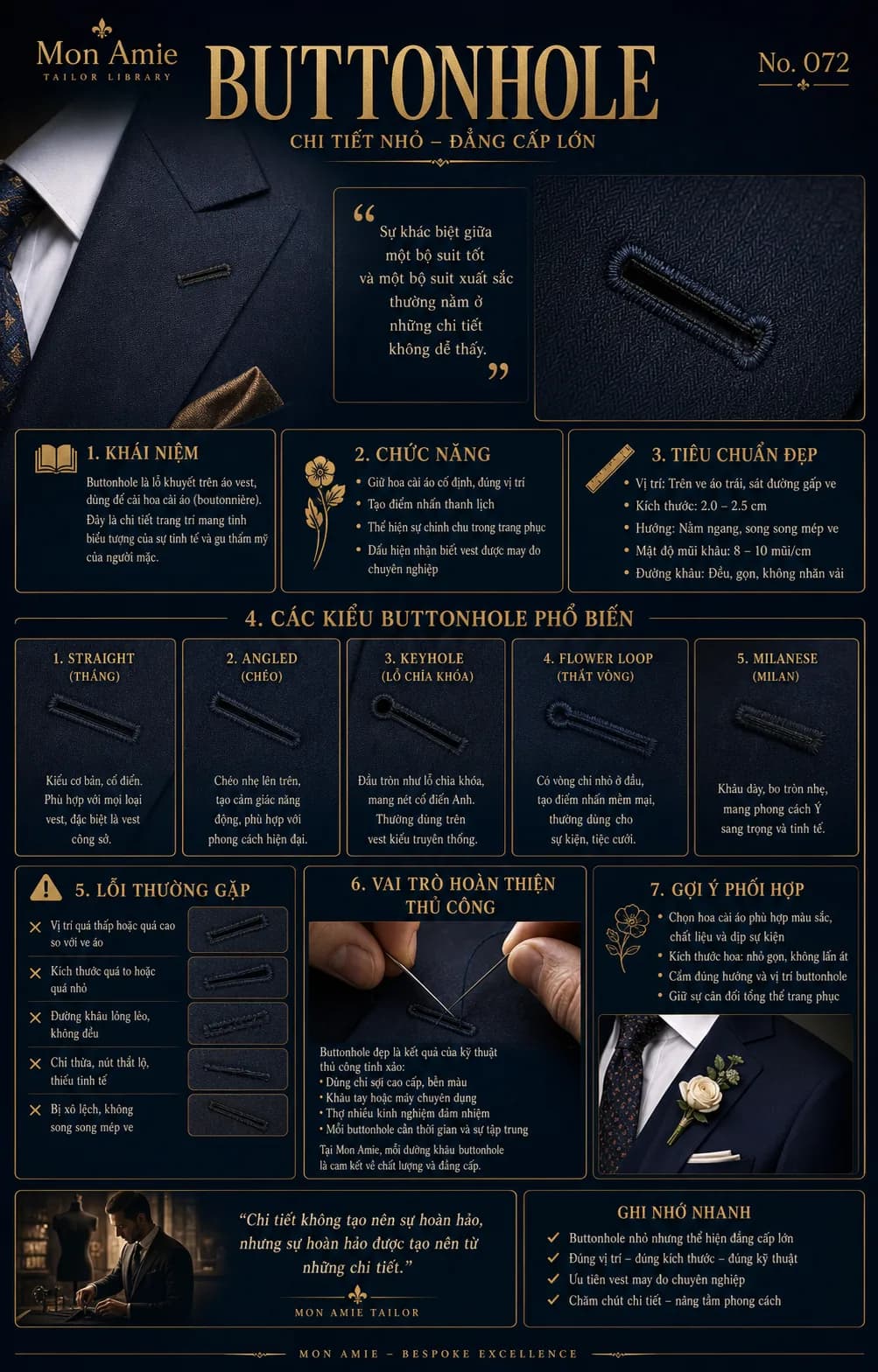
What Is a Buttonhole? The Detail That Marks a Fine Suit
The lapel buttonhole holds a boutonniere — a small detail that reveals at once whether a suit was tailored with real craft.
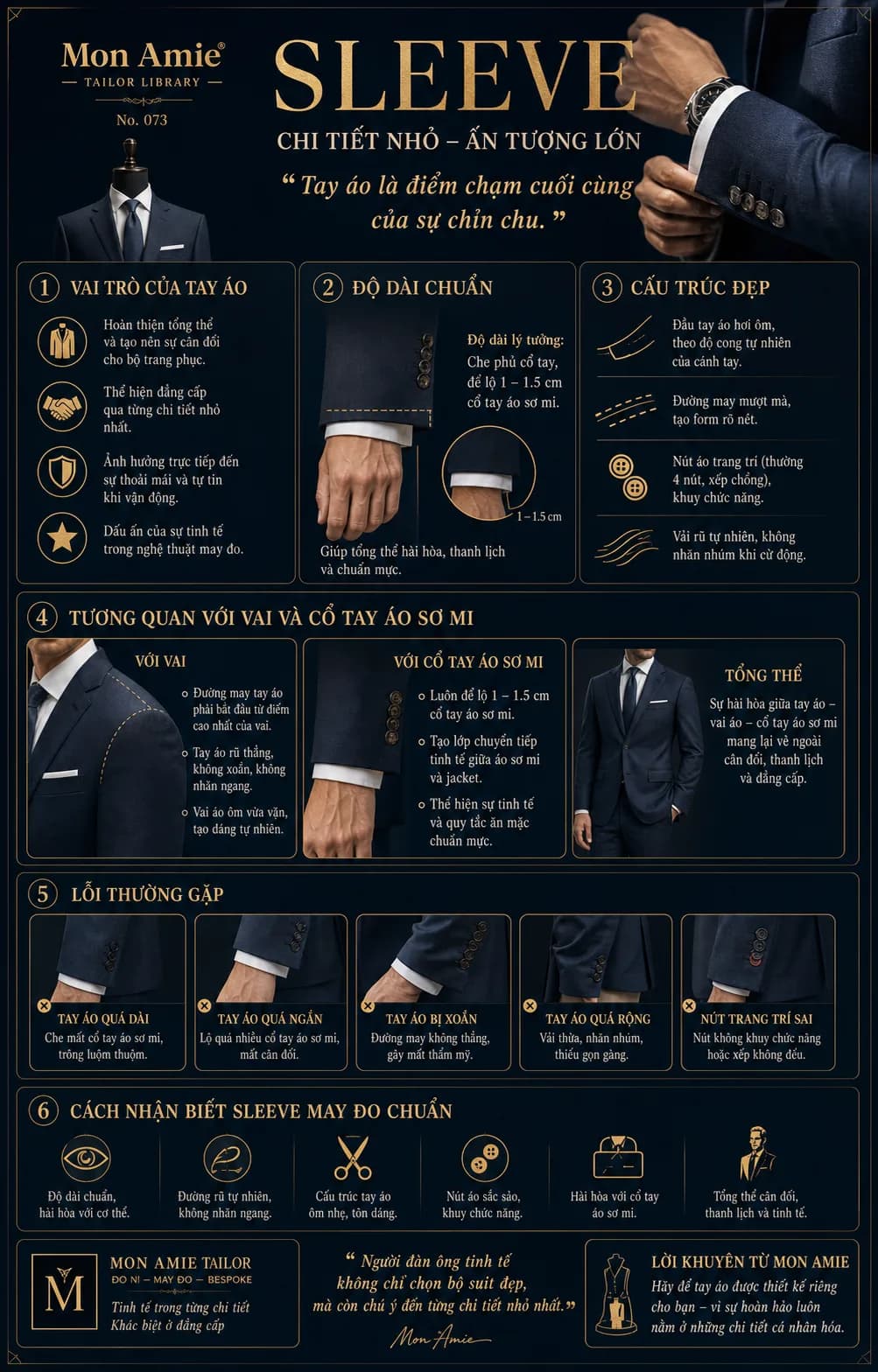
Suit Sleeves: Correct Length, Structure and Common Faults
A correct suit sleeve covers the wrist and shows 1–1.5 cm of shirt cuff. Mon Amie on sleeve length, structure and five common faults.
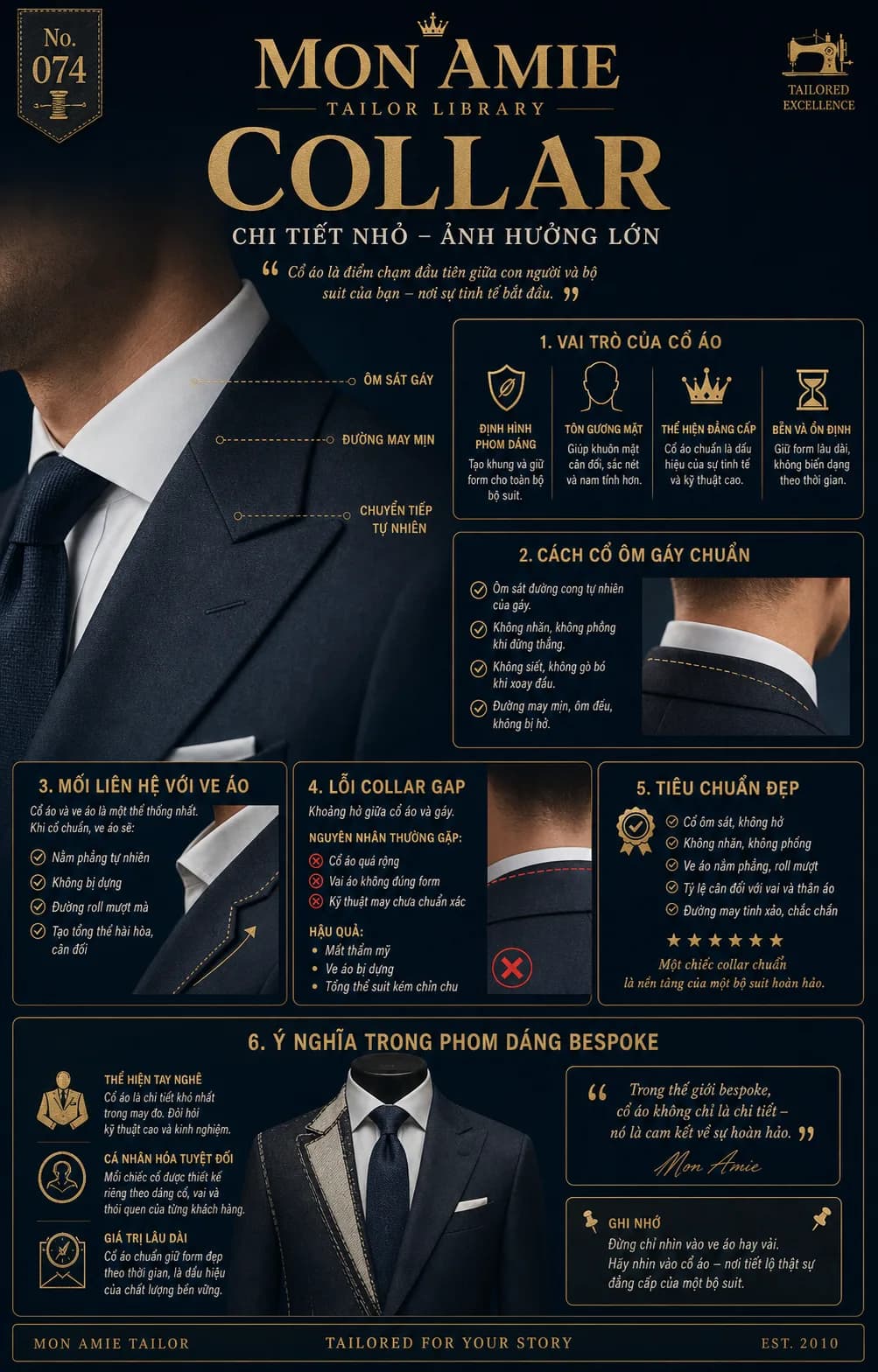
What Is a Suit Collar? A Small Detail With Great Weight
The collar governs the shape and quality of a suit. Learn what a clean collar hug looks like, the collar gap fault and its place in bespoke.
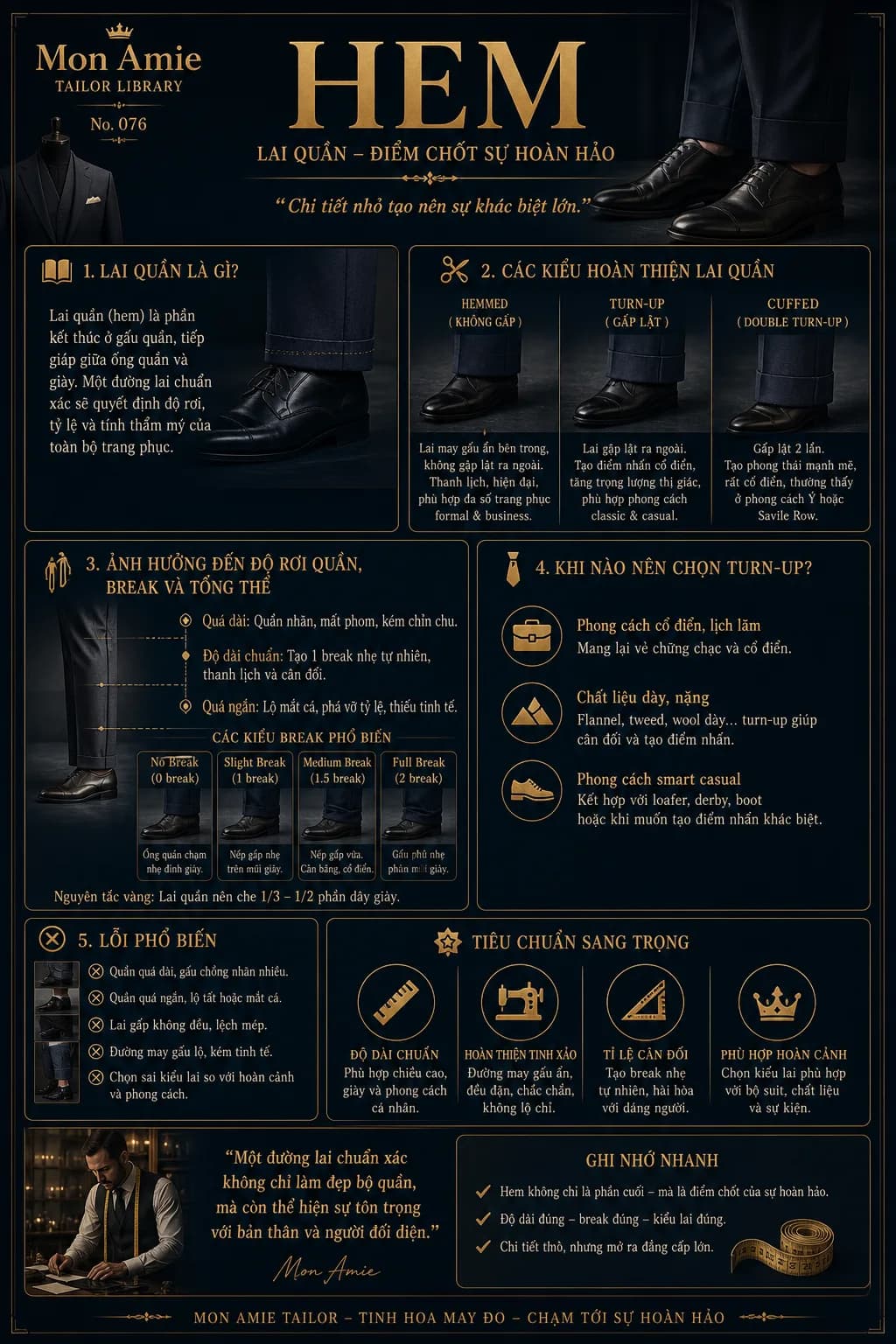
What Is a Trouser Hem? Length, Break and the Perfect Finish
The hem decides how your trousers fall, how they break and how the whole suit reads. Hemmed, turn-up, cuffed and the right length, explained.
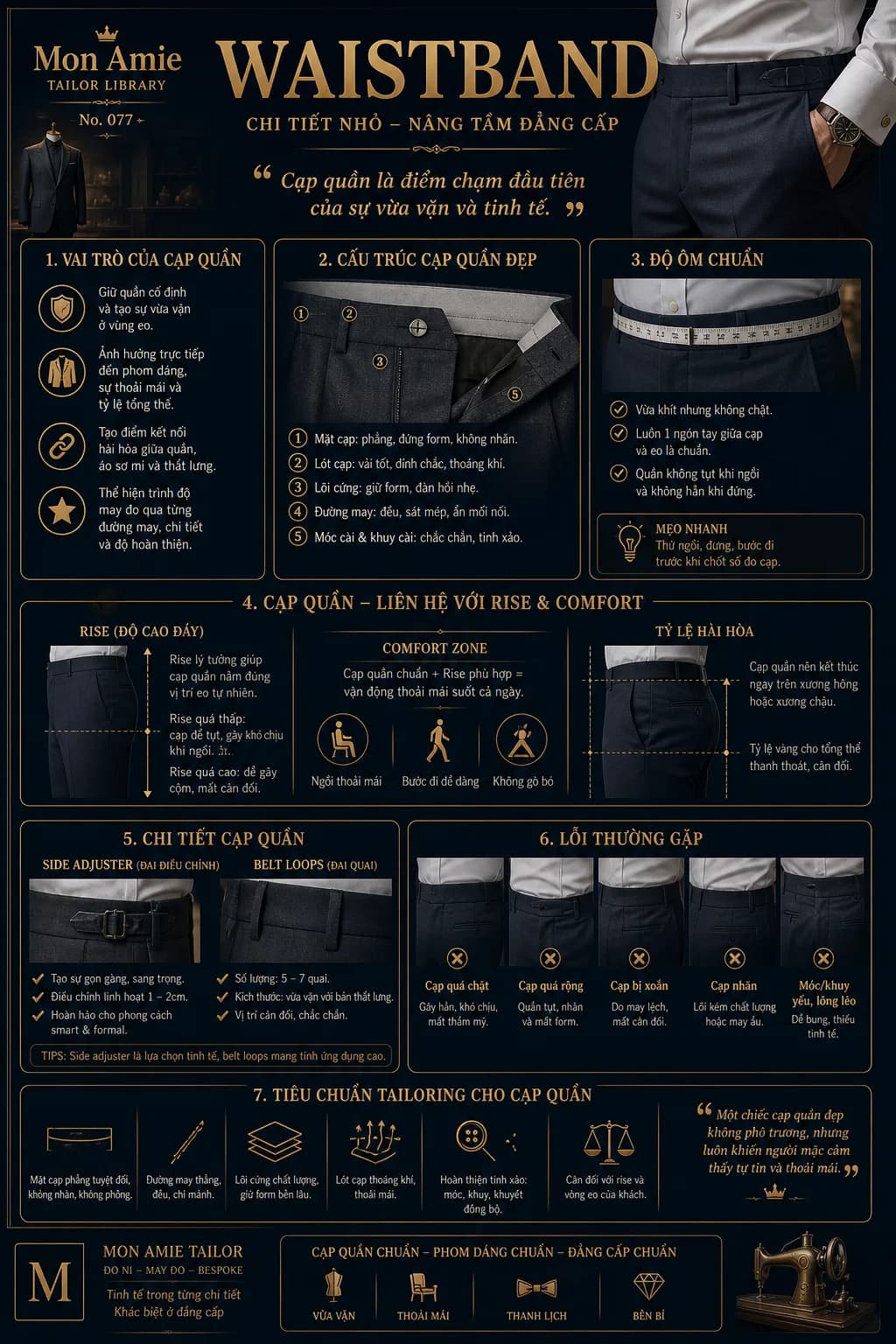
What Is a Waistband? The Foundation of Well-Fitting Trousers
The waistband governs the fit and shape of suit trousers. Its proper construction, the right degree of hold and the faults worth knowing.
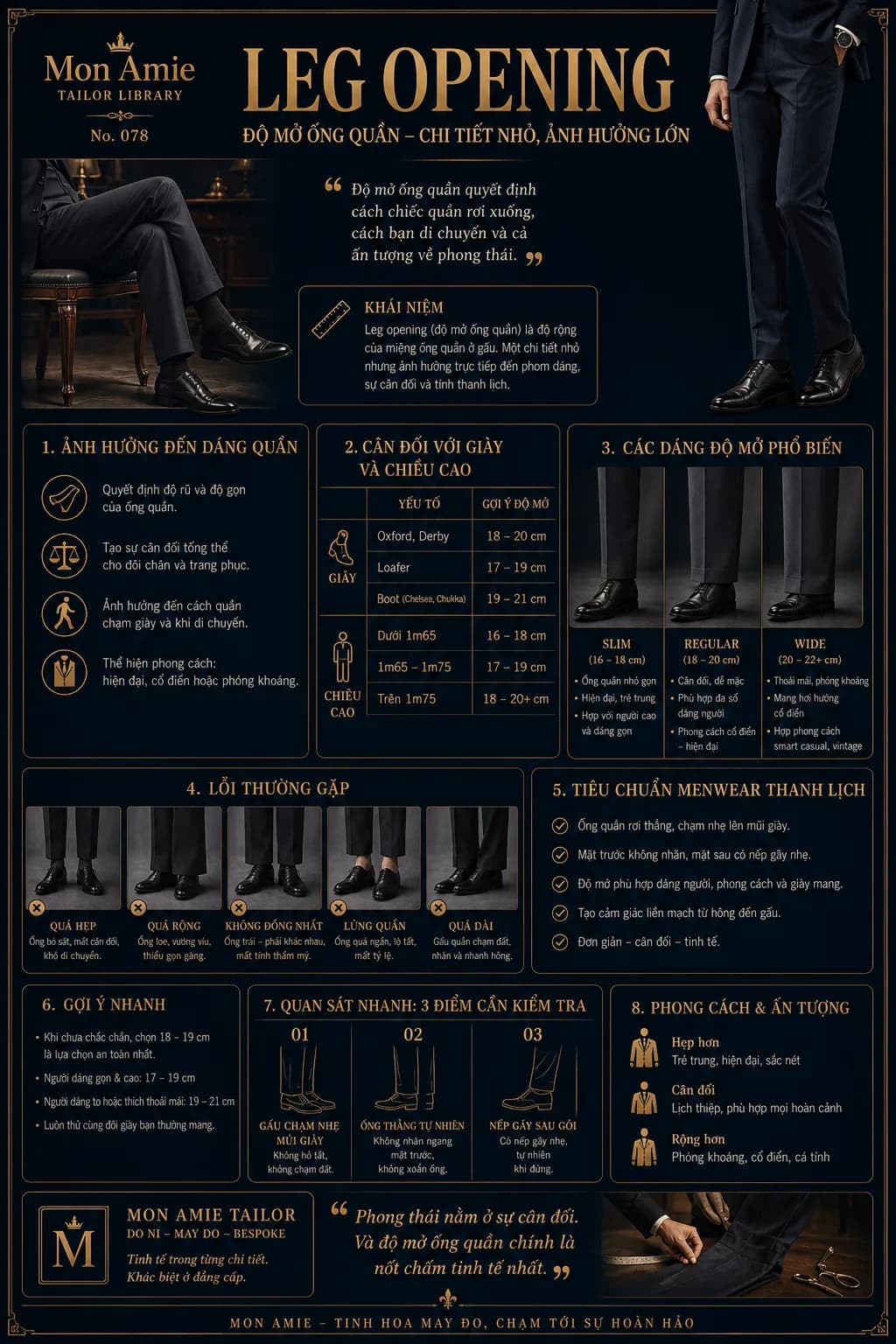
What Is Leg Opening? The Right Trouser Width at the Hem
Leg opening shapes how trousers fall, how balanced they look and how you carry yourself. How to choose it by shoe, height and build.
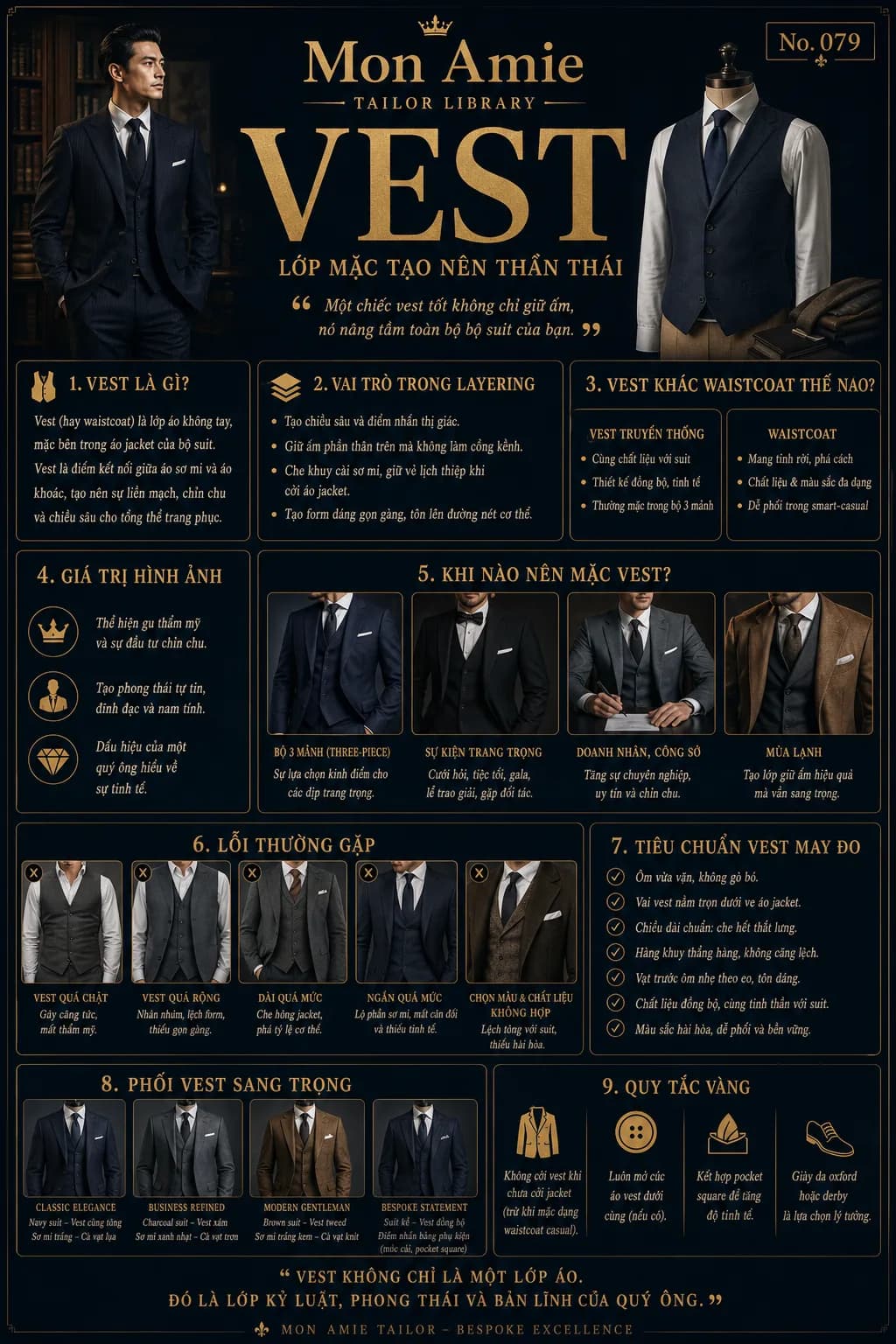
What Is a Waistcoat? The Layer That Gives a Suit Its Presence
The waistcoat is the sleeveless layer worn under the jacket — the piece that gives a three-piece suit depth, presence and polish.
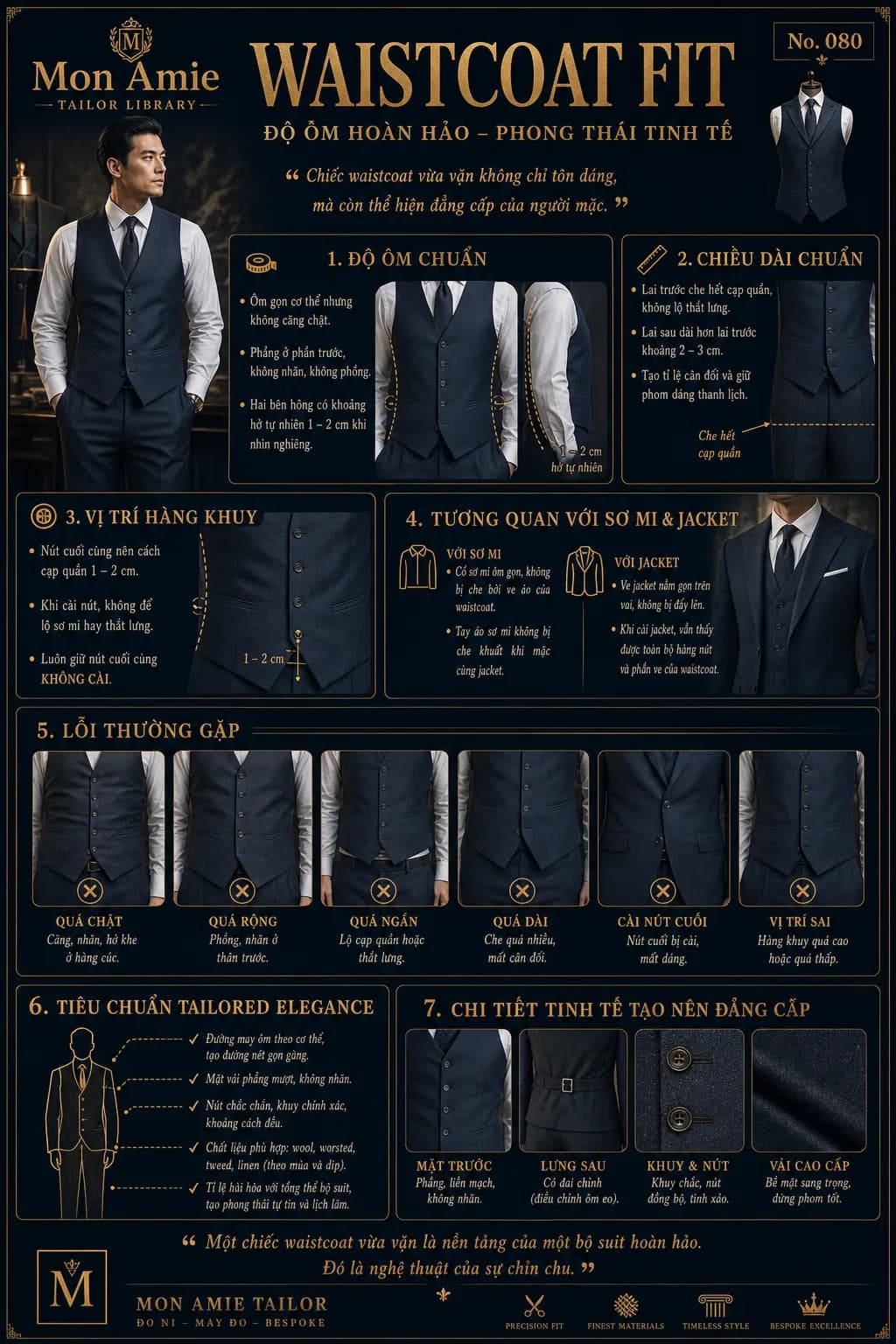
Waistcoat Fit: How a Suit Waistcoat Should Sit on You
What does a correct waistcoat fit look like? Length, button line, how it works with shirt and jacket, and six common faults to avoid.
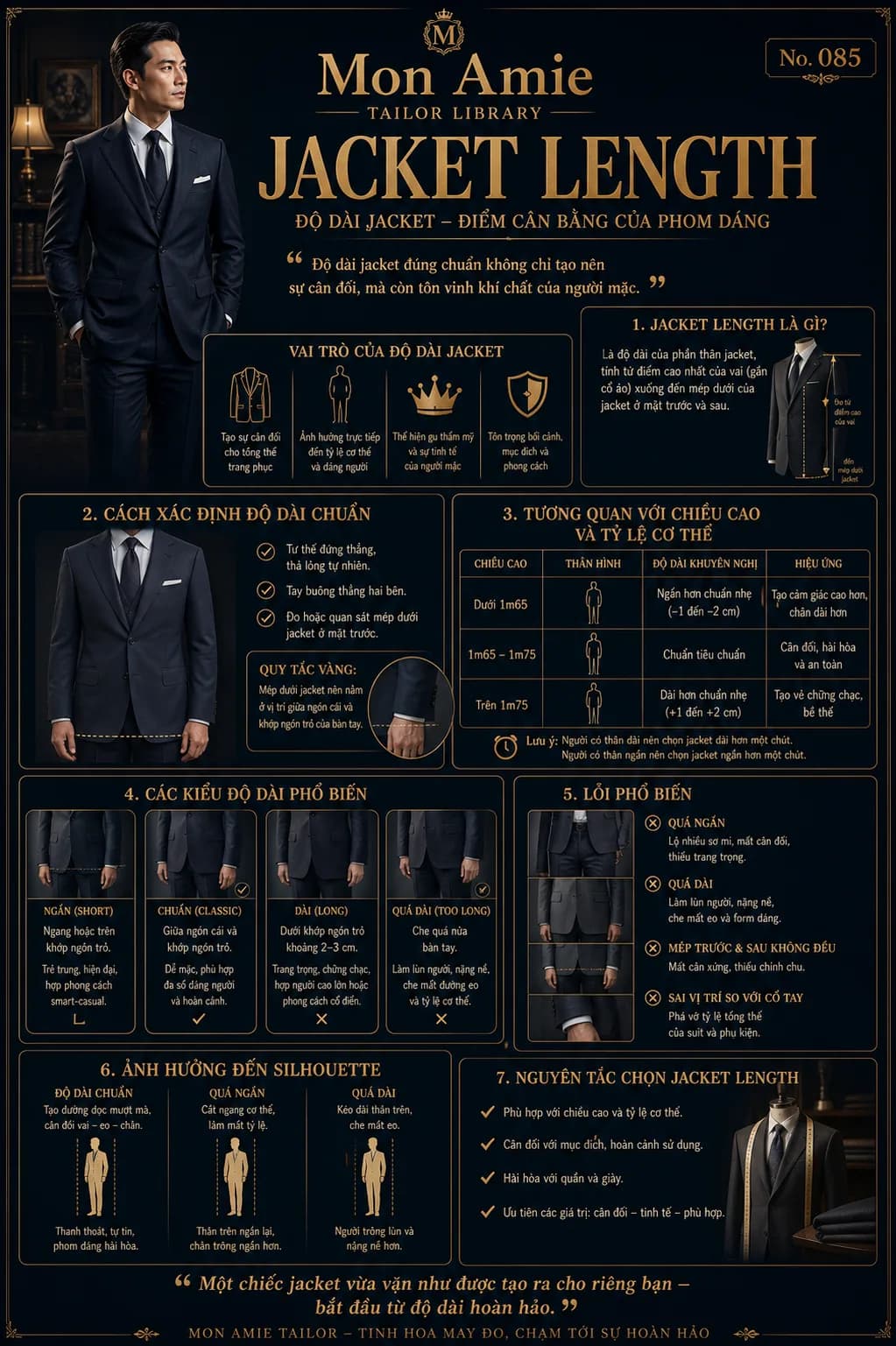
What Is Jacket Length? The Correct Suit Length by Height
Jacket length governs your proportions: the golden hand rule, recommendations by height, and the too-short and too-long faults to avoid.
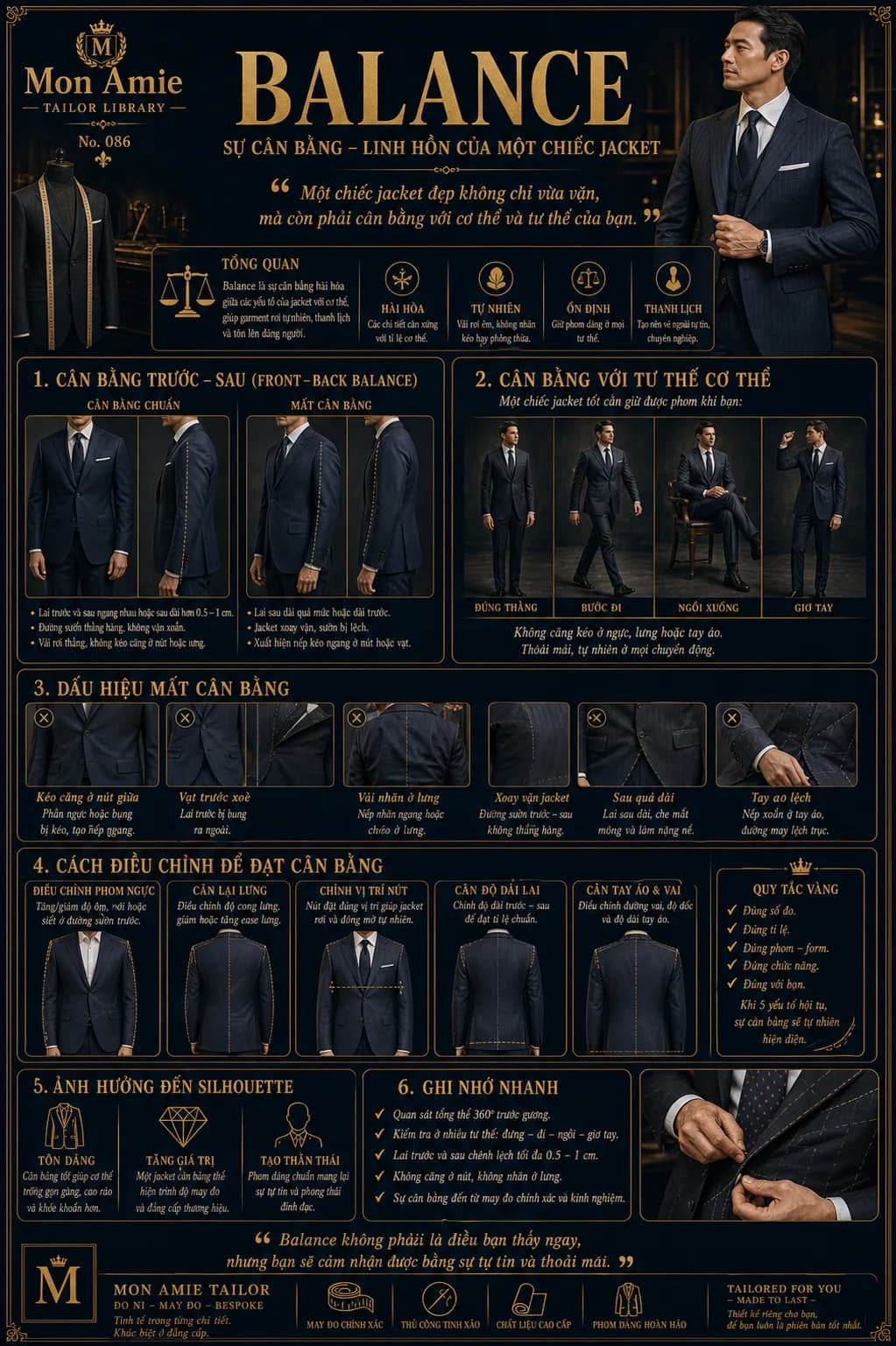
What Is Balance? The Soul of a Well-Made Jacket
Balance is how a jacket sits front to back and against your posture. How to spot imbalance and correct it so a suit hangs naturally.
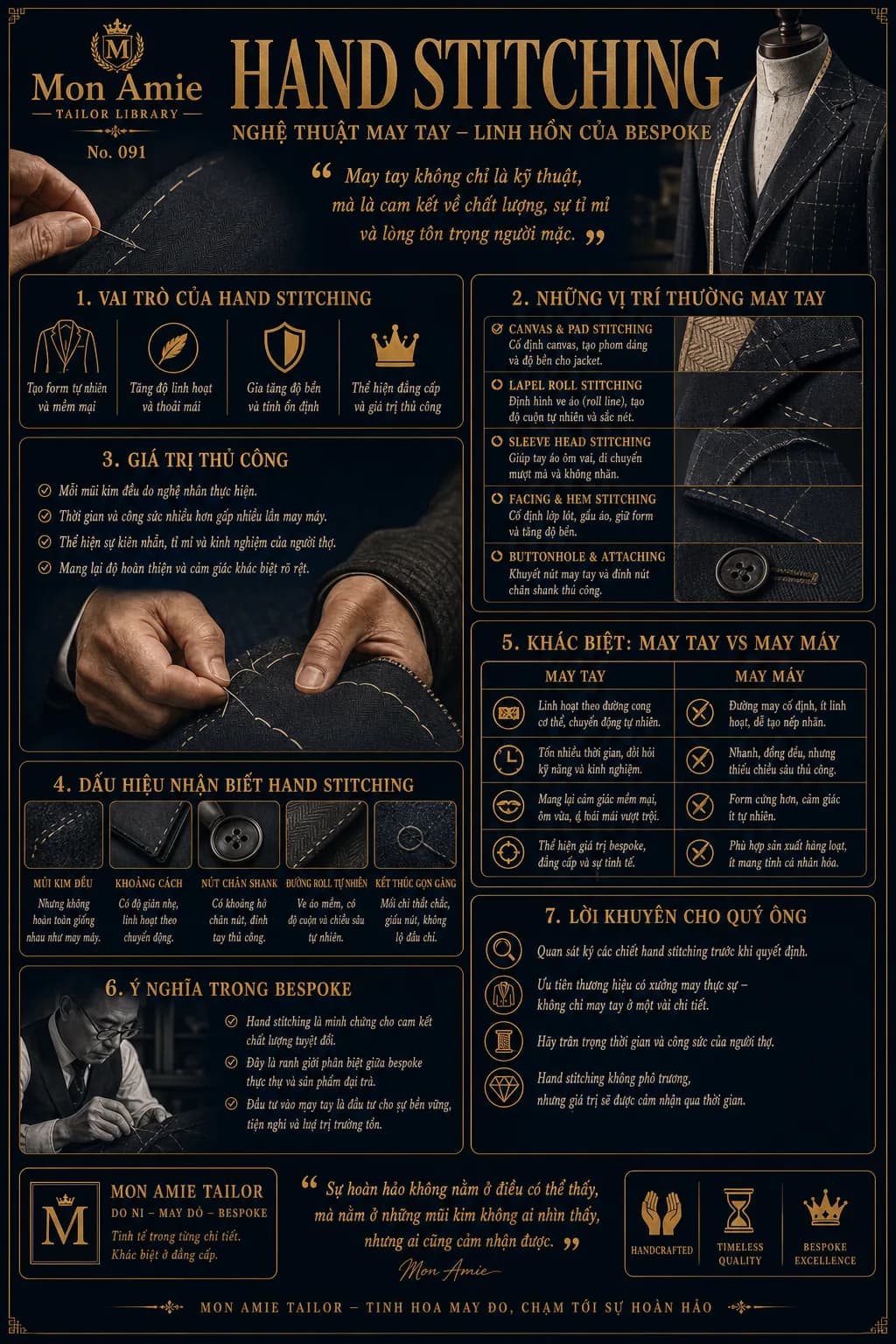
What Is Hand Stitching? The Soul of a Bespoke Suit
What hand stitching is, why it is the soul of bespoke, how to recognise genuine handwork and how it differs from machine sewing.
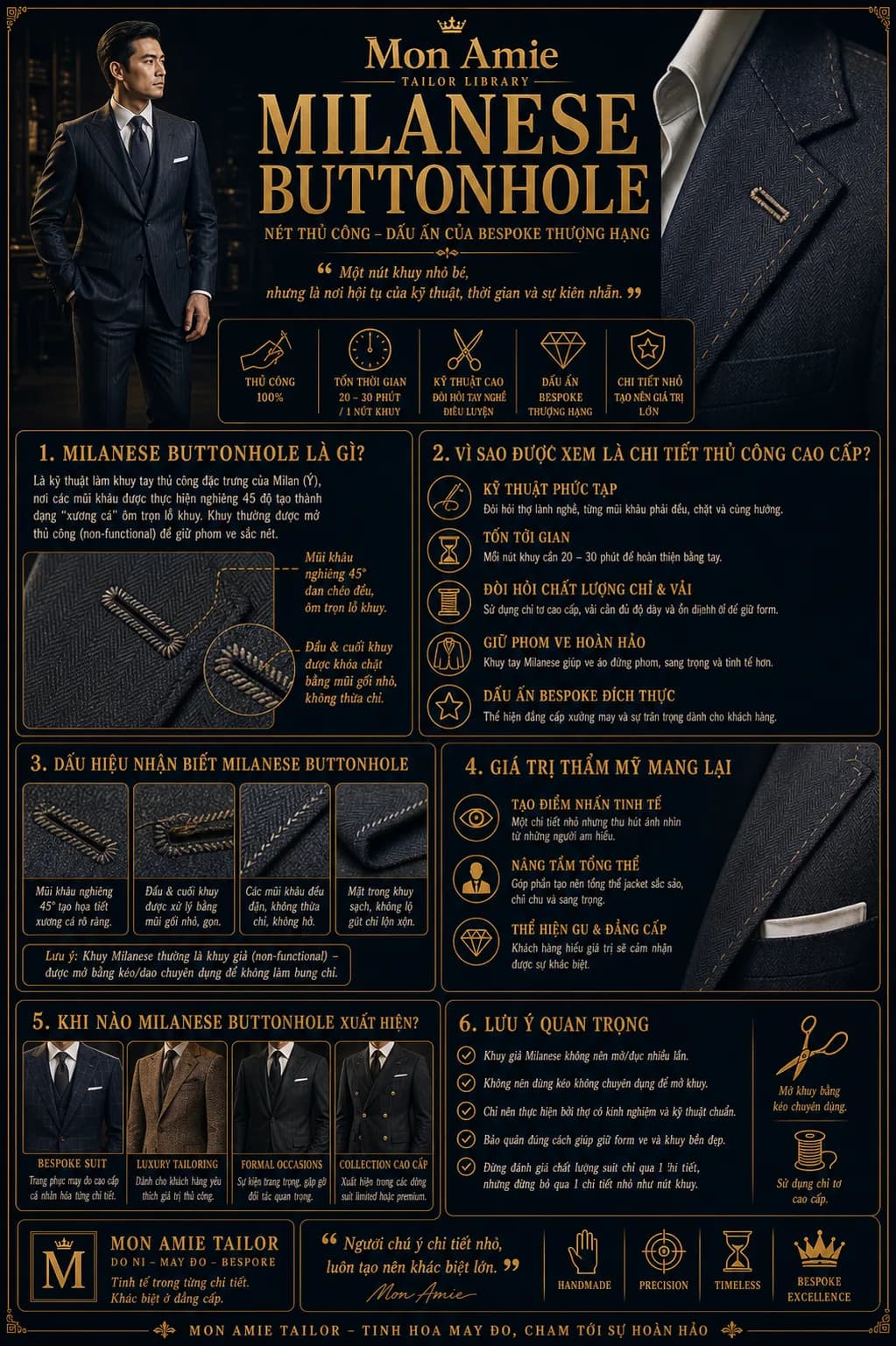
What Is a Milanese Buttonhole? The Peak of Bespoke
The Milanese buttonhole is hand-sewn in 20-30 minutes and marks the finest bespoke. How to recognise it, its value and how to care for it.
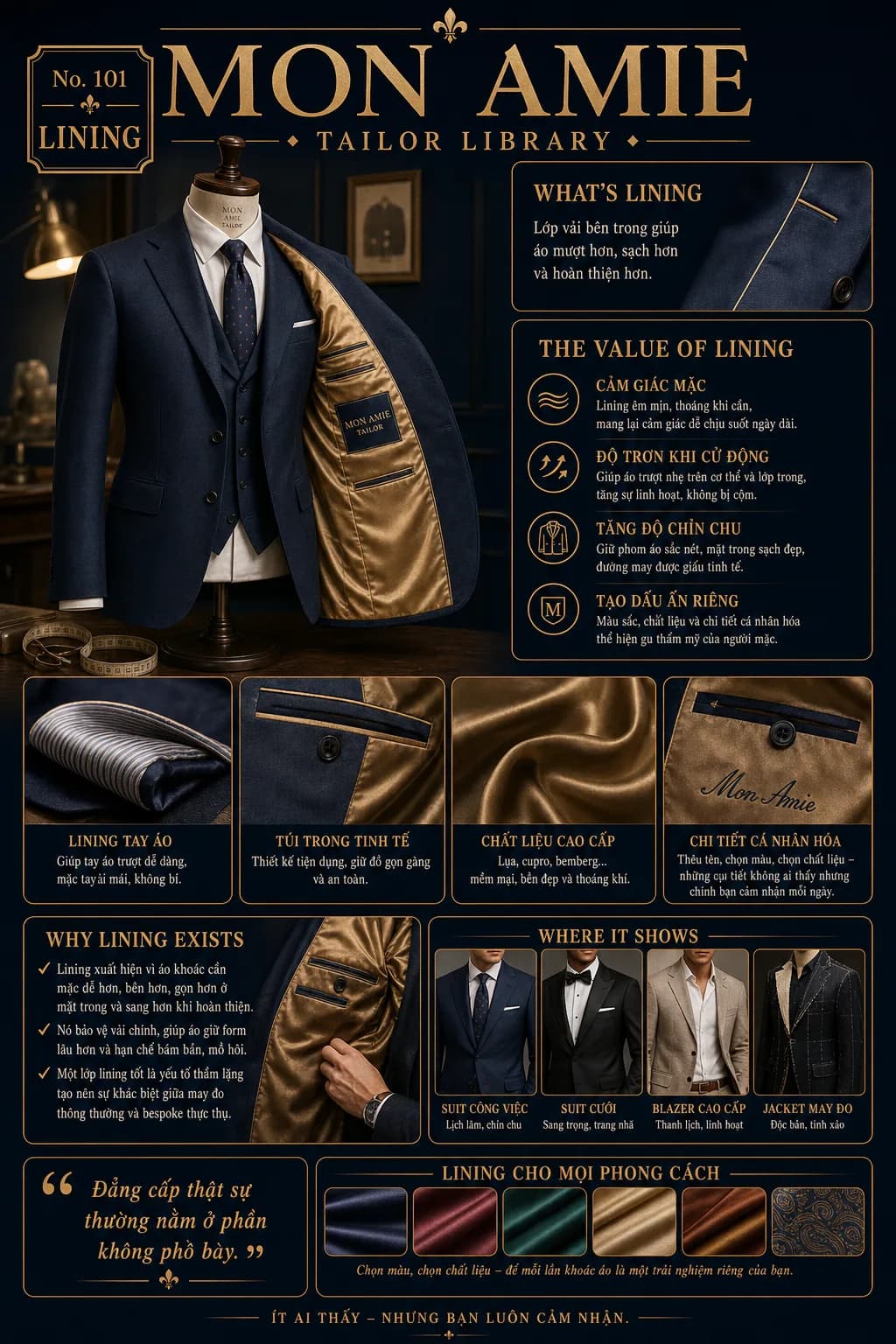
What Is Lining? The Hidden Layer That Defines a Suit
Lining is the layer almost nobody sees, yet it shapes how a made-to-measure suit feels, holds its form and carries your personal signature.
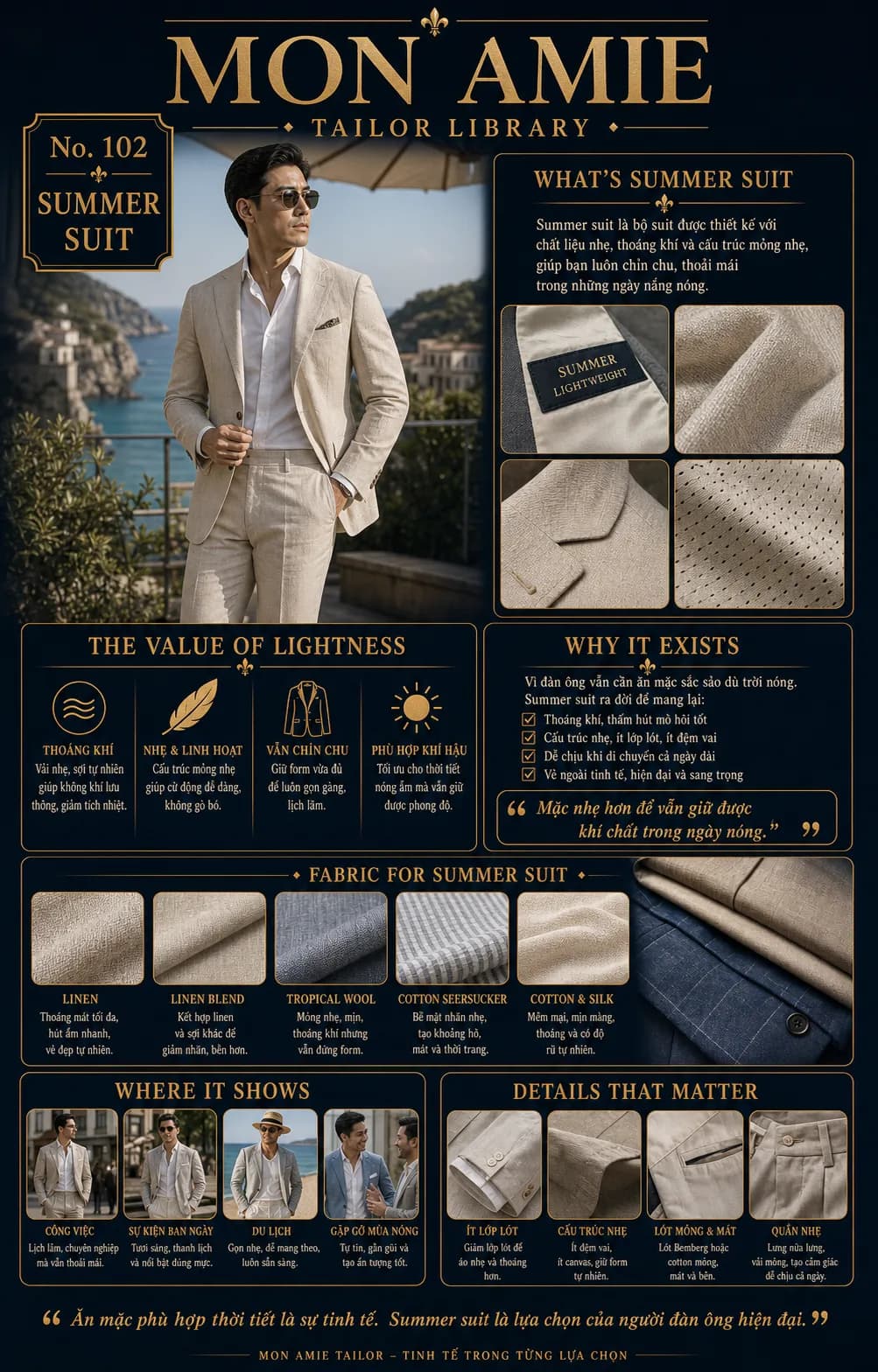
What Is a Summer Suit? A Modern Man's Warm-Weather Answer
A summer suit uses light, breathable cloth and a soft construction to keep you polished and comfortable through the hottest days.
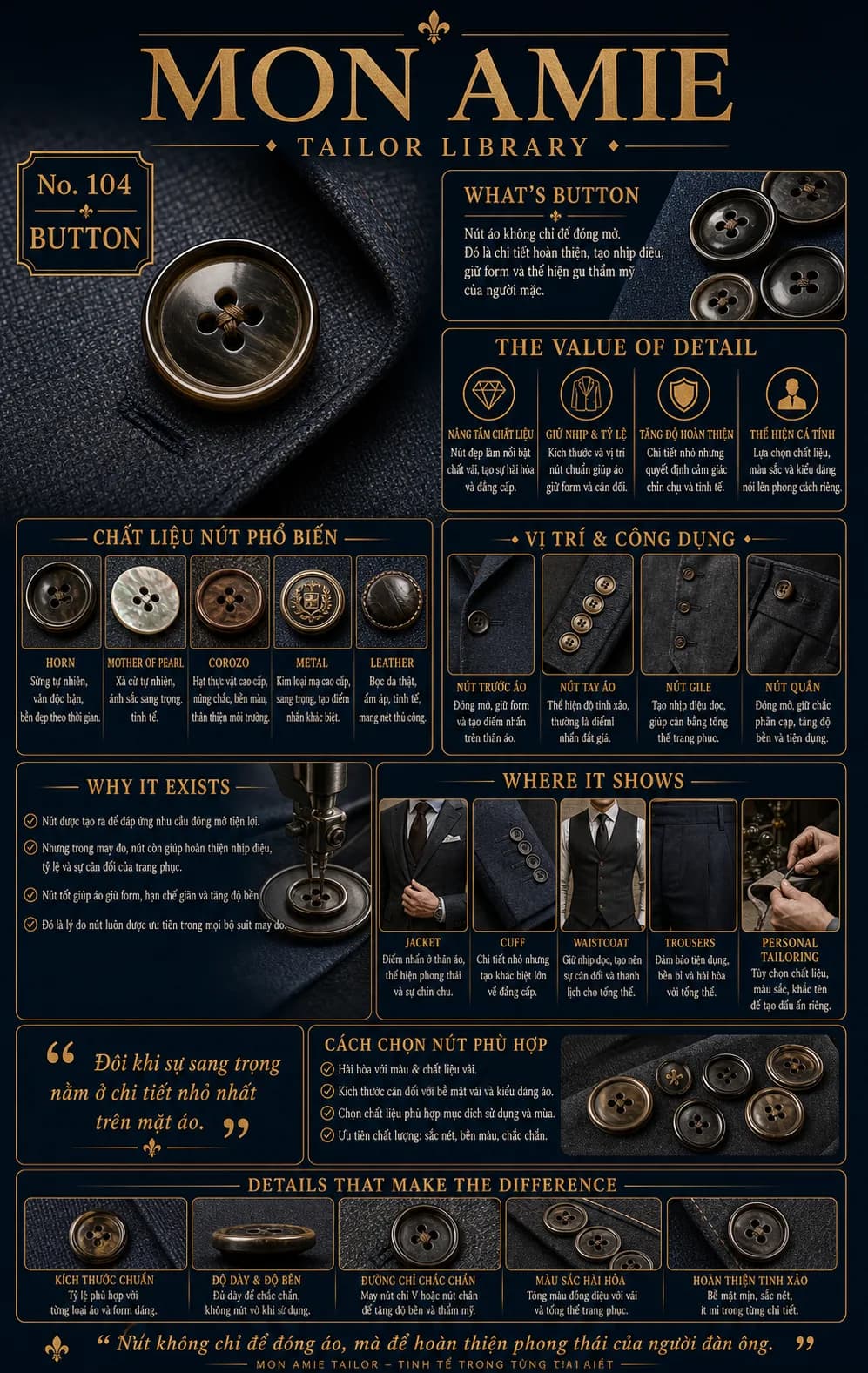
Suit Buttons: The Small Detail That Defines a Suit
Suit buttons do more than fasten. Explore horn, mother of pearl and corozo, where each row sits, and how to choose well with Mon Amie.
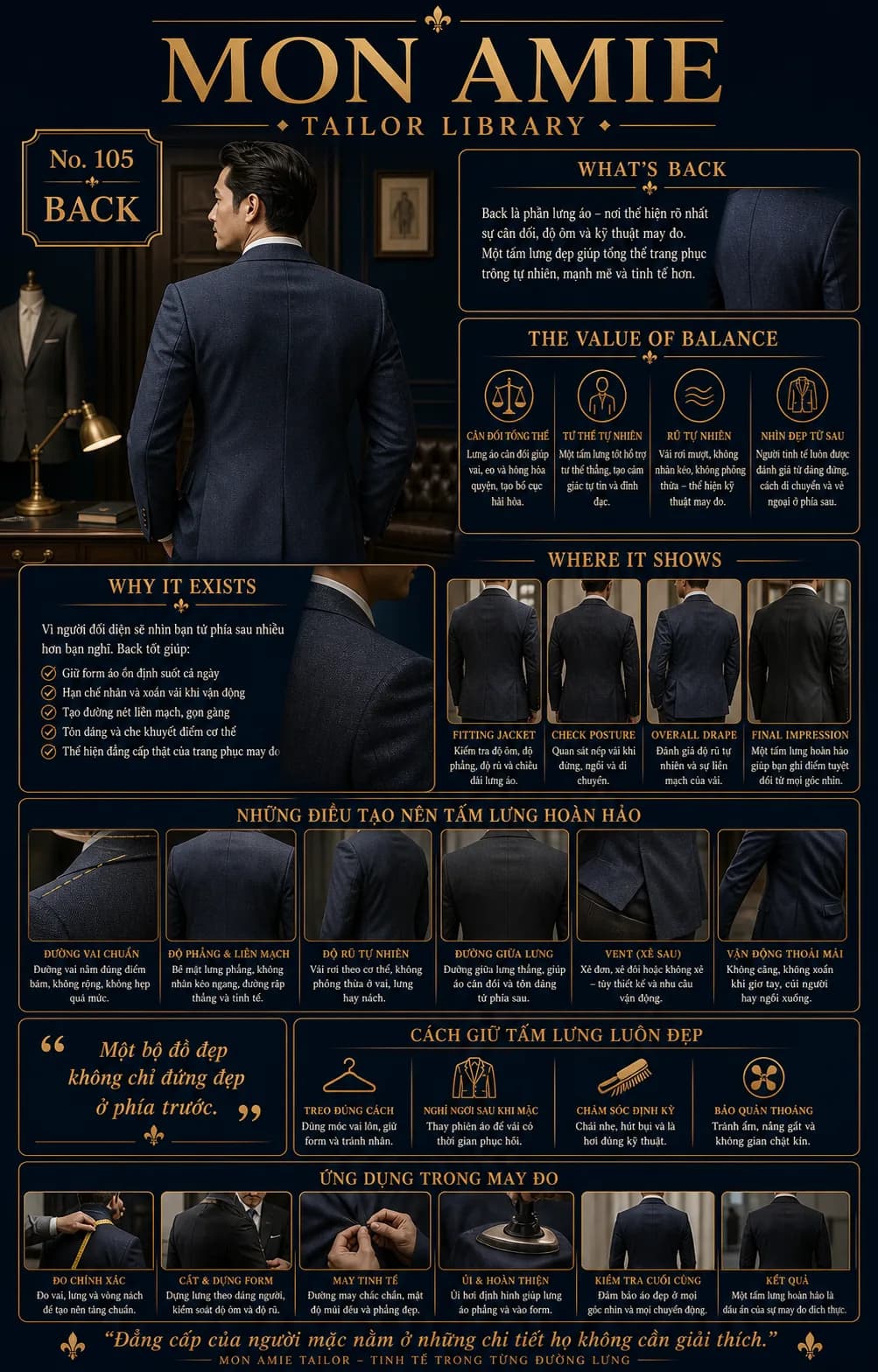
The Suit Back: Why It Reveals True Tailoring Quality
The back of a jacket shows tailoring most honestly: fit, drape, the centre seam and the vent. Learn to judge a suit properly.
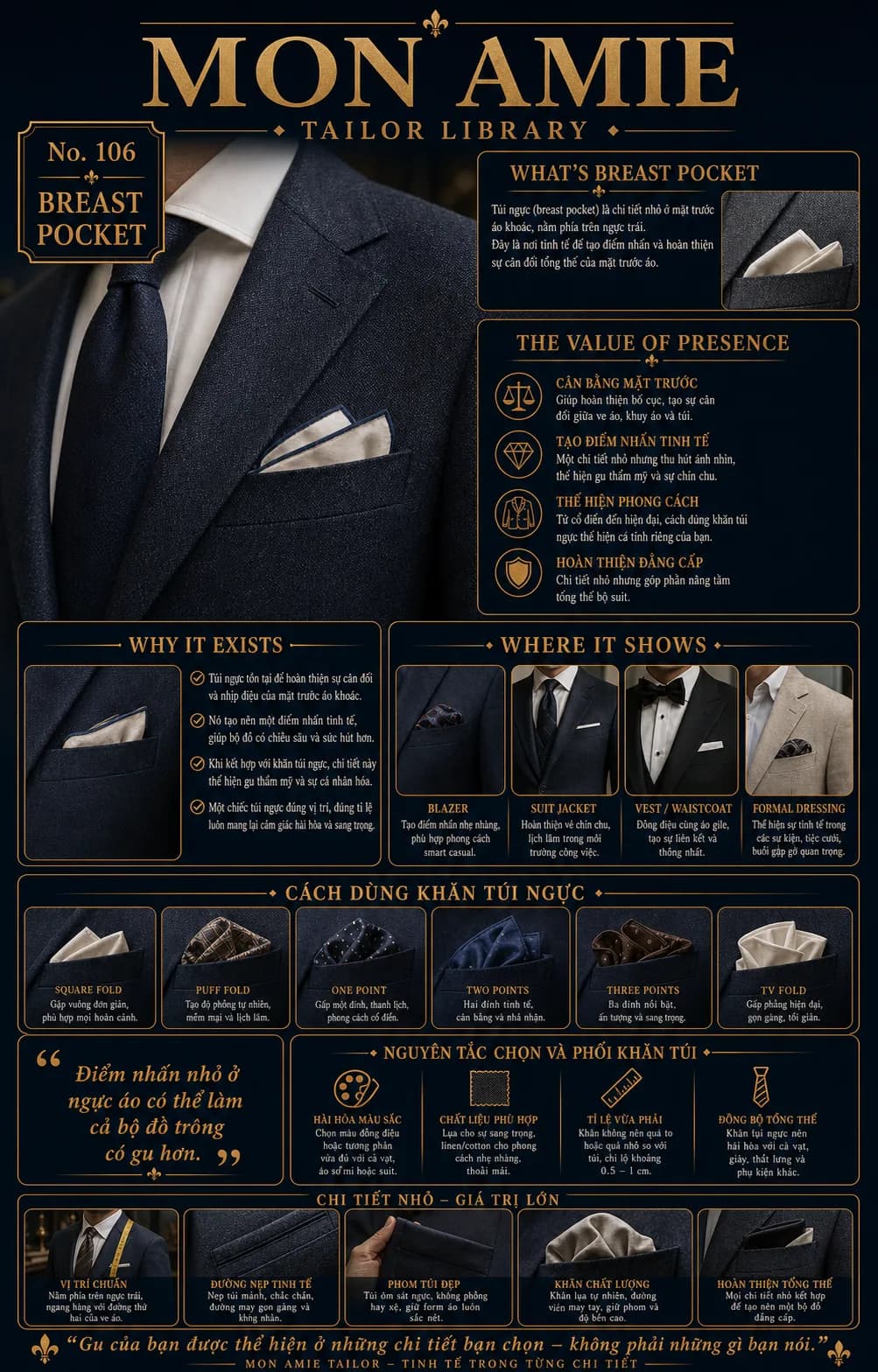
What Is a Breast Pocket? Pocket Squares and How to Fold Them
The breast pocket is a small detail that defines the focal point of a jacket front. Learn its purpose and six classic pocket square folds.
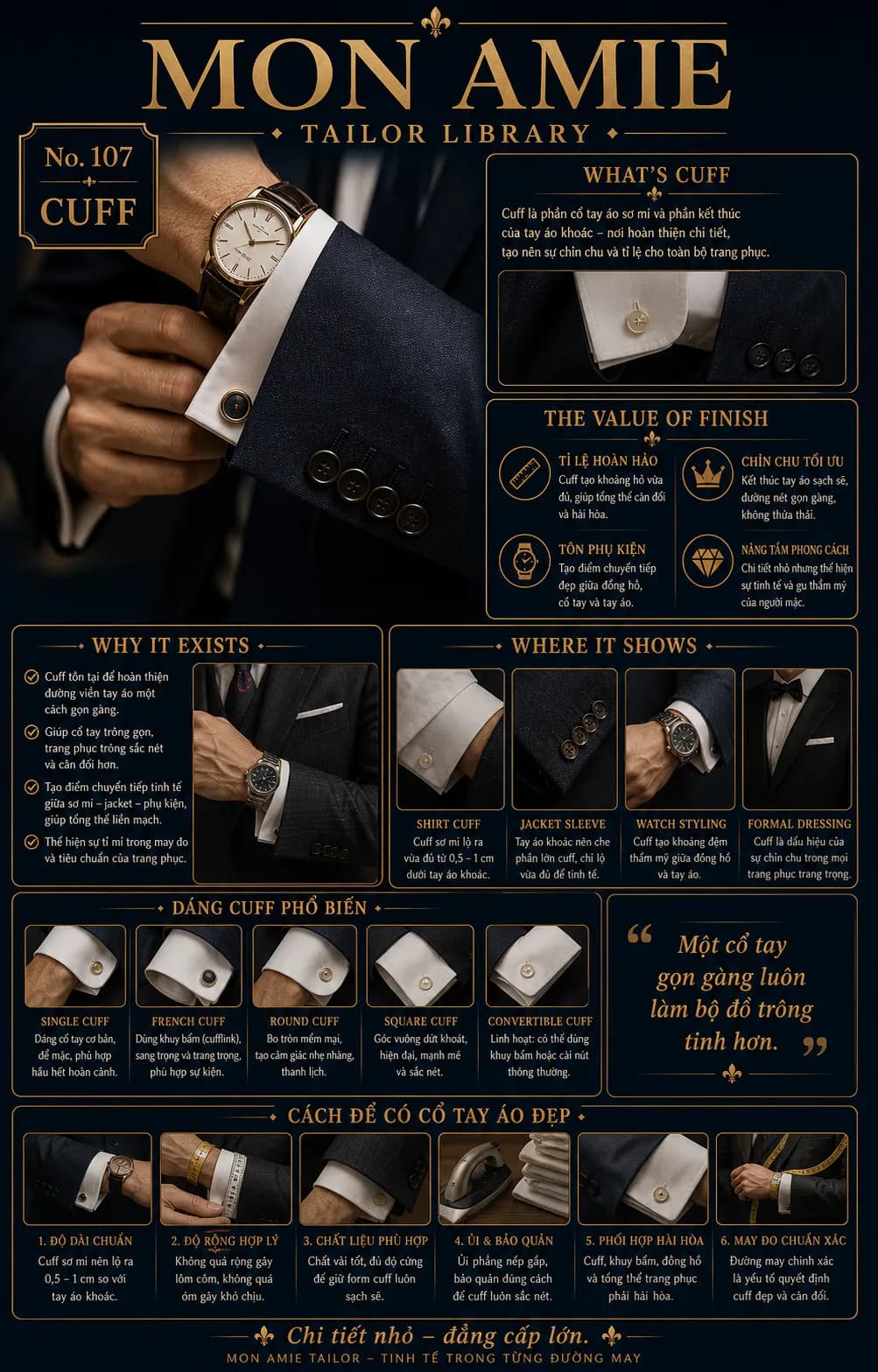
What Is a Cuff? The Small Detail That Finishes a Suit
The cuff finishes the sleeve, and the 0.5–1 cm of shirt on show decides how polished you look. Cuff styles and how to get them right.
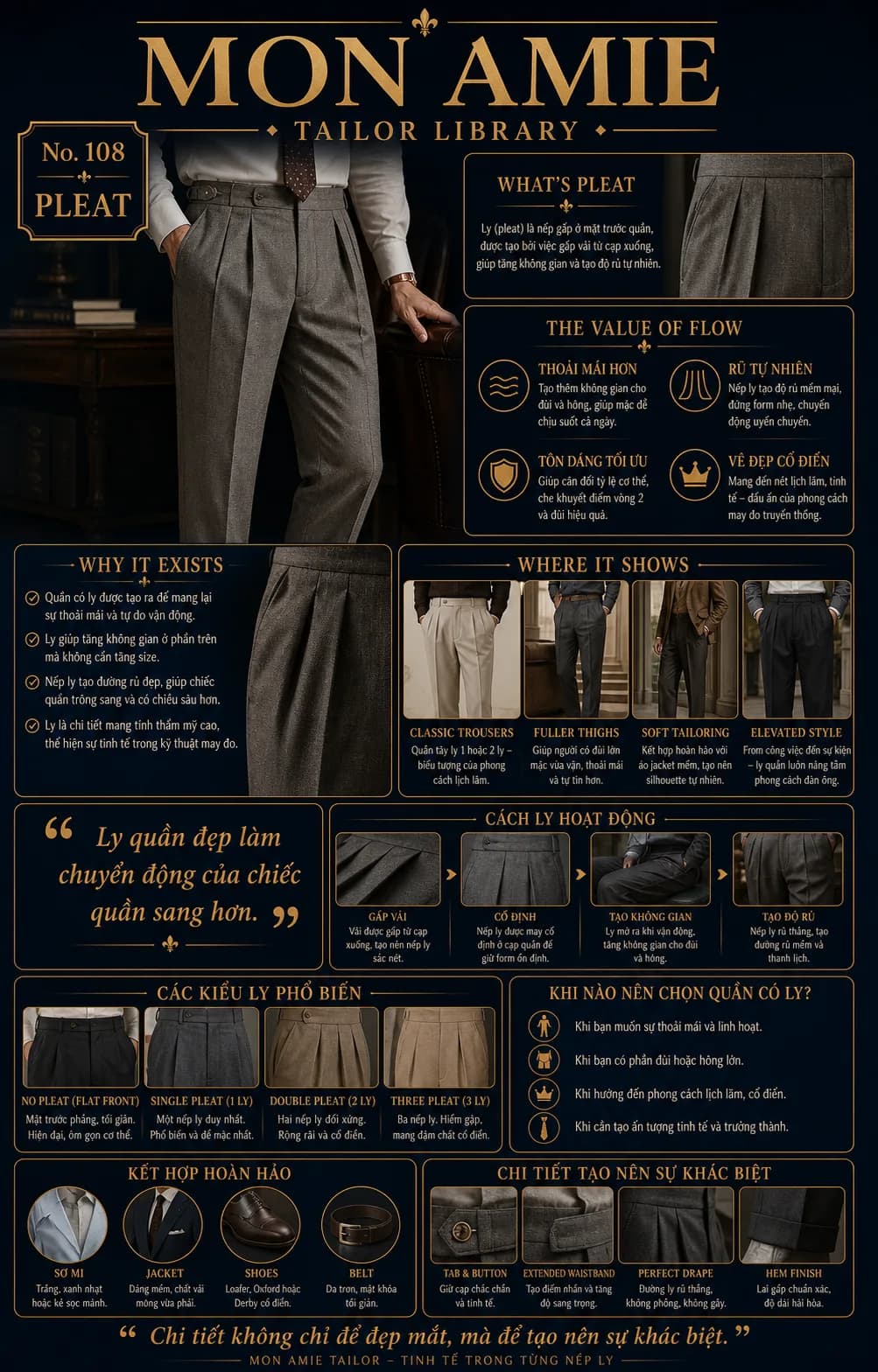
What Are Pleats on Trousers? Comfort, Drape and Elegance
Pleats are folds at the front waistband that give trousers comfort, drape and elegance. Single, double and triple pleats, and when to choose them.
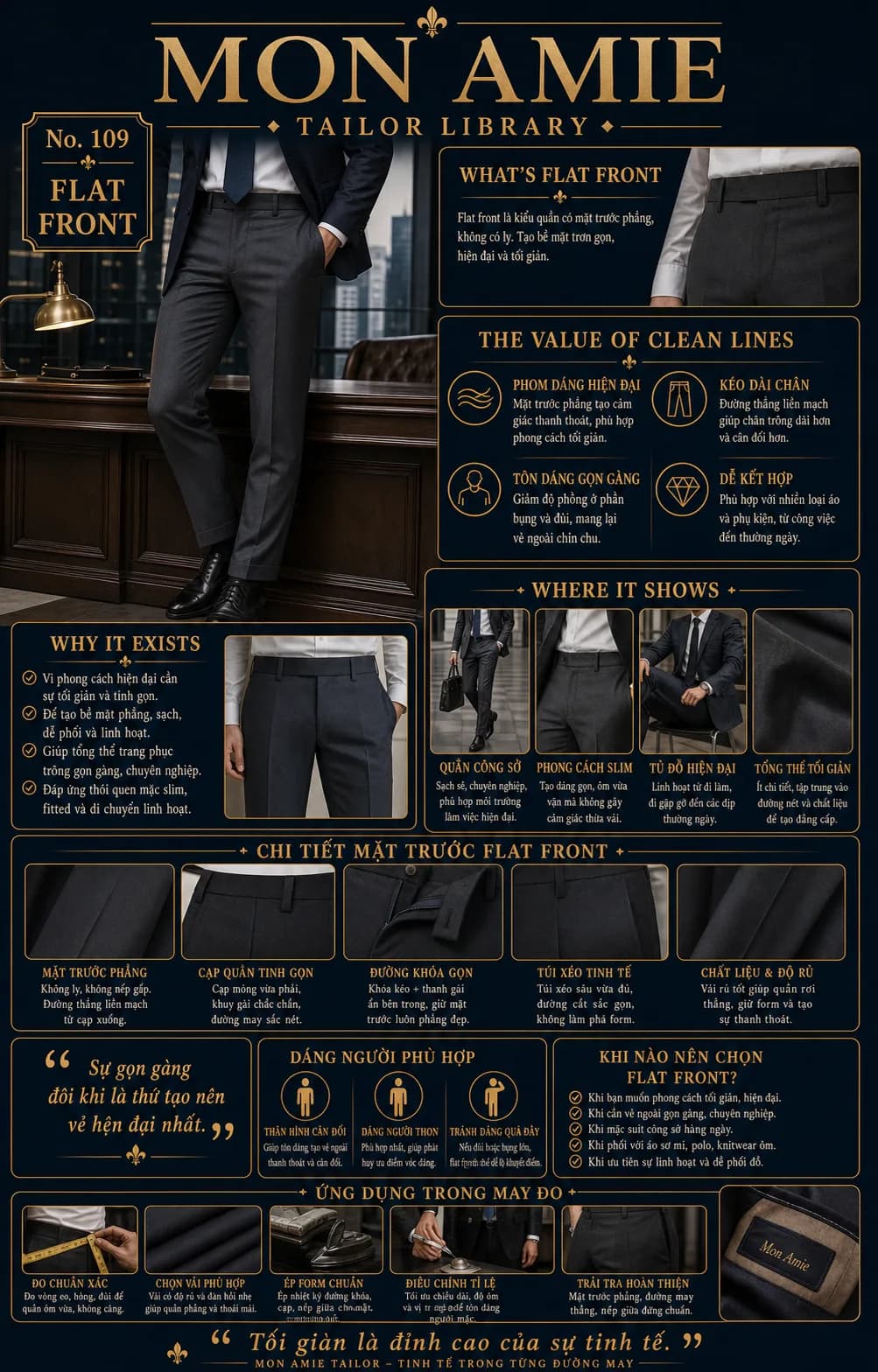
What Are Flat Front Trousers? The Modern Minimal Choice
What flat front trousers are, why an unpleated front became the standard of the modern suit, and who should choose them. Mon Amie explains.
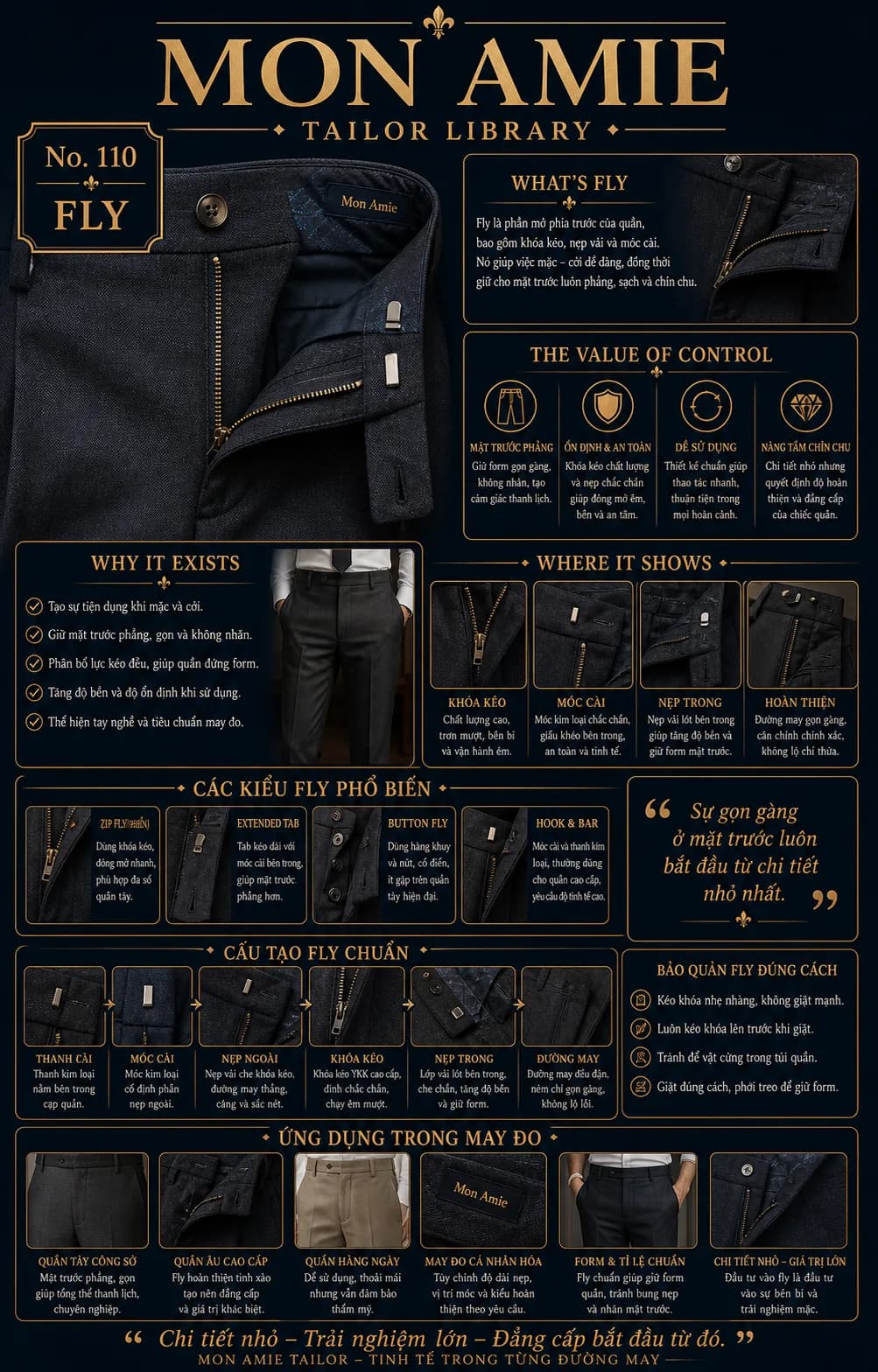
What Is a Trouser Fly? Construction and Tailoring Standards
The fly is the front opening of a trouser: zip, facings and closure. Its construction, the common fly styles and how to care for it properly.
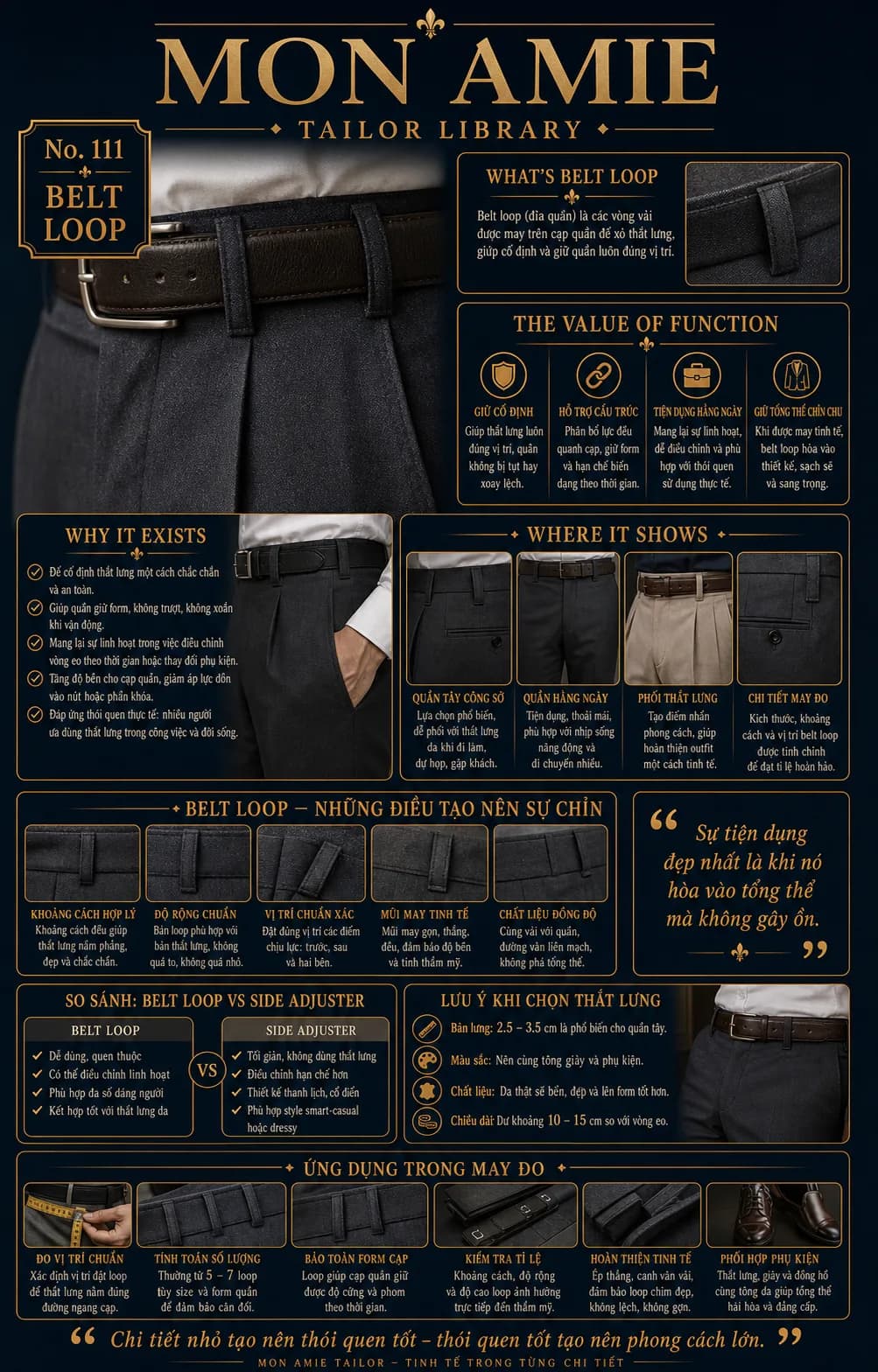
What Is a Belt Loop? Its Role in Tailored Trousers
A belt loop is the small detail that keeps your belt in place and your waistband in shape. Understand it, and your tailored trousers stay sharp.
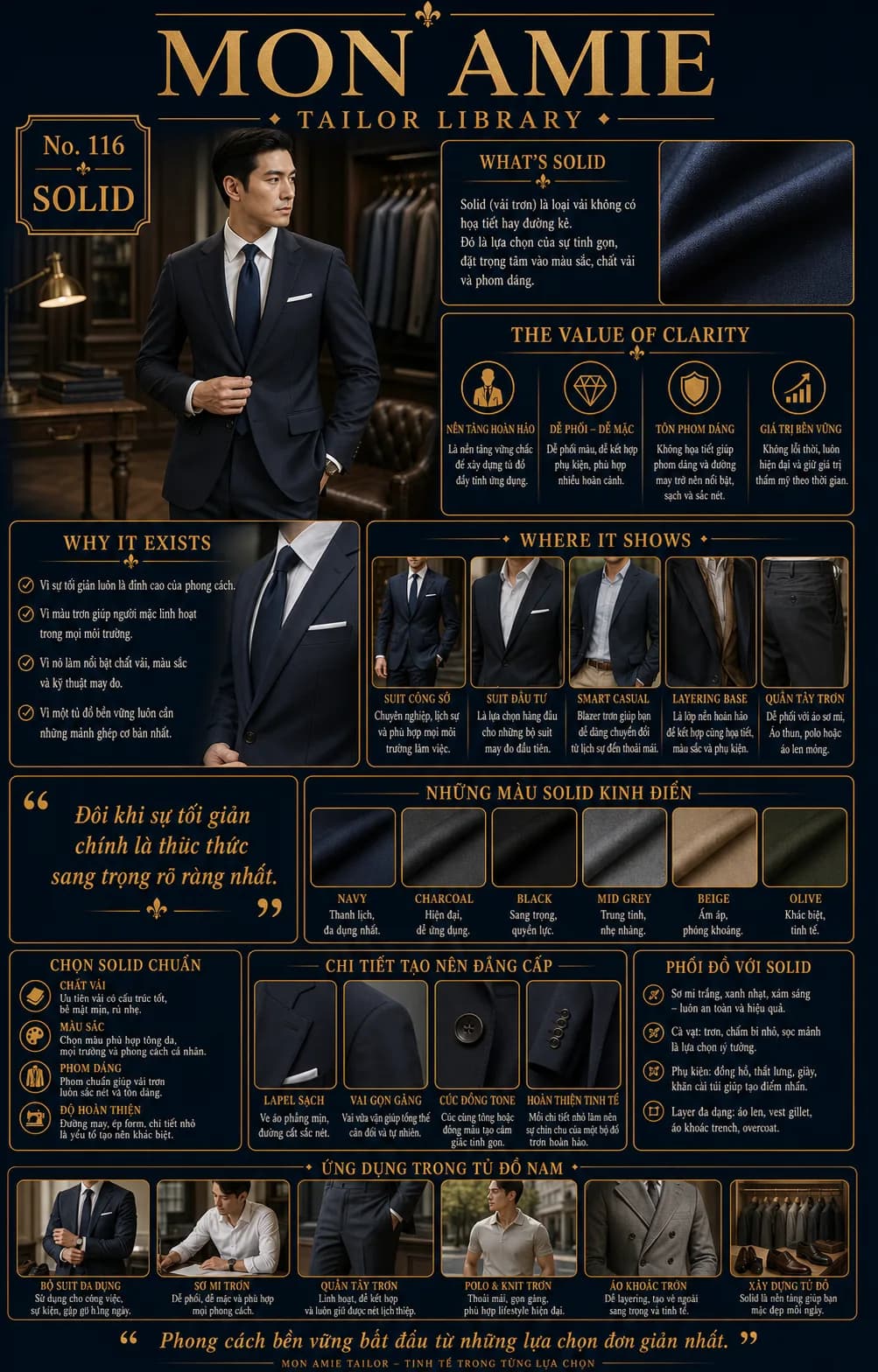
What Is Solid Fabric? The Power of Plain Cloth
What is solid fabric? Plain, pattern-free cloth is the foundation of a man's wardrobe. Mon Amie on its value, classic colours and how to wear it.
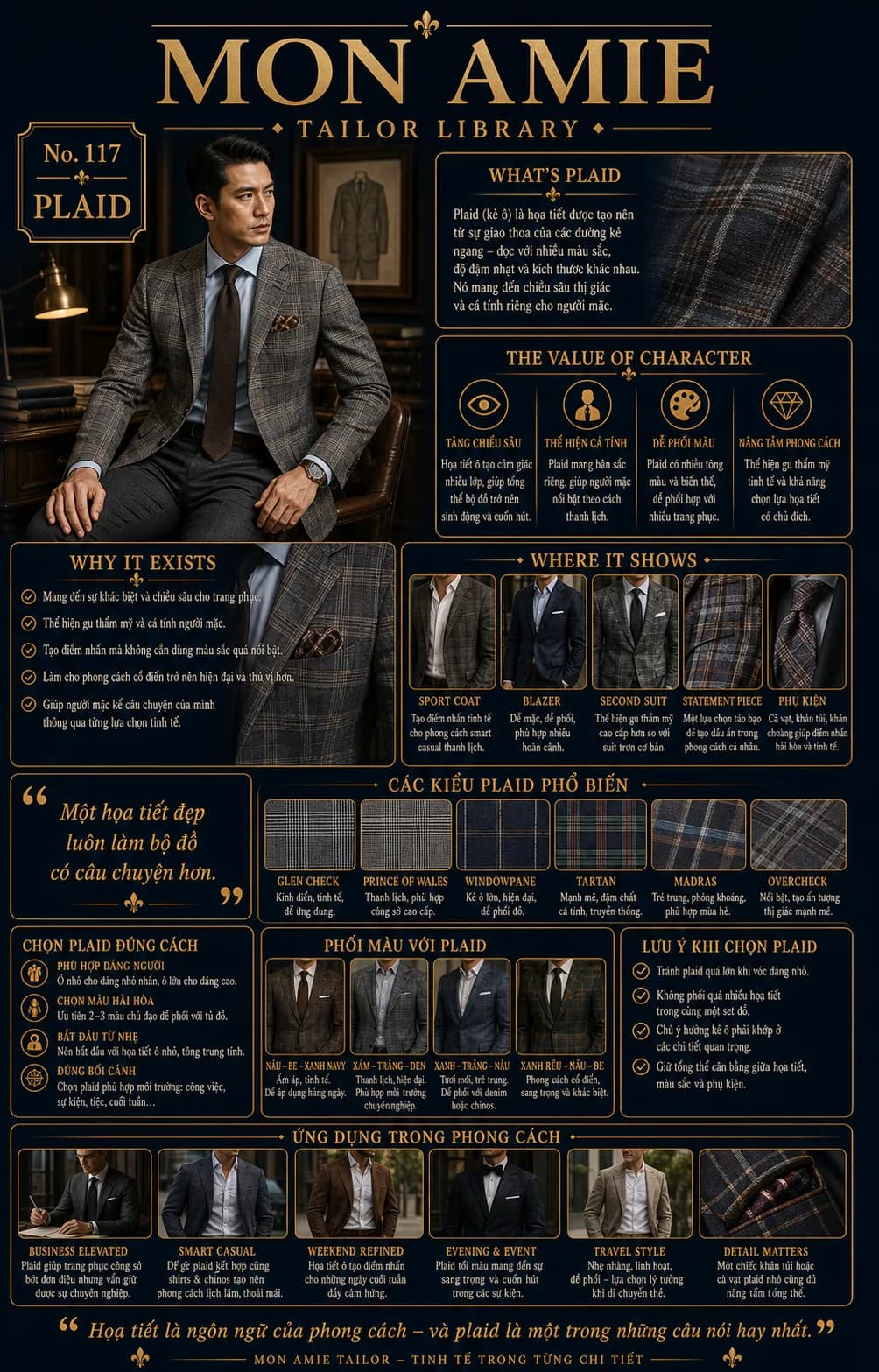
What Is Plaid? Choosing and Wearing a Plaid Suit
What is plaid? Understand the checked pattern, the common plaid families and how to choose and combine a plaid suit, guided by Mon Amie's artisans.
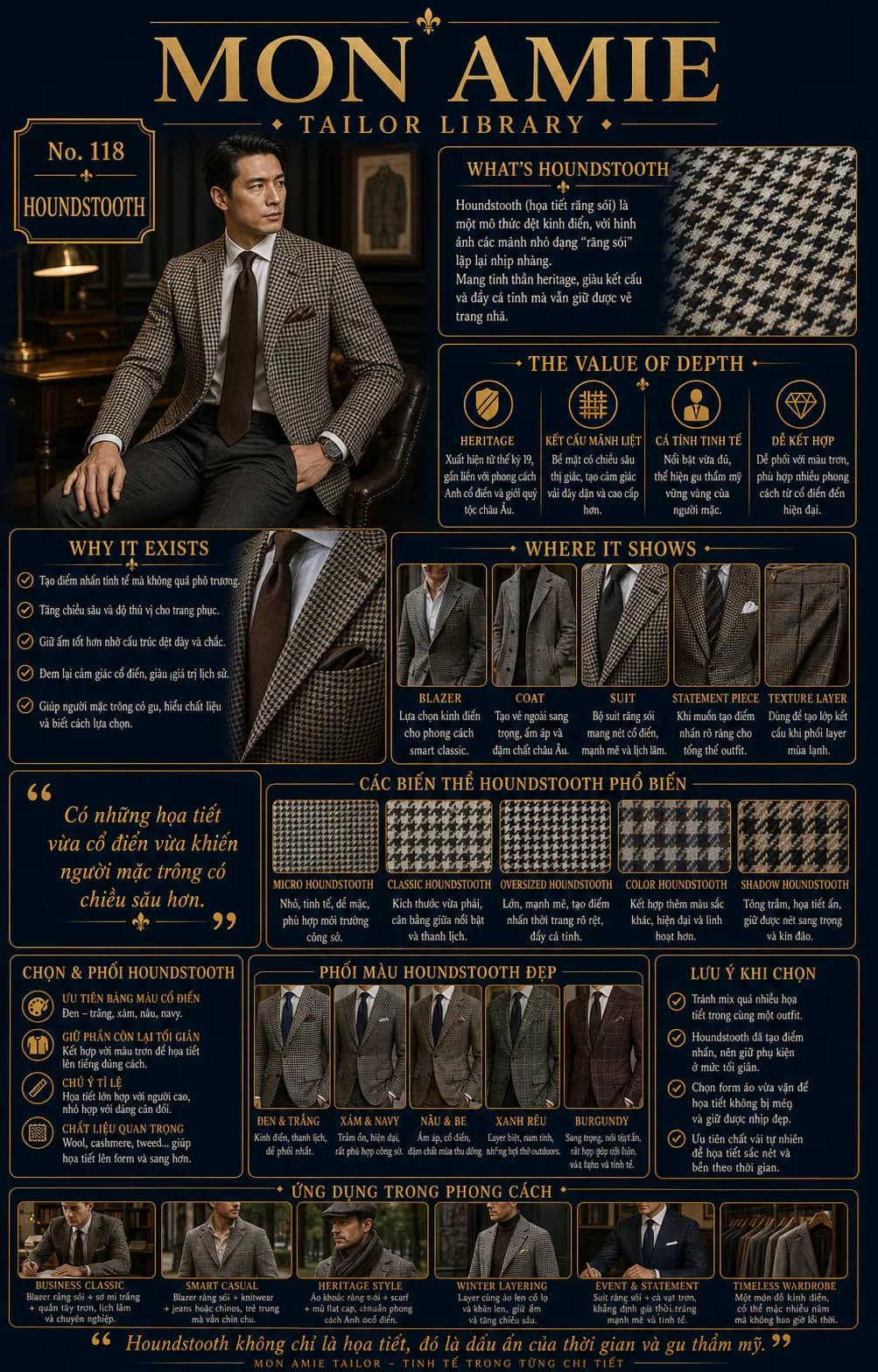
What Is Houndstooth? The Classic Weave in Tailoring
What is houndstooth? Explore the classic broken-check weave, its common variants and how to choose and wear it, guided by Mon Amie.
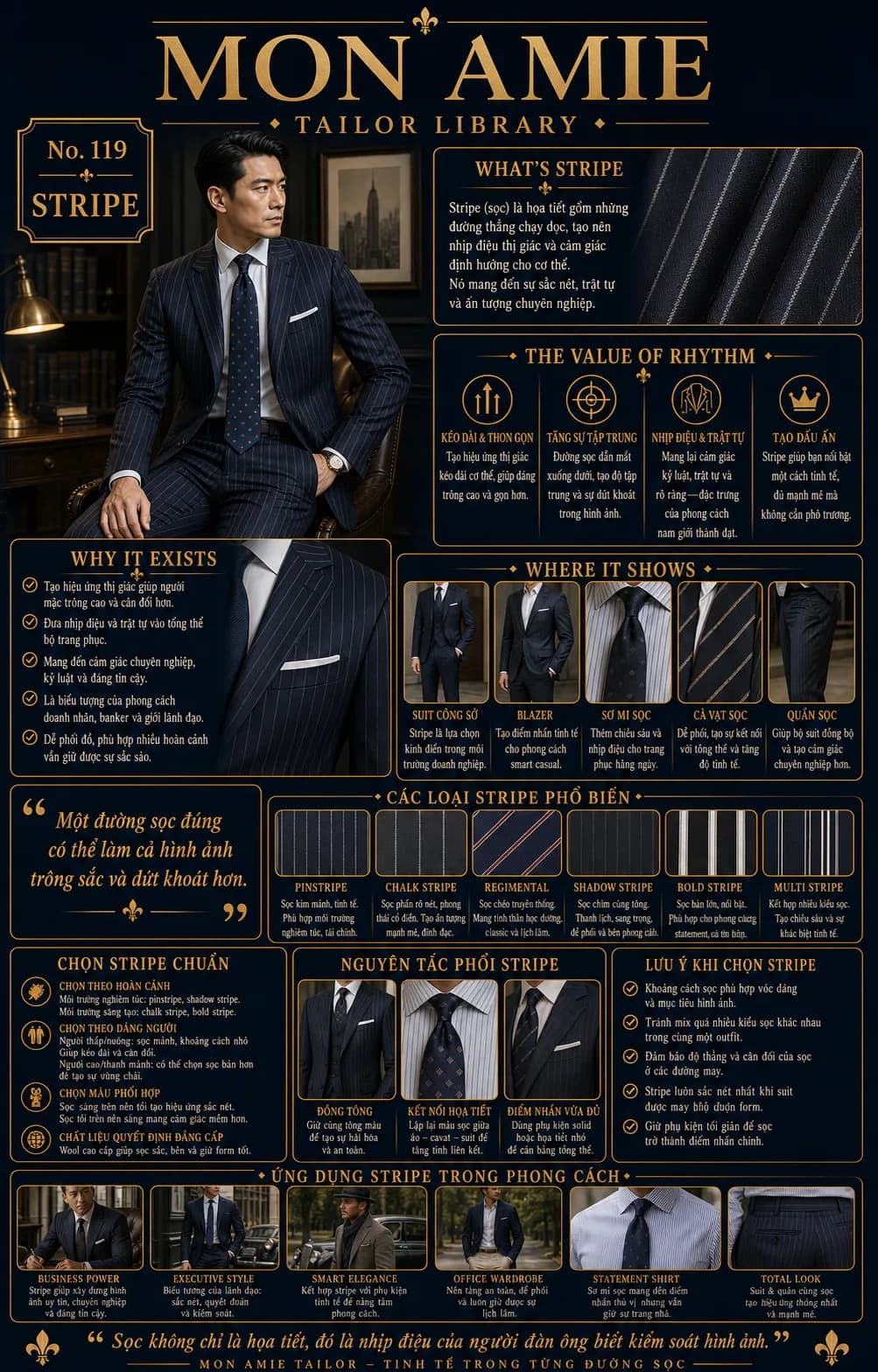
What Is a Stripe? Striped Suits and How to Choose
What is a stripe? Stripes lengthen the frame, set a rhythm and read professional. Mon Amie on pinstripe, chalk stripe and how to wear them.
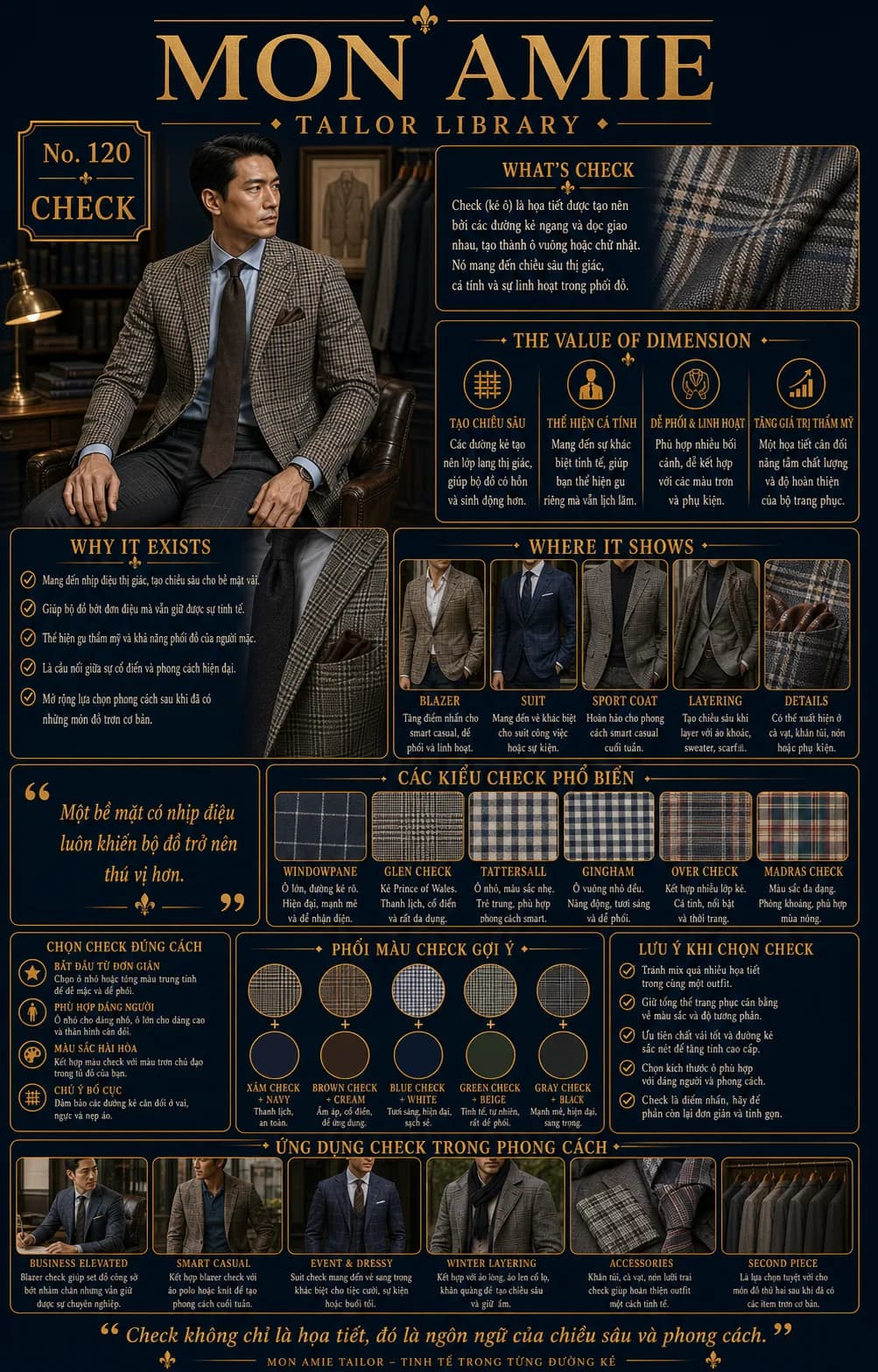
What Is Check? Checked Cloth and Depth in a Suit
What is check? Checked cloth brings depth and character to blazers and suits. Mon Amie on glen check, windowpane, gingham and how to wear them.
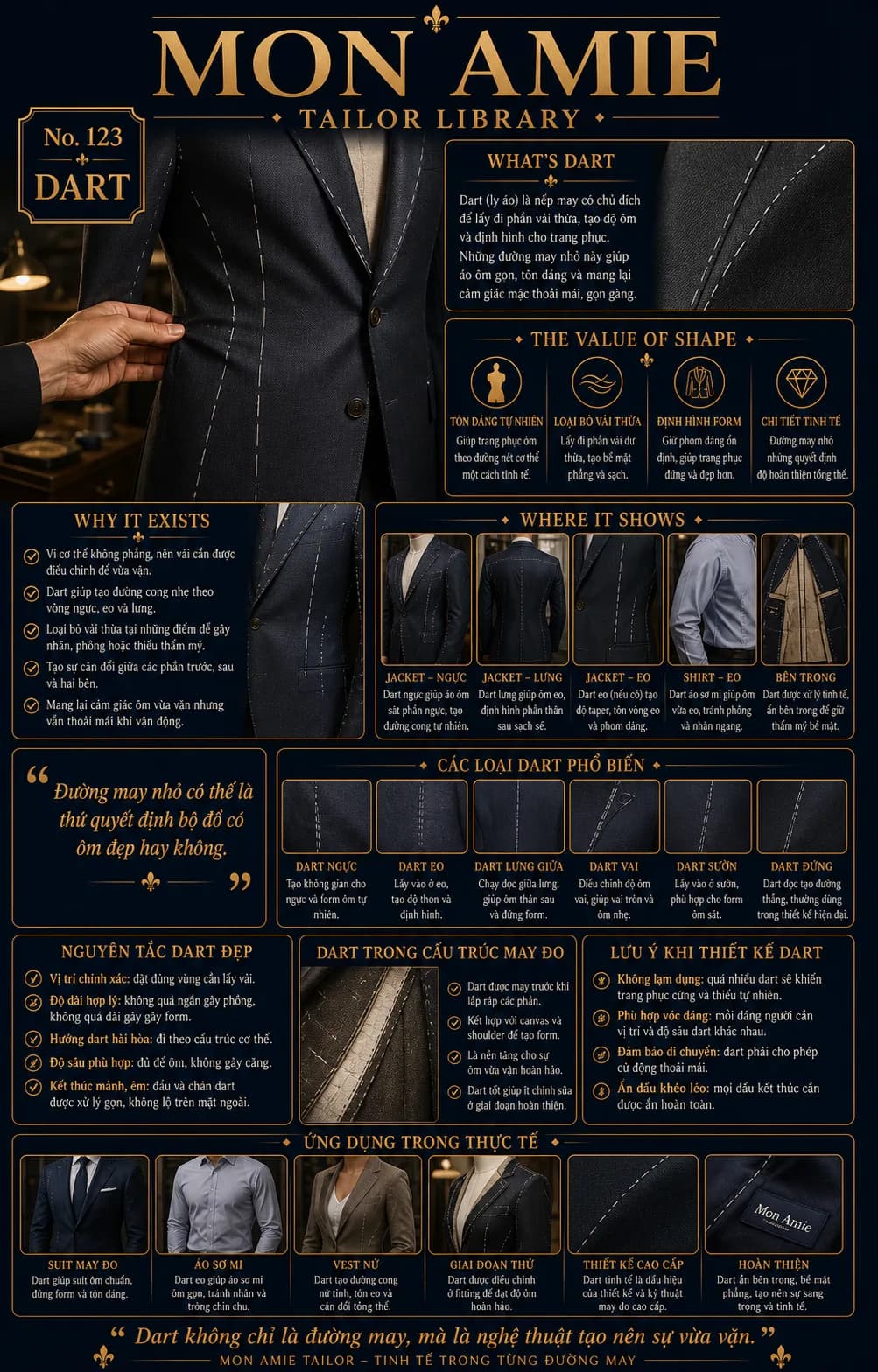
What Is a Dart? Shaping a Tailored Jacket
A dart is a stitched fold that removes surplus cloth to create shape and closeness. Mon Amie explains the types of dart and the rules for a fine one.
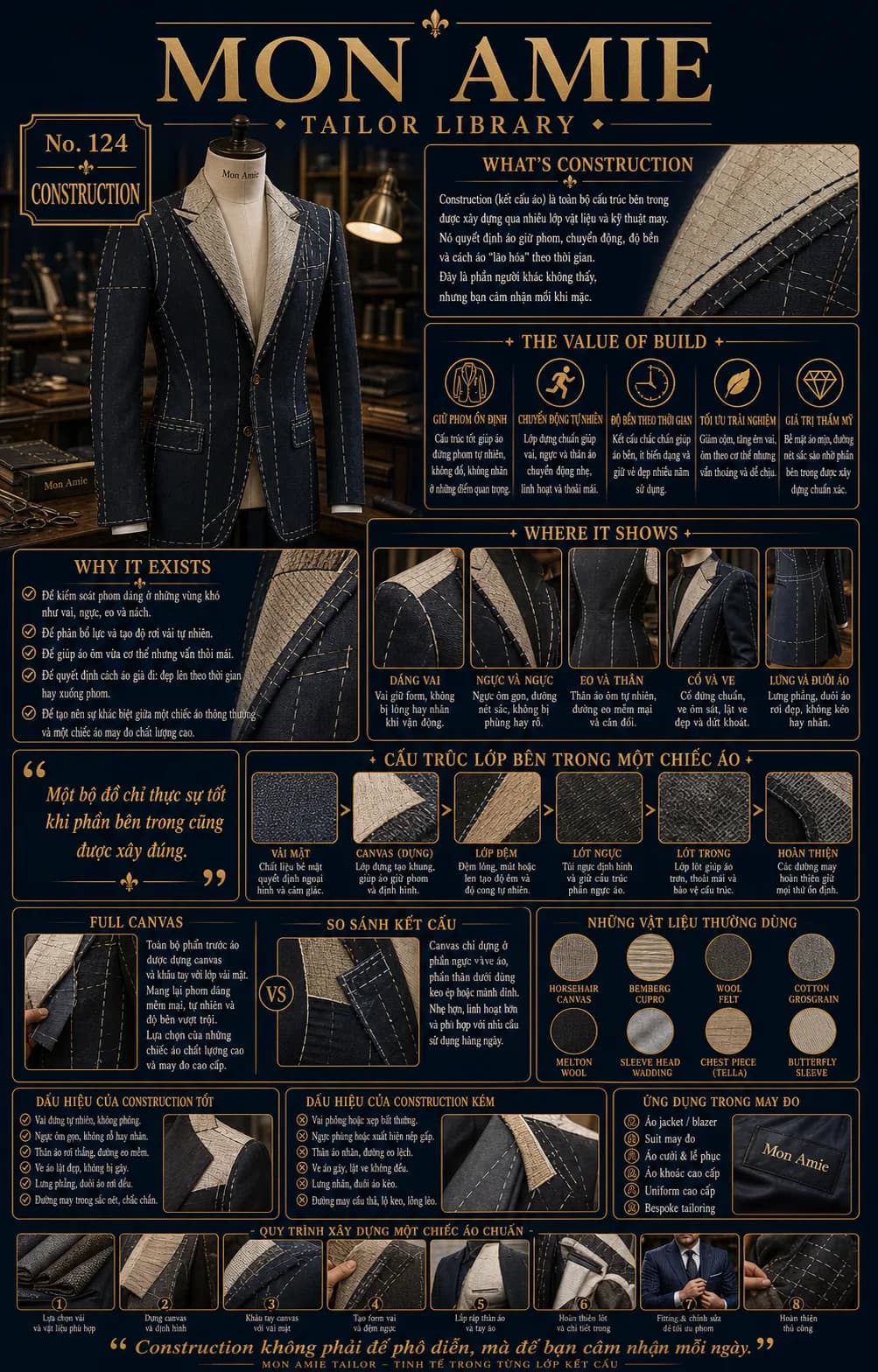
What Is Construction? The Inner Structure of a Jacket
Construction is the inner structure of a jacket — what decides shape, durability and how it wears. Mon Amie explains the layers and full canvas.
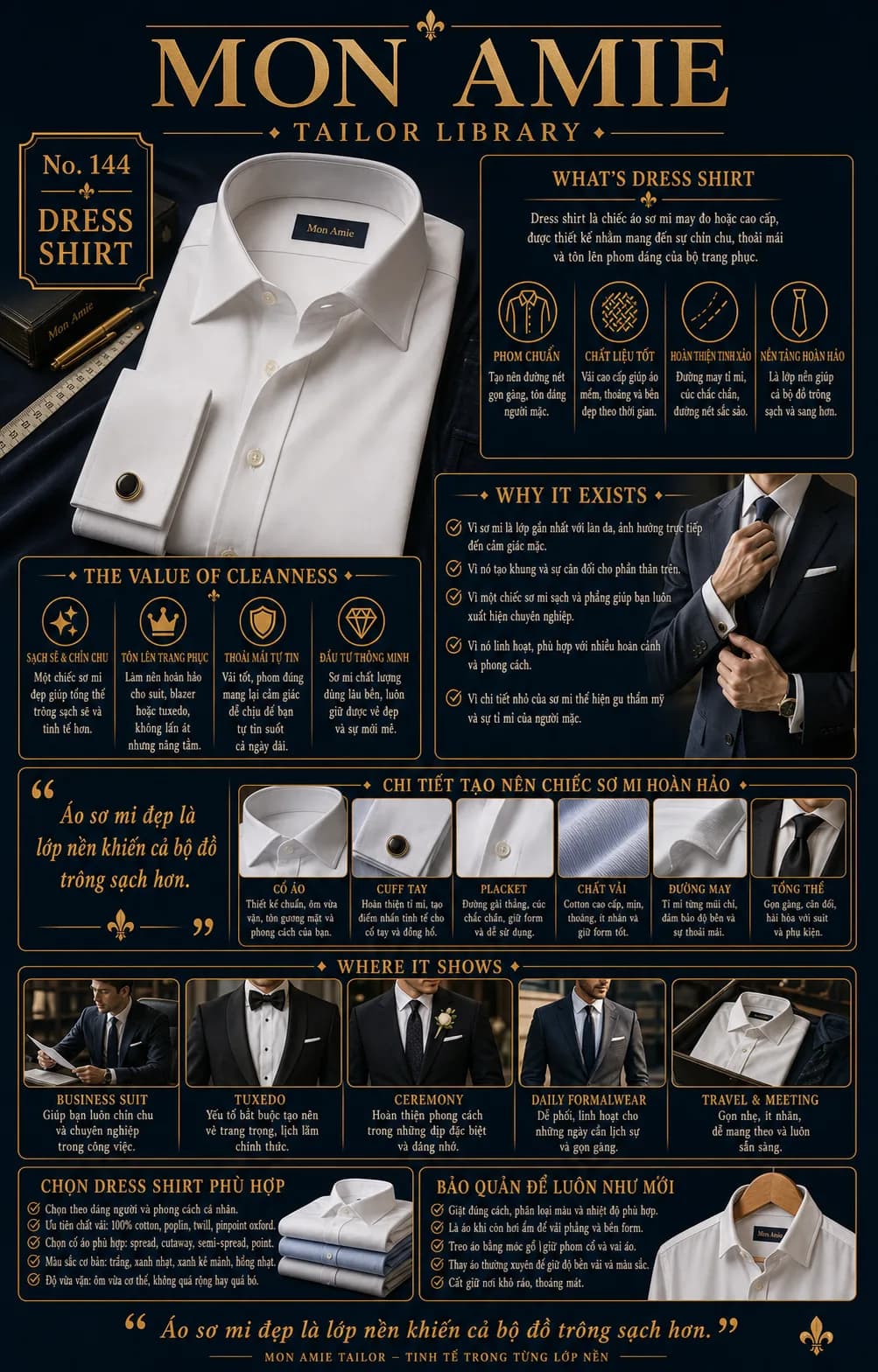
What Is a Dress Shirt? The Foundation of Every Suit
A dress shirt is the tailored layer that decides how clean a suit looks. Mon Amie guides you on collars, cloth, fit and proper shirt care.
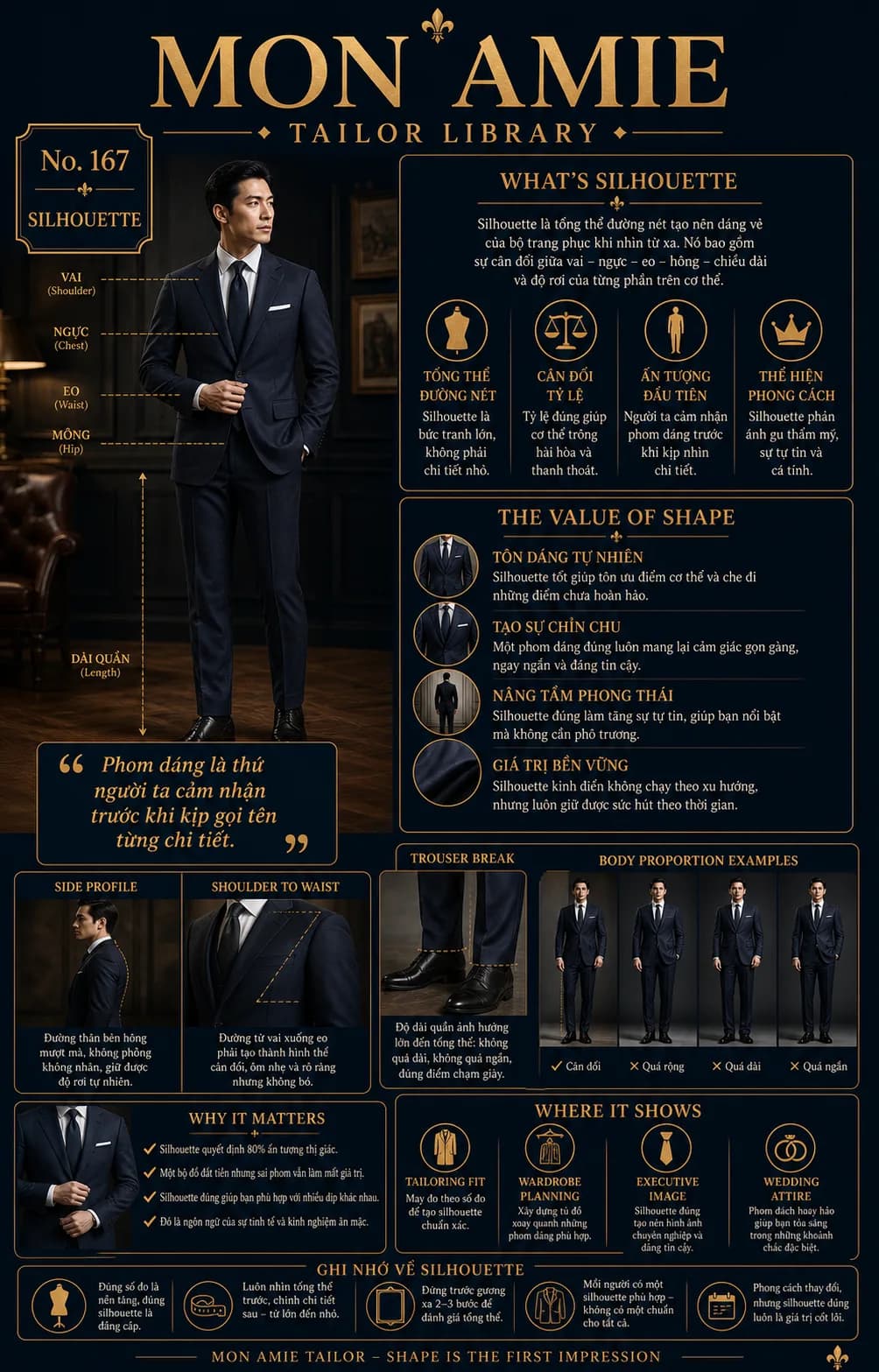
What Is Silhouette? The Suit Shape That Decides Everything
Silhouette is the overall line of a suit seen from a distance. Understand it well and your suit will flatter, refine, and hold its value for years.
What is a lounge suit? The foundation of a man's wardrobe
The lounge suit is menswear's most versatile foundation: formal enough for business, comfortable enough for daily life. Understand it to invest well.
What is a travel suit? Tailoring built for the road
A travel suit is optimised for packed schedules: wrinkle-resistant cloth and fast shape recovery, from early flight to afternoon meeting.
What is a Formal Suit? Dressing for occasions that matter
A formal suit sits a notch above business wear. How to recognise one by colour, cloth and detail — and how to choose yours for a big occasion.
What is a Casual Suit? Tailoring made for everyday life
A casual suit reinterprets tailoring in a softer, lighter, freer way. How to spot one by cloth, construction and detail — and wear it well.
What is a Morning Suit? Formal daytime dress explained
The morning suit — morning coat, striped trousers and waistcoat — is the most formal daytime dress. Its rules, occasions and how to wear it.
What is a Tailcoat? The coat at the heart of white tie
The tailcoat is cut squarely at the waist in front with long tails behind — the centre of white tie, the highest level of evening dress.
What Is a Prince Coat? Ceremonial Wear Beyond the Suit
What a prince coat is, how it differs from a suit or sherwani, when to wear one, and how to have it tailored — from Mon Amie's artisans.
What Is a Safari Jacket? Practical Style Done Right
What a safari jacket is, how to spot its four bellows pockets and belt, and how to style and fabric it for a hot climate — from Mon Amie.
What Is an Armhole? The Detail That Decides Comfort
What an armhole is, why a high armhole is actually more comfortable, and how to test it at a fitting — tailoring knowledge from Mon Amie.
What Is a Ticket Pocket? A Small Detail with History
What a ticket pocket is, its British railway origins, and when to add one to a tailored jacket — and when not to — from Mon Amie.
What Is a Sleeve Head? The Detail That Shapes a Suit's Shoulder
The sleeve head is the crown of the sleeve where it meets the body — the detail that decides how clean a suit's shoulder and sleeve line look.
What Is the Gorge Line? The Seam That Sets a Suit's Proportions
The gorge line is the seam joining collar and lapel — a few centimetres that govern lapel height, chest proportion, and a jacket's whole character.
What Are Suit Pants? The Trousers' Role in a Complete Suit
Pants — suit trousers — are the lower half of the suit, governing leg proportion, stance, and how polished the whole outfit reads.
What Is a Single Pleat? One Front Pleat, Quiet Comfort
A single pleat is one fold on each front of a trouser — the balance point between a flat front's clean line and a double pleat's classic ease.
What Is a Double Pleat? Twin Front Pleats in Tailoring
Double-pleat trousers carry two folds on each front panel. Why this classic detail is back, who it flatters, and how to order it right.
What Is Mid Rise? The Middle Trouser Rise Explained
Mid rise places the waistband between navel and hip — the safest rise for modern tailored trousers. How to choose the right rise for your build.
What Is Low Rise? The Low Waistband and Its Limits
Low rise places the waistband well below the natural waist, resting on the hips. When it works, and when it ruins a suit — Mon Amie explains.
What Is the Outseam? The Outer Seam and Trouser Length
The outseam is the outer leg seam and the outer-length measurement from waistband to hem. Understand it to get length and break exactly right.
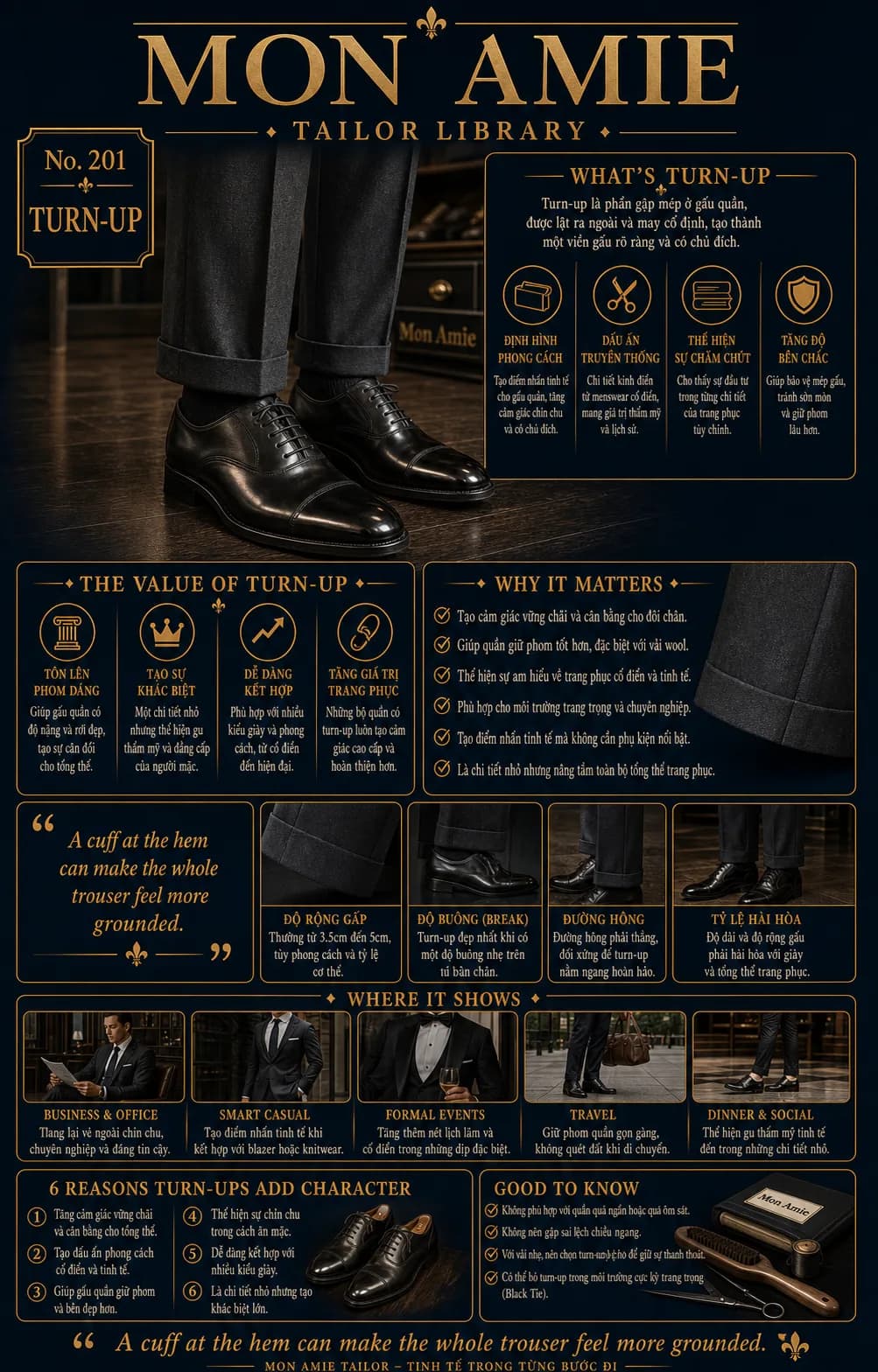
What Is a Turn-Up? Trouser Cuffs in Made-to-Measure
A turn-up is a folded, stitched hem at the bottom of the trouser. Mon Amie on its value, correct proportions and when to choose one.
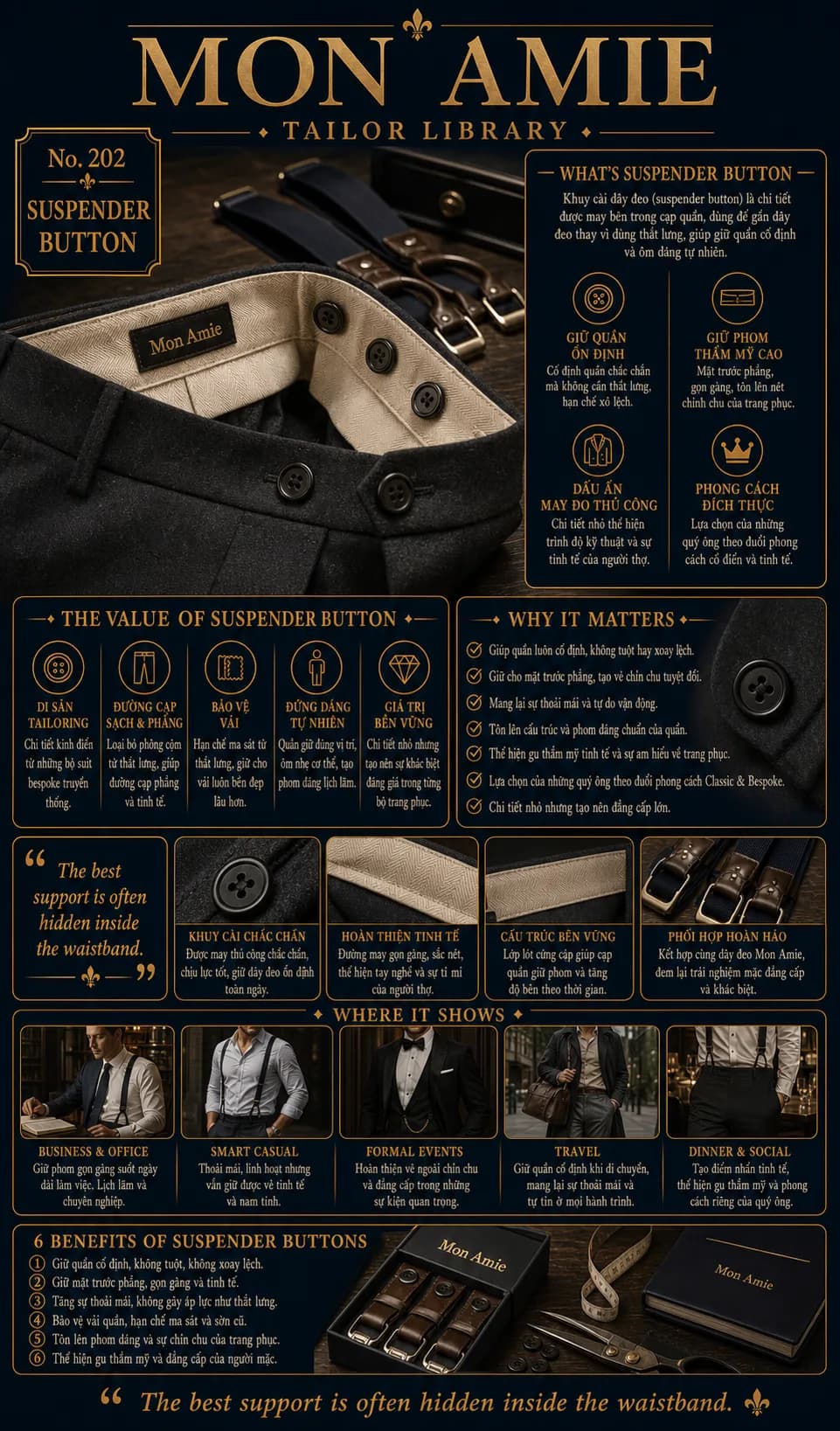
What Are Suspender Buttons? Braces Buttons Explained
Suspender buttons are sewn inside the waistband to carry braces instead of a belt. Mon Amie on the value of this quietly bespoke detail.
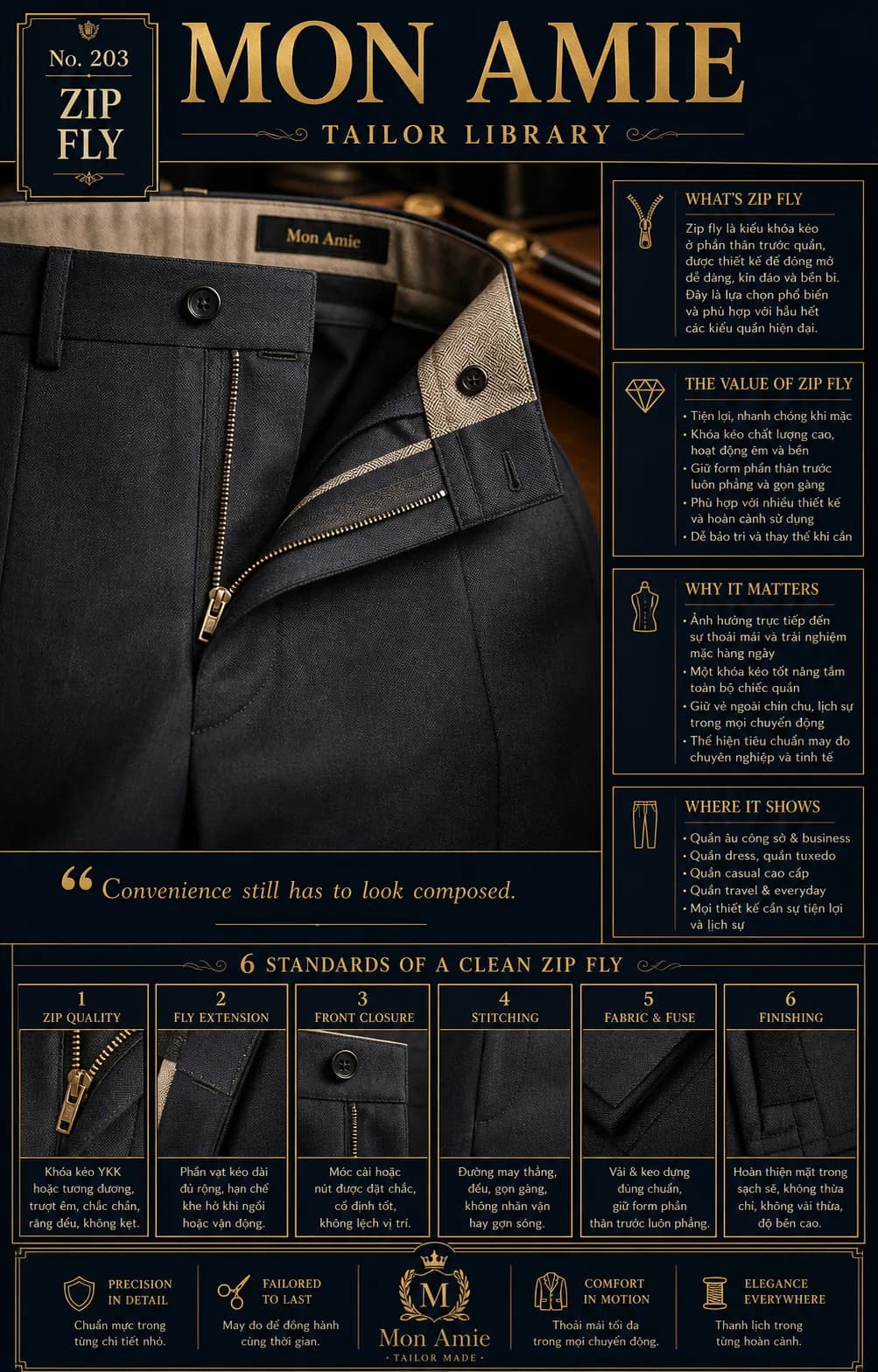
What Is a Zip Fly? Trouser Flies and Six Standards
A zip fly is the zipped front closure of a trouser: discreet and durable. Mon Amie on its value and the six marks of a clean tailored fly.
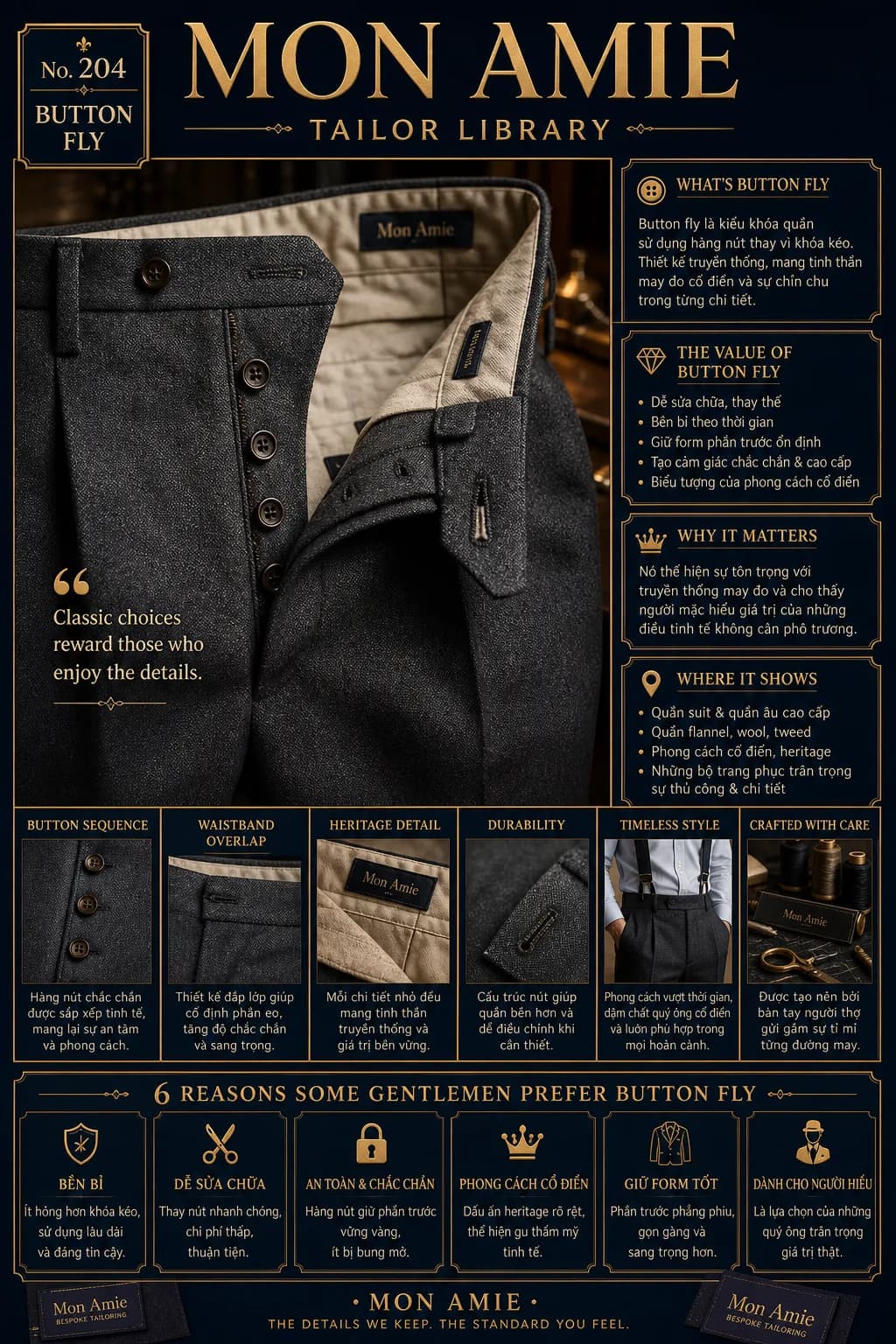
What Is a Button Fly? The Classic Gentleman's Trouser
A button fly closes trousers with buttons instead of a zip. Mon Amie explains its value and six reasons gentlemen still choose it.
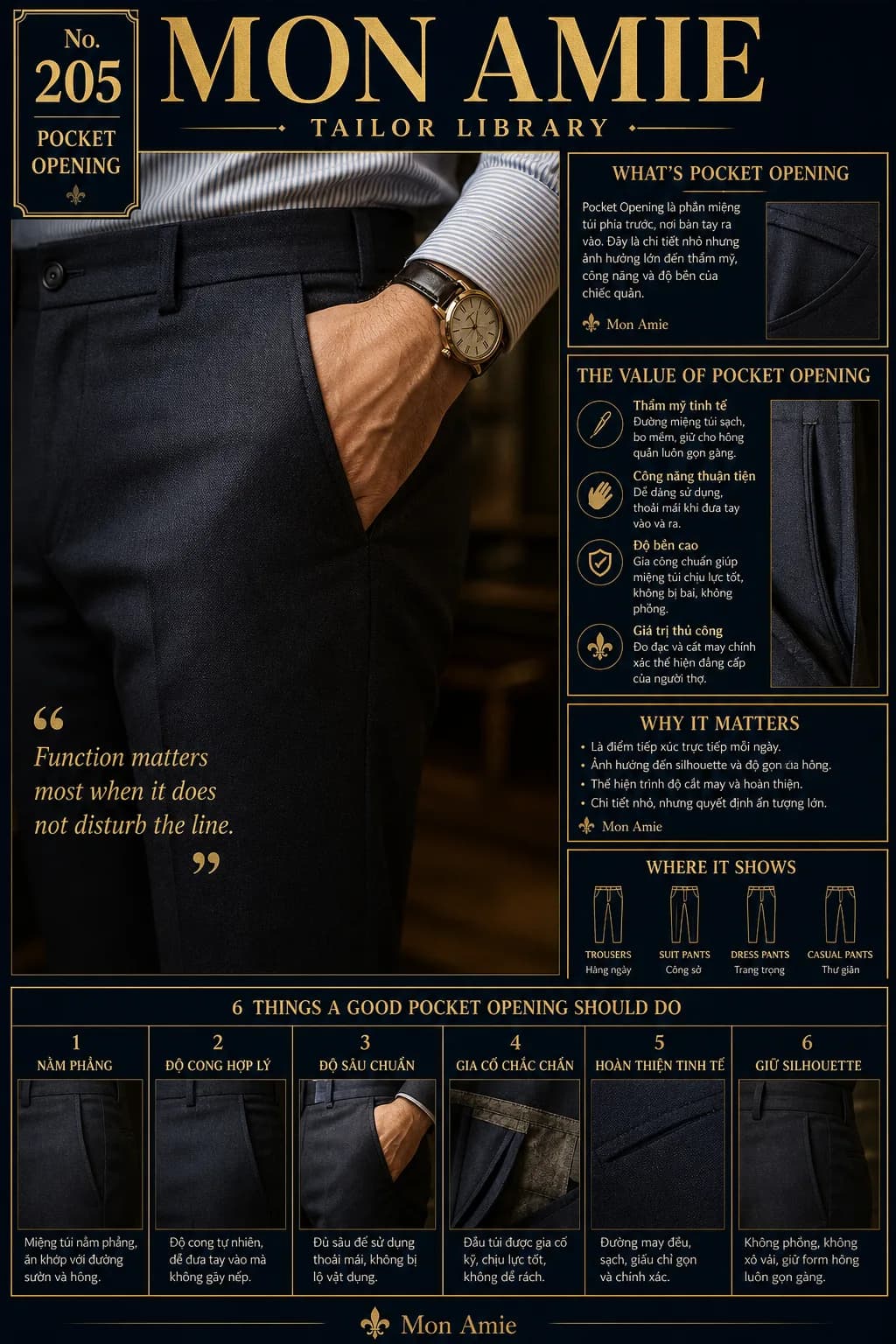
What Is a Pocket Opening? Trouser Pockets and a Clean Hip
The pocket opening is the front pocket mouth of a trouser. A small detail that governs looks, function and durability — six marks of a good one.
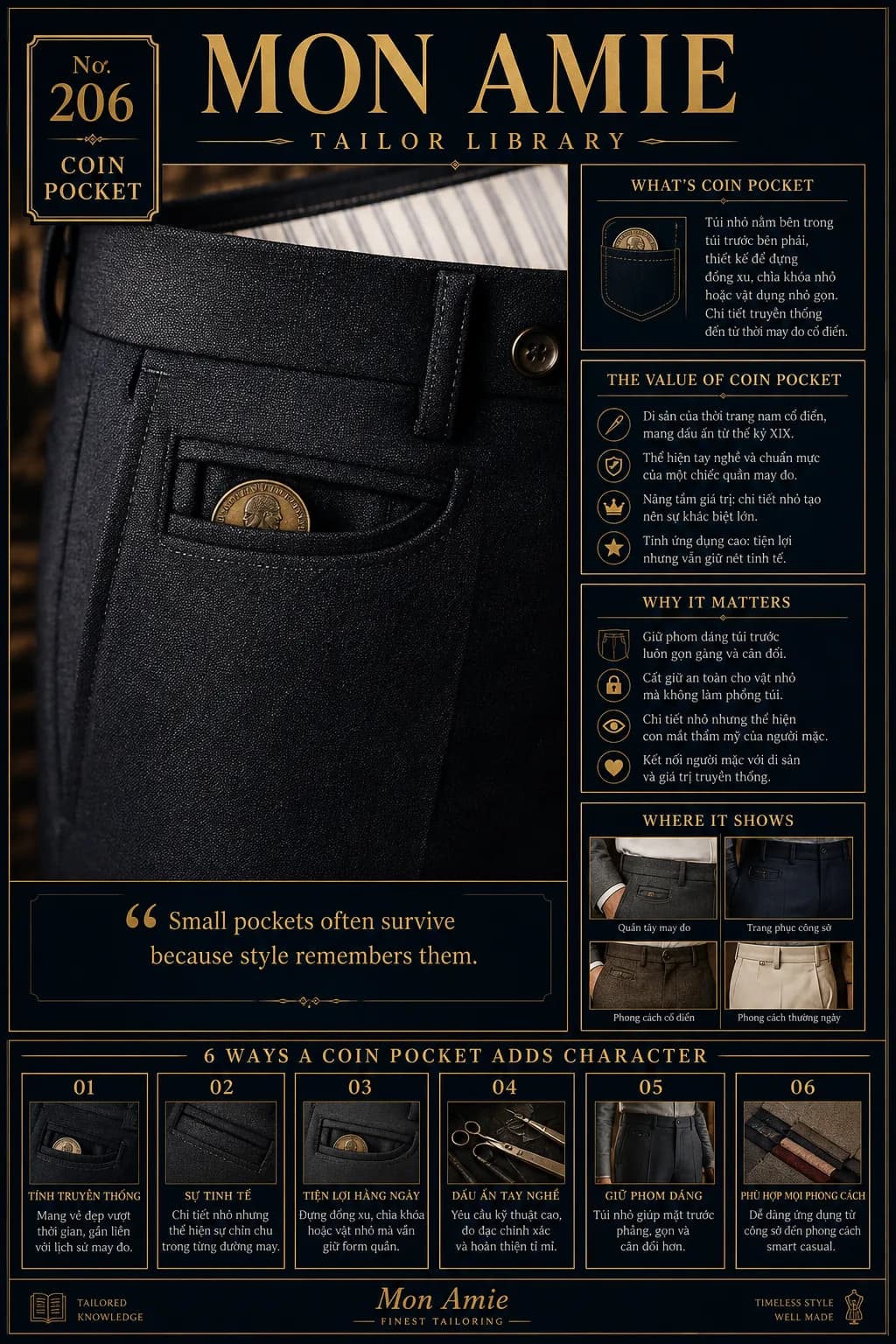
What Is a Coin Pocket? A Small Pocket, A Long Heritage
The coin pocket sits inside the front pocket of a trouser, a legacy of the 19th century. Why this tiny detail still defines a bespoke trouser.
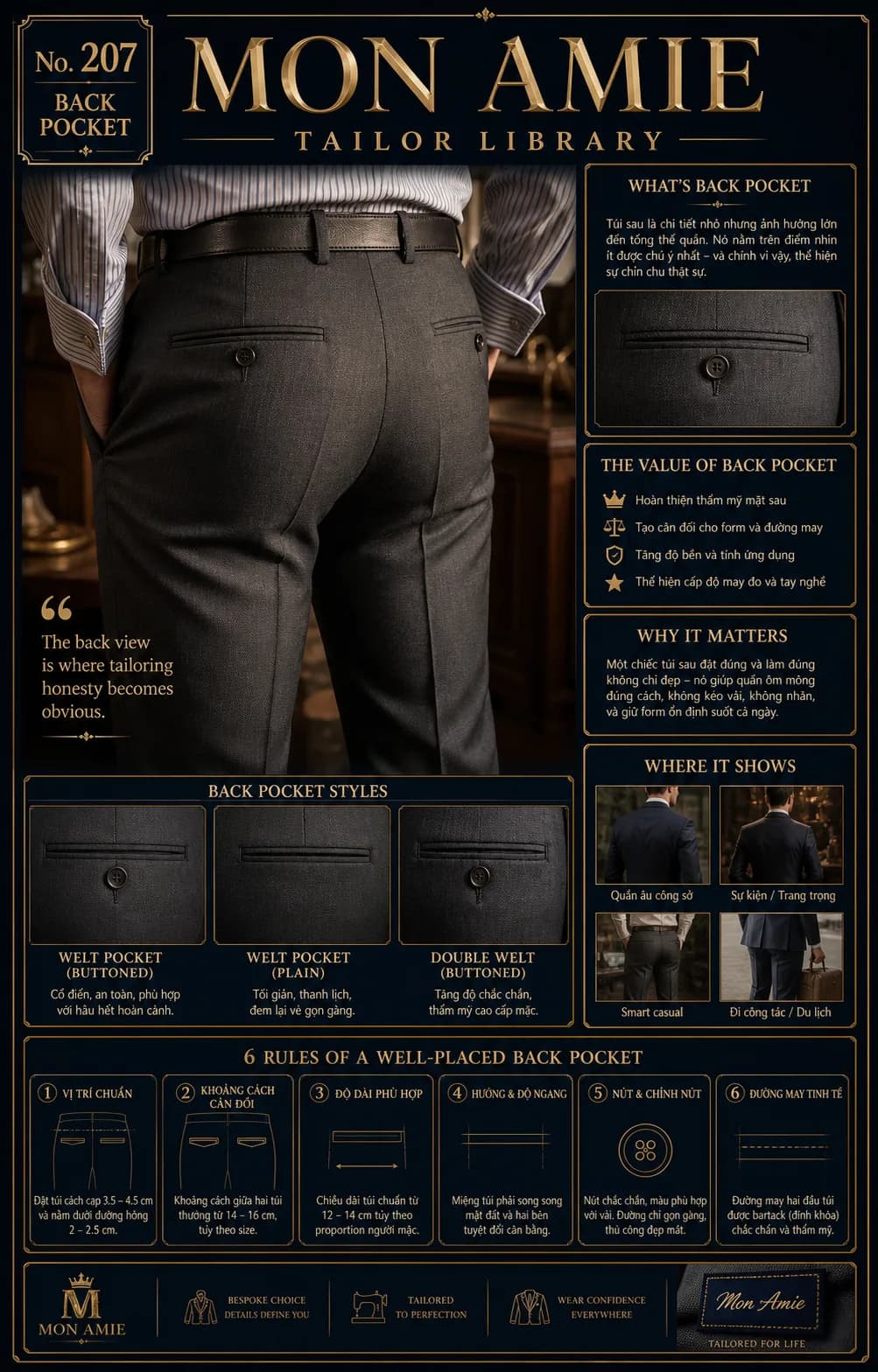
What Is a Back Pocket? The Rear View of a Fine Trouser
The back pocket is the least observed part of a trouser and the clearest test of skill. Three styles and six rules for placing them properly.
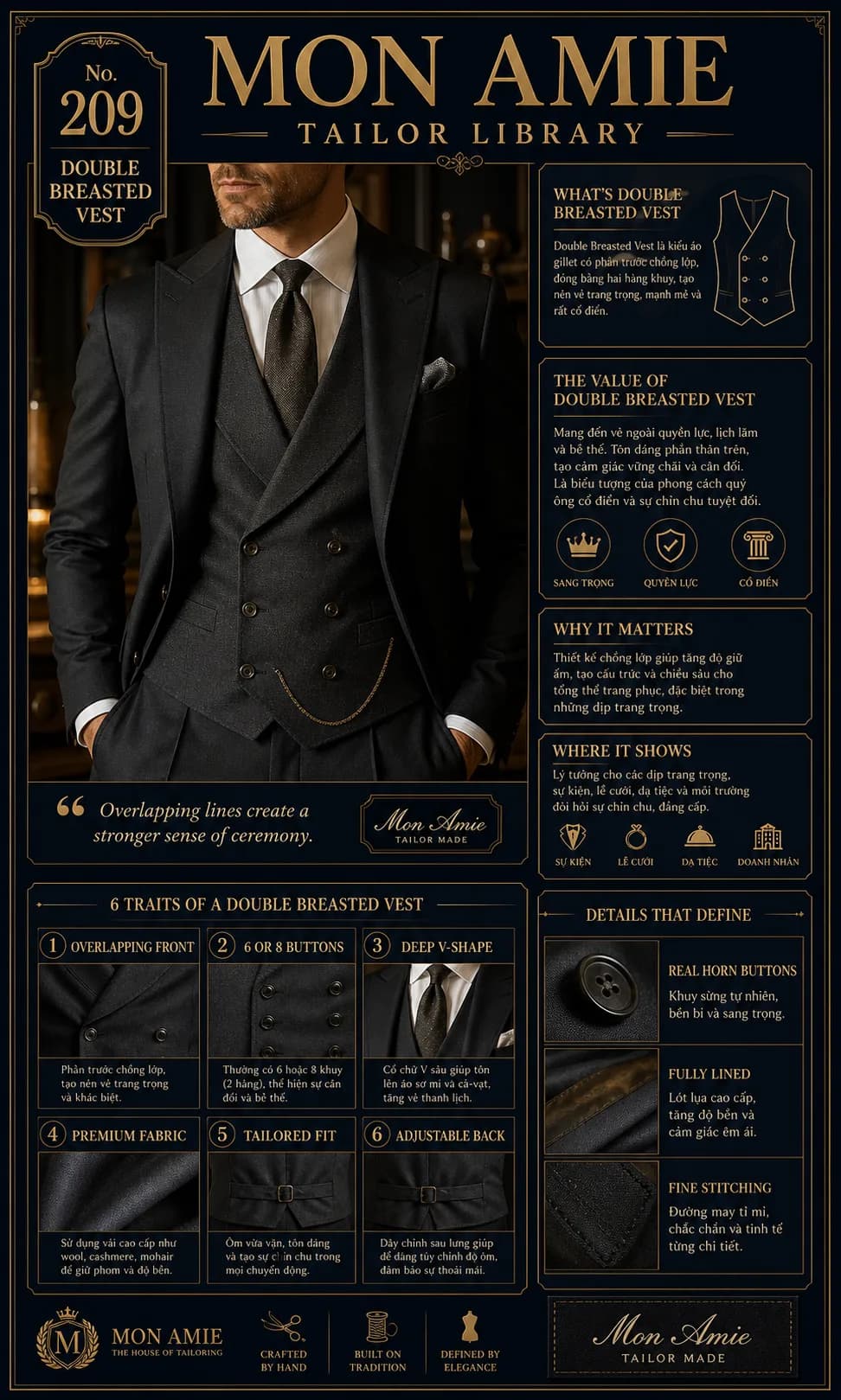
What Is a Double Breasted Vest? The Classic Statement Waistcoat
A double breasted vest overlaps at the front and fastens with two rows of buttons. Six defining features and the occasions that suit it best.
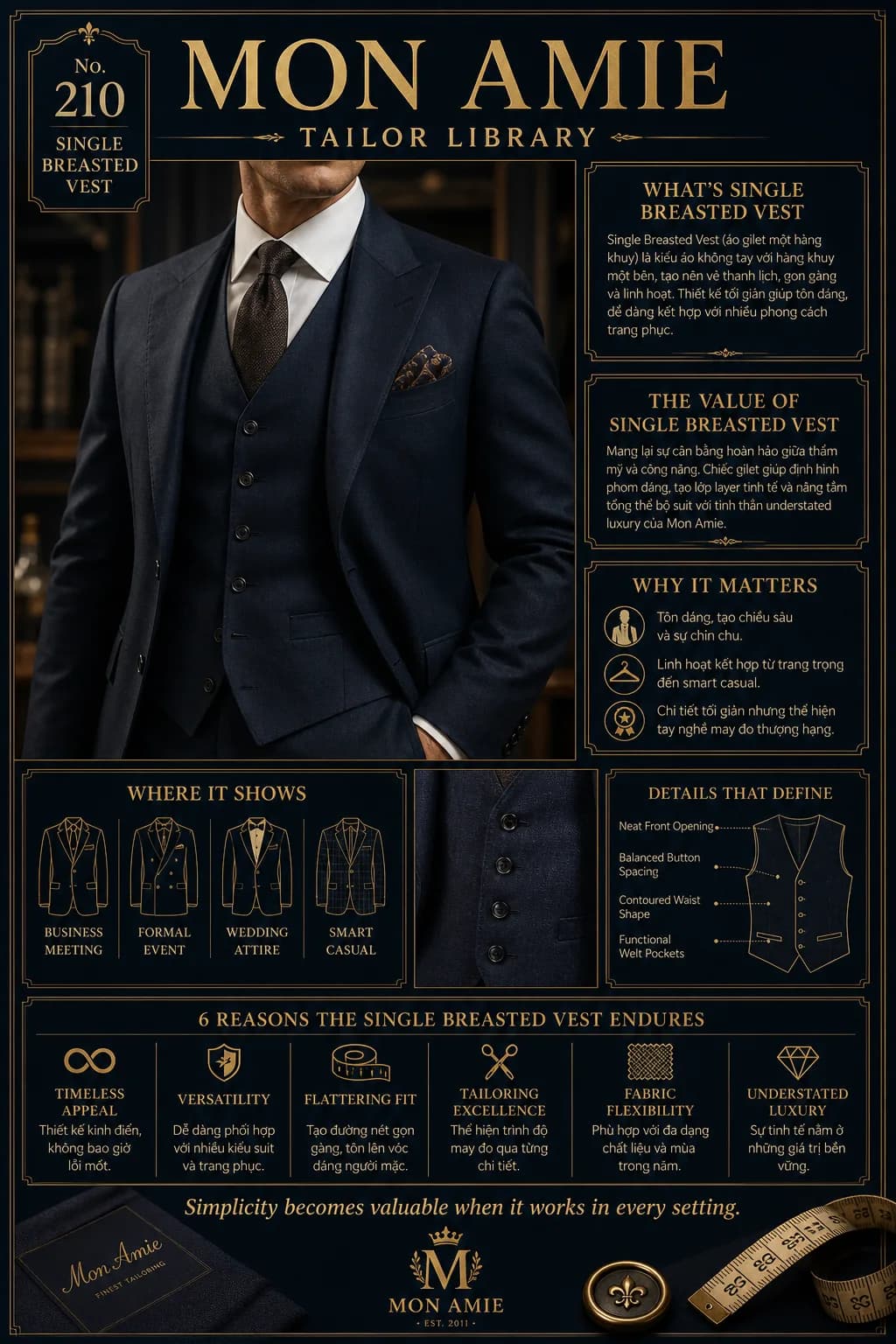
What Is a Single Breasted Vest? The Elegant Waistcoat
A single breasted vest has one button row — a minimal design that flatters, pairs easily and elevates a three-piece suit. Mon Amie explains.
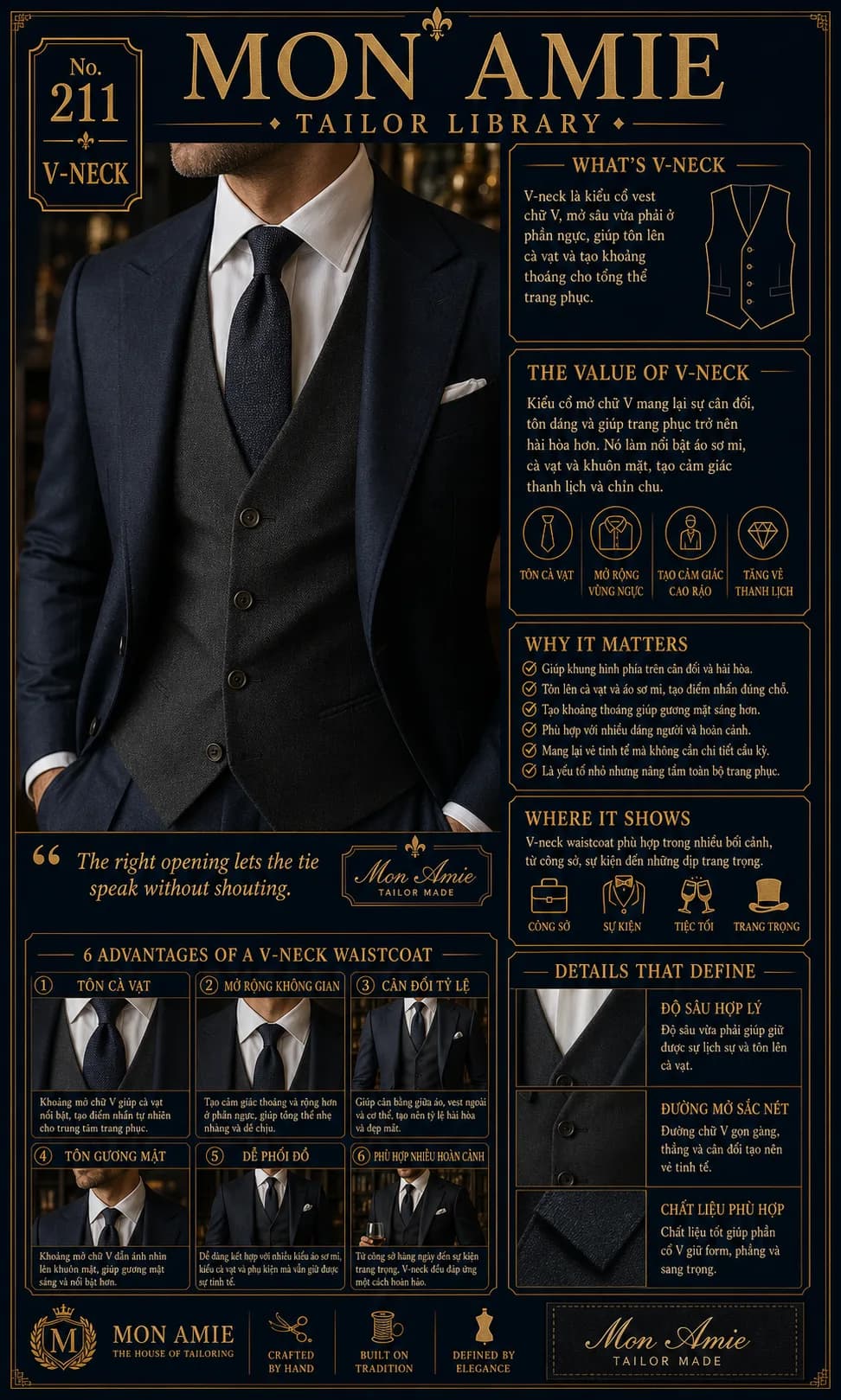
What Is a V-Neck? The Waistcoat Opening That Frames a Tie
A v-neck is the V-shaped waistcoat opening at the chest, framing the tie and lending the outfit air. Mon Amie explains six advantages of the V.
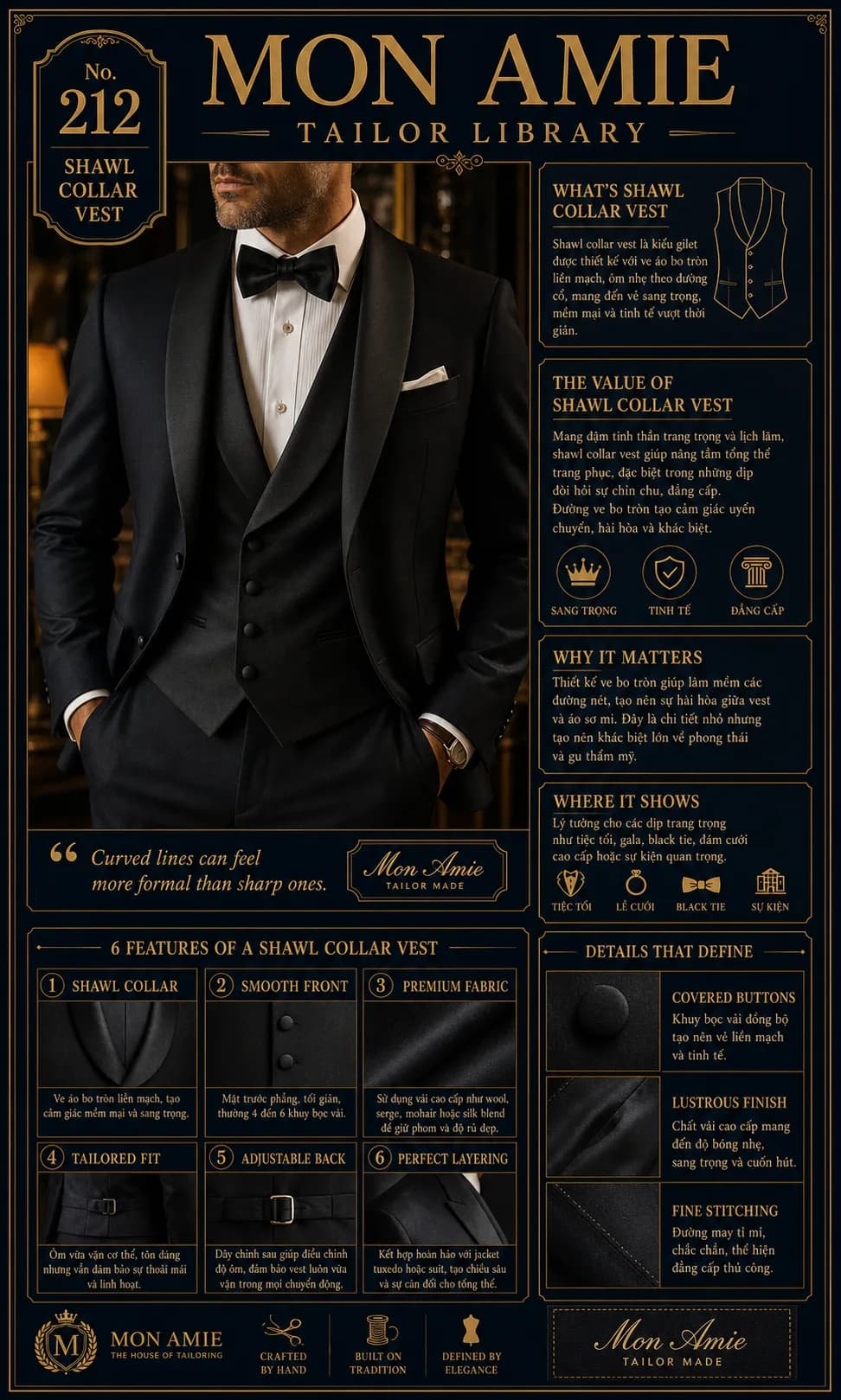
What Is a Shawl Collar Vest? The Waistcoat for Black Tie
A shawl collar vest has a smooth, unbroken rounded lapel — refined and softly elegant, ideal for black tie, galas and formal weddings.
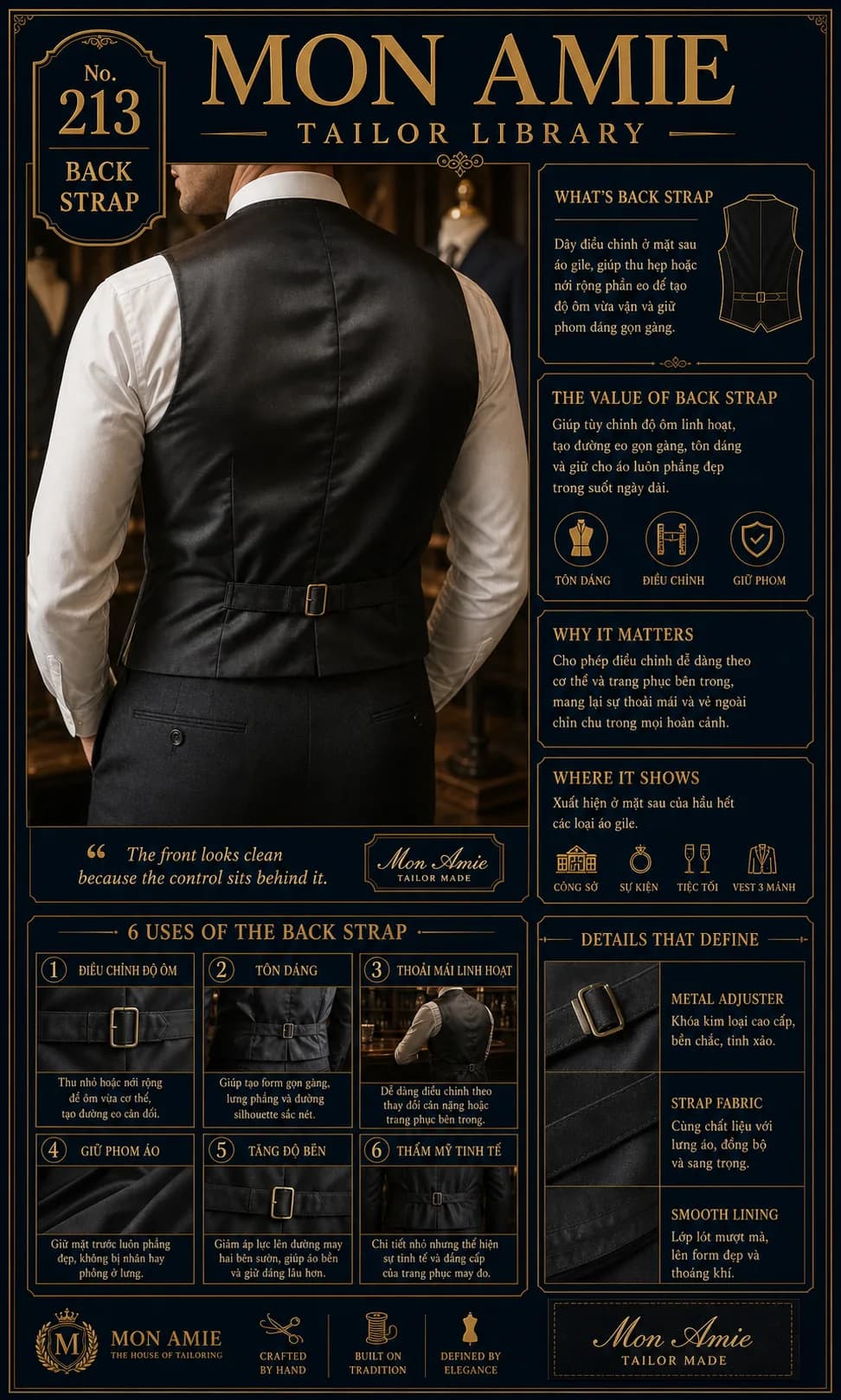
What Is a Back Strap? The Waistcoat's Rear Waist Adjuster
A back strap is the adjuster at the rear of a waistcoat that tightens or eases the waist for a precise fit. Mon Amie explains its six uses.
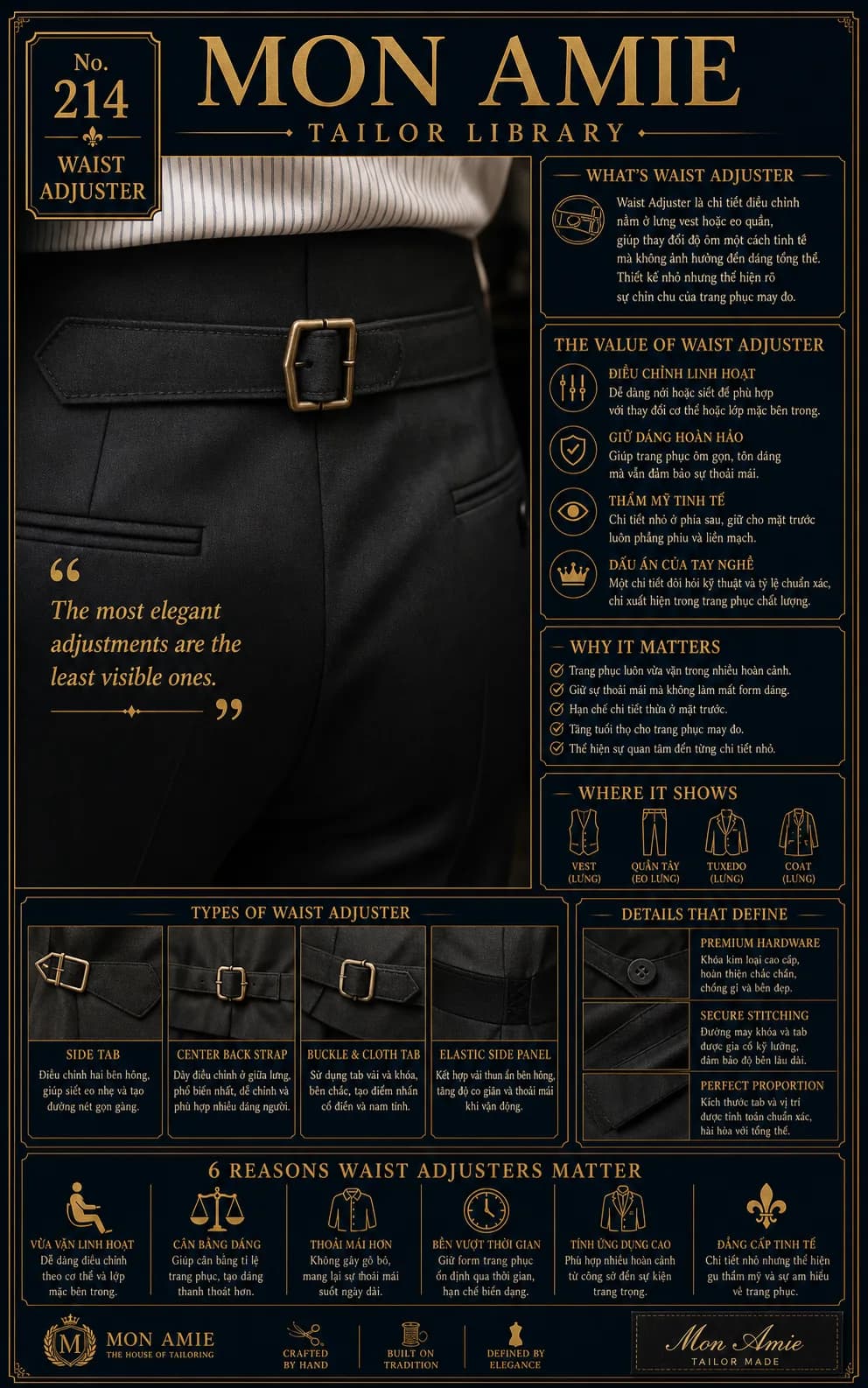
What Is a Waist Adjuster? The Tailored Waist Detail
A waist adjuster sits at the back of a waistcoat or the side of trousers to fine-tune the fit. Mon Amie explains four types and six reasons it matters.
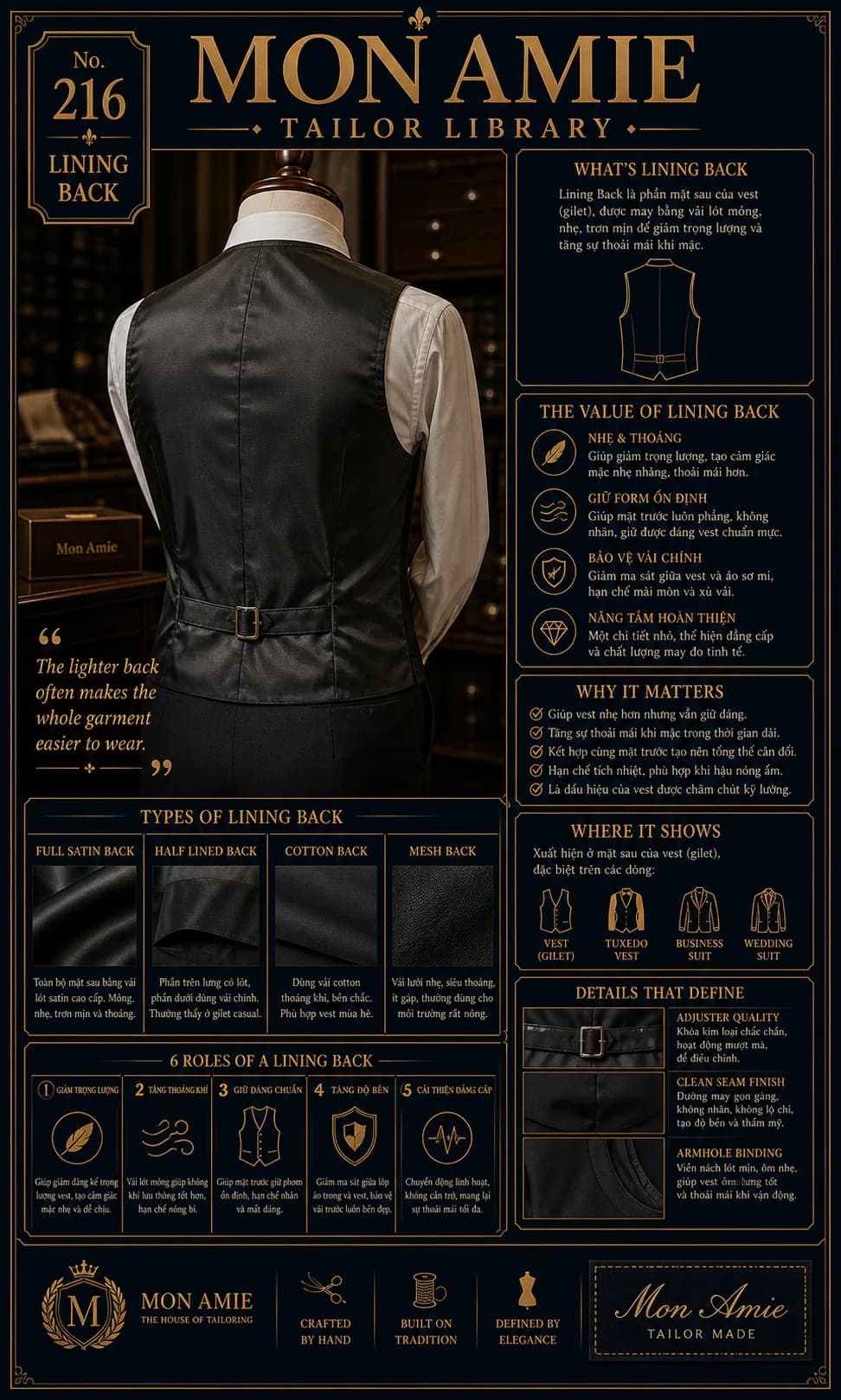
What Is a Lining Back? The Waistcoat's Lined Back Panel
A lining back is the waistcoat's rear panel, made in light, smooth lining cloth. Discover its value, the main types and six roles it plays.
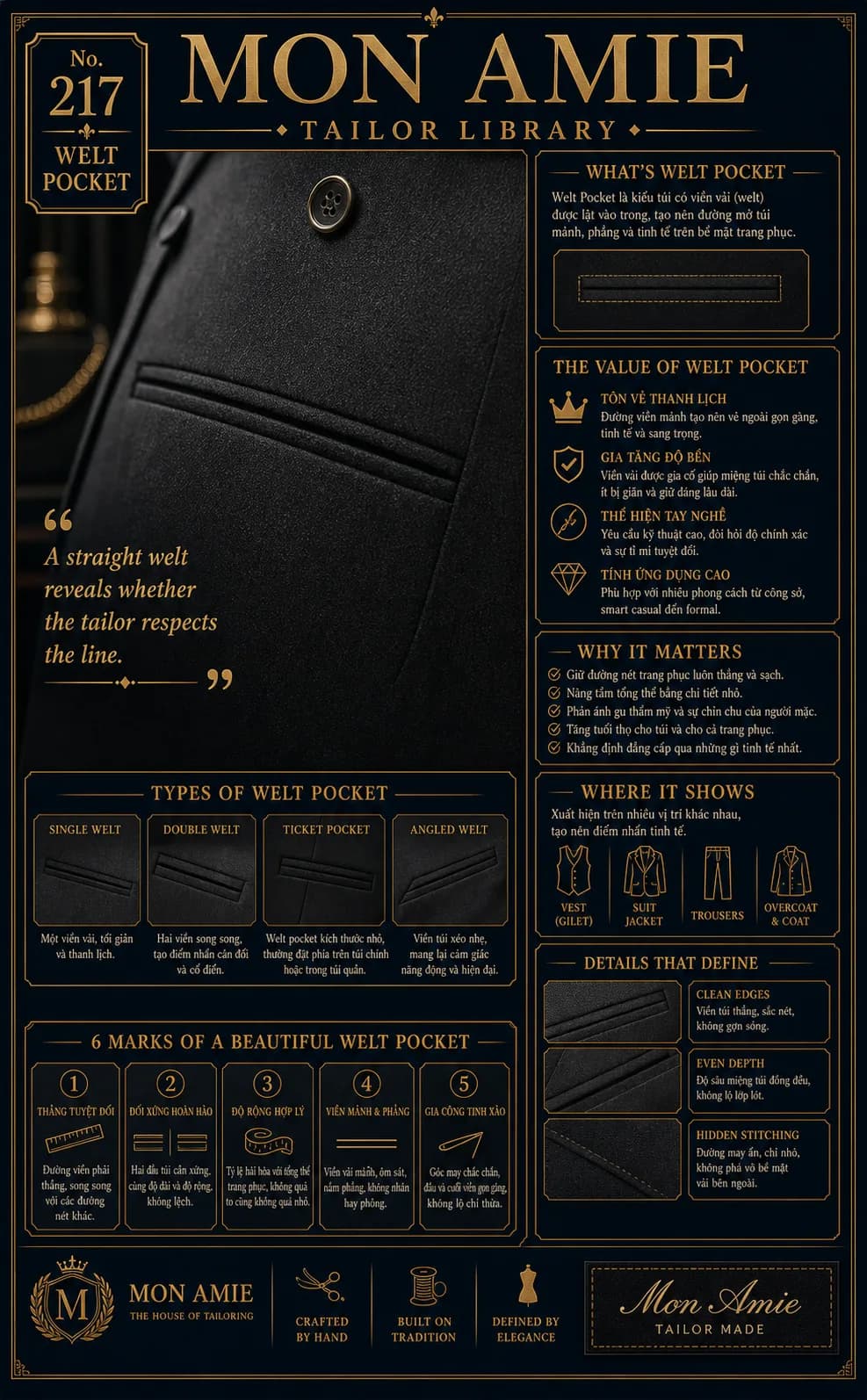
What Is a Welt Pocket? The Clean-Edged Tailored Pocket
A welt pocket has its edging turned inward, leaving a slim, flat opening. Discover its value, the main variations and six marks of a fine welt.
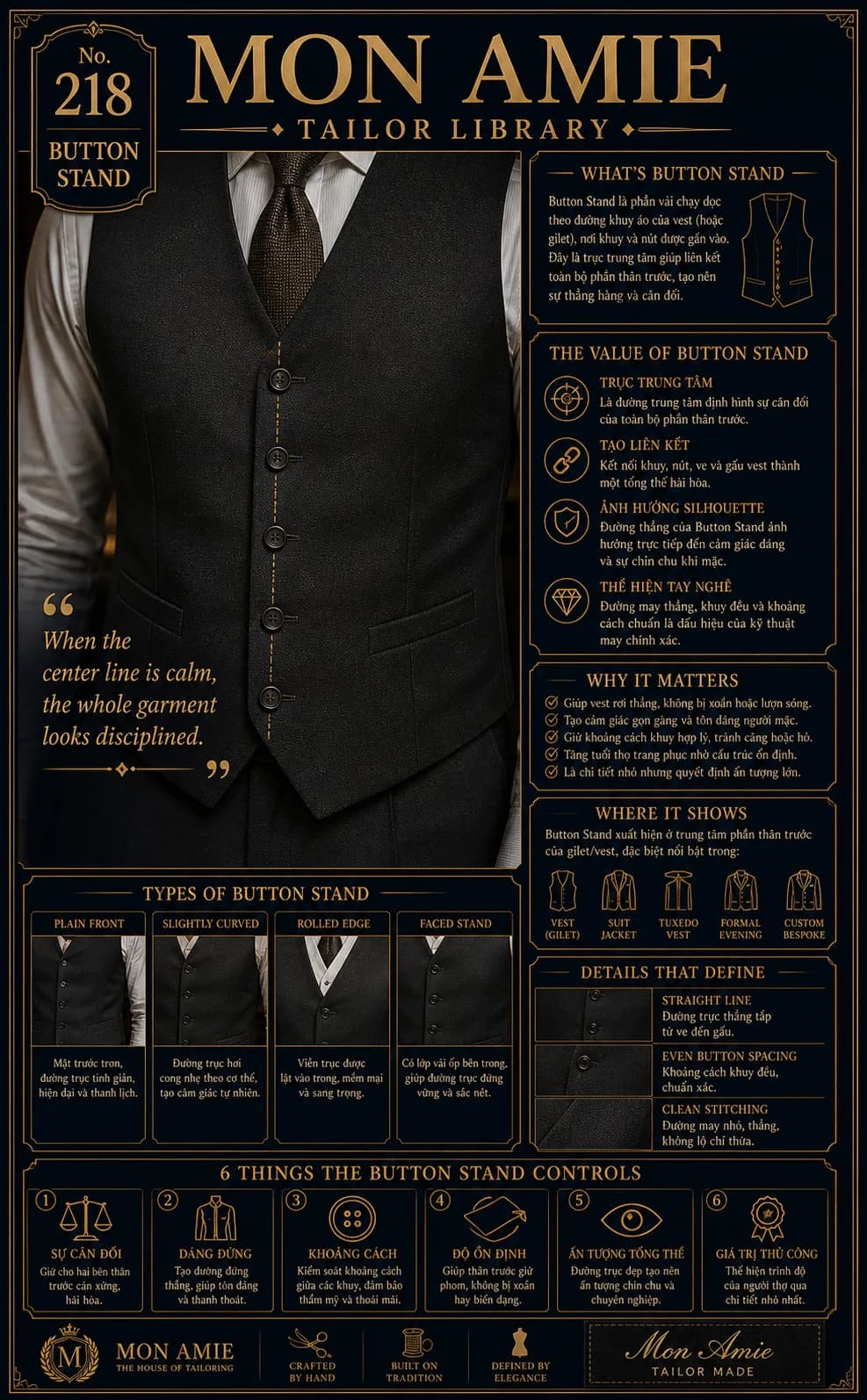
What Is a Button Stand? The Waistcoat's Central Axis
The button stand is the strip of cloth along the buttoning edge, the central axis that governs balance across the front. Six things it decides.
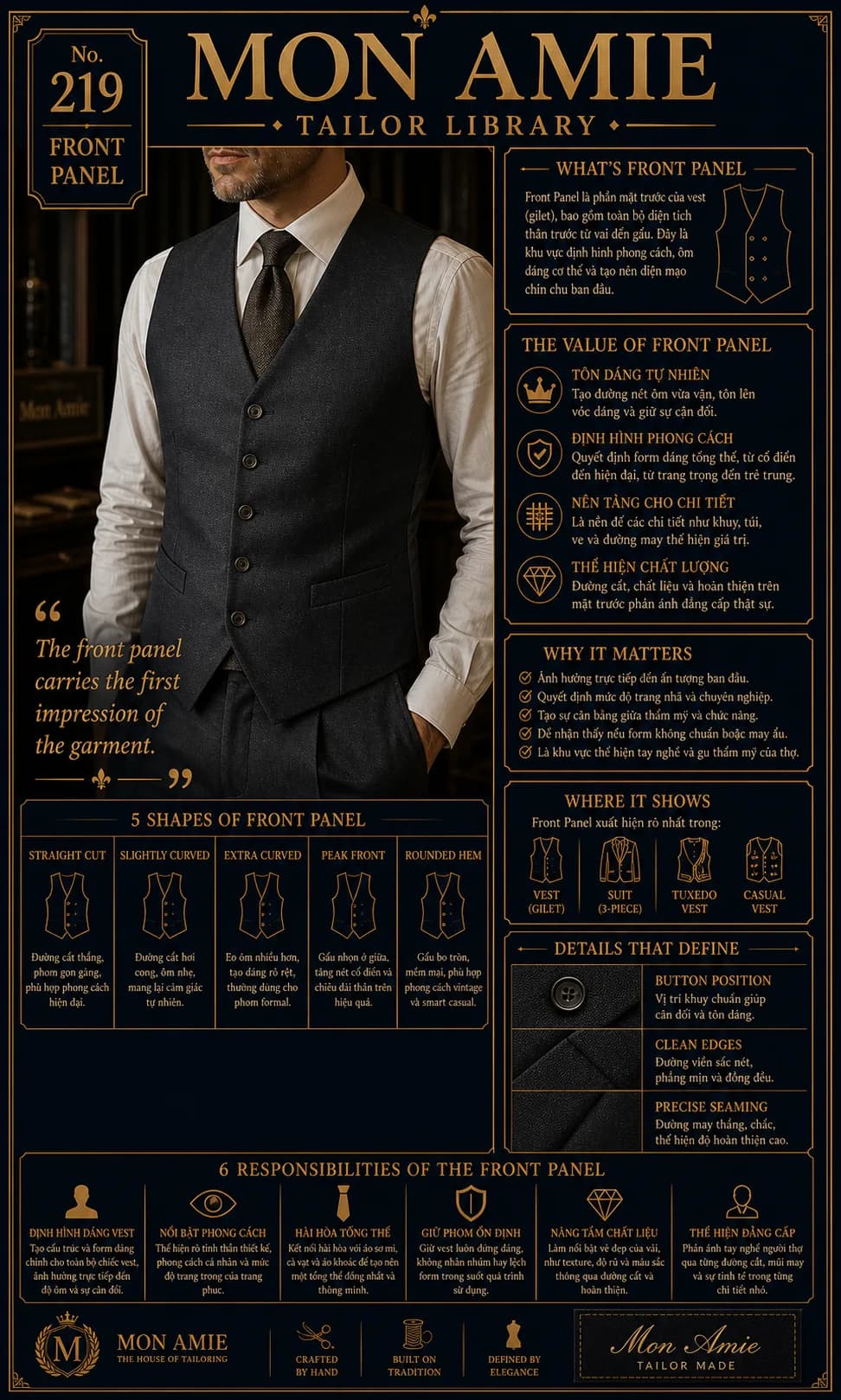
What Is a Front Panel? The Face of a Waistcoat
The front panel is the entire face of a waistcoat, from shoulder to hem. Five front shapes and the six jobs this panel quietly performs.
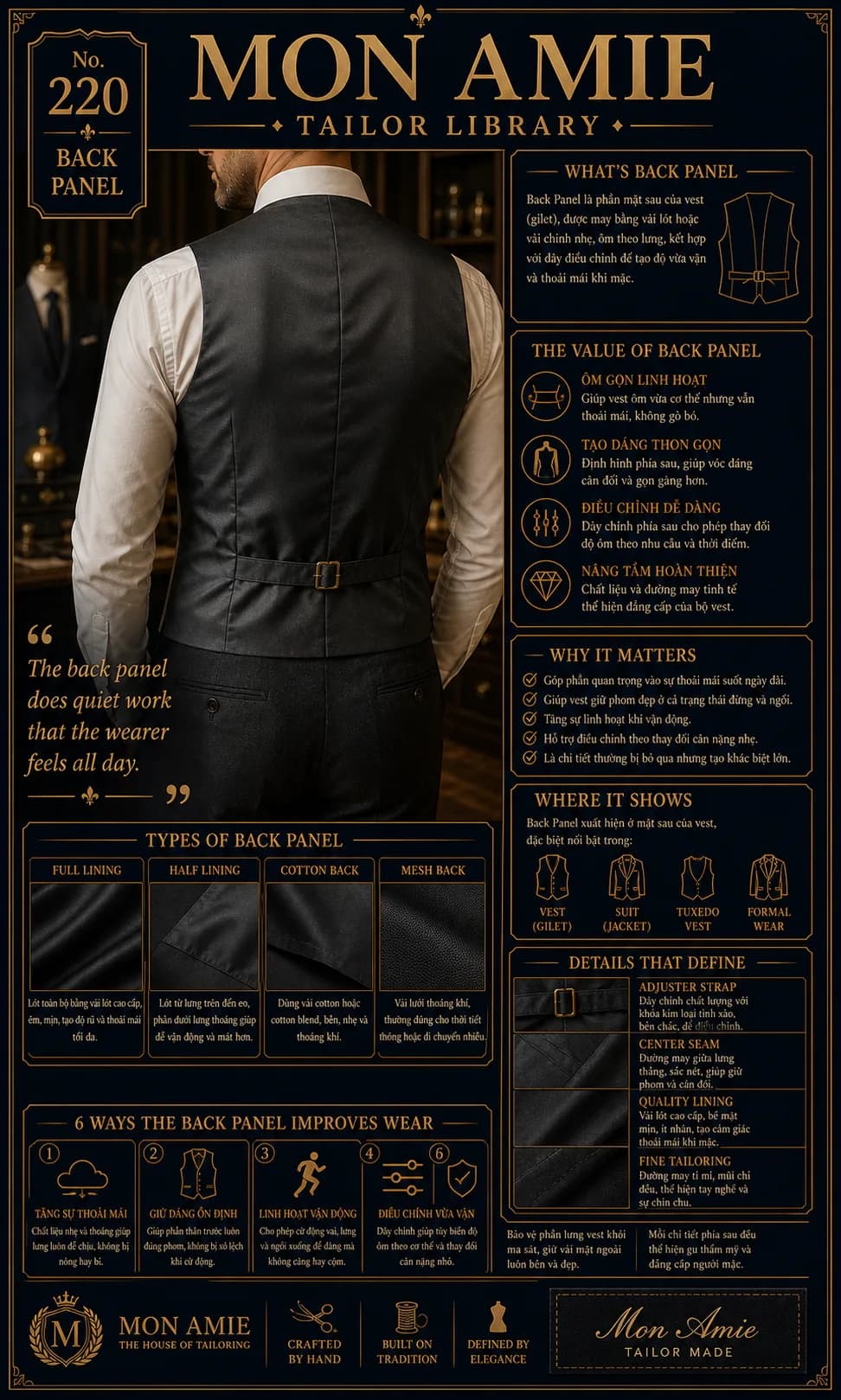
What Is a Back Panel? The Waistcoat's Quiet Half
The back panel is the rear of a waistcoat, cut in lining with an adjuster strap. The quiet detail that decides fit and all-day comfort.
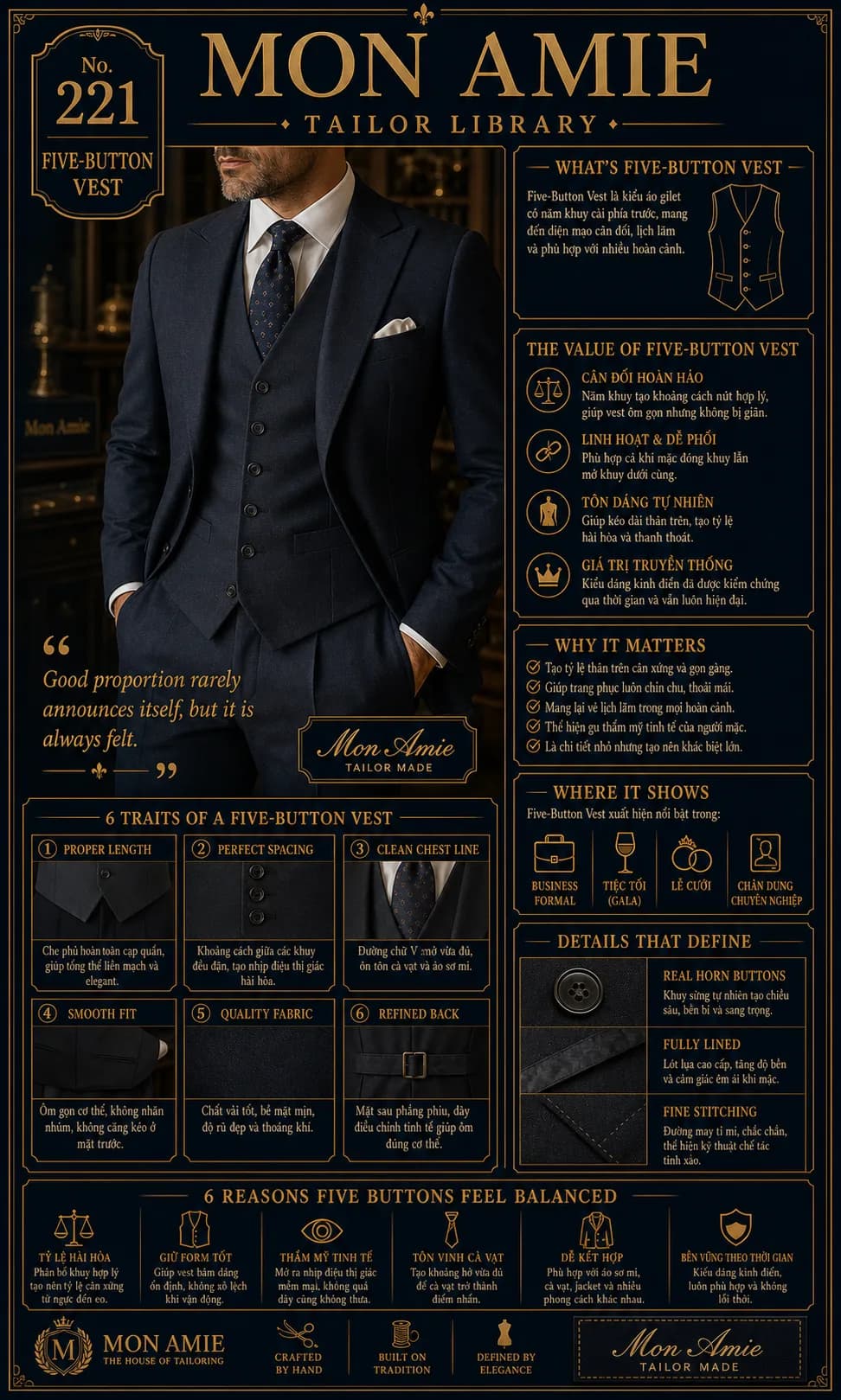
What Is a Five-Button Vest? The Balanced Classic
A five-button vest fastens with five buttons at the front for a balanced, elegant line. Why five feels right and how to spot a well-made one.
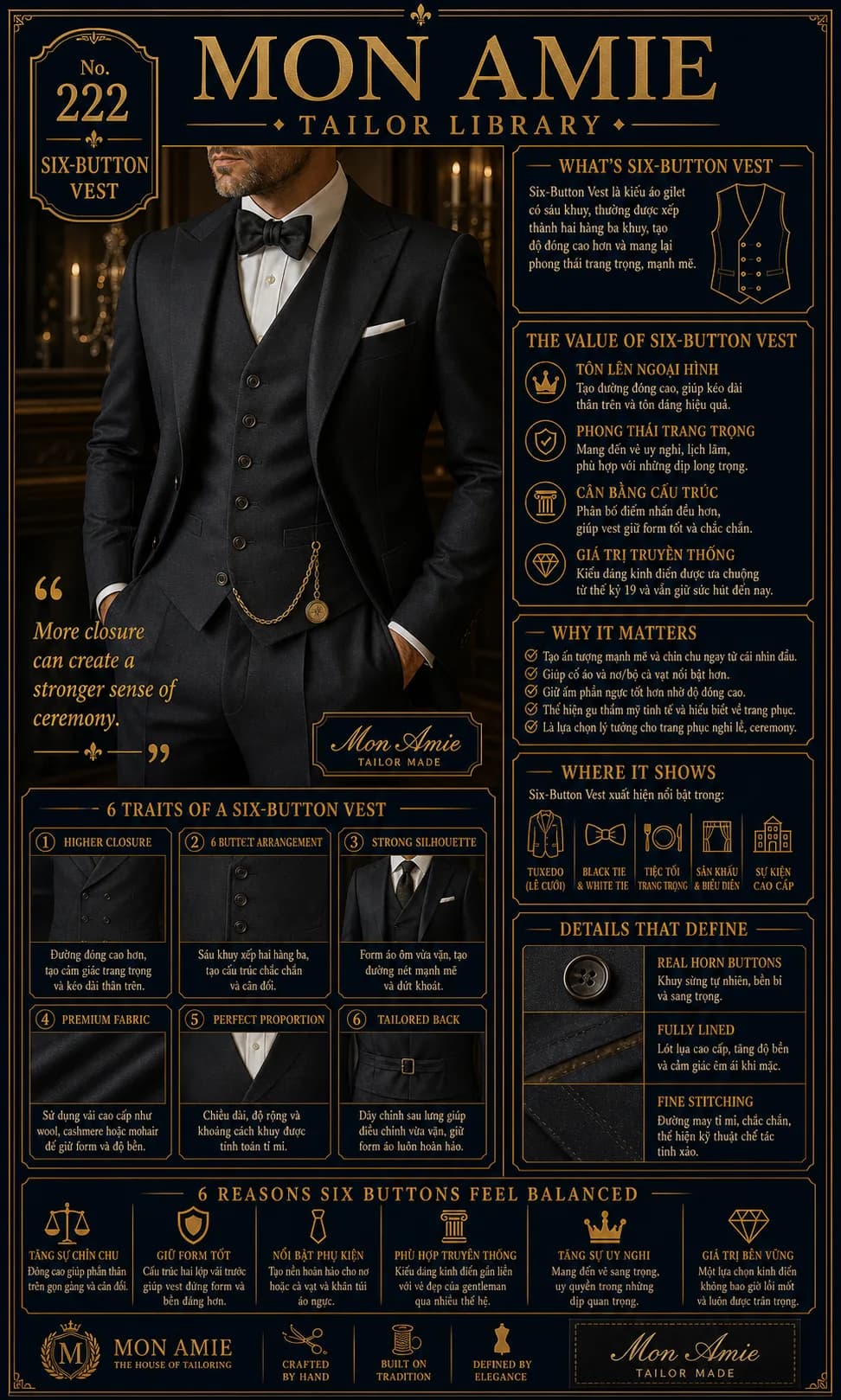
What Is a Six-Button Vest? The Formal Classic
A six-button vest closes high on the chest for a formal, commanding presence. When to choose six buttons and how to judge the making.
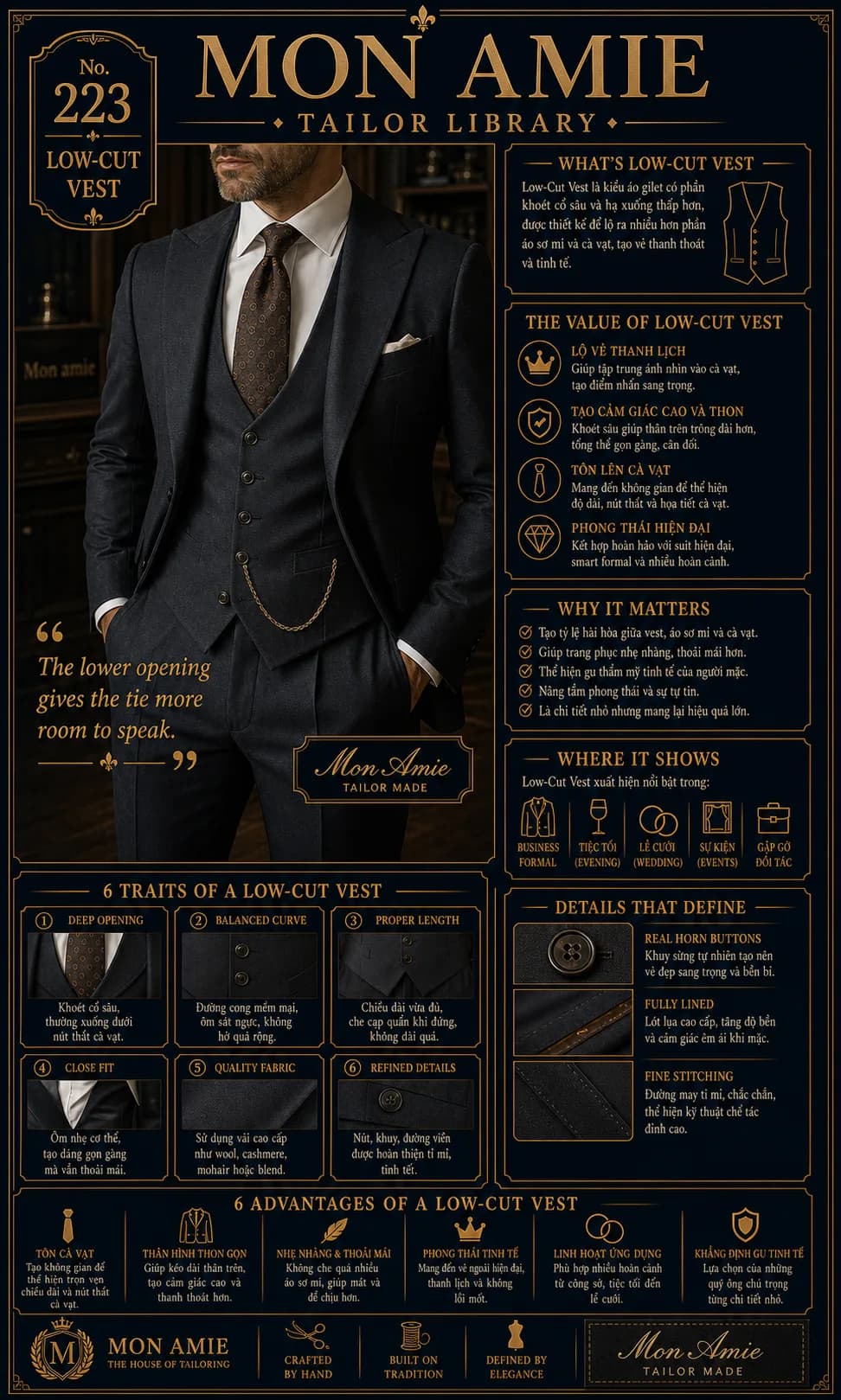
What Is a Low-Cut Vest? The Deep Opening Explained
A low-cut vest opens deep at the chest, showing more shirt and tie for a graceful, modern line. How to recognise one and why it works.
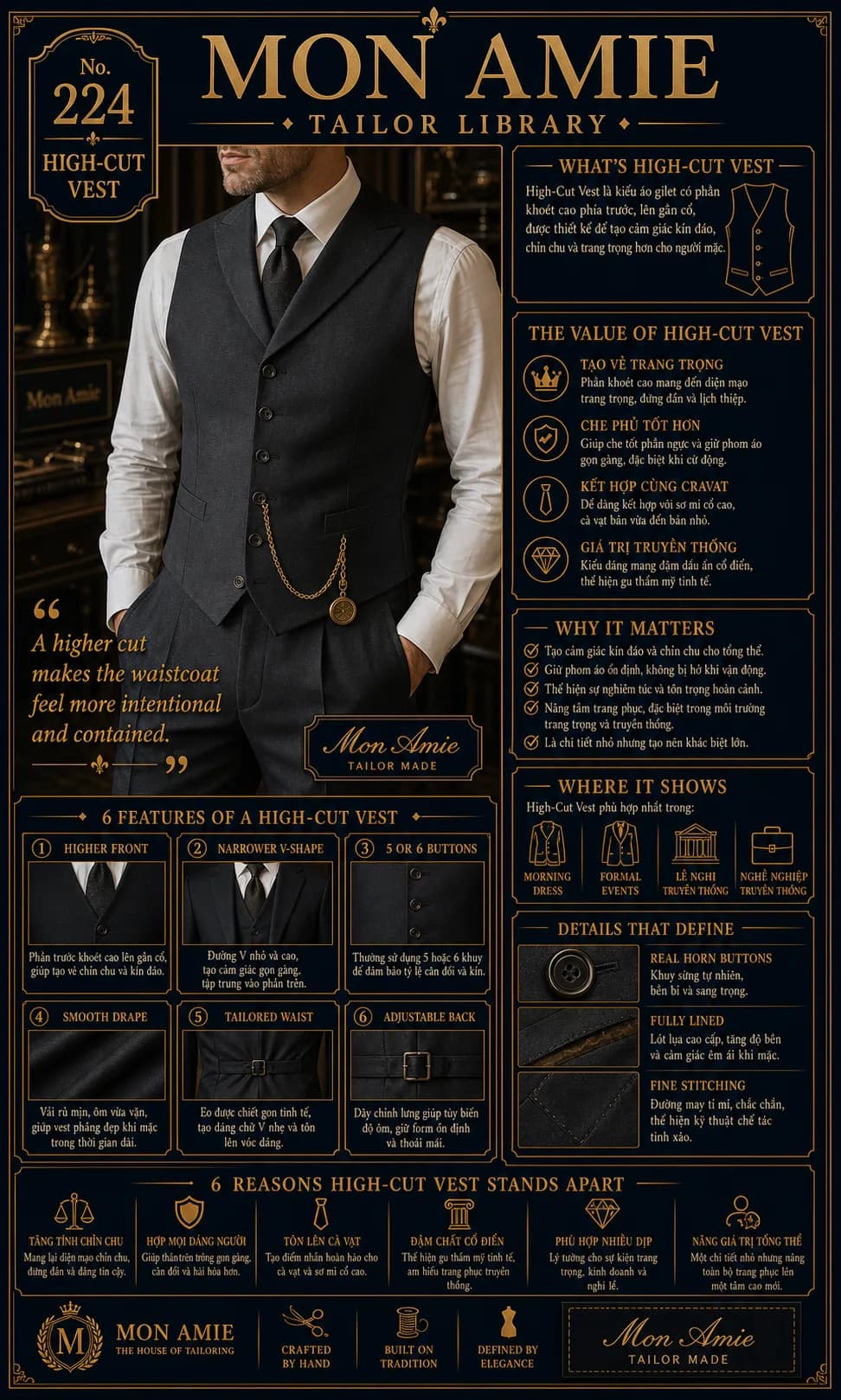
What Is a High-Cut Vest? The Discreet, Formal Waistcoat
A high-cut vest is a waistcoat cut close to the collar for a discreet, formal look. Its hallmarks, best occasions and how to choose one.
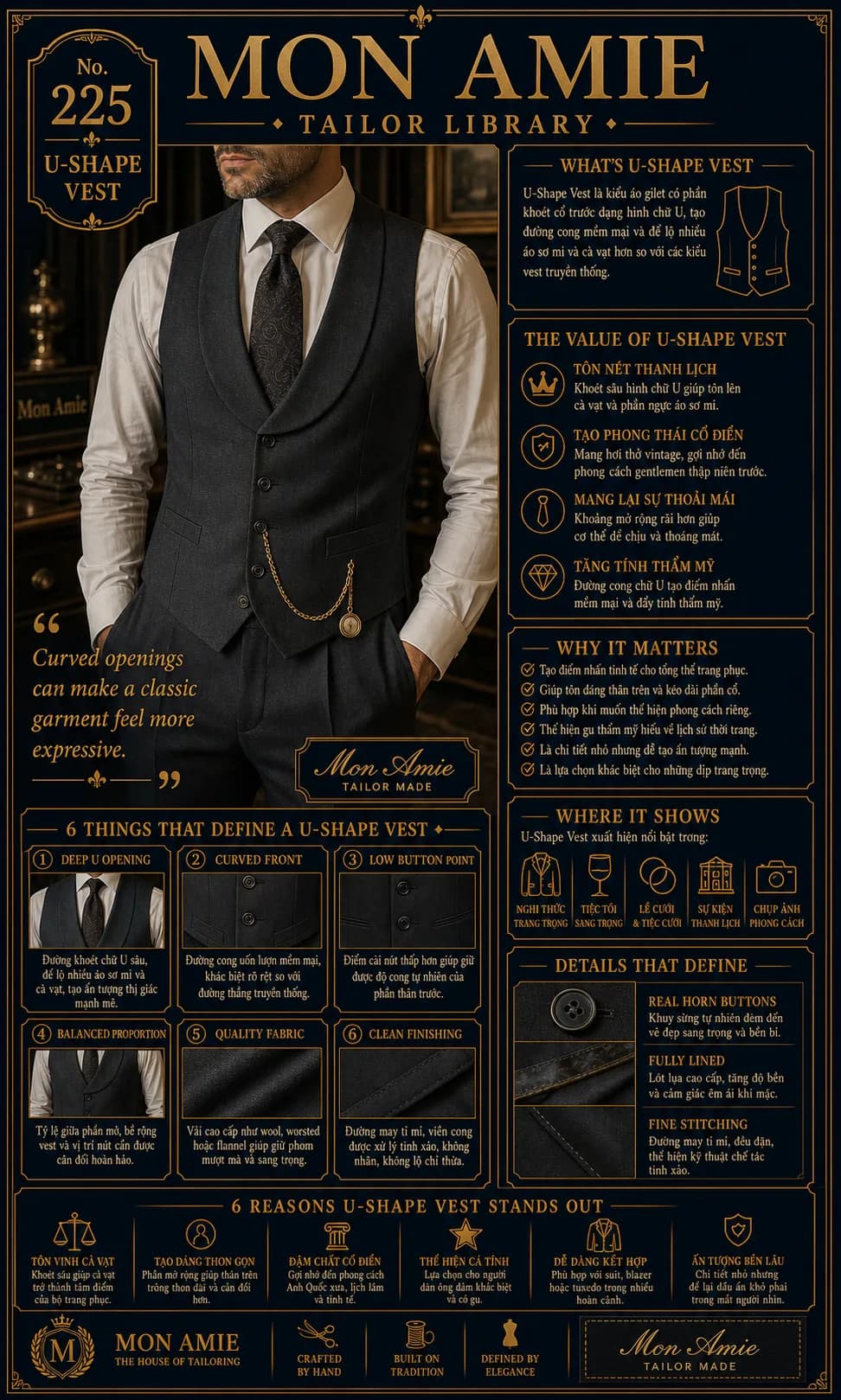
What Is a U-Shape Vest? The Classic Curved Waistcoat
A U-shape vest is a waistcoat with a curved U opening that reveals more shirt and tie. Mon Amie explains its construction and how to wear it.
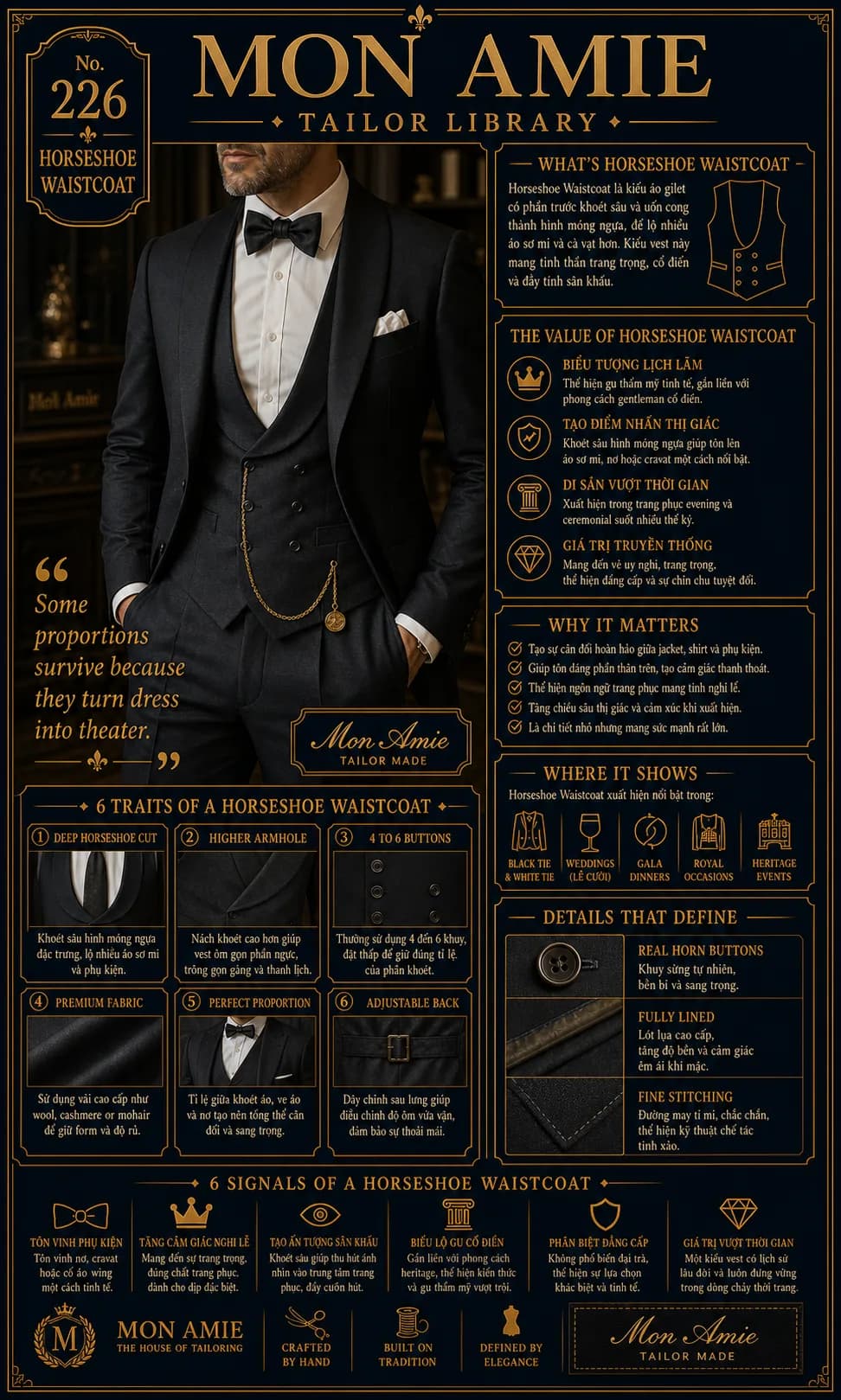
What Is a Horseshoe Waistcoat? The Black Tie Standard
The horseshoe waistcoat is deeply cut in a horseshoe curve, a standard of black tie and white tie. Mon Amie on its construction and occasions.
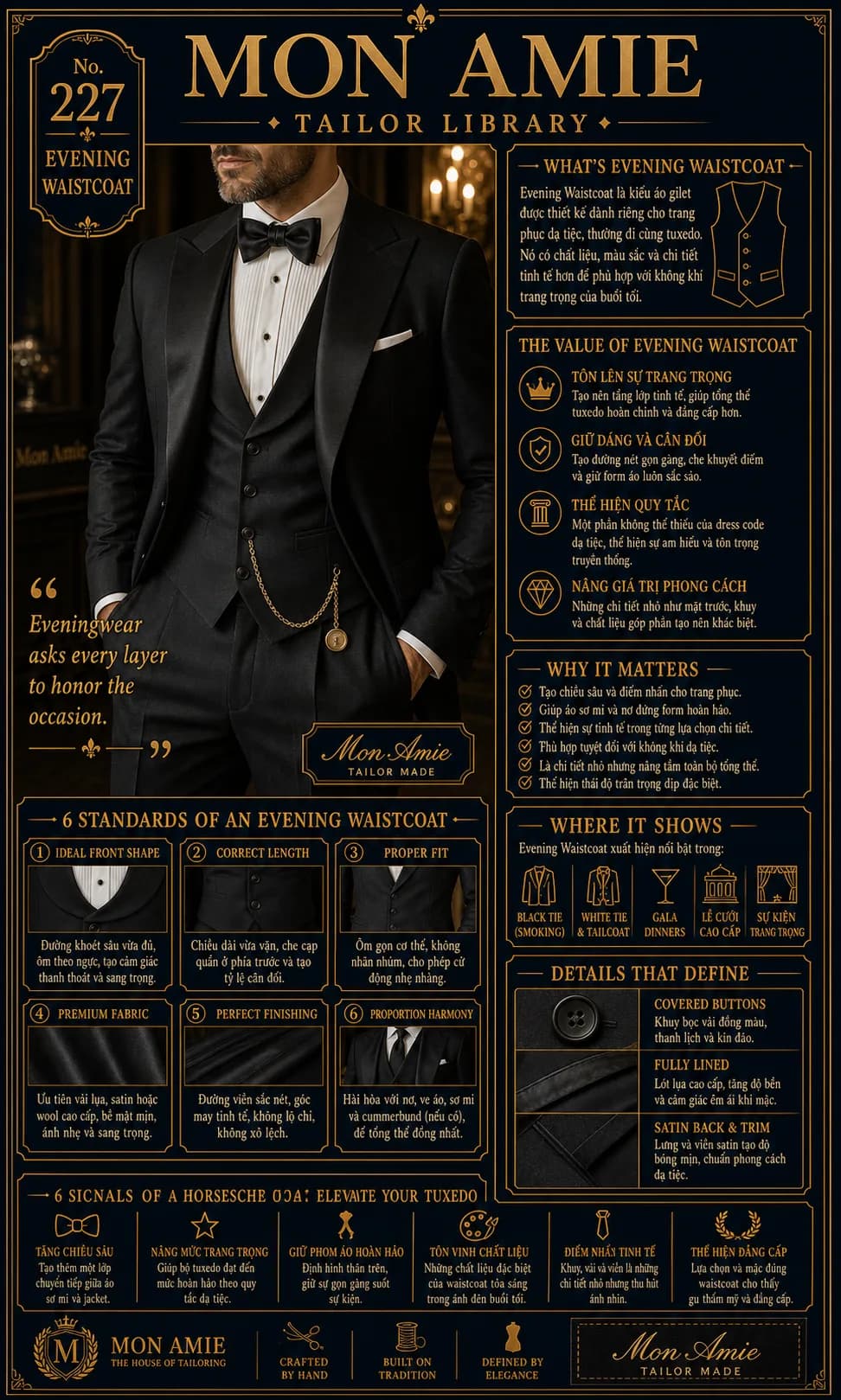
What Is an Evening Waistcoat? The Tuxedo's Quiet Layer
An evening waistcoat is made expressly for evening dress, usually worn with a tuxedo. Mon Amie shares the six marks of a true evening waistcoat.
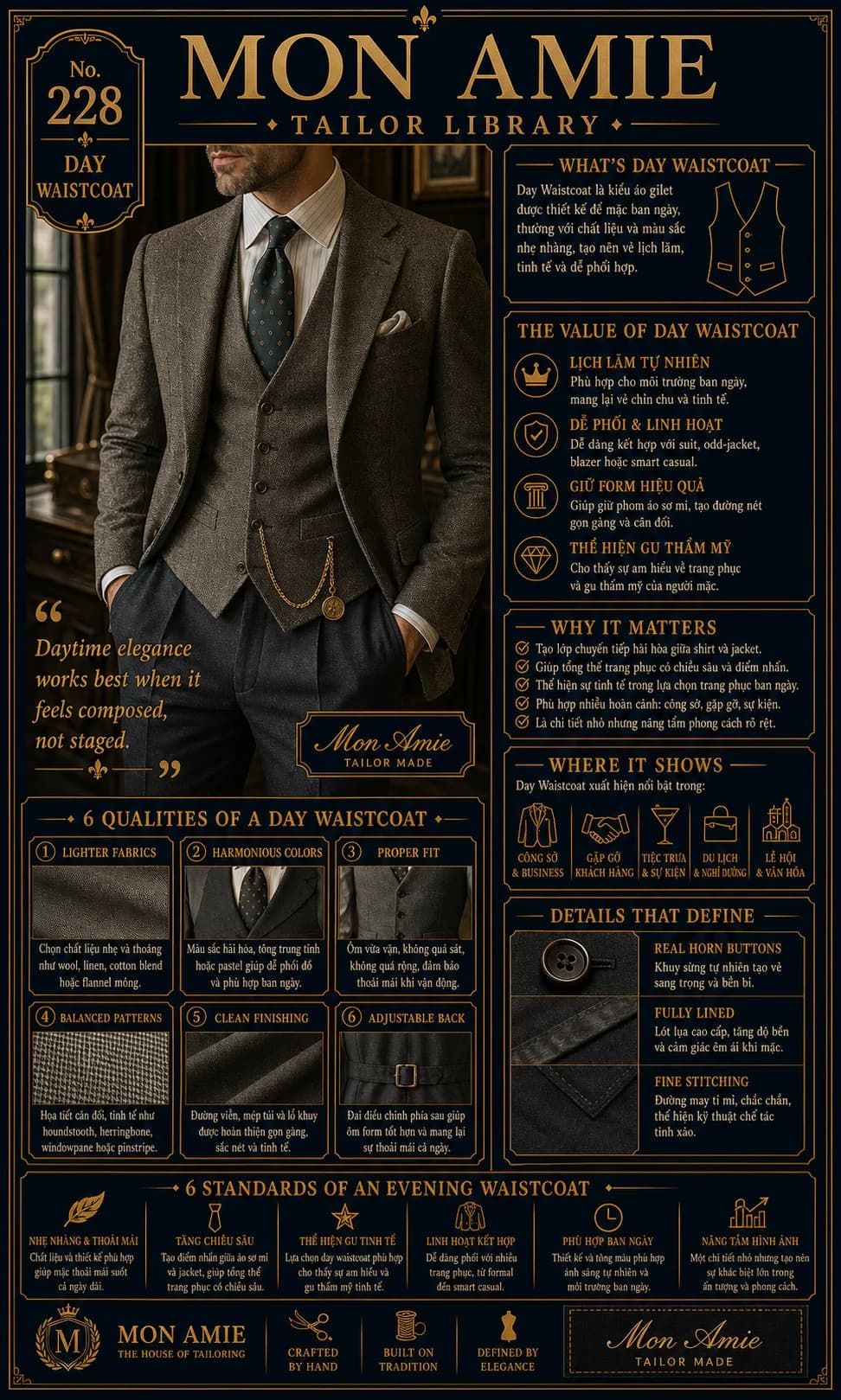
What Is a Day Waistcoat? Elegant, Easy Daytime Layering
A day waistcoat is made in lighter cloth and quiet colours, easy to wear with suits and blazers. Mon Amie shares the six qualities it needs.
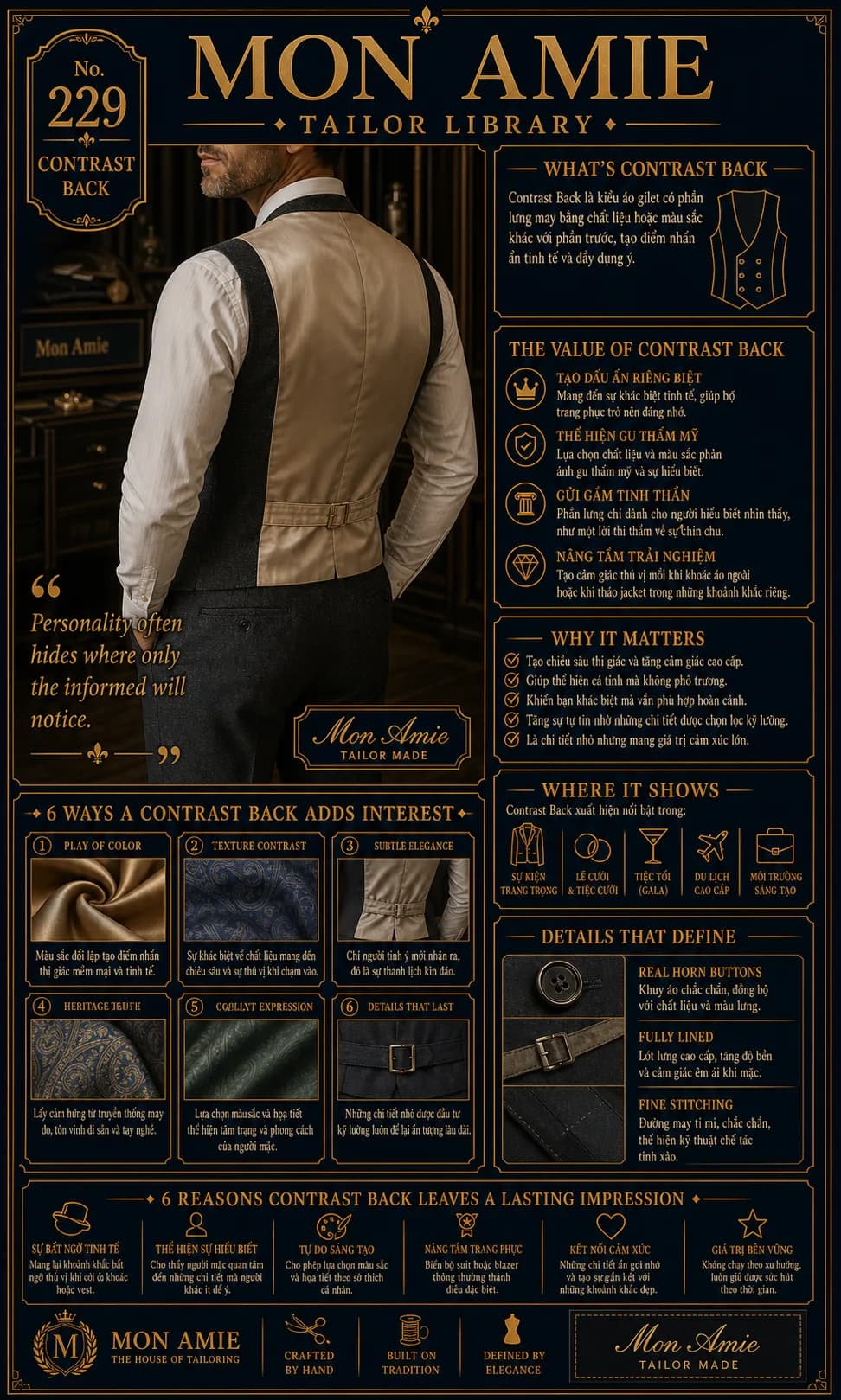
What Is a Contrast Back? The Waistcoat's Hidden Statement
A contrast back is a waistcoat whose back panel uses a different cloth or colour from the front. Mon Amie explains six ways it creates interest.
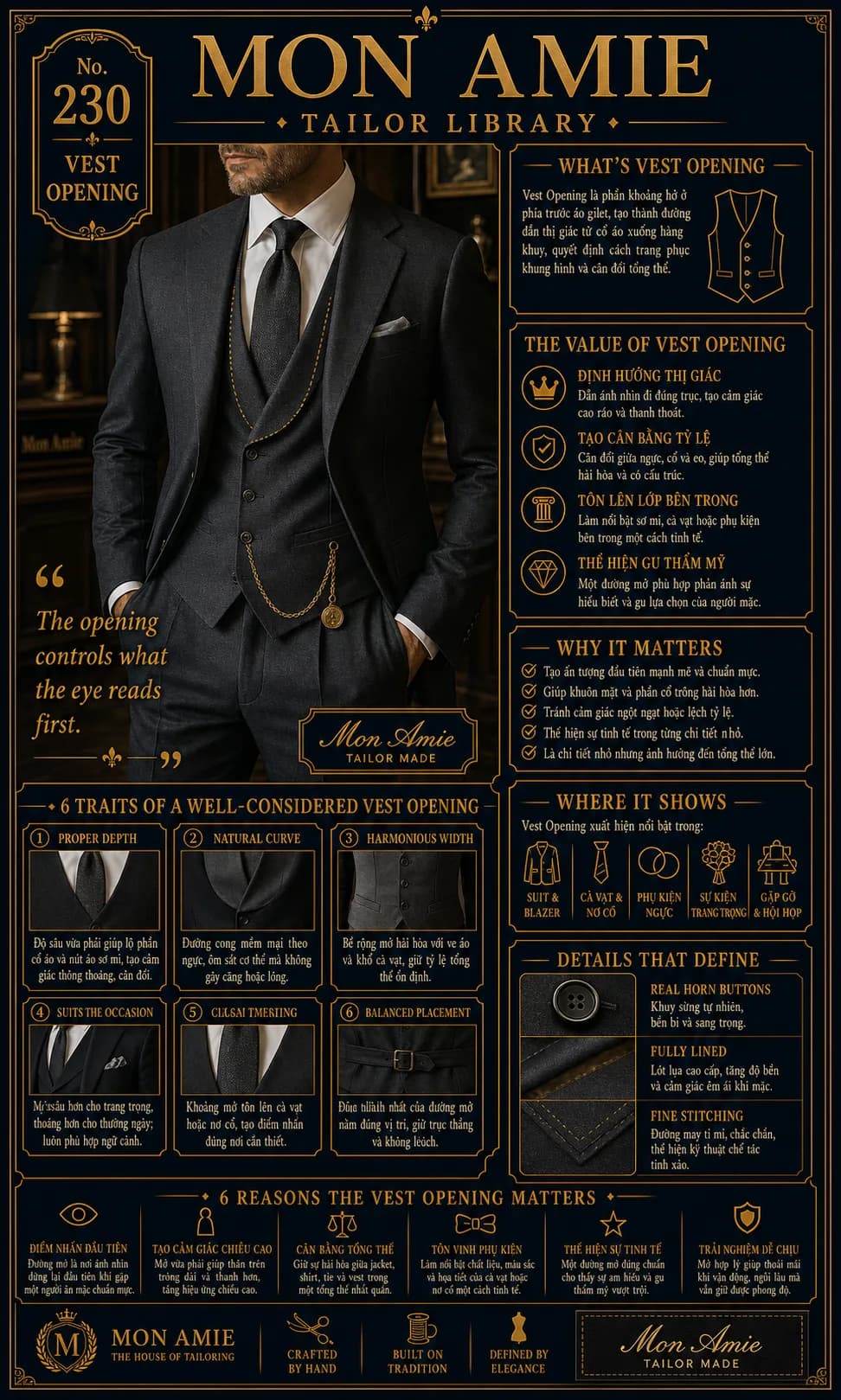
What Is Vest Opening? The Waistcoat Line That Leads the Eye
Vest opening is the front opening of a waistcoat, leading the eye from collar to buttons and setting the balance of a three-piece suit.
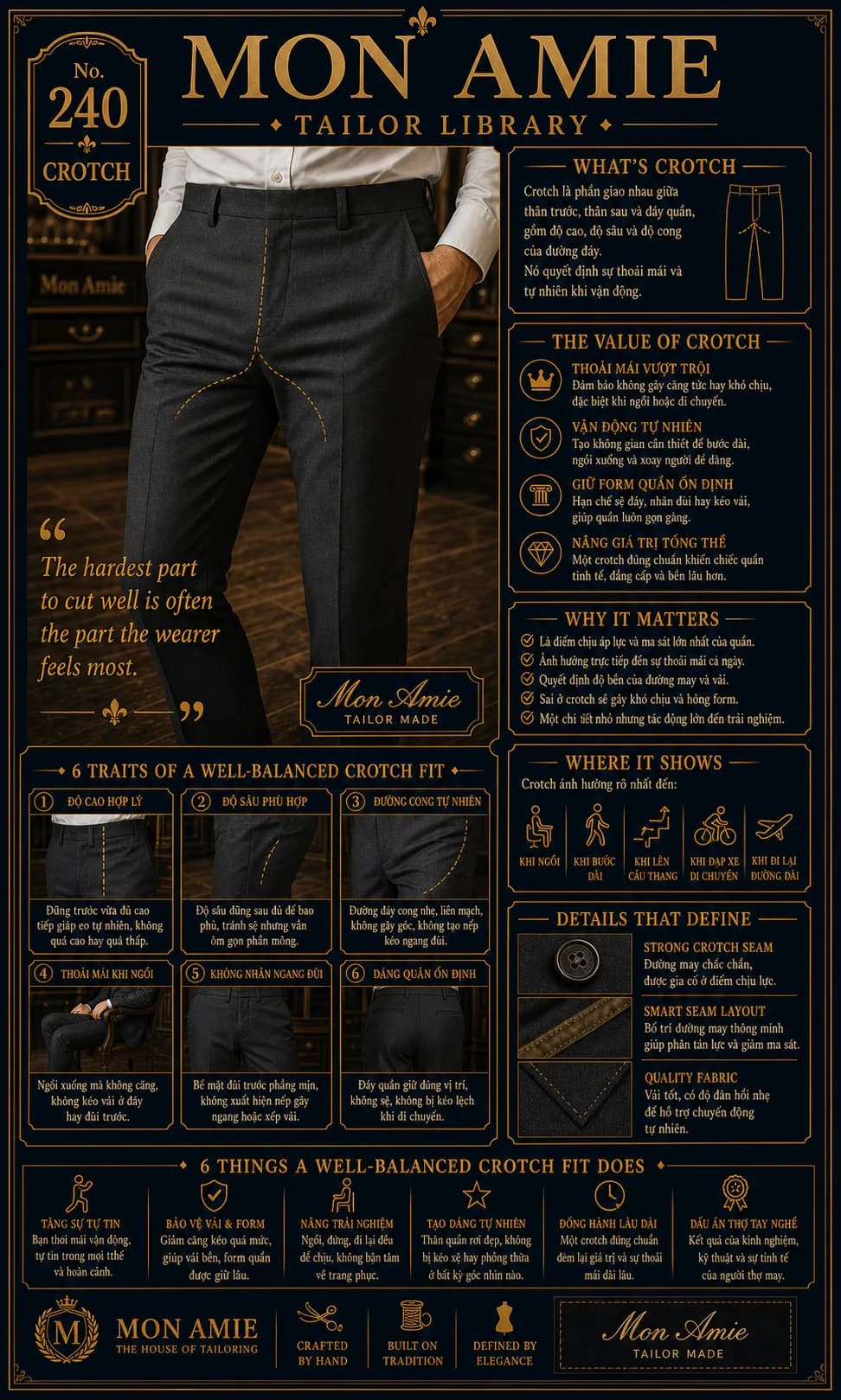
What Is the Crotch? The Detail That Decides Comfort
The crotch is where the front, back and seat of a trouser meet — a small detail that governs the comfort and shape of the whole garment.
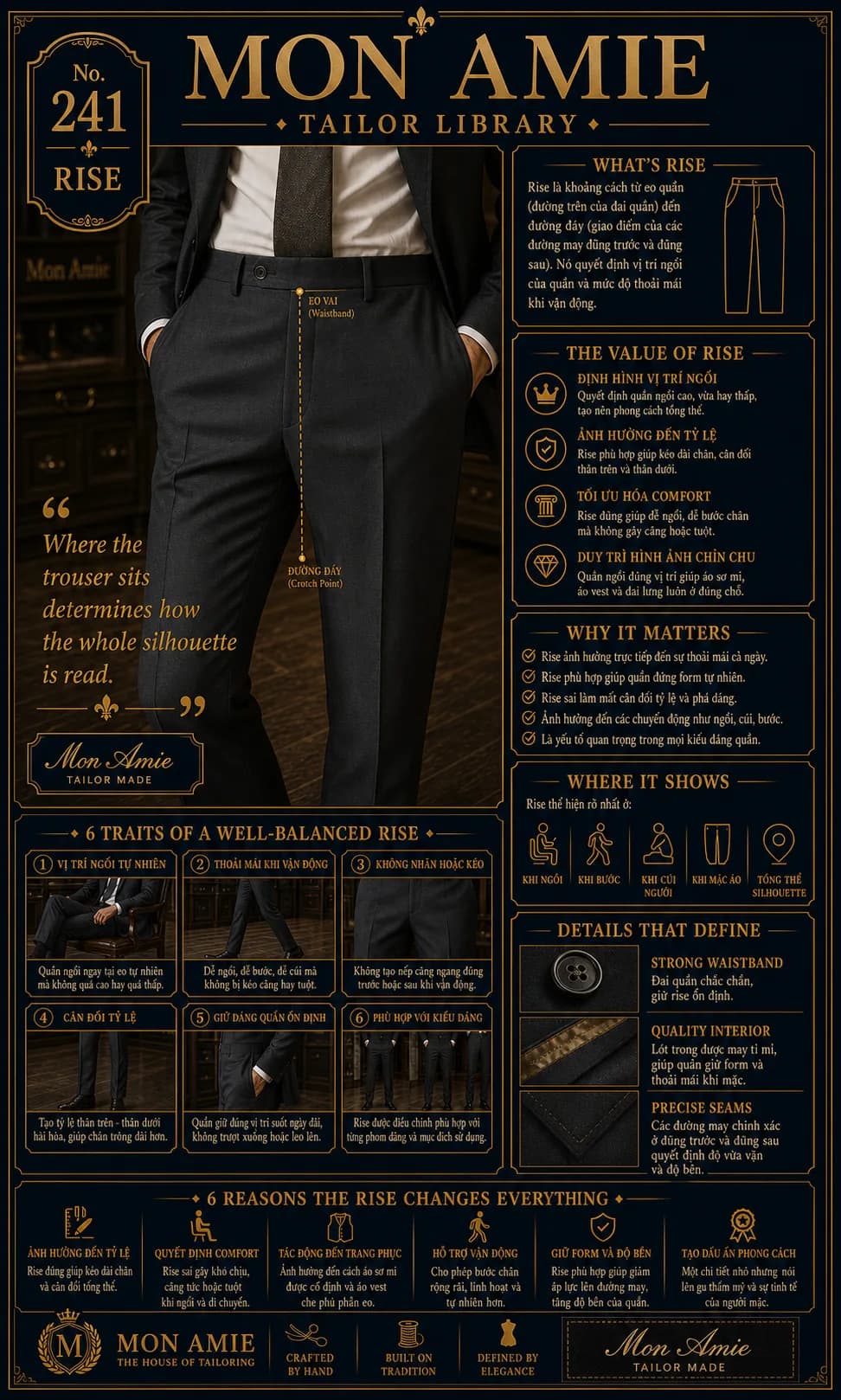
What Is Rise? Where Trousers Sit Shapes the Suit
Rise is the distance from the trouser waist to the crotch seam, deciding how high the trouser sits, your proportions and comfort in movement.
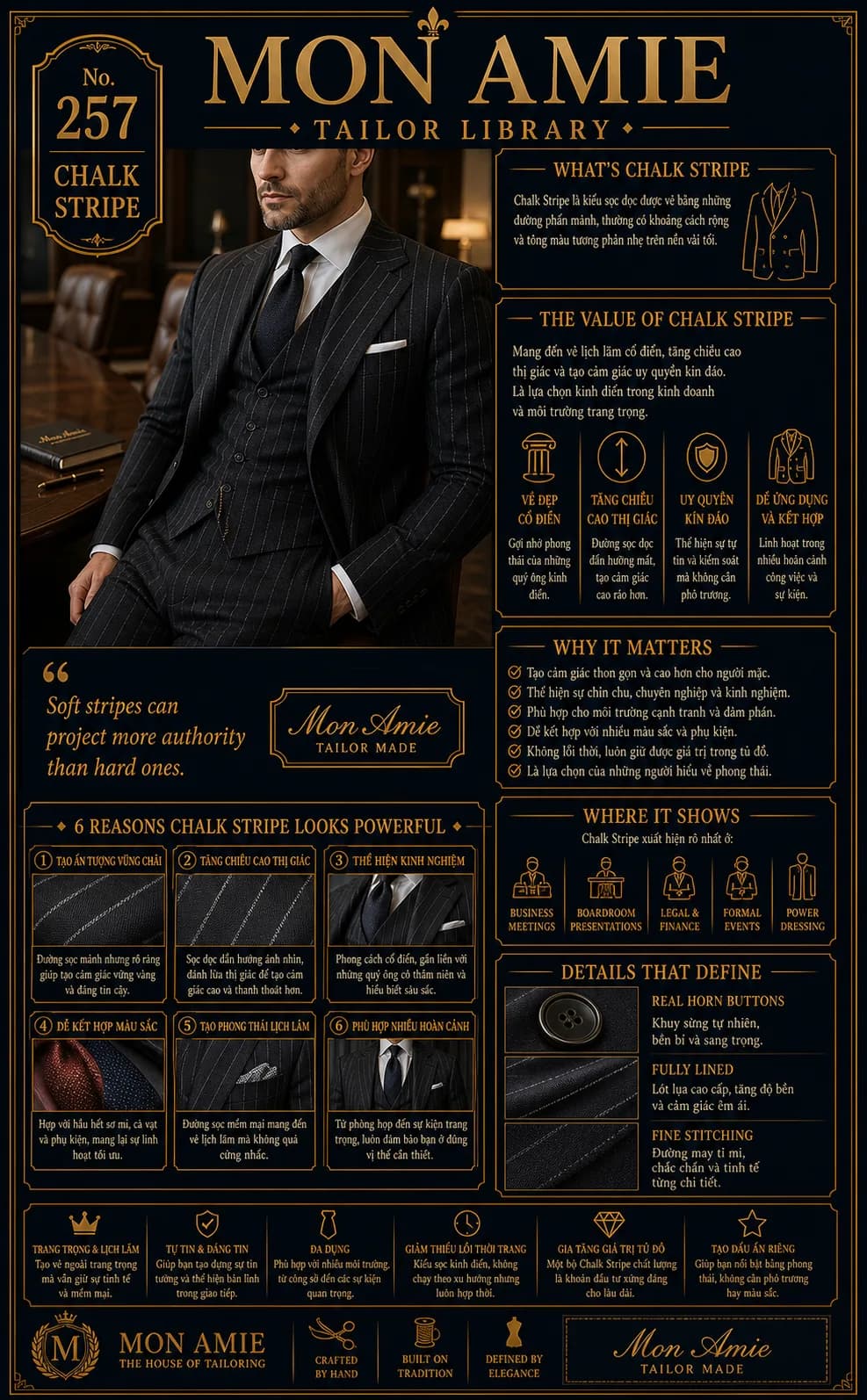
What Is Chalk Stripe? The Classic Stripe of Quiet Power
Chalk stripe is a soft, chalk-like vertical stripe set widely apart on dark cloth. Why it carries quiet authority, and how to wear it well.
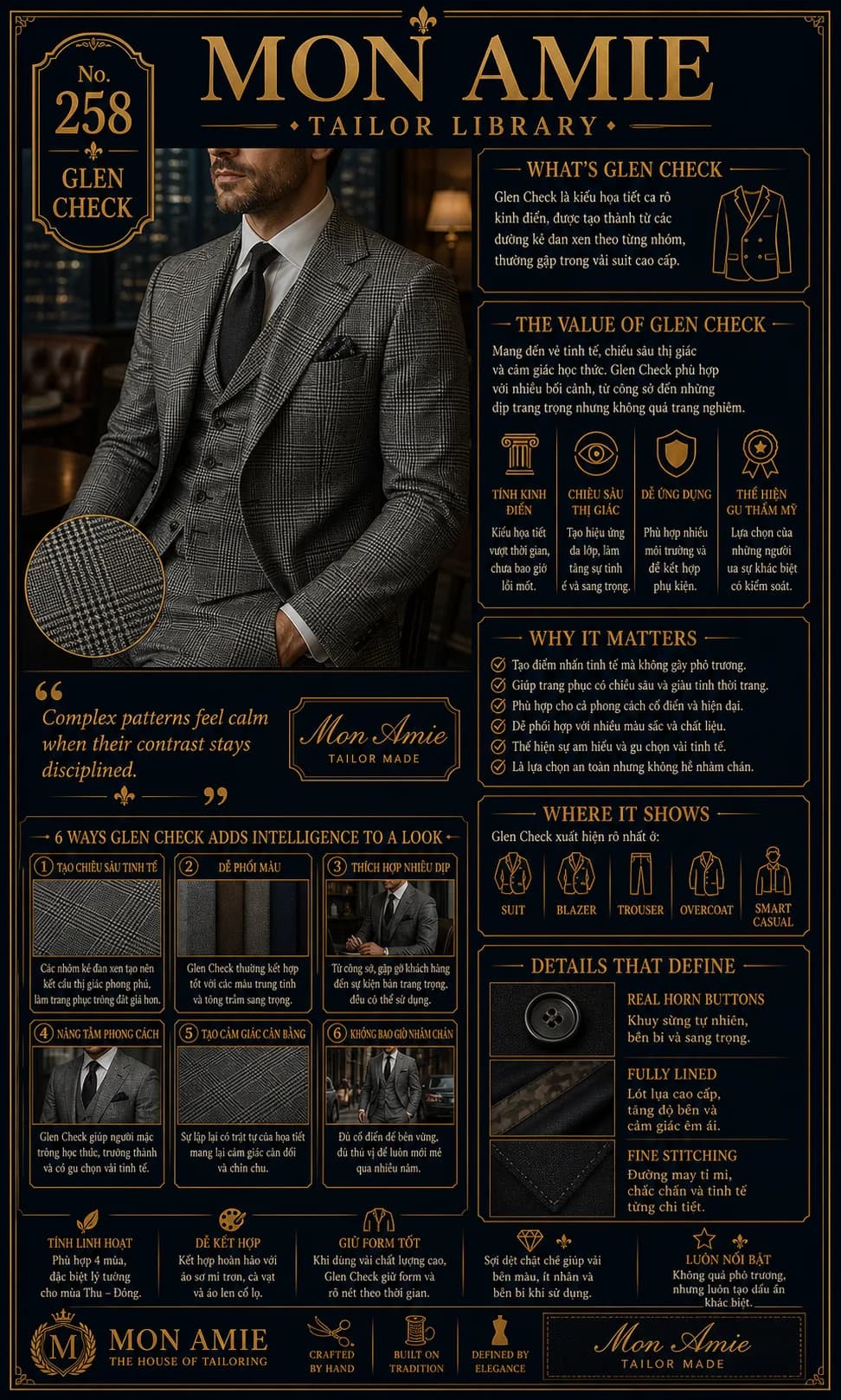
What Is Glen Check? The Classic, Scholarly Check Pattern
Glen check is a classic check woven from interlocking grouped lines, common in fine suiting. What it offers and how to wear glen check well.
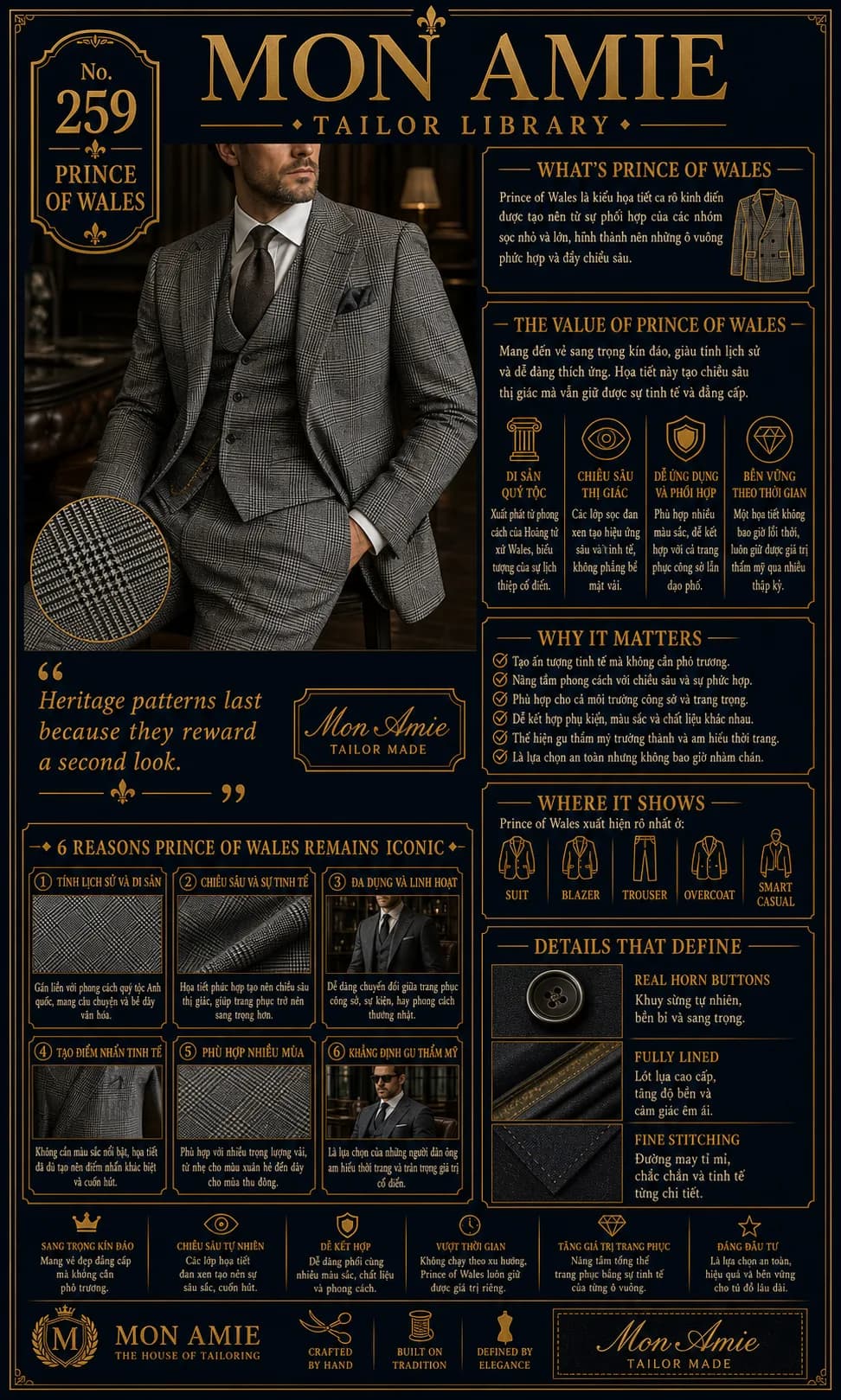
What Is Prince of Wales Check? A Royal Heritage Pattern
Prince of Wales is a classic check built from interlocking small and large stripe groups. Its heritage, its value and how to wear it well.
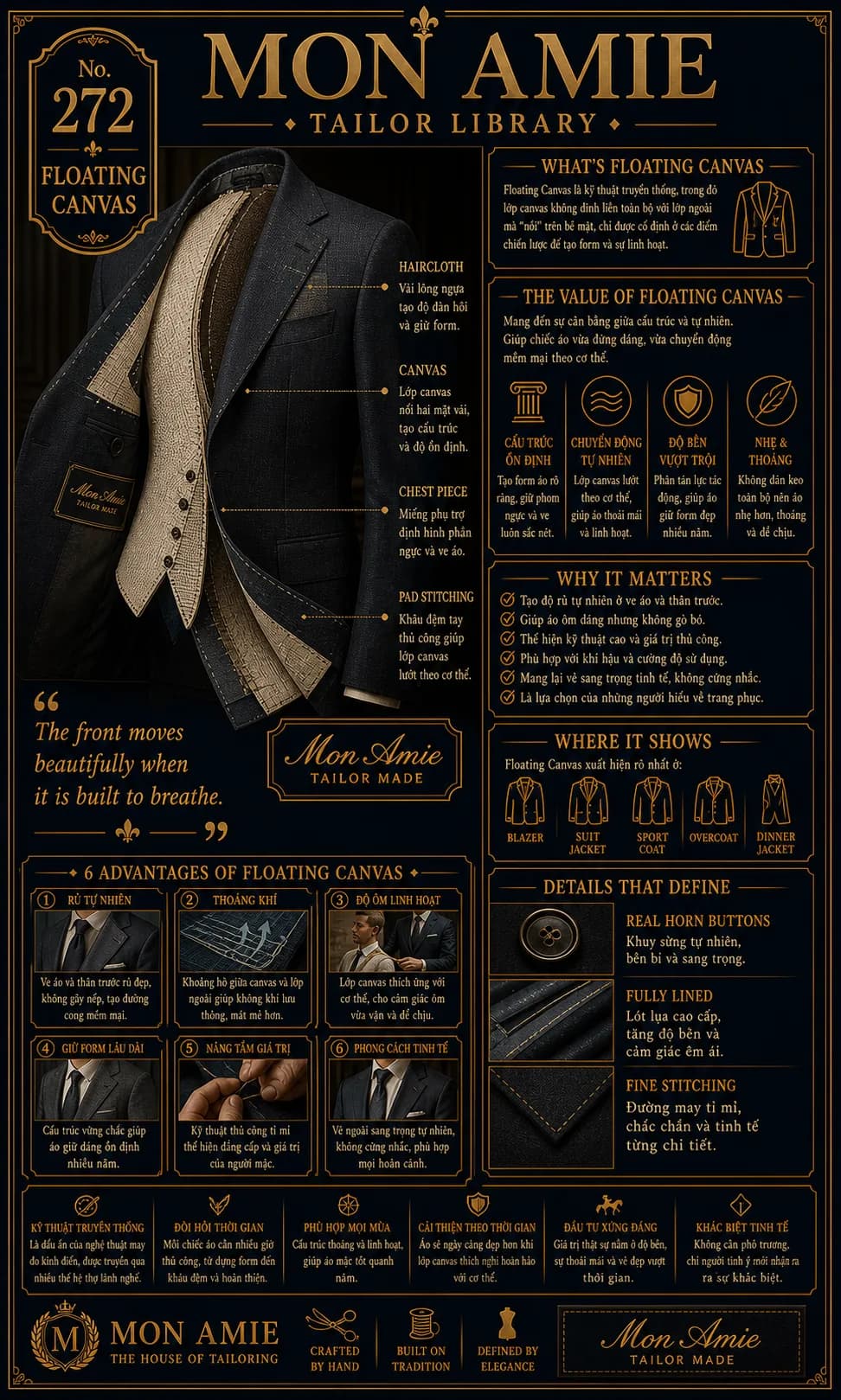
What Is Floating Canvas? The Finest Jacket Construction
Floating canvas is traditional construction: an unglued canvas layer floating against the cloth, so the jacket drapes naturally and fits without stiffness.
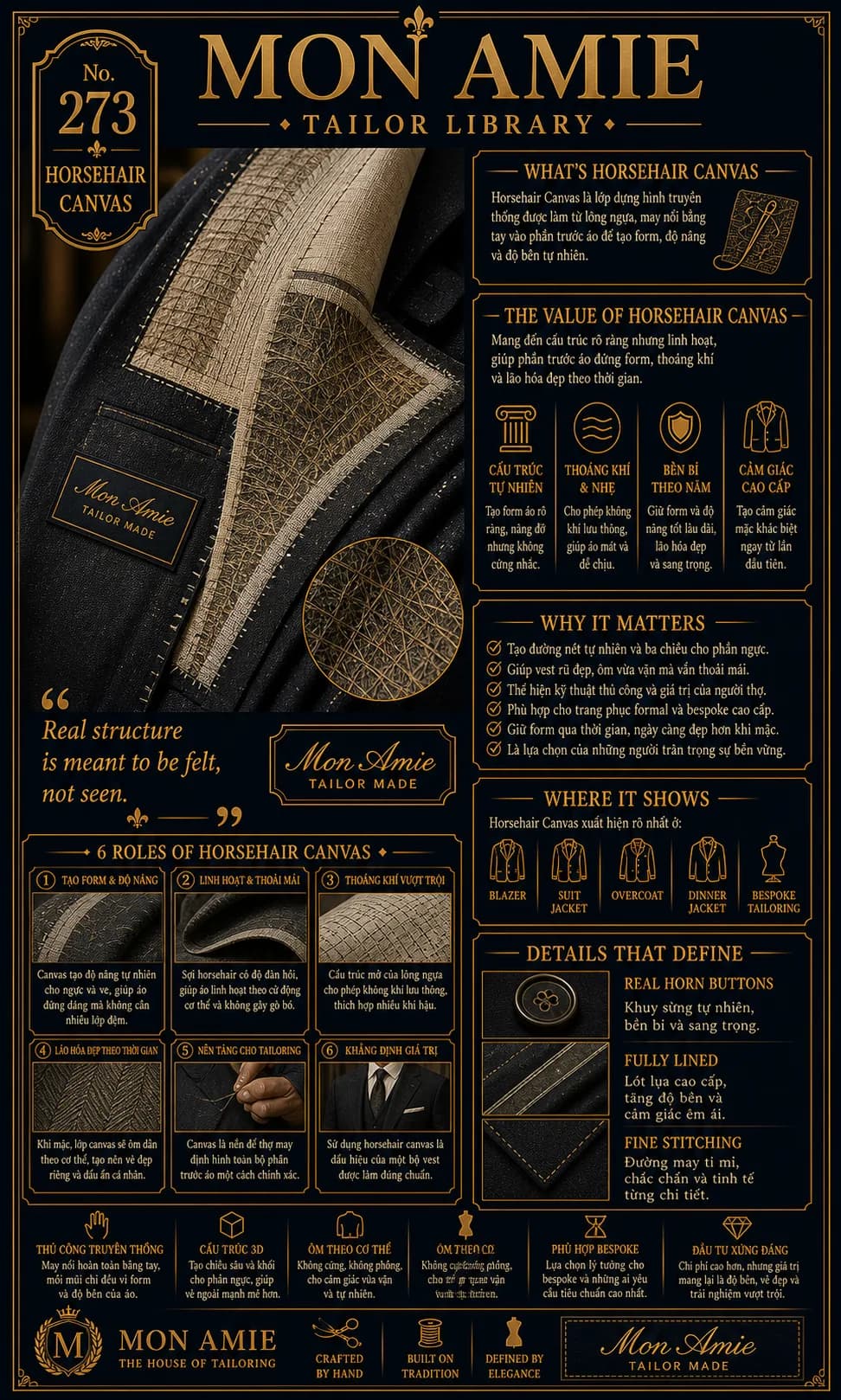
What Is Horsehair Canvas? The Interlining Inside a Jacket
Horsehair canvas is an interlining woven from horsehair, stitched by hand into the forepart to give shape, chest support and natural durability.
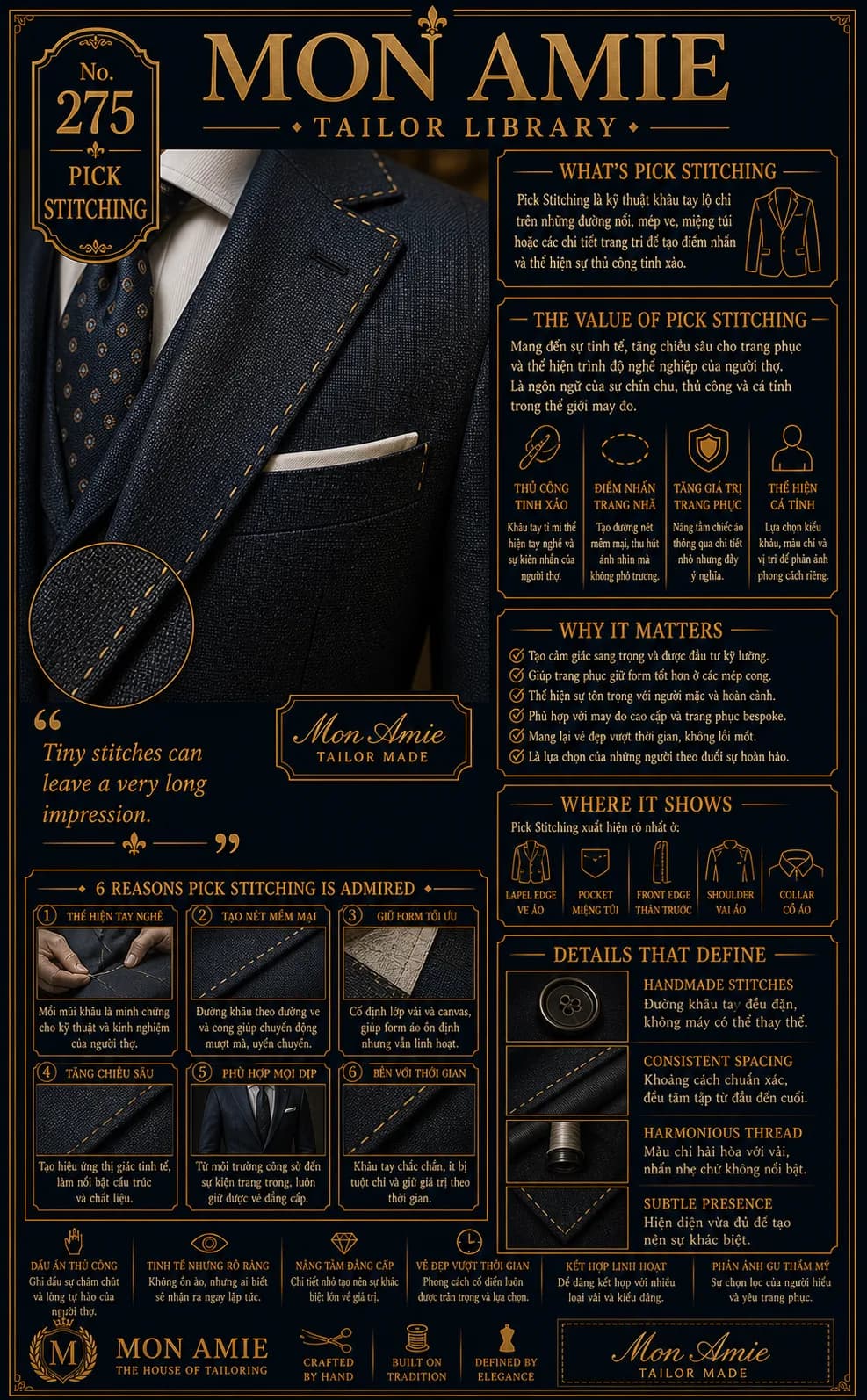
What Is Pick Stitching? The Hand Stitch on a Fine Suit
Pick stitching is visible hand stitching along lapels, pocket mouths and seams — the craft mark that separates a tailored suit from a factory one.
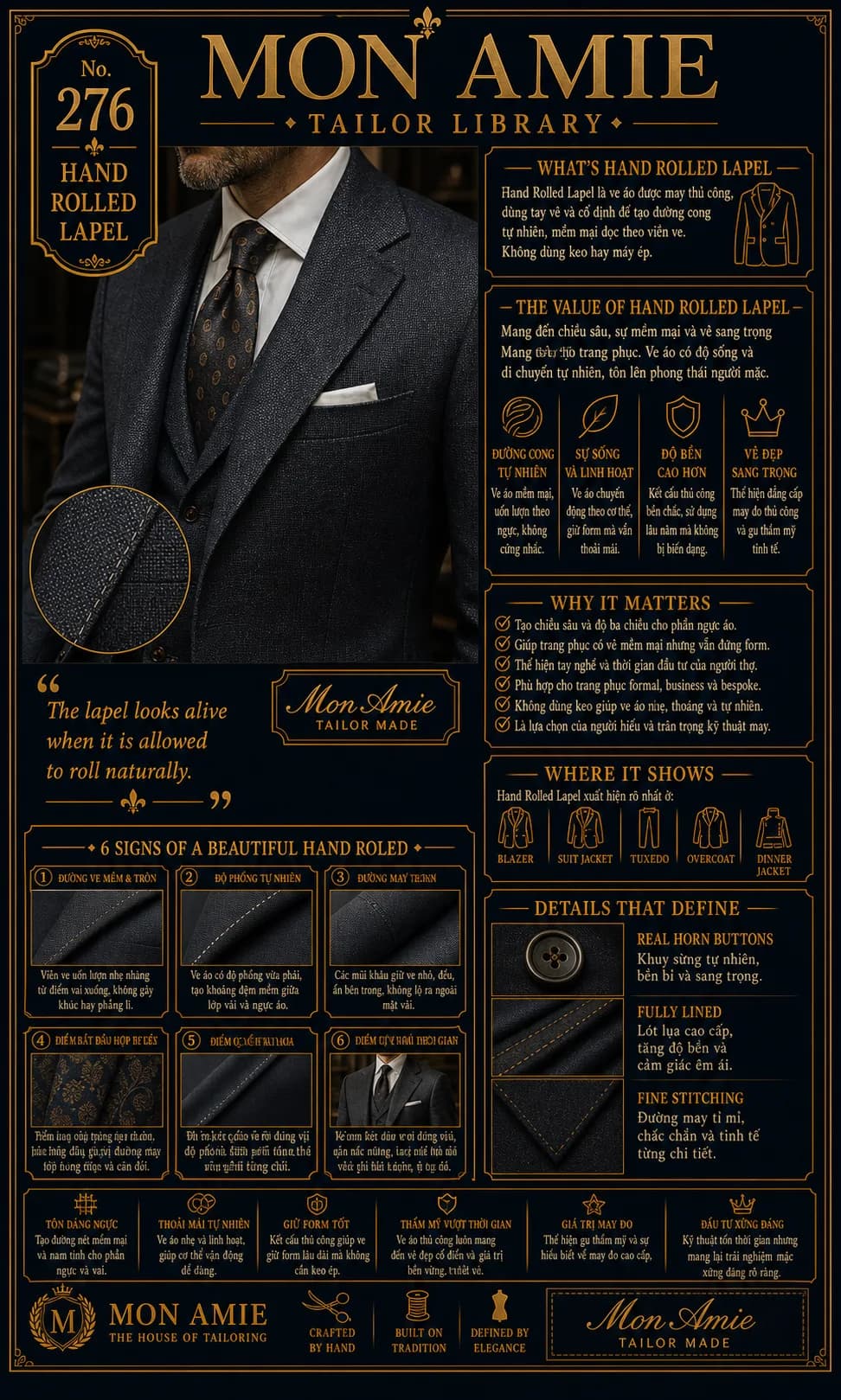
What Is a Hand Rolled Lapel? The Mark of a Tailored Suit
A hand rolled lapel is shaped entirely by hand, rolled and secured to create a natural curve along the edge, with no fusing and no pressing machine.
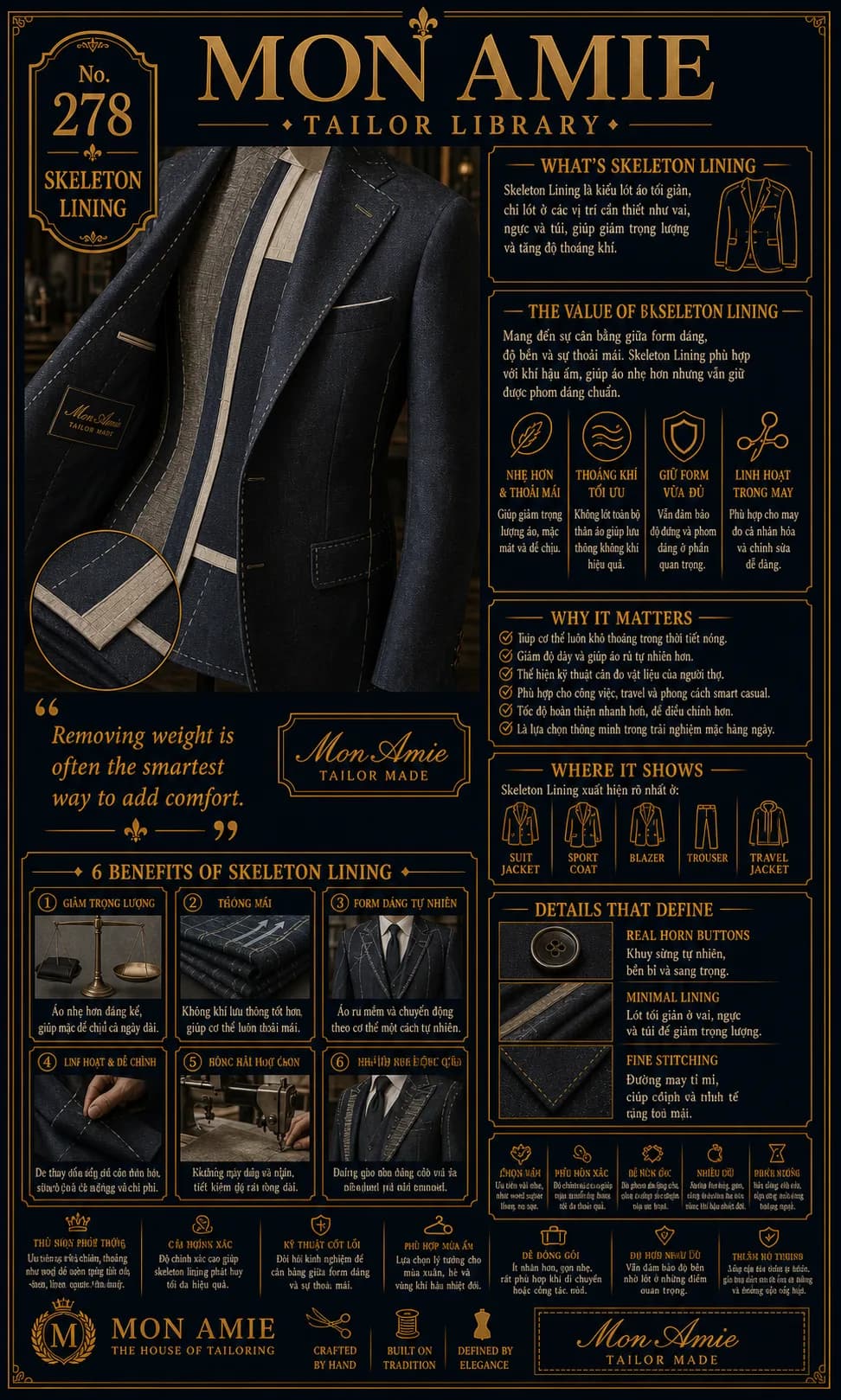
What Is Skeleton Lining? Light Suits for Hot Climates
Skeleton lining keeps lining only at the shoulders, chest and pockets — a lighter, more breathable suit that still holds its shape properly.
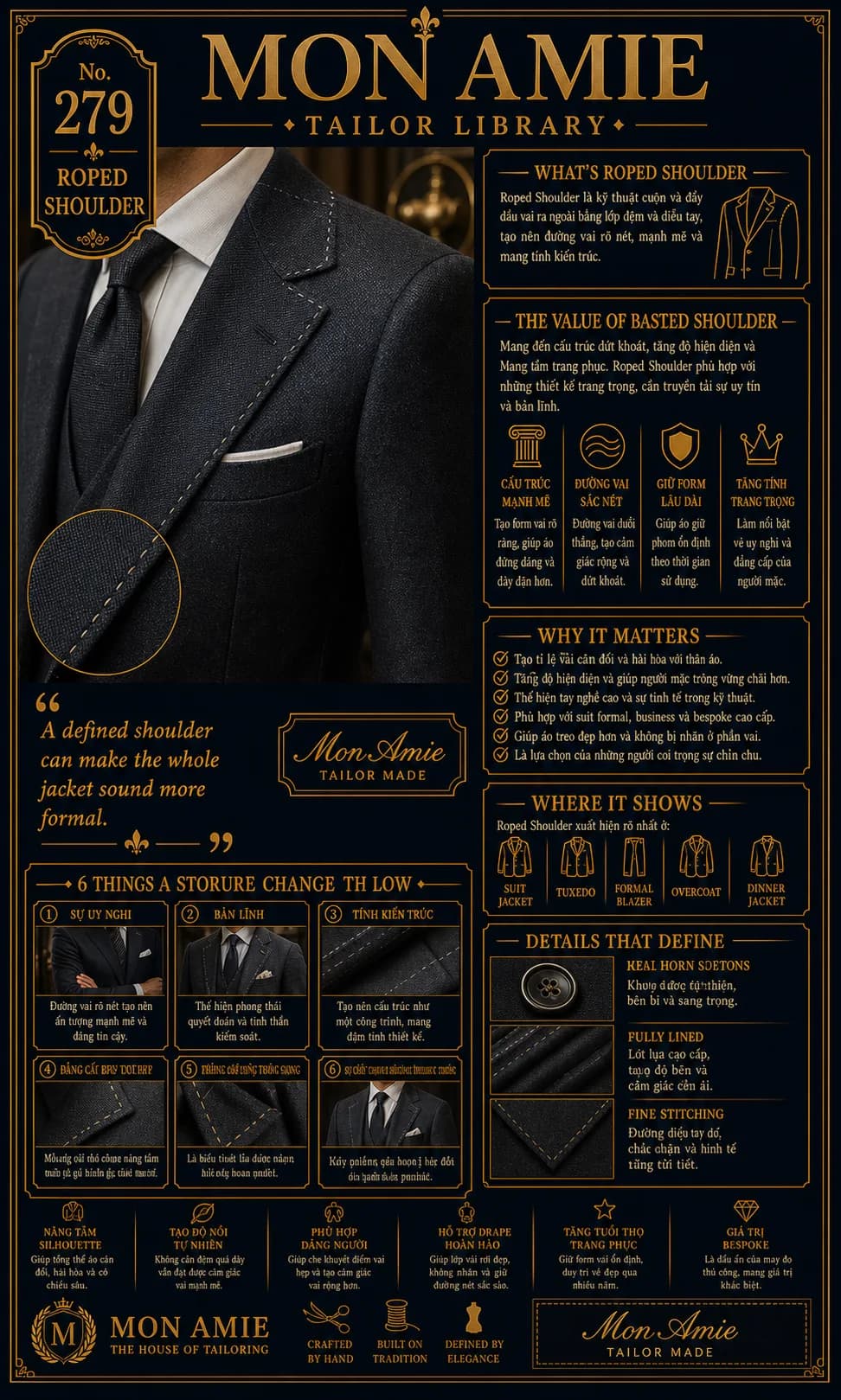
What Is a Roped Shoulder? The Commanding Suit Shoulder
A roped shoulder rolls the sleeve head upward with padding and hand-manipulated cloth, creating a crisp, powerful, architectural shoulder line.
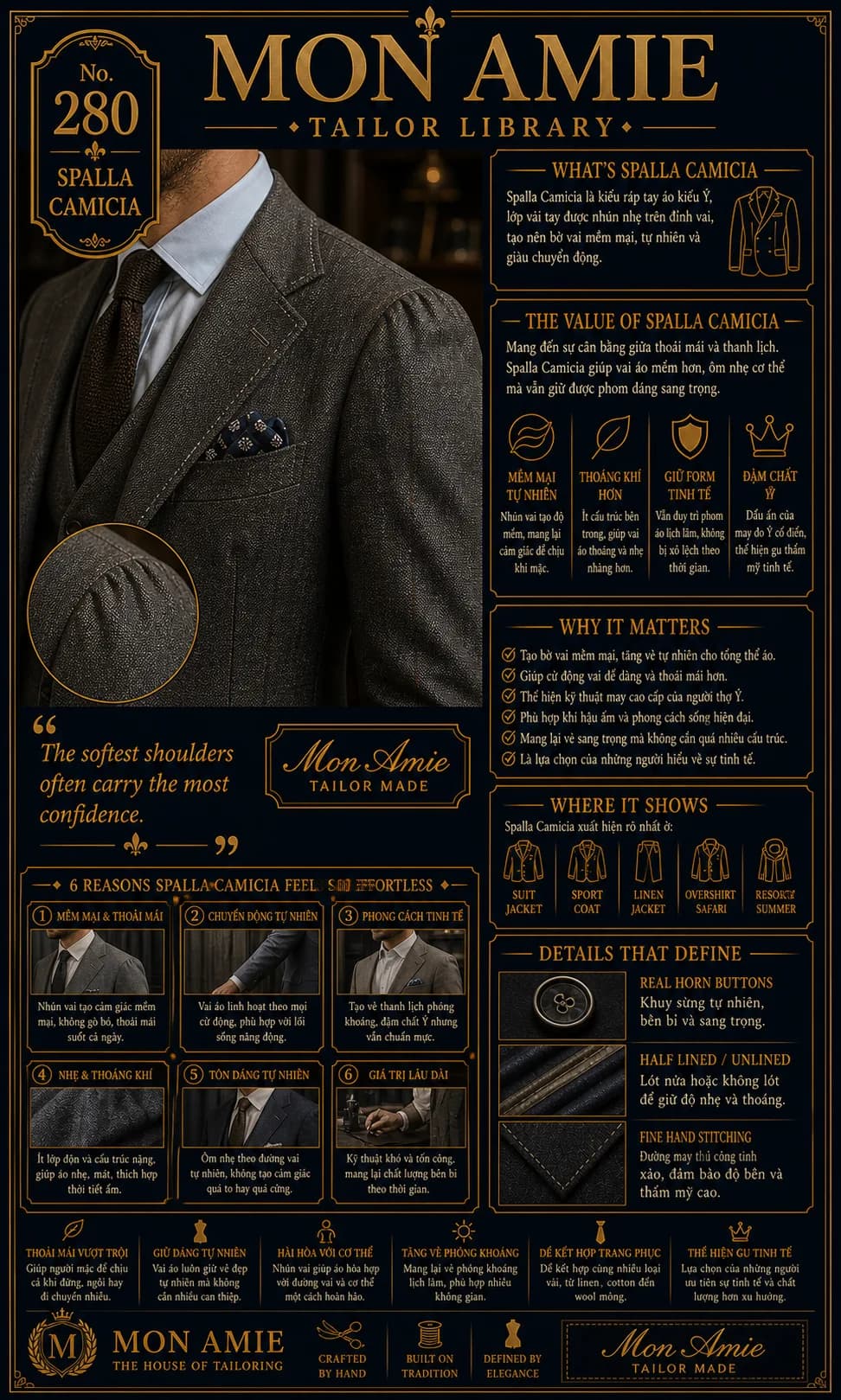
What Is Spalla Camicia? The Soft Italian Shirt Shoulder
Spalla camicia is the Italian shirt-sleeve shoulder, gently shirred for comfort and natural movement while keeping an elegant, refined line.
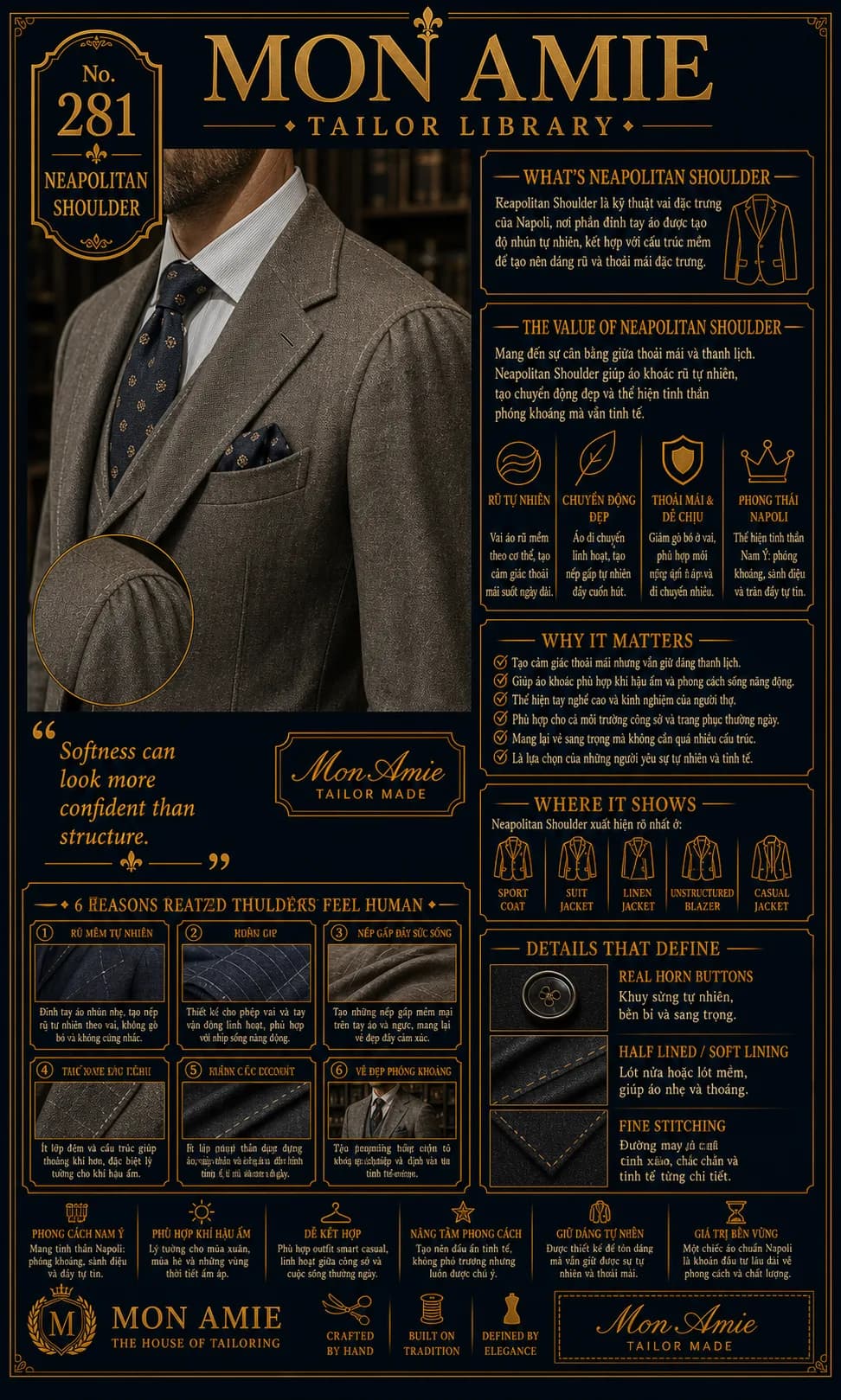
What Is a Neapolitan Shoulder? Naples' Soft Draped Line
The Neapolitan shoulder is Naples' signature: a lightly shirred sleeve head and soft construction that drape naturally, comfortable yet elegant.
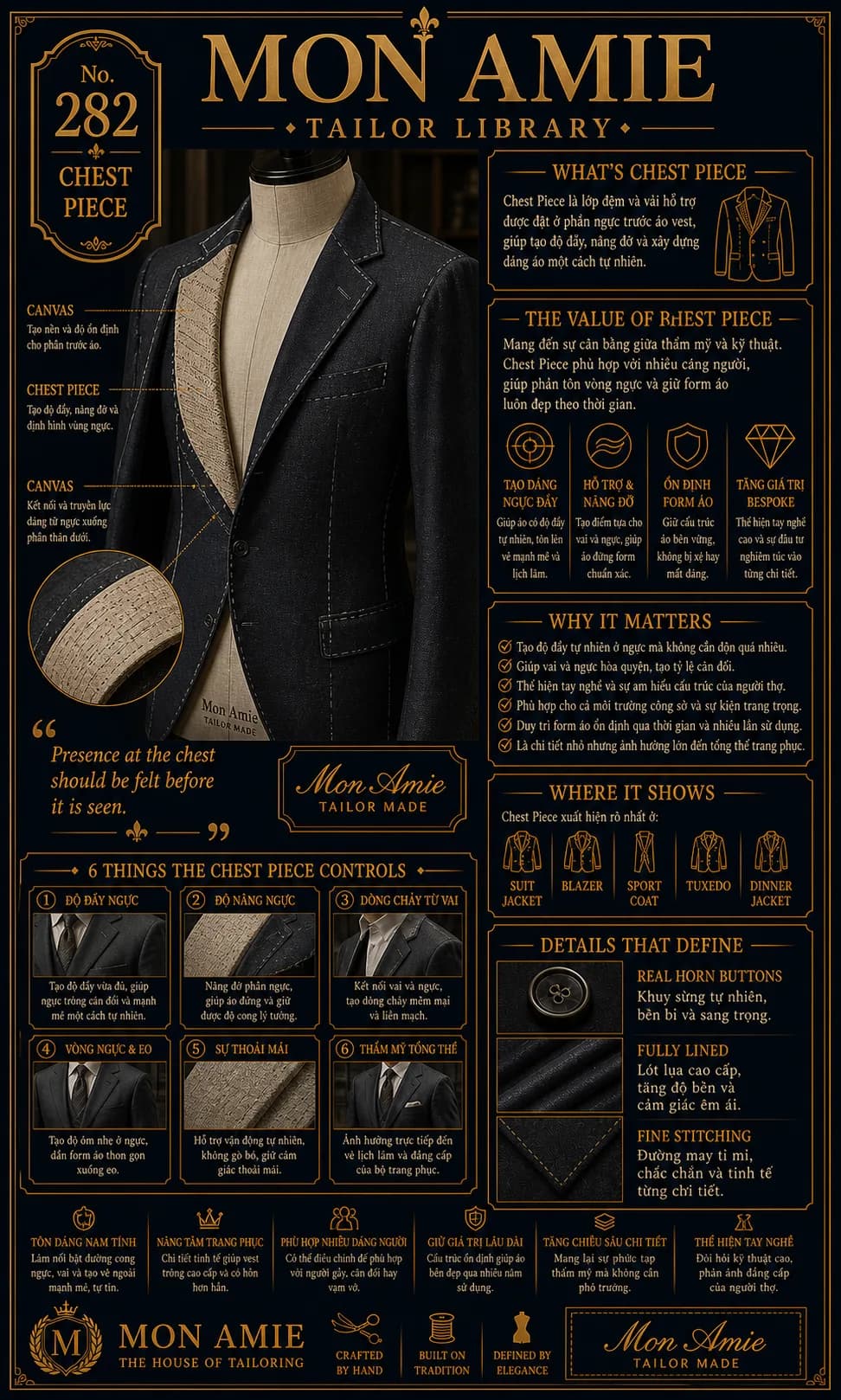
What Is a Chest Piece? The Padding That Shapes a Jacket
The chest piece is the padding and supporting cloth in the front chest of a jacket, adding fullness, support and lasting shape to the garment.
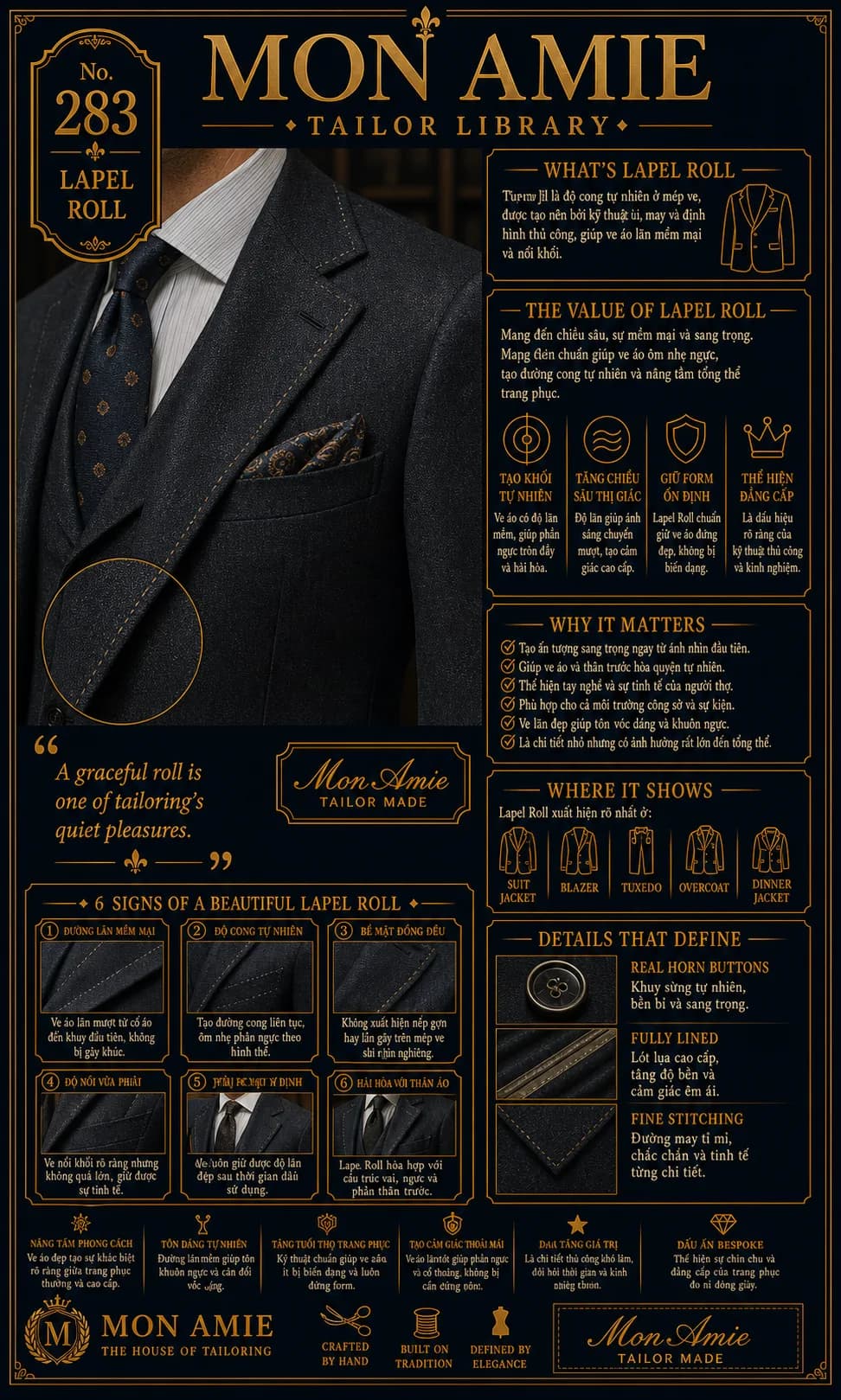
What Is Lapel Roll? The Curve That Marks a Bespoke Suit
Lapel roll is the natural curve along the lapel edge, created by hand pad stitching and shaping, so the lapel rolls softly with depth and elegance.
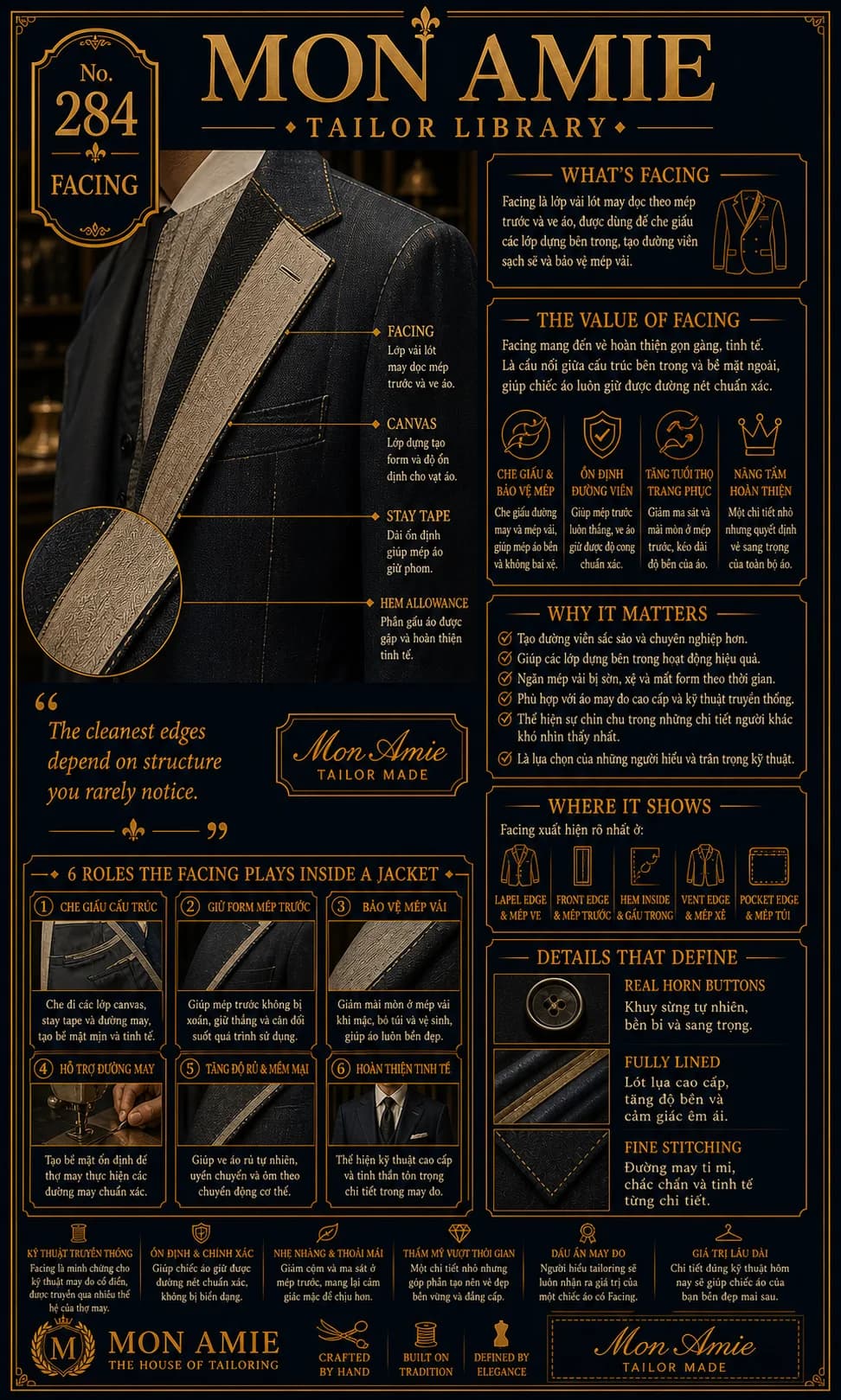
What Is Facing? The Lining Along a Suit Jacket's Lapel Edge
Facing is the fabric panel sewn along a jacket's front and lapel edges, hiding the inner structure, creating a clean border and protecting the edges.
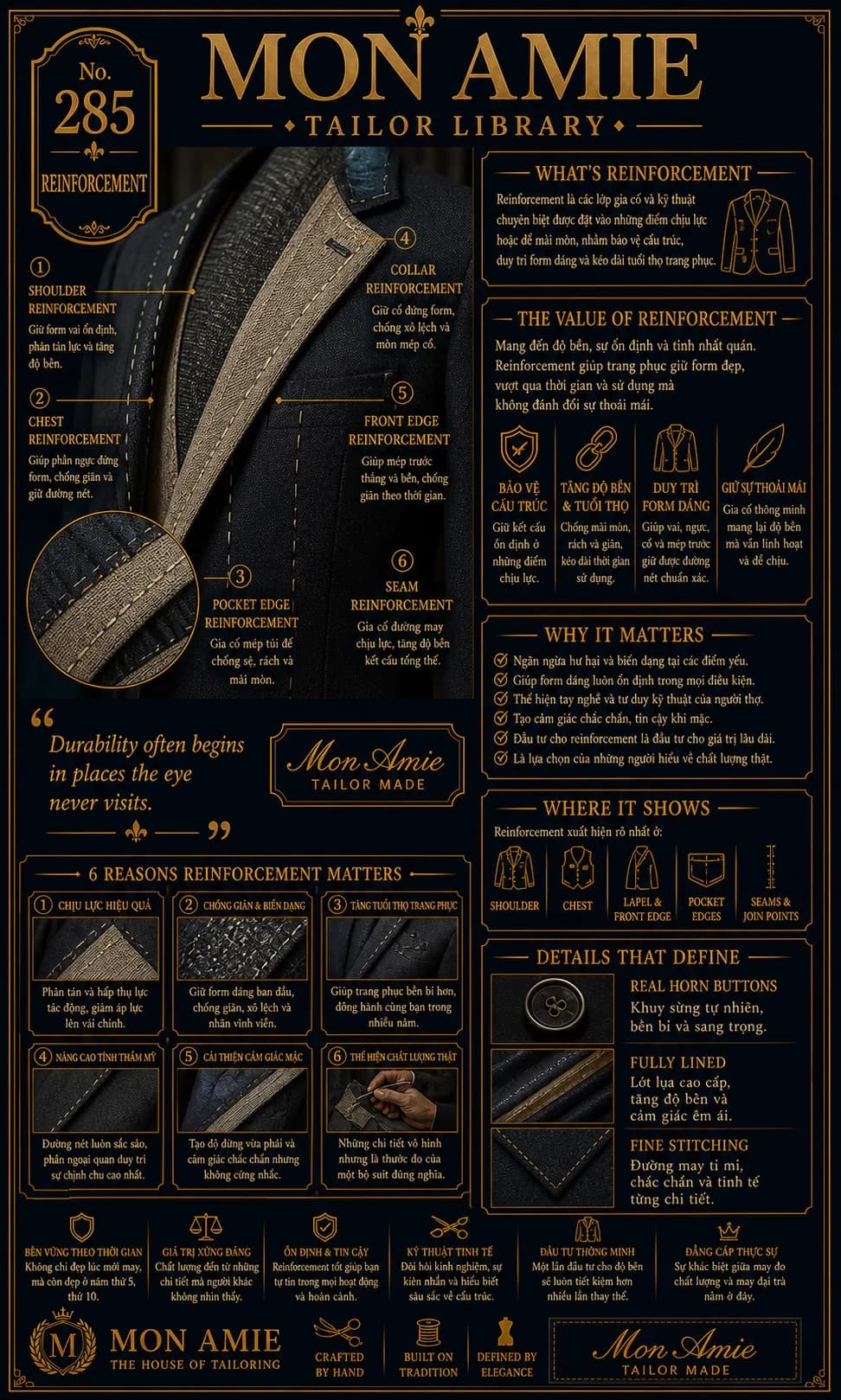
What Is Reinforcement? The Layers That Keep a Suit Lasting
Reinforcement is the set of supporting layers placed at a suit's stress points to hold its shape, resist wear and extend the life of the garment.
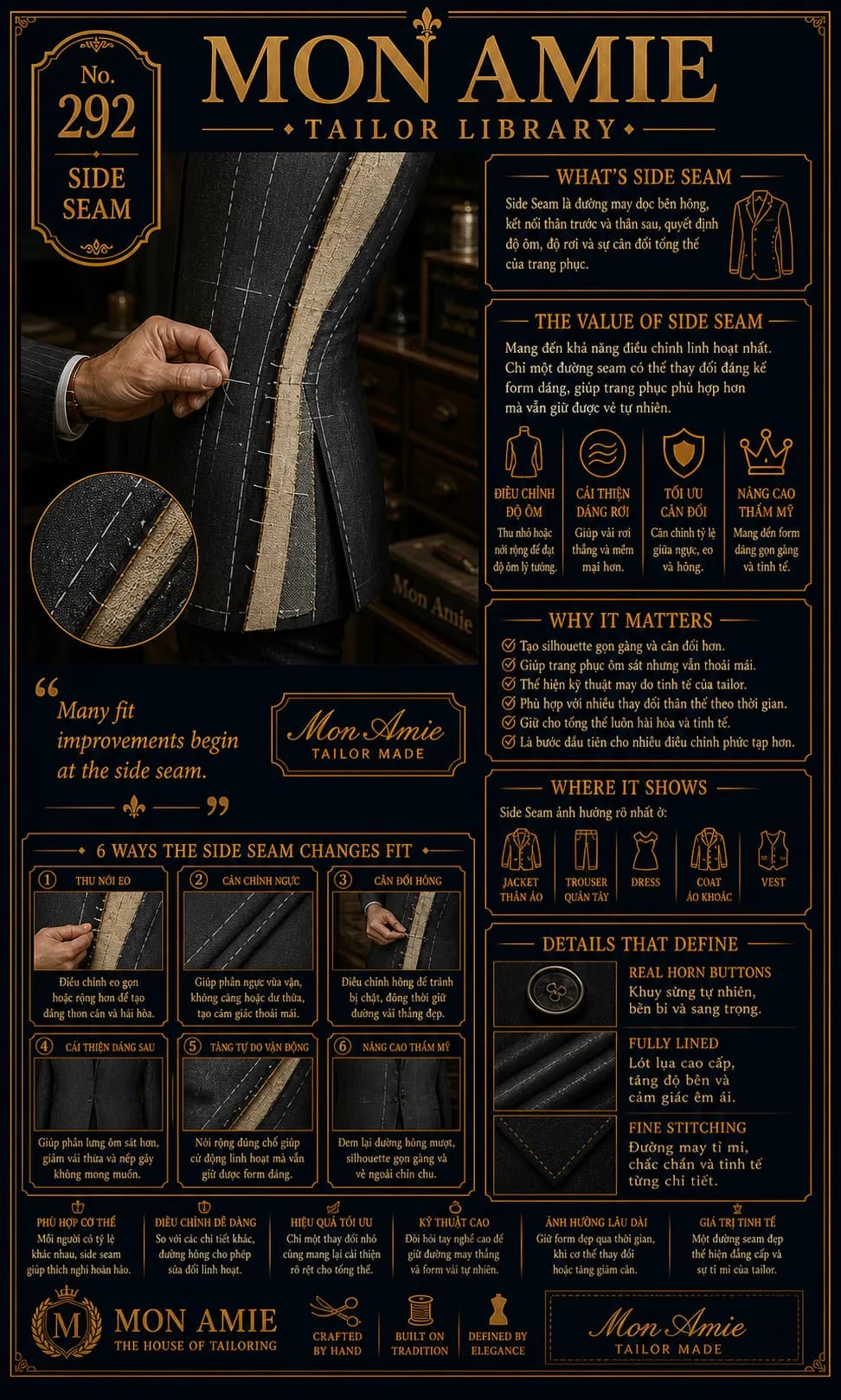
What Is a Side Seam? The Seam That Sets a Suit's Fit
The side seam runs down the flank joining the front and back panels, governing how closely a garment fits, how it drapes and how balanced it looks.
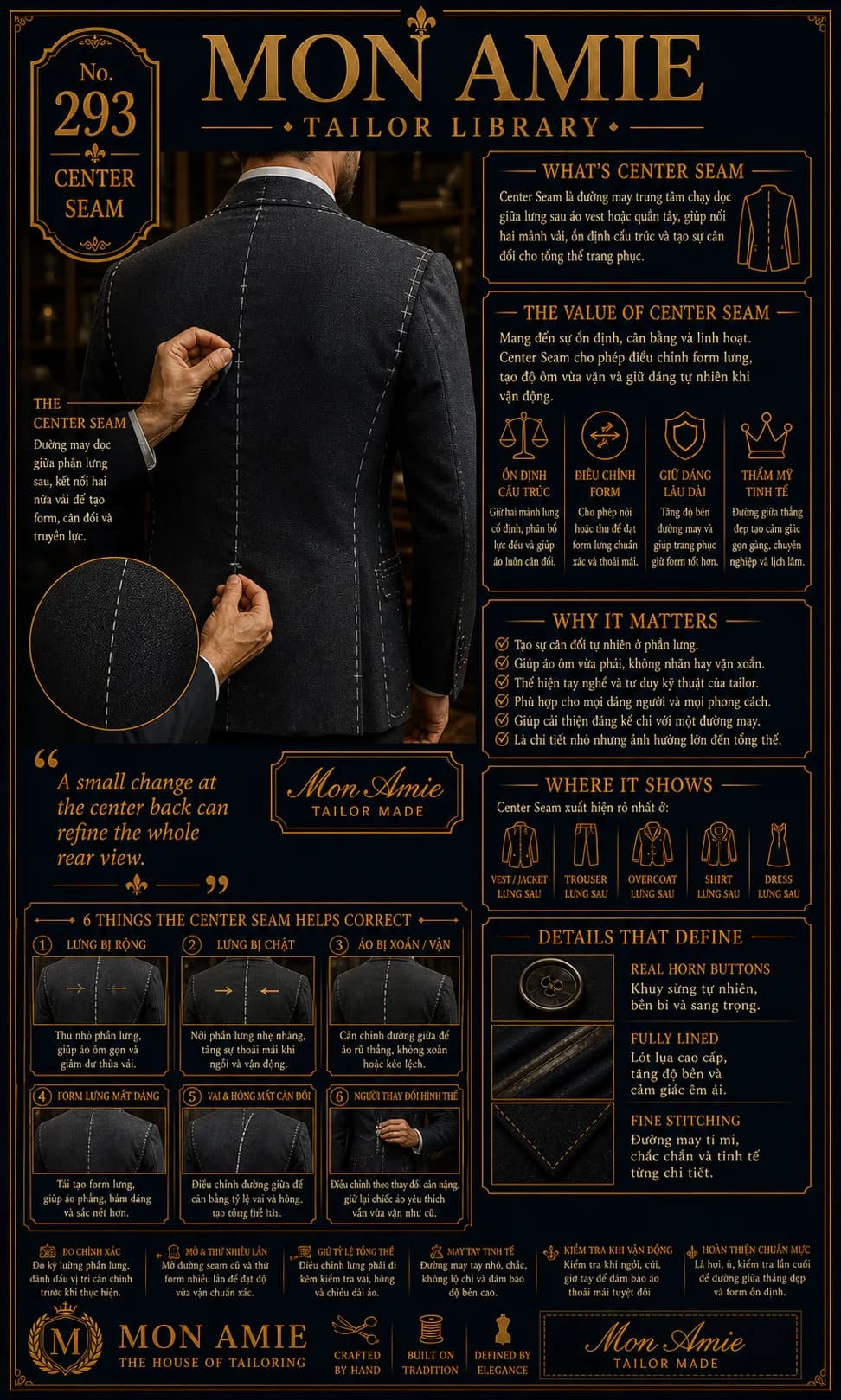
What Is a Centre Seam? The Back Seam That Holds a Suit
The centre seam runs down the centre back of a jacket, joining two panels, stabilising the structure and bringing balance to the whole garment.
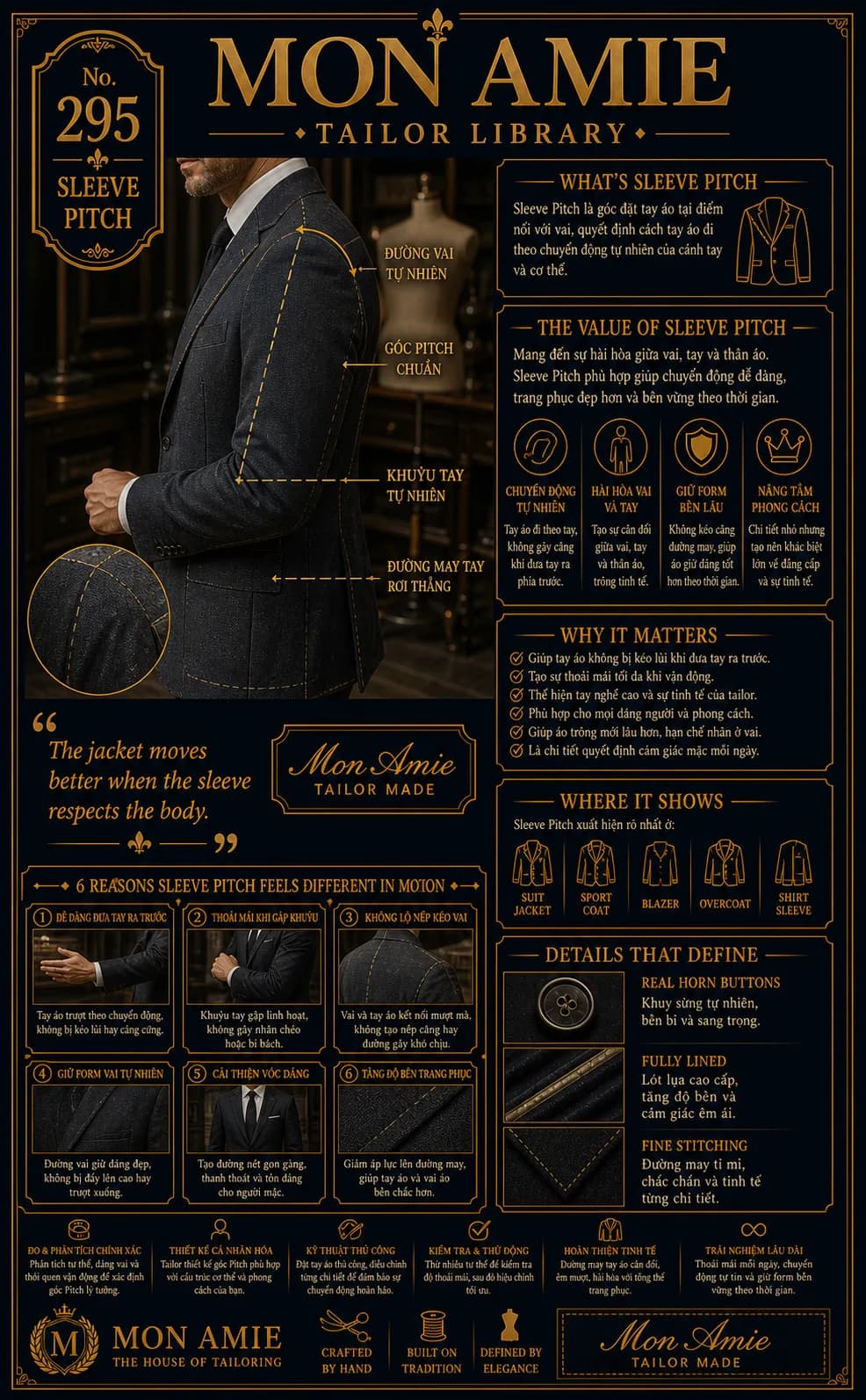
What Is Sleeve Pitch? The Angle That Governs Movement
Sleeve pitch is the angle at which a sleeve is set into the shoulder, deciding how it follows the natural movement of your arm and body.
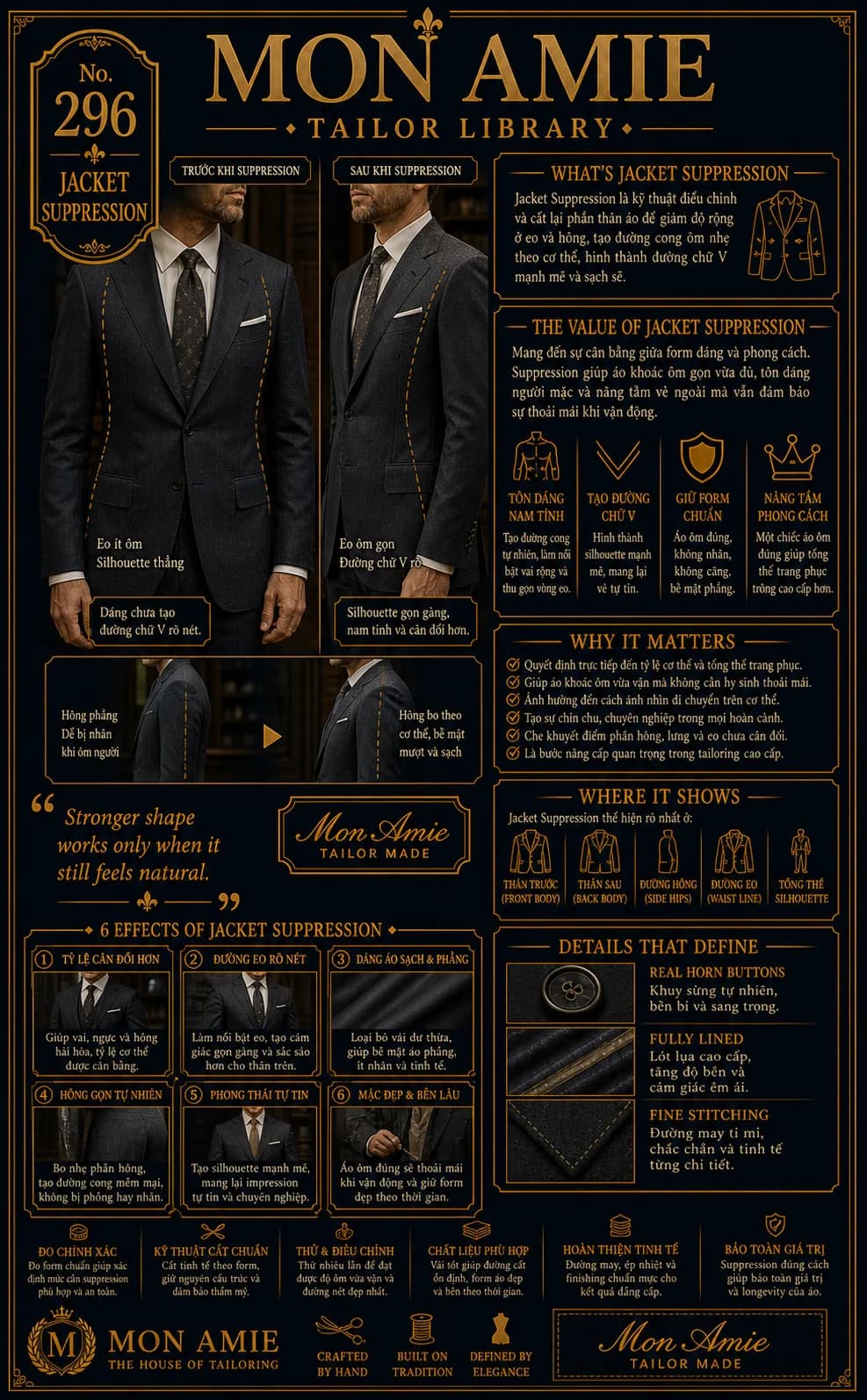
What Is Jacket Suppression? Shaping the V-Line Silhouette
Jacket suppression reshapes the body of a jacket to reduce width at waist and hip, creating a gentle curve and a clean V-shaped silhouette.
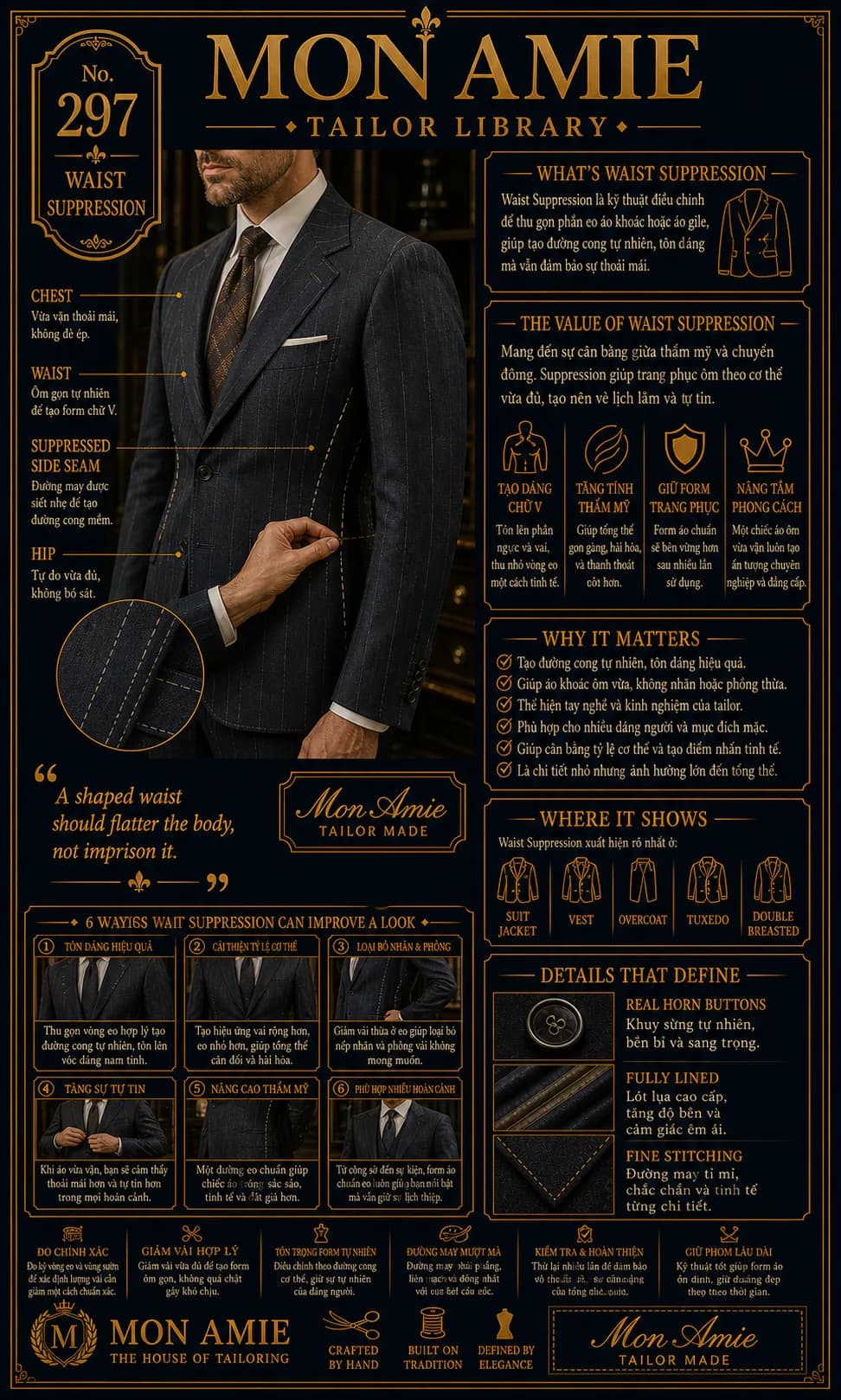
What Is Waist Suppression? Shaping the Waist Correctly
Waist suppression is the technique of shaping the waist of a jacket or waistcoat, creating a natural curve that flatters while staying comfortable.
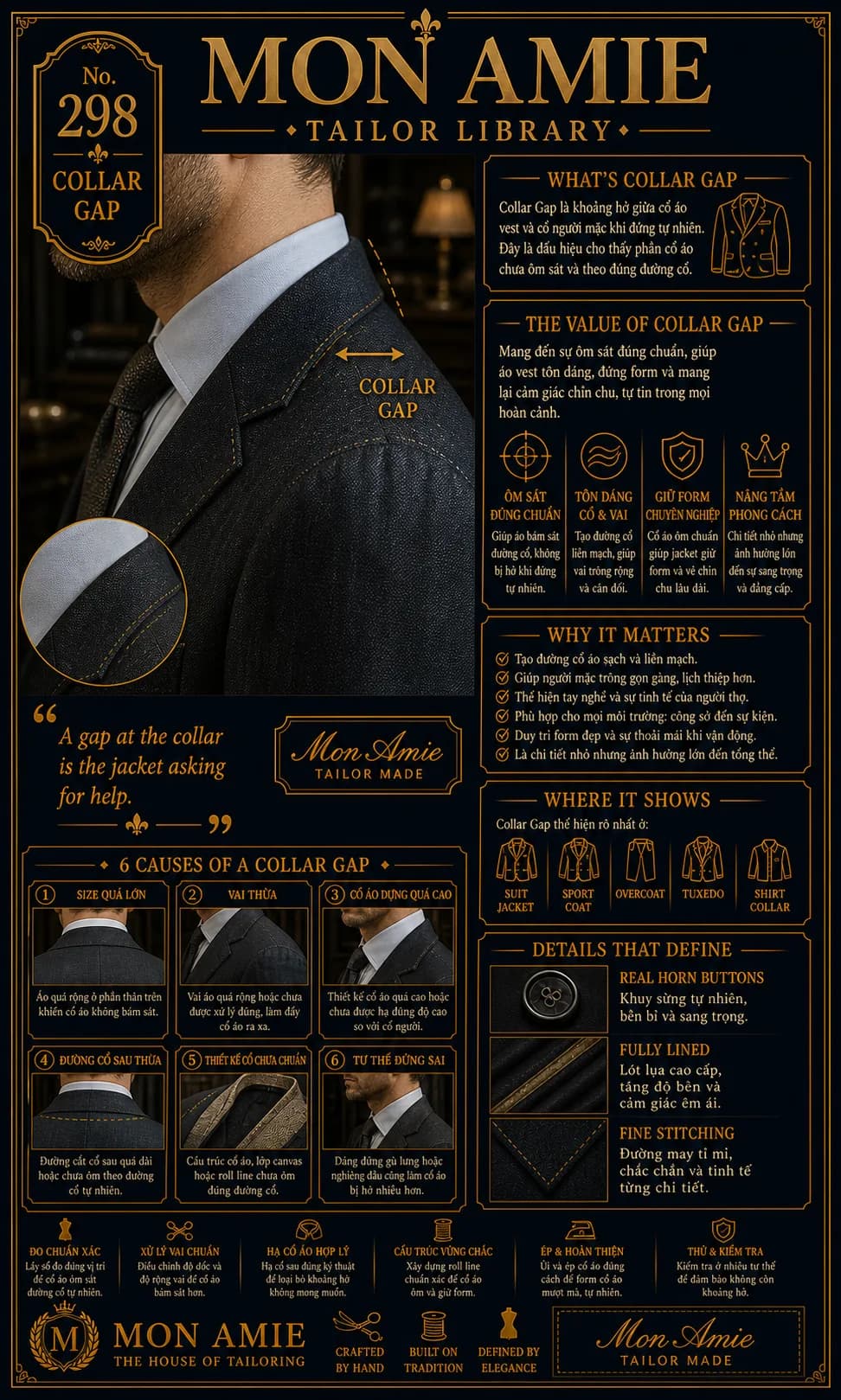
What Is Collar Gap? Causes and How Tailors Fix It
Collar gap is the space between a jacket collar and your neck when standing naturally — a sign the collar is not hugging. Six causes and their fixes.
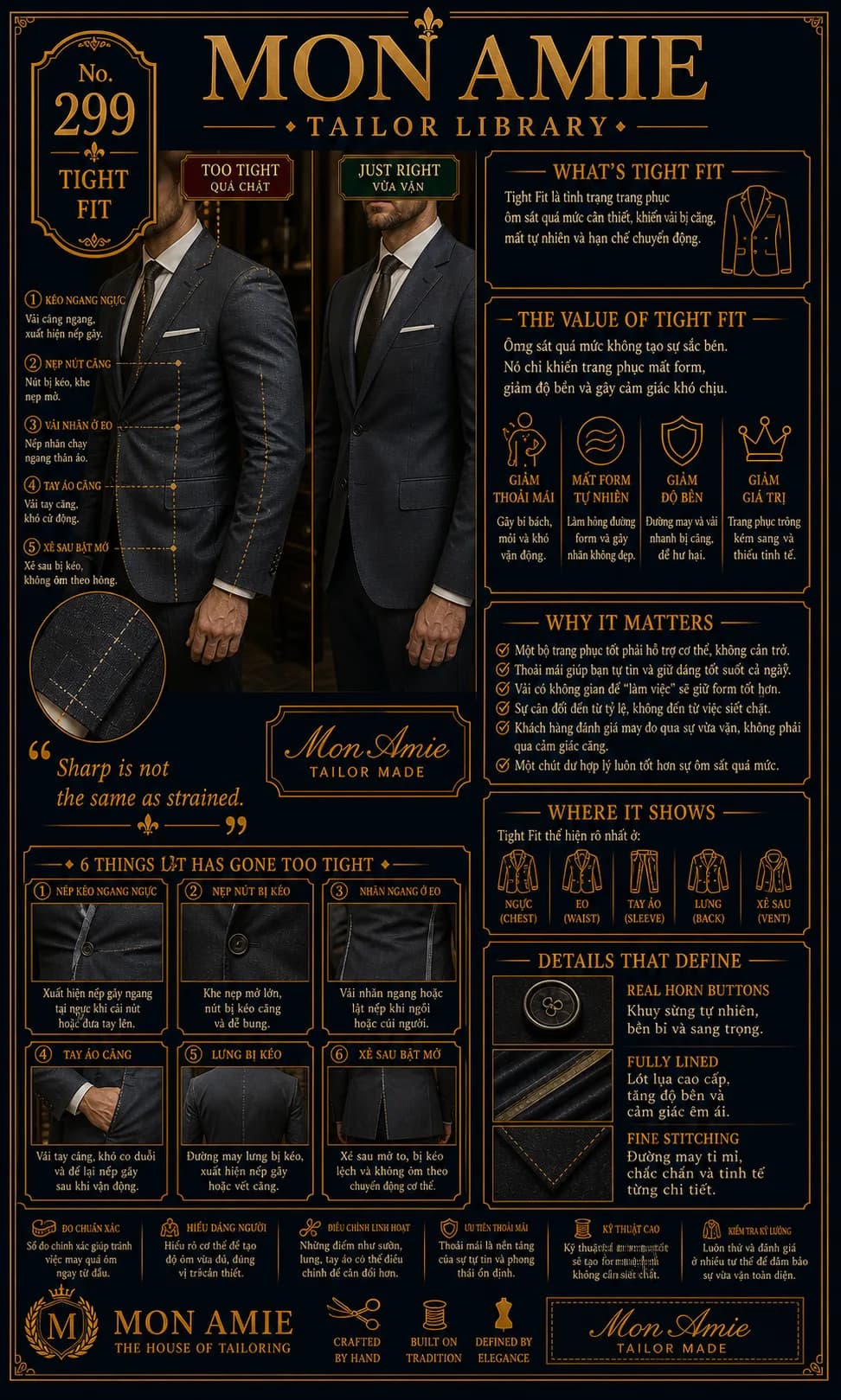
What Is a Tight Fit? Six Signs Your Suit Is Too Tight
A tight fit is a garment cut closer than it should be, straining the cloth and limiting movement. Six signs your suit jacket is too tight.
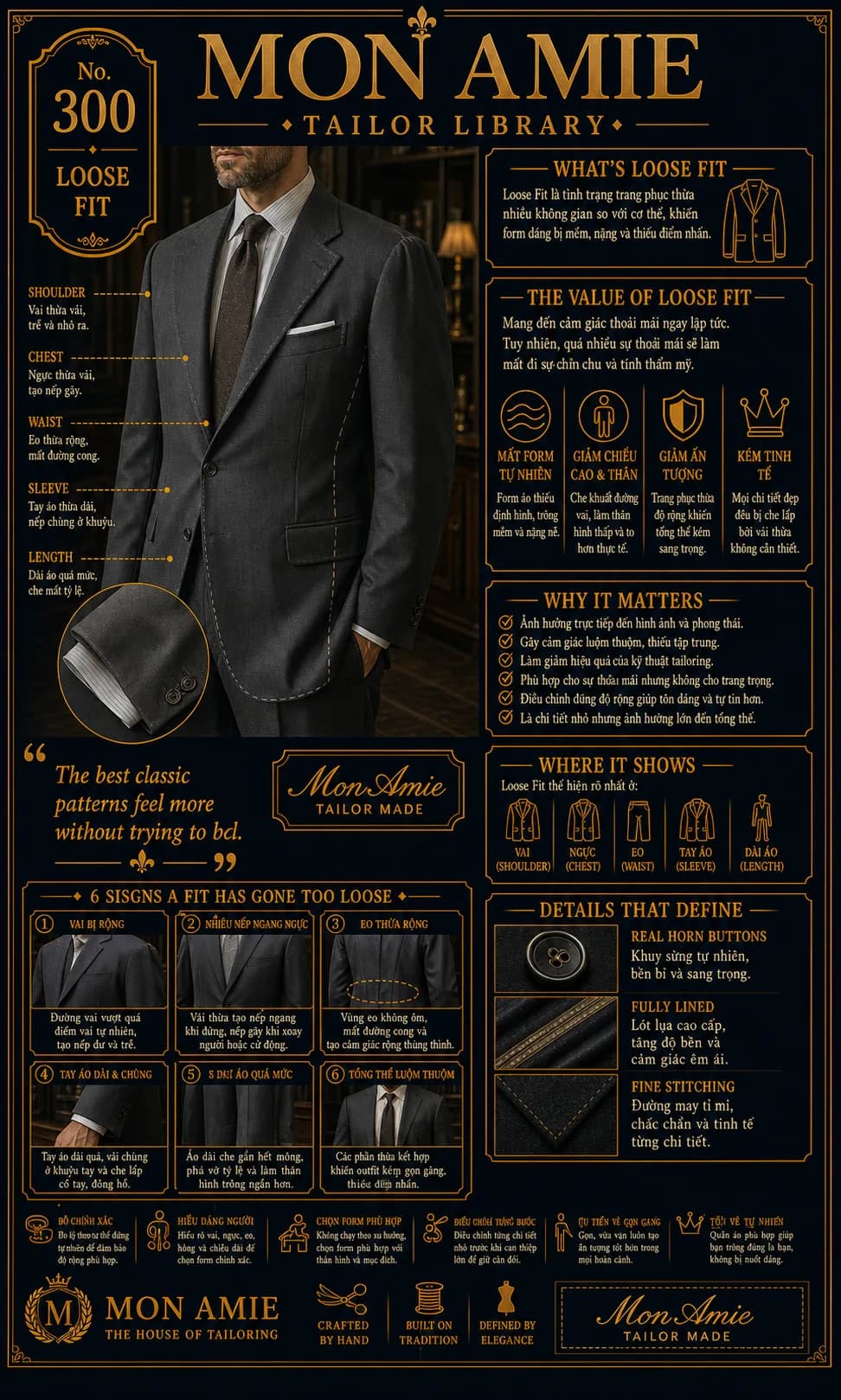
What Is a Loose Fit? Six Signs Your Suit Is Too Big
A loose fit means far more room than the body needs. Learn six signs your suit is too big and how to correct them with Mon Amie.
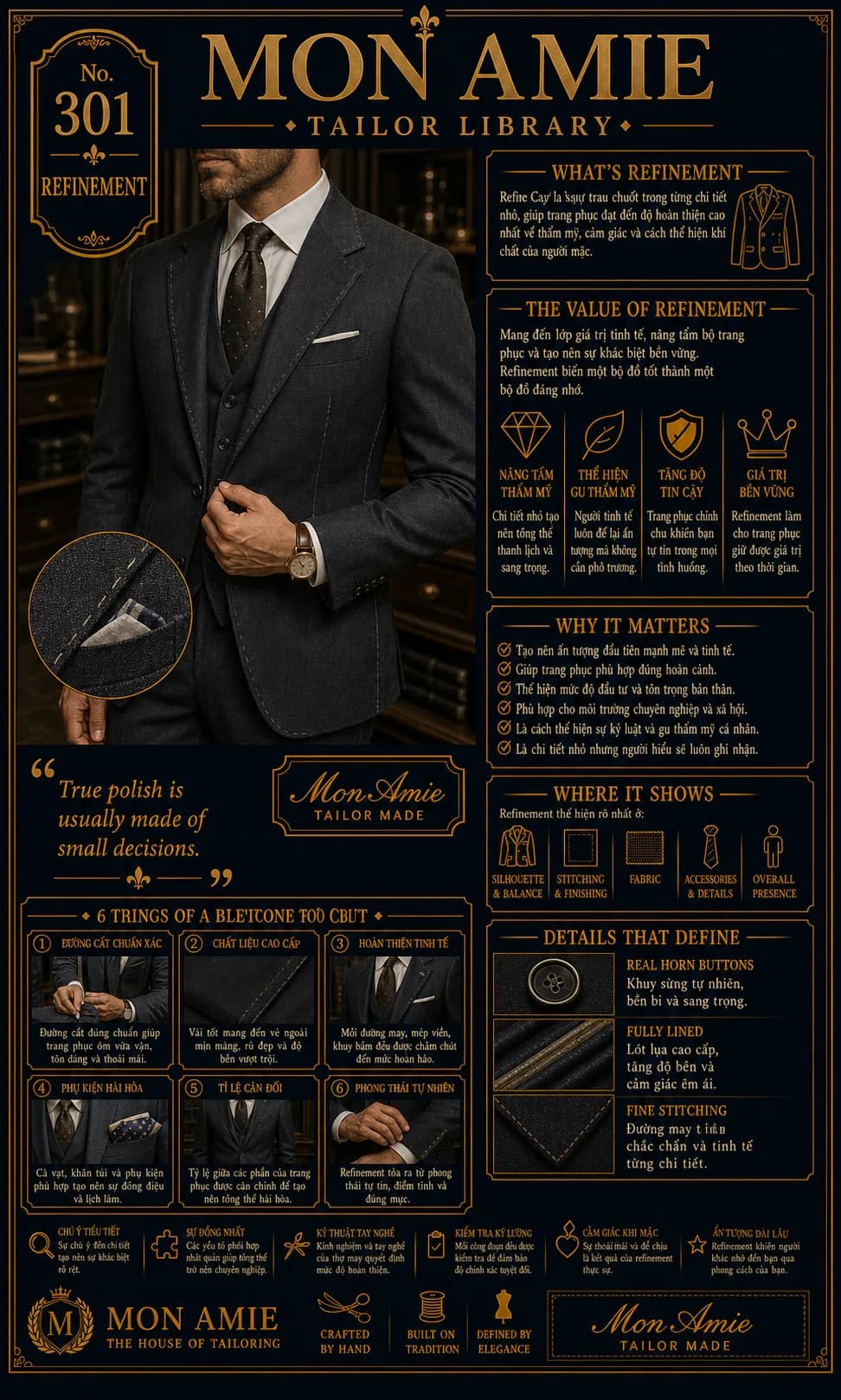
What Is Refinement? The Detail That Makes a Suit Memorable
Refinement is care taken in the smallest details, lifting a suit from good to memorable. Mon Amie explains its value and where it shows.
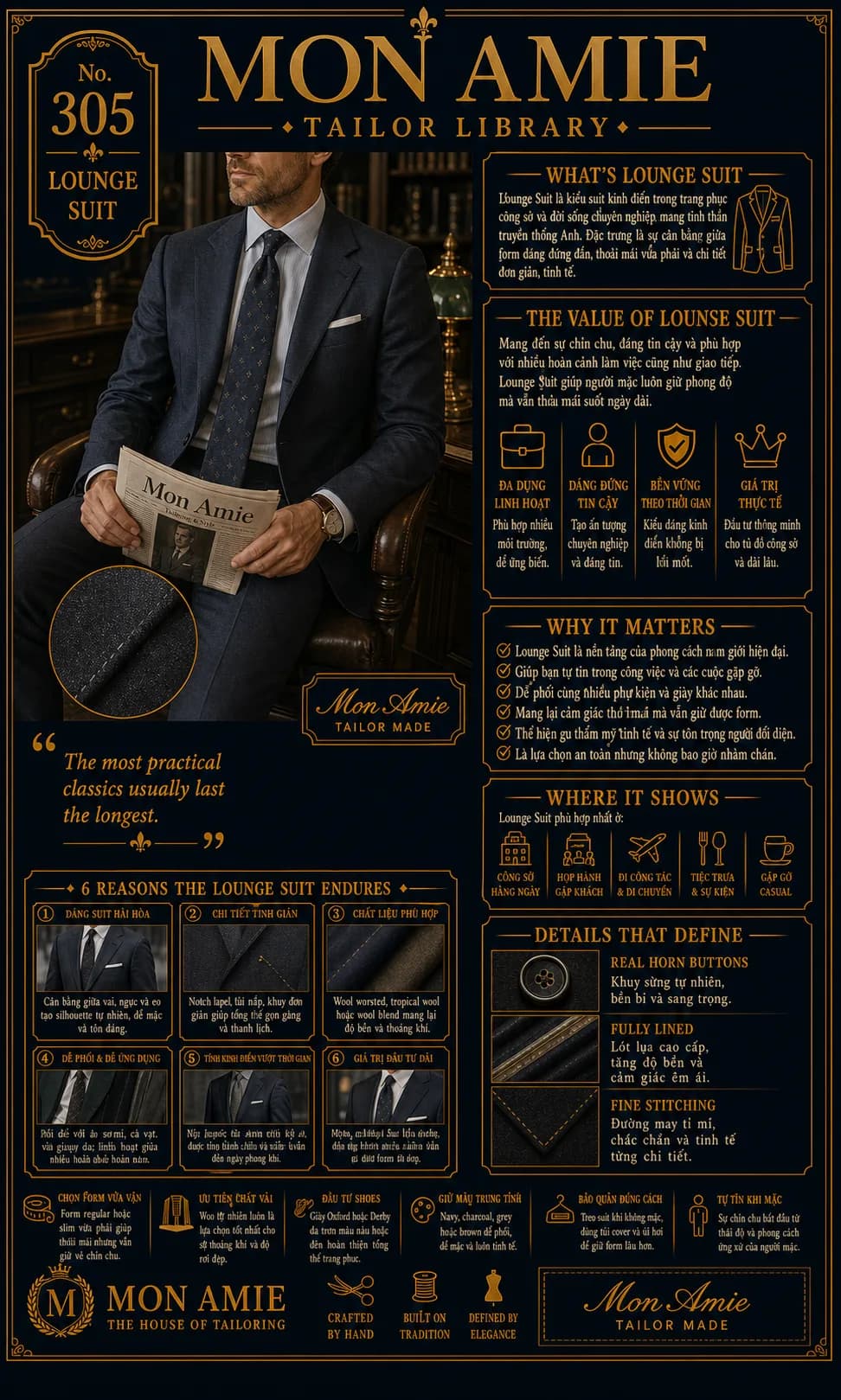
What Is a Lounge Suit? The Classic Business Suit
The lounge suit is the classic English business suit: correct in shape, comfortable, quietly detailed. Why has it never gone out of fashion?
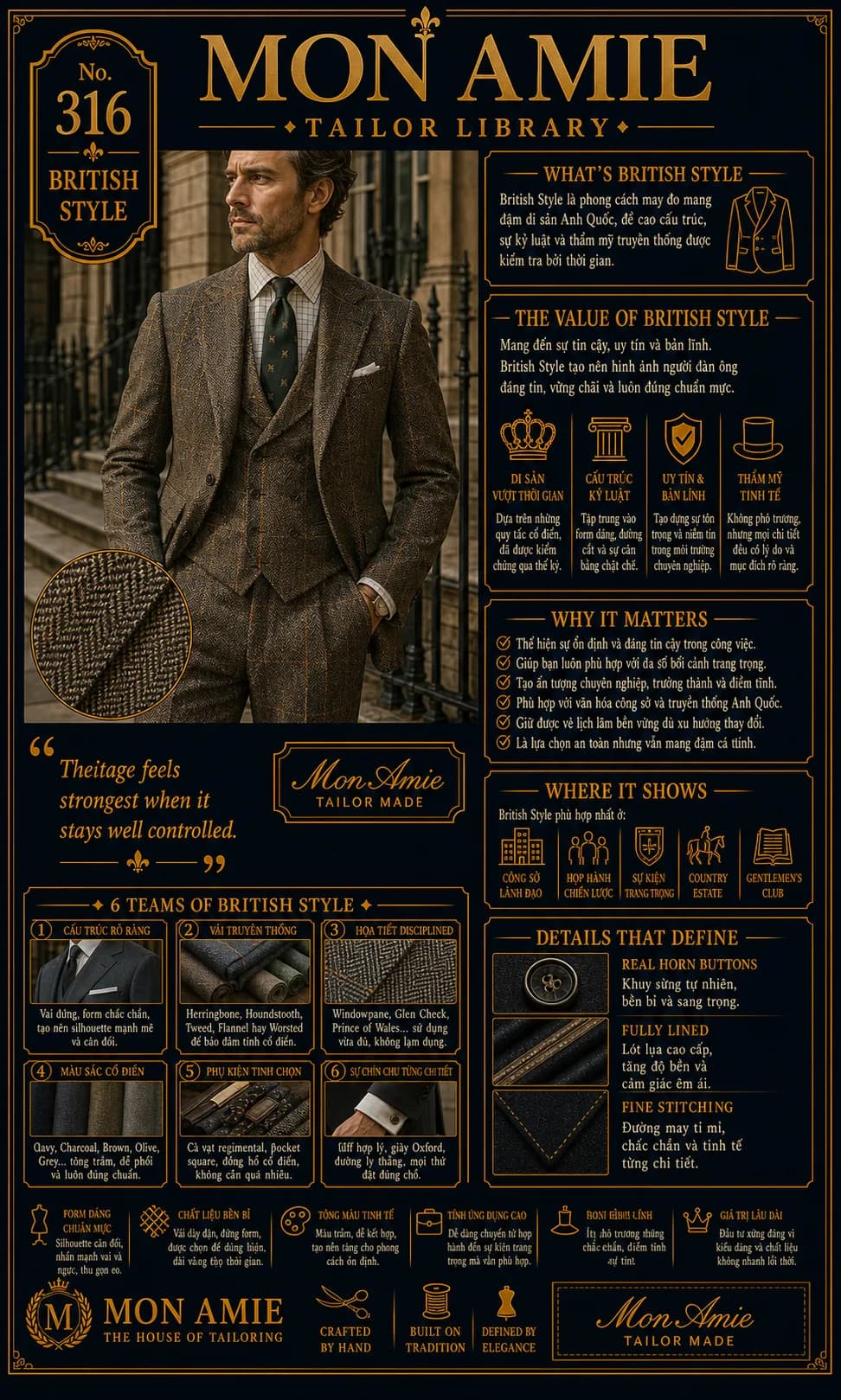
What Is British Style? Savile Row Tailoring Explained
British style is English tailoring: clear structure, built shoulders, traditional cloth. Six elements to help you wear the Savile Row spirit.
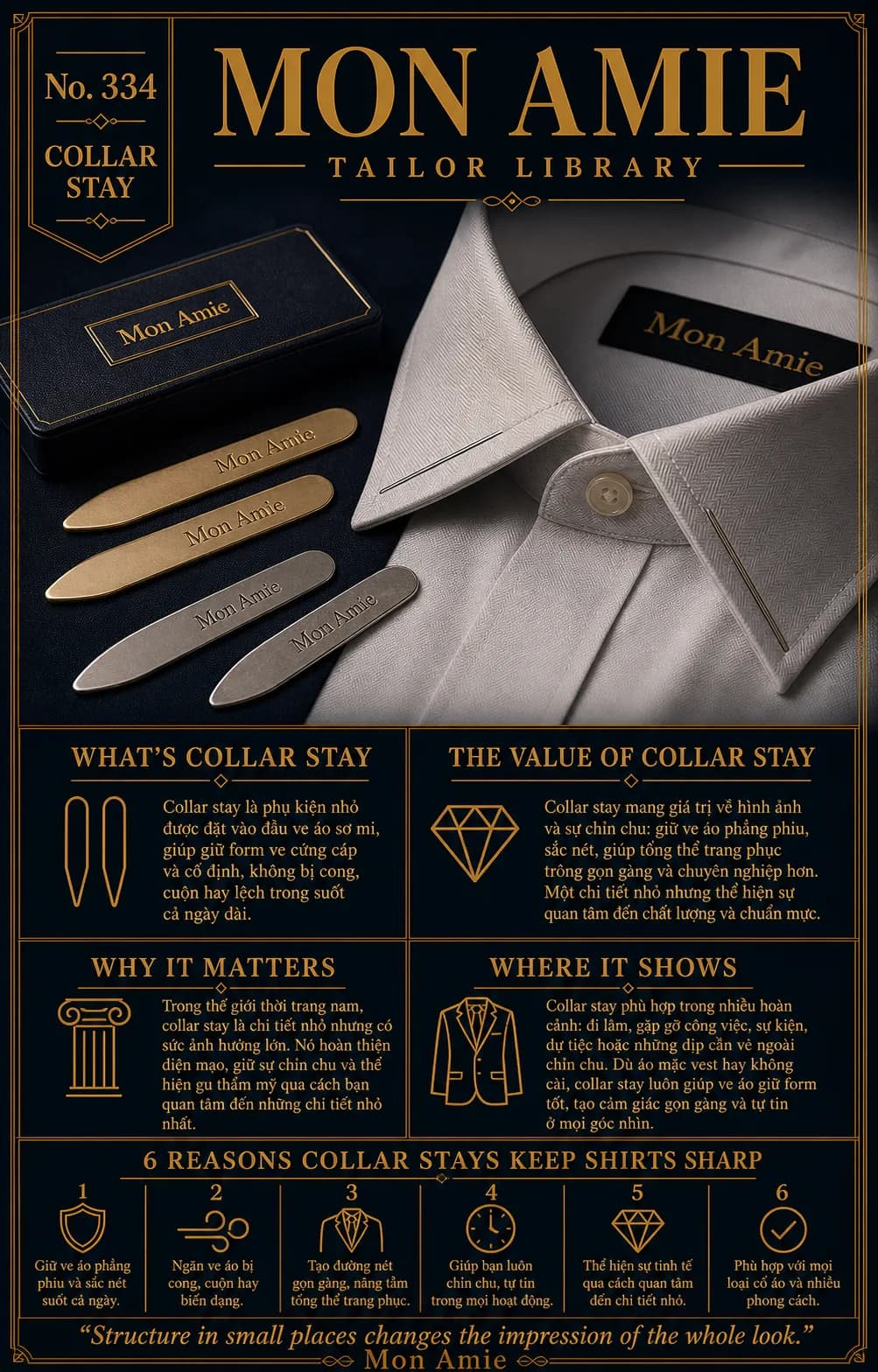
What Is a Collar Stay? Keeping Shirt Collars Crisp
What is a collar stay, and how does it keep a shirt collar crisp all day? Mon Amie explains the purpose, materials and correct use of collar stays.
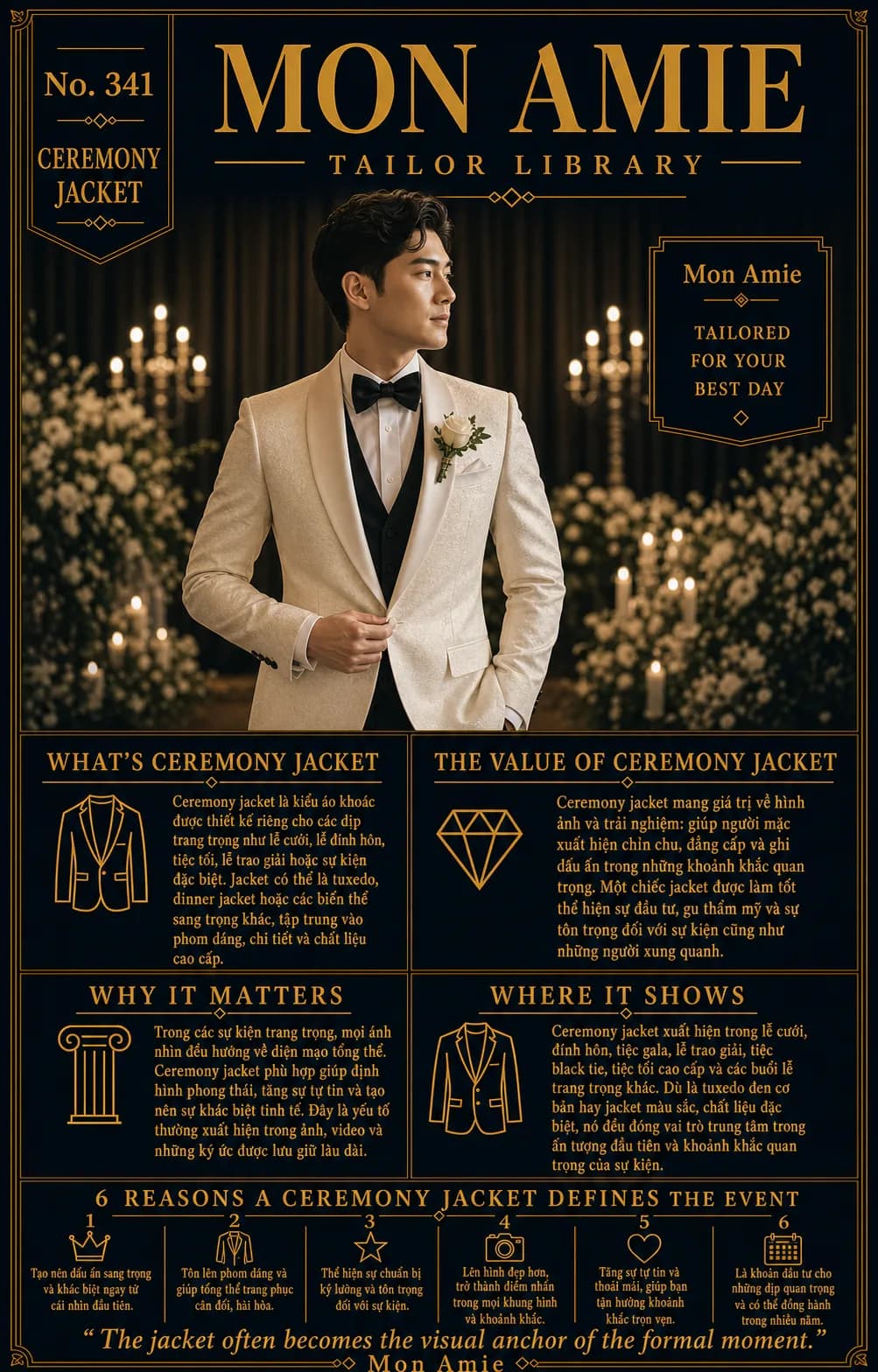
What Is a Ceremony Jacket? Dressing for Formal Moments
A ceremony jacket is made for weddings, engagements, galas and black tie. Why it becomes the visual anchor of the occasion, by Mon Amie.
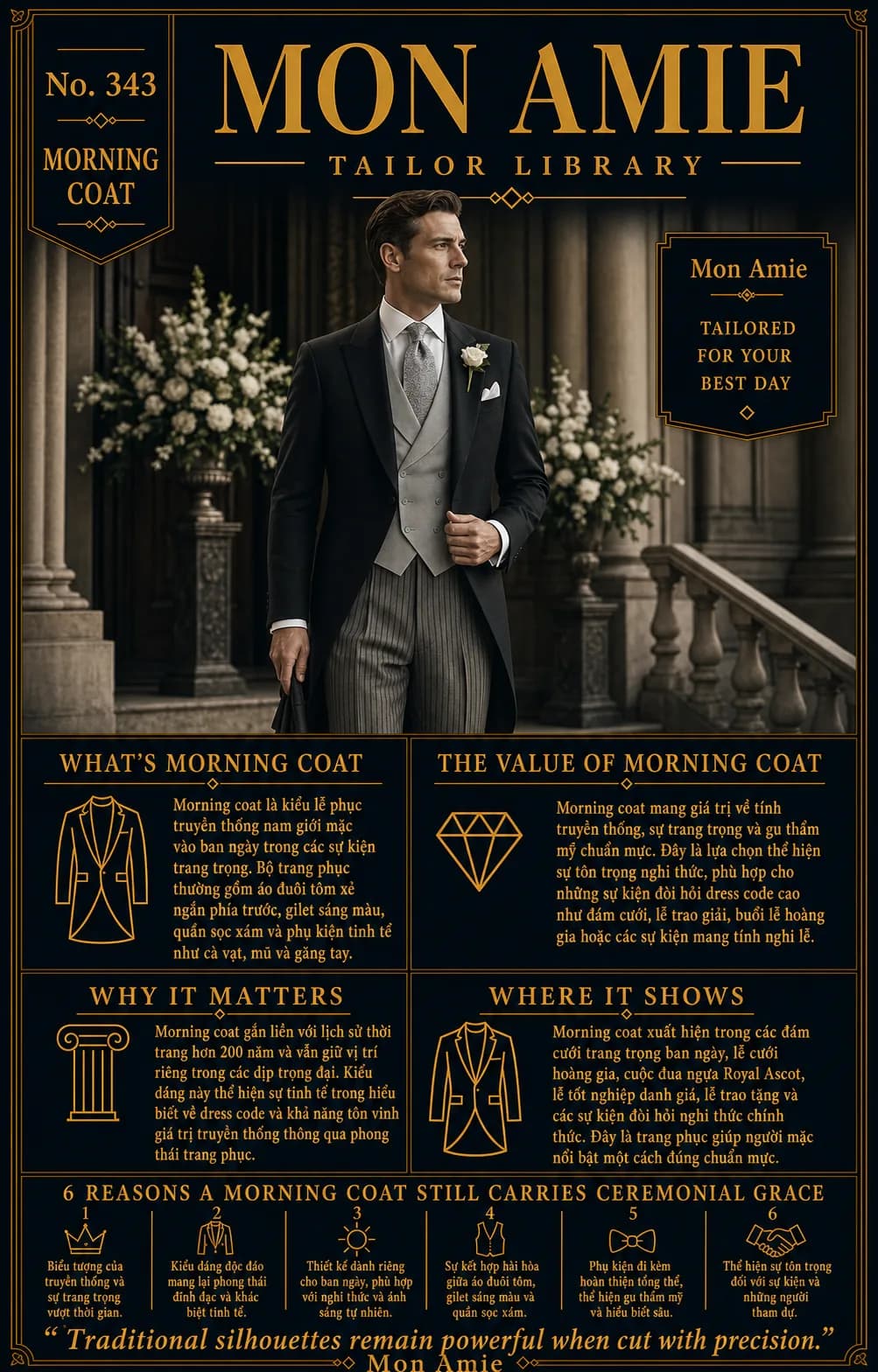
What Is a Morning Coat? Daytime Formal Dress Explained
A morning coat is traditional daytime formal dress: a cutaway tailcoat, a light waistcoat and grey striped trousers. When to wear it.
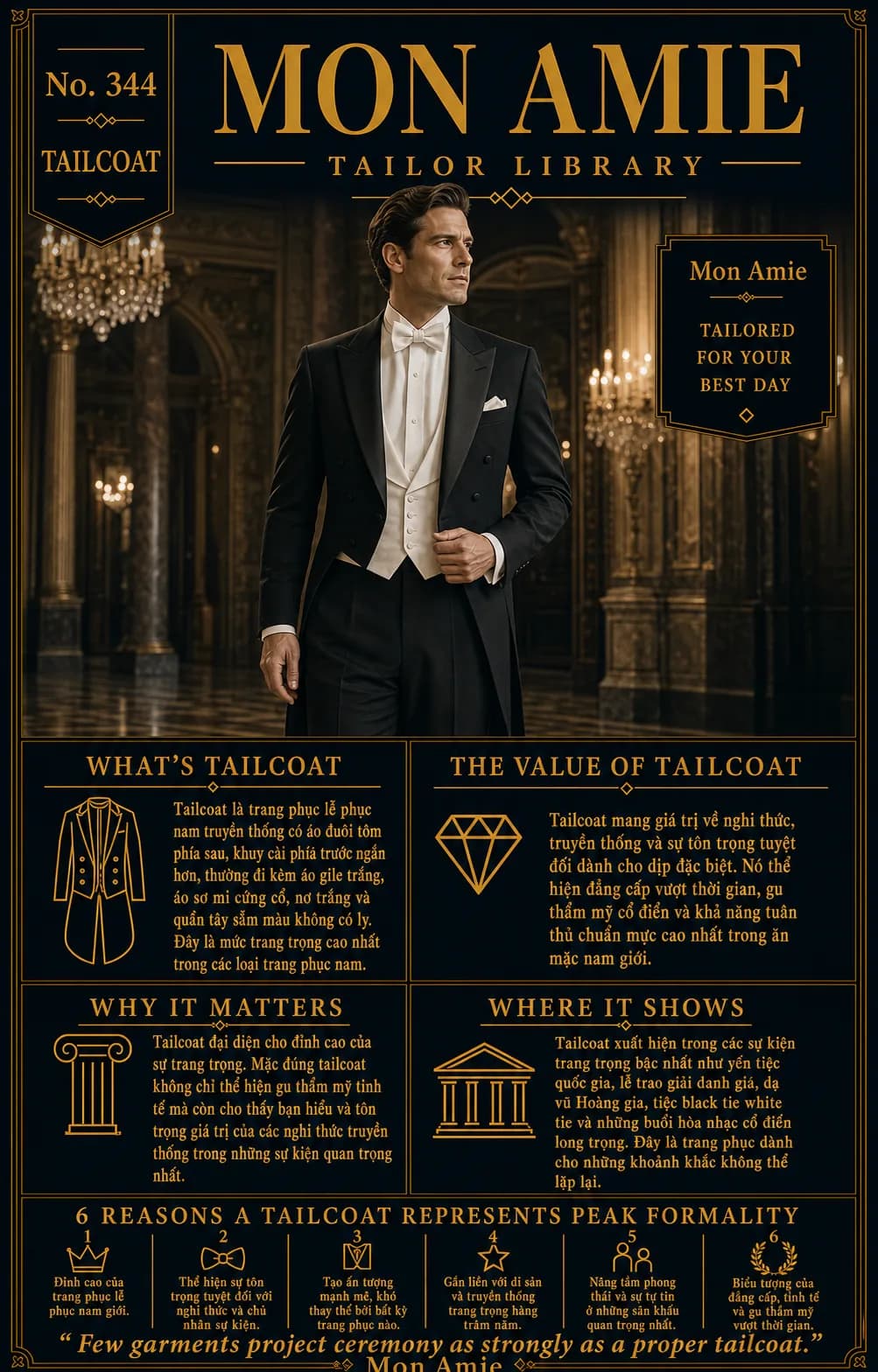
What Is a Tailcoat? The Pinnacle of Formal Dress
A tailcoat pairs a white waistcoat with a white bow tie — the highest level of formality in menswear. When and how to wear it, by Mon Amie.
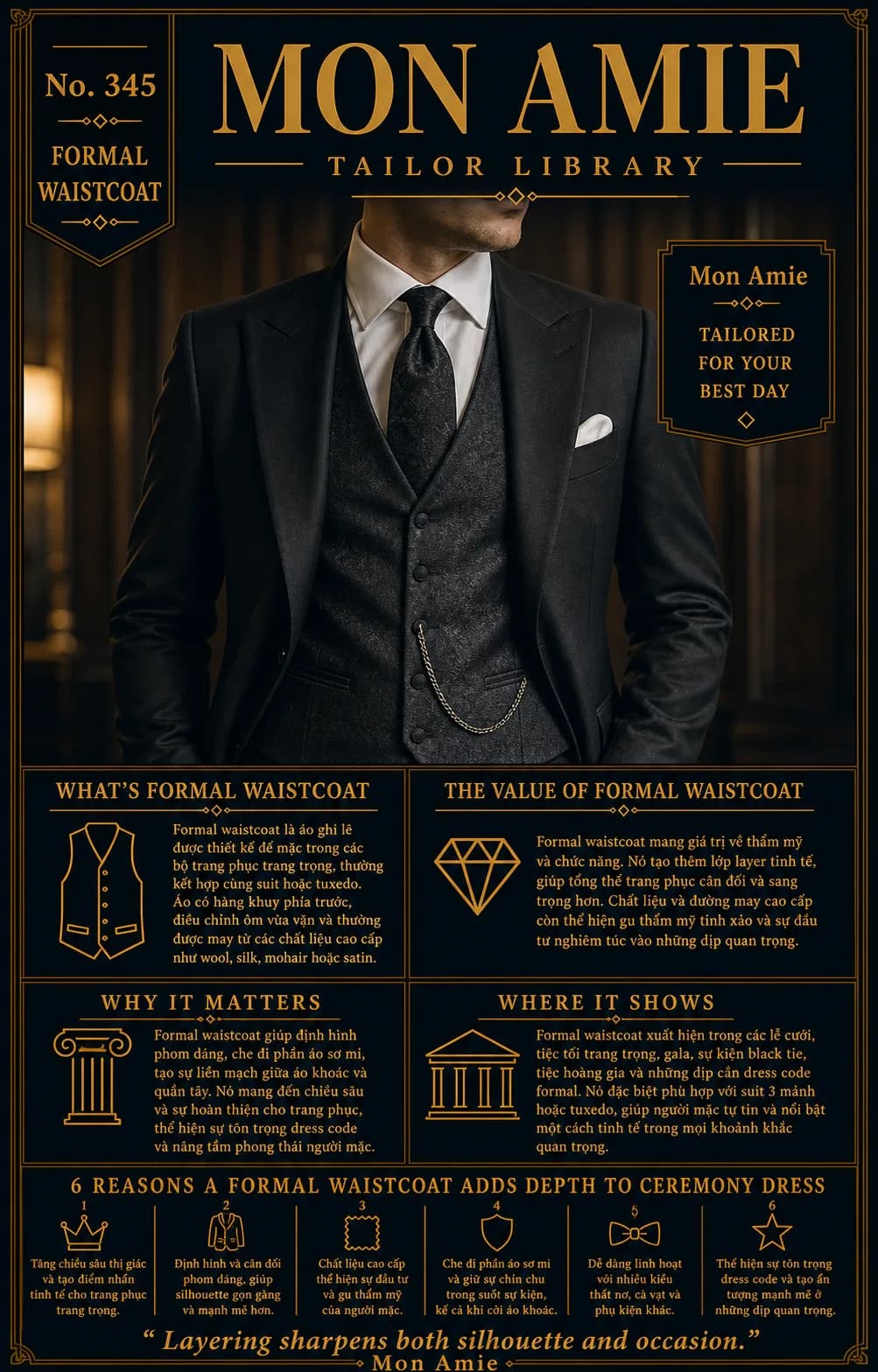
What Is a Formal Waistcoat? Depth for Ceremonial Dress
A formal waistcoat is the ceremonial third layer that shapes the silhouette and adds depth to a three-piece suit or a tuxedo.
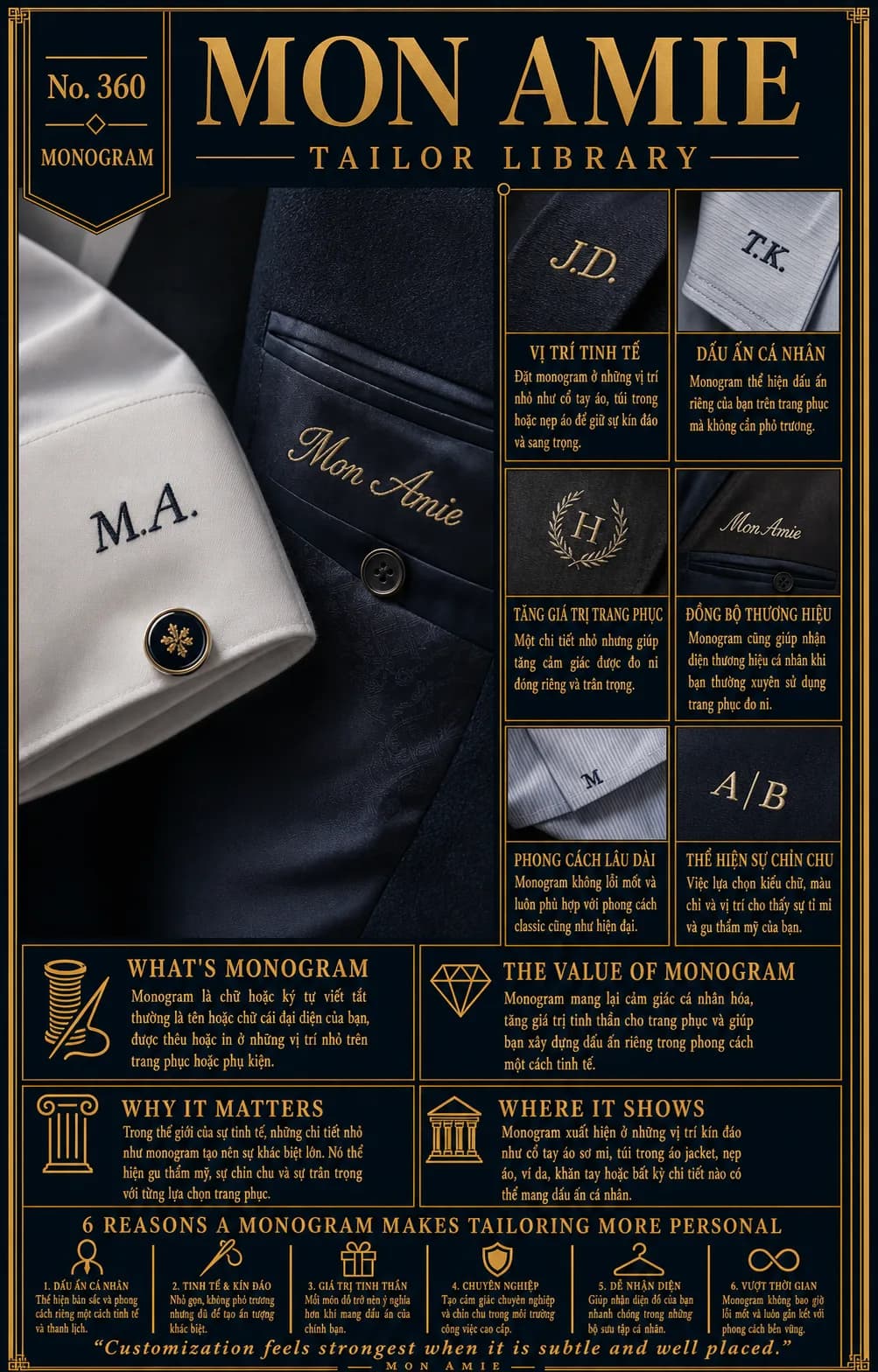
What Is a Monogram? Quiet Personalisation on a Suit
What is a monogram, and why do a few embroidered letters at the cuff or inside pocket make a tailored suit feel truly yours? Mon Amie explains.
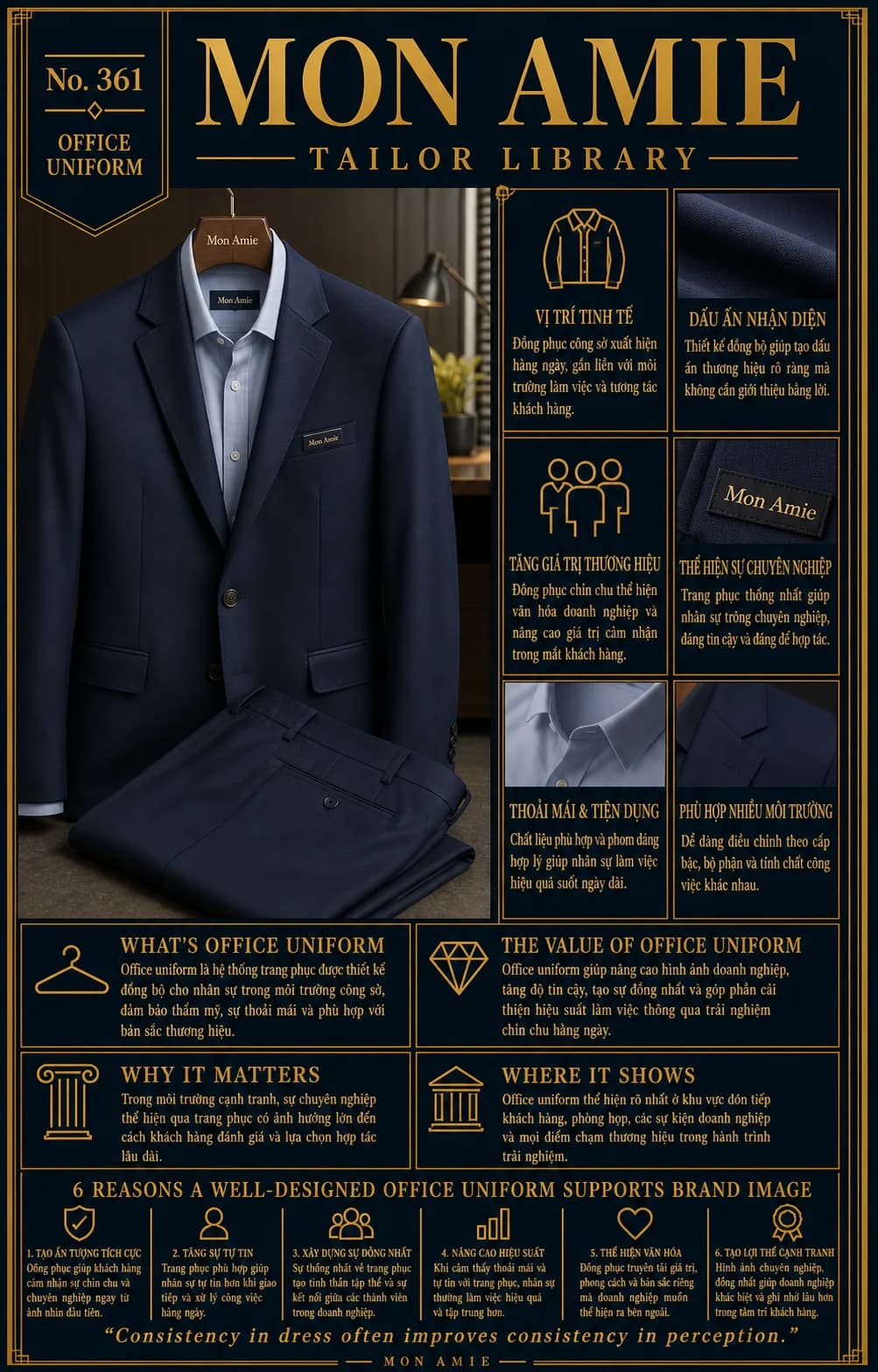
What Is an Office Uniform? Dressing a Company Well
What is an office uniform, and how does a coherently designed one raise a company's credibility and perceived value? A tailor's perspective.
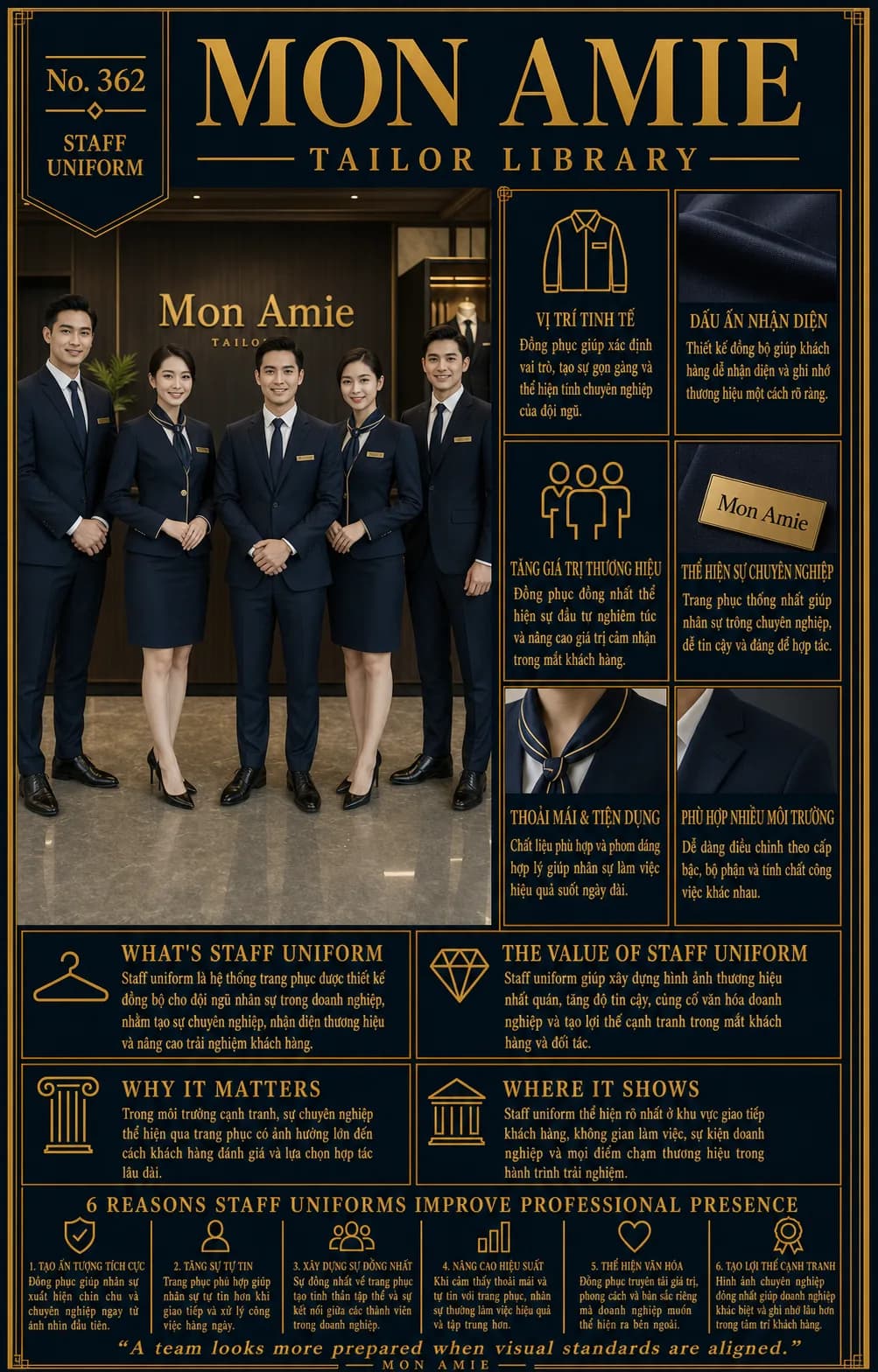
What Is a Staff Uniform? Dressing a Team Professionally
What is a staff uniform, and how does coordinated dress make a team look professional and trustworthy while lifting the client experience?
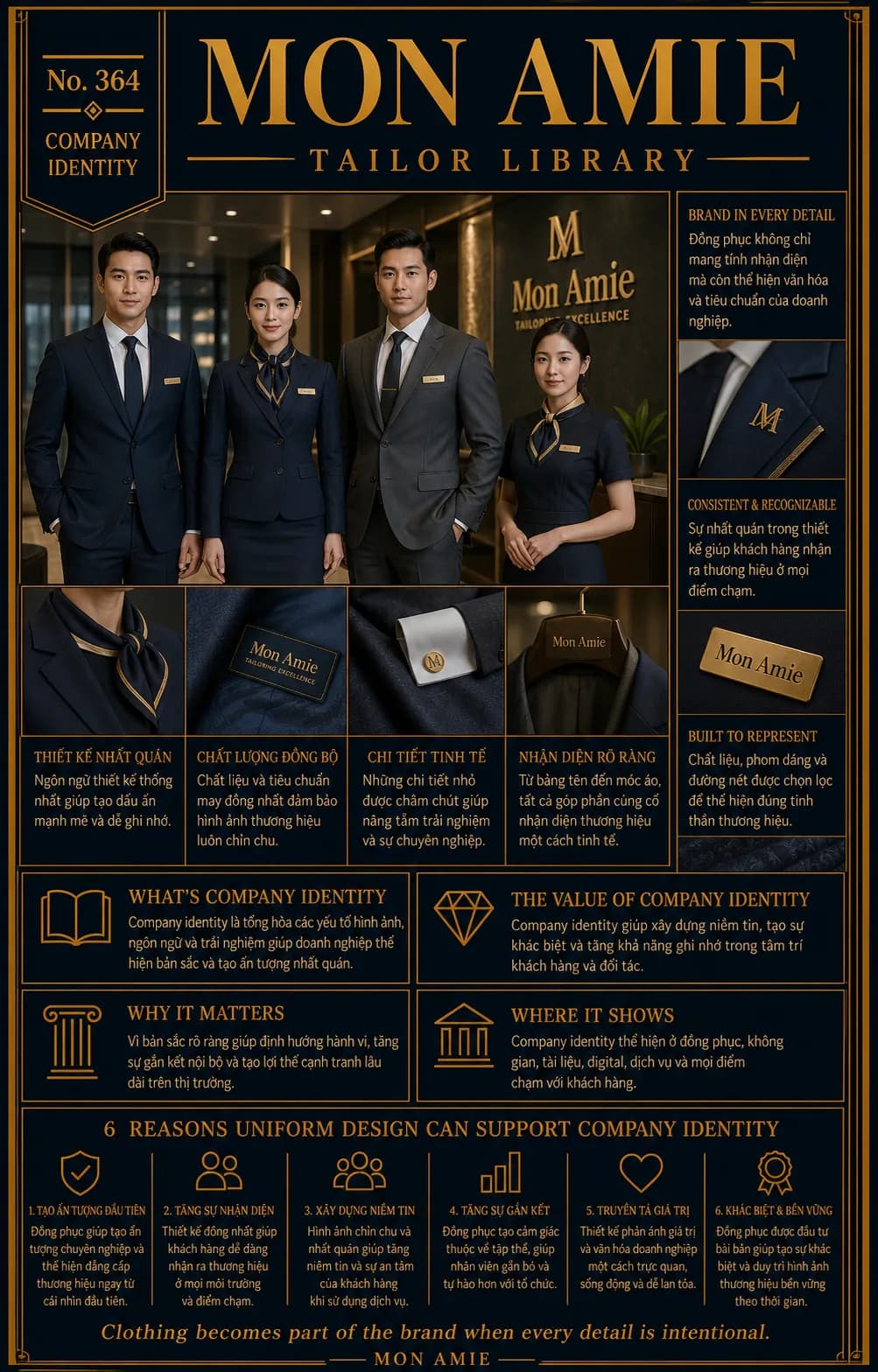
What Is Company Identity? Uniforms That Build a Brand
What company identity is, and why a properly designed uniform is an essential piece of it. Insights from the Mon Amie tailoring house.
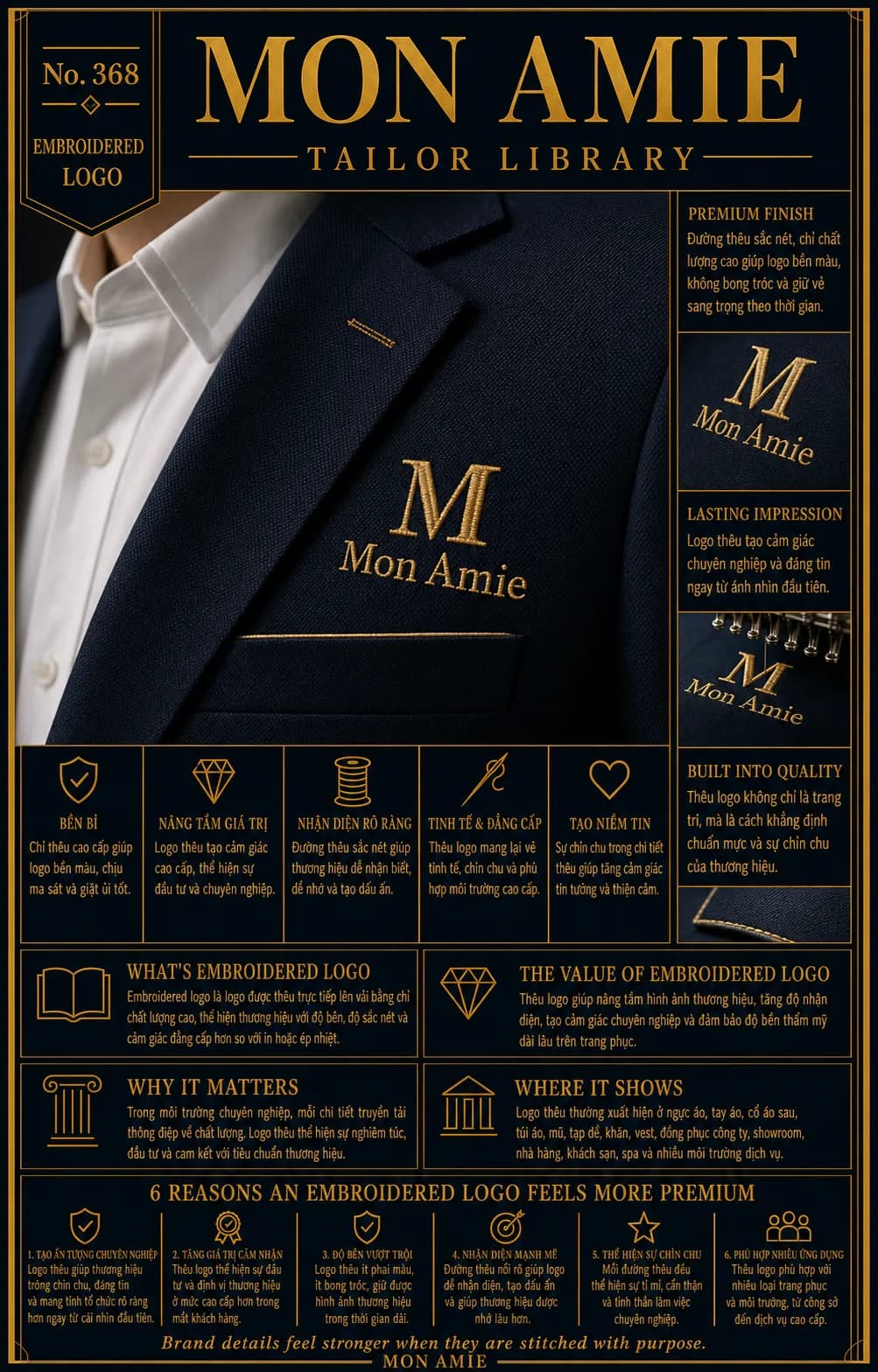
What Is an Embroidered Logo? Branding on Fine Garments
An embroidered logo is stitched directly into cloth with fine thread. Why embroidery outlasts heat transfer, and six reasons to choose it.
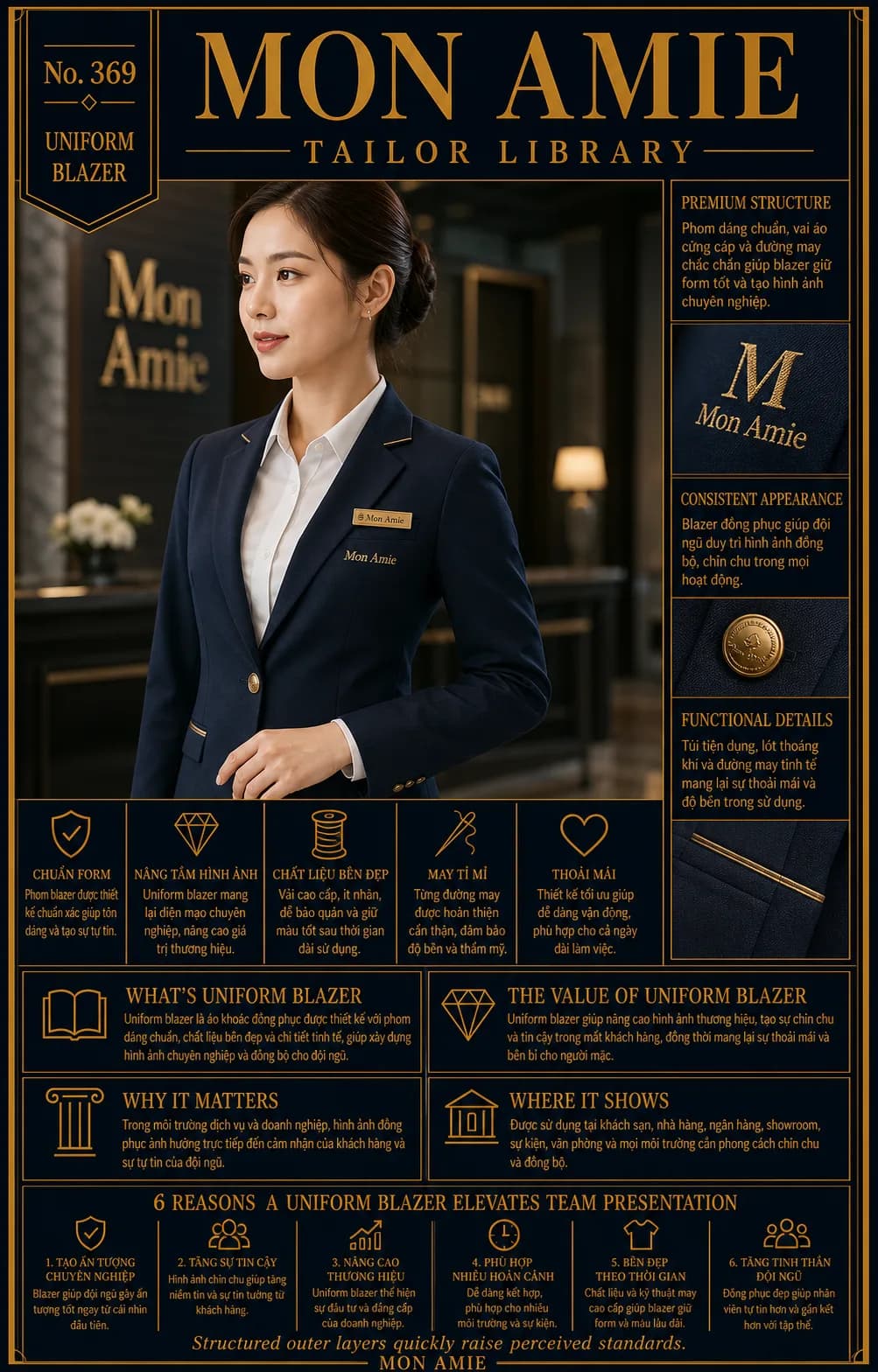
What Is a Uniform Blazer? Elevating Your Team's Image
A uniform blazer combines a precise cut, durable cloth and refined details. Five standards and six reasons it elevates your team.
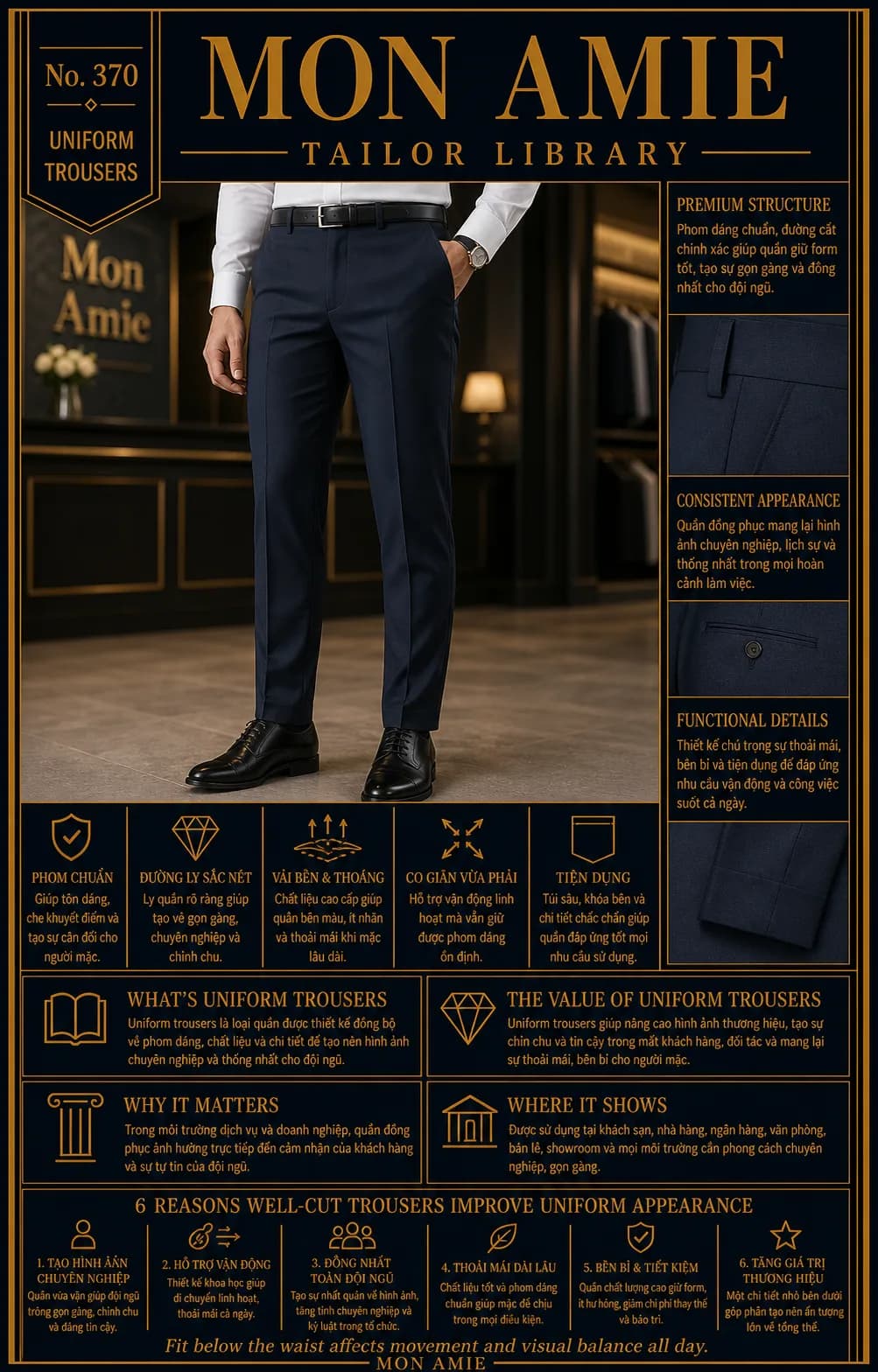
What Are Uniform Trousers? The Correct Cut for Your Team
Uniform trousers share one silhouette, cloth and set of details, giving a whole team a professional and consistent appearance.
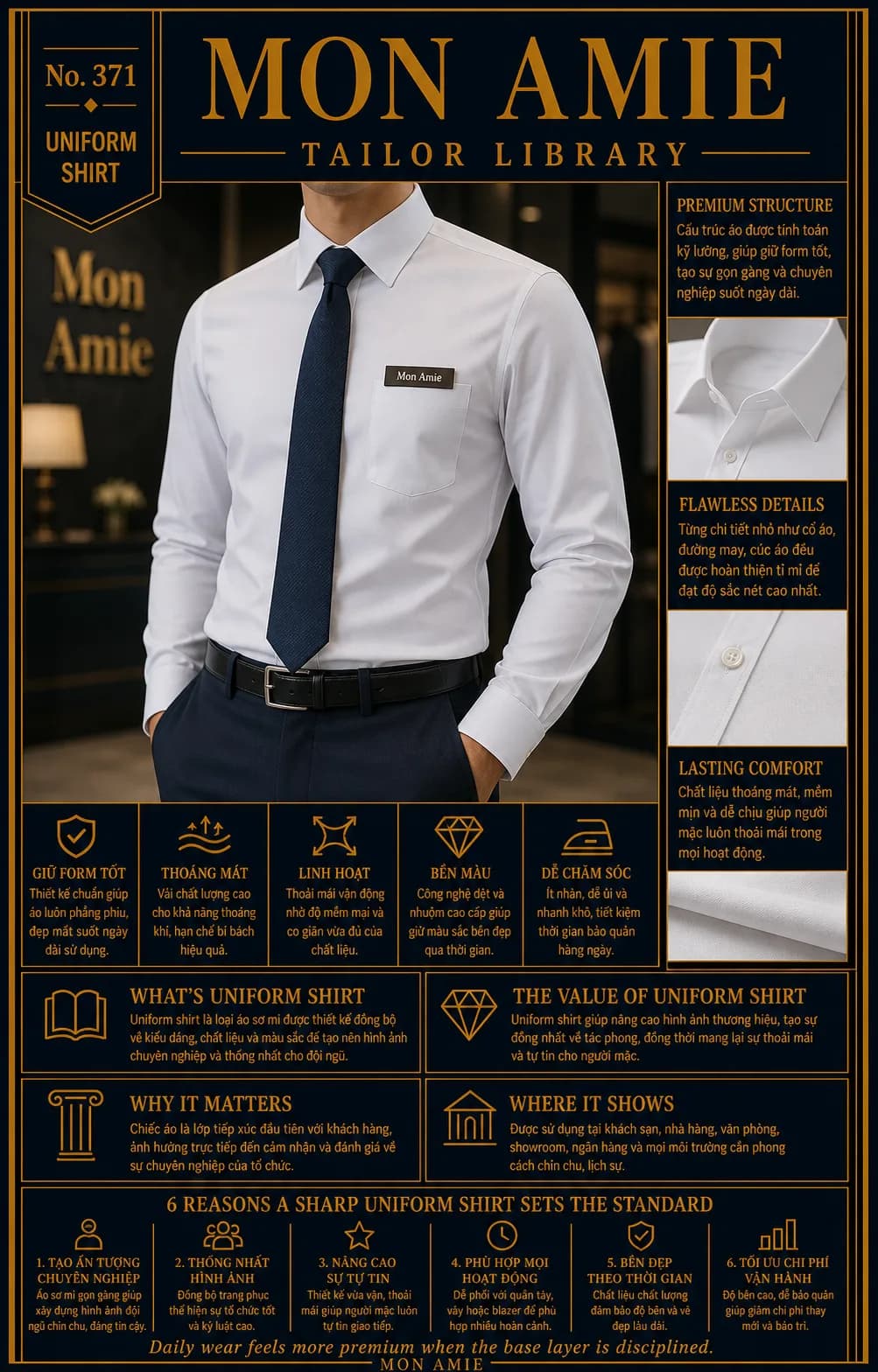
What Is a Uniform Shirt? The Professional Standard
A uniform shirt shares one cut, cloth and colour across a team, creating a professional and consistent appearance.
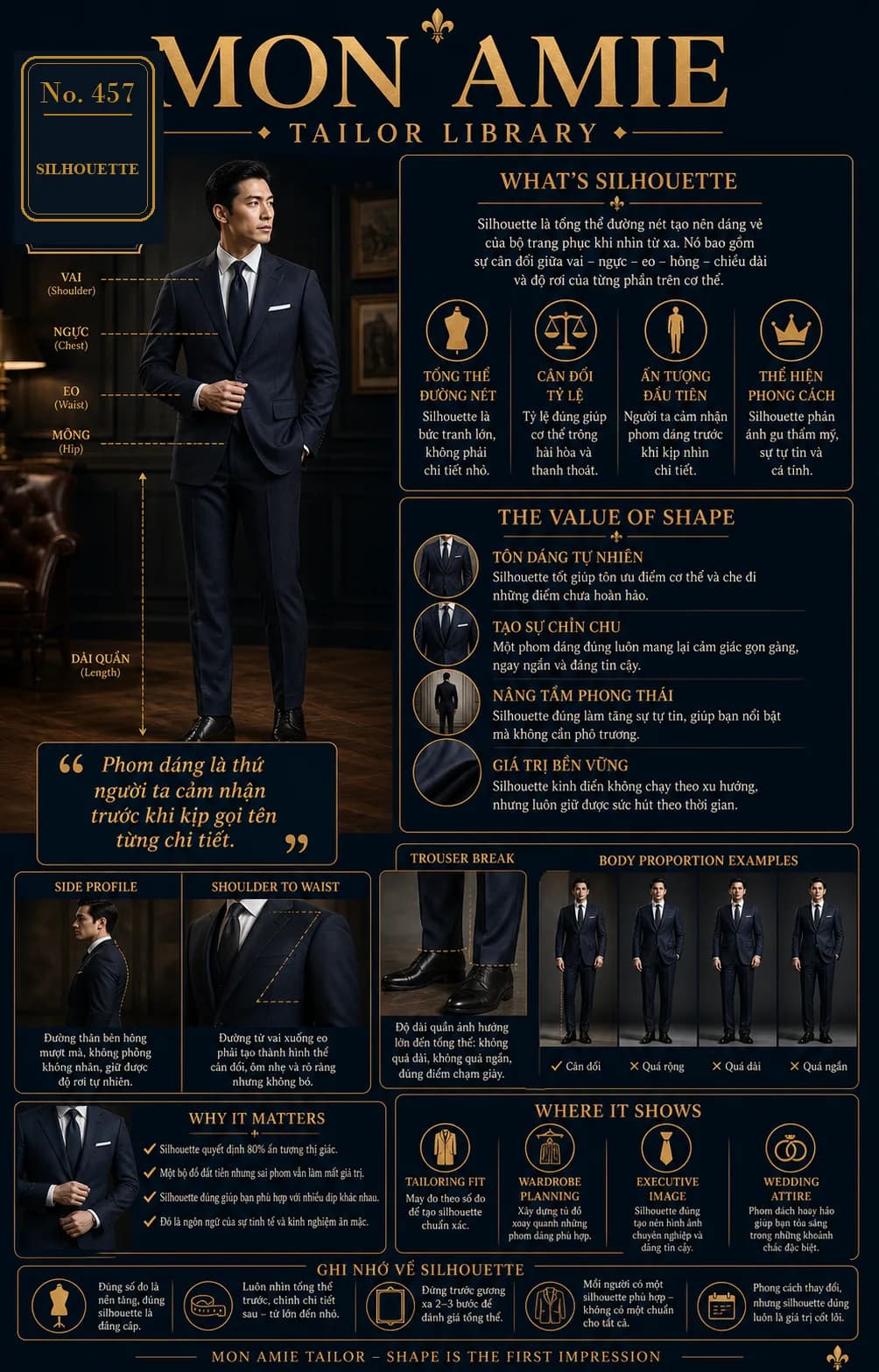
What is a Silhouette? The Line That Defines Your Suit
The silhouette is the overall line of a garment seen from afar — the balance of shoulder, chest, waist, hip and the drape of every part.
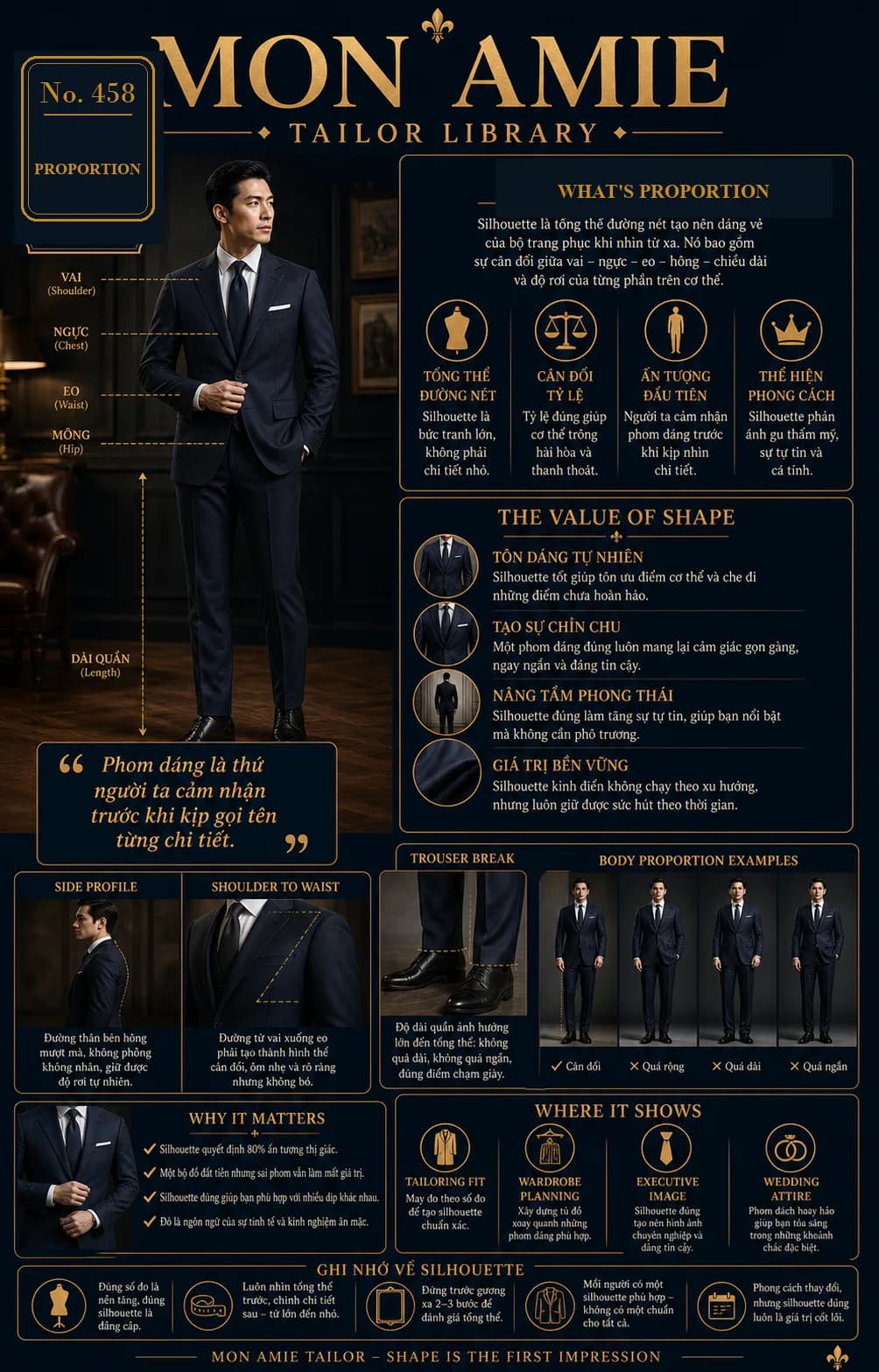
What is Proportion? The Silhouette of a Well-Cut Suit
Proportion shapes the first impression a suit makes. Understand shoulders, chest, waist, hips and trouser length to judge a silhouette properly.
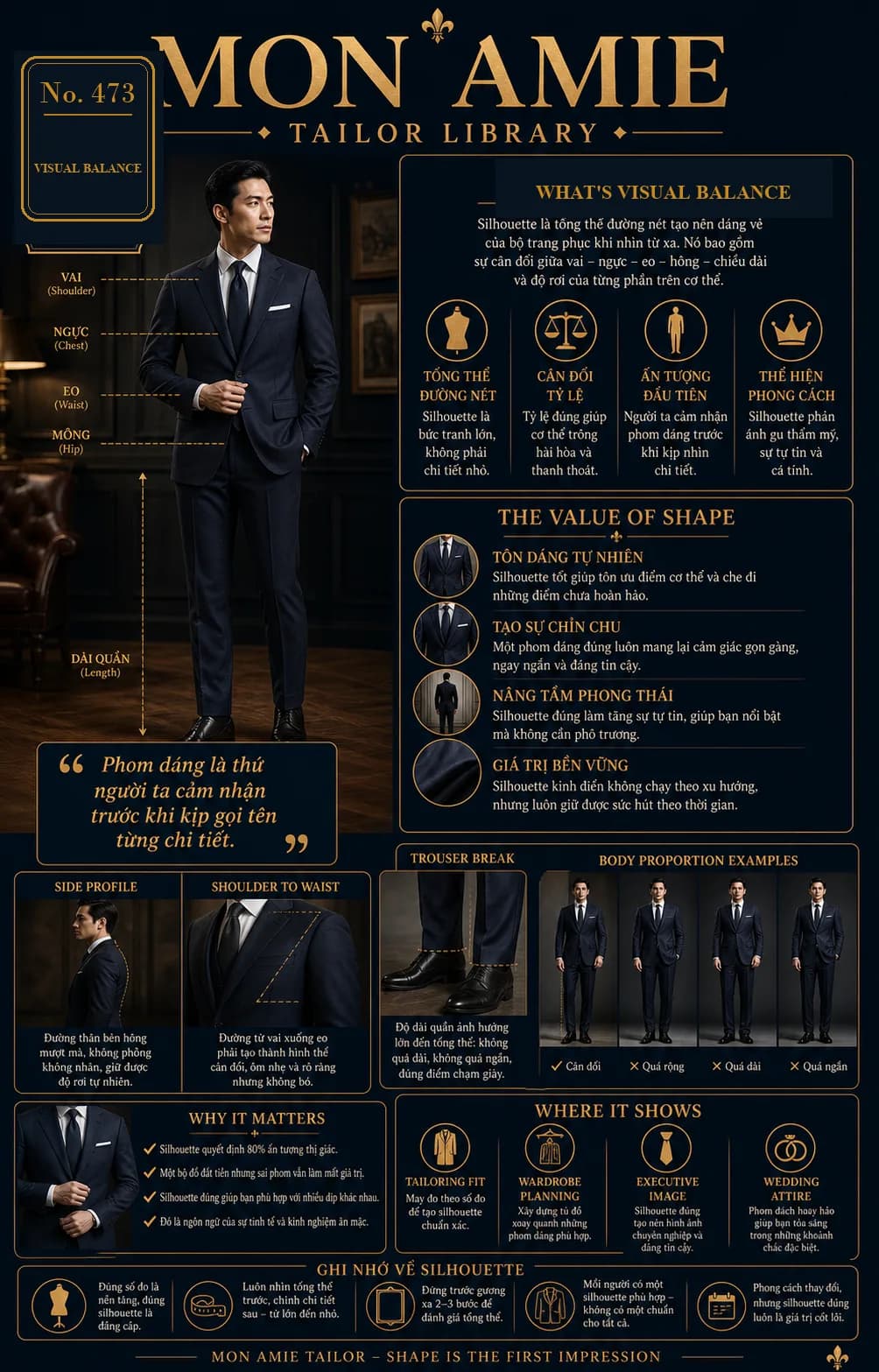
What is Visual Balance? Reading a Suit's Silhouette from Afar
What visual balance means, and why the shoulder–chest–waist–hip silhouette shapes most of the visual impression a suit makes.
Which suit colour should a young entrepreneur start with?
A young entrepreneur's first suit should be deep navy: trustworthy in every meeting, easy to pair, and versatile from the boardroom to a wedding banquet.
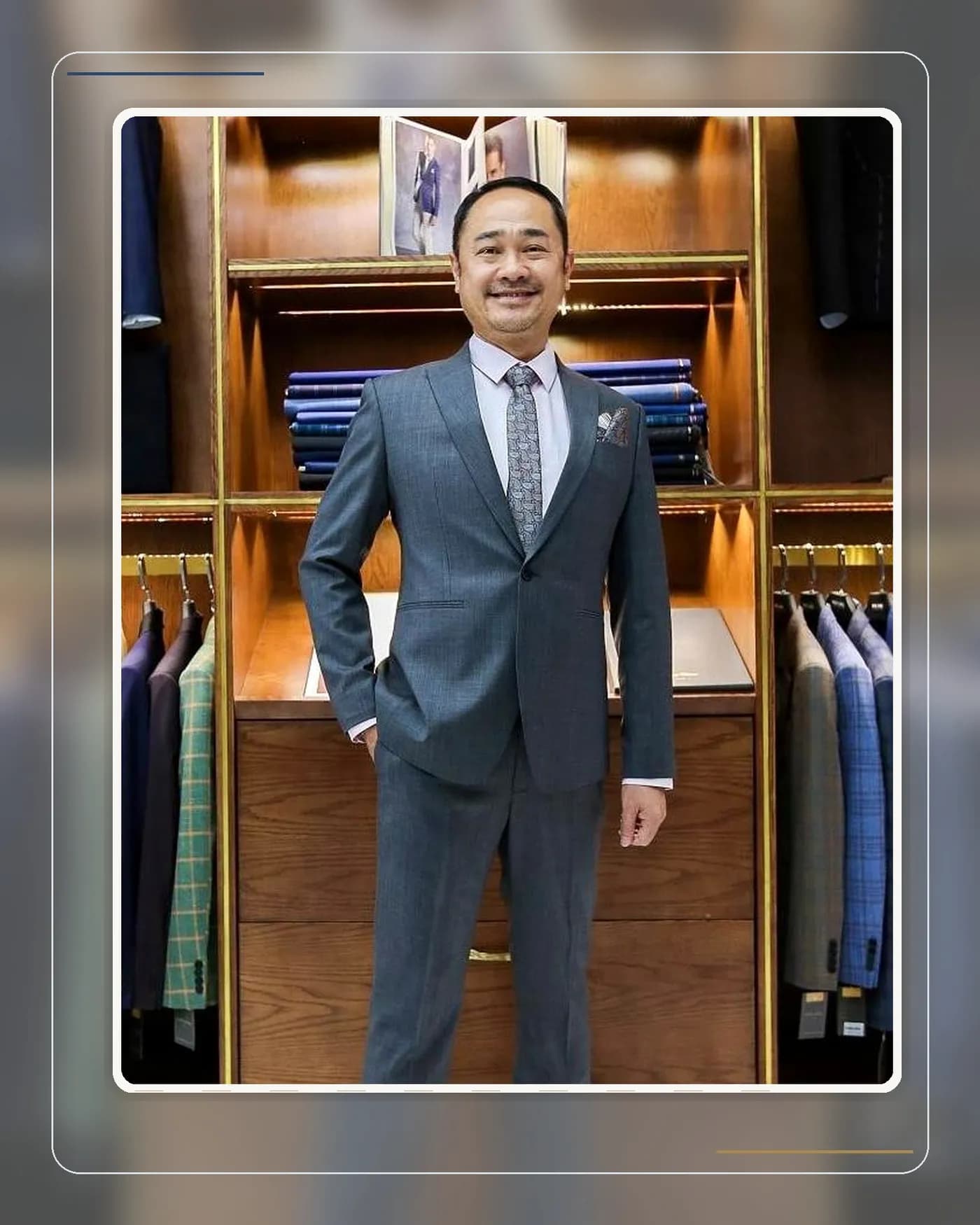
Office suits: should navy, charcoal or medium grey come first?
Navy for meetings and negotiations, charcoal for the most formal occasions, medium grey for daytime warmth — each colour has its own distinct role.
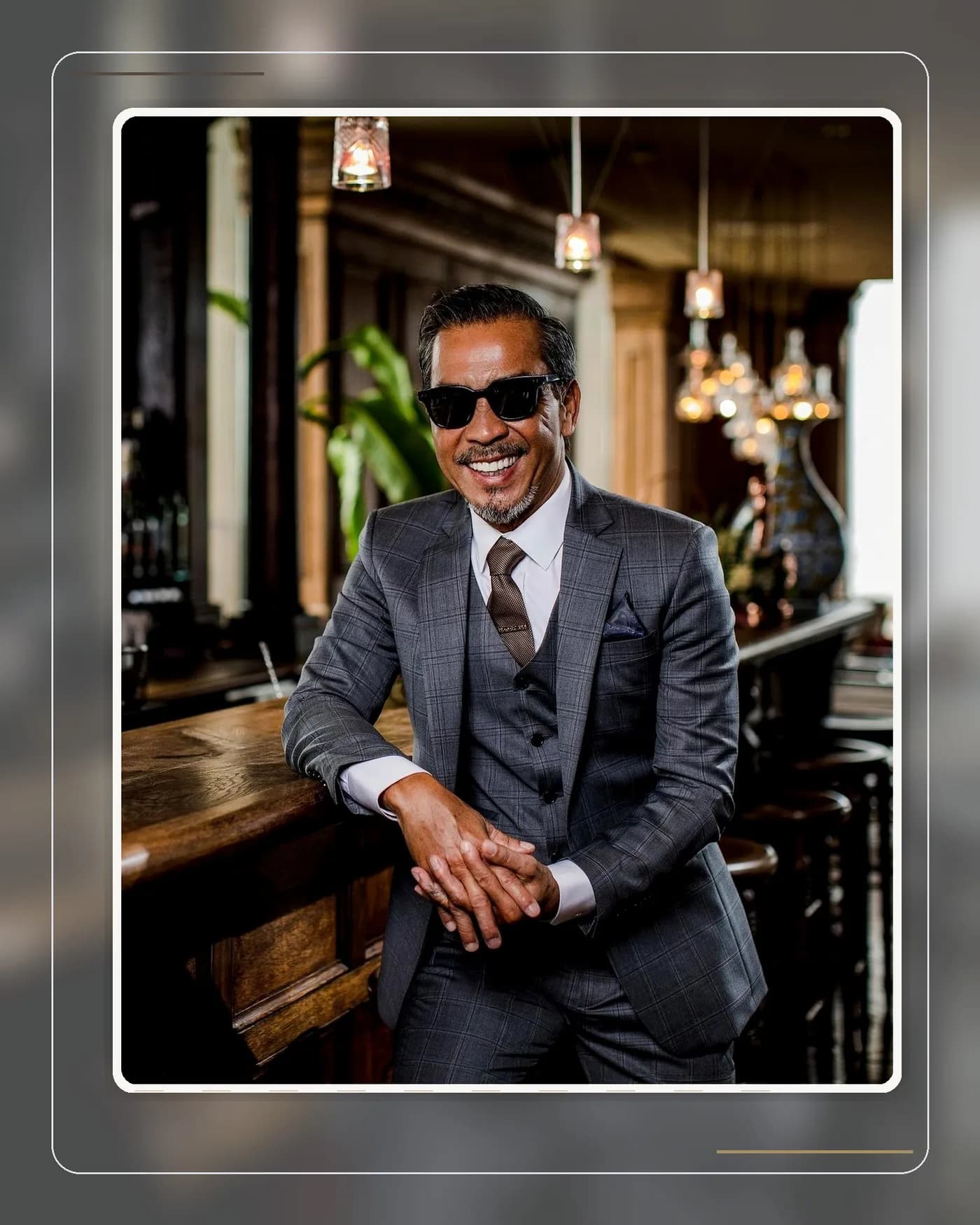
Is a black suit really the best first choice?
Usually not. Navy or charcoal is far more versatile for a first suit; black shines at formal evening events and black-tie occasions.
Two-button or three-button suit: which fits tall men better?
Tall men can wear both, but a three-button — especially a 3-roll-2 — uses height better: the longer button row fills the torso and avoids an overly deep V.
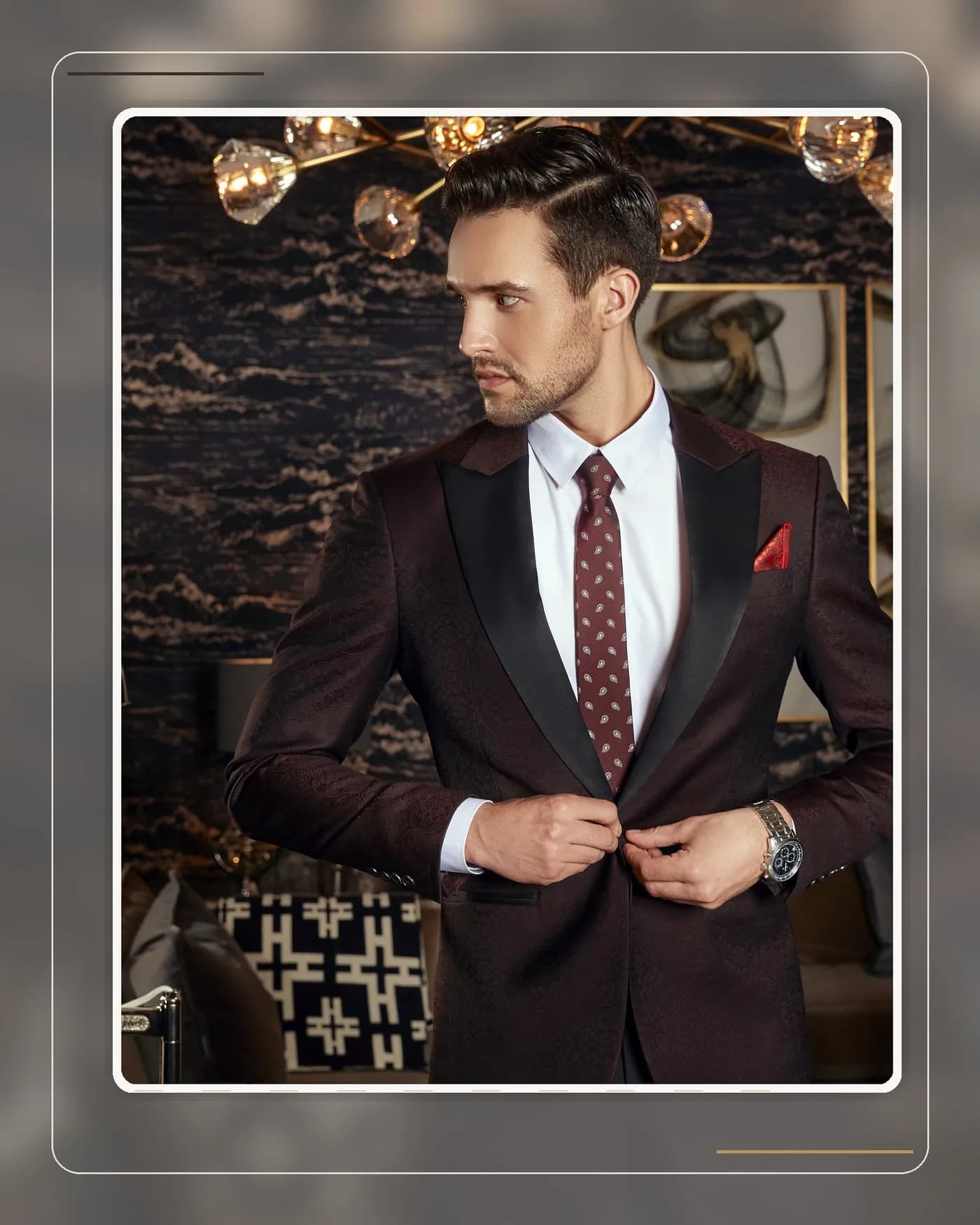
When should you wear a shawl lapel vs a peak lapel?
The shawl lapel is reserved for tuxedos and evening wear — soft and elegant; the peak lapel is sharp and formal, at home on both tuxedos and important suits.
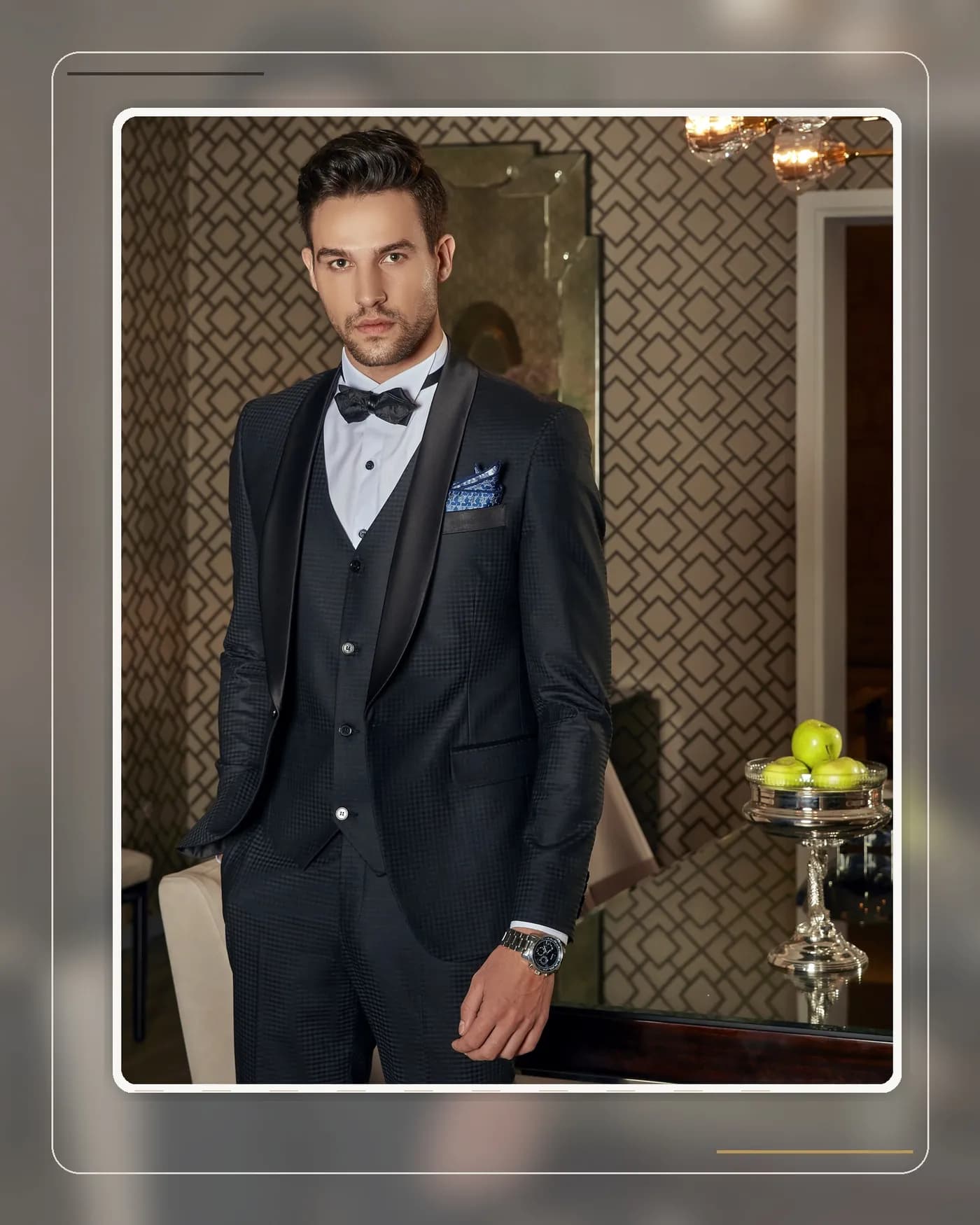
How does a formal tuxedo shirt differ from an office shirt?
Four key differences: a pleated or pique bib front, removable studs or a fly front, French cuffs for cufflinks, and a stiffer turndown or wing collar.
One all-season suit or separate suits by purpose?
Make your first suit an all-season navy or charcoal that covers every occasion; from the second suit on, divide by purpose so each suit does its job well.
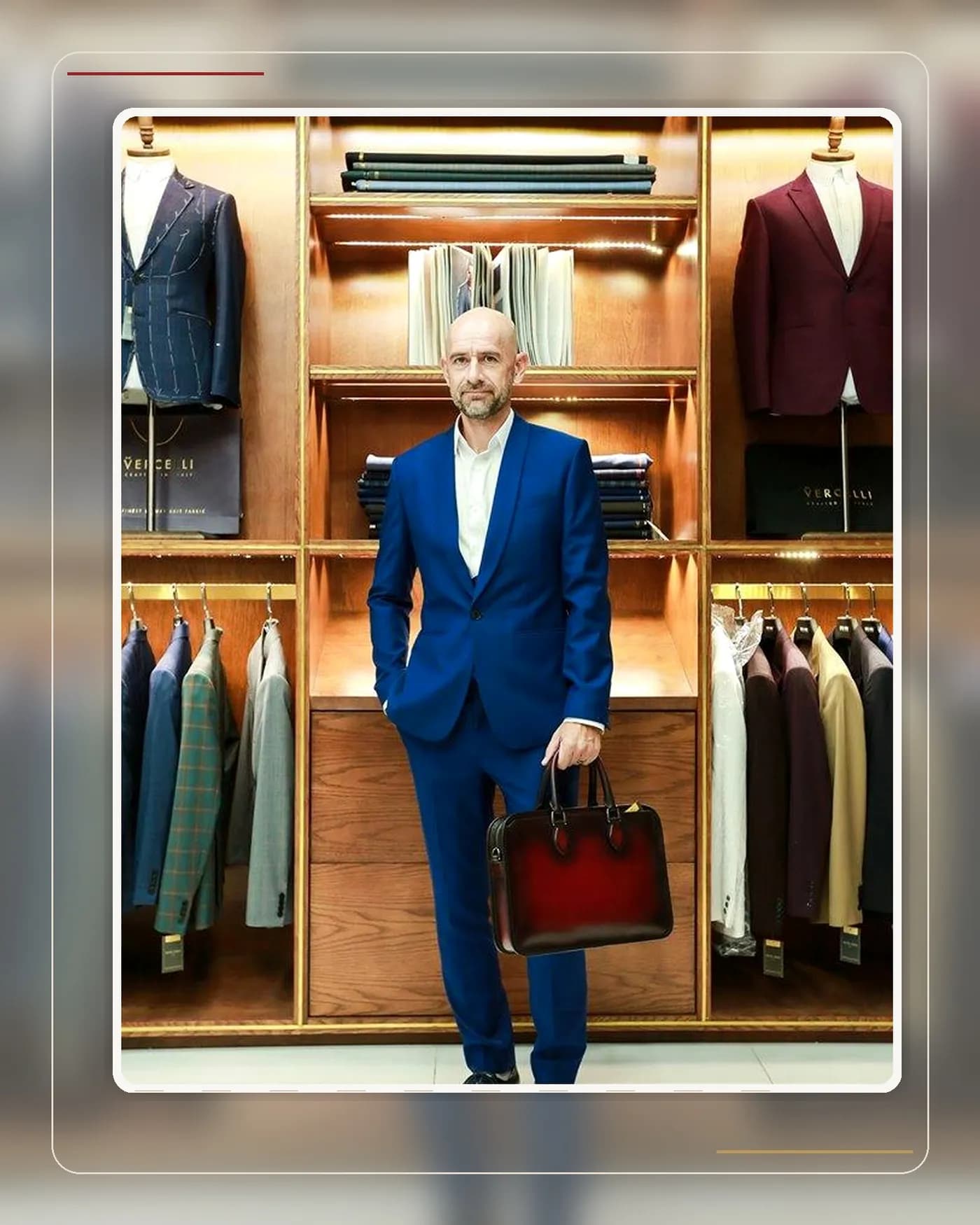
What color should your first suit be to wear it the most?
Dark navy is the best color for a first suit: formal enough for work, soft enough for events, and it pairs with almost every shirt, tie and shoe.
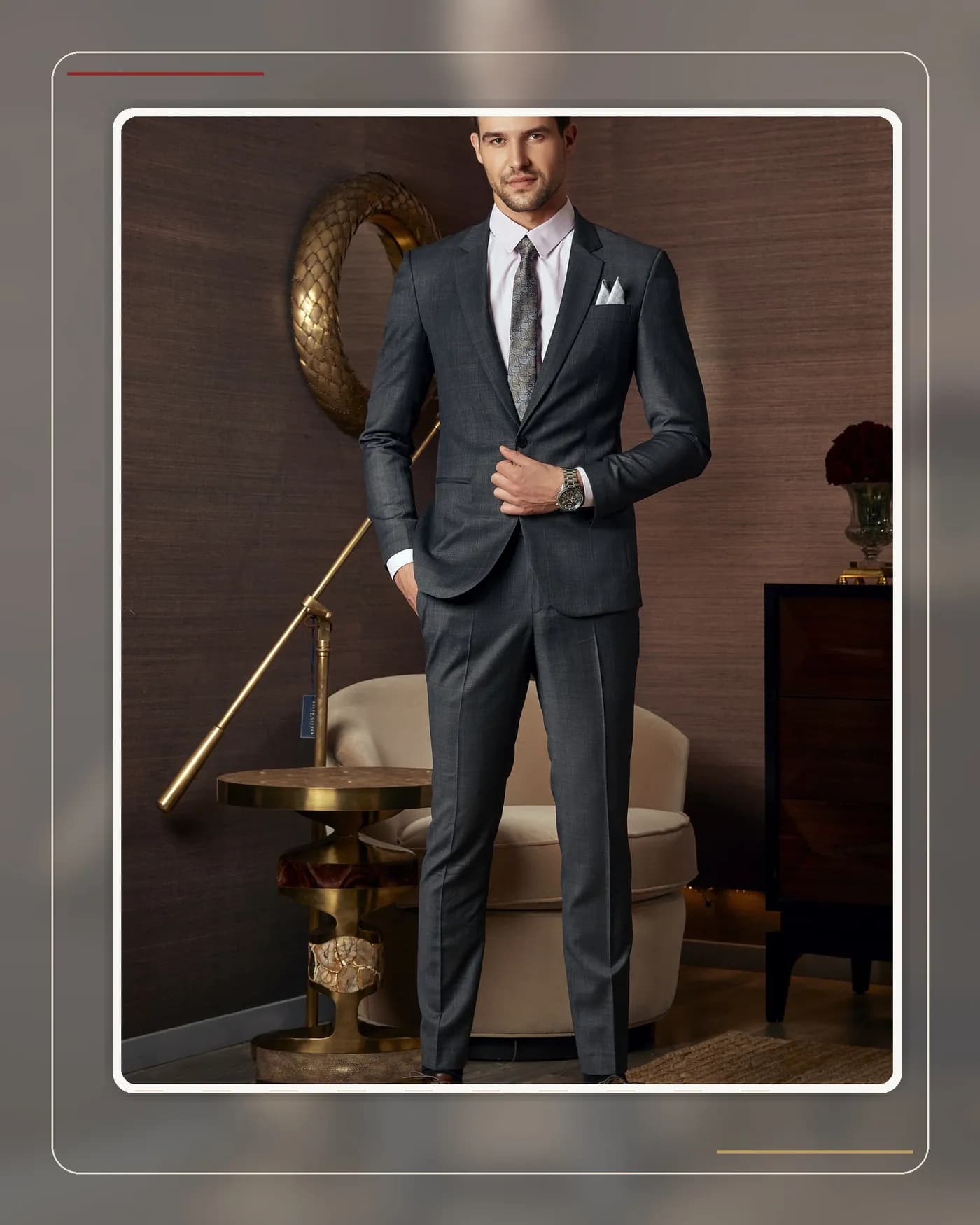
After your first navy suit, which color should you invest in next?
After navy, your second suit should be charcoal: it adds a higher level of formality, shares all your existing shirts and ties, and never duplicates navy's role.
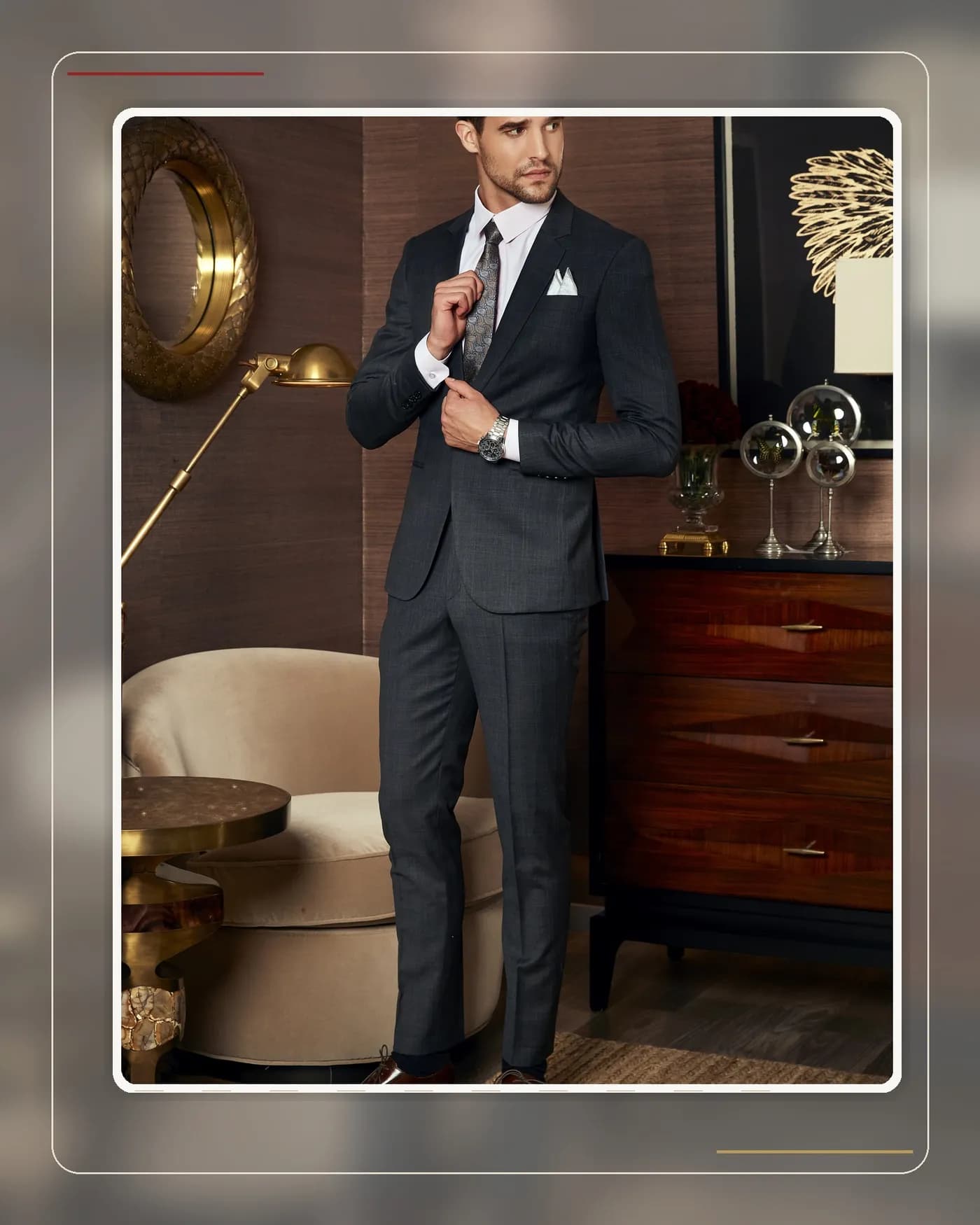
How do you build a 3-suit wardrobe for a busy professional?
The optimal 3-suit wardrobe: dark navy + charcoal + mid-grey in plain wool, with 5 shirts and 3 ties — enough for the whole working week and every event.
Is a tuxedo worth investing in if you wear it once or twice a year?
Commission a tuxedo if you attend black-tie galas every year and your weight is stable; if the occasions are rare, a well-styled dark suit or a rental makes more sense.

Should Beginners Get a Suit First, or Shirts and Shoes First?
Get the suit first: a well-fitted navy or charcoal suit is the foundation — shirts and shoes added later become easier and cheaper to choose.
How Many Ties and Shirts Does a Minimal Suit Wardrobe Need?
With two foundation suits, five shirts (three white, two light blue) and three to four ties cover a full working week without repeating a look.
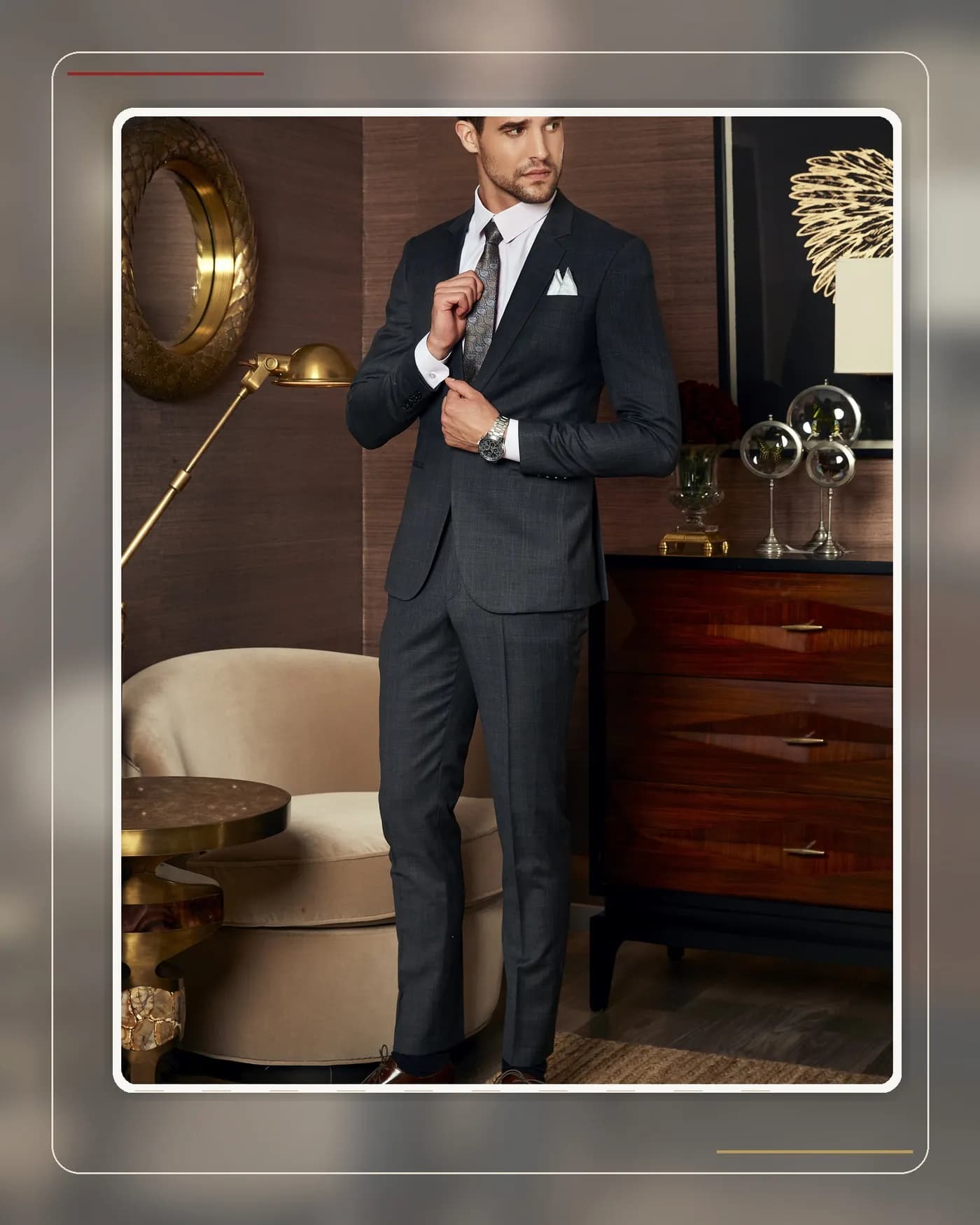
How many occasions can one good suit actually cover?
A well-tailored navy or charcoal suit can cover 5–7 occasions — meetings, signings, weddings as a guest, events, dinner dates — just by changing shirt and accessories.
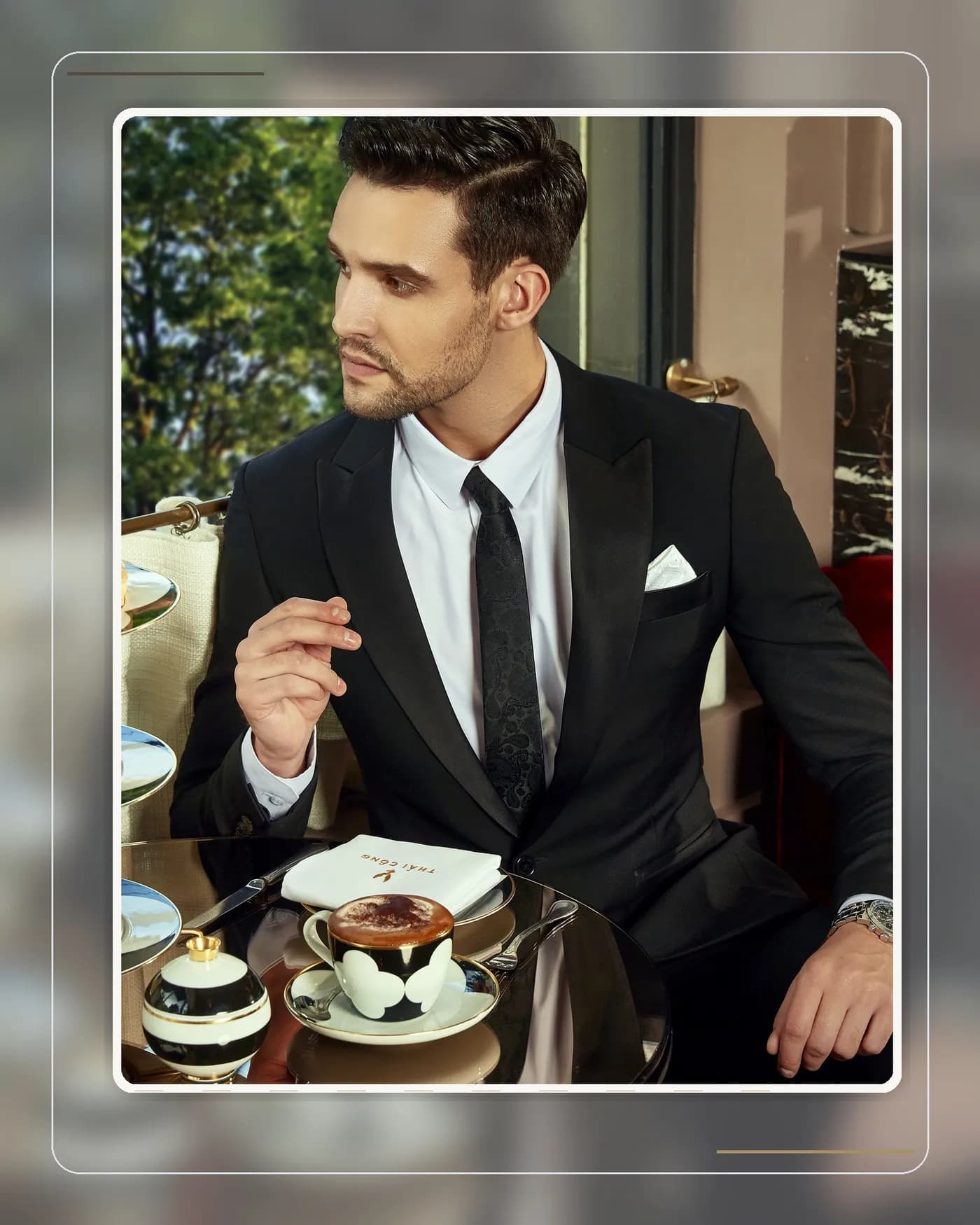
Which mistakes make a suit age you beyond your years?
A suit ages you through an oversized cut, trousers pooling at the shoe, dark shiny cloth and heavy accessories — not through the wearer's actual age.
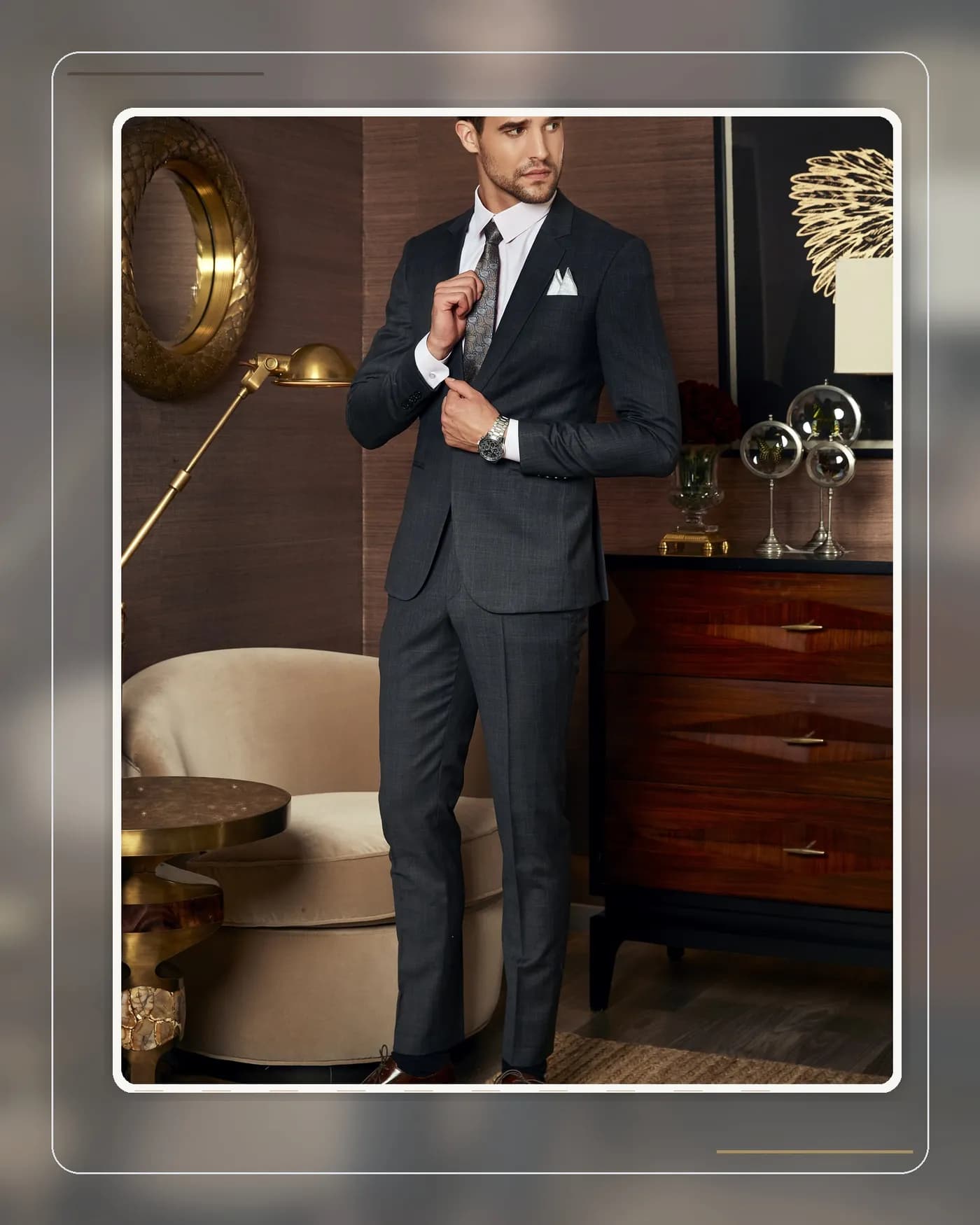
What are common mistakes when choosing a suit from social media?
Social media photos are posed, color-graded and pinned to fit the model. Copying them while ignoring your own body and context is the most common mistake.
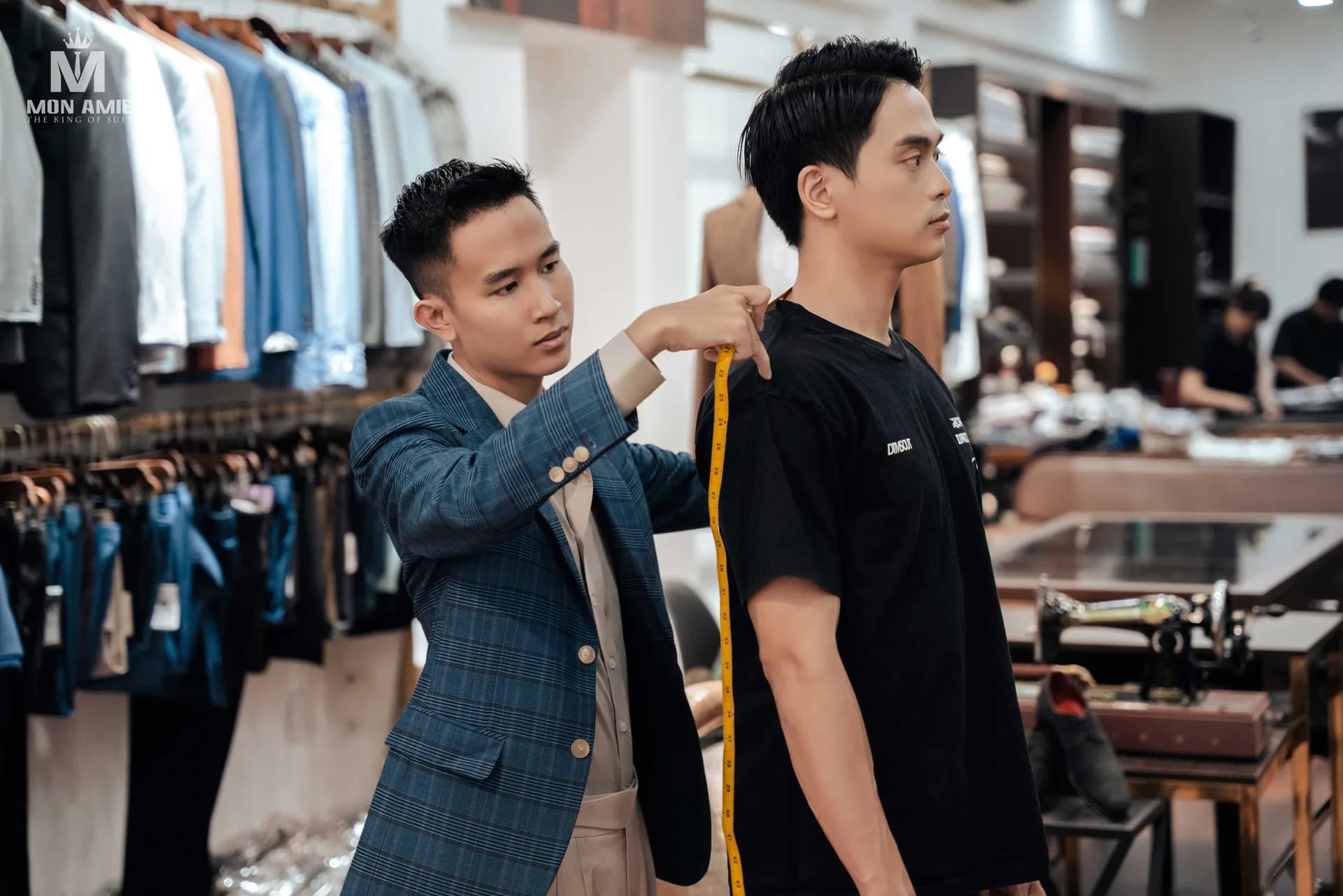
Men's Suit Size Chart by Height and Weight, and How to Read It
A men's suit size chart by height, weight and chest, with 4 steps to read it and three Vietnamese body types. Why shoulders, not the belly, decide the size.
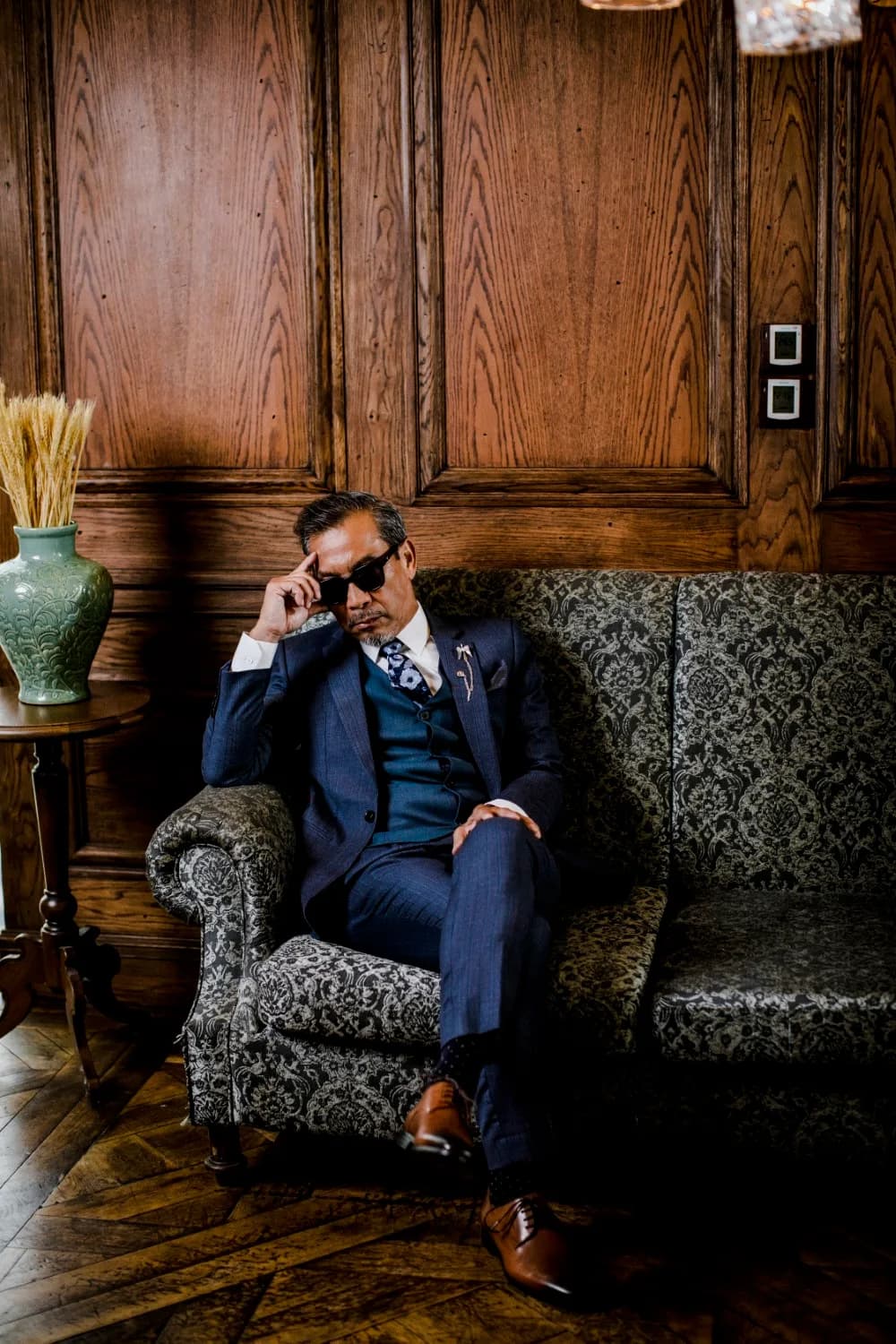
Suits for Big Men: 8 Rules for a Cleaner, Slimmer Fit
Suits for big men: 8 rules on shoulders, lapels, buttons, length, vents, cloth and trousers for a slimmer line, and what made-to-measure can fix.
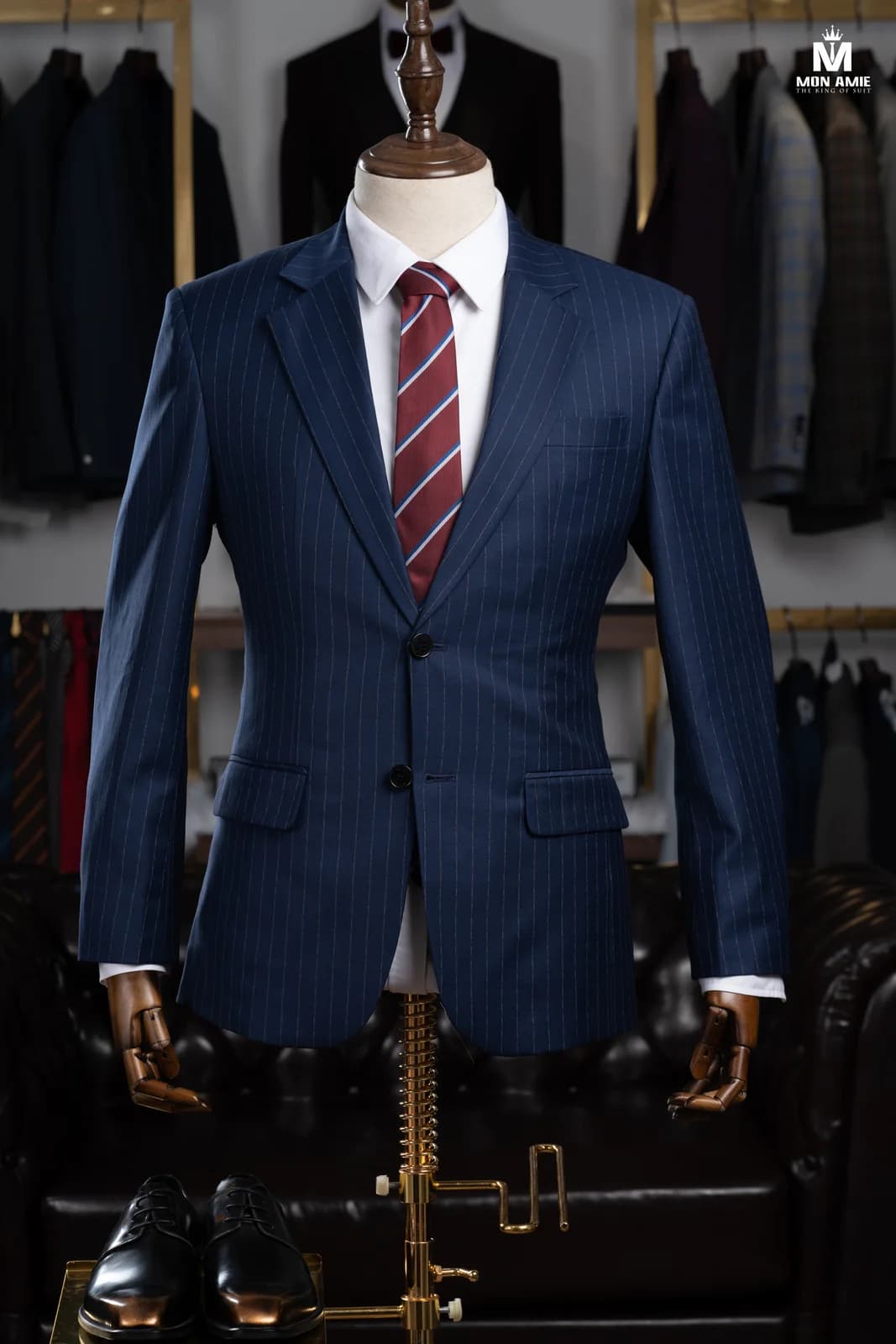
How to Button a Suit Jacket: What to Fasten, What to Leave Open
How to button a suit jacket with 1, 2 or 3 buttons and double-breasted styles: which to fasten, which to leave open, standing or sitting, plus common mistakes.
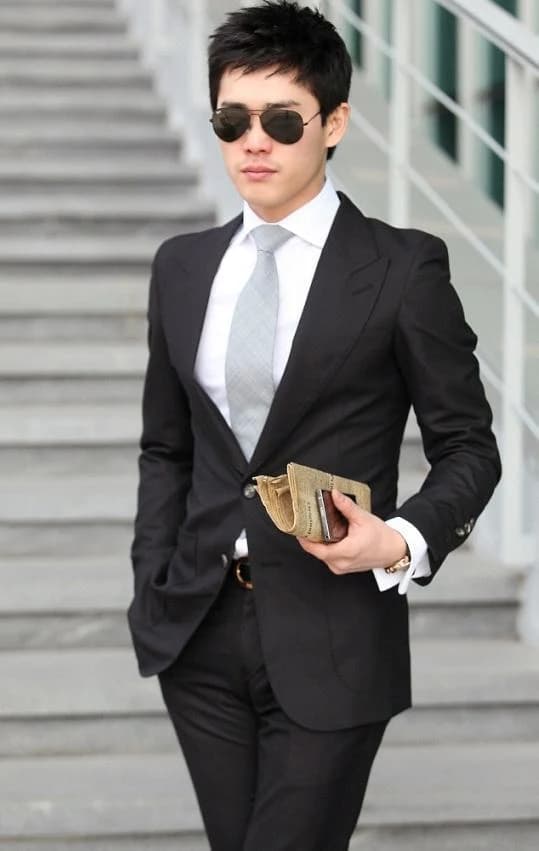
Men's Suit Styles: 12 Types and How to Recognise Them Quickly
Men's suit styles come in 12 types by button stance, lapel and occasion. Learn to recognise each by eye and see which builds suit each one before you choose.

Your First Men's Suit: 6 Decisions to Make Before Tailoring
First suit for men: colour, buttoning, lapel, canvas and vents to choose, whether to order two pairs of trousers, and why to start with the Essential line.
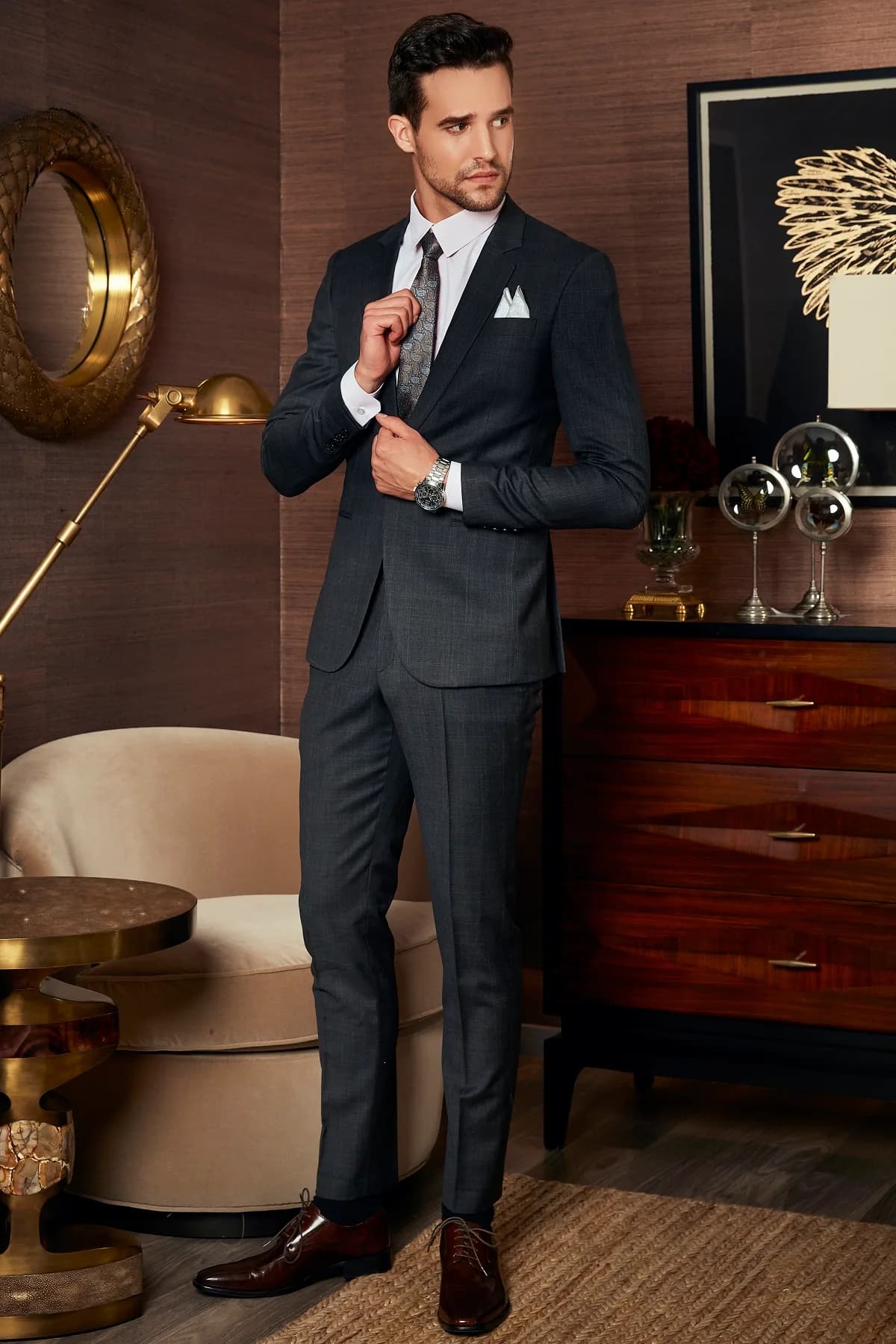
Slim Fit Suit: How It Differs From Regular Fit, Who Should Wear It
What is a slim fit suit, and how does it differ from regular fit and body fit in centimetres of ease? Plus five signs a slim fit has become too tight for you.
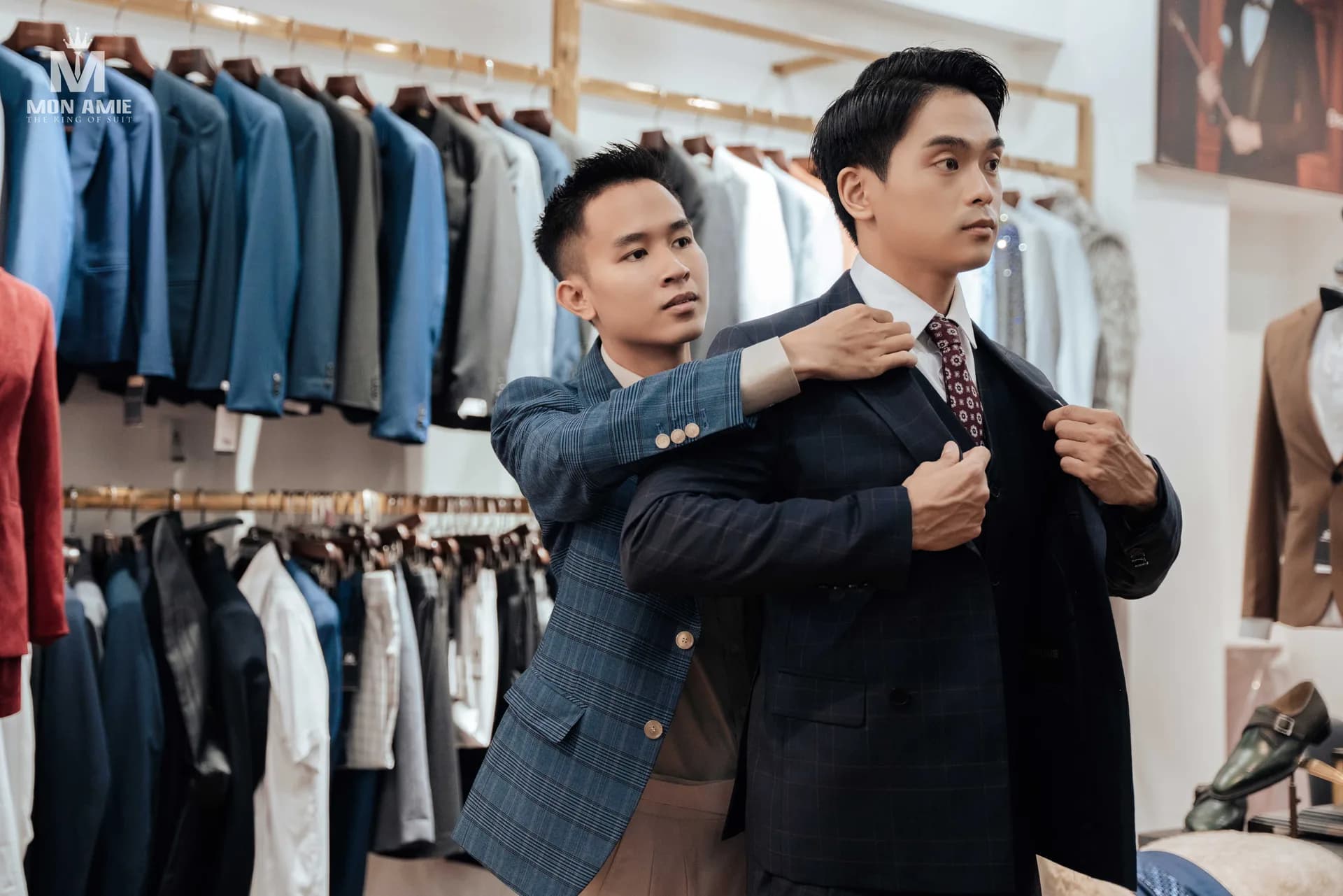
How to Choose a Men's Suit: 7 Steps from Fit to Fine Detail
How to choose a men's suit in 7 steps: check shoulders, chest, waist, length, sleeves, trousers and canvas, plus a fitting checklist to avoid a wrong buy.

Three-Piece vs Two-Piece Suit: Which Should You Have Made?
Three-piece suit vs two-piece suit: how they differ in function, heat in Saigon, cost and wearing the waistcoat alone. When the third piece is worth adding.
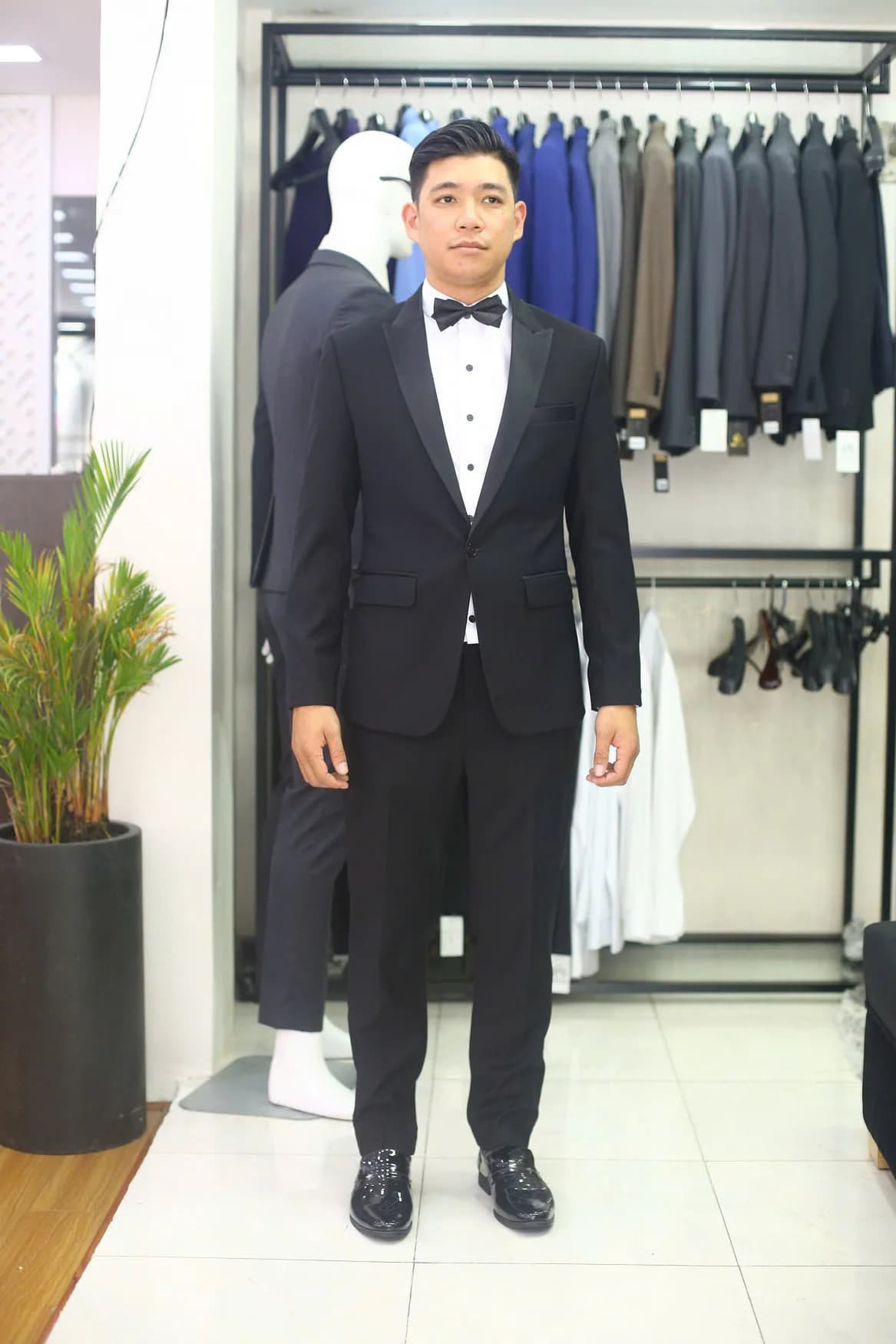
What Makes a Proper Men's Tuxedo? Spot One in 1 Minute
A proper men's tuxedo has satin lapels, covered buttons, satin-striped trousers and no vents or flaps. How to tell a real tuxedo from a black suit in a minute.
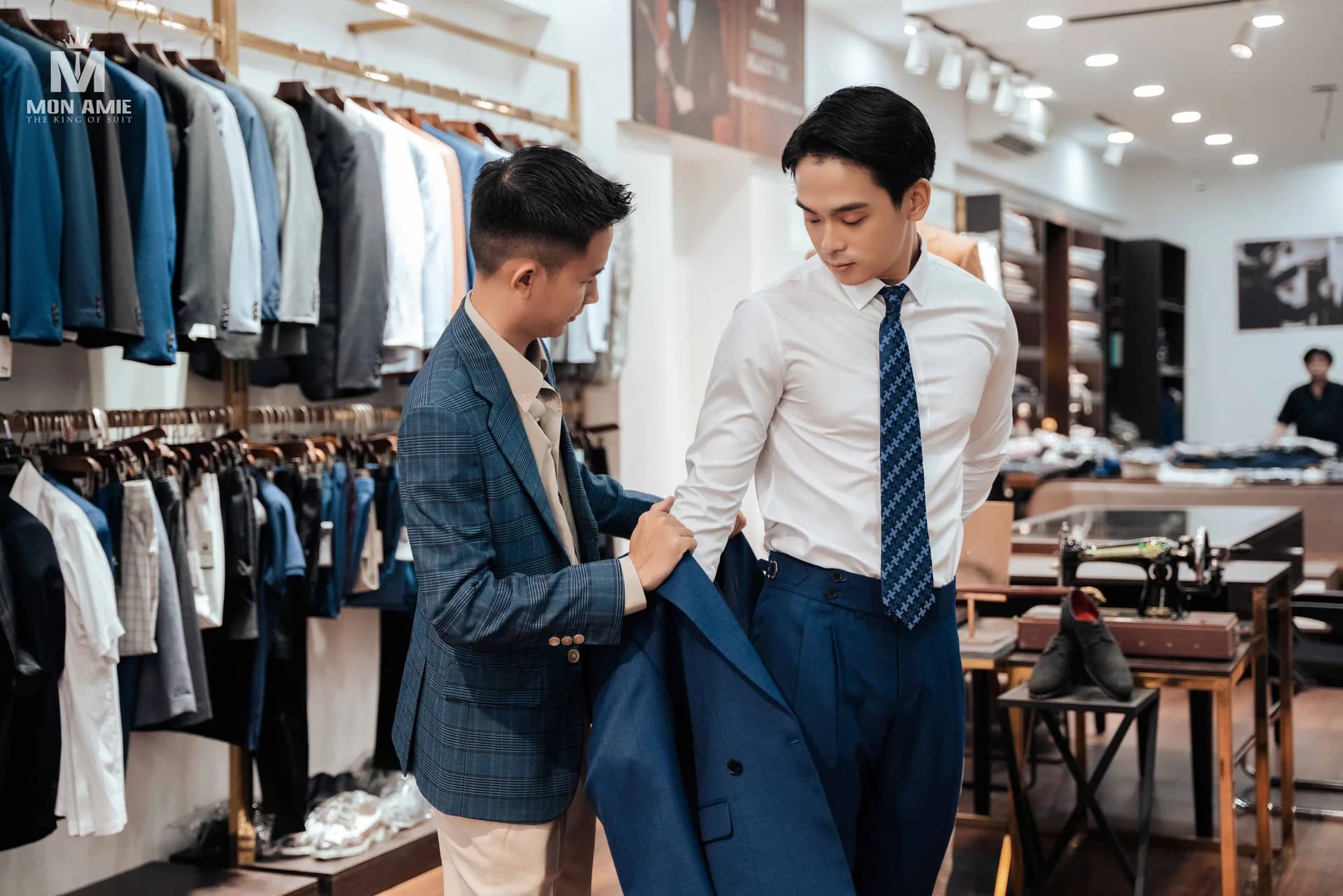
How should a suit fit? 10 points to check before the mirror
How should a suit fit? A 10-point checklist from shoulders, collar and chest to waist and trouser hem, with right and wrong signs and a home mirror check.

Suits for skinny men: a cut that gives fuller shoulders
Suits for skinny men under 60 kg: choosing ease, shoulder padding, lapel width and fabric weight for fuller shoulders, while avoiding an over-tight slim fit.

How to Spot a Premium Men's Suit: 10 Tailoring Details
How to spot a premium men's suit by 10 tailoring details: canvas, lapel, cuffs, stitching, lining and buttons. Checks you can make in store, without the label.
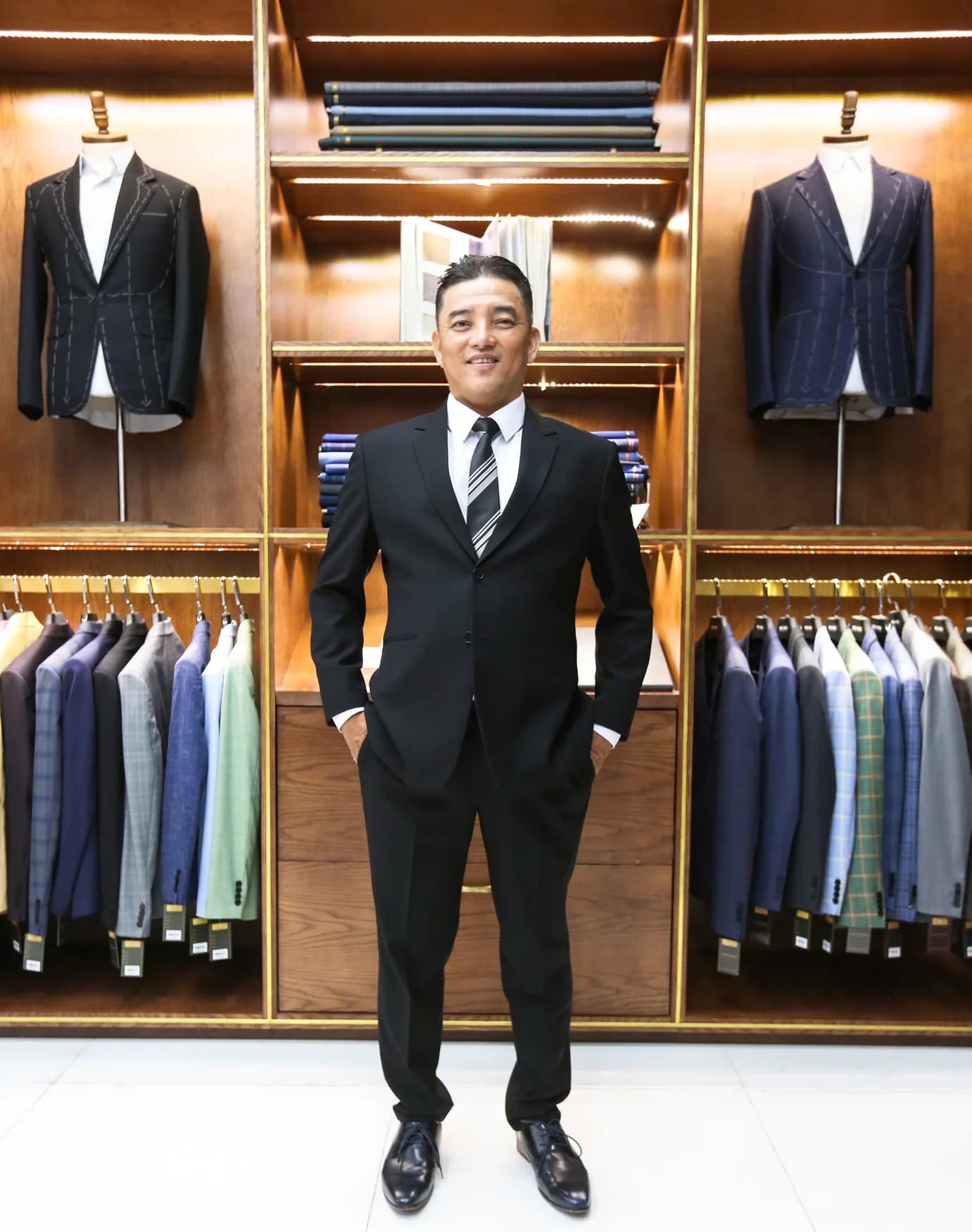
Suits for Middle-Aged Men: A Fit That Looks Sharp and Feels Easy
Suits for middle-aged men look best with a clean shoulder, room through chest and stomach, and a moderately high trouser rise. How to choose a fit at 40–55.
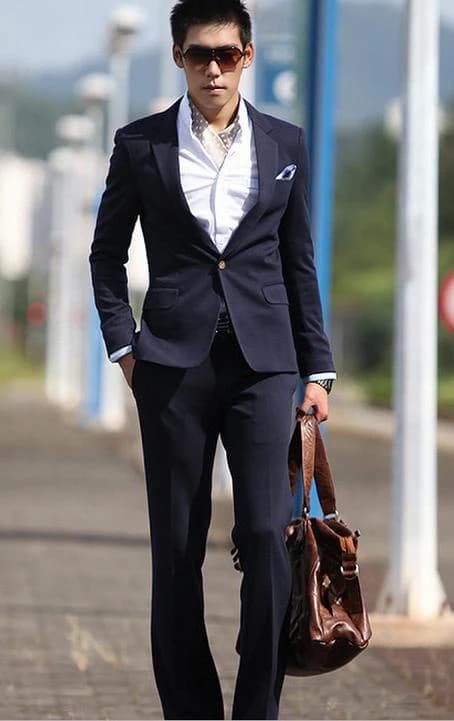
Types of Suits for Men: 9 Kinds, Matched to the Occasion
Types of suits for men: business, lounge, dark, three-piece, double-breasted, tuxedo, morning, casual, travel. Nine types by formality and how to spot each.
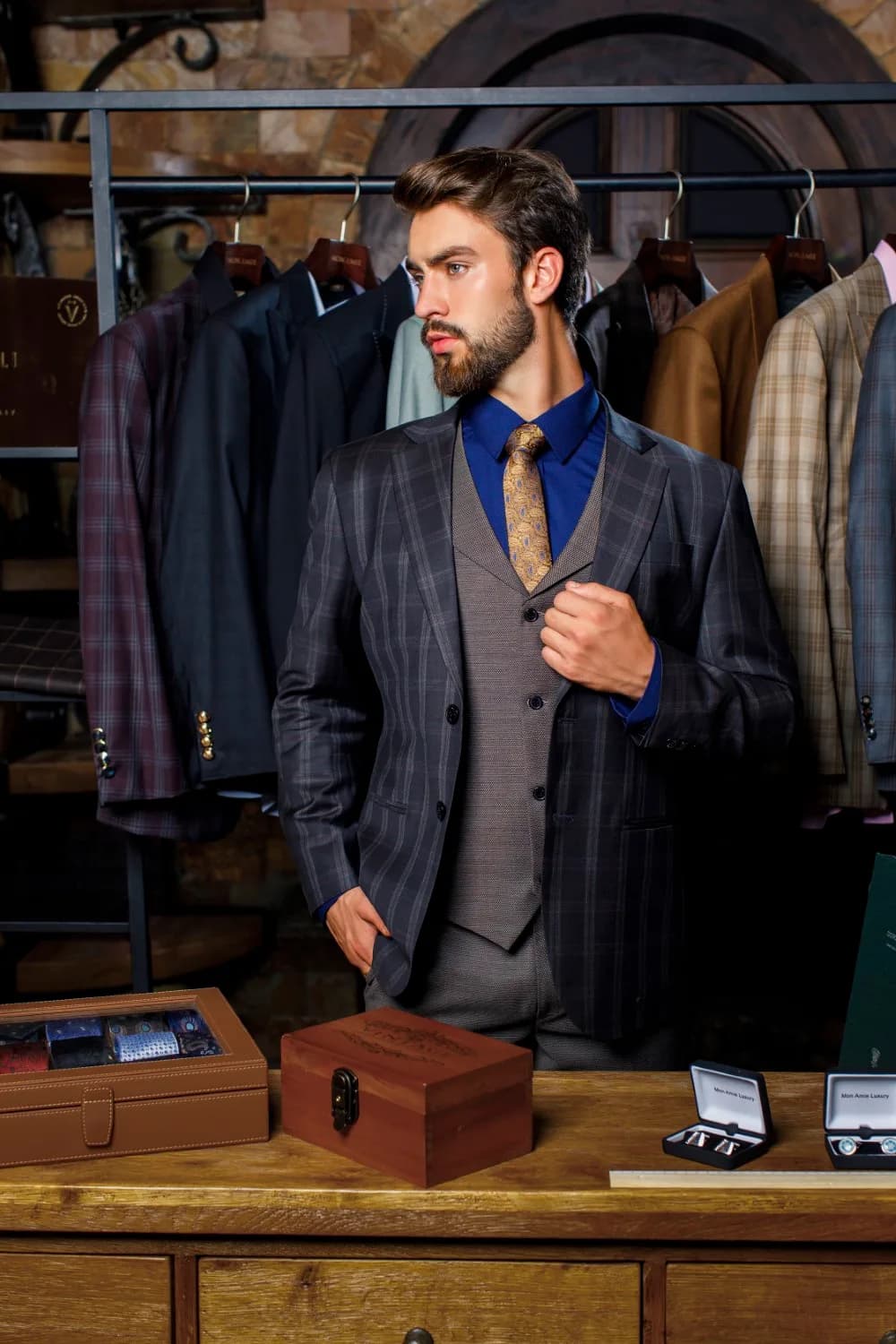
What Does a Men's Suit Include? Essential and Optional Pieces
What does a men's suit include? Jacket and trousers are essential, a waistcoat is optional; shirt, tie and shoes are accessories. Pieces needed by occasion.
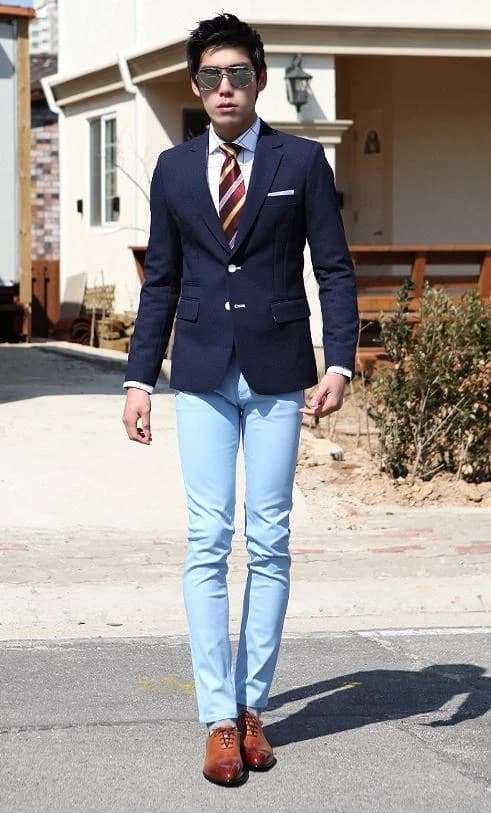
How to Choose a Men's Blazer: Fit, Structure and Details
How to choose a men's blazer by shoulder, structure, length, pockets, buttons and fabric, so it works worn alone with other trousers. Plus a mirror fit check.
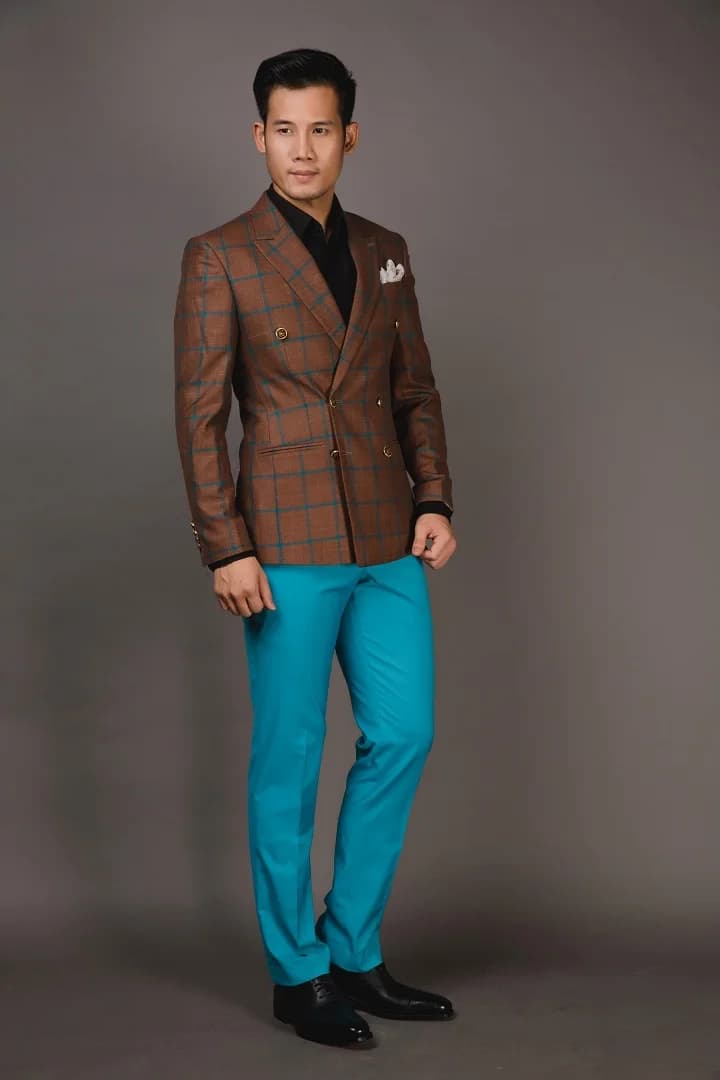
Types of Men's Blazers: 8 Common Styles and How to Spot Them
Types of men's blazers in eight styles: club blazer, sport coat, unstructured, double-breasted, mandarin, velvet, check and linen, and how formal each one is.

European Men's Suit Sizes 44–58: How to Read and Convert Them
A European men's suit size from 44 to 58 is half the chest in cm. How to read R, S, L codes, convert to S–XXL, US/UK and Asian sizes, and measure yourself.
What Weight Is a Size XL Suit Jacket? S to XXL Conversion
What weight is a size XL suit jacket? A weight and height chart for sizes S to XXL, why brands differ, and when to be measured instead of guessing your size.
Suit Size 46 and 48: How Many Kg? A Quick Reference Chart
What weight is suit size 46, and size 48? A size chart by weight, height and chest, plus why two men at the same 70 kg can end up two sizes apart.
Suits for Men With a Belly: 7 Cuts for a Neater Waistline
Suits for men with a belly: 7 cuts, from button position, lapels and front hem to high-rise trousers and braces, plus the colours and cloths worth choosing.

Choosing Men's Suit Size Between Two Sizes: Up or Down?
Choosing men's suit size between two sizes: shoulders and chest first, what can and cannot be altered, alteration costs and when to go made-to-measure.
Korean-Style Suits: 6 Cut Features and Who Wears Them Well
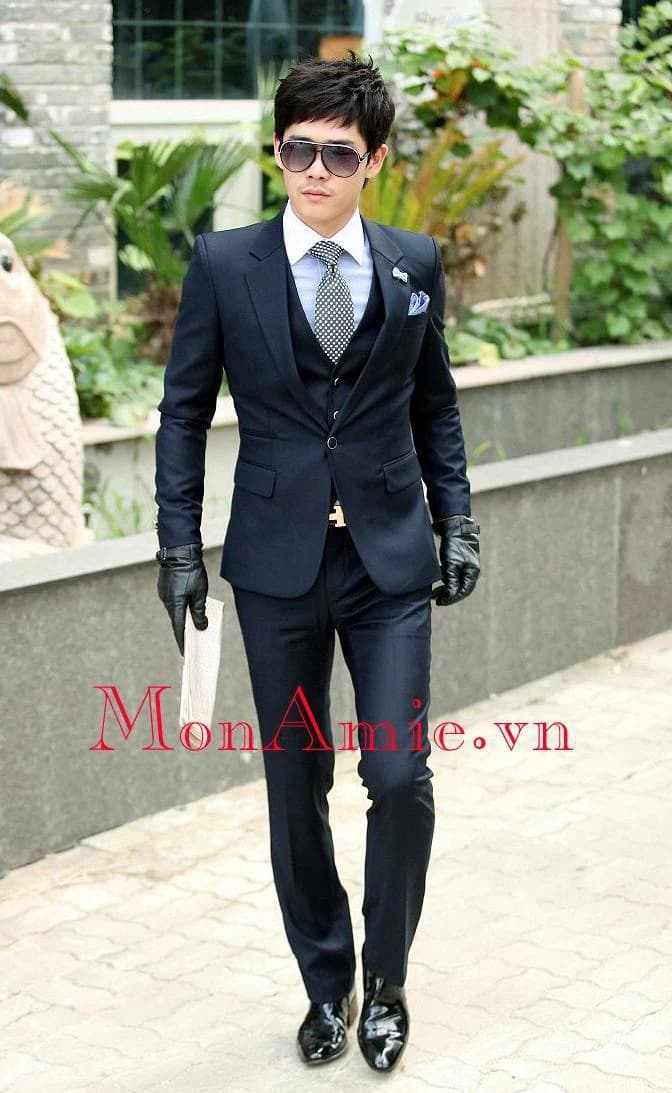
A Korean-style suit shows in six features: shoulder, body, length, lapel, trousers, colour. How it compares with Italian and British cuts and how to adjust it.

How Many Buttons on a Suit Jacket? 1, 2, 3 and Double-Breasted
How many buttons on a suit jacket? One, two, three and double-breasted compared by proportion, formality and build, with the buttoning rules and sleeve buttons.
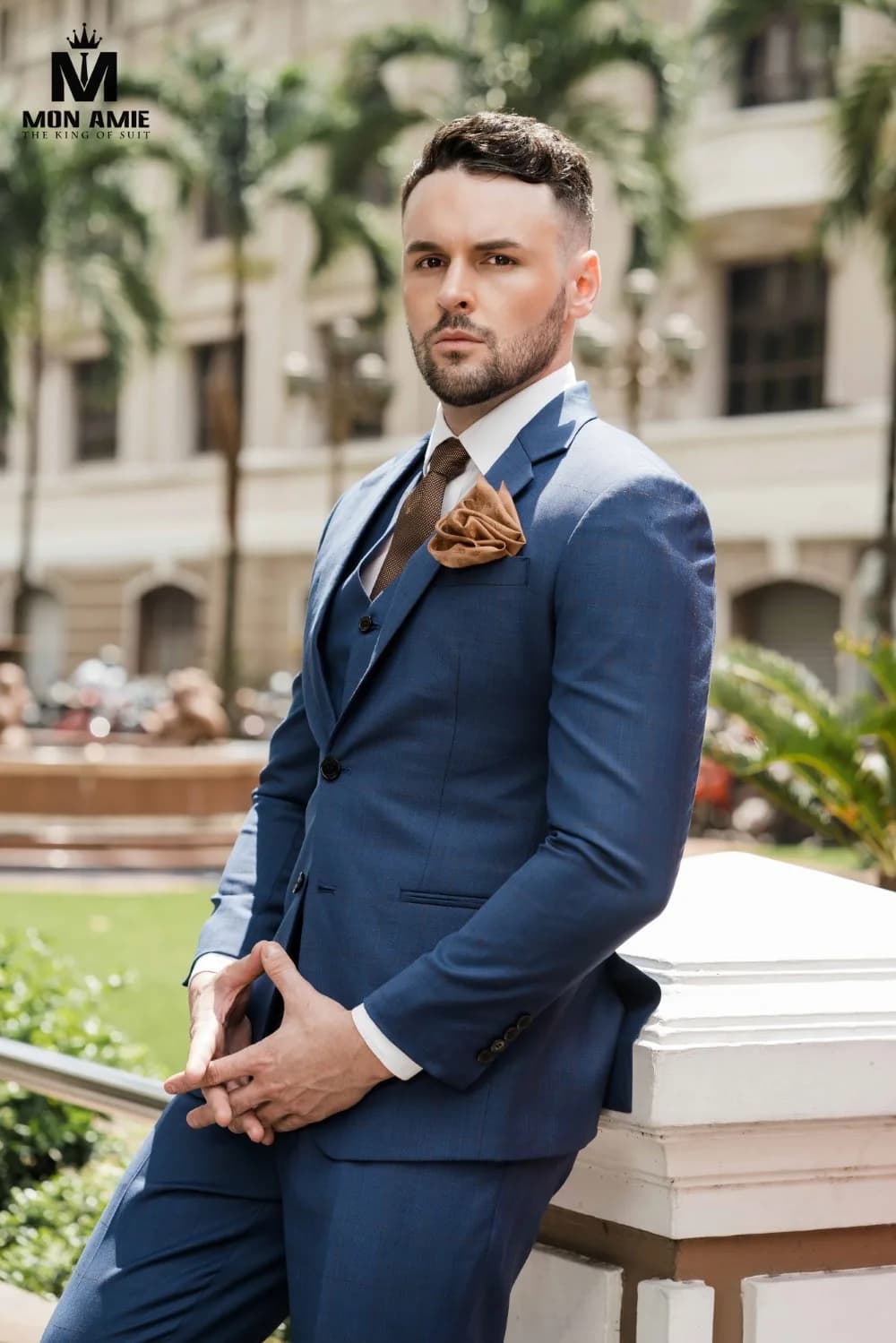
What Makes a Good Suit Jacket? 8 Criteria From a Master Tailor
What makes a good suit jacket? 8 master tailor criteria: shoulder, collar, lapel, chest, waist, hem, sleeve and finishing, plus a 60-second mirror test.

How to Wear a Suit Properly: 12 Small Rules Few Men Notice
How to wear a suit properly in 12 small rules: snip the vent and pocket stitching, remove the sleeve label, button correctly, show 1–1.5 cm of cuff, tie length.
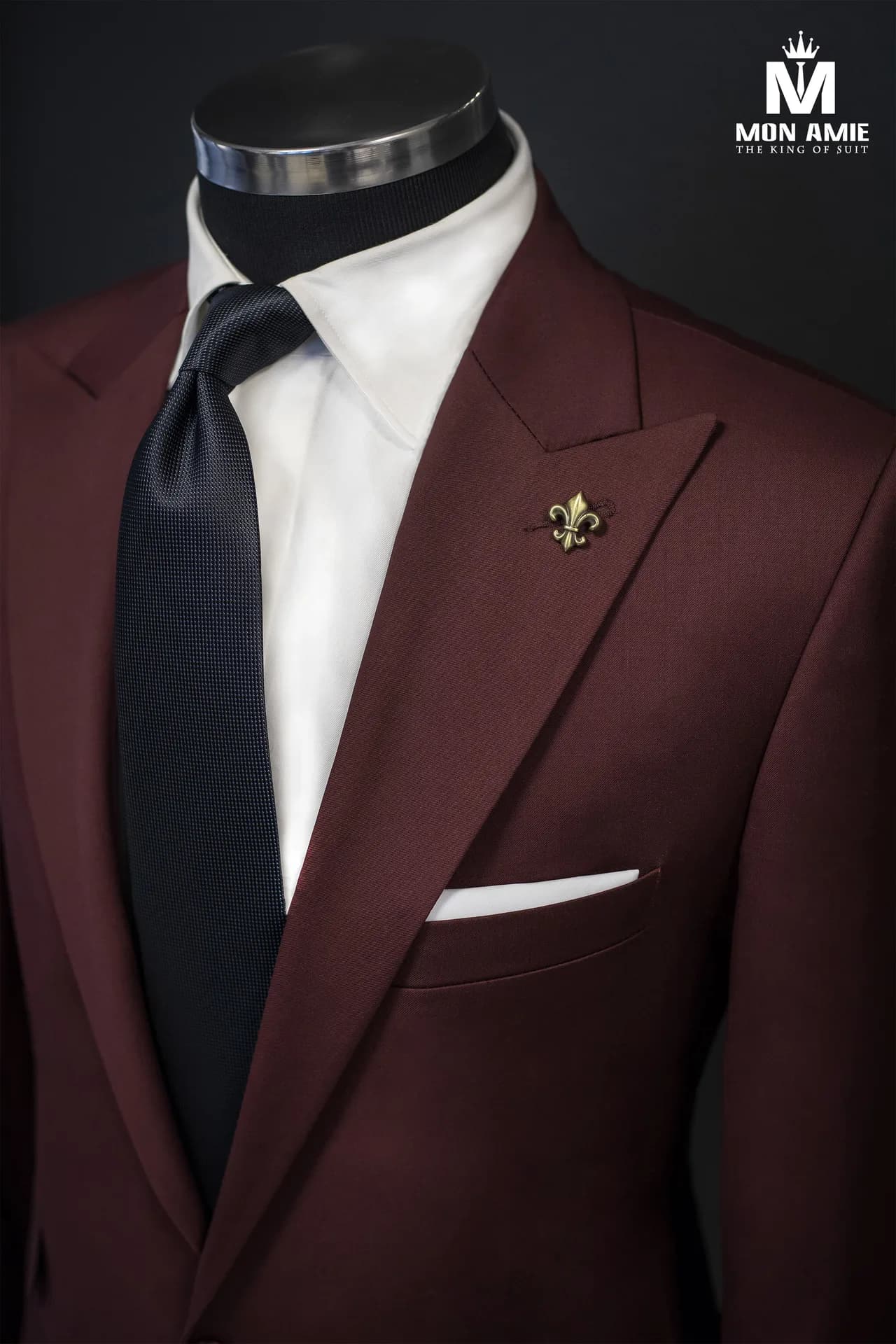
What Details Does a Men’s Suit Have? 20 Parts by Name
What are the parts of a men's suit? A 20-part map of jacket, trousers and waistcoat with Vietnamese and English names, from lapel to vent, to brief your tailor.

How to Measure a Suit Jacket You Own to Have It Remade to Fit
How to measure a suit jacket you already own to have it remade in the same fit: shoulder, chest, waist, length, sleeve, tolerances and online ordering.

Men's Suit Jacket Size Chart: Finished Measurements by Size
Men's suit jacket size chart S to XXL: shoulder, chest, waist, length and sleeve, how to compare with a jacket that fits, and what to do between two sizes.
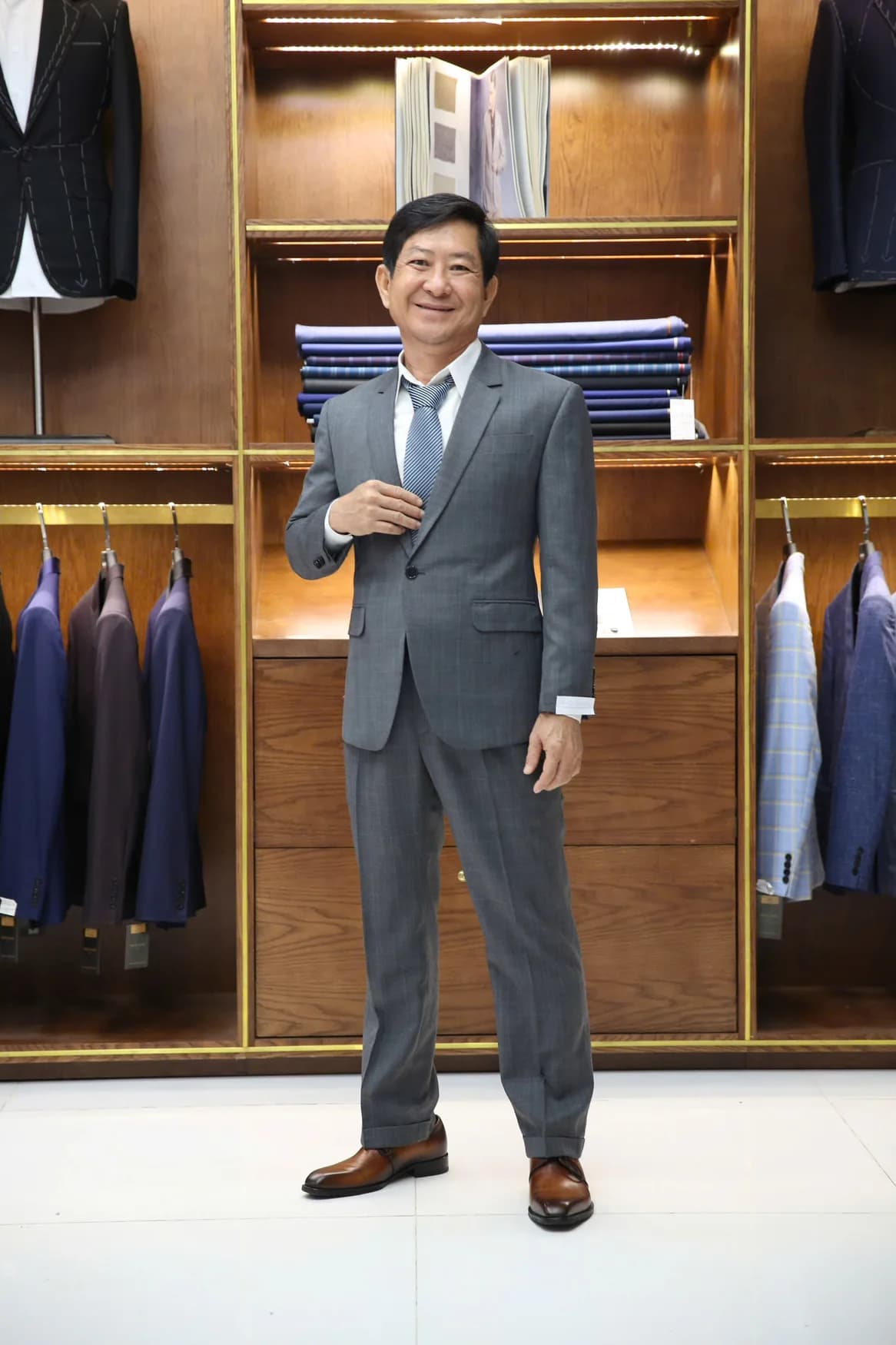
Suits for Older Men: Comfortable, Well-Fitted, Easy to Wear
A suit for older men needs soft shoulders, roomy armholes, high-rise trousers and light, crease-resistant cloth. Mon Amie's master tailors show how to choose.
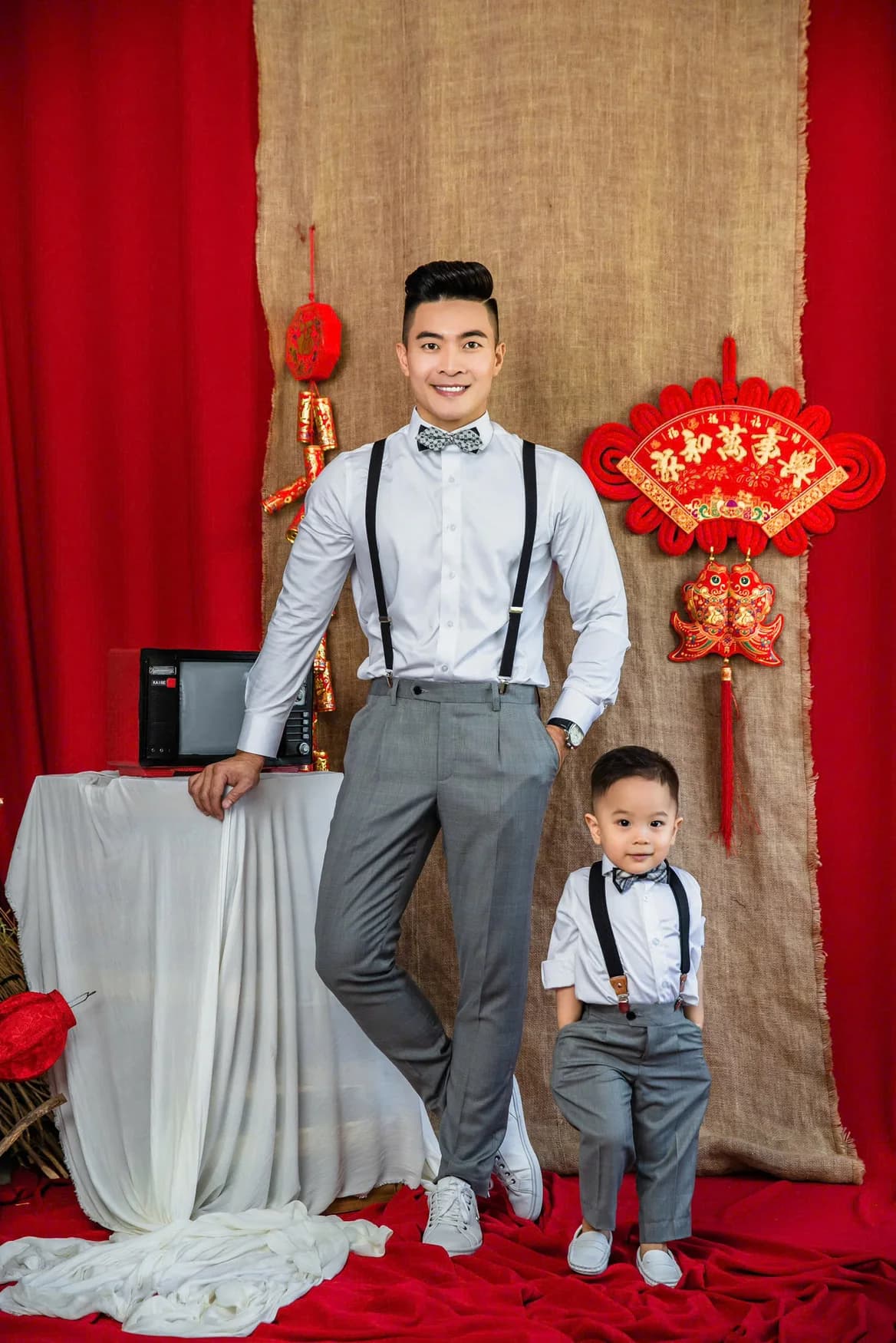
A Suit for Dad: Choose the Style, Take Measurements, Gift It
Choosing a suit for dad: measure from his old jacket, pick colours and styles that suit him, and give made-to-measure at home as a Father's Day gift.

Men's Suits for College Students: Choosing Your First One
A men's suit for college students: one navy suit for graduation, interviews and your first year at work. How to choose cut, style and cloth on a tight budget.

How to Choose a Men's Waistcoat for a Suit: Cut, Buttons, Length
How to choose a men's waistcoat to wear with a suit: cover the waistband, match the V to the lapel, leave the last button open. A guide by body type and colour.
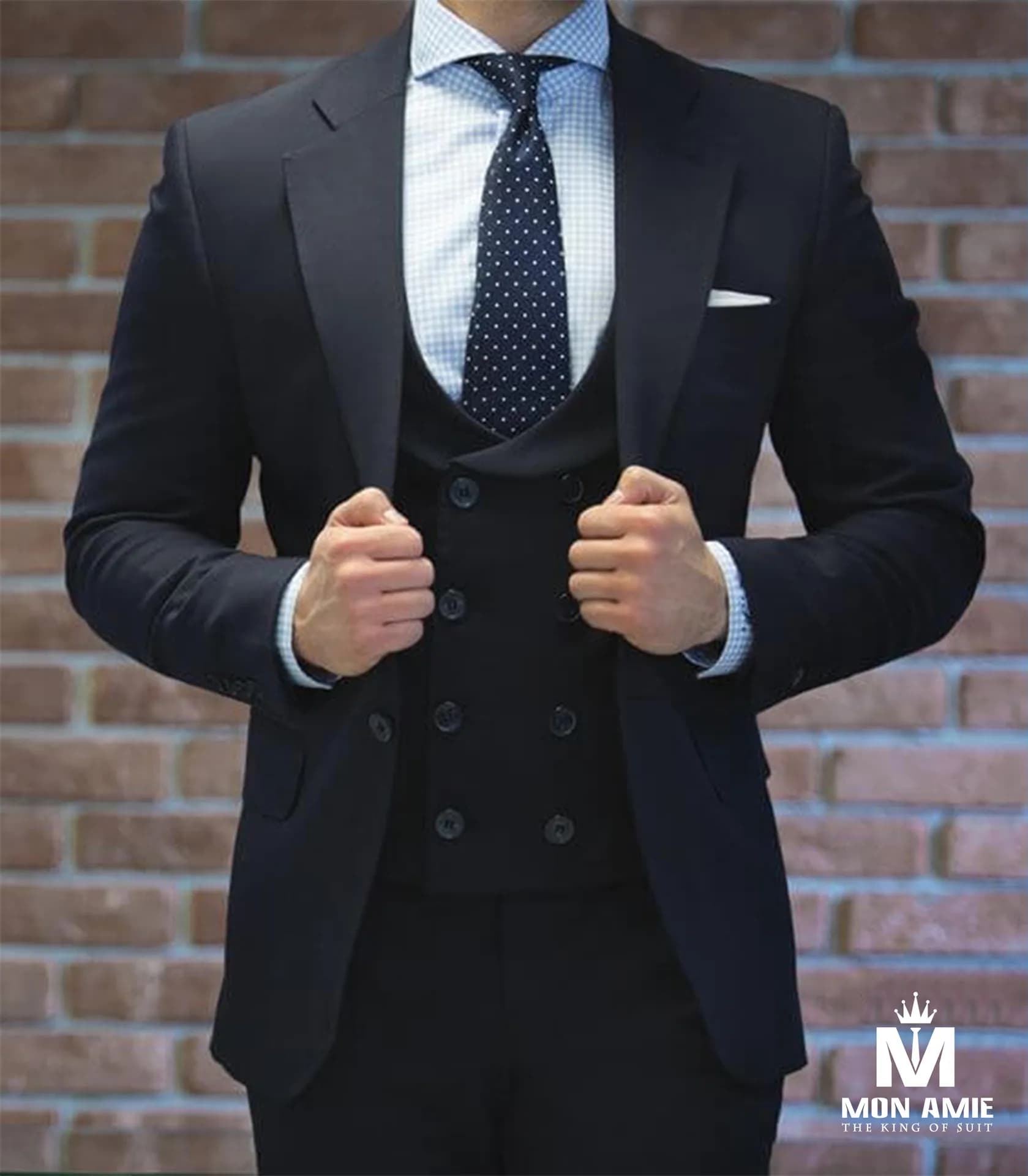
Men's Waistcoat Styles: 10 Cuts to Wear With a Suit or Trousers
Men's waistcoat styles: single-breasted, double-breasted, lapelled, U-neck and vintage. Spot all 10 cuts, their formality, and how to match one to your suit.

Top 7 Men's Suit Lapel Styles and When to Choose Each
Top 7 men's suit lapel styles: notch, slim notch, peak, double-breasted peak, shawl, rounded and contrast lapels. See which suits your build and the occasion.

Top 4 Men's Suit Cuts: Korean, Italian, British and American
Top 4 men's suit cuts: Korean, Italian, British and American differ in shoulders, waist and vents. See which build suits which cut before going made-to-measure.
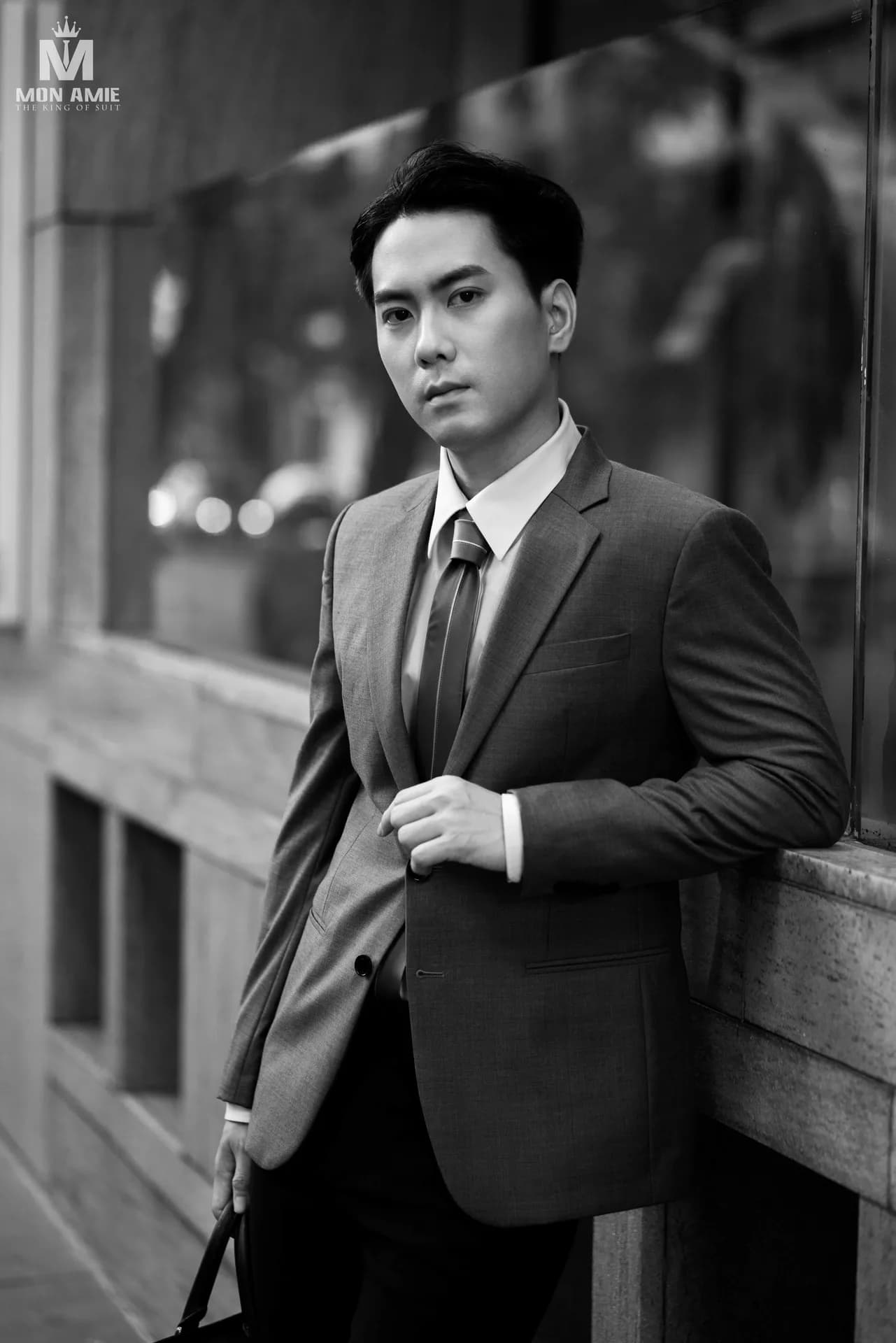
Top 5 Suit Jacket Button Styles and How to Choose
Top 5 suit jacket button styles: single, two-button, 3-roll-2, double-breasted 4x2 and 6x2. How to button correctly and which suits your build and the occasion.
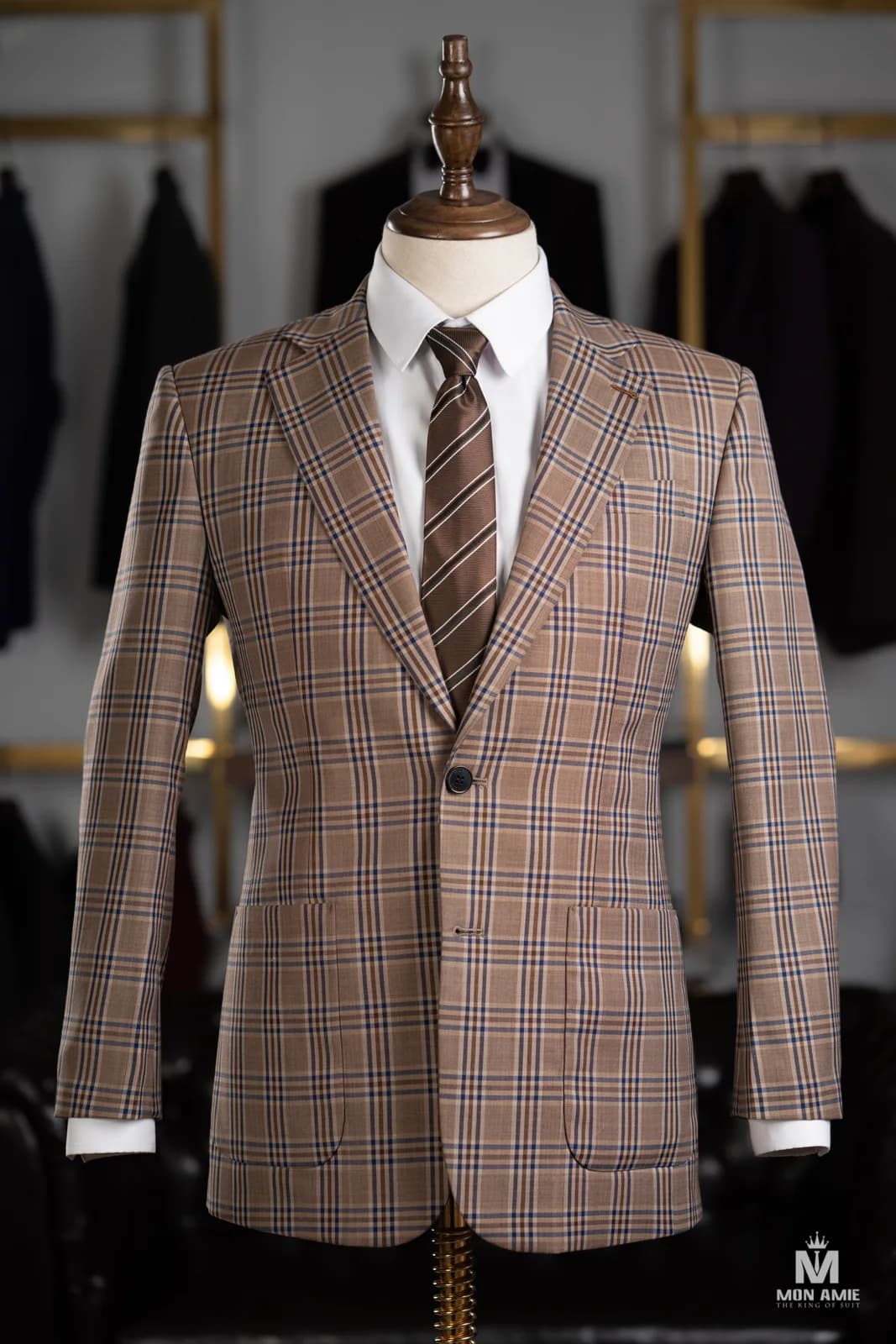
Top 5 Men's Suit Jacket Pocket Styles
Top 5 men's suit pocket styles: flap, jetted, patch, slanted and ticket pockets. How to choose by build, occasion and the formality of your suit.
Top 5 Suit Jacket Vent Styles: Ventless, Centre and Side Vents
Top 5 suit jacket vent styles: ventless, centre vent, side vents, hacking vents and side slit. How to choose by seat, build and the way you sit and move.