
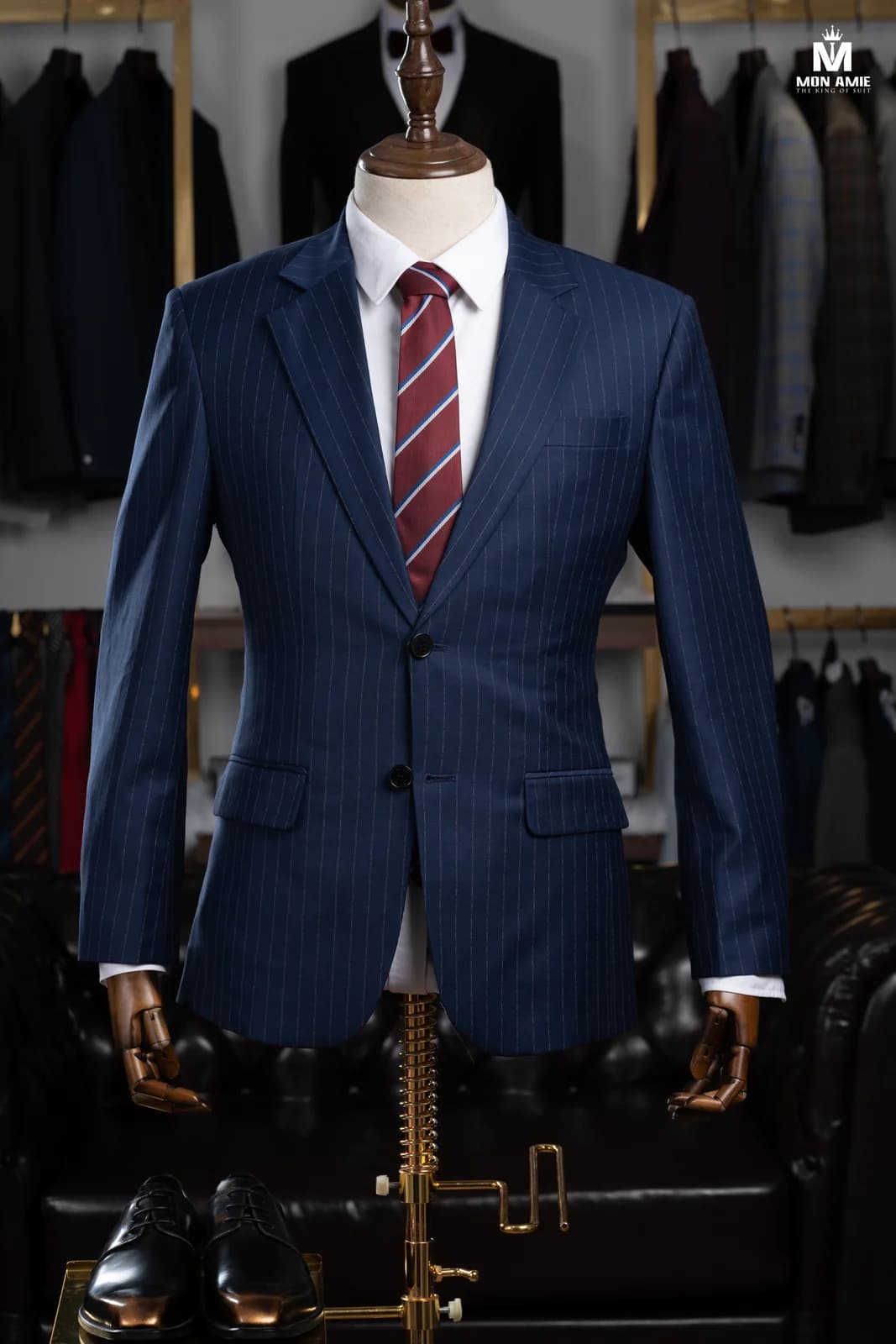
There is a kind of man who is easy to spot in a meeting room: all three buttons fastened, standing as stiff as a post, with the jacket pulled into X-shaped creases across the belly. He is missing nothing except one small rule. How to button a suit jacket comes down to just a few lines to remember, but the person across from you notices the moment it is wrong.
Quick answer
Two-button jacket: fasten the top button and always leave the bottom one open. Three-button jacket: fasten the middle button, the top one depends on the lapel roll, and the bottom one is always open. One-button jacket: fasten it when standing. In all three, unbutton when you sit and fasten again when you stand up. A double-breasted jacket is fastened when standing and opened when seated.
Buttoning rules for each jacket style
One-button jacket
There is only one button, and it is fastened when you stand. A one-button jacket has a slender, clean line, with the button at the natural waist. When you sit down, undo it so the front is not pulled taut.
Two-button jacket (the most common)
The rule is “always fasten the top button, never the bottom one”. The bottom button is decorative; the front is cut to flare slightly there. Fasten it and the front is pulled tight, creating creases that run from the waist out to the hip.
Three-button jacket
The rule is remembered in three words: the top button “maybe”, the middle button “always”, the bottom button “never”. If the jacket has a rolled lapel (3-roll-2), the top button sits hidden behind the edge of the lapel, so you only fasten the middle one. With a flat lapel you can fasten the top two buttons, but fastening the middle one is enough.
Double-breasted jacket
A double-breasted jacket has buttons that are only decorative and buttons that actually fasten. The six-button style with two to fasten (6x2) is usually fastened with two buttons, and the six-button style with one to fasten (6x1) with one. An easy general rule: fasten the working buttons when standing, open them when sitting. The hidden button on the inside of the front panel must also be fastened so the jacket does not hang crooked.

Quick reference table
| Jacket style | Top button | Middle button | Bottom button |
|---|---|---|---|
| One button | Fasten when standing | None | None |
| Two buttons | Always fasten | None | Always open |
| Three buttons | Depends on the lapel roll | Always fasten | Always open |
| Double-breasted | Fasten the working buttons when standing | Fasten when standing | Open when seated |
Why the bottom button is always left open
This rule is not fussiness. The tailor cuts the jacket so the front opens out gently around the bottom button; that way, when you walk, sit down or slip a hand into a trouser pocket, the jacket still hangs softly with your body. If you fasten the bottom button, the front is held tight at a point that should be free, creating X-shaped creases running from the button out to the hips and making the front panels ride up. People tell many stories about the origin of this habit, but the reason most worth remembering is the mechanical one: the jacket is cut so that button is not fastened.
To check whether a jacket fits, fasten the main button and slide a flat hand between the jacket and the shirt. If the hand slides in easily, the jacket fits. If the hand is stuck or the button strains into an X-shaped crease, the jacket is too tight; if a fist slips in easily, the jacket is too loose.
How to button a suit jacket when standing, sitting and walking
- Standing or walking: fasten by the rules above. A fully open jacket is fine in a relaxed setting, but when you meet partners, go on stage or have your photo taken, you should fasten it.
- Sitting: undo the buttons. If you stay fastened while seated, the jacket is stretched across the belly and shoulders, and over time the collar gaps and the front creases.
- Standing up: fasten again as soon as you stand, a movement that people used to wearing suits do almost unconsciously.
- Shaking hands in greeting: fasten the button before you step forward. A handshake with a jacket hanging open looks sloppier than you think.
Sleeve buttons: a small detail for the discerning
Besides the body buttons, the sleeve of a suit jacket has buttons too, usually four in a straight row. On a ready-to-wear jacket, the sleeve buttons are usually only sewn on for decoration. On a made-to-measure jacket, the cuff buttonholes are usually real and can be opened. On formal occasions such as meetings, ceremonies and photos, fasten all the sleeve buttons; on relaxed occasions, many people leave the last one or two open to roll up the sleeve or to check a watch more easily. What matters is that the sleeve buttons sit evenly and neatly, and that the sleeve ends at the wrist so the buttons are not hidden or touching the hand.
Waistcoat and tuxedo: two common exceptions
Waistcoat: the bottom button is always left open, even when you wear the waistcoat under a jacket. A waistcoat is cut with the hem flaring out, and fastening every button constricts the line.
One-button tuxedo: fasten when standing, undo when sitting, just like an ordinary one-button jacket. Tuxedo buttons are usually covered in fabric or satin to match the lapels, so the fastened button looks neat and clean.
Common mistakes and tips from Mon Amie’s master tailors
- Fastening the bottom button. The most common mistake, usually seen in people new to wearing suits.
- Fastening all three buttons. The jacket loses its shape and feels restrictive, especially on a man with a belly.
- Not unbuttoning when you sit. Even a good suit jacket creases quickly if it is fastened tight while you sit all day.
- Buttons straining. If the fabric pulls into an X-shaped crease with the button fastened, the problem lies in the size or the cut, not in the way you button. A jacket made to your measurements will hang flat when buttoned.
- Leaving the front rolled up. After standing up, give the front a gentle tug down before fastening so the jacket sits neatly.
A master tailor’s experience: the button is a small detail, but it says whether the wearer is used to suits. When you have a suit made, you can choose the button style, the button height and the button material during a bespoke consultation, so the button sits in the right place for your build.

Frequently asked questions
How many buttons do you fasten on a suit jacket?
It depends on the style: fasten one button on a one-button jacket, the top button on a two-button jacket, and the middle button on a three-button jacket (the top one depends on the lapel roll). The bottom button of a single-breasted jacket is almost always left open.
Which button do you fasten on a suit jacket?
Remember two lines: “never fasten the bottom button” and “the button at your waist is the most important one”. Count the buttons and put your hand on the one level with your navel; that is usually the one to fasten.
Which buttons do you fasten when sitting?
When sitting, unbutton completely so the jacket is not stretched and keeps its shape. When you stand up, fasten again by the original rule.
Is buttoning different between a men’s suit and a women’s suit?
Almost not at all. A women’s jacket with two buttons or one button follows similar rules, the only difference being that a woman can be more flexible: leave it fully open when pairing it with a dress or a fitted top underneath.
Conclusion
How to button a suit jacket turns out to be just a habit of the hand, and once it is second nature you no longer have to think about it. If you are choosing the style for a suit you are about to have made, the articles on men’s suit jacket styles and what to settle on for a first men’s suit will help you go further. To try each button style on your own body, you can book a showroom visit and have a stylist adjust it with you.