
At first it sounds like a problem with two unknowns: you want to stretch the figure upward and narrow its width at the same time. But standing in front of the mirror, you will realise that both come down to a single strategy: creating unbroken vertical lines, from the shoulder all the way down to the trouser hem. A suit for short stocky men needs no elaborate tricks; it rests on eight principles of proportion, colour and cut.
Quick answer
Short, stocky men should choose a suit with a medium lapel, one or two buttons, a jacket that just covers the seat, straight-leg trousers with no turn-up, and a deep single colour from jacket to trousers. Avoid horizontal stripes, large checks, double-breasted fastening and a jacket that is too tight. The goal is an unbroken vertical line with no horizontal break.
One strategy: an unbroken vertical line
The eye follows the longest line. If the body is cut across by contrasting bands, the eye stops at those bands and sees a shorter, wider figure. Conversely, when vertical lines run unbroken from shoulder to foot, the eye follows the length and the body looks taller and neater. Every principle below serves this one idea.
| Principle | Why it works | How to do it |
|---|---|---|
| One colour from jacket to trousers | No horizontal line at the waist | Jacket and trousers in the same cloth |
| Medium lapel, buttons fastened at a moderate height | Creates a long V on the chest | One or two buttons, fastened at the natural waist |
| Trousers without turn-ups | The vertical line is not broken | Hem just resting on the shoe |
| Fine vertical pattern or plain cloth | The eye follows the vertical | Plain or a fine vertical stripe |
8 principles for choosing a suit for short stocky men
1. True-to-size shoulders, no heavy padding
A shoulder narrower than the torso makes the belly stand out, while a shoulder that is too wide or heavily padded makes a short man look wide all over. Choose a shoulder that fits exactly at the shoulder bone, lightly padded or not padded at all. The shoulder is the one part that cannot be altered, so try it first.
2. A medium lapel, with the line set slightly high
An oversized lapel makes the upper body heavy; a lapel that is too small throws off the balance. Choose a lapel of medium width, and if you want to add vertical line, a peak lapel or a notch lapel set slightly high will pull the eye up to the shoulder. A high lapel directs the eye toward the face and shoulders rather than the belly.
3. One or two buttons, avoid double-breasted
A one-button jacket creates a deep V, making the upper body look longer. A two-button jacket is also fine if the button fastens at the natural waist, not at the point where the belly is fullest. Avoid double-breasted, because the overlap of cloth across the chest adds width, and avoid three buttons, because the low button makes the figure look shorter.
4. A jacket that just covers the seat, with a gently rounded front
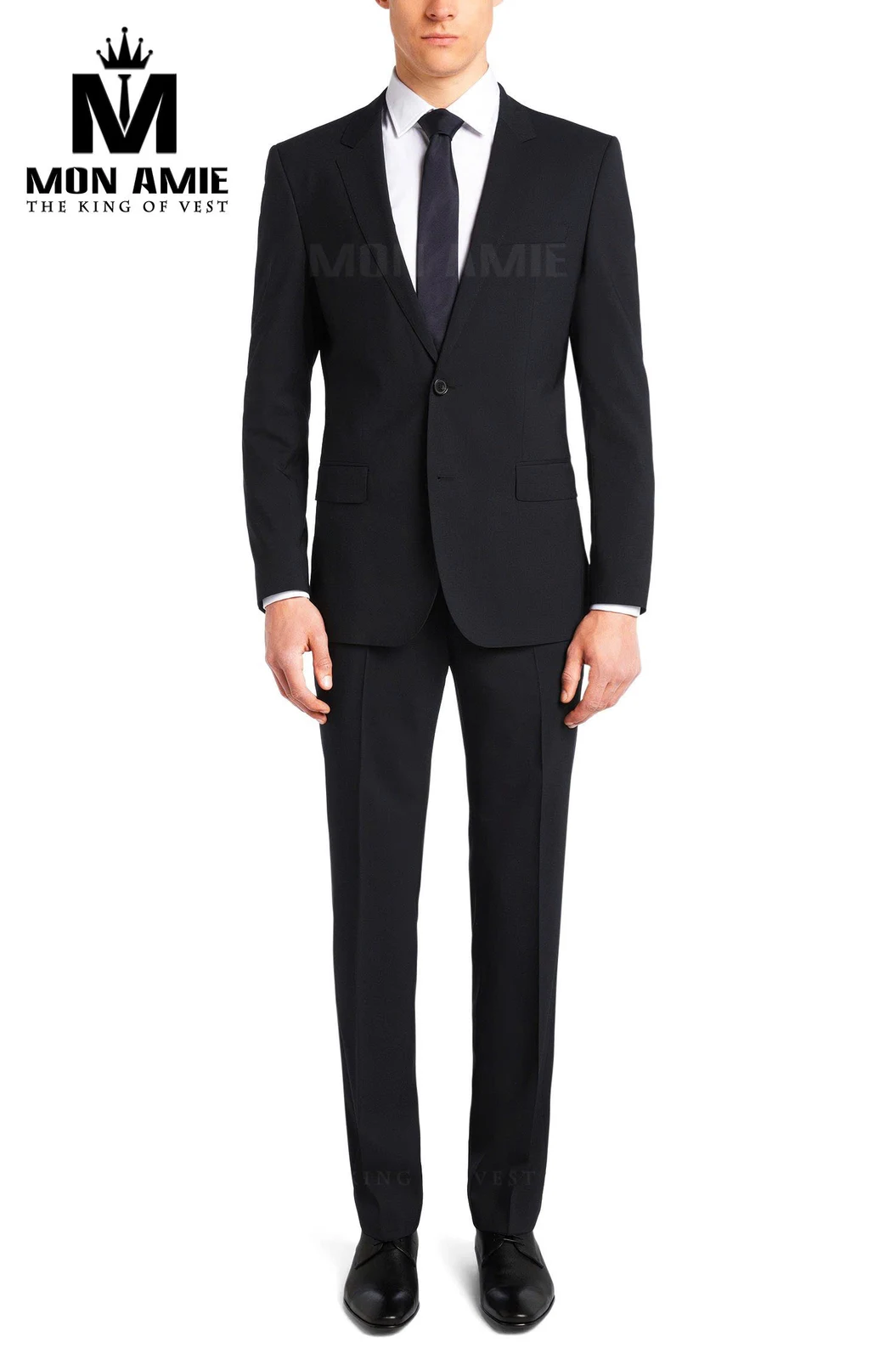
A jacket that is too short makes the legs look shorter and exposes the belly. A jacket that is too long makes you look smaller. The right length just covers the seat, with the hem falling around the thumb knuckle when your arms hang straight. Cut the front quarters in a gentle curve so there is no sharp corner cutting across the belly.
5. A moderately high waistband, straight legs, no turn-ups
A waistband at the navel or slightly higher makes the legs look longer and covers the belly. Choose straight or very slightly tapered trousers; a single pleat or a flat front depending on your build, since deep pleats easily puff out the thigh and belly. Keep the hem plain, just resting on the shoe. If the belly is large, ask the tailor about a high waistband with braces or side adjusters in place of a wide belt.
6. One deep colour from head to toe
Navy, charcoal, black or blue-black. Jacket and trousers in the same colour, the shirt a little lighter, the tie in the same palette and shoes in a tone matching the trousers. Avoid strong contrast right at the waist (a light jacket with dark trousers or the reverse).
7. Pattern: plain or fine vertical stripes
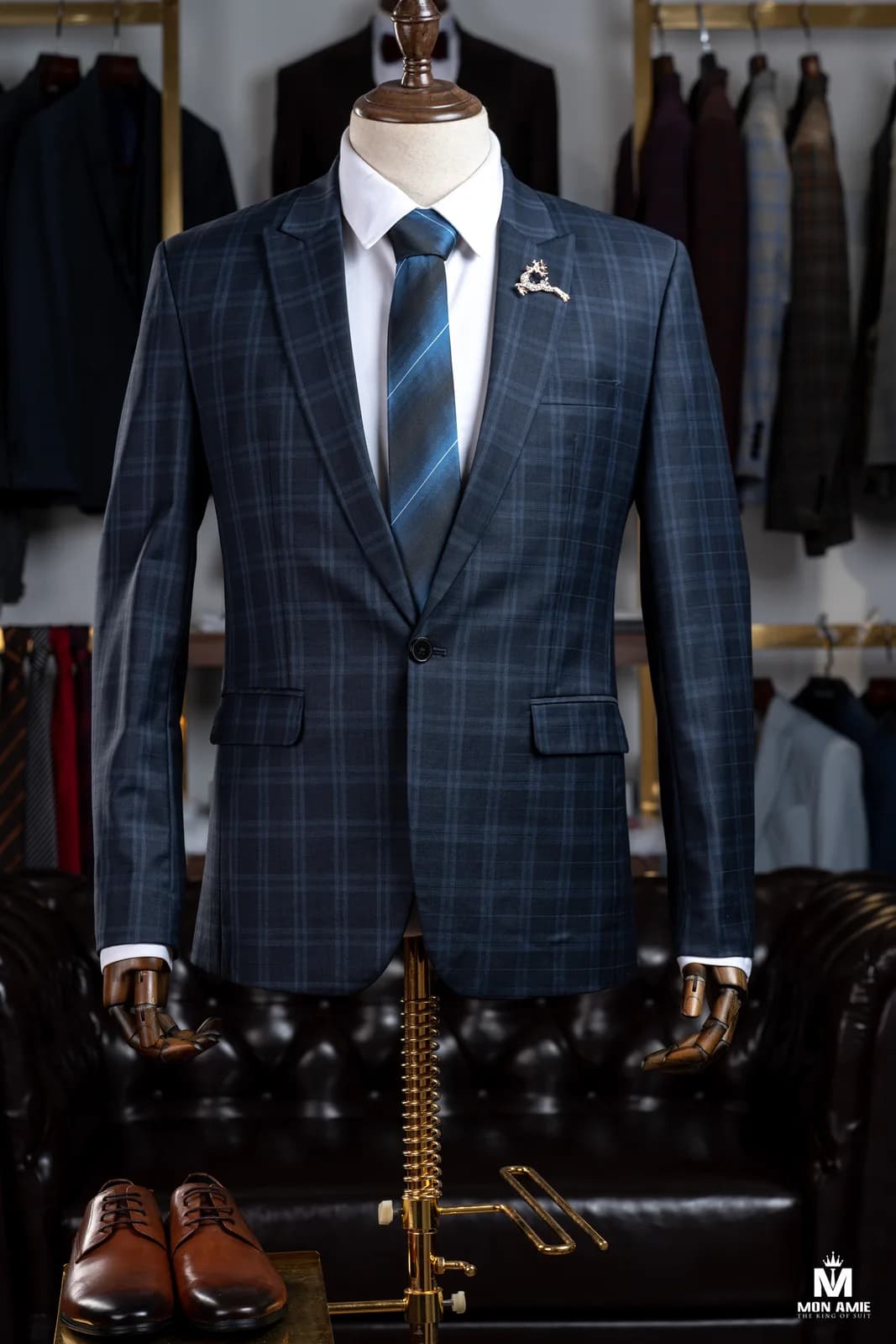
Plain cloth and fine vertical pinstripes are the safe choices. Horizontal stripes, large checks, shiny cloth and large woven motifs all make the width look broader. The single-button, peak-lapel suit in the cover image has a design well worth learning from, but for a short, stocky man, choose the plain version or a very small check.
8. Choose cloth that drapes, not cloth that puffs out
A fine wool with good drape (roughly 100s to 140s) is the familiar choice. Cloth that is too thick and stiff makes the jacket puff out; cloth that is too thin clings and shows creases. For the Essential line (VND 4.8 – 10 million for the full suit), Kevinlli cloth with 40 to 70% wool is a sound start; the Signature line (VND 10 – 20 million) gives cloth with a softer, more fluid drape.
Do and avoid: summary table
| Detail | Do | Avoid |
|---|---|---|
| Colour | Navy, charcoal, black, one colour throughout | Light colours head to toe, two contrasting colours at the waist |
| Pattern | Plain, fine vertical stripe | Horizontal stripes, large checks |
| Buttons | One button, two buttons | Three buttons, double-breasted |
| Jacket length | Just covers the seat | Cropped, or too long |
| Trousers | Moderately high waistband, straight legs, no turn-ups | Low waistband, wide legs, turn-ups |
| Waistcoat | Single-breasted, deep V-neck, close fit, same colour | A tight waistcoat, double-breasted |
Common mistakes
- Choosing a tight jacket to look “slim”. A jacket straining at the belly creates horizontal creases and makes the belly stand out more.
- Choosing a loose jacket to hide the belly. Looseness only makes the torso look like a square block.
- Wearing a wide belt with low-rise trousers. A belt pressing under the belly makes the belly spill over.
- A tie that is too short. The belly pulls the tie upward; choose a slightly longer tie and a compact knot.
- Wearing light socks and shoes in a different tone from the trousers, which breaks the line of the legs.
Tips from Mon Amie's master tailors
- Have your belly measured standing relaxed, do not suck it in. The correct measurement gives a jacket that fits evenly without straining.
- Have the baste fitting seated too. Men with a larger belly often find the jacket pulls when sitting; the tailor can adjust the front quarters and the position of the button.
- Settle the shoulder first, then think about the belly. Mon Amie bespoke tailoring takes more than 30 measurements and builds the shoulder, chest and belly individually for each person.
- For a more detailed list, the articles suits for heavier men: 8 principles for choosing a cut and suit for a small-framed groom cover more situations.
Frequently asked questions
What is the right suit for short stocky men?
Choose a one- or two-button suit, a medium lapel, a jacket that just covers the seat, straight-leg trousers with no turn-up and one deep colour. Avoid double-breasted, three buttons and horizontal patterns.
How do you choose a men's suit for a short, heavier build?
Focus on the vertical line: one colour from jacket to trousers, plain cloth or fine vertical stripes, a moderately high waistband and the trouser hem just touching the shoe. Prioritise a shoulder that fits correctly, because the shoulder determines the whole cut of the jacket.
What colour suit should a heavier man choose?
Navy, charcoal and black are the three colours that give the neatest figure. Keep one colour for both jacket and trousers, with the shirt a little lighter.
How does a made-to-measure suit for a heavier man differ from ready-to-wear?
Made-to-measure builds the jacket on your real measurements, so the shoulder, chest and belly are balanced individually, avoiding the situation where a jacket that fits the belly is loose in the shoulder. With bespoke tailoring, Mon Amie also does baste fittings and adjusts until the fit is right, along with a long-term alteration warranty.
Conclusion
The right suit is one that brings out what is good in the build you have, not one that hides it. If you would like to try, look at the made-to-measure price list and then book a measuring appointment, so the master tailor can balance each proportion for you alone.