
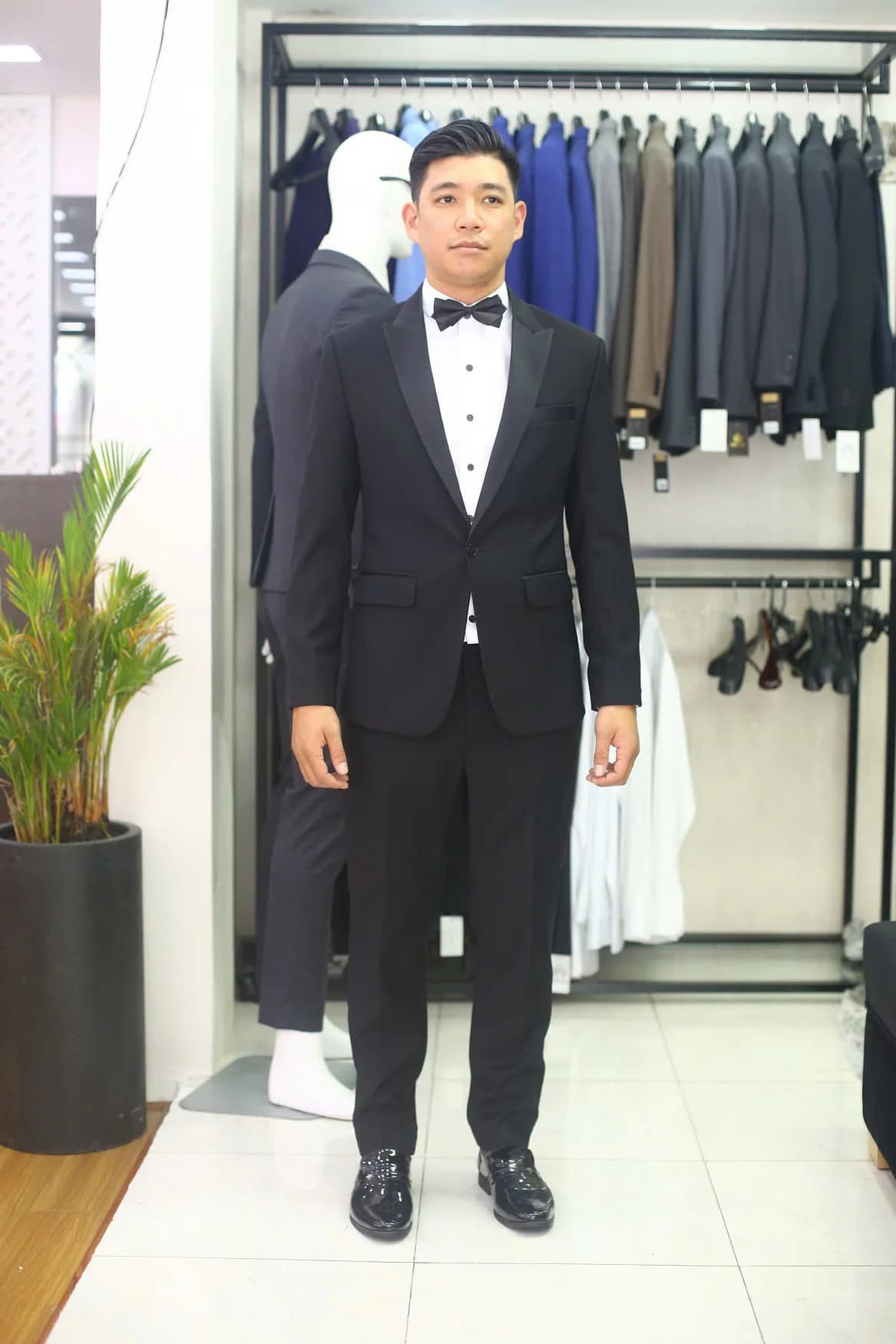
Under the lobby lights, the lapels of a tuxedo gleam like dark water; the lapels of a black suit do not. That one detail is enough for a knowledgeable eye to tell which is meant for the gala and which for the office. Many grooms and gentlemen rent or have made a “tuxedo” that is really just a black suit with a bow tie added. To avoid the confusion, you only need to know the six details below about the men's tuxedo.
The short answer
A proper men's tuxedo has six marks: lapels faced in satin or grosgrain, buttons covered in the same material as the lapels, jetted pockets without flaps, an unvented back, trousers with a satin stripe running down the outside seam, and a black bow tie and pleated shirt to go with it. A black suit usually lacks these details. If three or more of the marks are missing, it is most likely just a black suit.
What is a tuxedo? Tuxedo jacket, tuxedo outfit, tuxedo suit
What is a tuxedo jacket? It is a suit jacket for formal evenings, also called a dinner jacket (or a smoking in continental Europe). What is a tuxedo outfit? It is a formal set consisting of the tuxedo jacket and tuxedo trousers, together with the shirt, bow tie and accompanying accessories, worn to the black tie dress code. The term tuxedo suit basically refers to the same thing, sometimes used to stress that it is the complete set.
The core difference from an ordinary suit: a tuxedo is not a “nicer” suit but an evening garment with its own rules. Each of its details is chosen to catch the light in the evening and to set it apart from workwear. The article what is a tuxedo, evening formal wear explains the history in more detail.
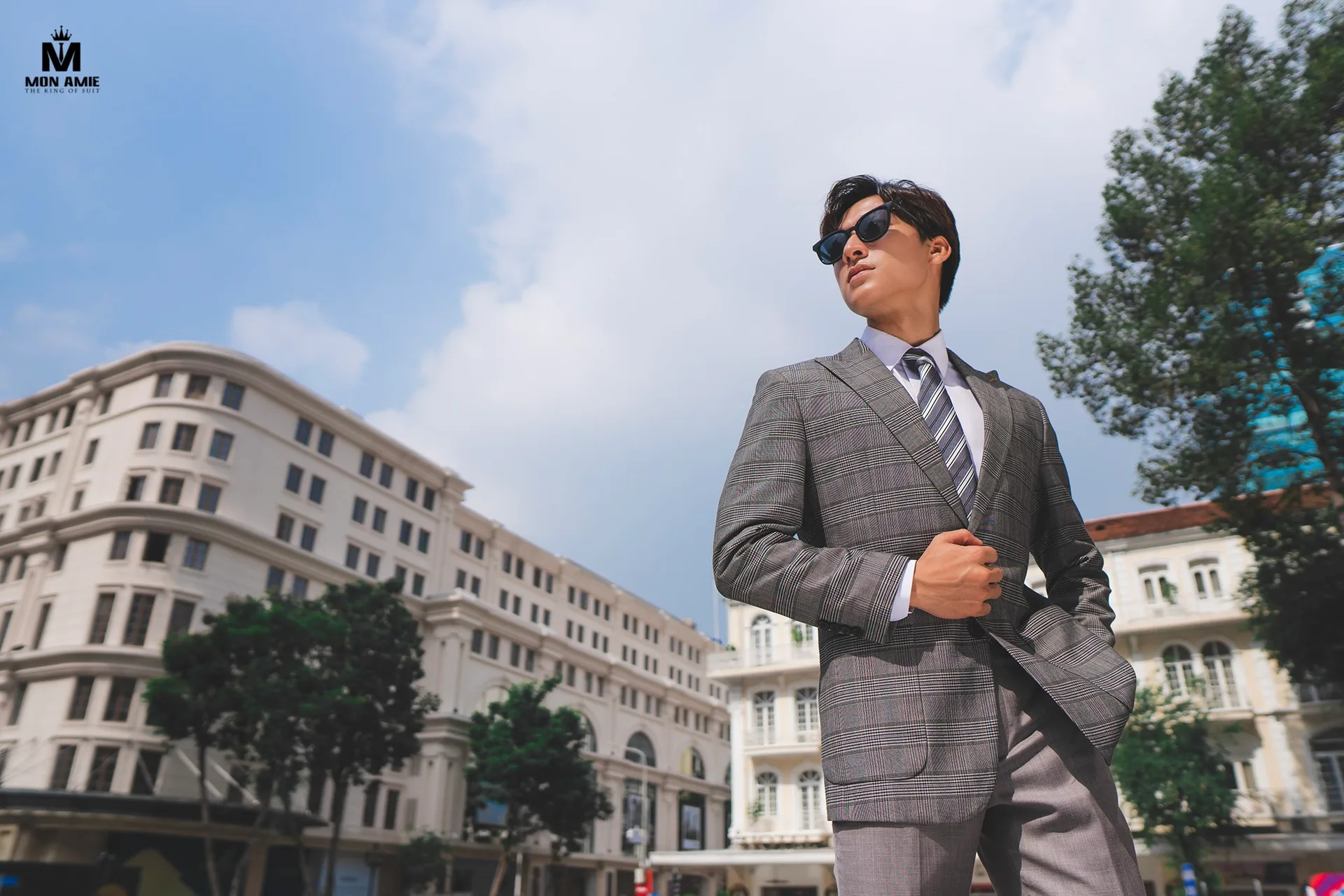
Anatomy of a proper men's tuxedo: six identifying marks
1. Lapels faced in satin or grosgrain
This is the clearest sign. The lapels (and sometimes the collar as well) are faced in glossy satin or grosgrain (ribbed silk with a matt sheen). The common lapel styles are the peak lapel or the shawl lapel (a continuous, rounded lapel with no notch). A notch lapel (the notched cut usually seen on suits) combined with satin is less often regarded as traditional.
2. Covered buttons in the same material as the lapels
The buttons are covered in the same satin as the lapels, or are plain glossy black. Usually there is just one button on a single-breasted style, or a double-breasted style with covered buttons. No horn or metal buttons.
3. Jetted pockets, no flaps
The hip pockets of a tuxedo are jetted pockets: a narrow slit, possibly trimmed in satin. There is no pocket flap, because the flap is a detail of daywear.
4. Unvented back
A traditional tuxedo has no vent (ventless), giving a clean, seamless line at the back. Some modern styles have slight side vents, but the original is unvented.
5. Trousers with a satin stripe, no cuffs
A stripe of satin (or grosgrain) runs down the outer seam of the trousers, in the same material as the lapels. The trousers usually have a high waist, no belt loops but braces or side adjusters instead, and no cuffs as on office trousers.
6. Bow tie, pleated shirt and accessories
A tuxedo goes with a black bow tie, not a necktie. The white shirt usually has a pleated or textured (bib) front and a wing collar or a small turn-down collar, with concealed or decorative buttons. It has double cuffs with cufflinks. In place of a belt, a cummerbund (waist sash) or a low-cut waistcoat covers the waistband.
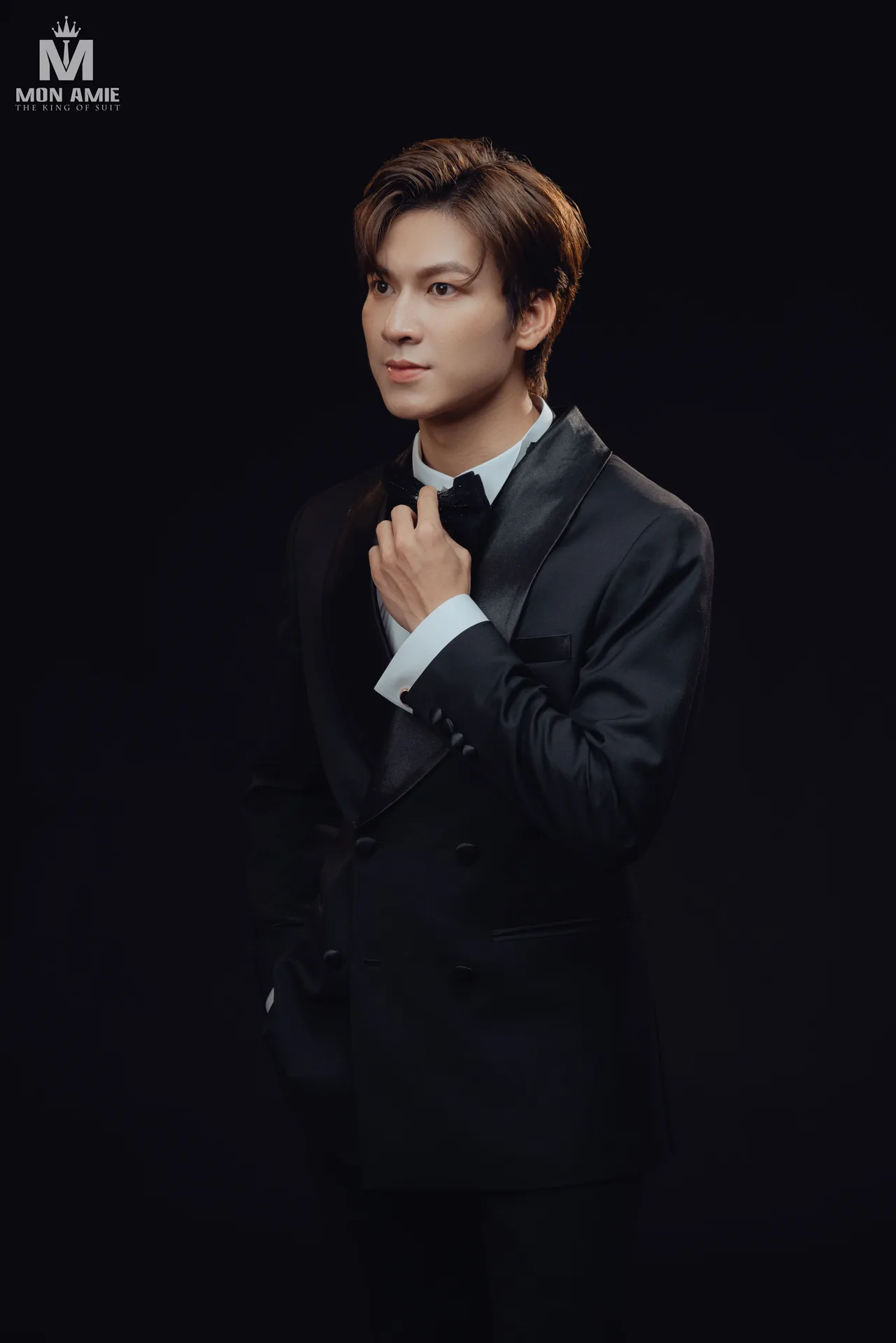
Table: telling a real tuxedo from a black suit
| Detail | Proper tuxedo | Black suit |
|---|---|---|
| Lapels | Satin or grosgrain, glossy | Same cloth as the body, matt |
| Buttons | Satin-covered or glossy black | Plastic, horn |
| Pockets | Jetted, no flaps | Flap pockets or ordinary jetted |
| Back | Unvented (traditional) | Centre vent or double side vents |
| Trousers | Satin stripe, high waist, no belt loops | No stripe, with belt loops |
| Shoes | Black oxford, polished or patent | Black or brown leather shoes |
| Collar and tie | Black bow tie, pleated shirt | Necktie, ordinary shirt |
| Occasion | Black tie, evening party, wedding | Office, meetings, ordinary events |
Spotting a tuxedo in a minute: five quick checks
When a friend or business partner shows off a “new tuxedo”, you can glance over five points:
- Are the lapels glossy? Satin is the biggest plus.
- Do the pockets have flaps? If they do, it is not a proper tuxedo.
- Is the back vented? A centre vent is the mark of a suit.
- Is there a stripe down the outside of the trousers? Without it, one mark is missing.
- A bow tie or a necktie? A black bow tie is the standard.
A set that meets three points or more can be considered a tuxedo; one that meets just one point, usually the bow tie, is most likely a black suit with accessories added.
Variations of the modern tuxedo
The traditional tuxedo is black or midnight blue (a very deep navy that, under artificial light, looks blacker than black). Today there are also double-breasted tuxedos, velvet tuxedos, and tuxedos in navy, burgundy, purple and white for weddings or fashion events. Even as the material and colour change, the underlying details (glossy lapels, no pocket flaps, satin-striped trousers) remain.
A tuxedo suits the black tie dress code. You can read the article what is black tie to know when it is needed.
Tips from Mon Amie's master tailors
The lapels decide the cut. On a tuxedo, satin lapels easily show creases and a crooked roll line, so they need a careful tailor. The lapels should lie flat, with an even curve.
Choose a body cloth that is fine enough. A fine wool or a cloth with a slight sheen suits a tuxedo; if the cloth is too shiny, combined with satin lapels it will easily glare.
Measure carefully, because a tuxedo has little room to hide. The cut is clean, the body is fitted and there is no belt, so the fit of the waist and the trouser waistband matters a great deal. Made-to-measure achieves exactly this.
If you are considering a tuxedo for a wedding, read on with the article wedding tuxedo or a regular suit.
Frequently asked questions
What is a tuxedo jacket and how does it differ from a suit jacket?
A tuxedo jacket is evening formal wear, with satin-faced lapels, covered buttons, jetted pockets without flaps and usually no vents. A suit jacket is worn to the office and on many ordinary occasions, with lapels in the same cloth as the body, usually with flap pockets and vents.
What is a tuxedo outfit, and what does it include?
It includes the tuxedo jacket, tuxedo trousers (with a satin stripe), a white pleated shirt, a black bow tie, a cummerbund or low-cut waistcoat, polished leather shoes and accessories such as cufflinks and a pocket square. This is the classic black tie formal outfit.
Is a tuxedo suit the same as a men's tuxedo?
Essentially it is the same thing. “Tuxedo suit” stresses the complete set, while “men's tuxedo” in everyday Vietnamese usage means either the jacket or the whole set. The deciding factor is details such as satin lapels and satin-striped trousers.
Do you have to wear a bow tie with a tuxedo?
With a traditional tuxedo, yes: a black bow tie is the standard. Some modern styles use a necktie or no tie, but then it has shifted to smart casual and is no longer proper black tie.
Does a tuxedo have to be black?
No. A tuxedo also comes in midnight blue, and in colours such as navy, burgundy, purple or white in modern styles. The identifying marks lie in the details (glossy lapels, jetted pockets, striped trousers), not in the colour alone.
Conclusion
Knowing the six details above, you will recognise a real tuxedo in a minute, and know what you need when you order one. If you are looking for a tuxedo for a big occasion, the Groom Styling service or bespoke made-to-measure at Mon Amie, a tailor in Ho Chi Minh City, can measure you and build the cut to your build.