
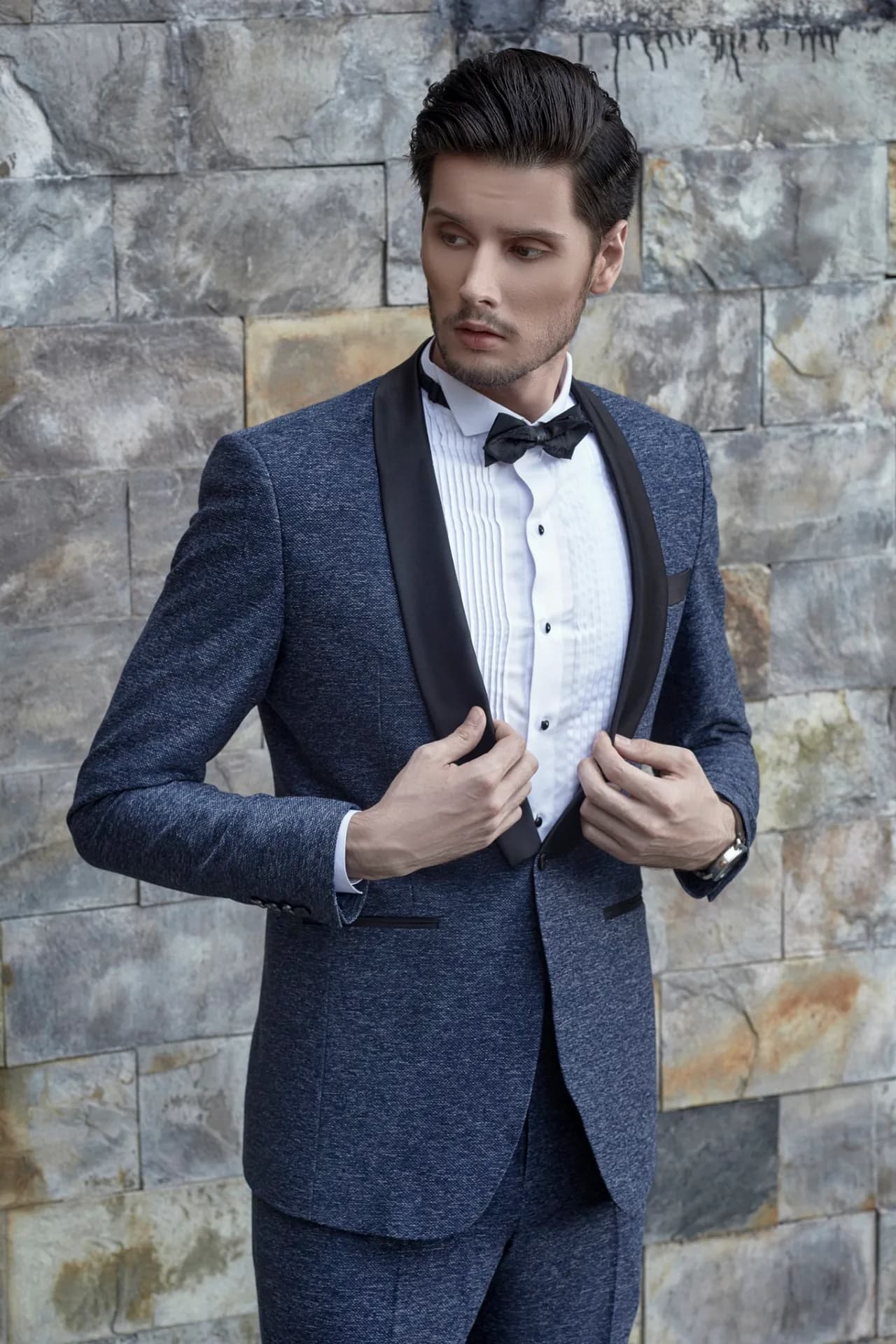
A button drops off in the middle of a meeting. You pick it up, slip it into your pocket, and remember that evening to go to the haberdashery. The shop assistant asks, "What size, sir?" You hold up the remaining button and stare at it like an exam question. The question of what suit button size you need sounds small, but if you buy the wrong size the whole row of buttons will look off, the buttonhole won't take it, or the button will look like a patch job.
Quick answer
Suit jacket chest buttons are usually about 20–25 mm (32L–40L), sleeve and pocket-flap buttons about 15–20 mm (24L–32L), and the waistcoat and trousers use smaller sizes. A single-breasted two-button jacket has two chest buttons and eight sleeve buttons. Take an old button with you to compare, or ask a tailor to measure, and buy a few spares.
What is a ligne and how do you convert it to millimetres?
In tailoring, button size is usually measured in ligne (symbol L). One ligne equals 1/40 of an inch, about 0.635 mm. To find a button's diameter in mm, multiply the L number by 0.635.
| Ligne size | Diameter (mm) | Commonly used for |
|---|---|---|
| 24L | about 15 | Small sleeve buttons, waistcoat |
| 28L | about 18 | Sleeve buttons, pocket flaps |
| 32L | about 20 | Large sleeve buttons, small chest buttons |
| 36L | about 23 | Suit jacket chest buttons |
| 40L | about 25 | Chest buttons on double-breasted jackets, blazers |
The table above is for reference only. Every suit has a different cloth thickness, buttonhole size and cut, so the master tailor will make small adjustments for each one.
Suit button size by position on the suit
- Chest buttons: the largest in the suit, about 20–25 mm. Chest buttons on a double-breasted jacket are usually a little larger so they look balanced against the wide lapels.
- Sleeve buttons: about one or two sizes smaller than the chest buttons, usually about 15–20 mm.
- Pocket-flap buttons: if there are any, use the sleeve-button size.
- Waistcoat buttons: smaller than the jacket buttons, usually about 15–18 mm, because the waistcoat sits close to the body.
- Trouser buttons: smaller and more compact, about 15–18 mm, and sturdy enough to withstand the pull of the waistband.
A rule of thumb for balance: chest buttons the largest, sleeve buttons a little smaller, waistcoat and trouser buttons the smallest. If the whole suit uses a single button size, the outfit looks as if it has no rhythm.

How many buttons does a suit have?
The answer depends on the style of the jacket:
| Jacket style | Chest buttons | Sleeve buttons | Notes |
|---|---|---|---|
| Single-breasted, two buttons | 2 | 8 (4 per sleeve) | The most common |
| Single-breasted, three buttons | 3 | 8 | Classic, less common |
| Single-breasted, one button | 1 | 8 | Minimalist cut, tuxedo |
| Double-breasted | 4 to 6 | 8 | An extra inner button to hold the front panel |
| Waistcoat | 5 to 6 | None | Smaller size than the jacket buttons |
| Trousers | 1 to 2 | None | A separate trouser button size |
Adding up the jacket, waistcoat (if any) and trouser buttons, a three-piece suit can have close to twenty buttons. When you buy replacements, work out exactly which button needs replacing.
Tip: always buy at least two spare buttons from the same batch as the buttons in use. Button colour can vary slightly between production batches, and keeping a spare tucked inside the jacket lining is a habit of long-time suit wearers.
How to measure a suit button correctly
- Place the button on a ruler and measure the outer diameter at the widest point. Calipers give the most accurate result.
- Write down both the diameter and the thickness, because a thick button needs a wider buttonhole.
- Check the buttonhole on the jacket: the new button should pass through the buttonhole easily but not sit loose.
- Take a remaining button with you when you go shopping so you can compare directly.
Example: how many buttons do you need to replace the whole suit?
Suppose you want to replace every button on a three-piece suit with a single-breasted, two-button jacket. The jacket needs 2 chest buttons in size 36L and 8 sleeve buttons in 28L–32L. The waistcoat needs about 5–6 smaller buttons. The trousers need 1–2. In total that is about 16–18 buttons, and you should buy 3–4 spares of each size. If you choose horn buttons, buy them all at the same time, because the grain and colour differ from batch to batch. And if you have lost only one chest button, still replace both chest buttons so that the two match; sleeve buttons that are still good can stay as they are.
Types of suit buttons and how to choose when replacing
There are many types of suit buttons, and each suits a different style of jacket:
- Horn buttons: natural grain, with a different pattern on every button. A classic choice for a suit.
- Resin and corozo buttons: durable, even in colour, with many colour choices. Corozo buttons are made from the seed of the tagua palm and look close to horn.
- Metal buttons: usually for blazers, especially navy blazers.
- Fabric-covered buttons: used for tuxedos, in the same cloth as the lapels for a seamless look.
- Mother-of-pearl buttons: mainly for shirts, rarely used on suit jackets.
When replacing suit buttons, stick to four rules:
- Same size as the remaining buttons, or replace the whole set if you can't find the same size.
- Same material and colour as the ones you aren't replacing. A button of a different tone shows at once.
- The button should have a thread shank, which keeps it from pressing flat against the cloth and makes it easier to fasten.
- If the old buttons have faded, replacing the whole set looks better than replacing them one by one.
When the suit is made-to-measure, the surest way is to ask the master tailor who made it to do the job, because they know the buttonholes and the cloth thickness of that suit. If your suit was made at Mon Amie, just bring it to a showroom and ask the master tailor about replacing buttons. The article replacing suit buttons as an upgrade also has a few small ideas for freshening up an old suit.
Common mistakes when choosing suit buttons
- Looking only at colour and ignoring size. Buttons of the same colour but the wrong size still make the row look untidy.
- Choosing buttons that are too big. Oversized chest buttons make the lapels look smaller and the whole suit look unbalanced.
- Using metal buttons on a formal suit. Metal buttons suit a blazer more than a full suit.
- Forgetting to buy spares. By the time you need one, there are no buttons left from the same batch.
Frequently asked questions
What kinds of buttons make up a set of suit buttons?
A set includes chest buttons (the largest), sleeve buttons, pocket-flap buttons if there are any, and waistcoat and trouser buttons in smaller sizes. Each position uses its own size, so work out the position before you buy.
What are the most common types of suit buttons?
Horn, resin (resin and corozo), metal and fabric-covered buttons. Business suits usually use horn or resin; blazers use metal; tuxedos use fabric-covered buttons.
Does replacing a suit button damage the jacket?
Not if you use the right size and sew it on firmly with a thread shank. If the new button is smaller than the buttonhole, the jacket tends to come undone; if it is larger, the button won't fasten. Ask a tailor to do it if you aren't sure.
What suit button size is right for a small-framed man?
Small-framed men usually suit chest buttons of about 20–22 mm and sleeve buttons of 15–17 mm, in proportion to the lapels and body of the jacket. Buttons that are too big swallow the wearer's figure.
Conclusion
Button size is a small detail, but it keeps the rhythm of the whole suit. If you are still unsure which buttons suit you, the article suit sleeve buttons: the 4-button cuff explains more about how buttons and buttonholes are laid out, or you can book an appointment to visit a showroom and choose buttons on a real jacket through the bespoke tailoring service.