
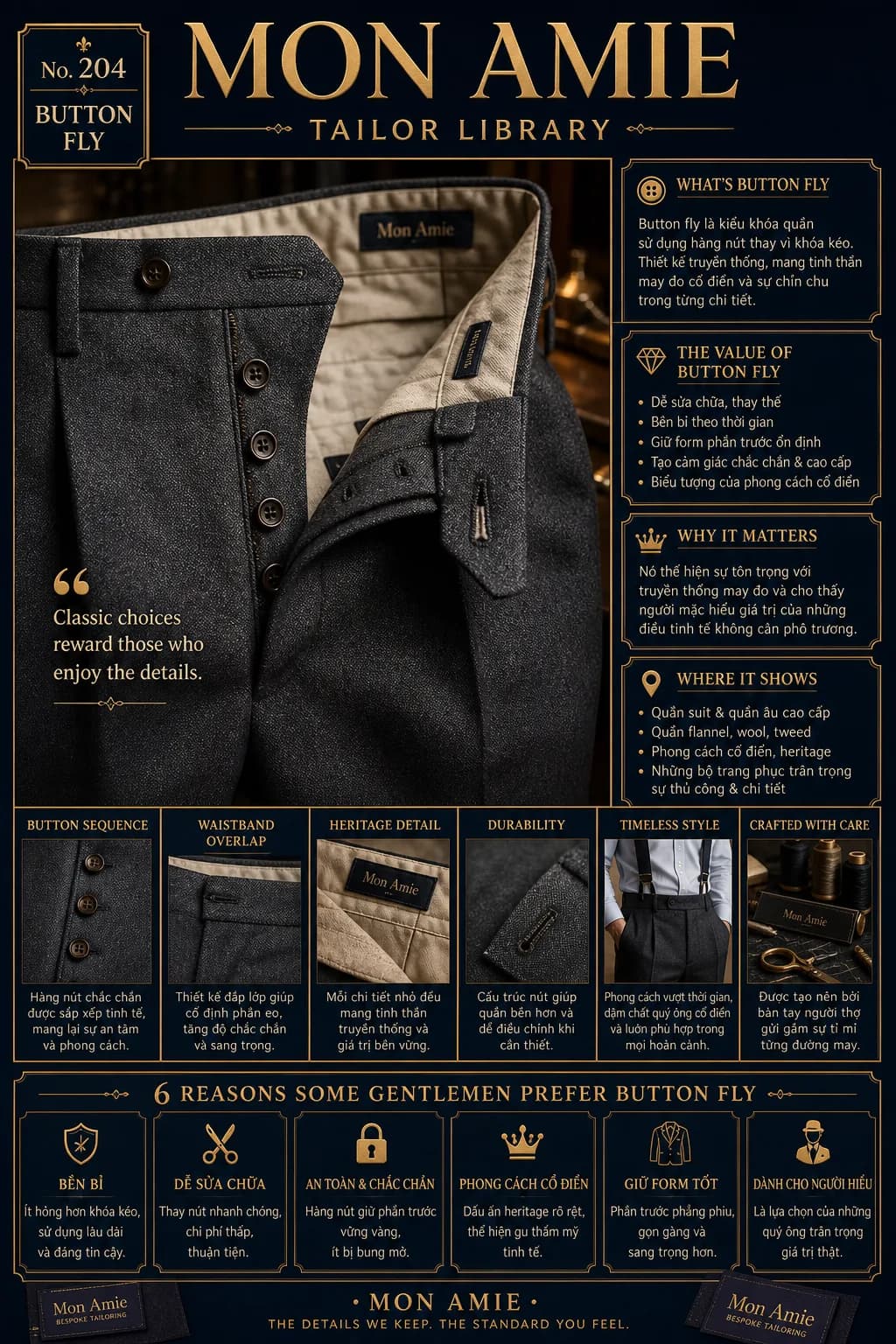
A button fly closes the front of a pair of trousers with a row of buttons rather than a zip. It is the traditional construction, carrying the spirit of classic tailoring and a certain care for detail. If the zip fly is the choice of convenience, the button fly is the choice of the connoisseur — as Mon Amie printed on the poster: classic choices always reward the man who takes pleasure in detail.
The value of a button fly
A row of buttons on the fly offers five things a zip cannot replace:
- Easy to repair or replace: a loose button takes a few minutes to resew; a broken zip means removing the whole assembly.
- Enduring over time: there is no sliding metal mechanism to wear out or jam.
- Steady front line: the buttons distribute tension evenly along the fly, so the front is far less prone to pulling out of shape.
- A solid, refined feel: every fastening is a deliberate gesture.
- A symbol of classic style: before the zip became common in the mid-twentieth century, every bespoke trouser had a button fly.
Why this detail matters
A button fly shows respect for the tailoring tradition and marks a man who understands quiet refinement. No one ever sees your fly — and that is precisely the point: choosing a button fly is choosing for yourself, not for anyone else's gaze. It is a philosophy very particular to bespoke: the standard lives in the places no one sees.
Where the button fly appears
You will find this fly on:
- Suit trousers and fine dress trousers
- Flannel, wool and tweed — substantial cloths that hold their shape and suit the classic spirit
- Classic and heritage wardrobes
- Garments that honour craft and detail
Six construction points of a proper button fly
Look closely at a well-made button fly and you will see:
- Button sequence: a firm, evenly spaced row of buttons that brings both reassurance and style — quality horn or pressed buttons at consistent intervals.
- Waistband overlap: the layered construction anchors the waist, adding both security and refinement.
- Heritage detail: every small element carries tradition and lasting value.
- Durability: the button structure keeps the trouser sound and easy to adjust when needed.
- Timeless style: unmistakably classic and appropriate in any setting — especially with a high-rise trouser and braces.
- Crafted with care: made by hands that invest patience in each stitch; every hand-worked buttonhole represents tens of minutes of labour.
Six reasons gentlemen choose a button fly
Tailor Library poster No. 204 sums up six of them:
- Endurance: fewer failures than a zip, dependable over many years.
- Ease of repair: replacing a button is quick, inexpensive and simple.
- Security: the row of buttons holds the front firmly, with little risk of opening unexpectedly.
- Classic style: a clear heritage signature and a mark of refined taste.
- Better shape: a flat, tidy, more elegant front, especially in heavier cloth.
- For those who know: the choice of gentlemen who value the real thing.
In return, a button fly asks a few extra seconds when dressing — a price lovers of the classic are usually glad to pay.
A word from Mon Amie's artisans
When a client asks for a button fly, our artisans know at once they are serving a man with depth of taste. We often propose it for high-rise flannel or tweed trousers: four horn buttons, a doubled waistband overlap, hand-worked buttonholes — three details that keep the trouser looking carved all day. We keep the details, you feel the standard; that is how Mon Amie works.
If you would like a button fly trouser made in the true bespoke spirit, we invite you to book an appointment at one of Mon Amie's five showrooms in Ho Chi Minh City, or first explore our bespoke service — from Kevinlli cloth to Canonico, Holland & Sherry, Dormeuil and Scabal.