
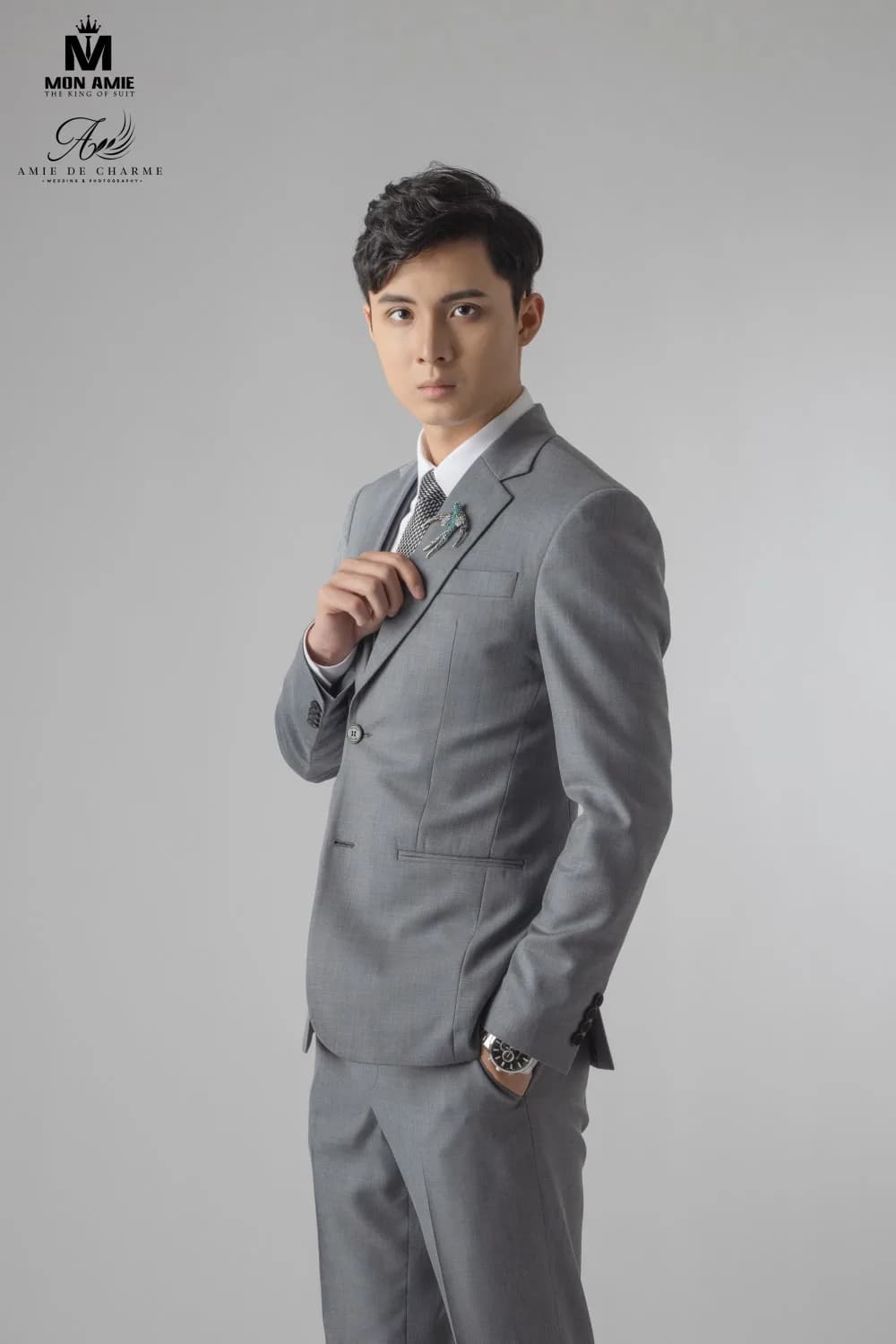
Flip through your parents’ wedding album and you will easily spot a suit jacket with three, even four buttons lined up straight down the chest. Twenty years later, most jackets in the wardrobe have only two. So is the multi-button suit jacket out of fashion, or just waiting for the right wearer? The answer: it is not out of fashion, but it is harder to wear well, and there are builds and cuts that genuinely suit it.
Quick answer
Multi-button suit jackets include the 3-button, the 3-roll-2 (the lapel rolls over the top button) and the 4-button single-breasted. The 3-roll-2 is still easy to wear; the 3-button and 4-button suit tall men with a long torso. The buttoning rule: the bottom button always open, the middle button always fastened, the top button depending on the lapel roll.
Single-breasted jacket styles
With a single-breasted jacket, the number of buttons determines the fastening point, the depth of the V and the sense of length in the torso:
| Style | Button fastened | Features | Feel |
|---|---|---|---|
| 1 button | The only button | Deep V, open torso | Modern, clean, suits evening events |
| 2 buttons | Top button | Medium fastening point, balanced V | The standard, wearable on any occasion |
| 3-roll-2 | Middle button | Lapel rolls over the top button, looks like a two-button | Gently classic, soft lapel |
| 3 buttons | Middle button (sometimes the top one as well) | High V, closed chest, long torso | Traditional style, suits tall builds |
| 4 buttons | Two or three top buttons, depending on the lapel roll | Very closed chest, neat skirt, high neckline | Retro, rarely seen, needs a tall, slim build |
Double-breasted jackets, meaning 4- or 6-button jackets with two parallel columns of buttons, are an entirely different group. You can read about them in the 6-button men’s jacket: 6x2, 6x1, 4x2.

Why did the two-button jacket become the default?
The three-button jacket was very common in the mid-20th century; the two-button then gradually became the default for three reasons:
- A deeper V, which lengthens the chest and neck area and makes the wearer look taller.
- Easy to fasten, easy to open. There is only one rule to remember: top button fastened, bottom button open.
- Suits every build. A two-button jacket is rarely “wrong” on any build, which is why tailors and designers chose it as the standard.
That does not mean three or four buttons are ugly. They simply ask more of the wearer and of the tailor.
How to wear a 4-button and 3-button jacket: which buttons to fasten?
The classic rule for a three-button jacket is called “sometimes, always, never”: the top button is sometimes fastened, the middle button always, the bottom button never. Here is a summary:
| Jacket | Standing | Seated |
|---|---|---|
| 1 button | Fasten the only button | Open |
| 2 buttons | Fasten the top, open the bottom | Open both |
| 3-roll-2 | Fasten the middle; the top button sits under the lapel, leave it as it is | Open |
| 3 buttons | Fasten the middle; the top depends on the lapel roll; open the bottom | Open |
| 4 buttons | Fasten the middle two or the top three, open the bottom one | Open |
The surest way to know which is the main button: look at the lapel roll. The button level with where the lapel folds is the main fastening point, and the buttons below follow the order given above. With a made-to-measure jacket in particular, the master tailor sets the button stance to your own body, so the main button always sits at the natural waist.
To read more about this rule on other styles of jacket, how to button a suit jacket correctly lists them all.
Which builds suit a multi-button jacket?
Tall men with a long torso
The body of the jacket needs enough length to carry three or four buttons without feeling “tight” vertically. For a tall build, a three-button jacket is well balanced and can even make the torso look neater.
Average build
Choose a 3-roll-2. The roll hides the top button, so to the eye it looks like a two-button, yet it keeps the classic character. This is the safest choice within the multi-button family.
Shorter men
Choose a two-button or a 3-roll-2 with a slightly higher fastening point. Avoid the four-button, because many buttons packed together cut the torso into several short sections and make the wearer look shorter.
Fuller builds
Prefer a two-button for a deeper V that lengthens the lines. Three- and four-button jackets make the chest look closed and thick, and should be chosen only when made to measure for a good fit.
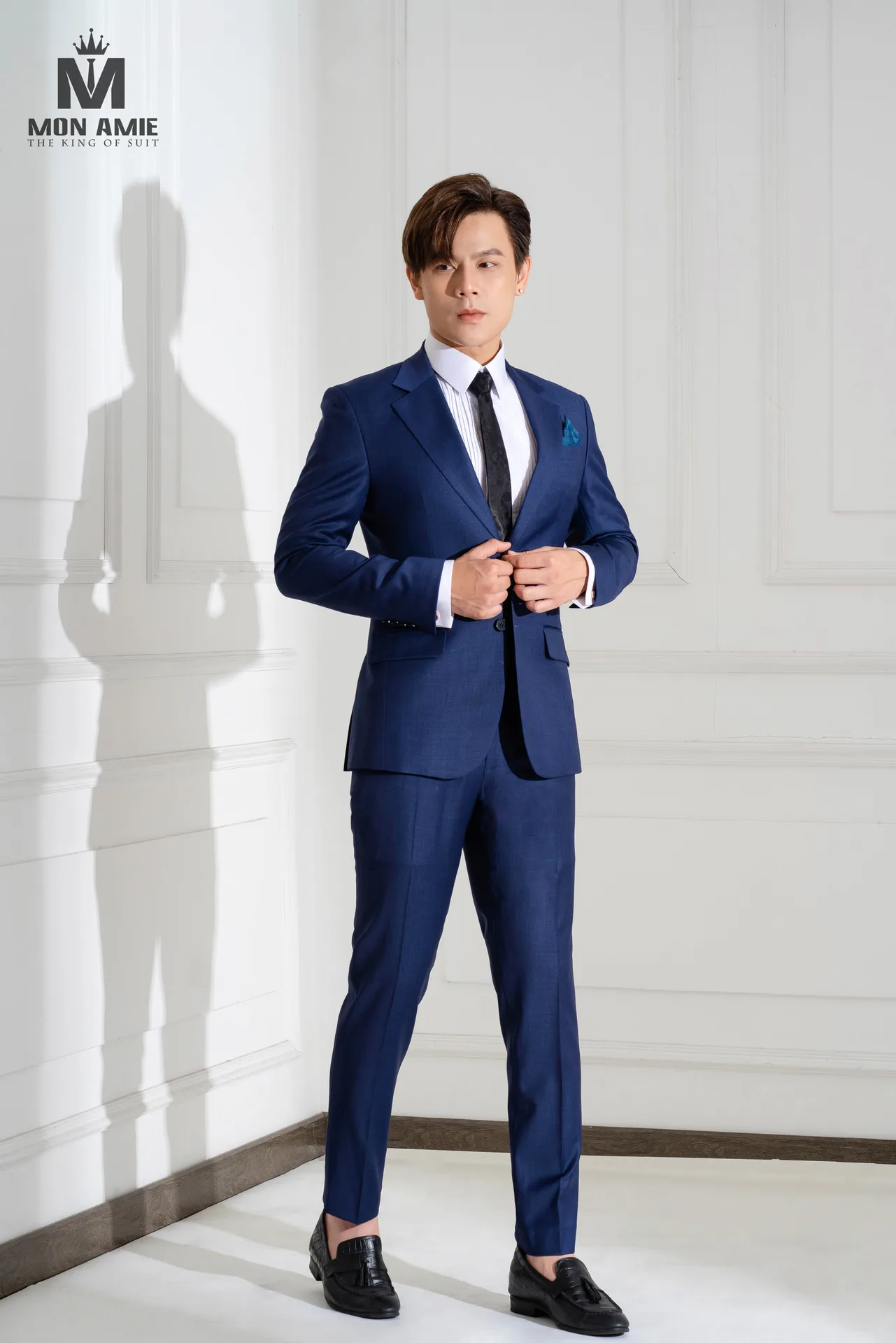
Multi-button jackets and waistcoats: should they be combined?
Yes, but with some calculation. A three- or four-button jacket is already visually dense across the chest; add a waistcoat with many buttons and the chest looks “stacked with buttons” and busy. Three small principles keep a three-piece suit neat:
- Choose a waistcoat with a moderately deep opening, to show a stretch of shirt and tie between the jacket and the waistcoat.
- Keep the waistcoat in the same cloth as the jacket, or in a gentle contrast, with no pattern of its own.
- Leave the bottom button of the waistcoat open, as tradition has it, so that the waistcoat sits comfortably when you sit.
So is the multi-button jacket still in style?
Yes, if you choose it deliberately. Three situations where a multi-button jacket shines:
- Classic, vintage style. A three-piece suit with a three-button jacket, peak lapels, a waistcoat and a pocket watch gives a convincing period feel from decades past.
- Tall, slim builds. A closed chest makes a slender frame look more solid.
- Occasions where you want to be different, within limits. A perfectly made-to-measure three-button looks more confident than a hastily made two-button.
If you need an everyday work suit, the two-button style, or a one-button for evening occasions, remains the most forgiving choice.
Common mistakes and tips from Mon Amie’s master tailors
- Fastening all three buttons. The bottom button is never fastened; it only lets the skirt hang properly.
- Wearing a three-button jacket with a fastening point that is too low. The jacket looks old and shortens the legs. The fastening point must sit around the natural waist.
- Choosing a multi-button jacket that is short. A short jacket with many buttons looks like a child’s jacket.
- Looking only at the number of buttons and forgetting the shoulder. A well-fitting shoulder is the foundation of the whole jacket; the number of buttons is only added decoration.
- A master tailor’s tip: try all three styles in the same cloth at the fitting. Seeing yourself in the mirror answers faster than any article.
Frequently asked questions
What is a 4-button men’s jacket?
It has two meanings: a single-breasted jacket with four buttons in a vertical row (a traditional style with a closed chest), or a double-breasted jacket with four buttons in two columns (4x2). The two are completely different in cut and in how they are fastened.
How do you wear a 4-button jacket correctly?
With a four-button single-breasted jacket, fasten the middle two or the top three, always leave the bottom button open, and open them all when seated. With a double-breasted jacket, fasten the buttons that have real buttonholes; the rest are decorative.
Which button should you fasten on a jacket?
Two-button: fasten the top. Three-button: fasten the middle. One-button: fasten the only button. In every case, the bottom button of a single-breasted jacket stays open.
Is a 3-button jacket out of fashion?
No, but it is less common. The 3-roll-2 looks almost like a two-button, so it is the easiest to wear; the three-button usually suits tall builds or a classic style.
Final word
The number of buttons is a small detail, but it affects how you walk into a room. If you would like to try both, book a fitting and ask Mon Amie’s master tailors to baste several styles for comparison, or explore the full bespoke tailoring journey at a showroom.