
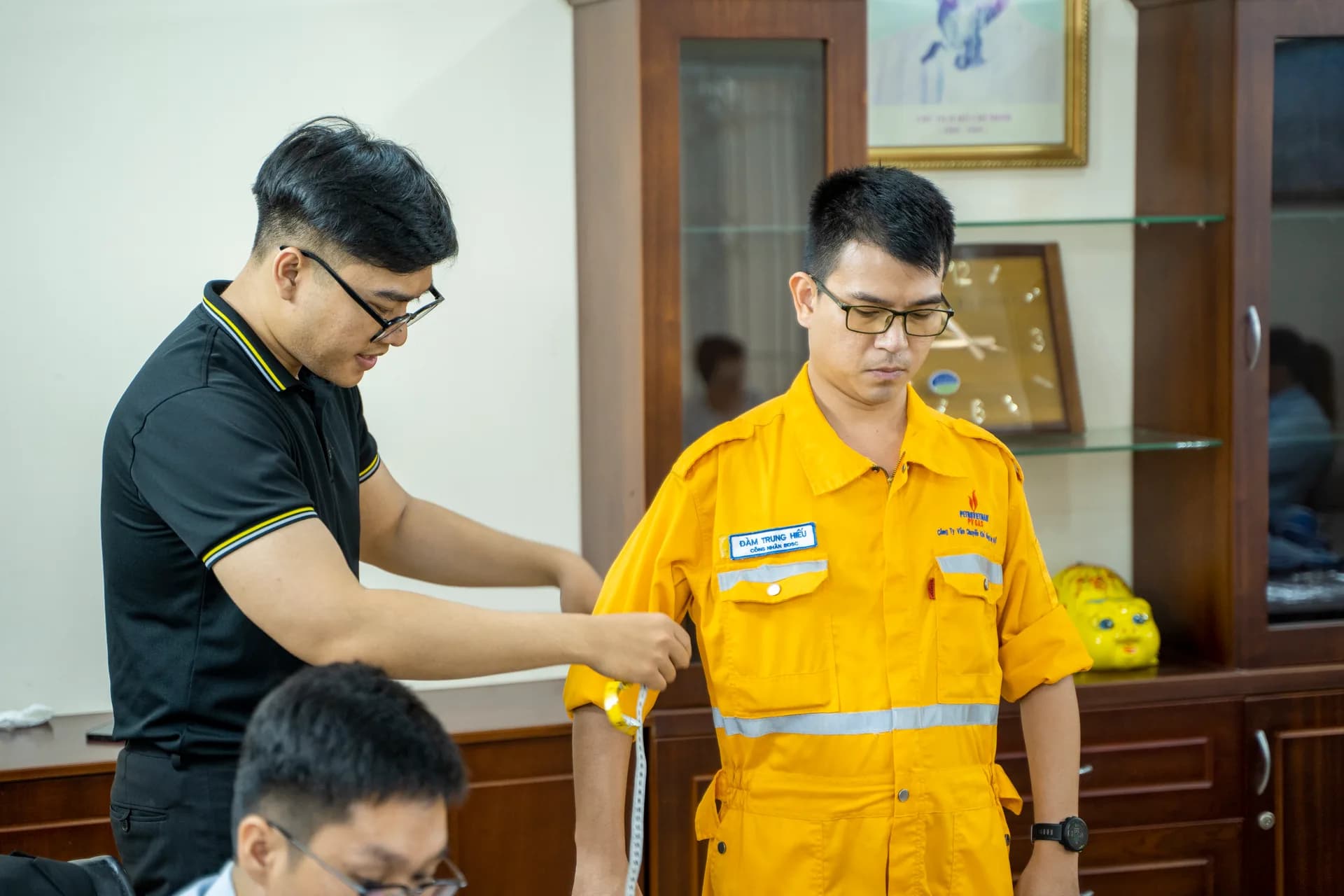
A tape measure answers this question better than feel does. Feel is easily fooled: a tight jacket makes us feel “neat”, a loose one makes us feel “comfortable”, when both can be wrong. So should a suit be worn loose or fitted? The answer is fitted, but “fitted” does not mean skin-tight. Fitted means having a certain amount of ease, enough for you to raise your arms, sit down and drive while the jacket stays in place on your body.
Quick answer
A suit should fit the body, with about 8 to 12 cm of ease at the chest and just enough room in the upper arm to raise your arm comfortably. A deliberately relaxed cut (straight silhouette, soft shoulder) is a style choice, whereas looseness from the wrong size shows as a collapsing shoulder, a gaping collar and horizontal creases across the back.
What “fitted” means: the right amount of ease
Ease is the surplus between the body measurement and the measurement of the garment, so that you can move without being restricted. For example, a person with a 100 cm chest will not wear a jacket with a 100 cm chest, because the jacket would then be stretched taut. The table below gives commonly used reference levels in the trade; the tailor adjusts for each build.
| Position | Slim fit | Regular fit | Relaxed, classic fit |
|---|---|---|---|
| Jacket chest | +8 to 10 cm | +10 to 12 cm | +12 to 16 cm |
| Jacket waist (at the middle button) | +8 to 10 cm | +10 to 14 cm | +14 to 18 cm |
| Upper arm | +4 cm | +4 to 6 cm | +6 cm or more |
| Trouser waistband | +1 cm | +1 to 2 cm | +2 cm |
These figures are a starting point, not a hard rule. A person with broad shoulders, a deep chest and arms that move often will need more ease than someone who sits at a desk.
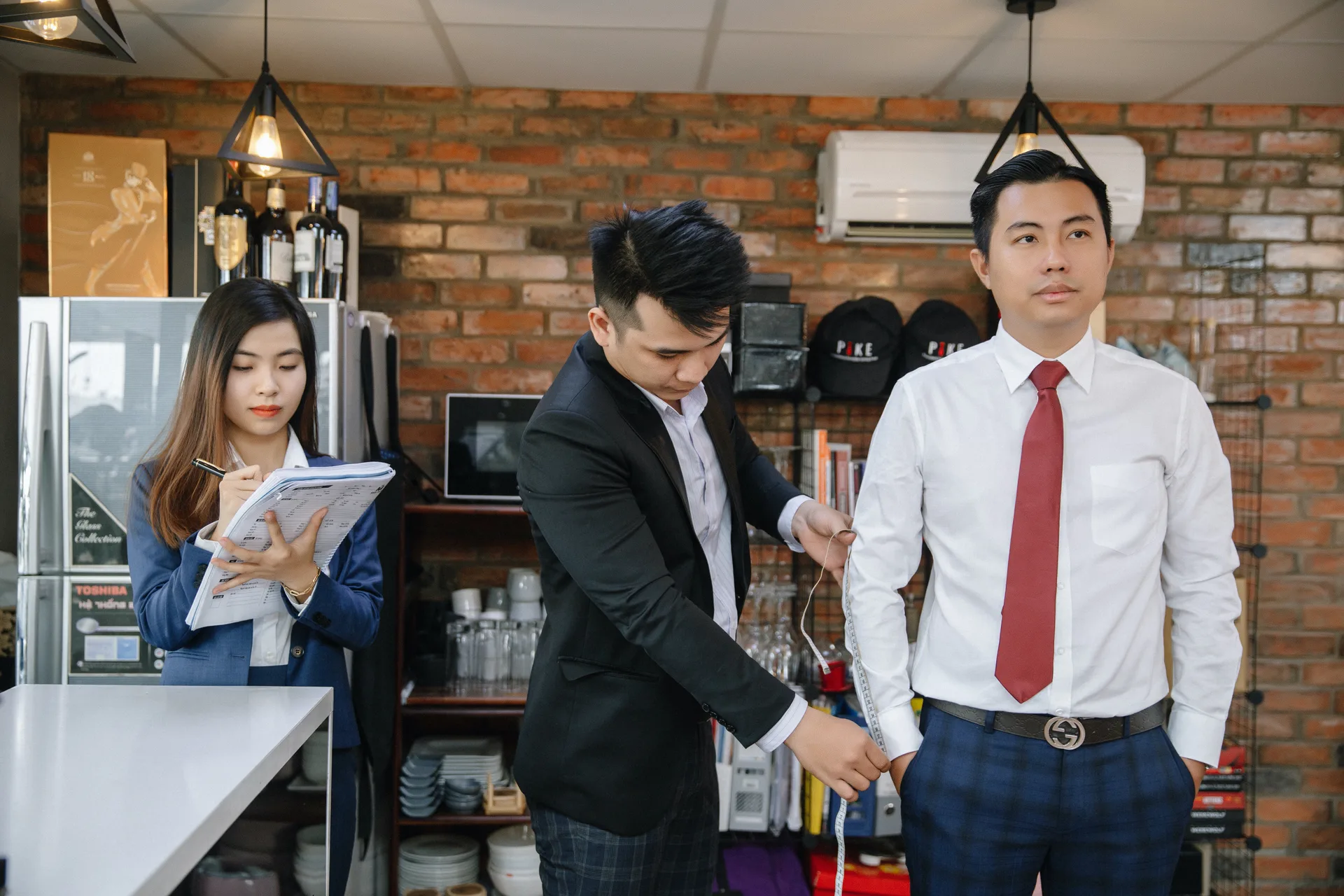
What a good suit fit looks like: 6 fit checkpoints
Standing in front of a mirror, check in order from the top down.
- Shoulder. The shoulder seam sits exactly at the end of the shoulder, does not slump down the arm and does not rise up. The shoulder is almost the only place that cannot be altered, so check it first.
- Collar. The jacket collar hugs the nape and the shirt collar, neither standing off nor leaving a gap.
- Button. Fasten the button: the cloth should not crease into an X around the button (too tight), nor bulge into vertical folds (too loose). Try pulling the front away from the chest: if it pulls out more than about 5 to 7 cm, the jacket has excess.
- Sleeve. About 1 to 1.5 cm of shirt shows at the wrist, and the sleeve is not so long that it covers the knuckle of the thumb.
- Jacket length. With your arms hanging straight, the hem reaches about the knuckle of the thumb or covers the seat.
- Trousers. The hem rests lightly on the shoe with one small break, not pooling into several layers.
The movement test
Once you have passed the six points above, do these four movements: raise your arms to shoulder height, bring both arms forward as if hugging a box, sit down on a chair and stand up, and pretend to hold a steering wheel. If the whole body of the jacket is pulled up when you raise your arms, or the button strains into an X crease, there is not enough ease.
Deliberately relaxed versus loose from the wrong size
Not every loose jacket is wrong. The current trend for a straight silhouette is a deliberate choice. What makes the difference is how the looseness is handled.
| Sign | Deliberately relaxed | Loose from the wrong size |
|---|---|---|
| Shoulder | Fits the shoulder or is slightly soft, seam in the right place | Slumps down, surplus cloth at the shoulder tip |
| Collar | Hugs the neck | Stands off behind the nape |
| Body | Evenly loose, soft drape, with shape | Many horizontal creases, excess at the back and underarm |
| Sleeve | In proportion with the body, comfortable upper arm | Baggy, with a shoulder that does not match |
| Matching trousers | Same straight cut, a wide leg in step | Slim trousers with a loose jacket, proportion lost |
When you choose relaxed on purpose, be relaxed throughout: a loose jacket calls for straight-leg trousers and slightly heavier shoes. A loose jacket with skin-tight trousers is the quickest way to look as though you are wearing borrowed clothes.
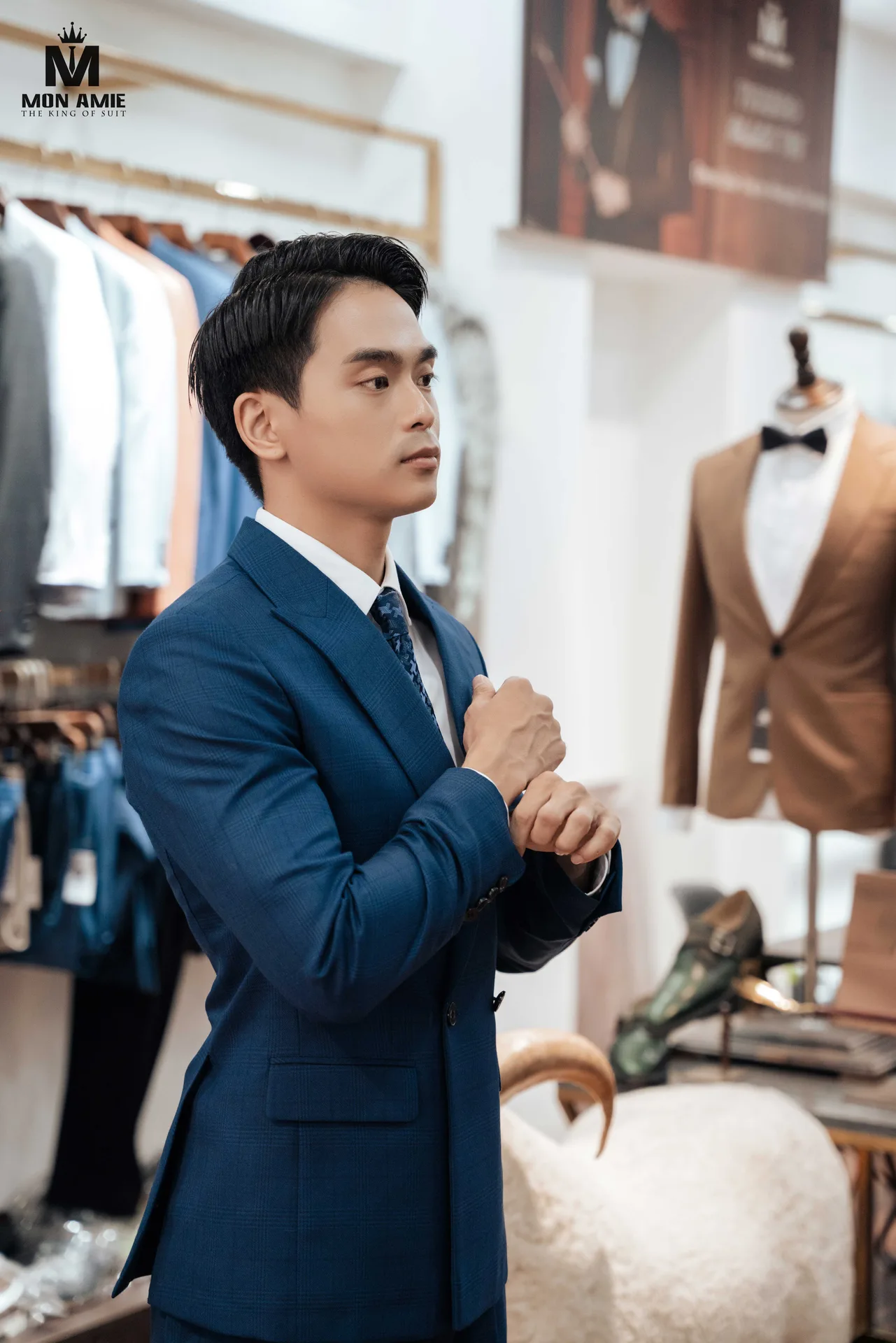
Should a blazer be loose or fitted
A blazer is worn as a separate piece, so it allows a little more ease than the jacket of a suit, especially at the chest and upper arm, because you will often wear a thin sweater underneath. But the shoulder still has to be right. A good blazer is usually about 1 to 2 cm wider than a suit jacket at the chest, not a whole size bigger.
Why off-the-rack sizes rarely fit
Ready-to-wear jackets are built to a common size chart, while every body is different. Two people can be the same 1.72 m tall and the same weight, yet one has broad shoulders and the other sloping ones, one a larger belly and the other a deep chest. A jacket in a standard size that fits the shoulder has too much room at the belly, and one that fits the belly has too much at the shoulder. As a result, many people have to choose between comfort and neatness. With bespoke tailoring, Mon Amie takes more than 30 measurements, keeps them for life, does a baste fitting and adjusts until it fits, so you do not have to choose between the two.
Common mistakes
- Choosing a tight jacket to look “slim”. Creases pulling sideways show at once that the jacket is straining.
- Choosing a loose jacket to “hide the belly”. Looseness only makes the belly look bigger because the cloth gathers in folds.
- Looking only at the front in the mirror. The back and sides are where the true fit shows.
- Trying on over a thick layer. Try it on with the shirt you actually plan to wear.
- Forgetting to move. Standing still, any jacket fits; the problem shows when you raise your arms.
Tips from Mon Amie's master tailors
- When choosing a jacket, choose by the shoulder first, then ask the tailor to adjust the waist and body; the shoulder is the part that cannot be altered.
- Stand naturally when trying on; don't puff out your chest or hold in your stomach; the jacket has to fit your natural standing posture.
- Bring the shoes and the shirt you plan to wear to the fitting, so that the sleeve and trouser hem are calculated correctly.
- If you want a fuller checklist, the article how a suit should fit: a 10-point checklist will help you check.
Frequently asked questions
Should a suit be loose or fitted?
Fitted, with about 8 to 12 cm of ease at the chest. A jacket that fits looks neat but still lets you raise your arms, sit and drive comfortably. A jacket that is too tight creases, and one that is too loose looks borrowed.
Should a blazer be loose or fitted?
A blazer can be slightly looser than a suit at the chest and upper arm, by about 1 to 2 cm, because it is often worn over a thin sweater. The shoulder must still fit exactly; otherwise the blazer will look untidy.
What makes a suit look good on you?
The shoulder fits, the collar hugs the neck, the fastened button does not crease, 1 to 1.5 cm of shirt shows at the cuff, the hem covers the seat and the trouser hem rests lightly on the shoe. Most important is that the jacket fits at the shoulder and is comfortable when you move.
How can a suit look good without feeling tight?
Choose a regular fit rather than a slim fit, cloth with a little stretch, and have it made to measure so that the waist, shoulder and upper arm are all accounted for. Check with the four movement tests before you take the jacket.
In short
Should a suit be loose or fitted comes back to one thing in the end: the suit that fits you perfectly is the one you almost forget you are wearing. If you would like to know which cut suits your measurements, learn about Mon Amie's made-to-measure process or book a measuring appointment so that a master tailor can work with you through the baste fitting and adjust until it is perfect.