
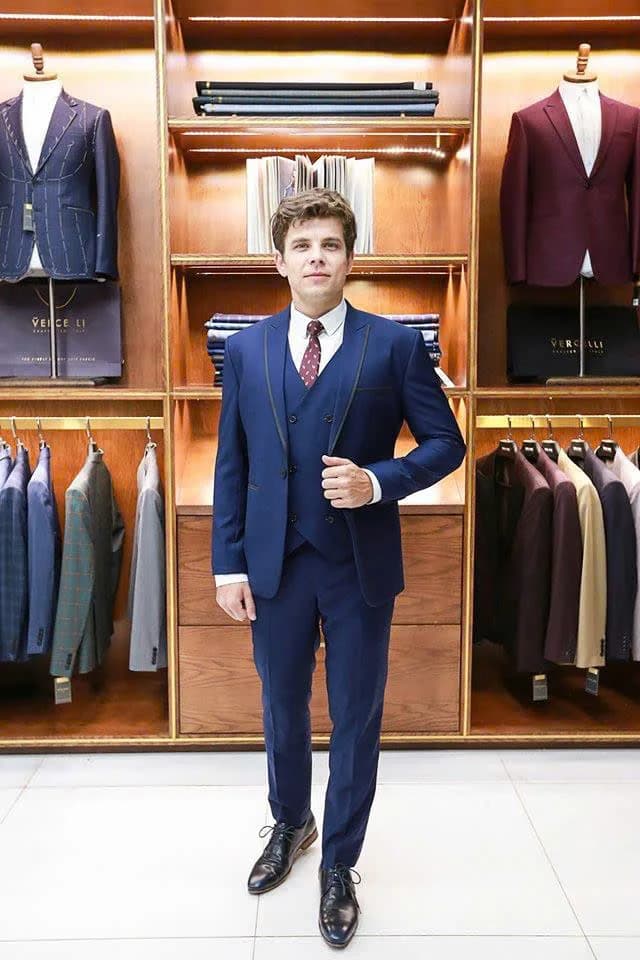
A suit on its hanger looks impressive. Put it on a thin man, and the shoulder juts out at an angle, the body hangs hollow like a sack, and the trouser legs drop like two chimney pipes. The problem almost never lies in “you are too thin”, but in the suit not yet creating the volume that the body lacks. How should you wear a suit when skinny to look fuller and better proportioned? The answer lies in structure, fabric and a few small details.
Quick answer
A thin man should wear a three-piece or double-breasted suit to add volume to the upper body, and choose cloth with weight and texture such as flannel, tweed and medium-scale checks, a spread collar, lapels of moderate width and pleated, straight-leg trousers that are not tight. Avoid a very close-cut suit, thin cloth that clings, and dense fine vertical stripes.
Understanding the problem of a thin build
Thin men typically meet three issues: shoulders that either jut out or slope, so the jacket is loose at the shoulder; a flat chest and stomach, so the body of the jacket has excess cloth; and thin thighs and calves, so the trousers hang loose. If you simply buy a small size to “fit the shoulder”, the body is still loose and the sleeves are short; if you take a bigger size to fit the sleeve, the shoulders droop. The solution is not choosing a size, but choosing the structure of the jacket and adjusting each part to the person, something that made-to-measure can do and ready-to-wear finds very hard.
Wear a three-piece to add volume to the torso
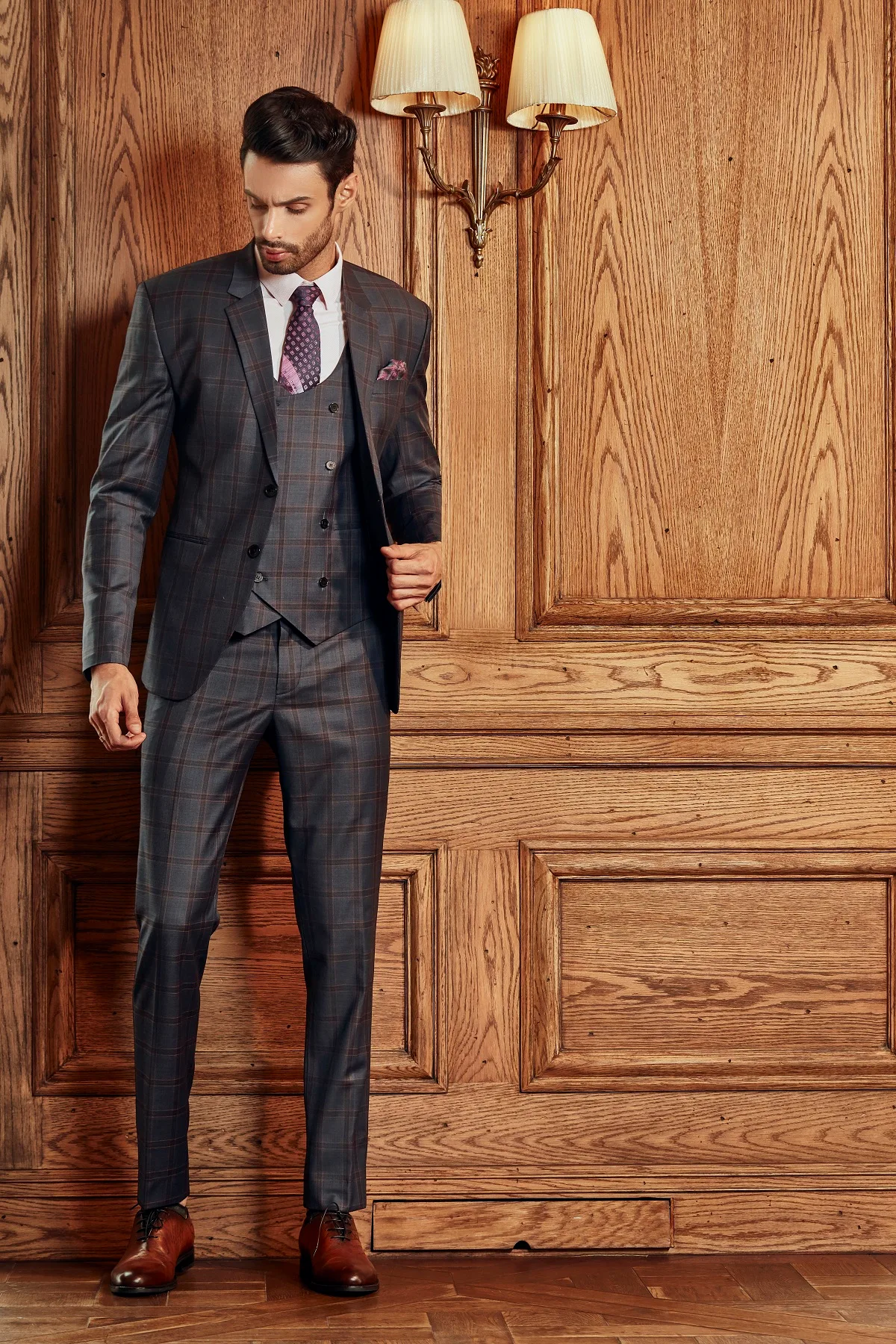
Adding a waistcoat layer thickens the upper body without any padding. A waistcoat fitted moderately close under the jacket creates a neat dividing line, makes the chest look fuller and keeps the tie in place. A three-piece has another advantage: trousers and waistcoat in the same plain cloth make an unbroken vertical line that tempers the impression of a long, narrow torso. If you are still undecided between the two, the article 3-piece or 2-piece suit: which should you have made compares the pros and cons in detail.
Choose cloth with surface and weight
Plain, thin, soft cloth that drapes close to the body easily shows every bone line. Cloth with texture creates volume and absorbs light, so the body looks fuller:
- Flannel: brushed fine wool, medium-weight, with a warm matt surface, suited to cool seasons and air-conditioned rooms.
- Tweed, herringbone: a raised woven texture that creates visual thickness.
- Medium-scale checks and horizontal stripes: these increase the impression of width. Choose a medium scale; checks that are too large swallow the figure.
- Substantial wool with a matt surface: holds its shape better than very fine wool.
Keep the southern climate in mind: heavy cloth should be used only in air-conditioned rooms or in the cool season. Mon Amie has a cloth library with many weights so that you can feel them by hand before choosing.
Shirt collar, lapel and tie
- A wide-spread collar (spread, cutaway): a taller, wide-open collar makes the neck and shoulder area look fuller. Combine it with a larger tie knot such as the half-Windsor to fill the empty gap at the neck.
- Lapels of moderate width: lapels that are too small make the body of the jacket look thinner; lapels of moderate width frame the chest clearly.
- A double-breasted jacket: the overlapping front adds a layer of cloth at the chest, suited to tall, thin men. Remember to fasten the right buttons and keep the jacket well fitted; do not choose a loose one.
- A tie of moderate width, in slight contrast with the shirt: this creates an accent at the chest.
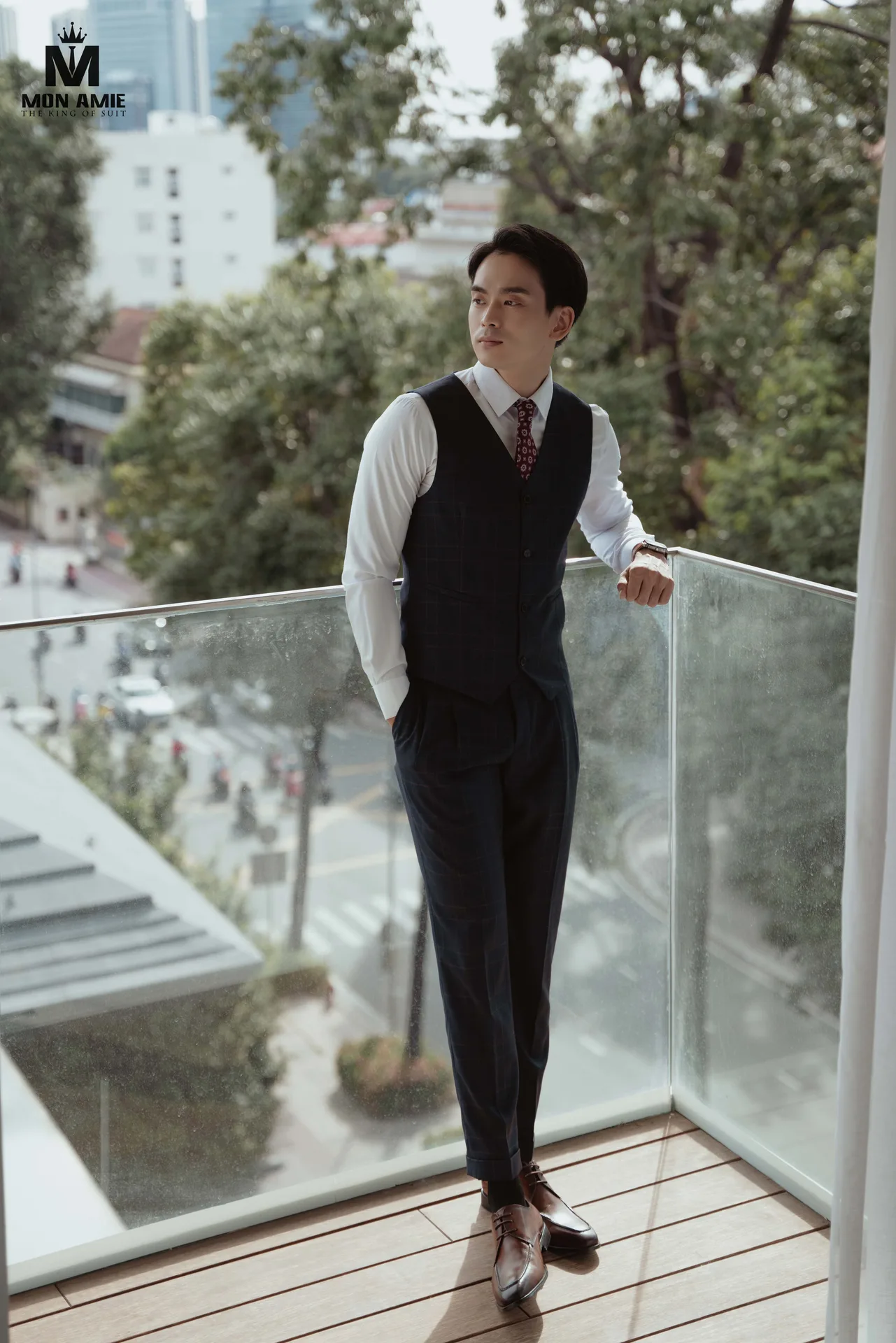
Trousers that are not tight: pleats, straight leg, moderate rise
Trousers that cling to the thighs and calves only make the legs look thinner. For thin men:
- One to two forward pleats: pleats open out to create volume at the hip and thigh.
- Straight or very slightly tapered legs, not sharply tapered.
- A moderately high rise, sitting near the navel, which lengthens the legs and balances the body.
- A slight break at the hem, touching the top of the shoe, not so short that it reveals thin ankles.
Colour: avoid too dark, too cool
Black and deep blue-black draw the lines in, which a thin man does not need. Choose mid grey, earth brown, deep beige, lighter navy or blue-grey so that the body looks to have more volume. A slight contrast between jacket, trousers and shirt also creates visual thickness. One caution: avoid fine, dense vertical stripes, because they lengthen the body and make a tall, thin build look taller still.
Small-size men's suits: how to choose correctly
Many thin men think that a “small size” settles it. In reality, a ready-made small-size men's suit is usually cut on an average build scaled down: small shoulders, but the body still follows a moderate chest proportion, and the sleeves are shorter than a tall, thin man needs. Things to check:
| Point | Sign of a good fit | Sign of a poor fit |
|---|---|---|
| Shoulder | The jacket's shoulder tip meets the end of the shoulder bone | The shoulder tip falls onto the upper arm or rides up |
| Body | Fastens flat, with no X-shaped creases | Excess cloth bulging at the back |
| Sleeve | About 1 cm of shirt cuff showing | Covers the shirt entirely or is too short |
| Trousers | Hang straight, not tight on the thigh | Legs clinging tight or baggy |
For a man caught between two sizes, made-to-measure is the least headache, because the master tailor can choose the shoulder by the small size and the sleeve length and body by the actual measurements.
Common mistakes
- Buying a loose suit to “look bigger”. Excess cloth only creates shadow, not shape.
- Wearing an ultra-tight slim fit. Every bone line shows more, especially when seated.
- All black, all dark. Thinner still.
- Overly tight trousers, especially sharply tapered legs.
- Artificially thick shoulder padding: you can tell it is padding at a glance. Only increase it slightly, just enough for the shoulder to stand.
The article suits for thin men: choosing a cut for fuller shoulders and a strong frame goes deeper into the cut and the thickness of shoulder padding.
Tips from the master tailors at Mon Amie
When a customer asks how to wear a suit well when skinny, a master tailor usually begins with the shoulders, not the cloth. The shoulders of a jacket cannot be altered much, so a thin man should settle the shoulders first and then work on the body and sleeves. When having a suit made, you can tell the master tailor plainly that you want “standing shoulders, a full chest”: they will adjust the thickness of the shoulder padding, the structure of the chest and how closely the waist is cut for each person. The same cloth, the same code, two different adjustments for two completely different builds.
Frequently asked questions
How can a thin man wear a suit well?
Choose a three-piece or double-breasted suit, flannel or medium-scale checks, a spread collar and pleated trousers. Avoid a suit that is too tight, and thin cloth that clings. The jacket's shoulders must fit first, with the other parts adjusted to follow.
Should a thin man wear slim fit or regular fit?
Usually it is better to choose a cut that fits the body without being too tight. A standard slim fit can work if the body and shoulders match, but an ultra-tight cut shows the thin build clearly. A cut with slight ease through the chest usually suits better.
Can a small-size suit be bought ready-made?
Possibly, but the sleeves, body and trousers usually need altering. If your build is far from the standard size, made-to-measure from the start usually saves effort and gives a better result.
What colour should a small-size suit be?
Mid grey, earth brown, lighter navy, blue-grey or deep beige. Keep black and deep blue-black to a minimum, since they draw the lines in further.
In closing
How should you wear a suit when skinny to look fuller? Not by hiding the figure, but by adding volume in the right places: the shoulders, chest and thighs. If you want to try this in person, please visit a Mon Amie showroom to experience bespoke tailoring or book a measuring appointment so that the master tailor can advise to suit your exact build.