
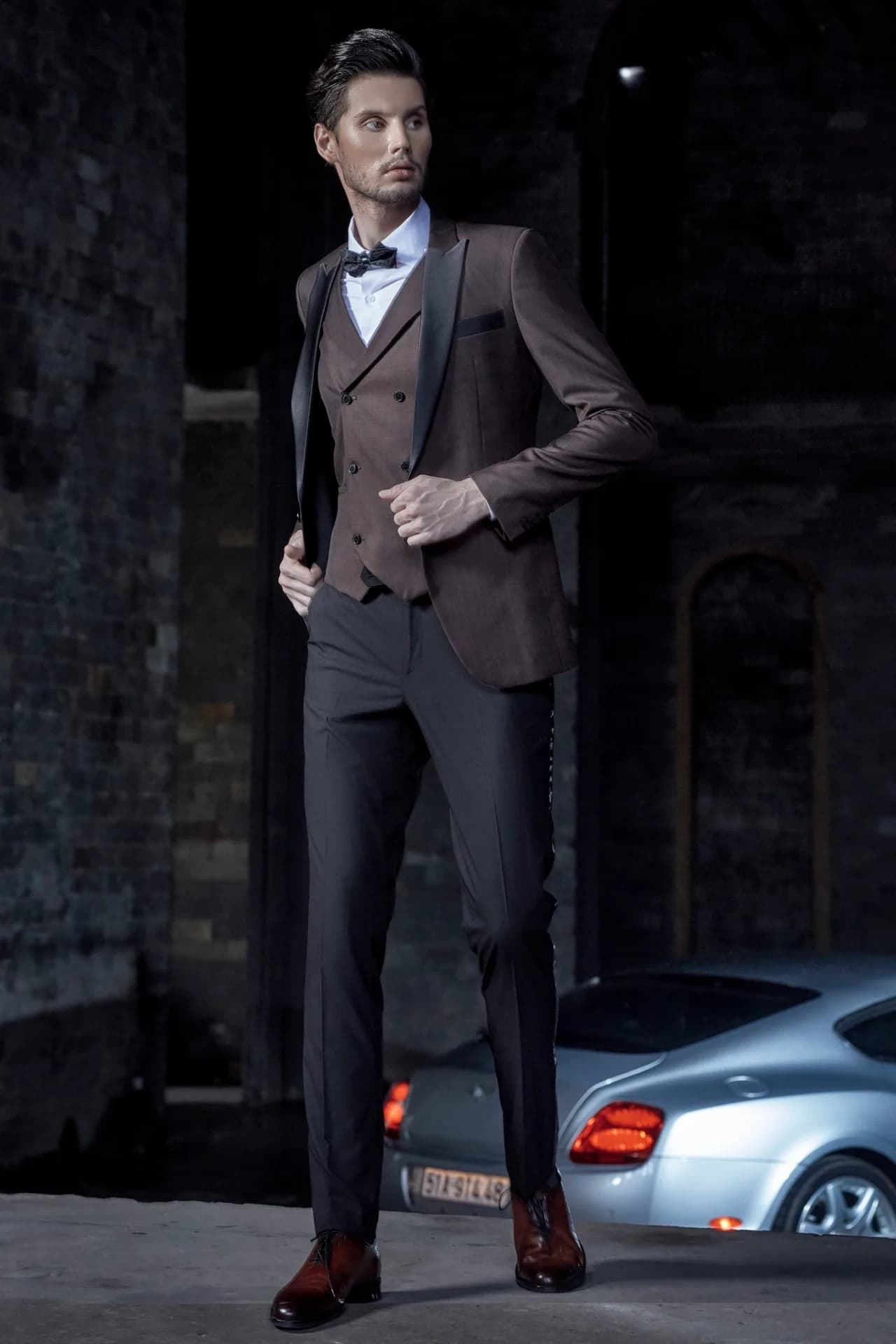
“A waistcoat with a collar looks smarter than one without, right?” Customers ask us this almost every week in the showroom, usually while holding two waistcoats and not sure which to put back. The short answer: smart or not does not come from the collar. A men's waistcoat with a collar and a collarless waistcoat are two different styles, each suited to a different build, a different suit and a different occasion.
Quick answer
A men's waistcoat with lapels (a collar) is not more formal than a collarless one; it is simply a different style. The collarless waistcoat is clean, easy to pair and suits the office. The lapelled waistcoat usually comes double-breasted and is distinctly classic. The rule for choosing: the waistcoat lapel should belong to the same family as the jacket lapel, peak with peak, notch with notch.
How do waistcoats with and without a collar differ?
The waistcoat's “collar” is really the lapel, the cloth that folds back on either side of the chest, like a suit jacket's lapel but smaller. A collarless waistcoat is cut straight into a single V line, with no folded cloth.
The most common is the collarless single-breasted waistcoat, with five or six buttons. This is the classic standard of the three-piece suit. A waistcoat with a jacket-style collar is usually a double-breasted waistcoat with peak or notch lapels, or a single-breasted waistcoat with a shawl lapel (a continuous, rounded lapel often seen on a tuxedo).
| Criterion | Without a collar | With a collar (lapels) |
|---|---|---|
| Fastening | Single-breasted, 5–6 buttons | Double-breasted, or single-breasted with lapels |
| Feel | Clean, minimal, classic | Classic, distinctly retro, more prominent |
| Difficulty of pairing | Very easy | Needs thought about the jacket lapel |
| Suited to | Office, interviews, three-piece suits | Parties, weddings, evening events, deliberate wear without a jacket |
| Build | Most builds | Balanced, with full shoulders and chest |
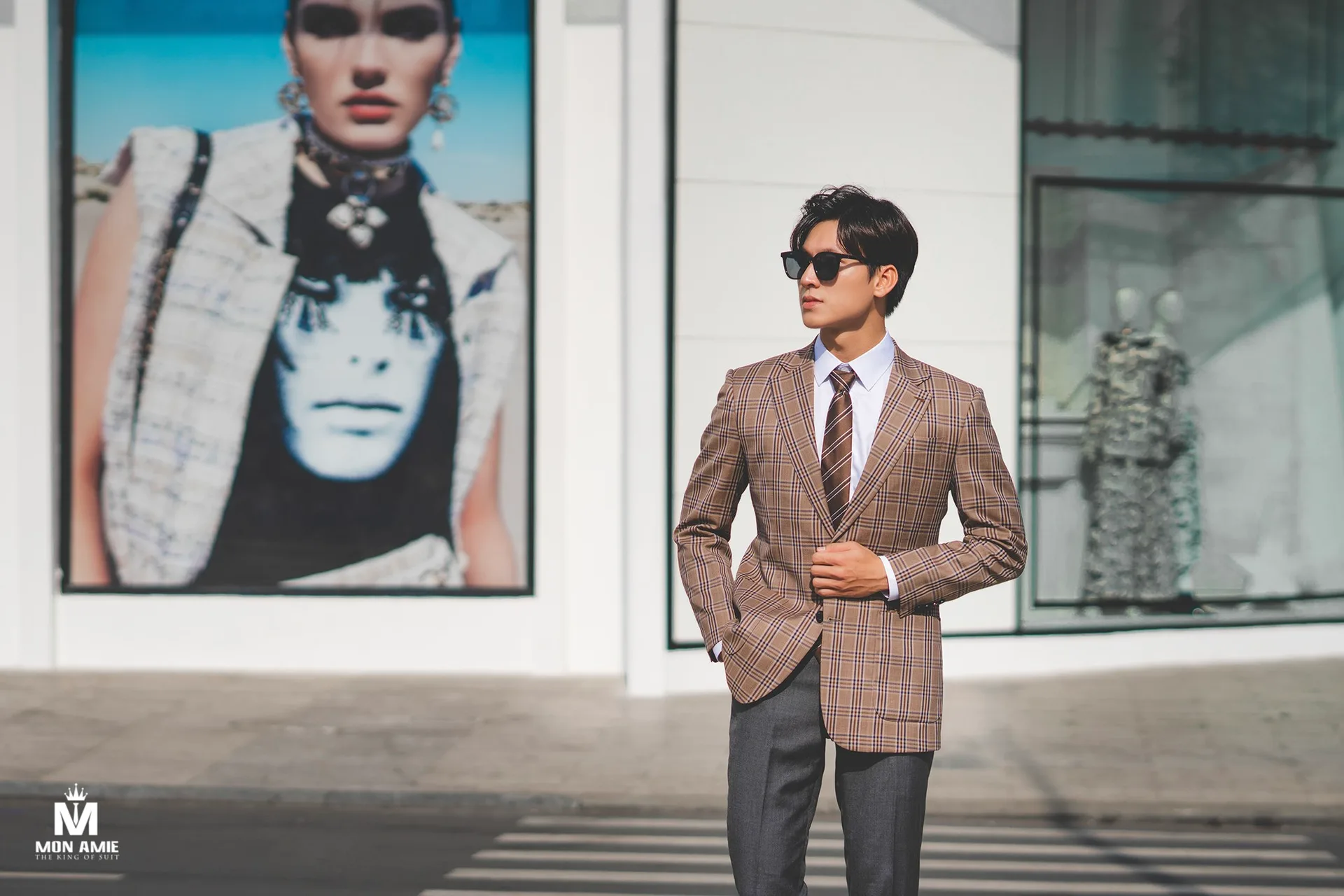
Three lapel styles you will see on waistcoats
When choosing a men's waistcoat with a collar, you will meet three lapel styles. Each gives a different character:
- Notch lapel (a V-shaped notch, compact): gentle and youthful, often seen on single-breasted waistcoats in a three-piece suit for work.
- Peak lapel (pointing up toward the shoulder): serious, “authoritative”, mostly worn with double-breasted waistcoats. It suits gentlemen with medium shoulders and a full chest.
- Shawl lapel (continuous, rounded, without a notch): associated with the tuxedo and evening dress, usually faced in satin or in the same cloth.
Whichever you choose, the waistcoat lapel is always smaller than the jacket lapel. An oversized waistcoat lapel will jump out of the frame of the jacket and make the three-piece look cluttered.
Is a waistcoat with a collar more formal?
Not necessarily. How formal a waistcoat is depends on its colour, cloth, cut and context, not on whether it has lapels. A plain navy collarless waistcoat worn with a three-piece suit in the same cloth is the safest choice for an interview or a meeting with partners. A double-breasted lapelled waistcoat is more fashion-led and “has more to say”, so it suits parties, weddings or evenings.
There is one case where the lapel is almost a rule: the tuxedo. For a black-tie dress code the waistcoat is usually cut low, or replaced by a cummerbund. If it has lapels, they are shawl lapels faced in satin, matching the tuxedo's own lapels. Do not use an office-style peak-lapel waistcoat for this occasion.
Matching waistcoat lapels to jacket lapels
The easiest rule to remember: the waistcoat lapel belongs to the same family as the jacket lapel, and is smaller than it.
- Notch-lapel jacket (the V-notched lapel, the most common): choose a collarless waistcoat, or a small notch-lapel waistcoat for a distinctly classic suit.
- Peak-lapel jacket (pointing up toward the shoulder): best with a double-breasted waistcoat with peak lapels. This is the double-breasted vest and peak lapel pairing that many gentlemen love because it has both structure and depth. A collarless waistcoat is still fine if you want something softer.
- Tuxedo with shawl or satin lapels: a shawl waistcoat in the same cloth, or a cummerbund.
- Double-breasted jacket: prefer a single-breasted collarless waistcoat. A double-breasted waistcoat under a double-breasted jacket stacks several rows of buttons on top of one another. The article vest under double breasted suit analyses this case in detail.
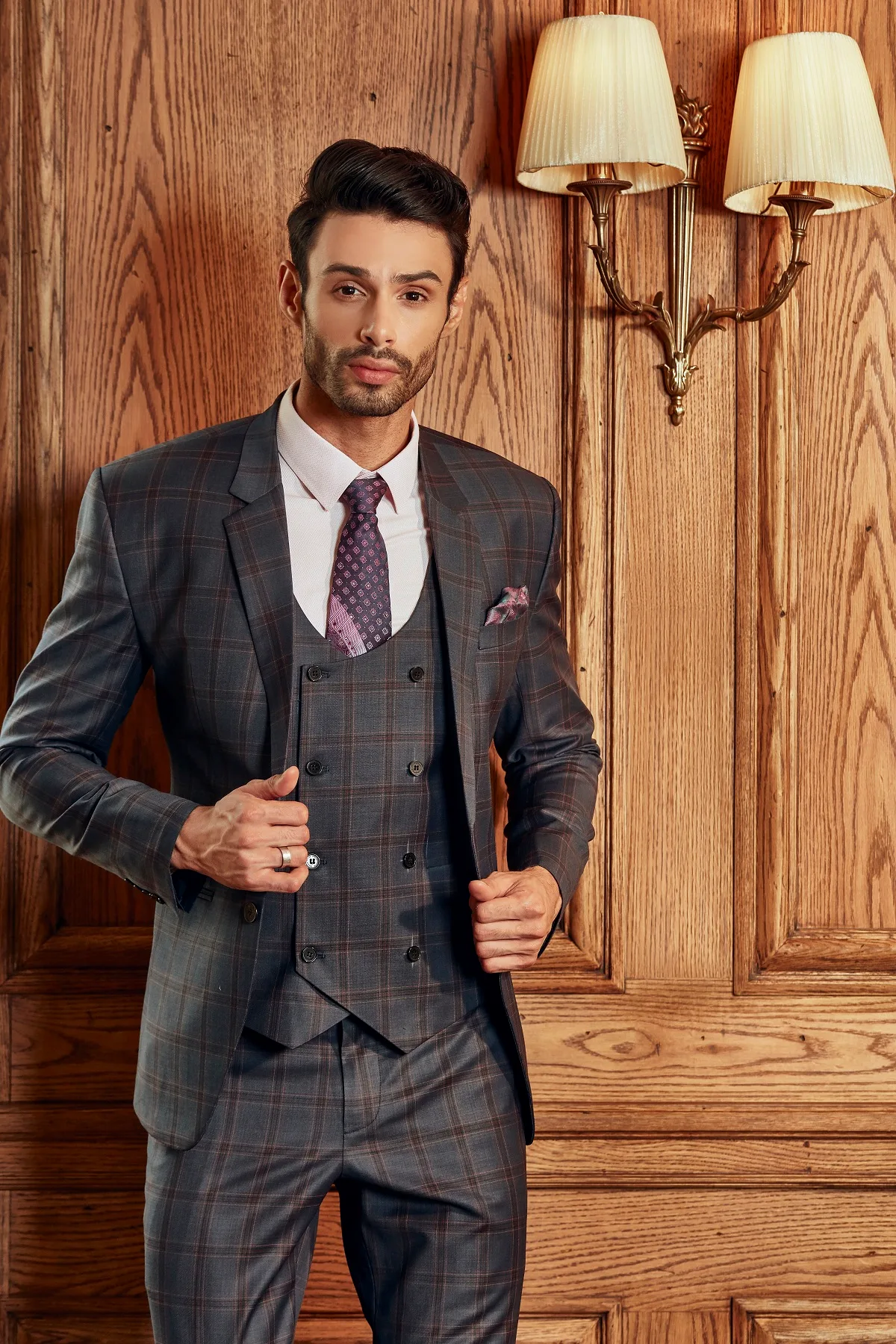
Matching the colour of a lapelled waistcoat to the jacket
The waistcoat's colour decides whether it “blends in” with the suit or “talks back” to it.
- Same colour, same cloth as the suit: the most dignified, and safe for the office. The waistcoat lapel almost disappears into the whole.
- A different colour in the same tone: for example a charcoal waistcoat with a light grey jacket. A lapelled waistcoat in this form shows clear taste yet remains discreet.
- A contrasting waistcoat: a brown waistcoat with a moss-green jacket, a wine-red waistcoat with a grey striped jacket. Very handsome for a party or a photograph, but the waistcoat lapel needs the same depth of shade so it does not “break” the line of the jacket's shoulders.
With a lapelled waistcoat that differs in colour from the suit, keep the tie and pocket square in one colour palette and avoid adding large patterns.
When should a waistcoat be worn on its own, without a jacket?
A collarless waistcoat with an ordinary lining at the back usually only looks good when there is still a jacket over it. A lapelled waistcoat can be worn on its own quite well if its back is in the same cloth as the front and you style it deliberately: a light-coloured shirt, trousers in the same tone or a mild contrast, perhaps a tie or bow tie. Avoid wearing it on its own where formality is required, such as interviews or a solemn wedding, because without a jacket it looks less polished.
We have written about wearing it on its own in detail in the articles men's office waistcoat and what to wear a men's waistcoat with.
Choosing by build
- Slim build: a double-breasted waistcoat with peak lapels adds thickness across the chest and balances the shoulder line.
- Fuller build or a belly: a single-breasted collarless waistcoat, a moderately deep V, a plain dark cloth to make the torso read longer. A double-breasted waistcoat adds width at the belly. The article big-size men's waistcoat explains more.
- Shorter build: a deep V, small lapels, and a waistcoat colour close to the trousers so the upper and lower body read as one block.
- Broad shoulders, expanded chest: a waistcoat with wide lapels suits, because the lapels sit in proportion to the shoulder frame.
Tips from Mon Amie's master tailors
- Leave the last button of a single-breasted waistcoat undone. This is a long-standing convention that lets the waistcoat sit more comfortably when you sit down. A double-breasted waistcoat is buttoned on every button meant to be fastened.
- The waistcoat must cover the waistband. Even a strip of shirt showing between waistcoat and trousers breaks the whole three-piece structure.
- Check the waistcoat lapel at the fitting. The lapel must lie flat and hug the chest, without bulk. A bulky lapel usually comes from uneven interfacing.
- Say what the occasion is when you order. If you plan to wear it on its own, the tailor will suggest a back in the same cloth instead of lining, and will discuss the lapel style with you as well.
Frequently asked questions
What is a men's waistcoat with a jacket-style collar?
It is a waistcoat with lapels (a collar) that fold back on either side of the chest like a suit jacket's, but smaller. This kind of waistcoat is usually double-breasted or has a shawl lapel, giving a more classic, more tailoring-flavoured look than a collarless waistcoat.
Does a collarless waistcoat suit every jacket?
Almost. A single-breasted collarless waistcoat is the most neutral style and pairs with notch-lapel, peak-lapel or double-breasted jackets. Only the tuxedo needs its own waistcoat or a cummerbund.
What should a double-breasted vest with peak lapels be worn with?
A double-breasted waistcoat with peak lapels goes best with a peak-lapel jacket from the same suit. If you wear both a double-breasted waistcoat and a double-breasted jacket, the buttons look cluttered. Keep one of the two single-breasted.
Can a waistcoat with lapels (a double-breasted lapel vest) be worn on its own?
Yes, if the back of the waistcoat is in the same cloth as the front and you pair the shirt and trousers deliberately. With a lining-backed waistcoat, wearing it alone looks unfinished, so use it only in a private, relaxed setting.
Conclusion
Whether a men's waistcoat with lapels or a collarless one, what is worth weighing is your build, the suit it goes with and the occasion. If you would like to try one on a real body, book an appointment at a showroom, or design your waistcoat and suit online first, then bring that sketch in so a stylist can adjust it with you under our bespoke tailoring service.