
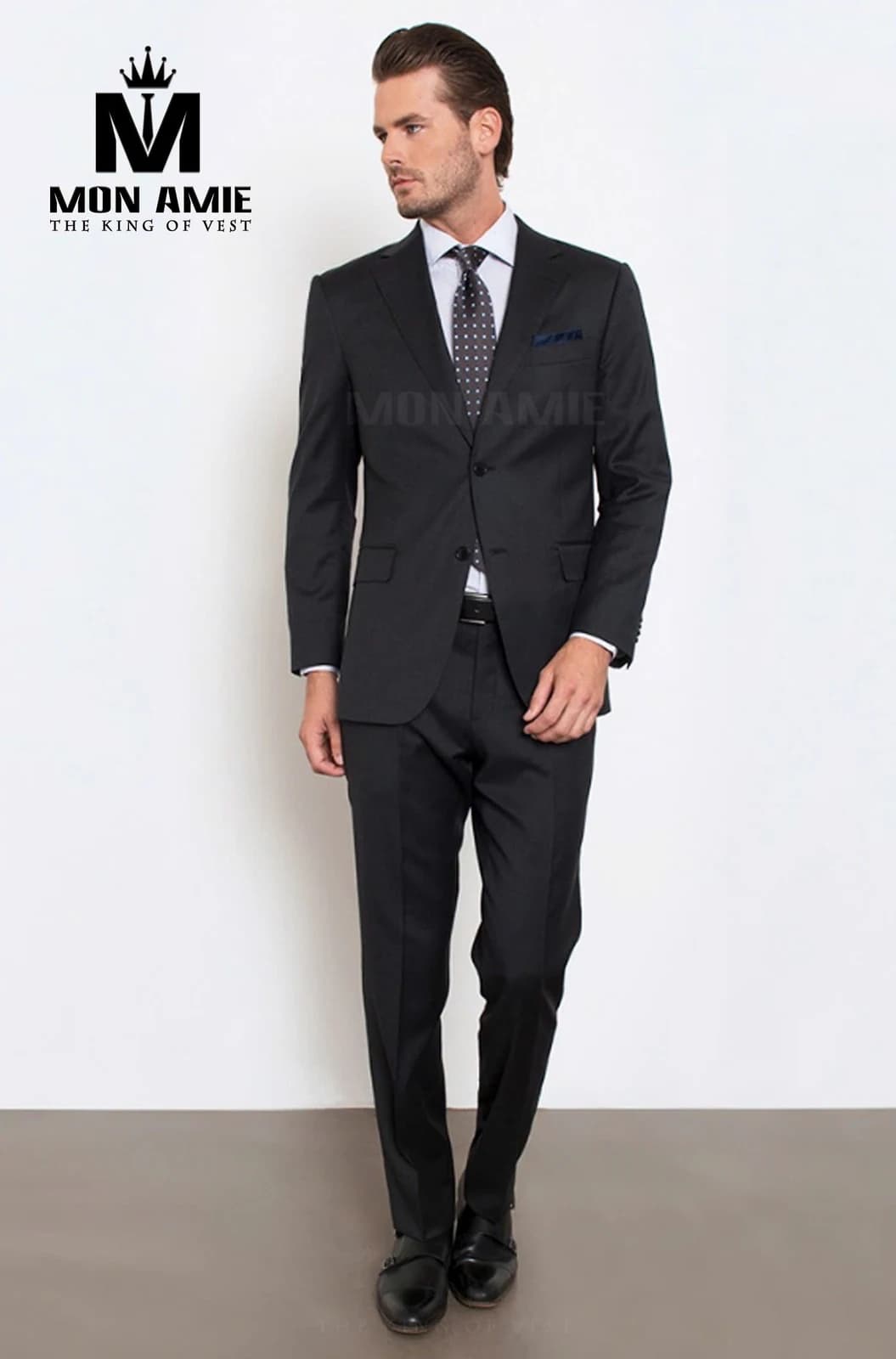
In October 1666, while London was still reeling from the great fire, King Charles II of England announced that his court would change the way it dressed. The writer Samuel Pepys recorded it in his diary: the king had begun wearing a plain, long coat in place of the elaborate dress then in fashion. More than three and a half centuries later, the suit you wore to this morning’s meeting still carries a trace of that moment. So when was the suit invented, and what road has it travelled?
Quick answer
The modern suit took shape around the middle of the 19th century, from the lounge suit in Britain. But its roots go back to 1666, when King Charles II declared a switch to simpler dress. That is why people often say the suit has a history of about four centuries.
What is a men’s suit?
Before getting into history, let us settle the definition. A men’s suit is a set consisting of a jacket and trousers, made from the same cloth, in the same colour and pattern. Add a waistcoat in the same cloth and it is called a three-piece suit. If the jacket and trousers are in different cloth, it is not a suit but an odd jacket worn with trousers.
When was the suit invented: the milestones that shaped it
| Period | Event | Influence on the suit |
|---|---|---|
| 1666 | King Charles II declares a change in court dress, wearing a plain long coat | The spirit of simplicity replaces elaborateness, the seed of the suit |
| Late 18th and early 19th century | Beau Brummell champions a clean, dark-coloured style, well-fitted made-to-measure tailoring | Lays the foundation for English gentlemen dressing simply but impeccably |
| Mid-19th century | The lounge suit (Britain) and the sack suit (US) appear | A short, comfortable jacket with trousers in the same cloth, everyday wear |
| Late 19th century | The dinner jacket, later called the tuxedo | A short form of evening dress, replacing the tailcoat |
| Early 20th century | The lounge suit becomes standard office attire | The suit becomes the uniform of the male office worker |
| 1930s | The drape cut, broad shoulders, full chest | The “English gentleman” look is perfected |
| 1960s | The slim, trim suit with close lines | Paves the way for the slim-fit suit |
| 1980s | The power suit with large padded shoulders | The suit becomes associated with office power |
| 2000 to now | Natural shoulders, light construction, many fits | A softer, more varied suit |

From the 1666 declaration to the lounge suit
The Charles II episode is often loosely called an “edict”. In truth it was a declaration by the king about court dress: dropping the elaborate clothing with its lace and many colours in favour of a moderate-length long coat, combined with a jacket and trousers. That was not a suit in today’s sense, but it opened the way for the idea of a gentleman dressed neatly, in a single colour and with seriousness.
At the start of the 19th century, Beau Brummell, famous for his style in London, championed dress that was simple but perfectly fitted, in muted colours, and clean. He held that a gentleman looks good not through fussy detail but through the cut. That spirit was the foundation of the made-to-measure trade on Savile Row, which later became a symbol of bespoke tailoring.
The lounge suit: the first suit for people who go to work
Around the middle of the 19th century a new type of garment appeared: a short, comfortable jacket worn with trousers in the same cloth. The British called it the lounge suit (a lounge being a sitting room, a place to rest), and the Americans called it the sack suit. At first it was clothing for at home and for leisure, not formal wear. But the more comfortable it was, the more convenient it was for work, so within a few decades the lounge suit had pushed aside the tailcoat and the long frock coat, becoming men’s standard office attire.
It is interesting that the name “lounge suit” still survives in the vocabulary of dress codes today, where it denotes the everyday level of business formality.
What does tuxedo mean and where does it come from?
Tuxedo is the American name for evening wear in the form of a short jacket with satin lapels and trousers with a satin stripe, usually worn with a bow tie. The British call it the dinner jacket. According to a popular anecdote, the name “tuxedo” comes from Tuxedo Park, a resort for the wealthy in New York State, where this style of formal dress was worn at parties in the 1880s. Many people believe that this short jacket, which replaced the tailcoat, drew on the influence of the British aristocracy, whose gentlemen already wore short jackets to dinner.
What the tuxedo and the suit have in common is that both come from the lounge suit. The difference is that the tuxedo is for the evening, with satin lapels, covered buttons and not usually an ordinary necktie. You can see the differences in detail in the article how the tuxedo and the smoking differ.
Vest, veston, com-lê, suit: what are all these names?
One garment, many names, and each name carries a trace of history.
| Name | Origin | Where it is used |
|---|---|---|
| Vest | Short for “veston” (French) | Common in Vietnam |
| Veston | French, the outer jacket of a suit | An older term, still in use |
| Com-lê | From “complet” (French), meaning a complete outfit | Older people, the South |
| Suit | English, meaning the whole set | Common in fashion |
| Blazer, jacket | English, a jacket worn separately | When the jacket is not worn with trousers in the same cloth |
The words “vest” and “com-lê” reached Vietnam through contact with French culture, which is why they have French roots. You can read more about the English terms in the article what a men’s vest is called in English.
The suit in Vietnam: from French roots to modern made-to-measure
The suit came to Vietnam along with the period of contact with Western culture. It was first the dress of civil servants, merchants and urban intellectuals, then gradually became the choice of working people, of the groom on his wedding day and of businessmen. The terms “vest”, “veston” and “com-lê” preserve the French names, while “suit” is the term more familiar to young people.
Today, Vietnamese buy ready-to-wear and also turn to the made-to-measure trade, where each suit is cut to individual measurements. That very act of tailoring brings the suit back to its original spirit: dressing simply but fitting the person. Mon Amie is one of the tailors working in that direction, and bespoke tailoring is a journey of taking more than 30 measurements, choosing cloth from a fabric library of Italian and English cloth, and baste fittings until it fits perfectly.

Why the suit has lasted four centuries
The shape of the suit changes constantly: broad shoulders then natural shoulders, wide lapels then slim lapels, wide-legged trousers then close-fitting legs. But the basic structure remains the same. There are three reasons the suit has lived so long:
- It hides flaws and shows off strengths. The line of the shoulder and the line of the waist give a neat figure to almost every build.
- It conveys seriousness without a word. A polished suit tells the person across from you that you have prepared.
- It adapts. Each generation revises the cut, the cloth and the colour to suit its time, but does not abandon the core structure.
A tip from Mon Amie’s master tailors
Knowing the history helps you choose a suit with a clearer head. Details that seem “fashionable”, such as peak lapels, double-breasted buttoning and the waistcoat, have in fact come round many times over the decades. So rather than chasing trends, choose a cut that suits your build and cloth that is right for the occasion; those never go out of date. If you want to recognise classic styles of suit, look at the details of the shoulder, the lapel and the waist darts.
Frequently asked questions
In exactly which year was the suit invented?
There is no single year. 1666 marks Charles II’s declaration changing court dress, while the modern suit, with a jacket and trousers in the same cloth, appeared around the middle of the 19th century through the lounge suit.
What is a men’s suit and how does it differ from a “vest”?
A suit is the full set of jacket and trousers in the same cloth, whereas “vest” in Vietnamese usually refers to the outer jacket on its own. In Vietnamese, people often call both the whole set and the jacket “vest”, which makes it easy to confuse them. To be precise, use “suit” for the whole set and “vest jacket” for the jacket.
What does tuxedo mean?
The tuxedo is American evening dress, with satin lapels and trousers with a satin stripe, usually worn with a bow tie. According to a popular anecdote, the name comes from Tuxedo Park. The British call it the dinner jacket.
What is a vest called in English and in French?
In English the whole set is a suit, and the jacket is a suit jacket or blazer. In French the jacket is a veston and the whole set a complet, which is how Vietnamese got the words “vest” and “com-lê”.
Closing thoughts
Four centuries of history show that the suit is not an unchanging object but an idea that keeps being revised: dress neatly, fit the person, suit the occasion. If you want to see suit styles in real photographs, visit Mon Amie’s lookbook, or book a fitting so that a master tailor can cut you a suit to your own measurements.