
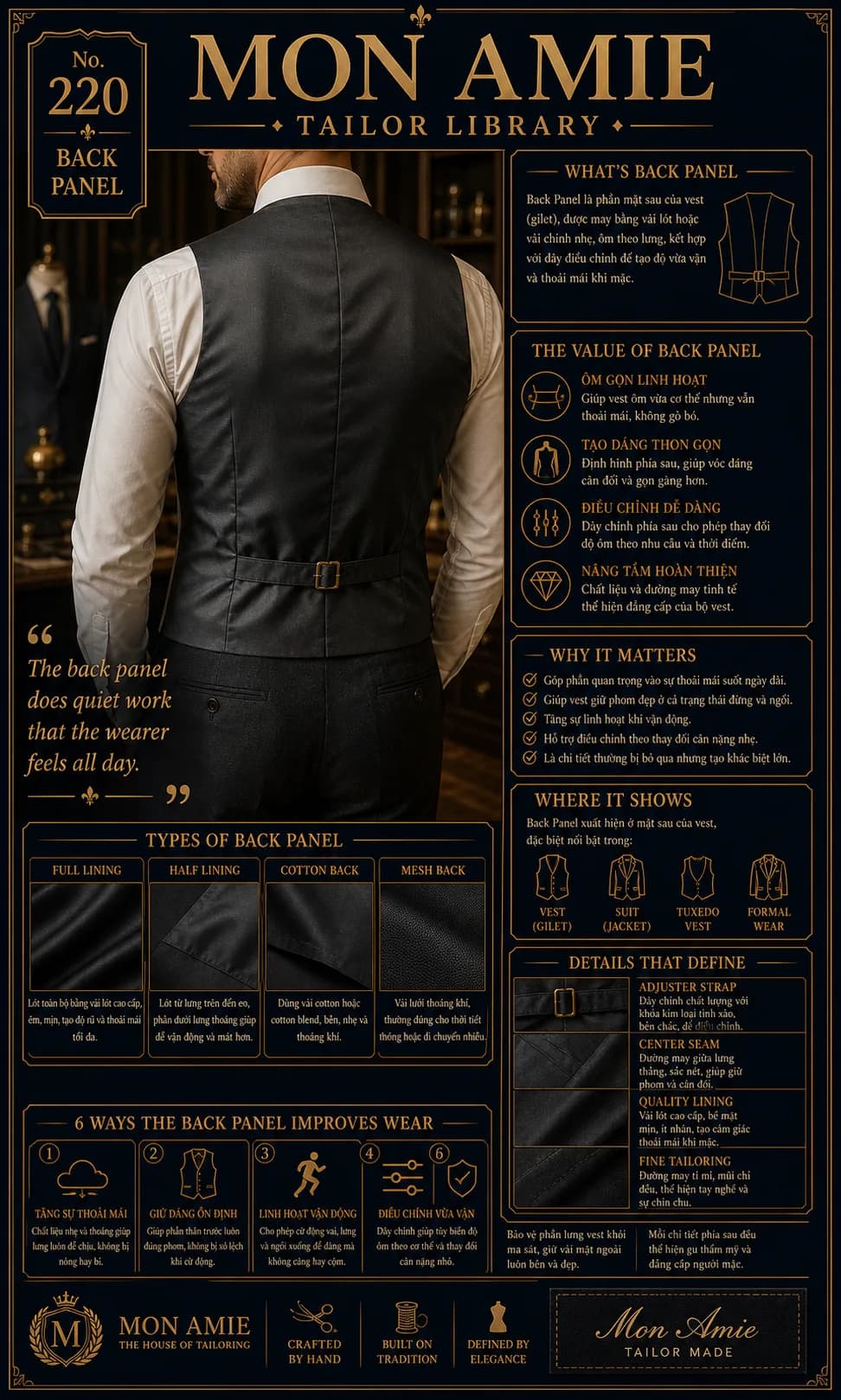
The back panel is the rear section of a waistcoat, usually cut in lining or a light version of the main cloth, following the line of the back and working with an adjuster strap to create a comfortable, well-judged fit. Few men look at it during a fitting, yet it works quietly all day long: holding the shape, letting heat escape and allowing the body to move naturally. Understanding the back panel helps you choose a waistcoat that suits how you actually live, rather than judging by the front alone.
What the back panel is and why it matters
In a three-piece suit, the back of the waistcoat is nearly always covered by the jacket. For that reason many makers treat it lightly. To a tailor who knows the craft, however, the back panel carries four roles nothing else can take on:
- Flexible closeness: it lets the waistcoat sit close to the body while remaining comfortable, never restrictive when you sit at a desk or move about.
- A trimmer line: it shapes the back, keeping the figure balanced and neat — especially visible the moment you remove your jacket.
- Easy adjustment: the adjuster strap lets you change the closeness as the occasion requires, after a long dinner or through a small change in weight.
- A finer finish: the cloth and stitching at the back reveal the standing of the whole suit. Discerning eyes look at the inside and the back of a garment to judge the hand behind it.
In short, the back panel contributes a great deal to all-day comfort, keeps the waistcoat looking well both standing and seated, and adds freedom of movement. It is a detail routinely overlooked, yet it separates a carefully made waistcoat from one made merely to complete a set.
Four common back panel treatments
Depending on cloth and intended use, the back of a waistcoat may be handled in four ways:
- Full lining: the entire back in a fine lining — usually bemberg or viscose — smooth, soft, with good drape and maximum comfort. The classic choice for a waistcoat worn with a business suit.
- Half lining: lined from the upper back to the waist, with the lower back left open for movement and coolness. Suited to men who sit for long hours or to warm climates.
- Cotton back: cotton or a cotton blend across the back — durable, light and breathable, with a more natural feel than a lustrous lining.
- Mesh back: an open, breathable mesh, generally used for hot weather or for men constantly on the move. In the climate of Ho Chi Minh City this is well worth considering if you wear a waistcoat all day.
No single treatment is best in absolute terms. The right question is where you wear the waistcoat: air-conditioned rooms or outdoors, standing or seated.
How the back panel improves the way a waistcoat wears
Six concrete benefits of a properly made back panel:
- Greater comfort: light, breathable materials keep the back at ease, never hot or close.
- A steady shape: the front stays in place and does not twist as you move, because the back balances the tension.
- Freedom of movement: shoulders and back move easily and sitting down is effortless, with no pulling or bunching.
- Adjustable fit: the strap tailors the closeness to your body and to small changes in weight, with no alteration needed.
- Protection for the main cloth: the back of the garment is shielded from friction against chair backs and jacket linings, keeping the outer cloth handsome and long-lived.
- A statement of taste: every detail at the back — even the hidden ones — speaks of the wearer's standards.
The details that define a good back panel
When you collect a made-to-measure waistcoat, you can check four points at the back yourself:
- Adjuster strap: a good strap comes with a finely made metal buckle, sturdy and easy to adjust, and does not slip after a few uses.
- Centre seam: the seam down the middle of the back must be straight and crisp — it is the axis that holds the shape and keeps the back in balance.
- Quality lining: fine lining is smooth to the touch, resists creasing and feels cool against the hand, making it pleasant against a shirt.
- Fine tailoring: careful stitching with even stitch length, showing the skill and diligence of the house.
The back panel appears at the rear of a waistcoat, and is most notable on the three-piece waistcoat, the suit jacket, the tuxedo vest and ceremonial dress — occasions where you may remove your jacket and the waistcoat becomes the principal garment.
A word from Mon Amie's artisans
At Mon Amie we often tell clients that the back of a waistcoat is where a tailor cannot hide his craft. The right lining, a straight centre seam, a buckle that holds firm — none of it is visible in the mirror, yet all of it is felt across an eight-hour day. With measurements kept for life and an alteration guarantee, Mon Amie can always refine the closeness at your back as your body changes.
If you are considering a three-piece suit, or would like the fit of an existing waistcoat reviewed, please book an appointment at one of Mon Amie's five showrooms in Ho Chi Minh City or call 0888.111.118. You are also welcome to read about the tailoring process to see how carefully we handle every detail — including the ones hidden behind your back.