
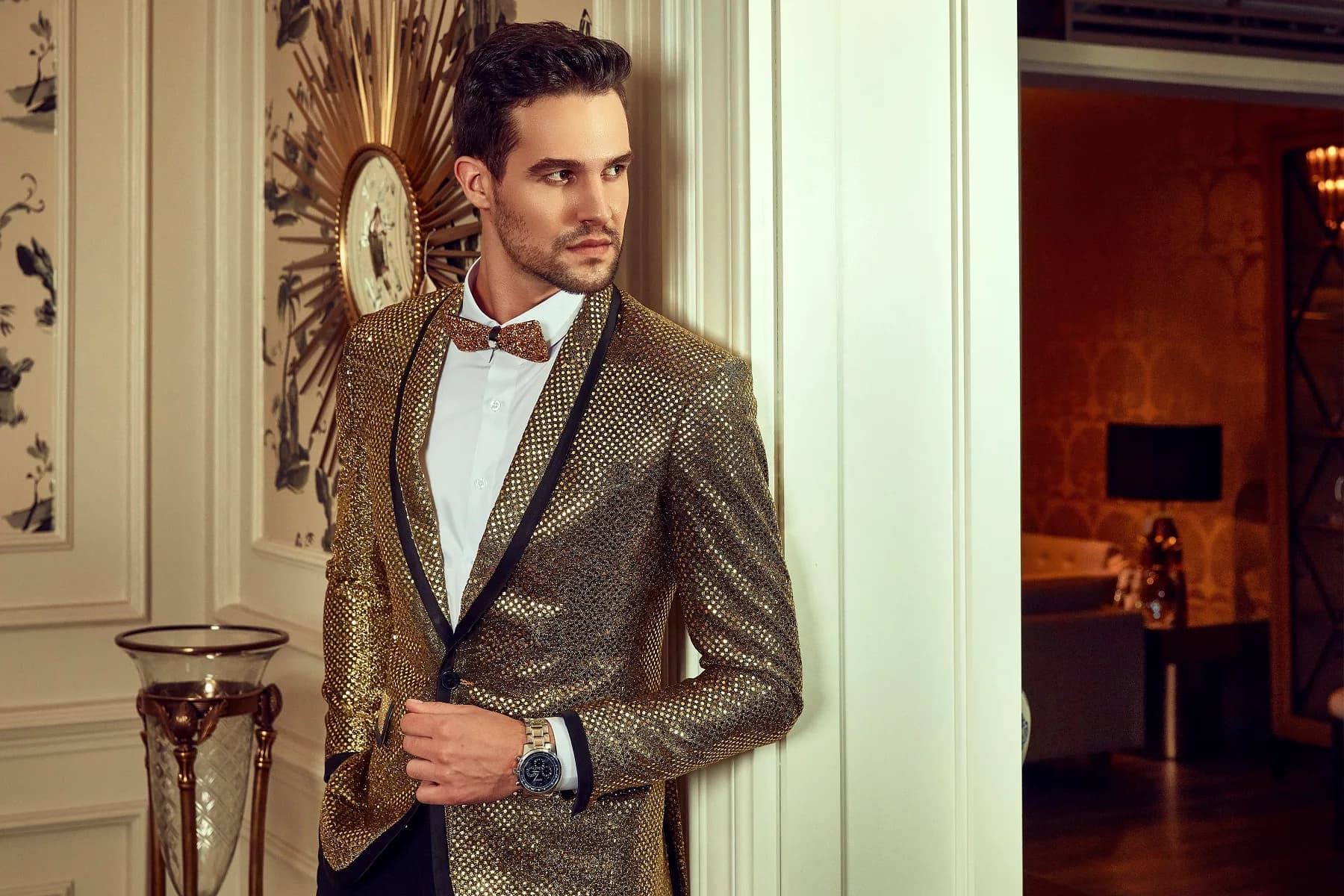
Change the lapel width by just a centimeter or two, with the same fabric and the same wearer, and a suit can move from the office to an evening party, from youthful to classic. The lapel is the frame around the face, and it is a detail a tailor weighs for a long time when building the cut. Below are seven men's suit lapel styles worth knowing, each with when to choose it. The terms used are the ones tailors and customers use at the fitting, and each is explained the first time it appears.
Quick answer
Seven men's suit lapel styles are worth knowing: the standard notch, slim notch, peak, wide peak for double-breasted jackets, shawl, rounded lapel and contrast-fabric lapel. The notch is the usual office choice; peak or shawl suit weddings and evening events; the slim notch suits those who want a younger look.
1. Standard notch: the notched lapel, the office default
The notch lapel has a V-shaped notch where the lapel meets the collar (that seam is called the gorge). The standard lapel width is about 8–9 cm, which suits an average build. This is the style for meetings, interviews and workdays, and it is also the first suit many customers choose: it rarely limits the occasion and rarely goes out of date.
Pairing: lapel width and tie width should go together; a tie 7–8 cm wide suits this lapel. One note on the gorge: choose a moderate height. A high gorge lengthens the jacket body and makes the neck look neat, while a low gorge looks softer and more relaxed. The article what is a lapel? how to choose a suit lapel in the right style goes deeper into the construction.
2. Slim notch: youthful, trim silhouette
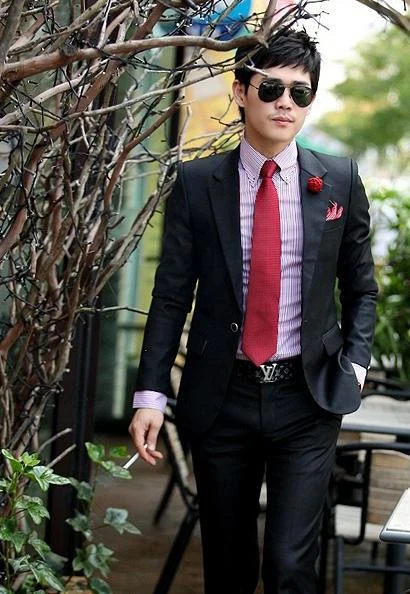
The slim notch keeps the notched style but with a lapel only about 6 cm wide. Because it is small, it makes the jacket body look slimmer, suiting younger men and those with a small or lean frame, and it is the foundation of many Korean-style men's suits. A tie 5–6 cm wide goes with it.
Worth weighing: if you have broad shoulders and a full chest, a narrow lapel makes the jacket body look puffed out and out of balance. A narrow lapel is also tied to a particular period in fashion, so if you want a suit to last, choose a medium width, around 7 cm, rather than something too thin. It suits daytime weddings, creative events and everyday wear.
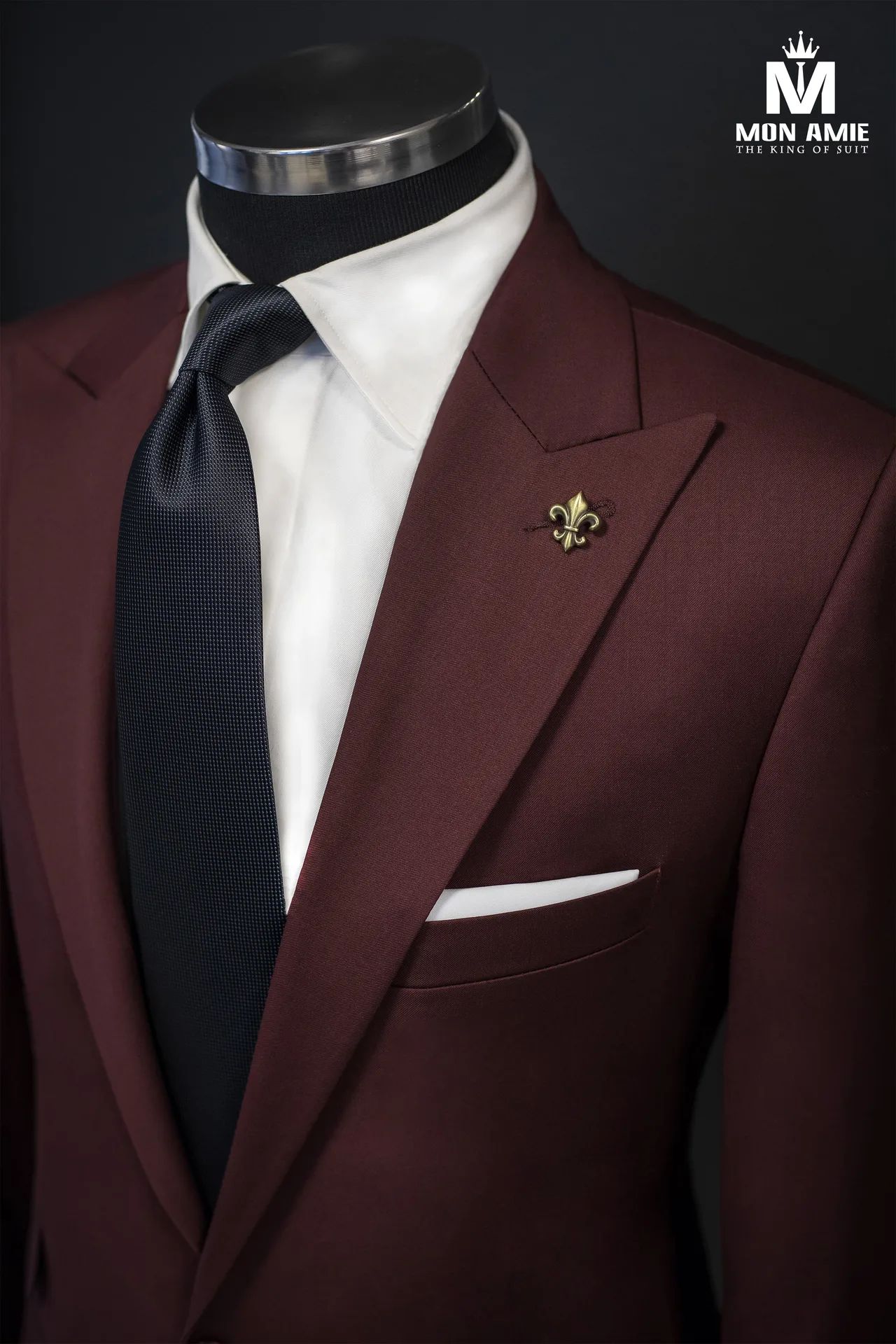
3. Peak lapel: the pointed lapel, a stance of formality
The peak lapel has a pointed tip angled up toward the shoulder, drawing the viewer's eye upward, making the shoulders look broader and the figure slim and long. It is the style of weddings, evening parties and galas, and of those who want presence from the very first glance.
It suits a lean or shorter build, because the upward line makes the body feel taller. Note: the peak is more elaborate, so wearing it to work every day in a casual environment may be a little much. For a groom, the peak is often the right choice; see Mon Amie's Groom Styling service, where stylists advise on the lapel style together with the wedding concept.
4. Wide peak on a double-breasted jacket: classic, authoritative
A double-breasted jacket almost always goes with a peak lapel, with a lapel width of about 10 cm or more. The wide lapel and overlapping fronts create a suit with weight, suiting tall men with broad shoulders and a full chest; it fits businessmen who need an imposing image or those who love classic style.
One thing to remember: a double-breasted jacket should be buttoned when standing and unbuttoned when sitting, and the fit must be exact, because any excess fabric makes the whole suit look baggy. Shorter men or those with a large belly should think twice, because double-breasted makes the torso look wider. Choose an 8 cm tie and a shirt with a wing collar or a wide-spread collar to balance the lapel.
5. Shawl lapel: the language of the tuxedo
The shawl lapel is a single continuous soft curve with no notch, usually faced in satin or silk, looking like a shawl wrapped around the neck. It is the lapel of the tuxedo and the smoking jacket, for black-tie evenings, evening weddings and galas. This lapel is gentle, elegant and slightly nostalgic.
Worth noting: the shawl hardly suits an everyday work suit; it needs a bow tie, a wing-collar or plain-collar shirt, and a white pocket square to complete the evening look. The unbroken line with no notch gives the jacket body a slender, neat look, but for that very reason it only truly works when the entire outfit follows the evening spirit. To learn more about tuxedos, see made-to-measure tuxedo; the tuxedo finishing surcharge is VND 2,500,000 per suit, added on top of the fabric price.
6. Rounded lapel: softness for heavy wool and tweed
The rounded lapel is a notch style with the corners curved rather than cut square, giving a soft, warm look. It goes with thick fabrics such as heavy wool, tweed and flannel, where sharp lines can feel stiff. A person with an angular face will find the rounded lapel softens the face.
It is also an easy choice for middle-aged men who like a gentle, dignified look: combine an 8–9 cm rounded lapel with a regular cut, and avoid a lapel that is too narrow. A heavy wool suit is an investment for the cold season; read more in men's wool suit: when to have one made and how to choose the cloth. Note: the rounded lapel suits fabrics in subdued colors; on shiny fabric it loses its advantage.

7. Contrast-fabric lapel: satin, velvet or colored piping
This is not really a lapel shape but a way of treating the material: the lapel is made from a fabric different from the jacket body, usually satin, silk or velvet, or the same material in a different color. The lapel shape underneath can be peak or shawl; the contrast fabric is an additional layer of decoration. The result is a suit that stands out under the lights and photographs very well.
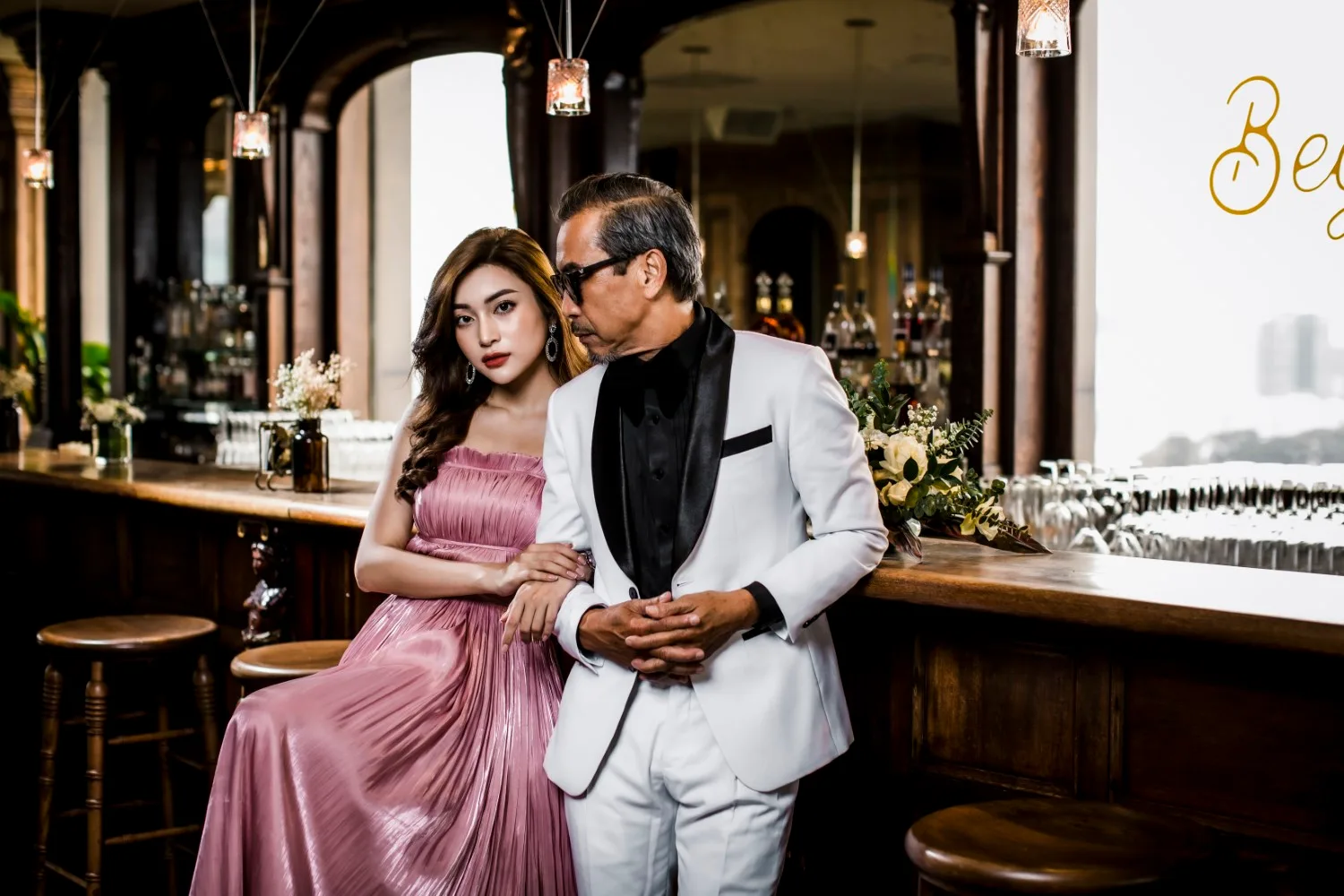
It suits weddings, evening parties and events that need impact. The rule: have only one accent. If the lapel already contrasts, keep the tie and pocket square simple; a black velvet lapel on a white jacket with a black shirt is a neat way to do it, with intention. Pairing a velvet lapel with a heavy wool jacket needs a fabric with just enough drape, because a stiff lapel will puff up.
Quick summary table
| Lapel style | Suits | Worth remembering |
|---|---|---|
| 1. Standard notch | Office, interviews, every day | 8–9 cm width, 7–8 cm tie |
| 2. Slim notch | Younger men, small frames, Korean style | About 6 cm width; avoid with broad shoulders |
| 3. Peak | Weddings, evening events, lean builds | More elaborate, less suited to casual work |
| 4. Double-breasted peak | Tall men, broad shoulders, businessmen | Buttoned standing, unbuttoned seated; the jacket must fit exactly |
| 5. Shawl | Tuxedo, black tie | Needs a bow tie and pocket square; not for work |
| 6. Rounded lapel | Heavy wool, tweed, middle-aged men | Suits fabrics in subdued colors |
| 7. Contrast-fabric lapel | Weddings, events | Only one accent, simple accessories |
Tips from Mon Amie's master tailors
- Choose the lapel width by your shoulders and chest, not by fashion. A wide lapel on narrow shoulders looks like a borrowed jacket; a narrow lapel on broad shoulders makes the jacket body puff out.
- Lapel width, tie width and shirt collar go together. A wide lapel takes a wide tie and a medium-spread collar, and vice versa.
- Remember the flower buttonhole on the left lapel. That is where a pin or flower goes; see the black suit with a lapel flower for a picture of it.
- Do the baste fitting by buttoning up and raising your arms. The lapel should lie flat, not warp; Mon Amie does the baste fitting and adjusts until it fits, and you should say clearly how it feels to you.
- For a three-piece suit with a collared waistcoat, keep the outer jacket's lapel simple. A collared waistcoat has its own lapel too; see men's waistcoats with and without a collar.
Frequently asked questions
Which lapel should a young man's suit have?
A slim notch of about 6–7 cm, a moderately fitted body and natural shoulders. If you want to stand out more for an event, choose a medium-width peak. Avoid very thin widths if you want the suit to last.
Which lapel should a middle-aged man's suit have?
A standard 8–9 cm notch or a rounded lapel are the two reliable choices. If you have a larger belly, avoid a wide-lapel double-breasted jacket; choose a single-breasted, two-button jacket long enough to cover the seat.
How do Korean-style men's suits differ?
They typically have a slim notch lapel, soft unpadded shoulders, a fitted body, and fitted trousers with a short hem that shows the ankle. This cut suits young men with a lean build; fuller builds need the proportions adjusted for comfort.
How wide should a men's suit lapel be?
About 8–9 cm for an average build; 6 cm for a slim lapel; 10 cm or more for a wide lapel. More important than the number is the proportion to your shoulders, chest and tie width. The showroom will measure you and make a recommendation when you visit.
To choose the right lapel for your build and the occasion, book a measuring appointment so a stylist can do a baste fitting with you, or see the bespoke tailoring service with more than 30 measurements and fittings adjusted until it fits. The lapel is a small thing, but it is the detail people look at first.