
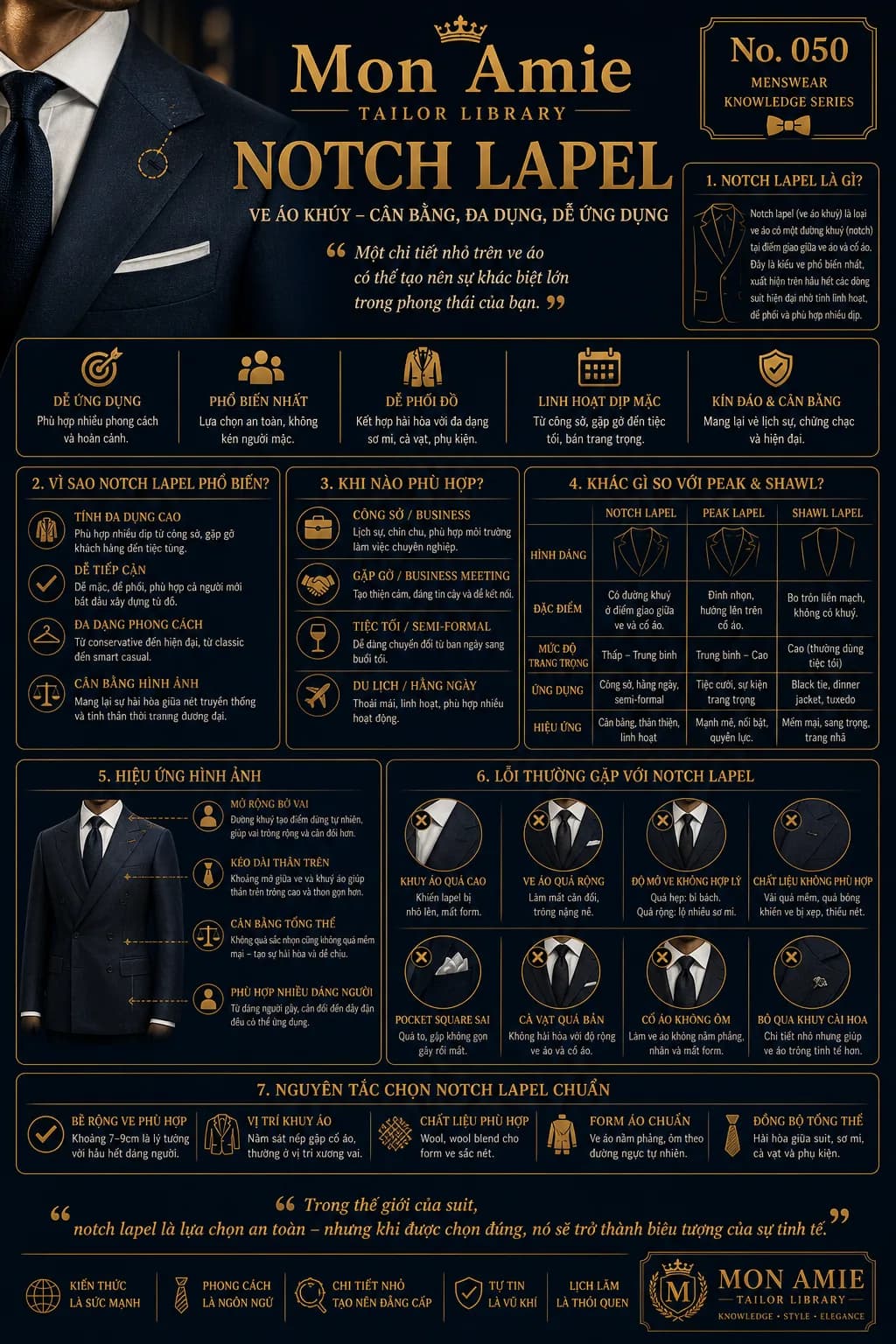
A notch lapel is a lapel with a step — a V-shaped cut — at the point where the lapel meets the collar. It is the most common lapel in the world of suiting, found on nearly every modern suit thanks to its versatility, ease of combination and suitability across occasions. A small detail on the lapel, yet one that can change a great deal in how a man carries himself.
What a notch lapel is
Within the structure of a jacket, the lapel is the panel of cloth folded back across the chest and joined to the collar. On a notch lapel, the two meet in an open step — usually cut at around 75 to 90 degrees — reading like a neat notch carved at collarbone height. That step gives the notch lapel its discreet, composed and contemporary character, quite unlike the sharpness of a peak lapel or the seamless softness of a shawl.
Five qualities make the notch lapel the default choice for most gentlemen:
- Easy to apply: appropriate across styles and settings.
- The most common: a safe choice that suits everyone.
- Easy to combine: harmonises with a wide range of shirts, ties and accessories.
- Flexible in occasion: from the office and meetings to dinners and semi-formal events.
- Discreet and balanced: correct and composed, yet still modern.
Why the notch lapel is so widespread
Its popularity is no accident. It rests on four core strengths:
- Genuine versatility: right for many occasions, from the office and client meetings to receptions.
- Approachability: easy to wear, easy to combine, suitable for anyone beginning to build a wardrobe. If you are commissioning your first suit, a notch lapel is almost always the right answer.
- Stylistic range: from conservative to modern, from classic to smart casual — the same lapel takes on a different spirit with a change of cloth and styling.
- Visual balance: a comfortable meeting point between tradition and contemporary taste.
When a notch lapel is the right choice
- Office and business: correct and composed, right for a professional environment.
- Meetings with partners: approachable and credible, easy to connect in — never as declarative as a peak lapel.
- Dinners and semi-formal events: moves from day to evening with nothing more than a change of tie or the addition of a pocket square.
- Travel and everyday wear: comfortable, flexible, suited to a full day of activity.
For black tie, on the other hand, or a wedding where you want maximum presence, consider a peak or shawl lapel instead.
Notch, peak and shawl compared
- Character: a notch has a step where lapel meets collar; a peak rises to a point directed toward the shoulder; a shawl curves in one unbroken line, with no step at all.
- Formality: notch is low to moderate; peak moderate to high; shawl high, generally reserved for evening.
- Application: notch for the office, everyday wear and semi-formal occasions; peak for weddings and formal events; shawl for black tie, dinner jackets and tuxedos.
- Visual effect: notch is balanced, approachable and flexible; peak is strong, striking and authoritative; shawl is soft, refined and elegant.
What a notch lapel does visually
A step placed correctly produces subtle effects:
- It widens the shoulders: the notch creates a natural stopping point that makes the shoulders read broader and better balanced.
- It lengthens the torso: the opening between lapel and notch makes the upper body look taller and leaner.
- It balances the whole: neither too sharp nor too soft, it settles into an easy harmony.
- It suits many builds: from slim to balanced to fuller frames.
Common mistakes with notch lapels
- A notch set too high: the lapel lifts and the shape is lost.
- A lapel cut too wide: the proportions go, and the jacket reads heavy.
- The wrong lapel opening: too narrow feels closed in, too wide shows too much shirt.
- Unsuitable cloth: fabric that is too soft or too lustrous leaves the lapel flat and characterless.
- The wrong pocket square: too large or untidily folded, and it distracts.
- A tie that is too wide: out of proportion with the lapel width and the collar.
- A shirt collar that does not sit close: the lapel then cannot lie flat and puckers.
- Skipping the lapel buttonhole: a small detail, but it makes the lapel look considerably finer.
The rules for a correct notch lapel
- Appropriate width: around 7–9cm is ideal for most builds, and it should relate to the width of your ties.
- Notch position: sitting close to the collar's roll line, typically level with the collarbone.
- The right cloth: wool or a wool blend holds the shape and gives a crisp lapel edge.
- Correct jacket shape: the lapel must lie flat and follow the natural line of the chest — the clearest sign of a well-fitted suit.
- Overall coherence: harmony between suit, shirt, tie and accessories.
A word from Mon Amie's artisans
When you commission with Mon Amie, our artisans balance the lapel width against each client's shoulder and chest proportions — broader shoulders take a slightly wider lapel, a slighter frame keeps the lapel moderate so it is not overwhelmed. It is also worth trying the jacket with the exact shirt and tie you intend to wear, since how closely the shirt collar sits determines whether the lapel lies flat. A correct notch lapel does not draw attention by standing out; it does so by the sense that everything is where it should be.
In the world of suiting, the notch lapel is the safe choice — but chosen in the right proportion and the right cloth, it becomes a mark of refinement. If you would like a notch lapel suit cut for your own frame, we invite you to book an appointment with Mon Amie, or read about the tailoring process to understand how a properly made suit takes shape.