
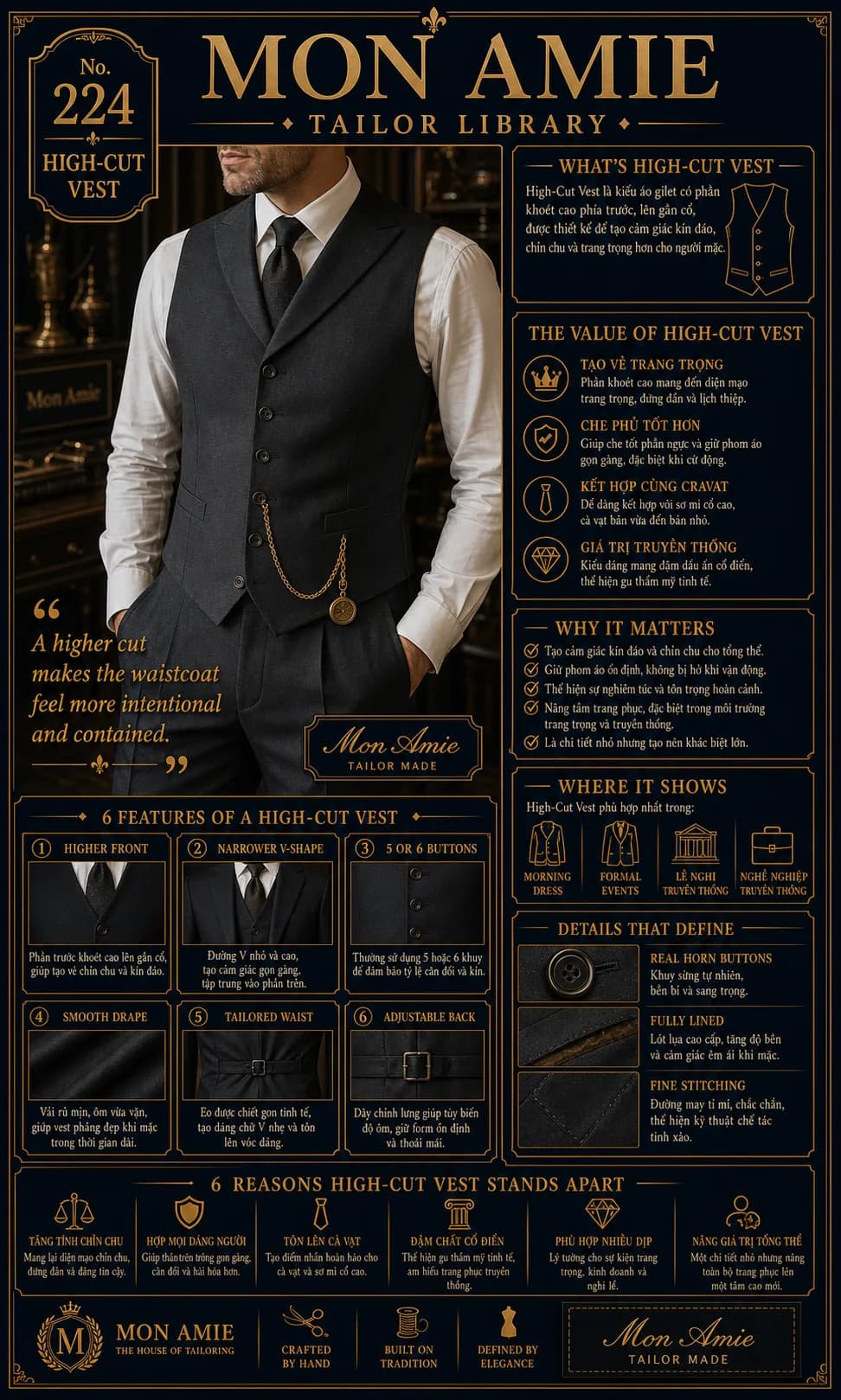
A high-cut vest is a waistcoat whose front opening sits high, close to the collar, giving the wearer a more discreet, composed and formal presence. Where a low-cut vest hands the stage to the necktie, the high-cut vest takes the lead role itself: the cloth covers nearly the whole chest, creating one unbroken, disciplined block. That high opening makes the waistcoat look deliberate and compact — and that is the spirit of the style.
What a high-cut vest is, and why it matters
Four qualities give the high-cut waistcoat its appeal:
- A formal presence: the raised opening lends a dignified, upright and courteous look — ideal if you want to project seriousness and reliability.
- Better coverage: it covers the chest well and keeps the silhouette neat as you move, so the shirt beneath rarely shows creases or pulls out of place.
- Perfect with a necktie: it pairs easily with a high shirt collar and a medium to narrow tie; the high opening hugs the base of the collar for a seamless whole.
- A traditional value: the cut is unmistakably classic, signalling refined taste and a real understanding of clothing.
Why does this matter? A high-cut waistcoat brings discretion and polish to the whole outfit, holds its shape without gaping when you move, shows respect for the occasion, and elevates your clothing in formal, traditional settings. A small detail that makes a large difference.
Six marks of a well-made high-cut vest
- Higher front: the front is cut high toward the collar, creating a composed, discreet look.
- Narrower V-shape: a small, high V draws the eye upward to the tie knot and collar and keeps the whole thing trim.
- 5 or 6 buttons: five or six buttons are usual, keeping the proportions balanced and the front properly closed.
- Smooth drape: cloth that falls softly and fits closely, so the waistcoat stays flat over a long day.
- Tailored waist: a subtly suppressed waist creates a gentle V line and flatters the figure.
- Adjustable back: a back strap lets you fine-tune the fit, holding the shape while keeping you comfortable.
When to wear a high-cut waistcoat
The high-cut vest is at its best in four settings:
- Morning dress: the traditional daytime formal ensemble, where the high-cut waistcoat is the standard.
- Formal events: from award ceremonies to state dinners.
- Traditional ceremonies: classically formal weddings and solemn occasions.
- Traditional professions: law, banking, senior management — settings that prize a correct, trustworthy image.
In a hot climate, a high-cut waistcoat covers more of the chest, so favour a light, breathable wool to stay comfortable all day.
Six reasons a high-cut vest makes the difference
- Greater polish: it lends an upright, trustworthy appearance.
- Flattering on any build: it makes the upper body look neater and better proportioned.
- It frames the tie: the perfect setting for a necktie and a high collar — less is shown, and what shows counts for more.
- Distinctly classic: it signals refined taste and knowledge of traditional dress.
- Suited to many occasions: ideal for formal, business and ceremonial wear.
- It lifts the whole: a small detail that raises the entire outfit a level.
In the making, three details still define quality: natural horn buttons for durability and luxury, fine silk lining for strength and comfort, and meticulous stitching that shows genuine craft.
A word from Mon Amie's artisans
For a Mon Amie tailor, the high-cut waistcoat is an exercise in restraint: it must cover without looking heavy, close without feeling stifling. The secret lies in the waist suppression and the drape of the cloth — get it right and the garment reads discreet yet graceful; get it wrong and it becomes a stiff breastplate. We fit the shape on the client himself and guarantee alterations until that high V sits exactly at the base of your shirt collar.
If you work in a formal environment or are preparing for a traditional ceremony, you are welcome to book an appointment at one of Mon Amie's five showrooms, or call 0888.111.118. See our pricing — full suits from VND 4.8 million, up to Canonico, Holland & Sherry, Dormeuil and Scabal cloths.