
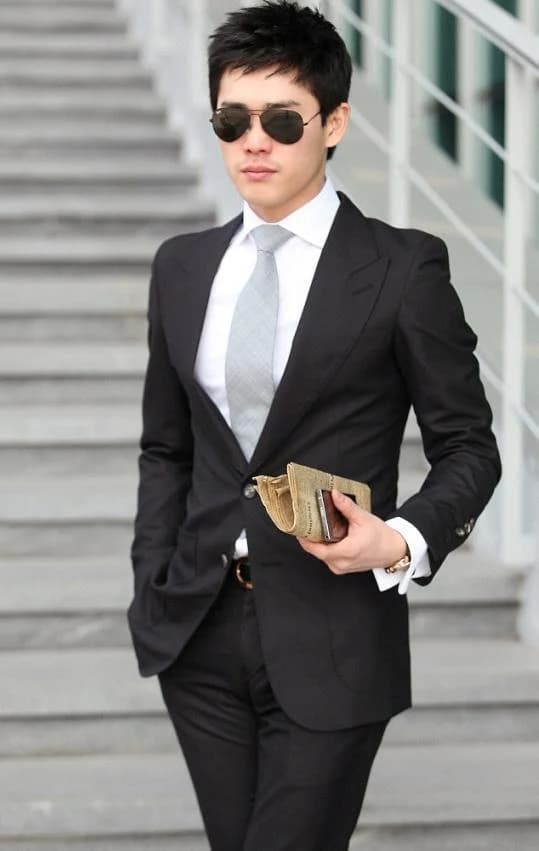
Standing in front of a rack of twelve suits, a stranger sees only "men's suits". A master tailor sees twelve different stories, and can read them in a few seconds from three details: the button stance, the lapel and the cut. This article maps men's suit styles into twelve groups, each with a quick way to recognise it and the build it suits most.
The short answer
Men's suit styles fall into three groups: button stance (one-button, two-button, three-button, double-breasted), lapel (notch, peak, shawl) and garment type by occasion (three-piece, tuxedo, blazer, tailcoat, unstructured jacket). To recognise one quickly: count the buttons, look at the lapel, and ask what occasion the jacket is for.
Group 1: Men's suit styles by button stance
1. One-button suit
A single button, a clean cut, an open chest. It suits slim builds and a modern look, and tends to feel tight on a fuller build. How to recognise it: one button only, at the waist.
2. Two-button suit
The most common style, with a balanced V-shaped lapel, suiting almost every build and every office occasion. How to recognise it: two buttons stacked vertically; fasten only the top one.
3. Three-button suit
More classic, with a higher-cut front, suiting a man with a moderately long torso. Shorter men should be careful, because three buttons make the torso look shorter. How to recognise it: three buttons in a column, usually with a gently rolled lapel.
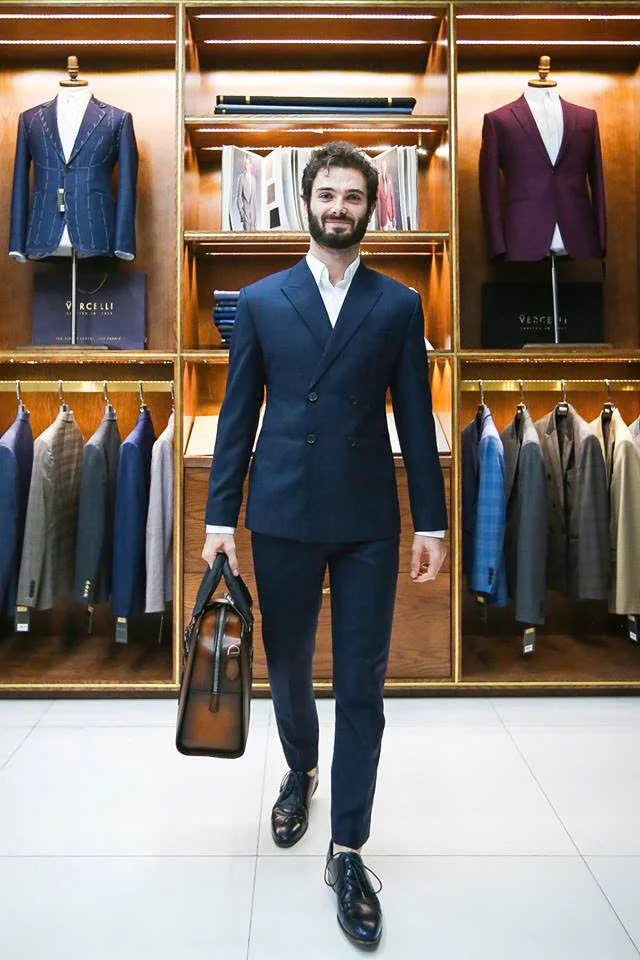
4. Double-breasted suit
Two parallel rows of buttons and front panels that overlap, giving an air of authority and a fuller chest. It suits tall men, broad shoulders or a balanced build. A man with a larger belly needs careful measuring, because two rows of buttons can make the belly more visible. Details on how to identify them are in the article men's 6-button jackets: 6x2, 6x1, 4x2.
Group 2: Telling them apart by lapel
5. Notch lapel (V-shaped lapel)
The lapel has a V-shaped notch where the collar meets the lapel. This is the most common lapel on business suits: understated, and safe for both interviews and important meetings.
6. Peak lapel (pointed lapel)
The tip of the lapel rises and points outward. A peak lapel makes the shoulders look broader and the figure taller, and usually comes with double-breasted jackets and formal suits.
7. Shawl lapel (rounded lapel)
A continuous curved lapel with no notch. Commonly seen on tuxedos, often faced in satin. Soft, elegant and slightly nostalgic.
Group 3: Telling them apart by garment type and occasion
8. Three-piece suit (with waistcoat)
Jacket, waistcoat and trousers in the same cloth. It suits an upright build and looks more formal than a two-piece suit. The waistcoat hides the belt and keeps the waistline clean, which suits a man with a slight belly if it is cut correctly.
9. Tuxedo
An evening formalwear jacket, with satin or silk lapels, covered buttons and trousers with a silk stripe. The quickest way to recognise one is the glossy lapel, in a different material from the body of the jacket. It is for evening parties, weddings and formal events.
10. Blazer
A standalone jacket, not matched to the trousers. The cloth is softer, often with patch pockets and metal buttons. It suits smart-casual dressing, outings and relaxed workplaces. You can see how to choose one in how to choose a men's blazer.
11. Tailcoat (including the cutaway)
Cut straight across the waist at the front, with the back extending into two "tails". It is for very formal ceremonial occasions such as traditional wedding receptions and awards ceremonies. Rarely seen, but highly striking.
12. Unstructured jacket (no shoulder padding)
No firm canvas, no thick shoulder padding, as light as a cardigan. Comfortable in a hot climate and suited to an airy, modern style, but less "commanding" than a structured jacket.
Recognise a suit style in ten seconds
When you see a suit jacket, you can read it quickly in five steps, with no tools:
- Count the buttons and the rows. One row or two? One, two or three buttons? This is the first and clearest piece of information.
- Look at the lapel. Is there a V-shaped notch (notch), a pointed tip rising upward (peak) or a continuous curve (shawl)?
- Look at the lapel material. A lapel faced in satin or silk is almost certainly a tuxedo or an evening jacket.
- Look at the pockets and the length. Patch pockets and a shorter body usually mean a blazer; flapped pockets and a body that covers the seat mean a suit.
- Look at the shoulders and the stiffness. Straight, padded shoulders mean a structured jacket; soft shoulders that fall naturally mean an unpadded one.
Run through all five steps and you can tell apart most men's suit styles, in a shop or on the street.
Quick recognition table
| Style | How to recognise it | Builds it suits | Occasions |
|---|---|---|---|
| One-button | One button at the waist | Slim to medium builds | Modern office, parties |
| Two-button | Two buttons in a column | Most builds | Office, meetings, interviews |
| Three-button | Three buttons in a column | Long torsos | Classic, office |
| Double-breasted | Two rows of buttons, overlapping front | Tall, broad shoulders | Events, leadership |
| Notch lapel | V-shaped notch | Every build | All-purpose |
| Peak lapel | Pointed tip rising upward | Men who need extra shoulder | Formal |
| Shawl lapel | Continuous curved lapel | Men who like a softer look | Tuxedo, evening events |
| Three-piece | An extra waistcoat | Upright builds | Formal |
| Tuxedo | Satin-faced lapel | Most builds | Evening events, weddings |
| Blazer | Standalone jacket, soft cloth | Every build | Smart-casual |
| Tailcoat | Long tails at the back | Tall men | Very formal ceremonies |
| Unstructured | Soft, natural shoulder | Men who like a lighter feel | Everyday, hot season |
Tips from Mon Amie's master tailors on choosing a style
- First-time suit wearers: choose two buttons, a notch lapel, in navy or charcoal grey. This is the combination least likely to go wrong.
- Want to stand out at an event: a peak lapel or double-breasted, but don't pick several prominent details at once.
- Shorter men: favour one or two buttons and a moderate jacket length; avoid a jacket that is too long.
- Fuller builds: choose a single-breasted style, a medium lapel and cloth with good drape.
- A common mistake: choosing a style from a sample photo and only then thinking about your own build. Do it the other way round: know your build, then choose the style.
At the showroom, you can try each style on in person, or design one beforehand with the online suit design tool and bring it to discuss with the master tailor. For a broader overview still, the article types of suits for men explains further how to group them by purpose.
Frequently asked questions
Which men's suit style is the most flattering?
There is no single most flattering style for everyone, but a two-button suit with a notch lapel is the most balanced and versatile. The right style is the one that suits your build and your occasion.
What is the Korean-style men's suit?
Usually a lightly fitted cut with a compact shoulder and slightly short sleeves and trousers, in light or pastel colours. This style is close to slim fit and suits slim, young men.
Which men's suit style suits a heavier man?
A single-breasted, two-button suit with a medium lapel, cloth with good drape and a moderately close cut. Avoid a jacket that is too short or too tight.
What men's suit style is good for everyday office wear?
Two buttons, a notch lapel, navy or grey, in an easy-care wool blend. This is the style most suitable for an office environment.
Conclusion
Knowing men's suit styles means you can already read half the language of the suit wearer. The rest is choosing a style that suits your build, and that is something to do together with the person taking your measurements. You can see more samples in the lookbook or visit the bespoke tailoring service so the master tailor can advise you directly on your own frame.