
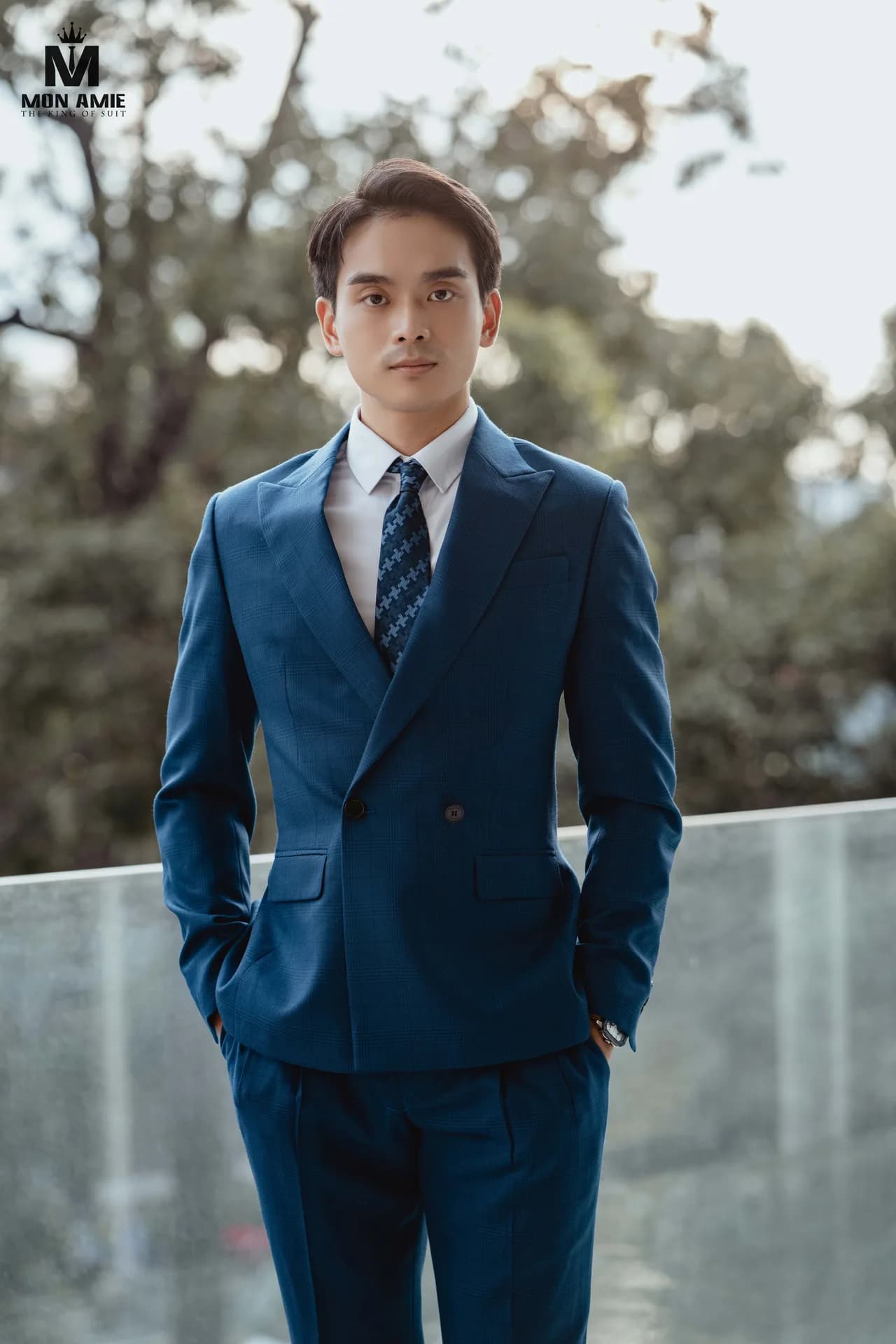
Pick up a suit jacket, ignore the label, and turn it inside out. Tailors look at the inside first, because that is where craftsmanship cannot hide: the interlining, the lining, the stitching, the way the edges are bound. A suit that is carefully finished inside is usually handsome on the outside too. This article gives you 10 details for recognising a premium men's suit in store, using only your eyes and your hands.
Quick answer
A premium men's suit gives itself away in small details: a soft chest canvas rather than stiff glued interlining, lapels that roll naturally, a smoothly set shoulder and sleeve, patterns that match across the seams, a smooth lining finished neatly inside, firm buttons and even stitching. You don't need the label, only the 10 checks below.
10 details that identify a premium men's suit
Each detail comes with a simple test. Not every detail appears at every price level, but the more good signs a suit has, the more it is worth.
1. Chest interlining (canvas)
The interlining is a stiff layer hidden between the outer cloth and the lining that holds the shape of the chest. Squeeze the chest lightly. If the outer cloth and the interlining are bonded into one stiff block, it is fused (glued) interlining. If the cloth slides gently over the interlining, feels soft and returns flat, that is the sign of canvas construction, an interlining that gives a soft yet durable shape.
2. Lapel
Feel the lapel and look at it from the side. A lapel that rolls gently, with a soft fold line, is a sign of good construction. A flat, pressed, stiff lapel points to limited construction.
3. Shoulder and sleeve head
Look at the seam where the sleeve joins the shoulder. The sleeve head should be evenly rounded, with no rippling and no pulling wrinkles. A smooth sleeve head shows the sleeve has been set with care, and your arm will move freely.
4. Pattern matching
With striped or checked cloth, look at the seams: shoulder, pockets, centre back. Patterns that line up continuously show that the tailor spent extra cloth and labour. Patterns that don't match mean the cutting was done to save cloth.
5. Cloth quality and recovery
Take a corner of the jacket, squeeze it firmly in your palm for a few seconds, then let go. Good wool springs back flat and leaves few creases. Poor cloth holds its wrinkles for a long time and feels coarse.
6. Lining
Open the jacket and look at the lining. A premium lining is smooth, drapes well, breathes, and has neat, closed edges. A lining that is puckered, coarse or larger than the body of the jacket is a sign of rushed work.
7. Buttons
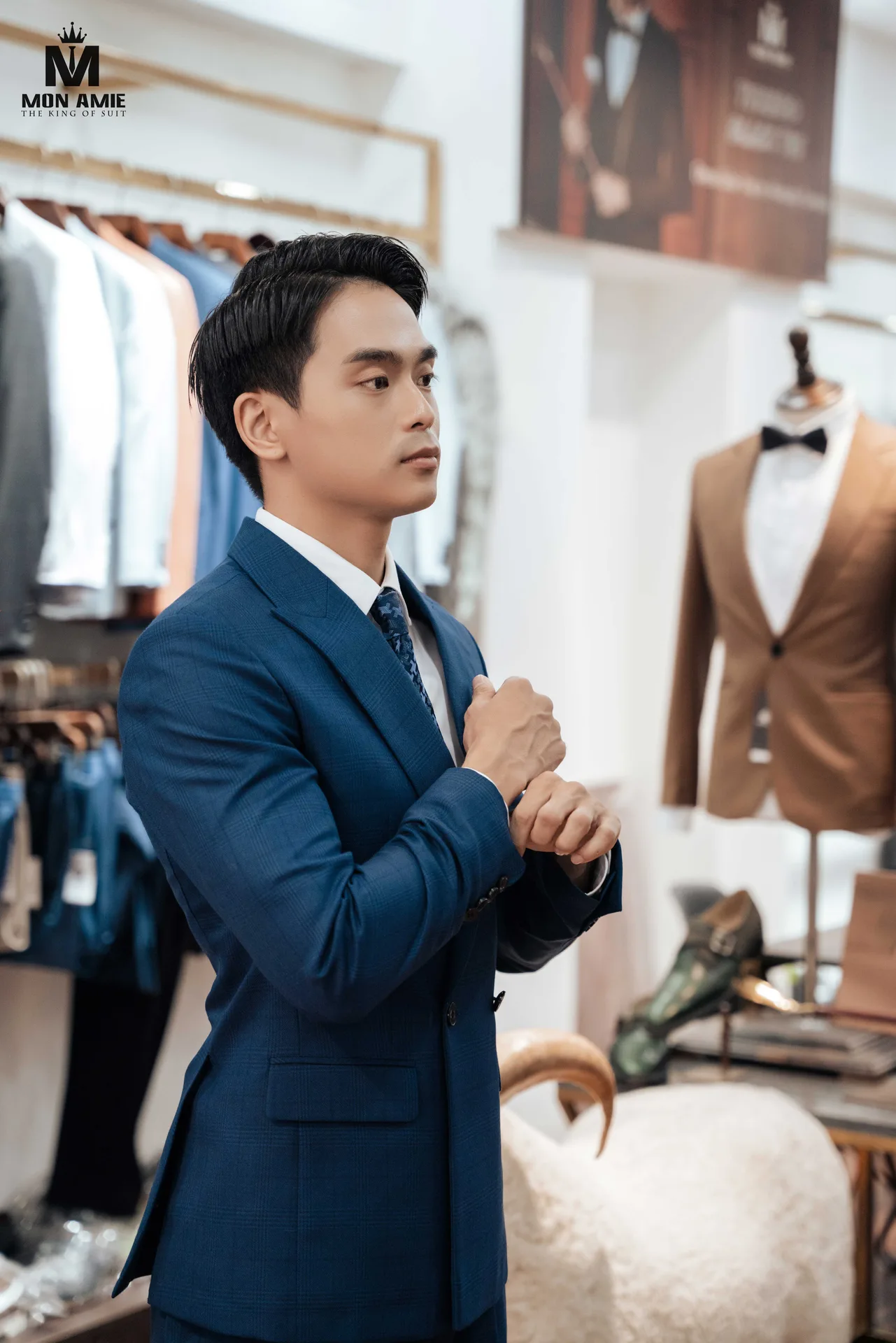
Horn buttons, or buttons of natural material that are weighty in the hand and have their own grain, give a premium feel. Plastic buttons that are overly shiny and weightless are usually a sign of cutting corners. Give a button a gentle tug: the shank should be firm, with a wrapped length of thread that creates a gap so the button doesn't press against the cloth.
8. Cuff and front buttonholes
Working cuffs (sleeve buttonholes that actually open, known as functional buttonholes) are a detail often seen on high-end made-to-measure suits. Buttonholes with even thread edging, dense stitches and no fraying are a sign of good workmanship. Not every suit has working cuffs, so treat this as a plus rather than a requirement.
9. Seams and stitch density
Look closely at the seams inside and out: straight, even, with no skipped stitches. A denser stitch count is usually stronger. Wavering seams, sparse stitches or loose threads point to haste.
10. Pockets and trouser hem
Welt pockets should be straight, and the pocket mouth should lie flat without gaping. On a premium suit, the trouser hem is usually left long and cut to the wearer after fitting. This shows the suit has been looked after for each individual.
Why do these details decide how long a suit lasts?
These ten details are not just for admiring. They decide how long a suit lives. Canvas and soft interlining let the jacket bend with the body, so the chest doesn't bubble or delaminate after a few steam-cleans. A carefully set sleeve head and densely stitched seams withstand daily movement without splitting. Firmly sewn buttons don't fall off in the middle of a meeting. A breathable lining lets the jacket release sweat, keeps the wool dry and holds less odour.
In other words, the price of a premium men's suit lies largely in the parts you can't see. Two years later, when the suit still holds its shape beautifully, you will understand how much those small details made the difference.
Summary table of in-store tests
| Detail | How to test | Good sign | Sign to think twice about |
|---|---|---|---|
| Chest interlining | Squeeze the chest | Soft, layers slide slightly | Stiff, bonded into one block |
| Lapel | View from the side | Rolls softly and naturally | Flat, pressed |
| Sleeve head | Look at the shoulder seam | Round, smooth | Rippled, wrinkled |
| Pattern | Look at the seams | Matched, continuous | Misaligned, broken |
| Cloth recovery | Squeeze, then release | Springs flat | Holds wrinkles |
| Lining | Open the jacket and look inside | Smooth, neatly closed, breathable | Puckered, coarse, loose |
| Buttons | Give a gentle tug | Firm, with a thread shank | Light, loose |
| Buttonholes | Look at the stitching | Even, dense | Frayed, sparse |
| Seams | Look at the inside | Straight, even | Wavering, skipped stitches |
| Pockets, hem | Look at pocket mouths and hem | Flat, hem left long | Gaping, hem already finished |
Mistakes when judging a premium suit
- Looking only at the label. The mill's name tells you about the cloth, not about whether the jacket is well made.
- Only feeling the cloth. Smooth cloth is not enough; it is the interlining and the seams that create the shape.
- Forgetting to try it on. A suit with every good sign that doesn't fit across the shoulders is still a suit that doesn't fit. Use the 10 further checks in the article how a suit should fit.
- Judging by price alone. A high price doesn't guarantee good finishing; check with your eyes and hands.
A tip from Mon Amie's master tailors
Veteran tailors have a habit: when they pick up an unfamiliar suit, they don't read the label. They turn the sleeve over, feel the trouser hem and look at the underside of the collar. Those three places tell you almost everything about how the jacket was made.
A tip for when you go shopping: ask to see the inside of a sample jacket before trying it on. Someone who does good work will gladly point out every seam. If they dodge the request, that is a signal too.
At a Mon Amie showroom, feel free to turn the sample jackets inside out: we will explain every detail. You can see 12 more signs in the article what makes a well-made suit.
Frequently asked questions
How can you recognise a premium men's suit?
Look at the inside: a soft chest canvas, smooth lining, even seams, firm buttons and lapels that roll naturally. Good wool springs flat after being squeezed. These signs hold regardless of the label.
What makes a quality men's suit different from an ordinary one?
The difference is in the structure that holds the shape, the cloth, the smoothness of the shoulder and sleeve, matched patterns and finishing details such as buttons, buttonholes and lining. From the outside two suits can look alike, but the inside and the durability do not.
Do premium suits always have working cuffs?
Not necessarily. Working cuffs are a plus often seen on high-end made-to-measure suits, but fit, canvas and cloth matter more.
Does a premium suit need to be made to measure?
If you want a truly complete fit, it is advisable. Made-to-measure lets the shoulders, chest and waist be adjusted for each person, something a ready-to-wear suit struggles to achieve even when the cloth is excellent.
How do you check for canvas when buying?
Pinch the chest of the jacket between two fingers. If the outer layer slides gently over the interlining, feels soft and returns flat, that is a sign of good construction. If it feels stiff and bonded as one block, it may be fused interlining.
An invitation from Mon Amie
If you'd like to check for yourself, visit a Mon Amie showroom and turn the sample jackets inside out. The Bespoke tailoring service takes you through every step from choosing cloth in the fabric library to the baste fitting, so you can see with your own eyes how a suit is made. To learn how to judge the cloth on its own, read the article “how to recognise premium suit fabric” in the Handbook section.