
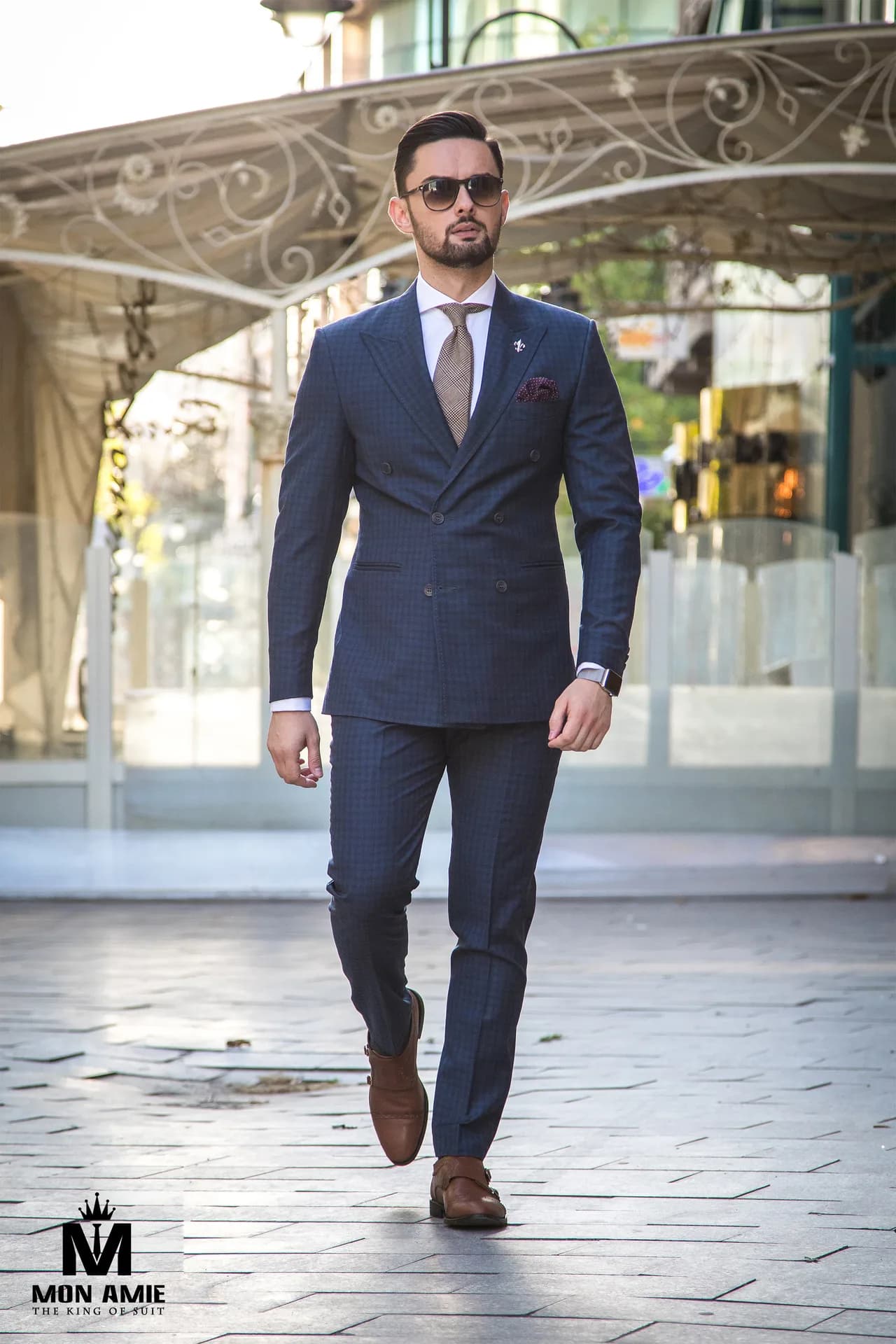
6x2. It looks like a multiplication sum, but it is how a tailor “reads” a double-breasted jacket: six buttons on the jacket, two of which actually fasten. The second number is where most clients get confused, because a six-button jacket looks like a great many buttons yet fastens fewer than you would expect. This article helps you read the notation on a 6-button double-breasted suit, know which buttons fasten and which are purely for show, and choose the style that suits your build.
Quick answer
A men’s six-button jacket is almost always double-breasted. The notation “6x2” means six buttons on the jacket, two that fasten; “6x1” is six buttons, one that fastens; “4x2” is four buttons, two that fasten. A button with no matching buttonhole is purely decorative.
How to read the notation: the first number, the second number
The convention is very simple:
- The first number is the total number of buttons visible on the front of the jacket.
- The second number is the number of buttons that actually fasten, meaning those with a buttonhole on the other flap to pass through.
The remaining buttons are called “show” buttons and only serve to balance the look: two symmetrical rows of buttons create an impression of a broad chest and strong shoulders. In Vietnamese the style is commonly called “vest hai hàng cúc” or “vest hai hàng khuy”. In English, brands and tailors call it double-breasted, so when speaking to a tailor, saying “double-breasted 6x2” is enough to be understood.
A quick check when trying a jacket on: look at the inner flap. A button with a real buttonhole fastens; a button without one is decorative. The top row of a six-button jacket sits high, close to the chest, and is usually decorative, helping the lapel sit close and clean.
Three common styles: 6x2, 6x1 and 4x2
| Style | Buttons | Fastened | How to recognise it | Suits |
|---|---|---|---|---|
| 6x2 | 6 | 2 | Closes firmly, closed chest, classic cut, clean skirt | Tall build, broad shoulders, those who want a formal look |
| 6x1 | 6 | 1 | Only one button fastened, more open lower front, long V, wide lapels | Tall, slim build; cold-season suits or evening events |
| 4x2 | 4 | 2 | Neater, balanced proportions, more modern | Average build, moderately short men, everyday work wear |
All three share one trait: the buttons are set low, around the waist, so the jacket lengthens the figure. The difference lies in how closed or open the body of the jacket is. The more buttons you fasten, the firmer and more formal the jacket; the fewer, the more relaxed and easygoing.
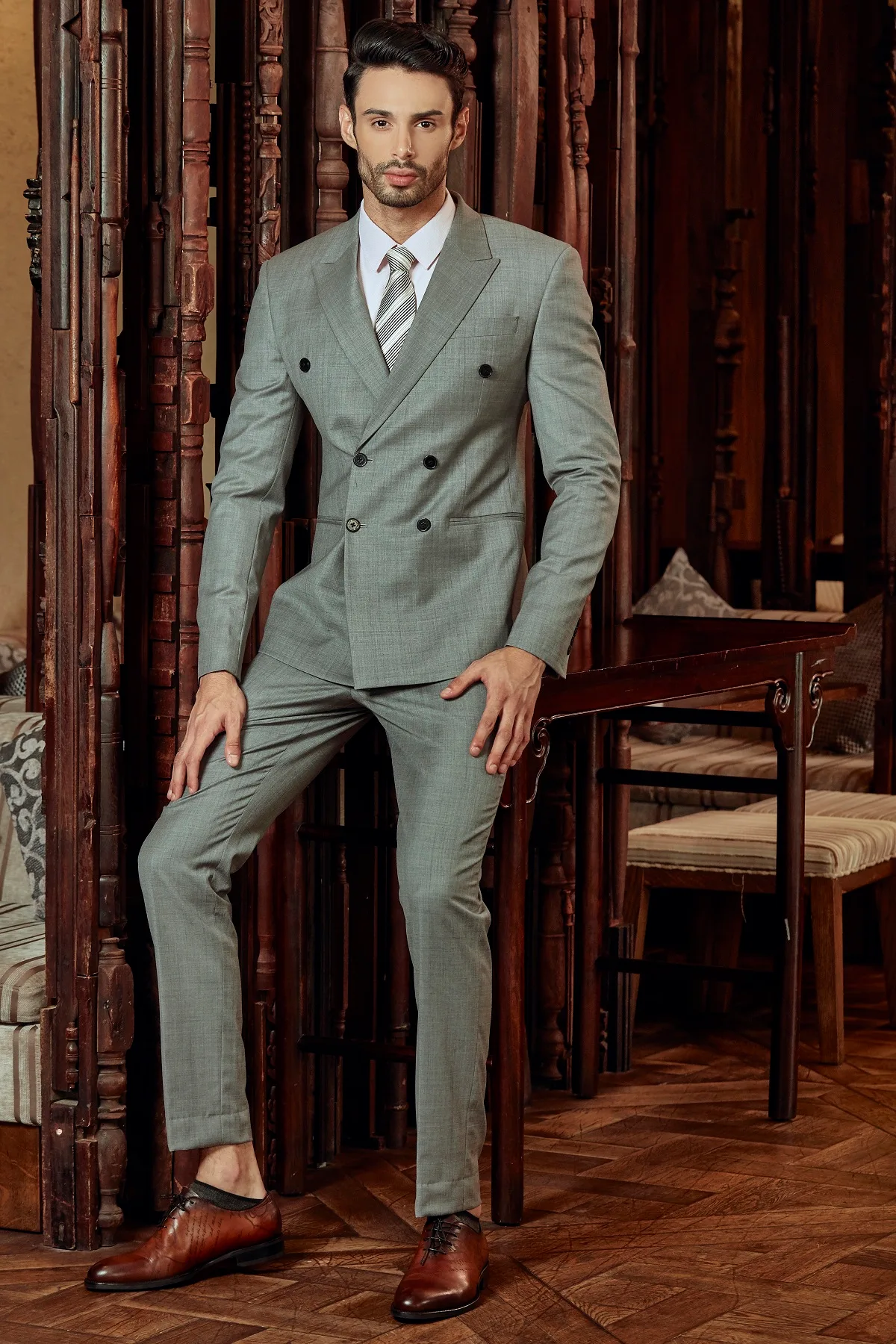
Peak lapels and the skirt: two details that make a double-breasted jacket
A double-breasted jacket is not only about buttons. These two details make up its look:
- Peak lapel. The tip points up toward the shoulder, drawing the eye vertically. Most traditional double-breasted jackets carry peak lapels, and shorter men should favour this style all the more.
- Square skirt, medium length. A skirt that is too short makes the jacket look like a short coat; too long and it feels heavy. The right length covers most of the seat and gives a natural drape.
A slightly wider lapel than on a single-breasted jacket is also a feature of the double-breasted, so don’t be surprised when your master tailor suggests an unusual lapel width.
Who suits a double-breasted jacket, and who doesn’t?
Tall and slim men
This group wears it most naturally: they have enough height to carry two rows of buttons, and shoulders that can hold the wide lapel. A 6x2 or 6x1 makes up for a slender frame with the visual thickness of the jacket’s chest.
Shorter men
Choose carefully, but there is no need to avoid it. Pick a 4x2 or 6x1 with a slightly shorter skirt, peak lapels and a moderately high fastening point so the legs look longer. Avoid a jacket that is too long, or too many small buttons packed tightly together.
Fuller builds
A double-breasted jacket still looks good if it is made to measure correctly. The body must be roomy enough that, when buttoned, the buttons are not strained and do not create an X-shaped crease across the stomach. Choose plain or tonal-stripe cloth in a deep colour, with peak lapels to lengthen the lines. For this build, this is where made-to-measure does the most good, because a ready-to-wear jacket is often tight across the chest when fastened.
Six-button groom’s suit: when to choose double-breasted for the wedding day?
A six-button groom’s suit, or double-breasted suit, evokes a classic, formal feel and a broad chest. It is especially suited to evening weddings, hotel venues or vintage concepts. Paired with a double-breasted waistcoat and a bow tie, the suit is strong enough to be the star of the wedding photos.
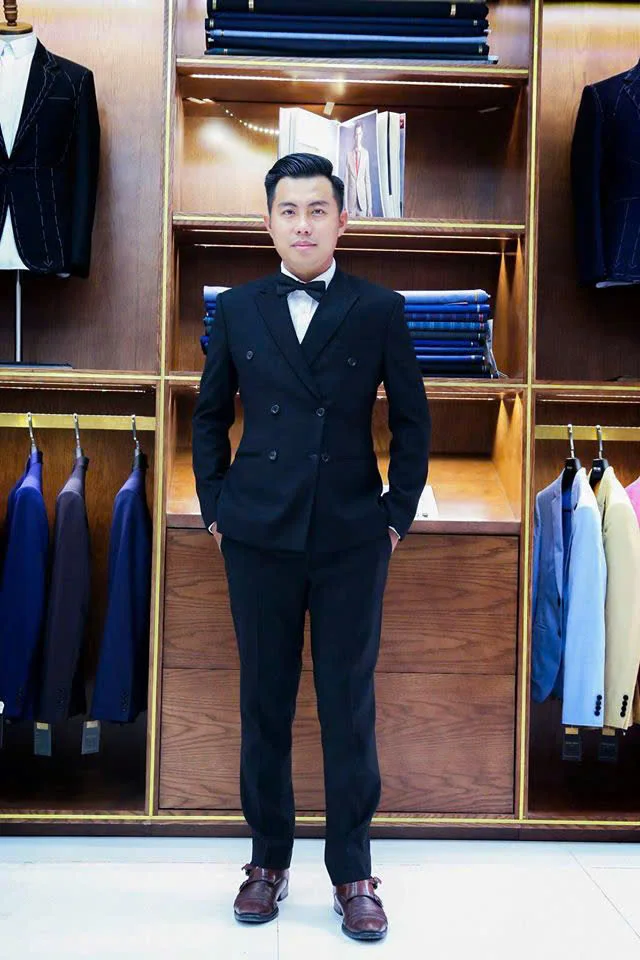
One thing to note: a double-breasted jacket demands a very precise fit across the shoulders and body. If you are considering this style for your wedding, start early so there are enough baste fittings. Mon Amie’s Groom Styling service schedules fittings backwards from the wedding date, and the article six-button double-breasted groom’s suit discusses this style in more depth.
Colours and cloths that suit a double-breasted jacket
Because a double-breasted jacket uses a lot of cloth across the chest, colour and cloth decide whether it looks elegant or heavy:
- Base colour: navy, charcoal, mid-grey and black are the four most dependable. Light or bright colours are better kept for special occasions.
- Patterns: tonal stripes, fine stripes or small checks keep the chest tidy to the eye. Large patterns make the jacket look bulkier.
- Cloth: wool with good drape, in a medium weight. Cloth that is too thin creases easily around the buttons; cloth that is too thick makes the jacket stiff and hot.
Common mistakes when wearing a 6-button jacket
- Fastening all the decorative buttons. Show buttons have no buttonhole; forcing them fastened ruins the seams and the drape.
- Buying a jacket that is too loose in the shoulders. Shoulders are not easily altered. Choose the jacket by the shoulders first and adjust the rest afterwards.
- Leaving the jacket open at the front when standing. A double-breasted jacket should always be fastened when standing; open it only when seated.
- Choosing cloth that is too thick or too shiny. A double-breasted jacket uses a lot of cloth across the chest, and thick cloth easily makes the wearer look heavy.
- Pairing it with trousers that are too wide. The trousers need to be moderately slim to balance the already “full” chest of the jacket.
Tips from Mon Amie’s master tailors
When fitting a double-breasted jacket, stand straight and let your arms hang naturally. The fronts should close flat, without curling or forming a horizontal crease at the waist. During the fitting, the master tailor will re-mark the button stance to suit your body; this is a detail ready-to-wear simply cannot offer. If you would like to know more about fastening single-breasted jackets, you can read the rules for buttoning a suit jacket.
Frequently asked questions
What is a double-breasted jacket?
It is a jacket with two parallel rows of buttons on the front, the two fronts overlapping. In English it is called double-breasted. There are usually 4 or 6 buttons, of which only some actually fasten.
How do 6x2 and 6x1 differ?
Both have six buttons, but the 6x2 fastens two and closes more firmly, while the 6x1 fastens only one, giving a more open front and a longer V. The 6x2 is more formal; the 6x1 is more relaxed and suits tall men.
Does a double-breasted suit need a waistcoat?
No. A double-breasted jacket is already substantial to the eye. A waistcoat underneath is mainly for classic concepts or very formal occasions such as weddings.
Does a six-button groom’s suit suit every build?
It does if it is made to measure correctly. Tall, slim men wear it easily; shorter or fuller men should choose peak lapels, a medium-length skirt and plain cloth to avoid looking heavy.
Final word
The six-button jacket is one of the hardest styles to wear but among the most rewarding: worn well, you carry a rare presence. If you are considering a 6-button double-breasted suit, book a fitting to try a baste and choose the button style that suits your build, or visit a showroom for bespoke tailoring where a master tailor can advise you in person.