
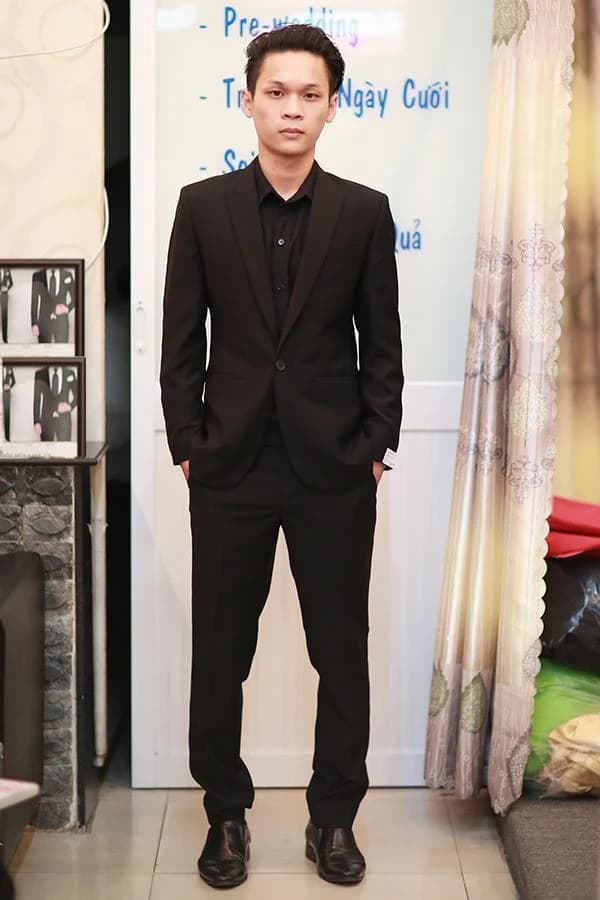
Walk among the morning commuters of a Japanese city and one thing is easy to notice: hardly anyone dresses showily, yet everyone looks remarkably put together. That is the spirit of the Japanese-style men's suit, something many Vietnamese men are looking for because they want to look polished without trying too hard.
The short answer
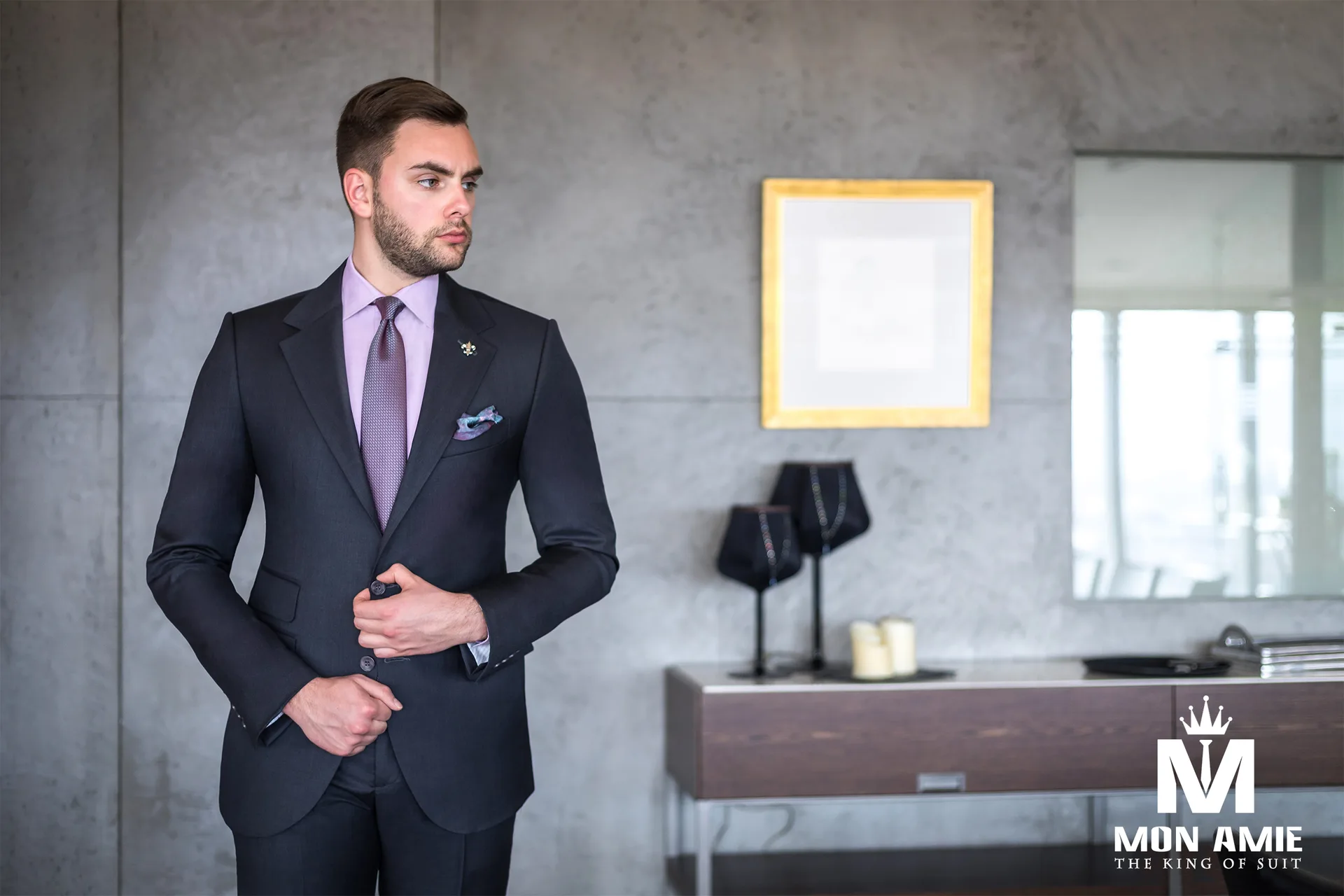
A Japanese-style men's suit has a natural soft shoulder, a lightly nipped waist, a body that fits well without clinging, and straight or slightly tapered trousers with a neat hem. Colours are muted — navy, grey, black — with very little pattern. Compared with the Korean fit, the Japanese style is more understated, more comfortable and less “fashion-led”.
Defining features of the Japanese-style men's suit
This cut has no official definition, but people in the trade usually recognise it by five points:
- Soft shoulder, little padding. The shoulder line falls naturally along the wearer's own shoulder rather than standing up at an angle. The sleeve head doesn't rise.
- Lightly nipped waist. The jacket follows the waist moderately: enough for a clean torso, but with no horizontal pulls across the stomach when buttoned.
- A well-fitting body of moderate length. Long enough to cover the seat, giving balanced proportions rather than being cut short for effect.
- Neat trousers. Straight or lightly tapered legs, the hem resting lightly on the top of the shoe or showing a little of the shoe's ankle, with no bunched folds.
- Muted colours, subtle pattern. Navy, grey, charcoal, black, occasionally a very fine stripe or a tone-on-tone weave.
Overall, the effect is minimalist, clean and hard-wearing. It suits people who wear a suit every day — not for photographs but for getting work done.
How the Japanese and Korean fits differ
| Criterion | Japanese fit | Korean fit |
|---|---|---|
| Shoulder | Soft, natural | Slim, narrow, slightly raised at the shoulder tip |
| Jacket body | Well-fitting, comfortable | Close-fitting, clearly nipped waist |
| Jacket length | Covers the seat | Usually shorter |
| Trousers | Straight or lightly tapered | Clearly tapered, short hem |
| Colour | Muted, little pattern | Varied, including light tones and pastels |
| Overall feeling | Minimalist, composed | Youthful, fashionable |
You can look more closely at the Korean fit in the article Korean-style suits: 6 defining features of the cut. If you like both, a good approach is to take the soft shoulder of the Japanese style and the trimness of the Korean, then let the master tailor balance them to your build.
Who the Japanese-style men's suit suits
- People of average or slight build: a well-fitting cut keeps the jacket from “swallowing” the wearer.
- People who wear a suit to work every day: comfortable when sitting for long periods, with no pulling across the back and underarms.
- People who like minimalism: muted colours, clean seams, no need for elaborate accessories.
- People who fear a suit that is too tight: the Japanese fit allows more freedom of movement than the Korean fit.
Think carefully if your shoulders slope noticeably or are uneven, because a soft shoulder has no padding to “disguise” the build.
Ordering made-to-measure in the Japanese spirit
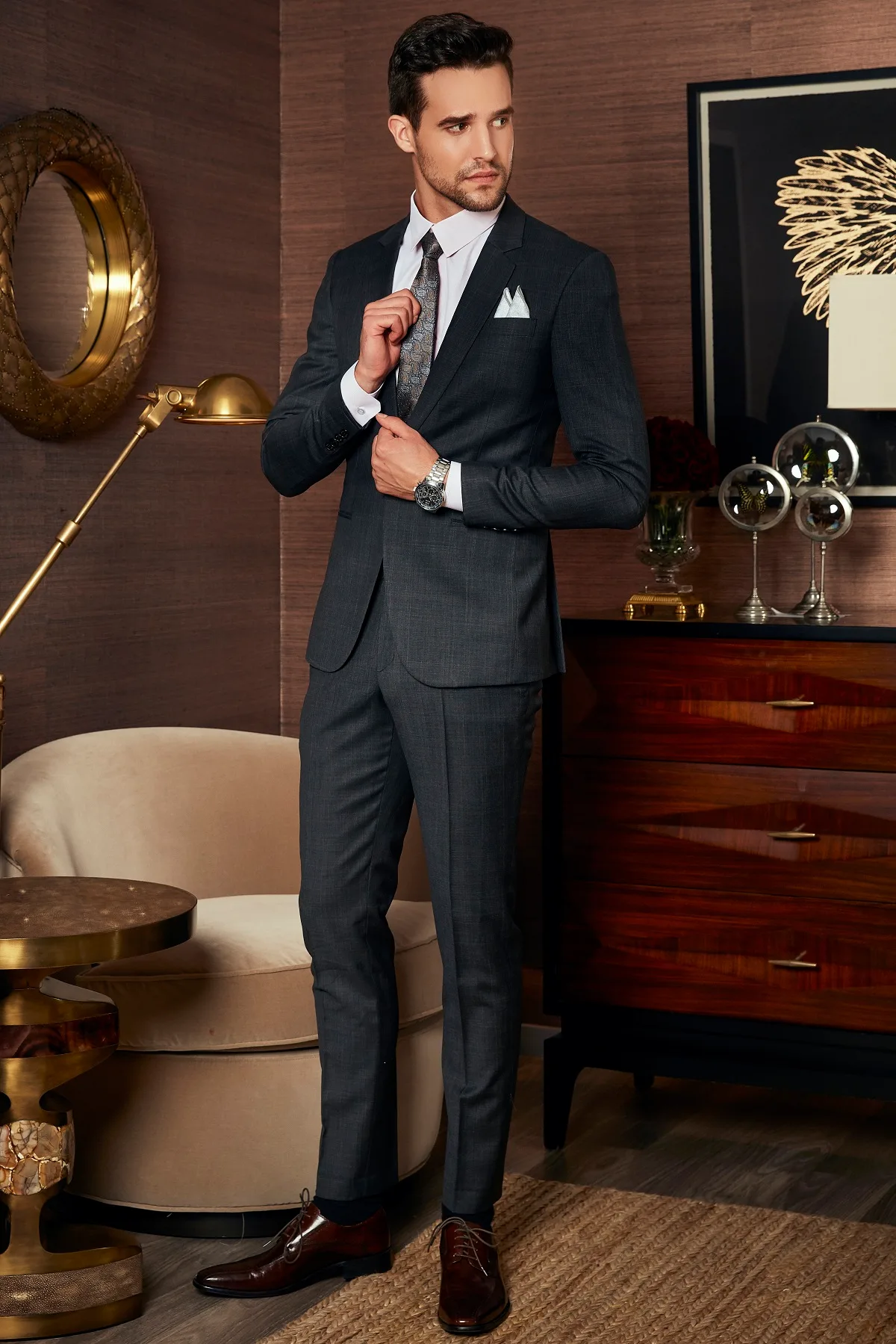
When you speak with the master tailor you don't need any technical terms. Just describe the spirit you want and let the tailor translate it into measurements:
- “I want a natural shoulder, no thick padding.”
- “A moderately nipped waist, nothing straining when I sit.”
- “A jacket long enough to cover the seat; it doesn't need to be short.”
- “Neat trousers, with the hem just touching the shoe.”
- “Plain cloth or a very fine stripe, in navy or grey.”
From that description, the master tailor will take more than 30 measurements in the bespoke tailoring service and do a baste fitting to check the shoulder and the waist fit before finishing. As for cloth, you can choose a fine, tightly woven wool from the fabric library so the jacket keeps its clean lines. Specific cloth lines and prices are on the made-to-measure price list.
The Japanese fit across occasions
- Everyday work: navy or charcoal grey, tightly woven wool, a well-fitting body. Suits offices that call for composure, such as finance, law and consulting.
- Meeting clients, important meetings: a matching set in the same cloth, a white shirt, a plain tie, black or dark brown leather shoes. Clean lines speak of care without a word.
- Travel, business trips: choose light wool or a wool-linen blend so the jacket doesn't feel stuffy. The soft shoulder makes it easy to fold into a suitcase and, put on after an early start, it shows no creases.
- Evenings, light receptions: black or deep navy, plus a white pocket square folded flat. No other detail is needed.
What these occasions have in common is that you don't have to “change outfits” much. A minimalist suit, tailored to fit, can carry you through most of the working week with only a change of shirt and tie.
Styling in a minimalist direction
- Shirt: plain white or light blue, with a medium collar.
- Tie: plain colour or a small stripe, medium width, a neat four-in-hand knot.
- Shoes: black or dark brown oxfords or derbies, with a thin sole.
- Accessories: a small-faced watch, a belt matching the shoes, and a white pocket square folded flat if needed.
Minimalism does not mean meagre. The cloth, the stitching and the fit are what speak for the wearer.
A tip from Mon Amie's master tailor
A Japanese-style suit looks simple but is the hardest to make for one reason: there is nothing to hide behind. A soft-shouldered jacket, a well-fitting body, a flat chest: being out by even a hair at the shoulder or armhole shows at once. So give the baste fitting its time and don't rush. One more thing: if you sit a lot, tell the master tailor to leave some ease across the back and underarms, because a minimalist jacket is often pushed into fitting too closely.
Common mistakes
- Confusing “minimalist” with “baggy”. The Japanese fit still has a waistline; it is just a light one.
- Choosing cloth that is too shiny or colours that are too bright, losing the composed quality.
- Trousers that are too short, tipping the whole outfit towards another style.
- Mixing several patterns at once, which breaks the principle of “less, but better”.
Frequently asked questions
What is a men's suit called in Japanese?
The Japanese use “スーツ” (sūtsu) for a suit in general, “ジャケット” (jaketto) for a jacket and “ブレザー” (burezā) for a blazer. The traditional word for a men's suit is “背広” (sebiro).
How does a Japanese men's suit differ from a Korean one?
A Japanese suit has a soft shoulder, a well-fitting body and muted colours. A Korean suit is slimmer and closer-fitting, often uses lighter colours and has clearly tapered trousers. The Japanese style is composed; the Korean style is youthful.
Can a Japanese-style blazer be worn to work?
Yes, it suits the office very well because it is understated and comfortable. Choose navy or grey, with a plain shirt and dress trousers, for a polished outfit.
Does a Japanese men's suit suit Vietnamese men?
Yes, especially those of average or slight build. What needs attention is the fit of the shoulder, because a soft shoulder depends heavily on the wearer's frame.
What cloth should I choose for a Japanese-style men's suit?
Tightly woven wool, plain or with a fine stripe. The cleaner the surface of the cloth, the more it brings out the minimalist spirit.
Wear less, with quality
If you would like to try a suit in the Japanese spirit, bring reference photos or a description when you come to the showroom, and book through the booking page. The master tailor will translate what you describe into specific measurements.