
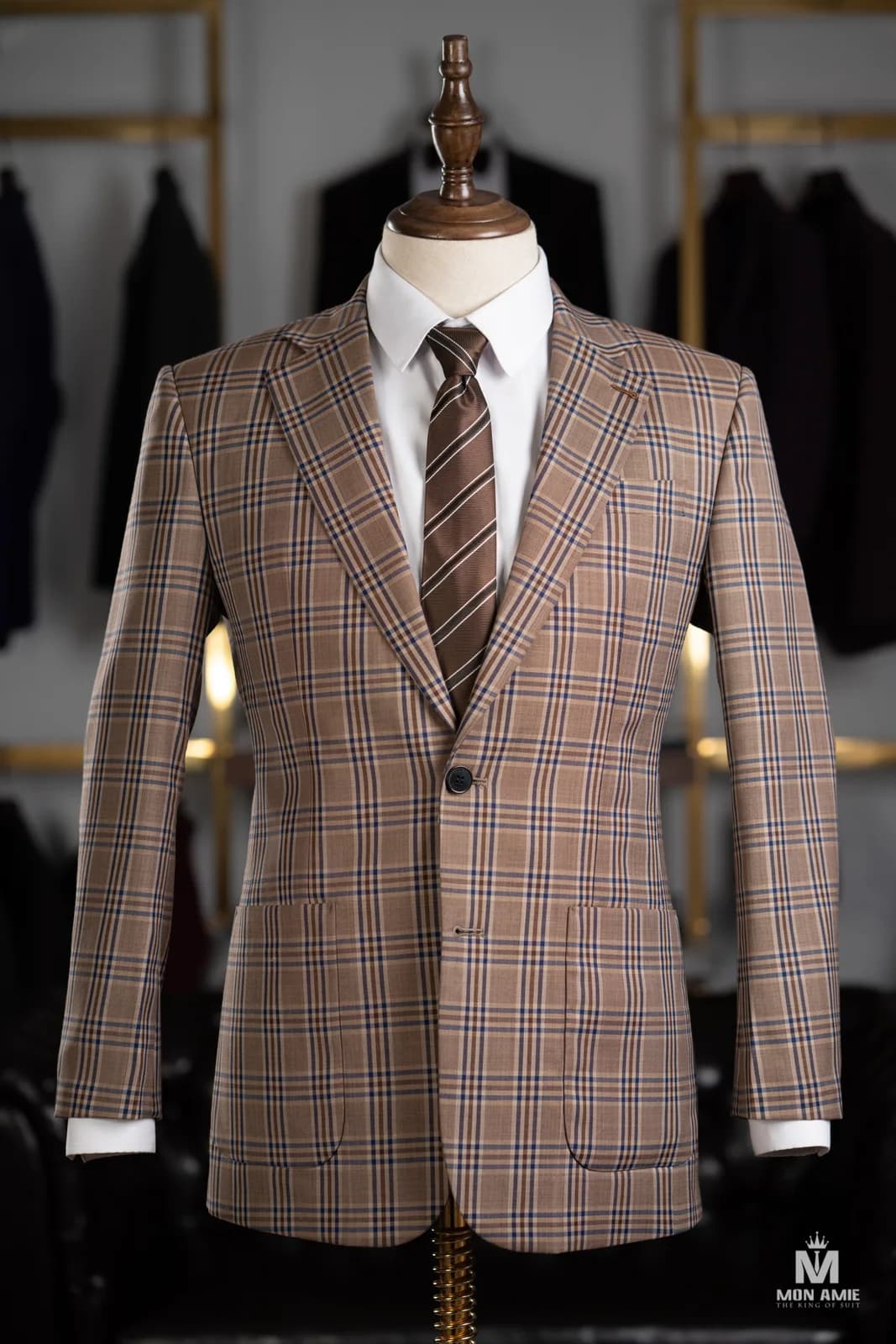
You stuff your phone and wallet into the jacket pocket and one side bulges out as if you were carrying a steamed bun. Suit pockets were not made for carrying things. Their job is to balance the jacket body and to signal the formality of the whole suit in advance. Each suit pocket style says something different: the flap pocket says office, the jetted pocket says formal dress, the patch pocket says relaxed.
Quick answer
Five men's suit pocket styles are worth knowing: the flap, jetted, patch, slanted and ticket pocket. The flap pocket suits the daily office; the jetted pocket suits formal dress and ceremony; the patch pocket suits a blazer and a relaxed look; the slanted pocket slims the jacket body; the ticket pocket adds a classic British touch.
1. Flap pocket: the office standard
The flap pocket has a piece of fabric covering the pocket opening, protecting it from dust and giving the hip line a little rhythm. This is the default of most two-button suits, fitting the office, meetings and daytime parties. When you need more formality, you can tuck the flap inside so the opening looks like a jetted pocket.
It suits every build. A flap of about 4–5 cm is right; an overly large flap makes the hips look heavier, and a flap that is too small makes the jacket look thin. The Women's Cream Beige Jacket with Large Flap Pockets, Single Button, Rolled Sleeves SNU-295 in our collection is an example of flap pockets in a large proportion, in keeping with a fashion-forward spirit.
Note: put only light things in, such as a parking card or keys. A strained flap pocket pulls the seams and loses the cut.

2. Jetted pocket: minimal and formal
The jetted pocket has no flap. The opening is just a narrow welt, about 1–1.5 cm, sitting flush on the jacket body, so the jacket looks flat and clean in line. This is the pocket of the tuxedo, the dinner jacket and evening suits. There is a "double jetted" version with two strips of fabric framing the opening.
It suits evening parties, weddings and those with fuller hips, because the pocket adds no raised bulk at the hip. It looks good with either a shawl or a peak lapel.
Note: the opening is exposed, so it is very easy to see when you put things in. Leave it empty, or choose a highly skilled tailor, because with a narrow welt a millimeter off ruins the line.
3. Patch pocket: relaxed, suits a blazer
The patch pocket is a piece of fabric sewn on outside the jacket body, with the two bottom corners gently rounded. You can tell at a glance it is a relaxed style: it suits blazers, tweed, linen, cotton and outfits worn to a café or at weekends. On a serious business suit, the patch pocket is less suitable because it breaks the gravity.
It suits slim men because the patch pocket adds volume at the hip, making the figure look fuller. Those with large hips or a big belly should avoid it. You can read more on telling these apart in the demi men's jacket, half suit and half blazer.
Note: the patch pocket bears pulling, so the stitching must be strong and the pocket edge should sit on a true line when seen from the side. With check or stripe fabric, the pattern must match between the pocket and the jacket body.

4. Slanted pocket: slim jacket body, British sporty look
The slanted pocket has an opening angled slightly from the horizontal, originating from English riding coats: the angled pocket makes it easier to slip a hand in when sitting in the saddle. Today it is an identifying detail of the British cut, country and sporty in feel.
It suits men with a long torso and slim builds: the slanted line makes the jacket body look neat and slender. It also suits slightly shorter men, since it reduces the impression of a short, boxy jacket body.
Note: this style looks free-spirited, so at formal occasions such as a ceremonial wedding, choose straight pockets instead of slanted ones. Slanted pockets suit tweed, flannel and checks, and look especially good with structured shoulders.
5. Ticket pocket: a small pocket above the hip pocket
The ticket pocket is a small pocket set a few centimeters above the right hip pocket, originally for holding train tickets. Today it is a detail of classic tailoring: a small pocket with a flap or welt, just big enough for a hotel key card, a parking card or a folded slip of paper.
It suits those who like elaborate details, and daily suit wearers who want a place of its own for cards so they do not rummage in the main pocket. It is used a lot on British-cut suits, two-button or double-breasted.
Note: this detail only looks good when the proportions are right: a small pocket, a neat flap, sitting directly above the hip pocket and parallel to it. Adding it to a jacket that already has patch or slanted pockets will look busy, so pick one accent for the hip pocket.
Quick summary table
| Pocket style | Suits | Worth remembering |
|---|---|---|
| Flap pocket | Office, every build | Flap about 4–5 cm; tuck the flap in when more formality is needed |
| Jetted pocket | Evening, tuxedo, fuller hips | Flat, clean line; do not put things in |
| Patch pocket | Blazer, tweed, linen, slim men | Relaxed; avoid with large hips |
| Slanted pocket | Long torso, British cut | Sporty, country feel; less suited to ceremonies |
| Ticket pocket | Those who like classic details | Small, in the right position; do not add when there are already patch pockets |
Tips from Mon Amie's master tailors
- The breast pocket (on the upper left chest) has styles too: a straight British line, or a gently curved Italian one. Choose one, and leave it empty or add a neatly folded pocket square, as the article how to fold a suit pocket square explains.
- There is a "fake pocket", where the opening is sewn shut and cannot be opened. The jacket body is flatter, which suits those who want a trim fit, but nothing can be carried in it.
- The hip pockets are usually set a few centimeters below the fastening button; set too high and the jacket looks short, too low and the legs look short. That is why you need a baste fitting.
- With check or plaid fabric, the pocket should be cut to match the pattern of the jacket body. If you see the stripes misaligned at the pocket opening, that is a sign of hasty sewing.
- To see the whole suit in context, you can read men's suit styles: 12 cuts to place the pockets in the context of the jacket's cut.
Frequently asked questions
Which pocket should a young man's suit have?
A small, neat flap pocket or a jetted pocket gives a neat, youthful look. If you choose a weekend blazer, the patch pocket is a more relaxed choice.
Which pocket style suits a middle-aged man's suit?
A flap pocket of moderate width or a jetted pocket. Middle-aged men often have fuller hips and bellies, so avoid large patch pockets, which exaggerate the hips.
What pockets do Korean-style men's suits usually use?
Korean-style suits prefer a trim look, so they often use jetted pockets or slim, short flap pockets; many are even made with fake pockets so the jacket body stays flat. How the Korean cut differs from the Italian, British and American is in the article Korean, Italian, British and American men's suit cuts.
Should you put things in a suit jacket pocket?
Only light, thin things such as cards, keys and a folded slip of paper. A phone, a thick wallet or large car keys belong in the trouser pocket or a bag. Every time you load a heavy item, the fabric at the pocket opening and the shoulder line gets pulled off line.
Choosing pockets for the suit you plan to have made
Choosing a pocket is choosing the formality first, then the practicality. When you come to the showroom, tell the stylist the main occasion and what you usually carry, and the pocket style will be chosen along with the cut and fabric. You can look at the fabric library and the price list first, then book a measuring appointment. If you want to think about a hairstyle to go with the suit too, the article men's hairstyles that suit a suit has a few suggestions.