
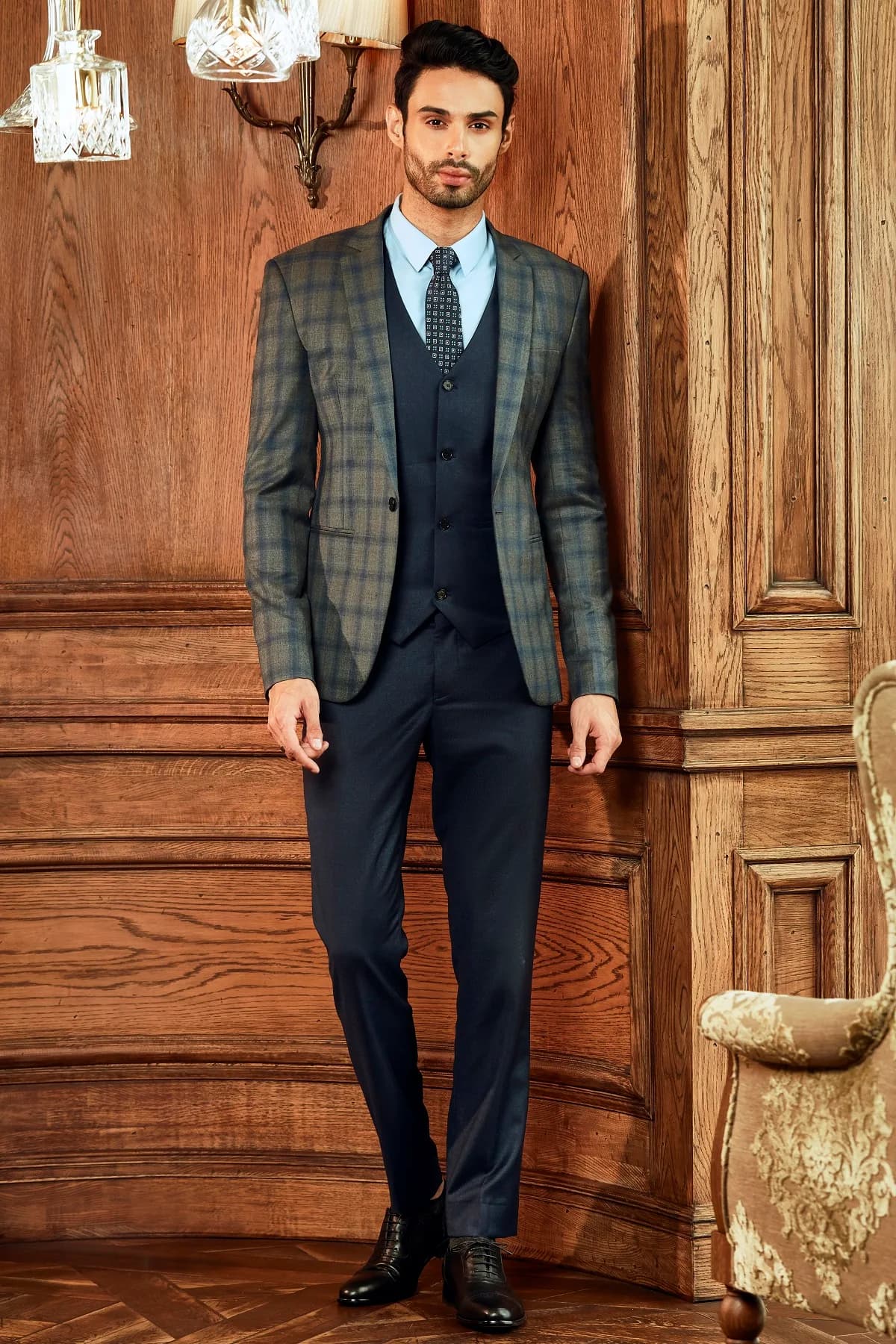
Hang two jackets side by side, both navy, both with peak lapels, and you may not be able to tell which is the suit and which is the blazer. Only when you pick them up, turn the lining, feel the shoulder and look at the buttons do you see that the two were made to do different jobs. So the question of suit or blazer shouldn't be answered by colour, but by structure, setting and body shape.
The short answer
Wear a suit when seriousness is needed: important meetings, first meetings with clients, dinner events, weddings. Wear a blazer when you need to be more comfortable: business-casual offices, coffee, weekends, hot weather. A blazer and a suit jacket differ in structure, cloth and how they are styled, not in colour.
How a suit and a blazer differ
A quick note on terms: Vietnamese uses “vest” for both the jacket and the whole suit. In this article, “suit” means a jacket made in the same cloth as the trousers, while a blazer is a standalone jacket worn with different trousers.
| Criterion | Suit (suit jacket) | Blazer |
|---|---|---|
| Cloth | Same cloth as the trousers, usually plain or lightly checked | Usually different from the trousers; can be check, velvet, flannel |
| Shoulders and canvas | Firmer shoulders, clearly structured chest | Soft shoulders, light structure, or unlined |
| Buttons | Same colour as the cloth, or horn | Can be metal or contrasting buttons |
| Pockets | Flap or jetted pockets | Can be patch pockets on the outside |
| Formality | High | Medium |
| Worn separately | Easily looks out of place | Easy to pair |
Names are only half the story. The other half is where the jacket is worn, with what, and who is looking.
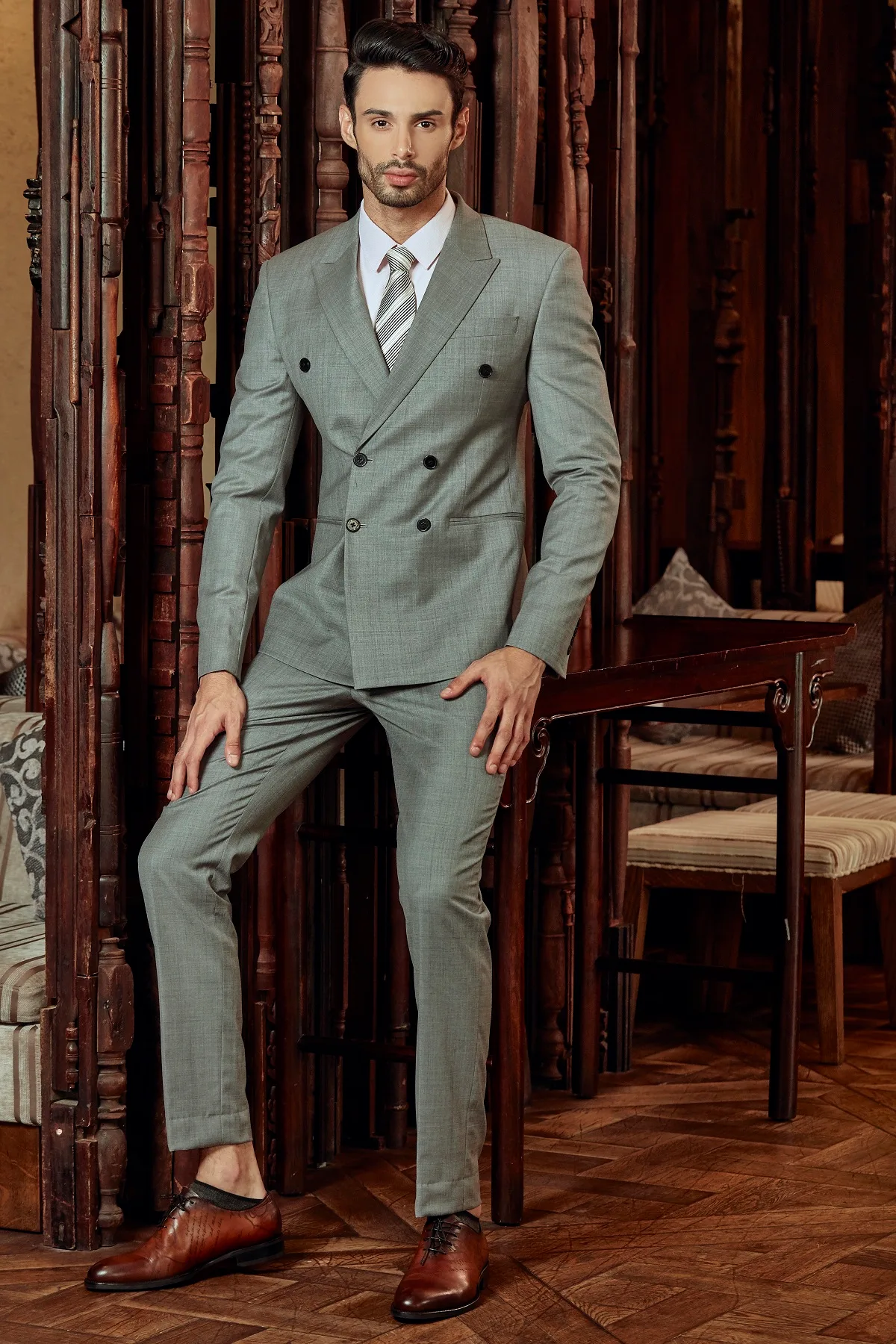
Decision table: suit or blazer by setting
| Occasion | Choose | Why |
|---|---|---|
| Board meeting, first meeting with a major client | Full suit | Matching cloth gives a seamless, serious line |
| Business-casual office | Blazer + trousers or chinos | Polished enough without feeling stiff |
| Dinner event, wedding, ceremony | Suit or tuxedo | High formality needed |
| Coffee, weekends, going out | Blazer | Easy to pair with a shirt or polo |
| Interview | Depends on the industry | Banking, law: suit. Tech, creative: blazer |
| Hot weather, outdoors | Lightweight blazer, little lining | More breathable than a fully constructed suit |
What Ho Chi Minh City's climate says about this choice
Hot, humid weather all year makes a three-layer suit, fully structured and fully lined, heavy if you have to move around a lot. A lightly structured blazer, half-lined or unlined, in lightweight wool or a linen blend, is usually more comfortable. Conversely, if you spend the whole day in an air-conditioned room, a full suit is no burden at all.
A practical tip: many men have two lightweight blazers made instead of another suit, because the frequency of truly formal meetings isn't that high. To choose a blazer in the right fit for the right occasion, see more in how to choose a men's blazer.
Choosing by body shape
- Tall and slim: a blazer with a lightly structured shoulder keeps the jacket from overpowering the torso. A large check or a lighter colour can add volume.
- Shorter men: a blazer just long enough to cover the seat, with trousers in a tone close to the jacket so the vertical line stays continuous and lengthens the legs. Avoid a blazer that is too long or a large check.
- Men with a belly: a suit in one colour throughout creates a continuous vertical line, neater than a contrasting blazer that cuts across the body.
- Sloping or broad shoulders: a properly structured suit corrects the silhouette better, while a soft-shouldered blazer feels natural.
When to split a suit jacket and wear it as a blazer, and when not to
This is a question many men ask, and the answer is: you can, but not every suit should be split.
You can split it, if:
- The cloth is plain or melange, with a matte surface, in navy or mid grey.
- The canvas is not too stiff and the shoulders not too padded.
- It has plain flap pockets and horn or non-glossy buttons.
You shouldn't split it, if:
- The cloth is pinstripe, shiny, mohair or solid black, tones that scream “suit” at a glance.
- The suit has a stiff canvas and lapels that are too sharp.
- It is your only jacket and the trousers wear evenly with it: wearing the jacket separately makes jacket and trousers wear unevenly, and the suit loses its partner.
If you plan to split the jacket from the very start, tell the stylist when it is made. They will choose cloth and a canvas soft enough for the jacket to stand on its own as well as with the trousers. For the “half-suit, half-blazer” jacket that many Vietnamese tailors call “demi”, see what is a demi men's suit jacket.
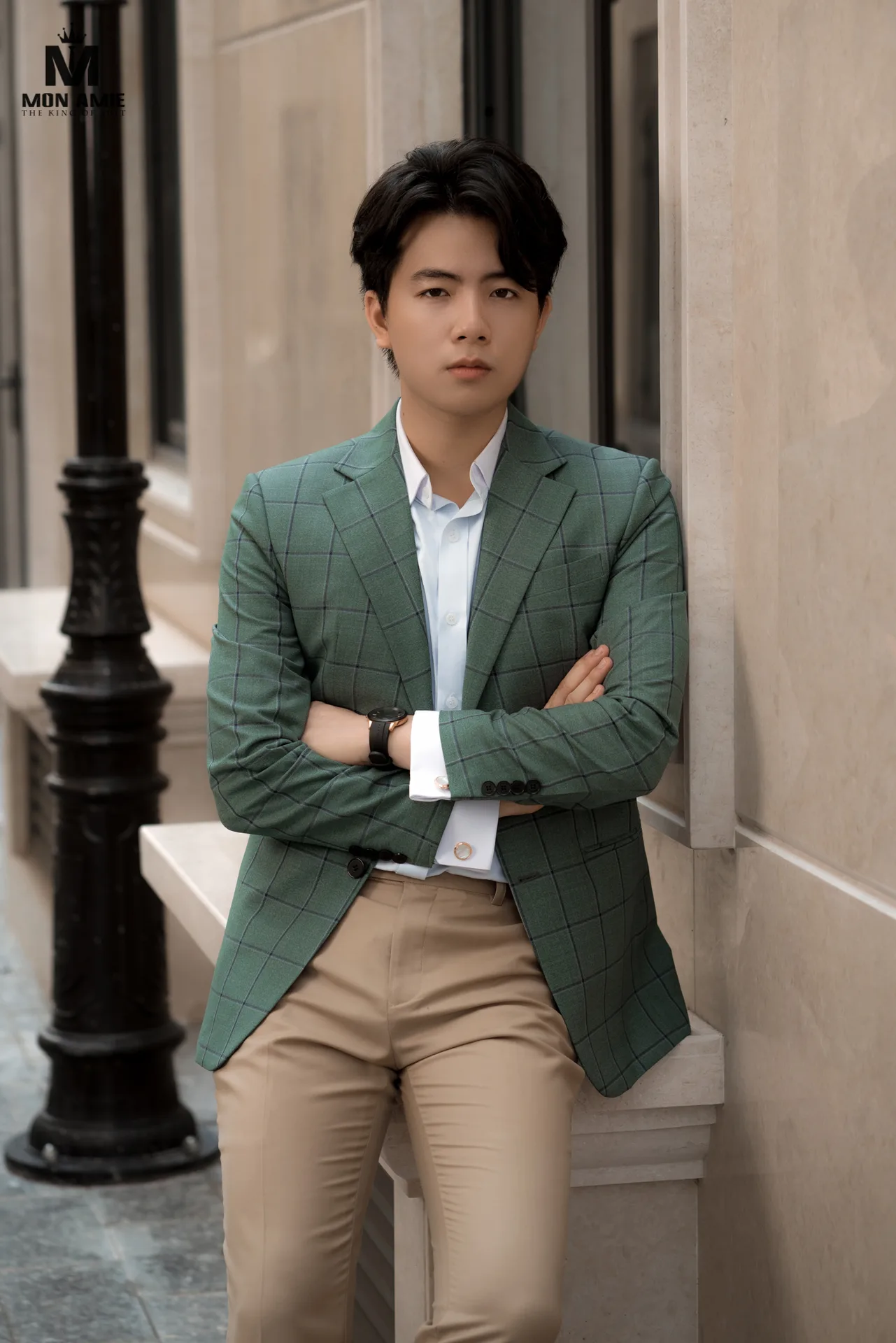
How to wear a suit jacket or blazer correctly
Whichever you choose, a few rules always hold:
- Fasten the top button, leave the bottom one open. On a two-button jacket, the bottom button is always undone.
- Shoulder meets shoulder. The jacket's shoulder seam sits at your shoulder point. A drooping shoulder betrays every other detail.
- Sleeves show 1–1.5 cm of shirt cuff. Let the shirt peek out just enough.
- Trousers clearly different from the blazer, or squarely in the same colour family. Nearly the same but off in shade looks like two suits stitched together.
- Shoes to match the formality. A suit goes with leather lace-ups; a blazer can go with loafers or suede shoes.
Common mistakes
- Using a black suit jacket as a blazer. A solid-black suit rarely splits without showing that it is an orphaned jacket.
- Pairing a sports blazer with suit trousers. The two cloths clash.
- Wearing a shiny suit in the middle of the day. It suits an evening event better than the office.
- Choosing a long, loose blazer for comfort. Surplus cloth gathers into folds and looks sloppy.
Tips from Mon Amie's master tailors
When a client asks whether to wear a suit or blazer for a specific occasion, the master tailor doesn't answer at once but tries a simple test: lay the jacket under consideration on a table and look at it alone, without trousers. If it still “stands up”, with cloth that has depth, a handsome shape and no look of being orphaned, then it can be worn separately. If it always looks as though half of it is missing, keep it with the suit.
Frequently asked questions
How is a suit different from a blazer?
A suit (the suit jacket) is made in the same cloth as the trousers, is clearly structured and is formal. A blazer is a separate jacket, usually with softer cloth and structure, and easy to pair with different trousers. Outwardly they can look alike; the real difference lies in construction and use.
Which is more formal, a blazer or a suit?
The full suit is more formal. But a well-fitting blazer in good cloth, paired with a shirt and neat trousers, is still enough for most modern office settings.
Blazer vs suit: which should you choose for everyday work?
If your office permits business casual, a blazer is more comfortable and practical, especially in a hot, humid climate. If your job regularly involves meeting clients or board meetings, a dark suit should be in your wardrobe.
Is there a difference in how a suit and a blazer are worn?
The buttoning, sleeve length and shoulder line are the same. The difference is in the pairing: a suit goes with trousers in the same cloth and leather shoes; a blazer pairs flexibly with chinos, odd trousers, shirts or polos.
In closing
Suit or blazer is a question you answer every morning in front of the wardrobe, and a good wardrobe has both. If you would like a blazer or suit made to fit your needs, you can see the bespoke tailoring service, check the price list and choose cloth from Mon Amie's cloth library.