
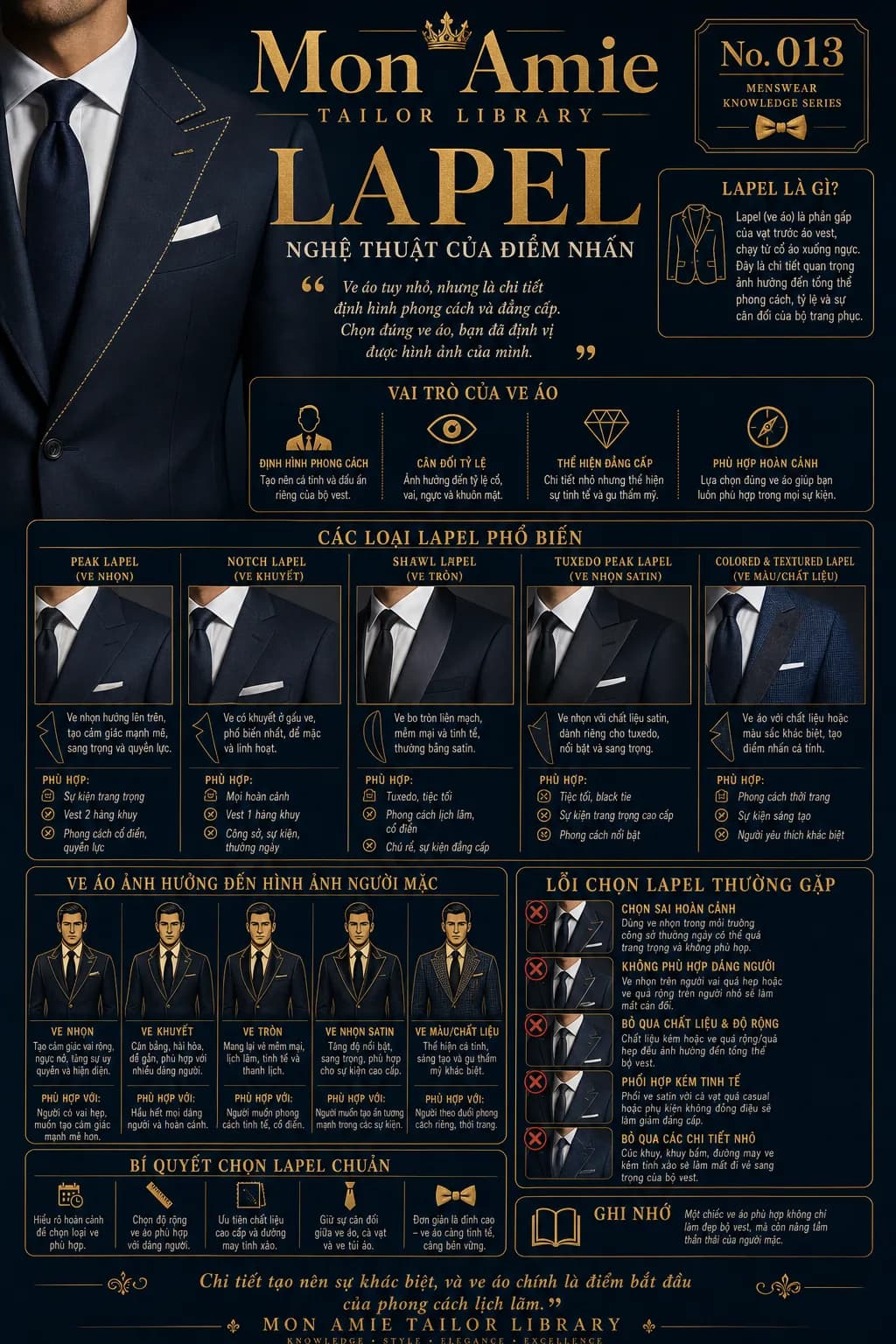
The lapel is the folded-back section of the jacket front, running from the collar down across the chest. Small as it is, the lapel determines much of a suit's character, proportion and balance. Choose the right lapel and you have defined your image before you say a word.
What the lapel does for a suit
Many assume the lapel is merely decorative, but in tailoring it is among the first things a cutter considers when building the silhouette. The lapel carries four principal roles:
- It sets the style: it gives the suit its personality — classic, modern or unconventional, it all begins at the lapel line.
- It balances proportion: the lapel directly affects the apparent proportion of neck, shoulder, chest and even the face.
- It signals refinement: a small detail, yet it reveals the wearer's taste and eye.
- It suits the occasion: the right lapel keeps you correctly dressed everywhere, from the office to a black tie dinner.
The common lapel styles
There are five lapels every serious wearer of suits should know:
- Peak lapel: the points sweep upward, conveying strength, elegance and authority. At home in formal settings, on double-breasted jackets and in a classic, commanding style.
- Notch lapel: cut with a notch at the join, this is the most common style, easy to wear and highly versatile. Suitable for nearly every situation: single-breasted jackets, the office, everyday occasions.
- Shawl lapel: an unbroken, rounded line, soft and refined, usually faced in satin. The classic choice for tuxedos, evening receptions, grooms and occasions of real distinction.
- Tuxedo peak lapel: a peak lapel faced in satin, reserved for tuxedos, striking and luxurious at black tie dinners and high formal events.
- Coloured and textured lapel: a lapel in a cloth or colour different from the body of the jacket, adding character for the fashion-minded and for creative occasions.
How the lapel changes the impression you make
On the same build, changing the lapel changes the whole visual impression:
- The peak lapel broadens the shoulder and lifts the chest, adding authority — especially useful for narrower shoulders seeking greater presence.
- The notch lapel is balanced and harmonious, quietly slimming — safe for nearly every build and setting.
- The shawl lapel brings softness, polish and refinement — for those who favour a classic, elegant manner.
- The satin peak lapel adds presence and luxury — for anyone wishing to make a strong impression at a major event.
- The coloured or textured lapel expresses individuality and a distinctive eye — for the man pursuing a style of his own.
Common mistakes when choosing a lapel
In consultation, Mon Amie sees five recurring errors:
- The wrong lapel for the setting: a peak lapel in an everyday office can read as overly formal and slightly forced.
- The wrong lapel for the build: a peak lapel on very narrow shoulders, or a lapel too wide on a slight frame, unbalances the whole.
- Ignoring cloth and width: poor cloth, or a lapel too wide or too narrow, undermines the line of the jacket.
- Careless combinations: a satin lapel worn with too casual a tie or mismatched accessories diminishes the effect.
- Overlooking small details: buttonholes, the boutonnière loop, the stitching and the roll of the lapel — apparently minor things that decide whether the whole suit looks refined.
How to choose your lapel well
Before deciding on the lapel for your next suit, take five simple steps:
- Be clear about where and how the suit will be worn, and choose the lapel accordingly.
- Match the lapel width to your build — broader shoulders take a wider lapel, and vice versa.
- Favour fine cloth and precise stitching, since the lapel sits at eye level for whoever you are speaking to.
- Keep the lapel, tie and breast pocket in proportion with one another.
- Simplicity is the summit — the more restrained the lapel, the longer the style endures.
A word from Mon Amie's artisans
When a client comes to be measured, the first thing our artisans look at is not the cloth but the frame of the shoulders and the proportion of neck to chest, because that is the basis for advising on lapel style and width. One principle we always keep: if you will own only one suit for many occasions, choose a notch lapel of moderate width — the most versatile, and never out of date. For a tuxedo made for a great day, only a shawl lapel or a satin peak lapel is equal to the occasion. The right lapel does not merely flatter the suit; it elevates the bearing of the man wearing it.
Details make the difference, and the lapel is where elegance begins. If you would like advice on the lapel best suited to your build and your occasions, you are welcome to book an appointment at one of Mon Amie's five showrooms in Ho Chi Minh City, or to read first about the tailoring process — our hotline 0888.111.118 is always available.