
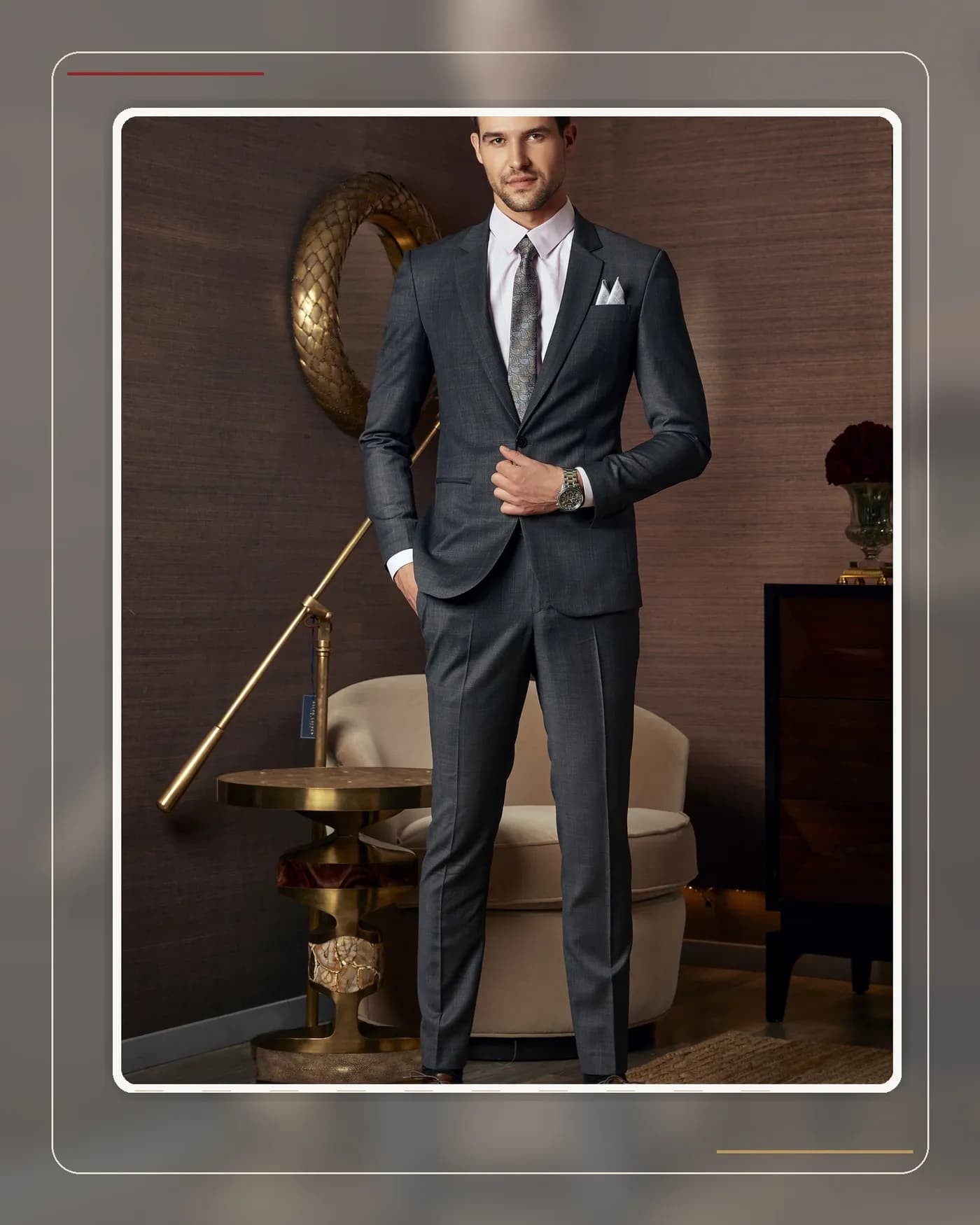
Asking which color to invest in after your first navy suit means you are building a wardrobe with strategy rather than impulse. The second suit does not need to be "prettier" than the first — it needs to fill exactly the gap navy leaves uncovered.
The short answer
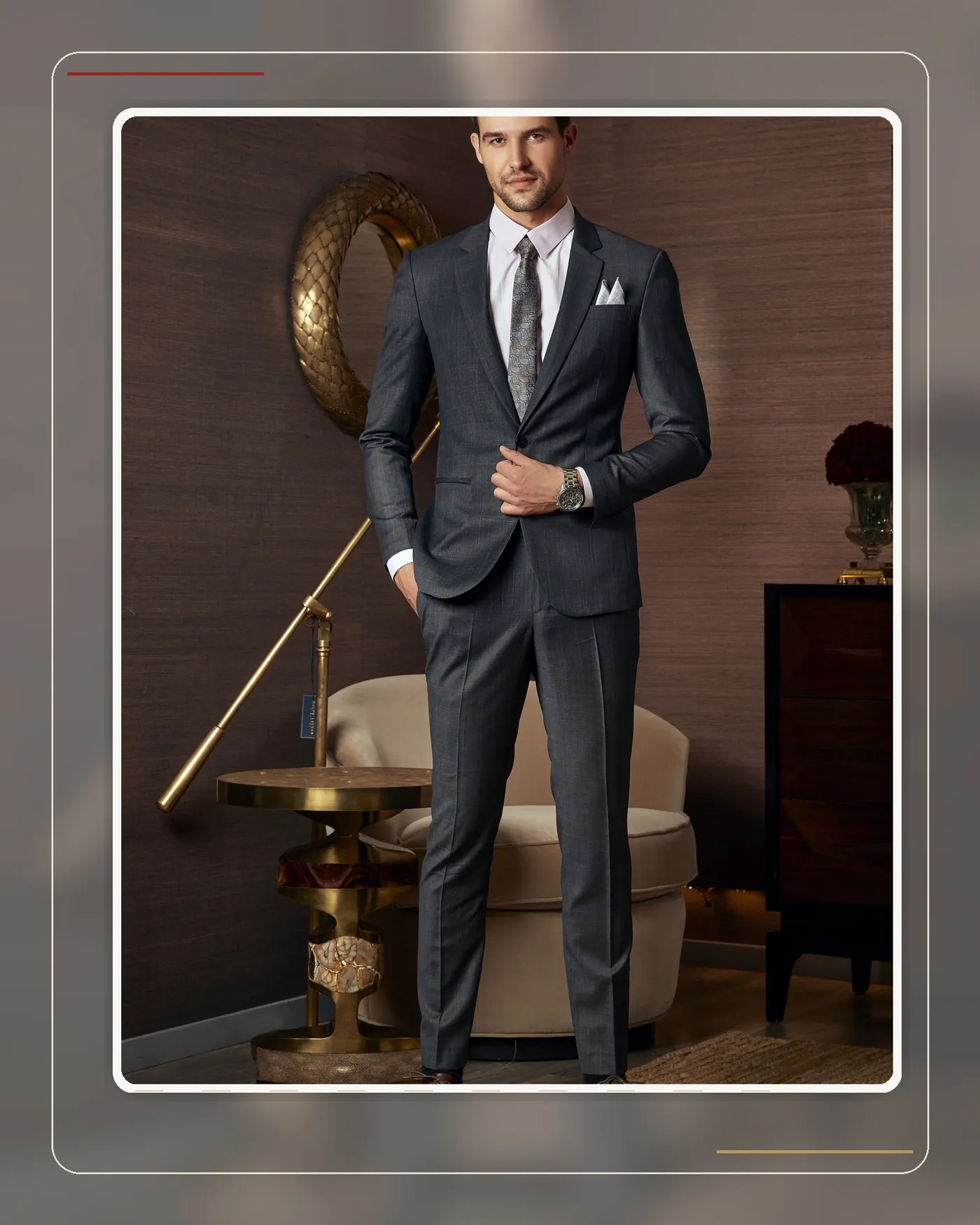
Your second suit should be charcoal grey. Charcoal sits one step above navy in formality, ideal for your most serious occasions: signings, board meetings, evening events. It shares every shirt, tie and shoe you already bought for the navy suit, so the cost of expanding is close to zero. Only at suit number three should you consider mid-grey or a lighter blue for variety.
Why charcoal, not something more "fun"
After a navy suit, many gentlemen are tempted by bright blue, beige or bold stripes. Mon Amie's advice: not yet. With a two-suit wardrobe, each suit must carry many occasions. Charcoal and navy form the classic foundation pair — one leans daytime, one handles the evening; one youthful, one authoritative. Once that base is solid, personality colors added later actually shine.
A sensible order of expansion
- Suit 1 — Dark navy: the foundation, worn the most.
- Suit 2 — Charcoal: the highest formality, important events.
- Suit 3 — Mid-grey or a subtly patterned navy: rhythm and variety for the working week.
- From suit 4: now the colors you love — bright blue, brown, beige, or a tuxedo if you attend many evening functions.
How two suits become six looks
Charcoal with a white shirt and a dark tie for formal days; with a light blue shirt, no tie, for regular days. Navy works the same way. With just 4–5 shirts and 3 ties, two suits carry an entire week without anyone noticing a repeat. That is an efficiency a large but unplanned wardrobe never achieves.

Common mistakes
- Buying a second suit almost identical to the first (a slightly lighter navy) — duplicated role, wasted money.
- Jumping straight to a statement color before the base is complete — worn a few times, then left hanging.
- Ignoring the accessories you already own, so every new suit drags in a whole new set of costs.
A word from Mon Amie's artisans
When a client returns for a second suit, Mon Amie's artisans always ask first: "On which occasions does your navy fall short?" — and the answer almost always leads to charcoal. We also carry over the measurements and fit adjustments perfected on the first suit, so the second usually fits beautifully from the very first basted fitting.
Frequently asked questions
Should the second suit be black? No, unless you specifically need it for black tie or funerals. Charcoal covers nearly every occasion people assume requires a black suit.
Should I choose pinstripes for the second suit? Save patterns for suit three onwards. In a two-suit wardrobe, plain cloth gives you far more wearable occasions.
Can charcoal be worn to a daytime wedding? Yes, and very correctly. Pair it with a white shirt and a lighter silk tie to soften the look.
Conclusion
After your first navy suit, charcoal is the most rational next investment: it fills the right gap, shares all your accessories, and together with navy forms the foundation for every expansion that follows. Book an appointment with Mon Amie, or review our pricing first.