
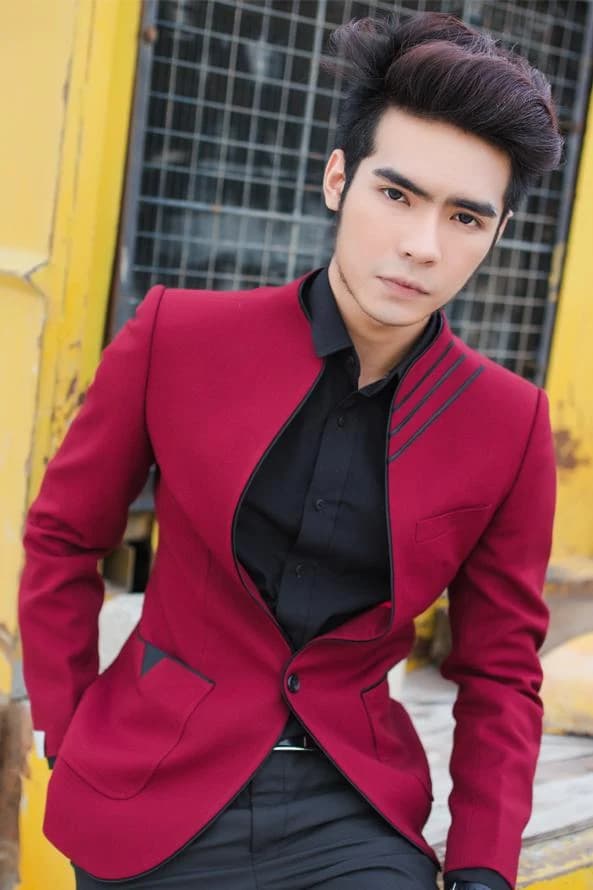
On a Friday afternoon you step out of the car into the muggy heat, your shirt already stuck to the seat behind you, while a fully structured blazer sits on your shoulders like a suit of armour. That is the moment many people start looking for a lightweight men's blazer, and then hesitate for fear that without padding and lining the jacket will go limp like a windbreaker.
The quick answer
A lightweight men's blazer still holds its shape if the cloth is firm enough and the shoulder is cut to the person wearing it. Removing the shoulder padding and chest canvas makes the jacket lighter, softer and airier, but in return the cut depends far more on your build and on the fabric. A breathable woven wool or a linen-wool blend is the safest choice.
What does a “lightweight” blazer actually leave out?
A classic blazer has four layers of structure that the tailor stacks up to create its upright shape. A lightweight blazer is not a jacket with “less cloth”; it reduces or removes a few of those layers:
- Shoulder padding: a piece of wadding or foam at the shoulder tip that keeps the shoulder line straight and hides sloping shoulders. The lightweight version has a very thin layer or none at all, giving the soft shoulder the Italians often call a “shirt shoulder”, with a slight gather at the sleeve head.
- Chest canvas: a stiff layer sandwiched between the outer cloth and the lining that keeps the chest flat and lets the lapel roll nicely. An unstructured blazer uses a very soft canvas, and sometimes none at all.
- Lining: a full lining lets the jacket glide easily over the shirt. A half lining covers only the upper back and the sleeves and leaves the rest open. A “single-layer” jacket means no lining at all.
- Bound seams: when the lining is removed, the raw edges inside are wrapped in a thin binding for neatness, so the inside still looks clean.
Comparing three levels of structure
| Level of structure | Construction | How it feels | Shape retention | Suited to |
|---|---|---|---|---|
| Fully structured | Shoulder padding, chest canvas, full lining | Firm, formal | Excellent | Important meetings, ceremonies |
| Half-structured | Light shoulder padding, light canvas, half lining | Balanced | Good | Everyday work |
| Unstructured | Soft shoulder, little or no canvas, unlined or half-lined with bound seams | Light, airy | Depends on fabric and build | Coffee, travel, weekends |
For most office workers in Saigon, the half-structured level is the easiest balance to live with. The unstructured level is worth choosing once you already own one or two firm blazers and want one more to “wear for comfort”.
A lightweight men's blazer in a hot climate: how much does it help?
Removing the lining genuinely helps: there is one less layer trapping heat, sweat dries faster, and the jacket folds compactly in a suitcase. But most of a blazer's heat comes from the fabric, not from the lining. An unlined blazer made of thick, tightly woven wool is still as hot as ever.
So if you want real coolness, choose the fabric first and the construction second:
- Breathable woven wool (hopsack, tropical): tightly twisted wool yarns, with tiny gaps in the surface that let air circulate, and springy enough to wrinkle little.
- Linen-wool blend: cool like linen, with fewer creases thanks to the wool. You can read more in the article on linen suits for hot weather.
- Firmly woven cotton: light and suited to a weekend look, but it holds its shape less well than wool.
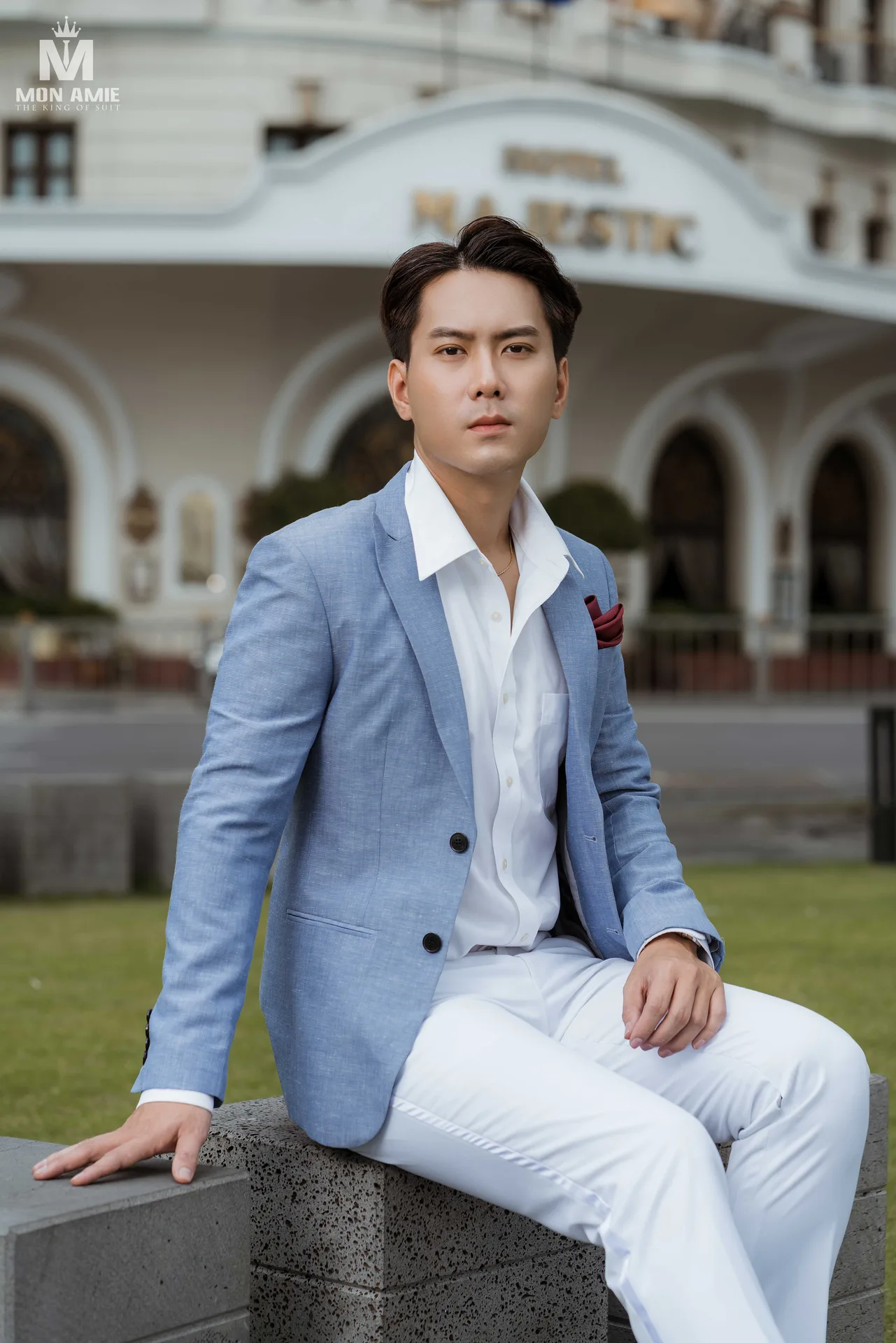
You are welcome to visit Mon Amie's fabric library and touch each material yourself. Every fabric feels cool in a different way, and the hand often judges more accurately than a spec sheet.
Keeping an unstructured blazer in shape after repeated wear
The weak points of a lightweight blazer are in three places: the shoulder tends to collapse, the lapel tends to flatten and the elbow tends to sag. A few small habits help the jacket last longer:
- Use a wide hanger with a curve that follows the shoulder. A thin wire hanger is the number-one enemy of a soft shoulder; within a few weeks the shoulder tips are creased.
- Let the jacket rest a day or two between wears so the wool fibres have time to recover.
- Don't overfill the pockets. A phone, a thick wallet and a bunch of keys drag the pockets down and pull the whole front out of line, because there is no canvas to hold it up.
- Steam rather than iron directly, especially at the lapels and the sleeve heads.
- Choose a fabric that “recovers”. Wool has natural elasticity, so creases gradually fall out. Pure linen wrinkles by nature, and you need to accept that as part of the material's elegance.
Who it suits, and who should think twice about an unstructured blazer
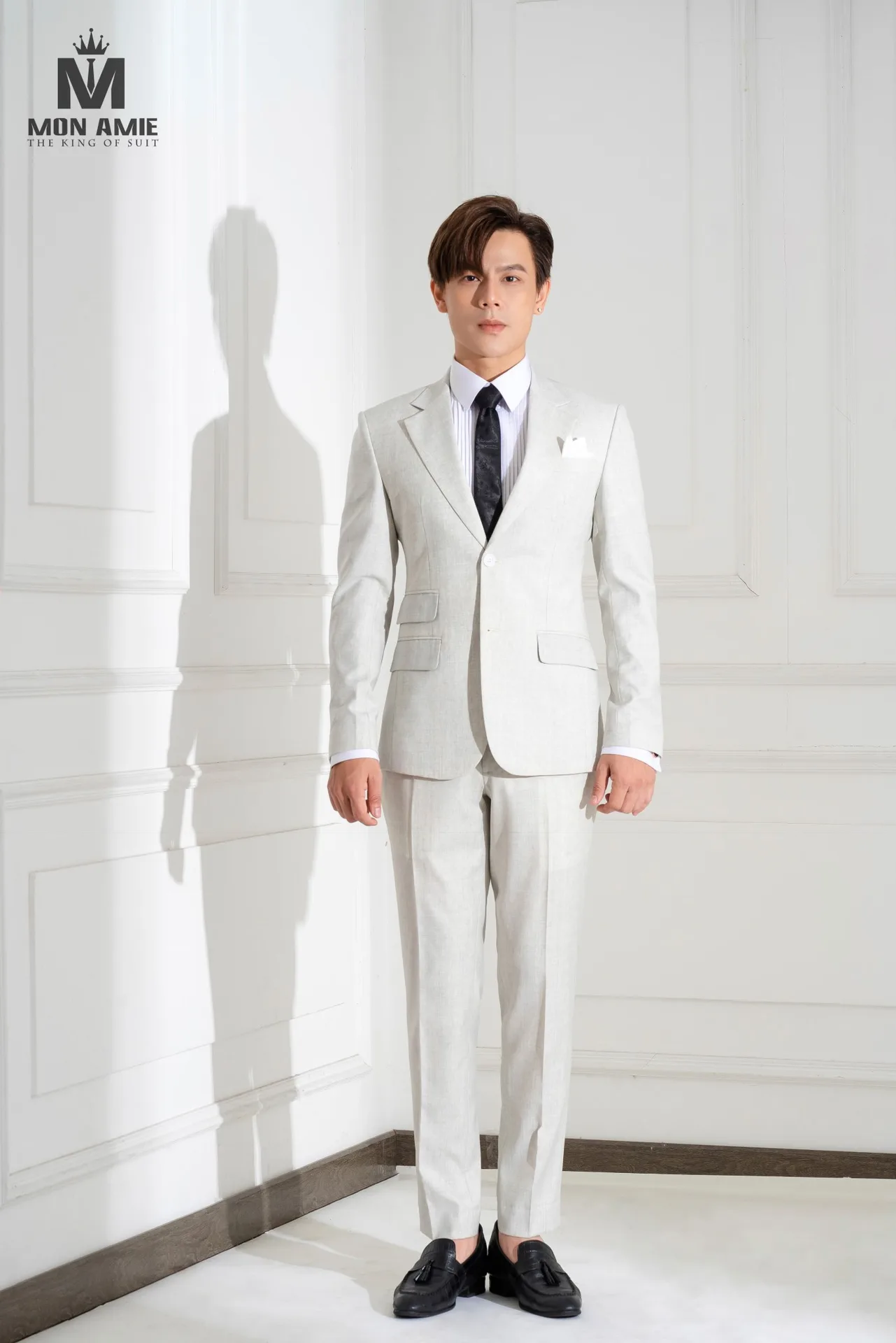
It suits: people with balanced shoulders, who move around a lot, who live in a hot climate, or who want a weekend blazer to wear all day without shoulder fatigue.
Think carefully if you have:
- Sloping or uneven shoulders, because there is no padding to “soften” the figure.
- A belly, because an unstructured jacket follows the stomach and shows the curve more clearly than a structured one.
- Occasions that call for a serious image, such as a board meeting or a signing ceremony, when a firm jacket is still more trustworthy.
A tip from Mon Amie's master tailors
The less structure a jacket has, the more exact the cut must be. A fully structured jacket has padding that “tells a white lie” on your behalf; a soft jacket shows everything exactly as your body is. So for a lightweight blazer, have the tailor measure the shoulder slope, sleeve length and chest carefully, then do a baste fitting before finishing. This is the part you get in full in the bespoke tailoring experience at the showroom, where the master tailor adjusts the jacket directly on you.
Common mistakes
- Choosing a fabric that is too thin, so the pocket edges show and the inner seams leave marks.
- Thinking “lightweight” means simple. Removing the lining demands cleaner seams inside, and craftsmanship has nowhere to hide.
- Wearing a soft blazer to a formal occasion. Let the fully structured jacket do the work at those events.
- Choosing by a model photo and ignoring the shoulder. Shoulders are not easily altered, so choose the jacket by the shoulder first.
Frequently asked questions
What is a single-layer men's blazer?
It is a blazer with no lining, leaving only the outer cloth and a very thin canvas. The inside seam edges are bound for a clean finish. The jacket is lighter and airier, but it demands good cloth and careful sewing.
Can a lightweight men's blazer be worn to work?
Yes, if your company does not enforce a strict dress code. Choose a neutral colour such as navy or grey, a well-fitted shoulder, and pair it with a shirt and trousers with a sharp crease, and a lightweight blazer still looks very polished.
Does a thin, light suit wrinkle easily?
It depends on the fabric more than the construction. Wool has natural elasticity and wrinkles little, while linen and cotton wrinkle more. Hanging it properly and steaming will help it flatten again quickly.
How is a thin Korean-style suit different from an unstructured blazer?
The Korean look usually has a trim shoulder, a close-fitting body and light cloth, but it is not necessarily unstructured. Even so, look closely at the shoulder and fabric before choosing, because the “thinness” of the Korean style usually comes from a trimmer cut rather than from removing structure.
What fabric should a lightweight blazer be made in to be both cool and shapely?
A breathable woven wool or a linen-wool blend are two good choices. Ask the master tailor about fabric weight when choosing from the fabric library.
One blazer for sunny days
If you would like to touch each fabric before deciding, the article on how to choose a men's blazer will help you pick the right cut, and the booking page is the quickest way to make an appointment with a master tailor. Visit a showroom whenever it suits you, and the master tailor will measure your shoulders before talking about fabric.