

A customer walks into the showroom and says it in one line: "Give me the Korean cut." Ask a little more and you find that one wants a short, close-fitting jacket, while another only wants slimmer shoulders than his old suit. The word "cut" bundles several things into one: the shoulder line, how much the waist is suppressed, the jacket length, the style of vent. The four schools of men's suit cut, Korean, Italian, British and American, differ precisely in these details, and once you understand them, talking to your tailor goes much faster.
Quick answer
The four men's suit cuts differ in shoulders, waist, jacket length and vents. The Korean cut is fitted and short, suiting young, slim builds; the Italian cut has soft shoulders and a slim waist, light and graceful; the British cut has structured shoulders, a longer jacket and side vents, suiting businessmen; the American cut is relaxed and comfortable, suiting fuller builds.
1. The Korean cut: trim, short, fitted and young
The Korean cut is a fitted cut. Trim shoulders, a clearly suppressed waist, slim sleeves, and narrow trousers usually cut to the ankle. The jacket is shorter than the classic standard, the lapel narrow at about 6.5–7.5 cm, two buttons, and the back rarely has a center vent. The whole suit feels light and young, so it suits men aged 20–35, office workers, and grooms who like a trim look.
It suits a slim to average build, a small waistline and moderately long legs. Those with a thick chest or a belly easily get X-shaped creases around the fastening button.
Note: fitted does not mean tight. If you have to strain your shoulders to raise your arm, the cut has gone too far. With made-to-measure, the fit is calculated from more than 30 measurements and adjusted in the baste fitting, so you can still sit, drive and raise your arms comfortably.
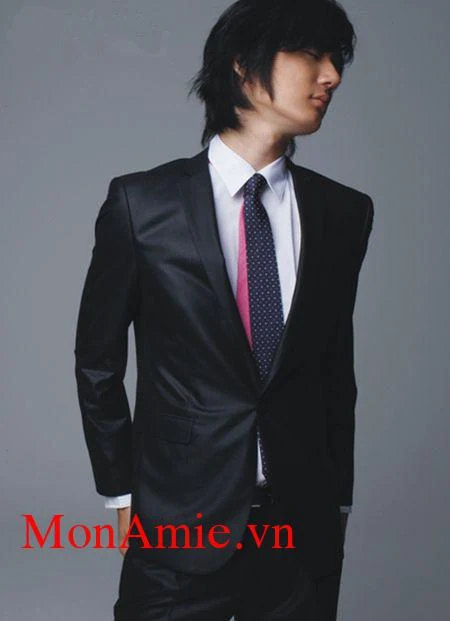
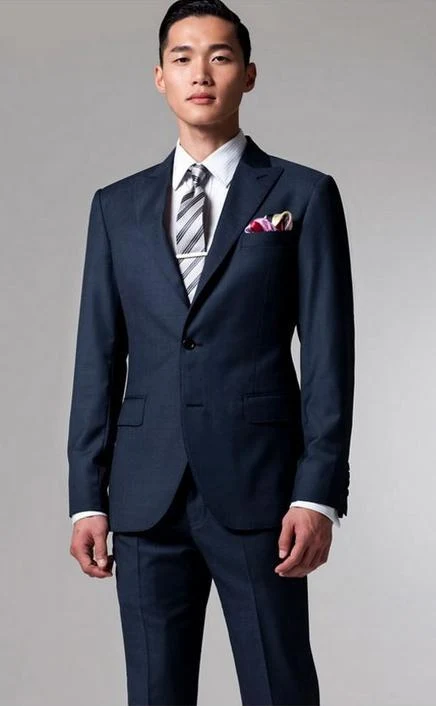
2. The Italian cut: soft shoulders, slim waist, light line
The Italian cut goes the soft way. Little padding in the shoulders, a shoulder line close to that of a dress shirt, a moderately full chest, a slim but not tight waist. The jacket is moderately short with rounded fronts, and the buttons sit slightly above the natural waist so the legs look longer. The back is usually unvented or has small side vents. On the body it feels more like a soft layer than a suit of armor.
It suits balanced to slim builds, people on the move, and those living in a hot climate like Saigon, because a light cut with thin fabric is much airier.
Note: a soft shoulder takes craftsmanship; a hair's breadth off and it sags. Those with strongly sloping shoulders or a flat chest should have a careful baste fitting; the tailor will add a thin layer of padding to keep the shoulder line.
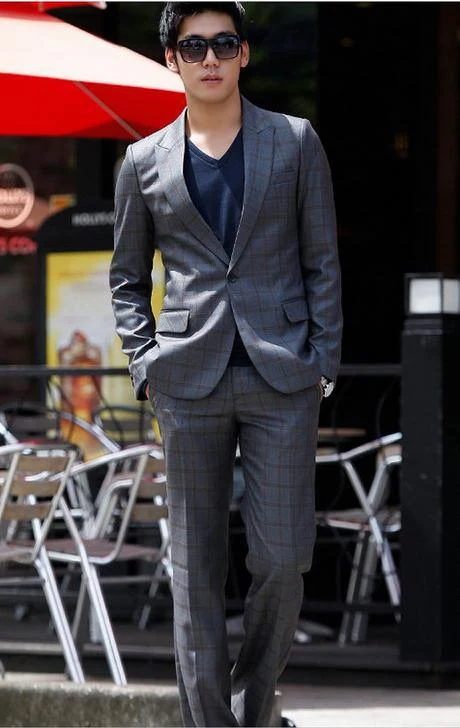
3. The British cut: structured shoulders, long jacket, side vents
The British cut is a structured cut. Squared, built-up shoulders with moderate padding, a firm chest thanks to the inner canvas, a moderately suppressed waist, a jacket long enough to fully cover the seat, side vents, and flap pockets. Trousers have a high rise and straight legs, sometimes with pleats. The fabric is usually heavier: heavy worsted, flannel, checks.
It suits tall men, broad-shouldered men, and those who need a dignified stance such as businessmen, lawyers and executives. Shorter men wearing this cut can find the long jacket "swallowing" their legs; in that case shorten the jacket body by a few centimeters.
Note: thick fabric suits the cold season, not a sunny midday in the city, so keep the British structure but choose a lighter fabric. The British Grey Check Suit SN-158 in our collection is one suggestion to help you picture check patterns.
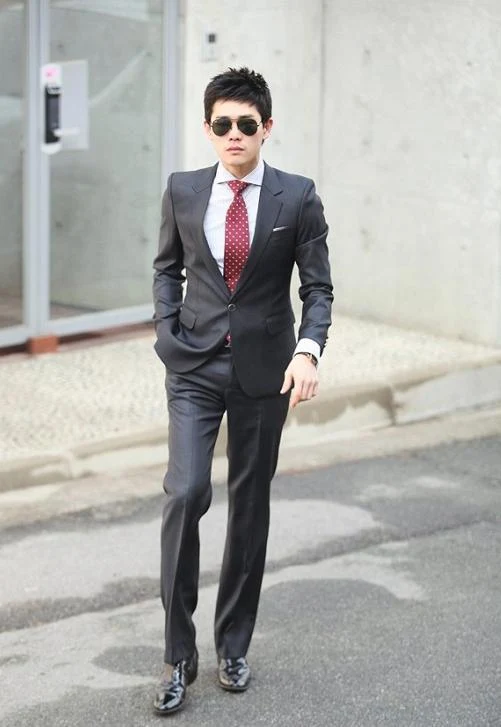
4. The American cut: relaxed, comfortable, easy to move in
The traditional American cut is a relaxed jacket. Natural shoulders with little padding, a body with little waist suppression, a center vent, usually two buttons or a 3-roll-2, a medium lapel. Trousers are straight-legged with a medium rise. This cut was born so that people could work in it all day, so comfort is the first priority.
It suits those with a belly, a fuller build, a broad chest, or anyone who hates feeling restricted. It is also an easy choice for first-time suit wearers.
Note: too relaxed looks sloppy, and drooping shoulders make a person look wide all over. A common approach is to mix cuts: keep the natural American shoulder, take the jacket body in by a few centimeters and add a little Italian-style waist for a neater look.
Quick summary table
| Cut | Suits | Worth remembering |
|---|---|---|
| Korean | Young men, slim to average build | Fitted, short jacket, narrow lapel; those with a belly easily get creases at the button |
| Italian | Balanced builds, people on the move | Soft shoulders, slim waist, light; needs a tailor's skill |
| British | Tall men, businessmen, executives | Structured shoulders, long jacket, side vents; choose lighter fabric in Saigon |
| American | Fuller builds, those who put comfort first | Relaxed, center vent; take the body in a little to avoid looking sloppy |
Tips from Mon Amie's master tailors
- Most good suits are "hybrid" cuts: soft Italian shoulders, a moderate length, British side vents. Do not treat the country names as hard rules.
- Your build decides the cut, not fashion. Sloping shoulders, a stooped back and a protruding belly can all be handled with the cutting line and the padding, as long as you are honest when being measured.
- At the baste fitting, raise your arms, sit down, button up and sit on a low chair. A jacket that pulls the collar backward or creases horizontally at the waist is a sign it needs adjusting.
- A structured cut in thick fabric is hot. In Ho Chi Minh City, if you want structure, choose lighter fabric; details of the fabric lines are in the fabric library.
- Bring a few photos of suits you like and let the tailor point out which details create that feel. A picture says more than a name.
Frequently asked questions
Which cut should a man with a small frame choose?
You should lean toward the Korean or Italian cut: trim shoulders, a jacket just long enough to cover the seat, a lapel that is not too wide. Avoid the long jacket and thick shoulder padding of the British cut because they make a small frame sink. Two buttons, with no vent or a center vent, is a sensible choice.
Does the Korean cut go out of fashion quickly?
The extreme fitted version does, because the degree of fit and shortness changes from season to season. A moderately fitted version, with natural shoulders and trousers that are not too narrow, lasts much longer. You can read more on telling them apart in how a modern men's suit differs from a classic one in its details.
Which cut should a man with a belly choose?
A moderate American or British cut. Both have shoulders and a jacket body wide enough that the belly does not pull on the button. Do not choose a close-fitted Korean cut. Trousers should have a high rise, at the navel or higher, so the line of the body flows more smoothly.
Which cut does Mon Amie make?
With made-to-measure, the cut is the result of your measurements, not a ready-made mold. The stylist takes more than 30 measurements, listens to what style you want, then blends the shoulders, waist and length to your build. Pure Korean, pure Italian or a hybrid are all possible.
Choose the cut for your build, not for the name
A good suit is one that speaks of your build and your work, not one that carries the name of a country. If you are still undecided among the cuts, you can drop by the showroom to try them on, or read three-piece or two-piece suit: which should you have made and minimalist Japanese-style men's suits. When you are ready, book a measuring appointment and a stylist will advise on the cut on your own frame. The full made-to-measure service is on the bespoke tailoring page, and the price range for each fabric line is on the price list.