
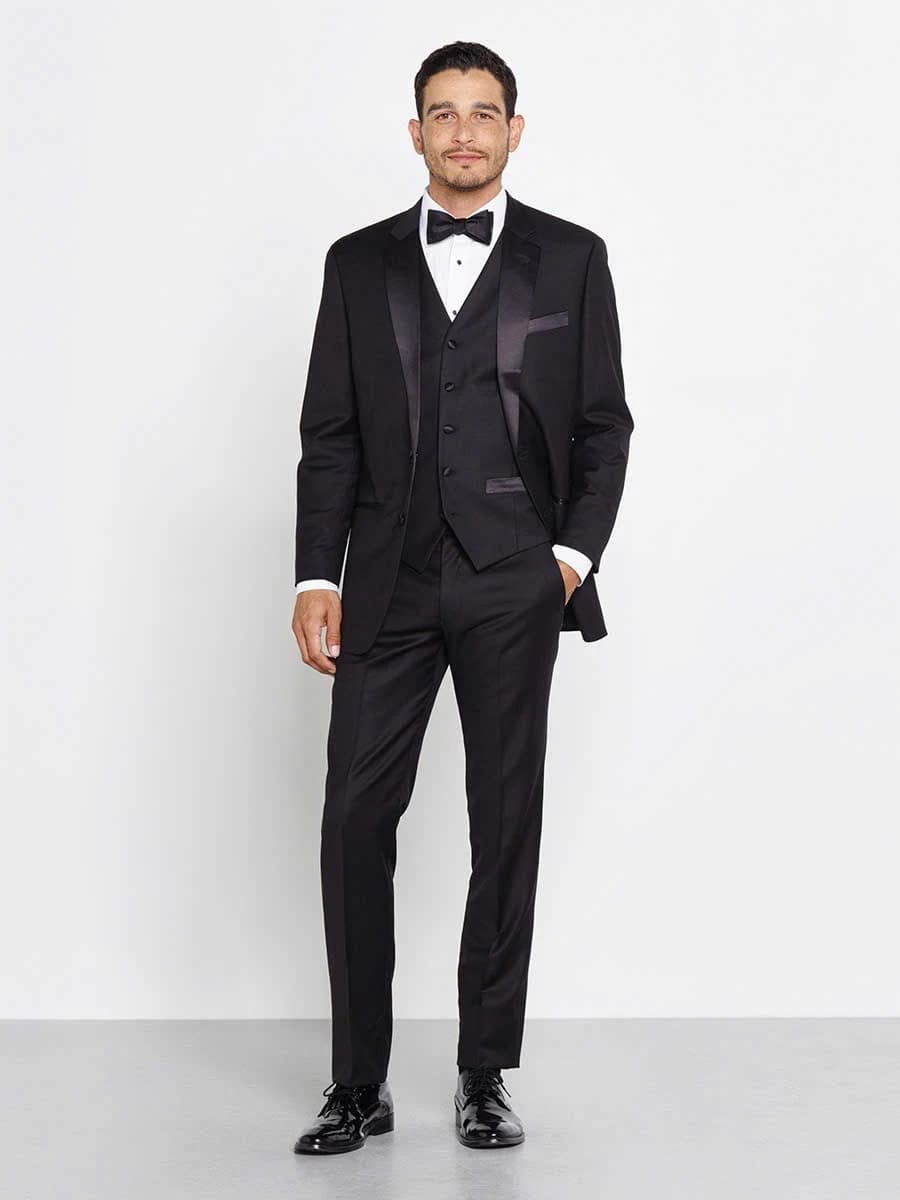
“I want a suit that's a little different from everyone else's, but not too over the top.” That was the request of a young client in a consultation, and it speaks for a great many men. They want to stand out from the crowd in grey and navy suits, yet fear turning into someone wearing a “stage costume”. A men's suit with a twist is exactly the zone between those two shores, and a middle zone always needs a map.
The short answer
A men's suit with a twist is a suit that keeps its structure but varies the details at the collar, front, buttons or length. To keep it a suit, hold on to a true shoulder and standard body proportions, vary only one standout detail per suit, choose a quiet base colour and place it in the right setting: events, parties, photo shoots.
A twist, stylised, avant-garde: what's the difference?
These three labels are often used interchangeably, but they are really three levels:
- A twist: refreshes a few details of the traditional suit, such as changing the lapel, the buttons or the front. Onlookers still recognise at once that it is a suit.
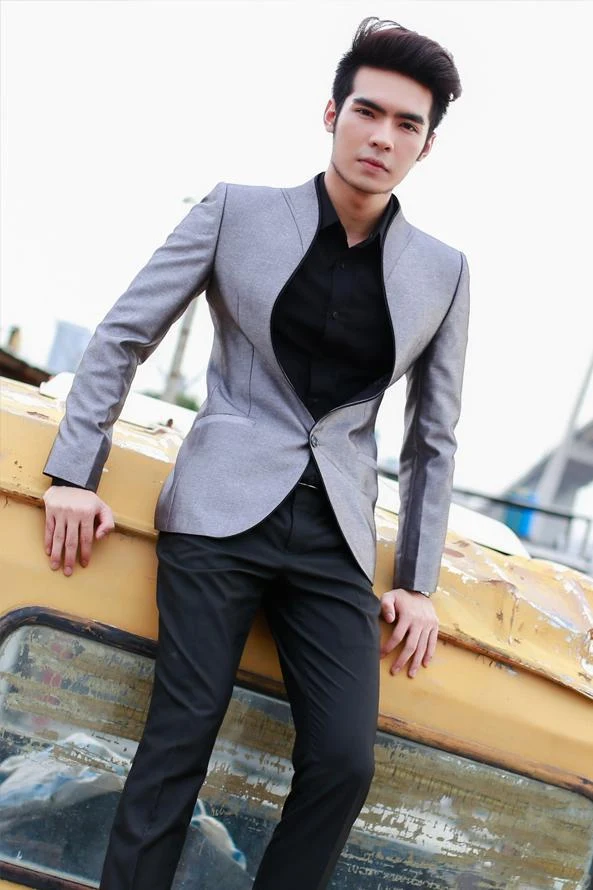
- Stylised: details are pushed a little further, for example a mandarin collar instead of lapels, a curved front, contrast piping. It is still a suit, but it adds a traditional-dress or personal-style element.
- Avant-garde: many details changed at once, usually suited only to the stage, performances or art photography.
Most gentlemen dressing for work or parties should stop at a twist or a light stylisation. Save the avant-garde for special occasions, not the suit you wear every week.
The common groups of variation
| Group | Common variations | Level | Suited settings |
|---|---|---|---|
| Collar and lapel | Shawl lapel, satin lapel, wide peak lapel, covered lapel, mandarin collar, lapel-less jacket | Light to strong | Satin and shawl lapels suit evening parties; mandarin collars suit events and photo shoots |
| Jacket front | Square front, curved front, asymmetric front, longer at the back | Moderate to strong | Weddings, events, stage |
| Buttons | Single button, fabric-covered buttons, hidden buttons, double-breasted with many buttons, metal or jade buttons | Light to moderate | Most occasions, except very traditional settings |
| Length | Cropped jacket, longline jacket (past the seat) | Moderate | Creative events, weekends, photo shoots |
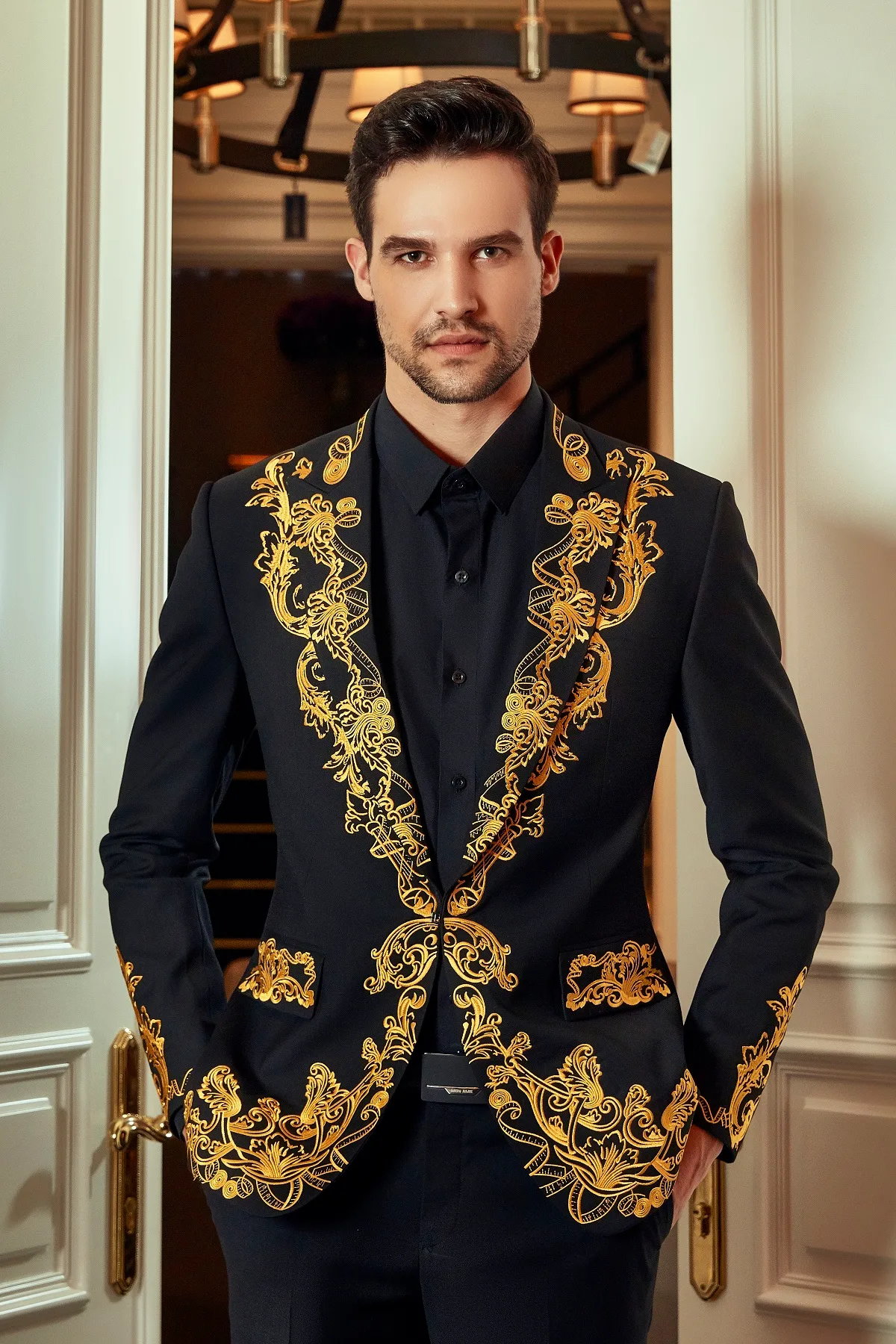
| Minor details | Patch pockets, contrast piping, embroidery, bright lining | Light | Almost any occasion if used with restraint |
| Materials | Velvet, jacquard, metallic, textured weaves | Moderate | Evening parties, weddings, photo shoots |
Each group has subtle versions and “overdone” ones. A softly lustrous satin lapel on deep navy looks elegant, for instance, while a wide satin lapel on a neon base becomes performance wear.
Five limits to keep so it is still a suit
At the showroom, we usually help clients answer the question “is it too much?” with the following five tests:
- Keep the shoulder line. The shoulder is the skeleton of the jacket. A suit with a twist and a true shoulder still looks good, while a wrong shoulder turns into a lopsided garment, however handsome the pattern.
- Keep the body proportions. Jacket length, waist position and button position must be in harmony with height and build. A strong departure in length usually suits only tall, well-proportioned men.
- Vary only one standout detail. If you have chosen a wide satin lapel, keep the front, buttons and length close to standard. When the collar, front and buttons are all unusual, the eye has nowhere to rest.
- Keep the base colour quiet. Navy, black, charcoal and deep olive are bases that carry unusual details easily. A loud base colour combined with an unusual cut is usually harder to wear.
- Keep the suit's “function”. You can still sit, raise your arms and button up freely without feeling restricted or stiff. If a suit with a twist only looks good when you stand straight, it is hard to wear again.
Which settings it suits, which to avoid
| Setting | Level of twist to choose |
|---|---|
| Interview, board meeting, banking | Almost no variation; if any, only in the buttons or lining |
| Relaxed office, creative industries | Light twist: medium lapel, patch pockets, special buttons |
| Evening party, gala, event | Satin lapel, shawl lapel, velvet or metallic fabric |
| Wedding (groom) | Variations in lapel, buttons and accessories; keep the whole balanced with the concept |
| Art photography, performance | Can go further: mandarin collar, asymmetric front, embroidery |
For the wedding day, a groom usually wants a suit that is his own and memorable yet still refined. Mon Amie's groom wedding suit service is where you discuss the wedding concept and the variations that suit the venue.
Stylised blazers: a safer first experiment
If you aren't sure you should rework a whole suit, start with a blazer. A blazer is flexible by nature and is worn in more relaxed settings, so the tolerance for variation is higher. A blazer stylised at the buttons, patch pockets or lapel can still be worn with dress trousers or jeans, and if it doesn't suit you, you lose a single piece instead of a whole suit. You can also read How to choose a men's blazer to grasp the structure before choosing variations.
Common mistakes when choosing a suit with a twist
- Choosing a twist because you saw it online. Models and studio lighting make every suit look good. Look at it on your own body.
- Stacking several variations. An unusual collar, front, buttons and fabric in the same suit ends up “stagey”.
- Sacrificing the cut for detail. The shoulders, armholes and fit are the parts you shouldn't give up in exchange for decoration.
- Forgetting the setting. A mandarin-collar suit looks good at an East Asian-style wedding but doesn't suit a meeting with a traditional partner.
- Not counting how often you will re-wear it. A very distinctive suit can often be worn only once; ask yourself how many times you will wear it.
Tips from Mon Amie's master tailors
If you want a twist but are wary of the risk, start with details that “whisper” rather than “shout”: a deep-coloured lining, classic horn or metal buttons, a pocket square, contrast-coloured thread on the sleeve buttonholes. These details make the suit yours without changing the cut. To go further, try the style on the design your own suit online tool before talking to the master tailor. And if you're interested in how modern and classic cuts differ, the article How a modern men's suit differs from a classic one in its details will complement this very well.
Frequently asked questions
What is a stylised men's suit?
It is a suit where one or several details are stretched away from the traditional standard, such as a mandarin collar, curved front, covered lapel or added piping. Unlike a light twist, a stylised suit is usually recognisable from afar and suits occasions for showing more personality.
Can an avant-garde men's suit be worn to work?
Usually not, unless the company environment is very open. For the office, keep a standard cut and use small details such as buttons, lining or a pocket square to show personality.
How is a blazer with a twist different from an ordinary blazer?
A blazer with a twist changes a few details such as the lapel, buttons, pockets or length. It keeps the basic structure of a blazer but looks clearly different. With a blazer, the range of variation is wider because the occasions are more relaxed than for a business suit.
Can a suit with a twist be made to measure?
Yes. In the bespoke tailoring journey at Mon Amie, you get one-to-one advice from a stylist and a master tailor, choosing the lapel, buttons, front, lining and many other details; the tailor will tell you plainly which details suit your build and which should be toned down.
In closing
A men's suit with a twist looks good when it is still a suit: a true shoulder, harmonious proportions, one standout detail and the right setting. Think like someone seasoning a dish: a little brings out the aroma, too much overwhelms the flavour. If you are nurturing a suit of your own, you are welcome at the Mon Amie showroom to sketch the style together and try fabrics before you decide.