
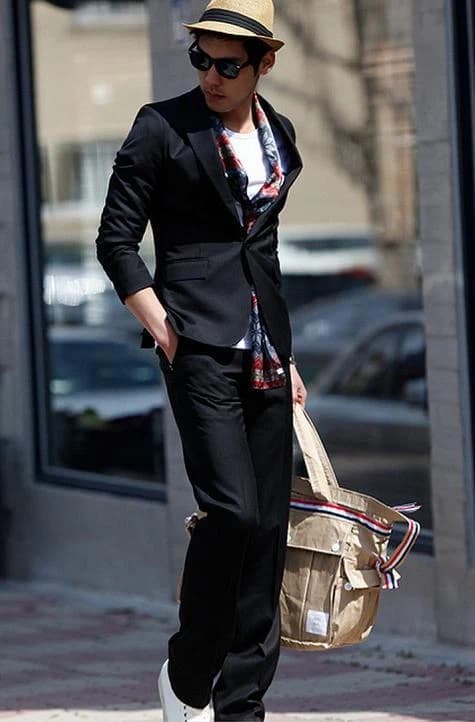
In a meeting, people look at you from the front. When you stand to leave the meeting room, they look from behind. The vent of a suit jacket is a detail the wearer never sees but the person opposite sees very clearly: whether the skirt hangs evenly or flips up, gapes open or creases. Choosing the right vent means choosing how the jacket "moves" when you walk, sit and slip a hand into your pocket.
The short answer
The five suit jacket vent styles are ventless, centre vent, side vents, hacking vents and the side slit for women's suits. Ventless gives a seamless back line; the centre vent is easy to move in; side vents cover the seat well when you put a hand in your pocket; long hacking vents suit a sporty look; the side slit is for women's suits.
1. No vent (ventless): seamless and sleek
The back of the jacket is one continuous panel with no vent at all. Seen from behind, the back looks smooth and clean, which is why this style is familiar on tuxedos, formal wear and Italian-cut suits. The seat is gently hugged, so the figure looks slimmer.
Suits a flat to average seat, a slim build, and anyone who puts a formal look first for photographs or on stage. It works very well on double-breasted jackets and evening suits.
Note: when you sit down, the skirt pulls tight, horizontal creases appear across the back and the button is dragged. If you sit a lot, drive, or have a fuller seat, consider another style. With a ventless jacket, the tailor must get the length and the ease at the seat exactly right.

2. Centre vent: classic and easy to move in
A single vent roughly 20–25 cm long at the centre of the back, often seen on American-cut suits. When you sit, the two halves overlap comfortably; when you walk, the skirt opens slightly and lets you stride. It is a very familiar vent on ready-to-wear suits, so it is easy to find and easy to wear.
Suits an average build, medium shoulders and a seat that is not too full. It also suits hot weather, because the vent lets air out.
Note: when you put a hand in your trouser pocket, or when there is a breeze, the centre skirt flips up and exposes the seat, which is rarely flattering. If the centre vent gapes into a V when you stand straight, the jacket is tight at the seat. For more detail, see the article What Is a Centre Vent?

3. Side vents: the British way, good coverage of the seat
Two vents sit on either side of the back, with the centre panel left whole. When you sit, the two side flaps part instead of creasing; when you put a hand in your trouser pocket, the centre panel still covers the seat fully. From behind, the jacket hangs evenly and looks composed. This is almost the default detail of the British-cut suit.
Suits tall men, men with a fuller seat, and office workers who sit a lot and often put a hand in a trouser pocket. It works with both heavy and light cloth.
Note: vents shorter than 15 cm lose their purpose, and vents that are too long make the skirt flare and look loose. A length of 20–25 cm, depending on the jacket length, is reasonable. This is the choice tailors often recommend when a customer is unsure.
4. Hacking vents: sporty and stylish
This is a longer version of side vents, cut high up, nearly to the level of the waist. The style comes from the riding jacket: the skirt parts wide so that a rider in the saddle does not bunch up the jacket. Today it goes with slanted pockets, tweed, flannel and check cloth.
Suits men who drive a lot, walk a lot, play golf, or want a sporty urban jacket. Tall men with a long torso look very good in it because it creates a clear vertical line.
Note: with a high vent the skirt flares easily when you move, and the tailor must cut it very precisely. Cloth that is too thin or too soft makes the skirt fly up and flip. For formal occasions and traditional weddings, choose regular side vents.
5. Side slit: for long-line women's suits
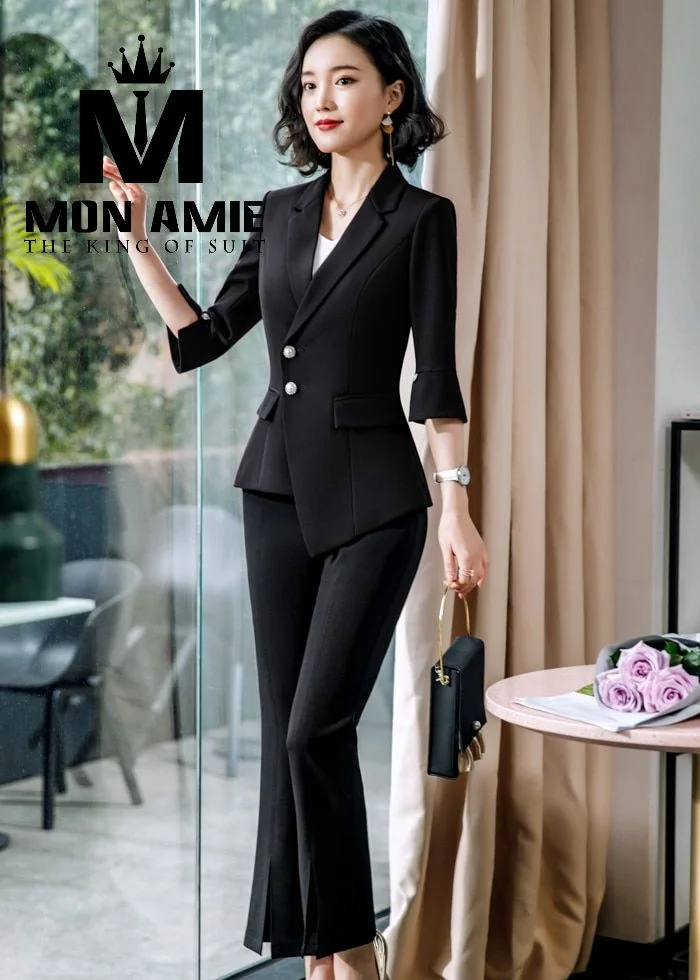
On a long-line women's suit, the slit usually sits at the hip seam instead of the back. A side slit frees the stride, keeps a long jacket from feeling heavy, and lengthens the legs in the overall look. The model Black Women's Suit, Asymmetric Hem, Flared Sleeves, Pearl Buttons, Slit-Leg Trousers SNU-131 in our collection shows that a slit on a women's suit can sit on the asymmetric hem and the trouser legs as well, not only on the back of the jacket.
Suits tall women with a long torso, and anyone who likes a long suit jacket paired with wide-leg trousers or a dress. Shorter wearers should choose a moderate slit and let the tailor keep the proportions right.
Note: a hip slit that is cut too high exposes the hip when you bend over; the tailor will do a baste fitting to find the right slit height.
Quick summary table
| Vent style | Suits | Remember |
|---|---|---|
| Ventless | Slim build, formal wear, tuxedo | Smooth back; the skirt pulls tight when sitting |
| Centre vent | Average build, American-cut suit | Easy to move in; the skirt flips when a hand is in the pocket |
| Side vents | Tall men, fuller seat, long sitting hours | Covers the seat well; 20–25 cm long |
| Hacking vents | Drivers, sporty urban look | The skirt flares; needs cloth with structure |
| Side slit | Long-line women's suits | Airy and lengthening; do not cut too high |
Tips from Mon Amie's master tailors
- Try the jacket in three positions: standing straight, a hand in the trouser pocket, and seated on a chair. If the vent does not gape and does not roll up, it passes.
- A vent that gapes into a V when you stand straight is a sign the jacket is tight at the seat, not a fault of the vent. Tell the tailor to let out the seat.
- Choose the vent first, the jacket length afterwards. The shorter the jacket, the shorter the vent; a vent of about one third of the jacket length usually looks right.
- Cloth with drape and structure suits side vents; cloth that is too thin or too soft makes the skirt flip. You can look at the weave and weight of cloth in our fabric library.
- If the skirt of a jacket creases after long sitting, hang it on a hanger and let it rest instead of washing it. The details are in the article Should You Wash a Suit Jacket?
Frequently asked questions
Which of the suit jacket vent styles suits an office worker: centre vent or side vents?
For office workers who often put a hand in a trouser pocket and sit a lot, side vents are the safe choice because they cover the seat well. A centre vent suits a smaller build, a seat that is not full, or a taste for the classic American look.
Which vent should I choose with a large seat and a full stomach?
Side vents. A ventless jacket tends to pull tight across the skirt and a centre vent tends to flip up. You can read more on choosing the cut in the article suit styles for a pear-shaped build and wide hips.
Can the vent of a finished jacket be altered?
It depends on how much cloth is left in the skirt and on the old seams. Adding a vent to a ventless jacket can sometimes be done, but the old seam will leave a mark. That is why it is better to settle the vent at the measuring appointment; the tailor will tell you whether an alteration is possible when they see the jacket in person.
Which vent should I choose for hot Saigon weather?
Side vents or a centre vent breathe better than a ventless jacket. Combine them with light cloth and a lightly constructed jacket and the whole suit feels much lighter.
Choose the vent to fit how you live
Of all the suit jacket vent styles, the right one is the one that matches how you sit, stand, drive and rest your hands. When you come to a Mon Amie showroom, tell the stylist how many hours a day you sit, then let them choose the vent on your actual figure. You can look at the price list and then book a fitting. To read more about jacket skirts and length, the article Demi Suit Jackets: Half Suit, Half Blazer is also worth a look, and the page on bespoke tailoring presents the whole journey of measuring and baste fitting.