
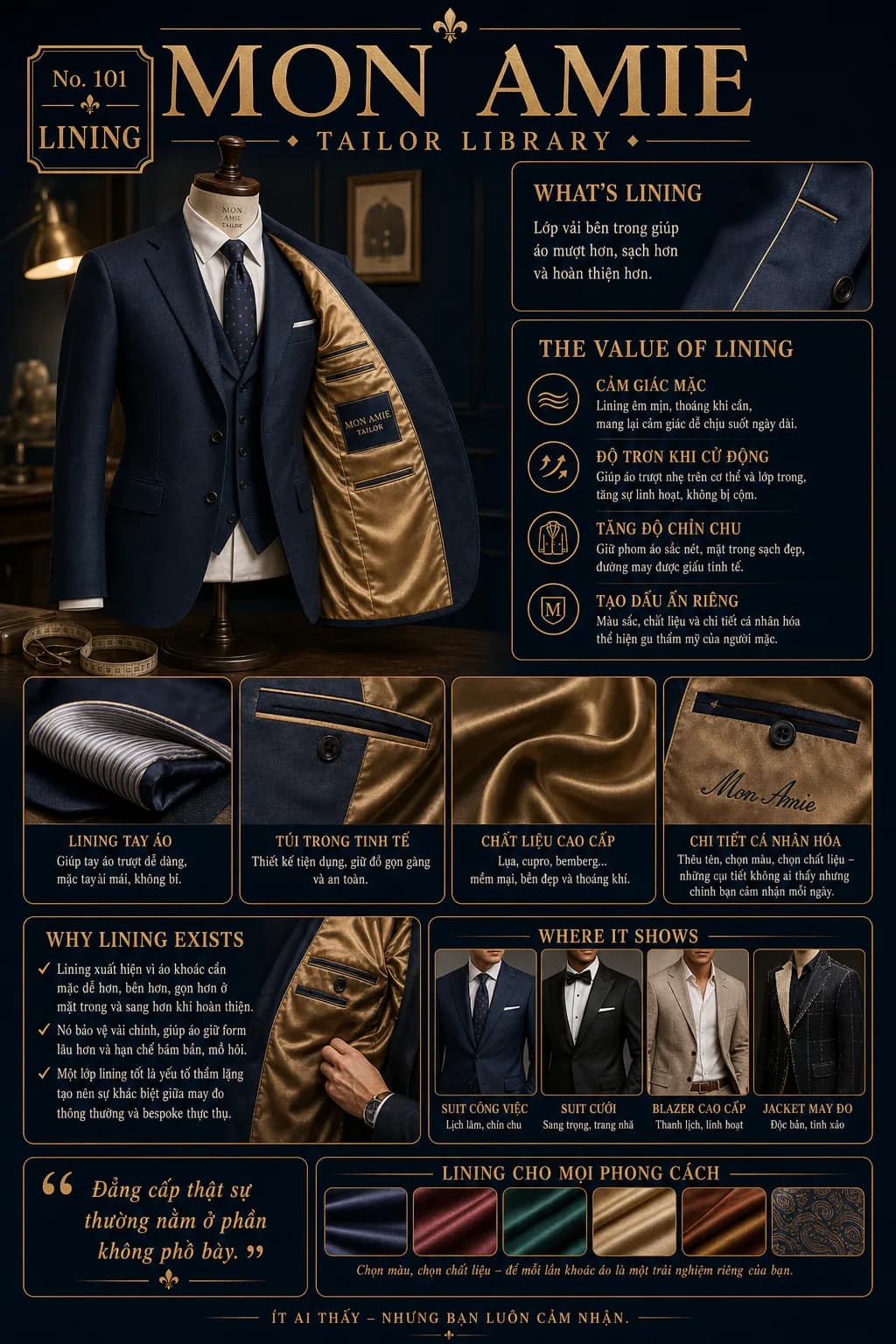
Lining is the inner layer of fabric that makes a jacket smoother, cleaner and more finished. Others will rarely see it, but the man wearing it feels it all day long — from slipping an arm through the sleeve in the morning to hanging the jacket up at night. At Mon Amie, the lining is the unshown part that gives a made-to-measure suit its true standing.
What lining is, and why it came about
In the history of tailoring, lining was never decorative. It solved very practical problems inside a jacket:
- It makes the jacket easier to wear: the smooth surface lets the coat glide over your shirt without clinging or dragging.
- It makes the jacket last longer: the lining shields the outer cloth from direct friction with the body, keeping soil and perspiration away from an expensive fabric.
- It makes the inside tidy: every seam, raw edge and canvas layer is discreetly covered, so the inside reads as beautifully as the outside.
- It helps the jacket hold its shape: lining contributes to structural stability, so the coat keeps its line over many years.
A good lining is the quiet detail that separates an ordinary suit from a genuine bespoke one. That is why long-established houses lavish care on the part their clients almost never show off.
The four things a good lining gives you
Wear a suit whose lining has been done properly and you will notice four things:
- How it feels: a fine lining is soft, breathable and comfortable through a long day. This is the first thing that separates a jacket lined in good material from one lined in cheap polyester — which traps heat, breathes poorly and builds static.
- Freedom of movement: the lining lets the coat slide over your body and shirt, so reaching, sitting down or putting the jacket on never feels bunched or restricted.
- A more polished result: a crisp silhouette, a clean interior, seams elegantly concealed. When you take your jacket off and drape it over a chair mid-meeting, the inside is part of your image too.
- A personal signature: colour, material and bespoke touches in the lining express your own taste — a discreet bit of character that only you and the sharpest eyes will catch.
Lining materials: silk, cupro and bemberg
Not all linings are equal. The finer materials used in tailoring include:
- Silk: soft, luxurious, remarkably pleasant against the skin — the traditional bespoke choice.
- Cupro / Bemberg: a regenerated fibre made from cotton cellulose, soft, durable and far more breathable and moisture-wicking than polyester. It is the modern benchmark in fine tailoring because it balances durability, glide and comfort.
Inexpensive polyester lining may look similar on the rack, but after a few hours in Ho Chi Minh City's heat and humidity the difference is unmistakable.
The lining details connoisseurs look for
On a carefully tailored jacket, the lining is more than a sheet of cloth inside:
- Sleeve lining: usually a dedicated striped fabric that lets the sleeve slip on easily and keeps the arm cool.
- Well-considered inside pockets: designed to hold a wallet, a pen, a phone securely and neatly without disturbing the jacket's line.
- Personal touches: an embroidered name, a chosen colour, a chosen material. Details nobody else sees, but that you feel every day.
Lining for each style of suit
Lining appears in every kind of jacket, and each has its own spirit:
- Business suits: lining tonal with the outer cloth — refined and considered.
- Wedding suits: a bolder colour or a pattern, elegant and celebratory — a beautiful surprise for the day that matters.
- Fine blazers: a light lining or half-lining for ease and elegance.
- Made-to-measure jackets: free rein on colour and pattern — burgundy, forest green, paisley — to create something singular and finely made.
A word from Mon Amie's artisans
In consultation, Mon Amie usually recommends cupro or bemberg lining for a suit worn daily in Saigon's climate, for its breathability and durability. For a wedding suit or a jacket with character, feel free to choose a contrasting lining or a hand-embroidered name — a private detail, but a meaningful one. And one simple rule: at your fitting, judge the inside with your hand and with a roll of the shoulders. If the jacket glides smoothly with nothing bunching, the lining has been done properly.
True refinement usually lives in the part that is never displayed — seldom seen, always felt. If you would like to choose the lining for your next suit at one of Mon Amie's five showrooms in Ho Chi Minh City, we invite you to book an appointment or read more about the tailoring process.