
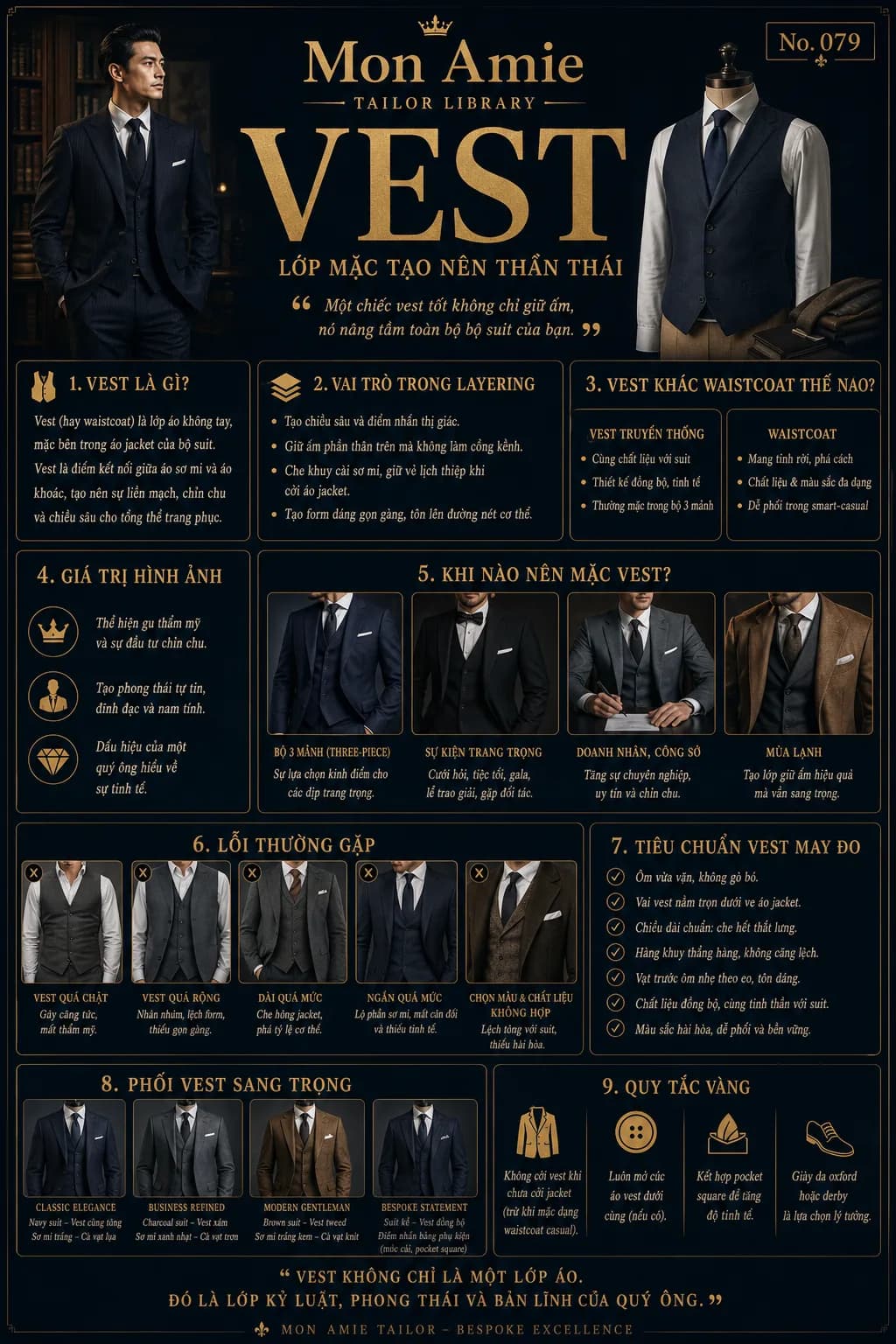
What is a waistcoat? In tailoring, the waistcoat — vest in American usage — is the sleeveless garment worn beneath a suit jacket. It is the link between shirt and jacket, giving the whole outfit continuity, polish and depth. A good waistcoat does more than keep you warm; it raises the standard of the entire suit.
What the waistcoat does in the art of layering
Many people take the waistcoat for an optional extra. In truth, in the art of layering it performs roles nothing else can:
- It adds depth and a visual focal point, instead of leaving two flat layers of shirt and jacket.
- It warms the torso without bulk — the very reason it entered European gentlemen's dress centuries ago.
- It covers the shirt buttons, keeping you properly dressed even when you remove your jacket in a meeting room or at the table.
- It creates a trim line that flatters the body, particularly through the waist and chest.
Traditional waistcoat versus the standalone piece
The same origin, but two directions in use:
- The traditional suit waistcoat: cut from the same cloth as the suit, matched and refined, and usually part of a three-piece. This is the standard for formal occasions.
- The standalone, expressive waistcoat: varied in cloth and colour — tweed, knit, patterns — easy to work into smart casual dress and wearable with just a shirt and trousers, no jacket required.
Understanding the boundary helps you choose well: a matched waistcoat for signing a contract, a standalone one for a weekend coffee.
Its value in the image you present, and when to wear it
The waistcoat carries a value beyond function: it signals taste and considered investment, and it lends an air of confidence, composure and masculinity — the mark of a gentleman who understands refinement.
The moments when a waistcoat earns its keep:
- The three-piece suit: the classic choice for formal occasions, when you want the most complete image.
- Formal events: weddings, dinners, galas, award ceremonies, meetings with important partners.
- Business and the office: it adds professionalism, authority and polish in the eyes of clients and colleagues.
- Cold weather: an effective warming layer that stays elegant and far neater than a heavy knit.
Common mistakes when wearing a waistcoat
The waistcoat sits closest to the body of any piece in a suit, so small errors show immediately:
- Too tight: it strains at the button line, looks poor and feels uncomfortable when seated.
- Too loose: it wrinkles, loses its shape and looks untidy — as though borrowed.
- Too long: it covers the jacket's hip line, breaking the proportion and shortening the leg.
- Too short: it exposes shirt and belt, unbalancing the look — the most common fault with ready-made waistcoats.
- The wrong colour or cloth: out of tone with the suit, and out of harmony overall.
The standards of a bespoke waistcoat
At Mon Amie's cutting table, a waistcoat must satisfy all of the following:
- A close fit that never restricts — free movement with the shape held.
- Shoulders that sit entirely beneath the jacket's lapels, never showing.
- Correct length: covering the belt, with the points meeting the top of the trousers.
- A button line that runs straight and does not pull when fastened.
- Front panels shaped lightly to the waist, flattering the figure.
- Cloth matched to the suit and true to its spirit.
- Colours that harmonise, combine easily and hold their appeal over time.
This is precisely why a bespoke waistcoat is different: every waist, chest and back measurement is cut for one man, which industrial sizing cannot do.
Four elegant waistcoat formulas
You can begin from four proven combinations:
- Classic Elegance: navy suit, matching waistcoat, white shirt, silk tie. Safe and refined for every formal occasion.
- Business Refined: charcoal suit, grey waistcoat, pale blue shirt, plain tie. The boardroom standard.
- Modern Gentleman: brown suit, tweed waistcoat, cream shirt, knit tie. Warm and characterful.
- Bespoke Statement: striped suit, matching waistcoat, accents from accessories such as a chain or a pocket square.
A few golden rules come with them: never remove your waistcoat before your jacket (unless you are wearing it as a casual standalone piece); always leave the bottom button undone if there is one; add a pocket square for refinement; and oxfords or derbies are the ideal shoes to complete the picture.
A word from Mon Amie's artisans
When making a three-piece, Mon Amie always advises trying the waistcoat on seated, not only standing — most of your time in a waistcoat is spent sitting in meetings and at dinners, and that is when tightness or shortness shows most plainly. We also recommend having the waistcoat cut from the same bolt as the suit from the outset, because ordering one later rarely matches the same dye lot, even under the same cloth reference. Finally, remember the bottom-button rule — a small detail, but the one that separates a man who understands suits from a man who merely wears them.
A waistcoat is not simply another layer — it is a layer of discipline, presence and self-assurance. If you would like a three-piece cut to your own measurements, we invite you to book an appointment at one of Mon Amie's five showrooms in Ho Chi Minh City, or to read about the tailoring process beforehand — hotline 0888.111.118 is always available to advise.