
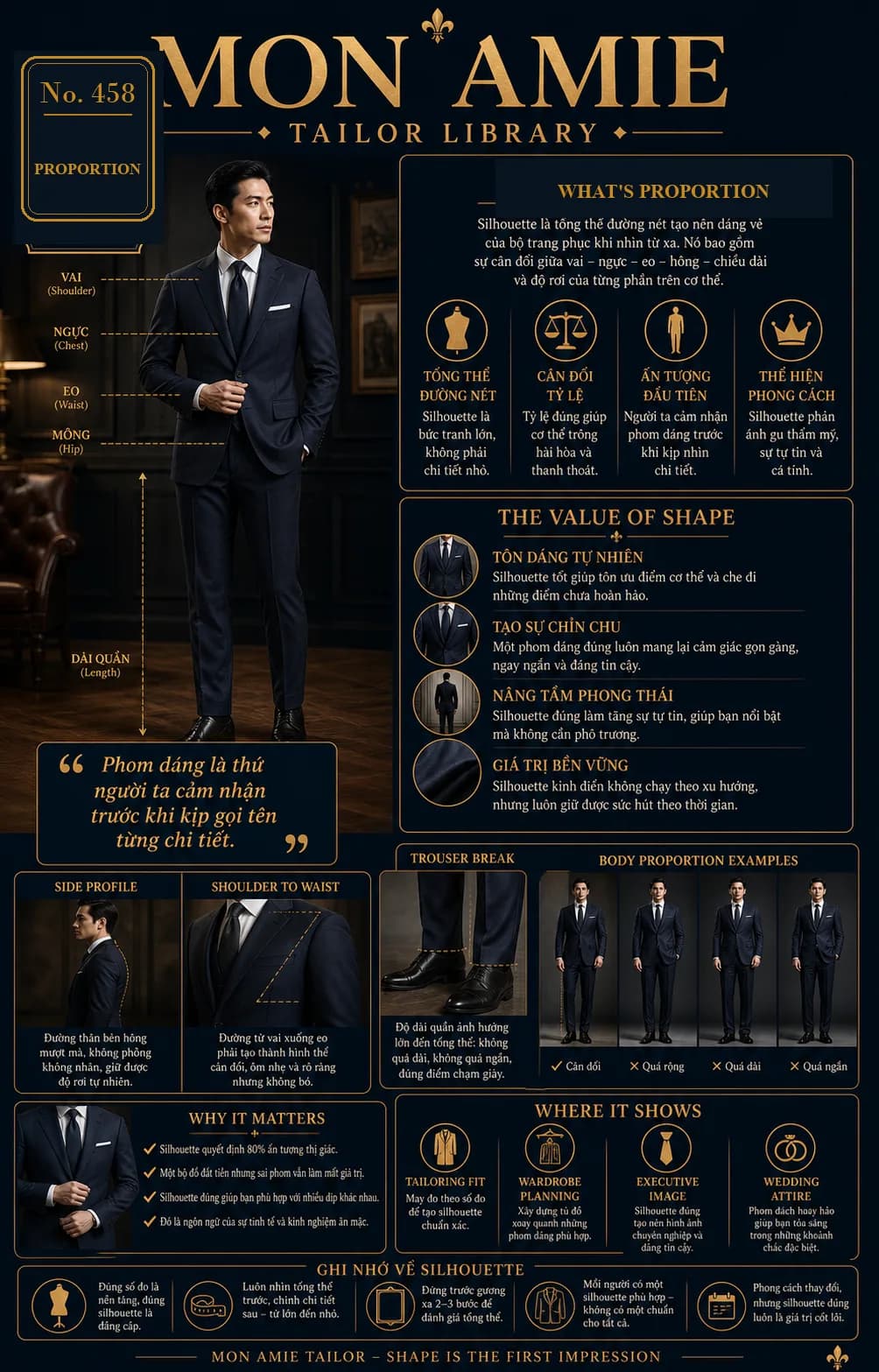
Proportion is the relationship between the parts of a garment — shoulders, chest, waist, hips and the length of each element — which together create the silhouette people notice first. We perceive shape before we can name any single detail. That is why a suit with correct proportion is always more convincing than an expensive suit that sits wrong on the body.
What a silhouette is and why it matters
The silhouette is the overall line a garment presents when seen from a distance. It encompasses the balance between shoulders, chest, waist and hips, along with the length and drape of each part of the body. Four core ideas worth remembering:
- The overall line: the silhouette is the big picture, not the small detail. Lapels and cufflinks only matter once the frame is right.
- Balanced proportion: correct proportion makes the body look harmonious and elegant, even when the figure is not ideal.
- First impressions: from two or three paces away, the eye registers only the shape.
- A statement of style: the silhouette reflects the wearer's taste, confidence and character.
The five landmarks that define proportion
On the body, there are five landmarks a tailor measures and weighs together:
- Shoulder: the anchor of the entire jacket. The shoulder line must end precisely at the shoulder bone — neither dropping onto the upper arm nor falling short of it.
- Chest: determines the fullness of the front. Too wide and the jacket balloons; too tight and X-shaped wrinkles pull around the button.
- Waist: where the gentle V is shaped. A moderate suppression gives the torso rhythm; over-suppression makes the jacket pull and crease horizontally.
- Hip: the skirt of the jacket should glide smoothly over the hips without flaring, preserving a natural drape.
- Trouser length: the length of the leg has an outsized effect on the whole — neither too long nor too short, meeting the shoe at just the right point.
The real value of a correct silhouette
- Natural flattery: a good silhouette celebrates the body's strengths and quietly conceals its imperfections, without padding or squeezing.
- A sense of polish: correct proportion always reads as neat, composed and trustworthy.
- Elevated presence: a well-proportioned suit builds confidence and lets you stand out without showing off.
- Lasting value: the classic silhouette does not chase trends, yet it never loses its appeal over time.
Three sightlines for checking a fit yourself
When trying a suit on, you can judge it through three simple views:
- Side profile: seen from the side, the line from armhole to hem should run smoothly — no ballooning, no creasing, a natural drape throughout.
- Shoulder to waist: this line should form a balanced shape that follows the body clearly but never constricts it.
- Trouser break: the hem should just touch the top of the shoe, creating a modest break. Too long shortens the legs; too short breaks the vertical line of the whole outfit.
The four most common faults, when silhouettes are compared side by side, are: too wide, too long, too short — and only then the balanced fit. Miss any one of those three sightlines and the whole suit loses its authority.
Where proportion matters
- Tailoring fit: cutting to the body's measurements to create a silhouette precise to one person.
- Wardrobe planning: building a wardrobe around silhouettes that suit you, rather than buying on impulse.
- Executive image: the right silhouette projects professionalism and credibility in a leadership setting.
- Wedding attire: a flawless silhouette lets the groom shine in moments that will certainly be photographed.
A word from Mon Amie's artisans
At Mon Amie, the tailor always looks at the whole before refining the parts — from large to small. We suggest standing two or three steps back from the mirror to judge the silhouette, rather than inspecting each stitch at close range. Every man has a silhouette of his own; there is no single standard for all, and that is precisely why Mon Amie keeps your measurements on file for life.
Accurate measurements are the foundation, but the right silhouette is what sets a suit apart. If you would like to be measured and advised on the proportions that suit your build, you are welcome to book an appointment at one of Mon Amie's five showrooms in Ho Chi Minh City — Nguyen Trai, Ho Van Hue, 3/2 Street, Caravelle Hotel District 1 and Nguyen Thi Thap — or call our hotline at 0888.111.118. You may also read about the tailoring process beforehand to picture each step of working with your tailor.