
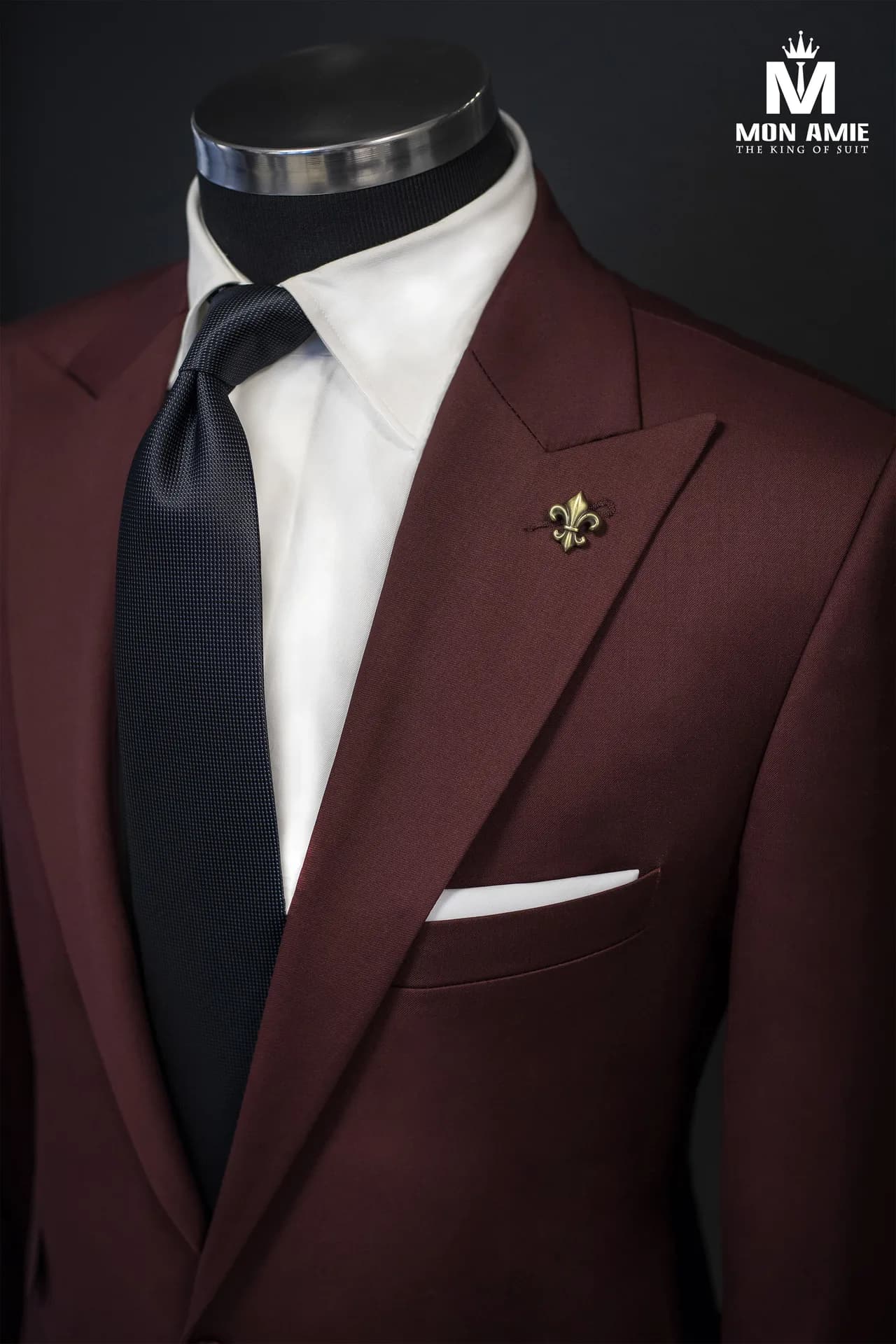
A client points at his chest and says: “This part, this bit that folds out, I want it smaller.” The master tailor nods, because he knows the man is talking about the lapel. But if that day he had said “the flap at the side” or “the slit at the back”, the conversation would have been a lot longer. Knowing the names of the parts lets you say exactly what you want, and saves you both a fitting session. This article answers the question what are the parts of a men’s suit head on: 20 parts, with Vietnamese and English names.
Quick answer
A three-piece men’s suit has 20 main parts: 11 on the jacket (lapel, collar, shoulder, front panel, breast pocket, hip pockets, buttons, sleeve, cuff buttons, vent, lining), 5 on the trousers (waistband, pleats, pockets, crease, hem) and 4 on the waistcoat. Every part can be customised when the suit is made to measure.
What are the parts of a men’s suit? A map of 20 parts
The table below follows the order in which you naturally notice the parts when wearing the suit: from top to bottom, from outside to inside.
| No. | Part | Vietnamese | What your tailor often asks you |
|---|---|---|---|
| Jacket (áo vest) | |||
| 1 | Lapel | Ve áo | Notch (ve bản nhỏ), peak (ve nhọn) or shawl (ve cổ khăn) lapel? How wide? |
| 2 | Collar | Cổ áo | Close against the nape, or slightly open? |
| 3 | Shoulder | Vai áo | Natural shoulder, lightly padded or clearly padded? |
| 4 | Front panel / Chest | Thân trước (ngực) | Relaxed or fitted chest? |
| 5 | Breast pocket | Túi ngực | Will you wear a pocket square? |
| 6 | Hip pocket (flap pocket) | Túi hông | Flap, jetted or patch pocket? |
| 7 | Buttons and buttonholes | Cúc và khuyết áo | How many buttons, what material, hand-made or machine buttonholes? |
| 8 | Sleeve | Tay áo | Sleeve length, sleeve width |
| 9 | Cuff buttons | Cúc tay | How many buttons, working buttonholes or not? |
| 10 | Vent | Xẻ sau | No vent, centre vent or side vents? |
| 11 | Lining | Lót áo | Full or half lining, and what colour? |
| Trousers | |||
| 12 | Waistband | Cạp quần | High or regular rise; with an adjuster or not? |
| 13 | Pleat | Ly quần | Flat front, one pleat or two? |
| 14 | Slant pocket | Túi quần | Slanted or straight pocket? |
| 15 | Crease | Đường ly | Sharp or soft crease? |
| 16 | Hem / Cuff | Gấu quần | Plain hem or turn-up? How far should it rest on the shoe? |
| Waistcoat | |||
| 17 | V-neck opening | Cổ gile | Deep or shallow V? |
| 18 | Front | Thân trước gile | Single-breasted or double-breasted? |
| 19 | Welt pocket | Túi gile | With pockets? With a watch chain? |
| 20 | Back and adjuster strap | Lưng gile và dây chỉnh | Back in the same cloth or in lining? |
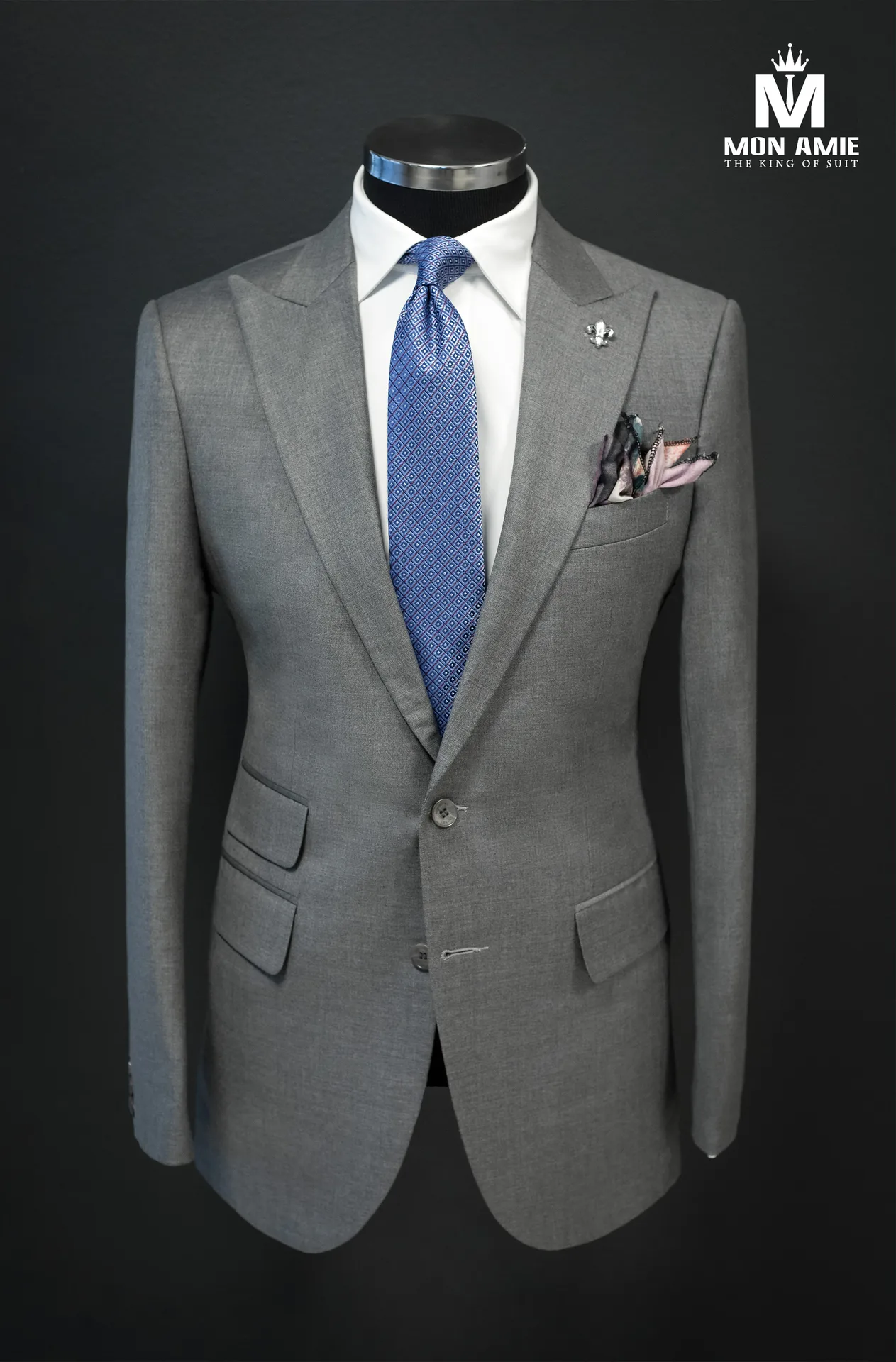
The jacket: the details that decide the shape
What is a suit lapel? What is “ve áo vest” in English?
The lapel is the part of the cloth that folds back at the chest, running from the collar down to the first fastening button. In English it is called a lapel. There are three main styles:
- Notch lapel (“ve bản nhỏ”): has a V-shaped notch where it meets the collar; the most common and easiest to wear, suited to every office occasion.
- Peak lapel (“ve nhọn”): the tip points up toward the shoulder; formal and strong, often seen on double-breasted jackets and tuxedos.
- Shawl lapel (“ve cổ khăn”): a continuous curved line with no notch, usually made in satin for tuxedos.
A common lapel width is around 7 to 9 cm. Men with narrow shoulders and slim frames suit a narrower lapel; men with broad shoulders and a full chest can carry a wider one. You can read more in What Is a Lapel and How to Choose a Suit Lapel.
Shoulder, chest and sleeve: the three hardest details to alter
The shoulder is the one detail that almost cannot be altered after the suit is made. The shoulder seam must sit exactly over the tip of your shoulder bone, neither wider nor narrower. This is why, in made-to-measure, the master tailor always measures and baste-fits the shoulder first.
The chest needs to be roomy enough to fasten without pulling creases, but close enough not to billow when you stand straight. The sleeve should be long enough to just reach the wrist bone, so that about one to one and a half centimetres of shirt cuff shows.
Pockets, buttons and cuff buttons
The most common hip pocket is the flap pocket. It can be a jetted pocket if you want something more formal, as on a tuxedo, or a patch pocket if you prefer a relaxed look. The breast pocket is for a pocket square. Inside the jacket there are usually extra inner pockets for a wallet and phone.
A single-breasted jacket usually has two or three buttons. Cuff buttons are usually four; if the cuff buttonholes actually open (working cuffs), the jacket is regarded as properly made to measure. The number of buttons is a choice in its own right: a single-breasted jacket usually has two or three, a double-breasted jacket from four to six.
Vents: centre vent or side vents on a men’s suit jacket
The vent is the cut at the hem of the jacket back that lets you sit, bend and put your hands in your pockets without the jacket pulling. There are three styles:
| Vent style | Characteristics | Suited to |
|---|---|---|
| No vent (ventless) | A smooth, unbroken line over the seat; cleanest and most formal | Tuxedo, formal-occasion suit jackets |
| Centre vent | One slit at the centre back; easy to make, easy to wear | Average builds, everyday wear |
| Side vents | Two slits at the sides; hugs the seat better, and nothing gapes when your hands go in your pockets | Tall builds, people who often sit in meetings |
If you sit a lot and put your hands in your trouser pockets, side vents are the most durable choice. If you like a clean, formal silhouette, go for no vent.
Lining: the detail outsiders rarely notice
The lining can be a full lining or a half lining. A half lining is more breathable and so suits hot weather, but the inner seams show, which demands more careful tailoring. The lining colour is where you slip a little personality into a serious suit.
Trousers and waistcoat: two pieces that are often overlooked
Suit trousers need a well-fitted waistband (a high rise is more comfortable for a middle-aged build, a regular rise suits a younger man), pleats (flat front for a slim look, one or two pleats for a man with large thighs or a belly) and a hem that rests lightly on the top of the shoe. The crease should run sharp and straight from thigh to hem.
The waistcoat is a short layer worn between the shirt and the jacket. The V-neck opening is deep enough to show the tie, and the body of the waistcoat covers the waistband of the trousers. The back has a small adjuster strap to fit the waist without needing a belt.
Tips from Mon Amie’s master tailors
- Before you come in, ask yourself “what parts does a men’s suit need” for you in particular. Do you put comfort or formality first, and is the suit for everyday wear or only for occasions? The answer will decide the lapel, the vent and the lining.
- Learn 5 basic words first: lapel, shoulder, vent, cuff, lining. Just by getting these five words right, you can make the consultation twice as fast.
- Photograph the details you like on another suit and send them to the stylist, then describe them using the part names. Photos and names complement each other.
- Every detail can be customised, but the shoulder and the fit are things not to compromise on. At Mon Amie, when you have a suit made bespoke, the artisan takes more than 30 of your measurements and keeps them for your later orders. You can learn about the process on the bespoke made-to-measure page, and see how to take the measurements of a ready-made suit jacket if you want to bring an old jacket as a template.
Frequently asked questions
What is a suit lapel?
The lapel is the part of the cloth folded back at the chest of a suit jacket, joining the collar to the first button line. There are three main styles: notch lapel, peak lapel and shawl lapel. The choice of lapel decides much of the character of the suit.
What is “ve áo vest” in English?
It is lapel. When talking with your tailor, you can say “notch lapel” for the notched style, “peak lapel” for the pointed style and “shawl lapel” for the shawl-collar style. A tailor understands immediately without further description.
Centre vent or side vents on a men’s suit jacket?
Side vents give a slimmer line and are convenient for people who sit a lot and put their hands in their pockets. A centre vent is easy for everyday wear, while no vent is the cleanest but a little tight when sitting. Choose by your daily habits rather than by fashion.
Do side vents suit a heavier man?
Yes, because the two slits let the jacket fall straight over the hips and not gape at the centre back when sitting. More important is that the jacket is long enough to cover the seat and that the waist is cut to fit, not too tight.
A final word
Learning the names of these 20 parts, and understanding what parts a men’s suit needs, won’t turn you into a tailor; it will turn you into a demanding client in the most endearing way. If you want to put each detail together yourself, try Mon Amie’s online suit design tool, then bring the design to a showroom for the master tailor to complete with you.