
You stand in front of the mirror, fasten the third button of the waistcoat and look down: the two middle buttons strain as if about to burst, and the cloth fans out in an X right across your belly. The question comes naturally: is a waistcoat something that hides the belly, or something that makes it more obvious? With a plus-size men's waistcoat, the answer lies in whether it fits. A fitting waistcoat is a neat, flat panel; a tight one is an advertisement for your waistline.
The short answer
A plus-size men's waistcoat gives a flatter belly when it fits, is long enough to cover the waistband and ends in a pointed bottom; a tight waistcoat shows the belly because of strained buttons and X-shaped creases. Fuller men should choose a single-breasted waistcoat, a moderate V, a plain dark cloth, and have the tailor adjust the length and back strap to their actual waist measurement.
Why does a waistcoat both slim the belly and show it?
A waistcoat helps a fuller man look slimmer in three ways:
- It creates a flat surface. The waistcoat cloth follows the torso and holds the belly area as a single flat block, instead of letting the shirt puff out and crease.
- It draws the eye vertically. The V of the neckline and the vertical row of buttons lead the gaze up and down rather than across the belly.
- It covers the transition zone between shirt and waistband, which is where things show most.
But those very advantages reverse when the waistcoat is too tight. The buttons strain, the cloth creases diagonally in an X, the bottom of the waistcoat rides up and the shirt shows between waistcoat and trousers. At that point the waistcoat acts like a belt cinched in, pushing the belly out instead of keeping it neat.
Four details that decide whether a big-size waistcoat looks good
1. Length
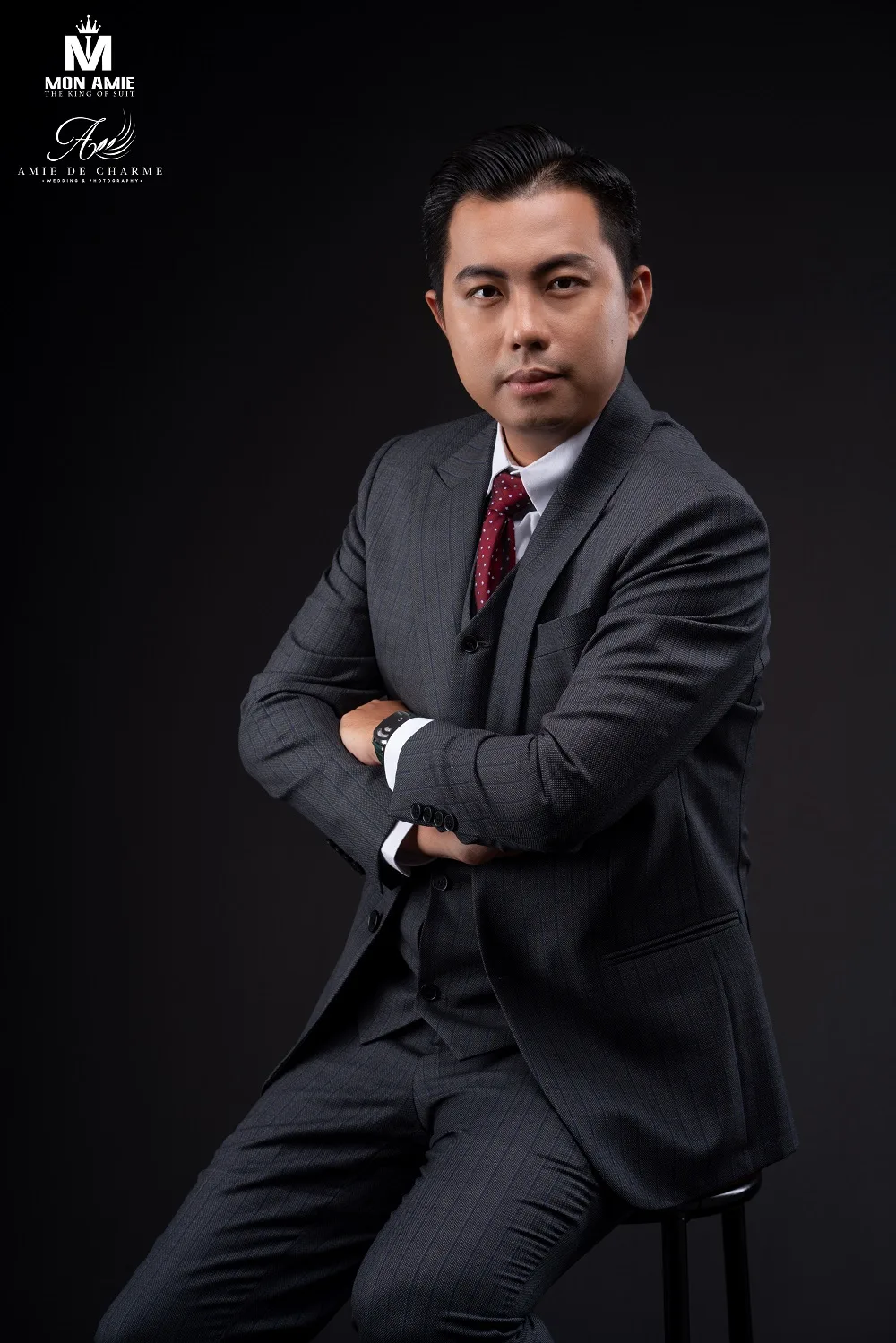
The waistcoat must cover the whole waistband, with the point (the pointed tip at the bottom centre) dropping a little below it. For a fuller man, choose a waistcoat slightly longer than standard, because a protruding belly makes the bottom ride up, and a short waistcoat will leave the shirt showing. A pointed bottom is preferable to a cut-off one, because the diagonal line makes the torso look slimmer and longer.
2. The V neckline
A moderate V makes the upper body look more vertical. A neckline that is too high and narrow pushes the eye onto the chest and belly. Conversely, a V that is too deep shows too much tie and shirt, and the balance is lost. A sensible depth usually leaves a fair stretch of the tie visible, with the tie knot in view.
3. Number of buttons and spacing
A single-breasted waistcoat with five or six buttons, evenly spaced, is the popular and easy choice. The last button is left undone, which lets the waistcoat sit more comfortably when you sit down. The spacing between buttons should not be pulled tight by the waist; if you see an X-shaped crease, choose a larger size or ask the tailor to adjust it.
4. The back strap (cinch strap)
The back strap is the detail that gives a plus-size waistcoat its flexibility: you can adjust it when your weight changes or after a meal. The rule is to adjust until it just touches, not to cinch. Don't use the strap as a belly belt, because the waistcoat will crease and feel tight.
Choosing fabric and colour for a plus-size men's waistcoat
- Dark colours, plain or with a thin vertical stripe: navy, charcoal, earth brown, black. Dark colours visually contain the body, and a vertical stripe lengthens the torso.
- Fine wool with good drape, of moderate thickness. Avoid thin cloth that shows creases, and cloth so thick that it makes the torso look wider.
- Avoid large checks, shiny cloth, horizontal patterns, and a pale waistcoat that stands out against a dark shirt.
- Matching the trousers in fabric and colour (waistcoat and trousers from the same suit) creates a continuous vertical line and looks slimmer.
Single-breasted or double-breasted?
| Body type | Suggested waistcoat | Why |
|---|---|---|
| Tall and broad-shouldered (big and tall), moderate belly | Single-breasted; double-breasted with a peak lapel if cut precisely | Broad shoulders balance the width of a double-breasted front |
| Short, full belly | Single-breasted, deep V | A double-breasted front adds width |
| Middle-aged, rounder torso | Single-breasted with 5 to 6 buttons, muted colour | Easy to wear, neat, polished |
| Fuller man with a broad chest | Single-breasted, or double-breasted cut precisely | A double-breasted front can merge chest and belly into one block |
As for the double-breasted vest, big and tall — a double-breasted waistcoat for tall, large men — this style works if the torso is long enough and the shoulders broad enough. A double-breasted waistcoat adds width to the torso, so if you have a full belly, have the tailor cut it precisely and choose a long peak lapel to draw the eye along a diagonal. You can read more in men's waistcoats with and without a collar to tell the styles apart when you choose.
A men's waistcoat for middle-aged men: neat, not forced
For a middle-aged man's waistcoat, we usually suggest three things:
- Muted colours such as navy, charcoal and earth brown, with few patterns.
- A comfortable fit, not too slim. A middle-aged man needs a waistcoat that fits closely enough, but lets him breathe and sit comfortably.
- A light shirt underneath (white, pale blue) to brighten the face, with a tie or pocket square in the same tone.
High-rise trousers: the other half of the waistcoat
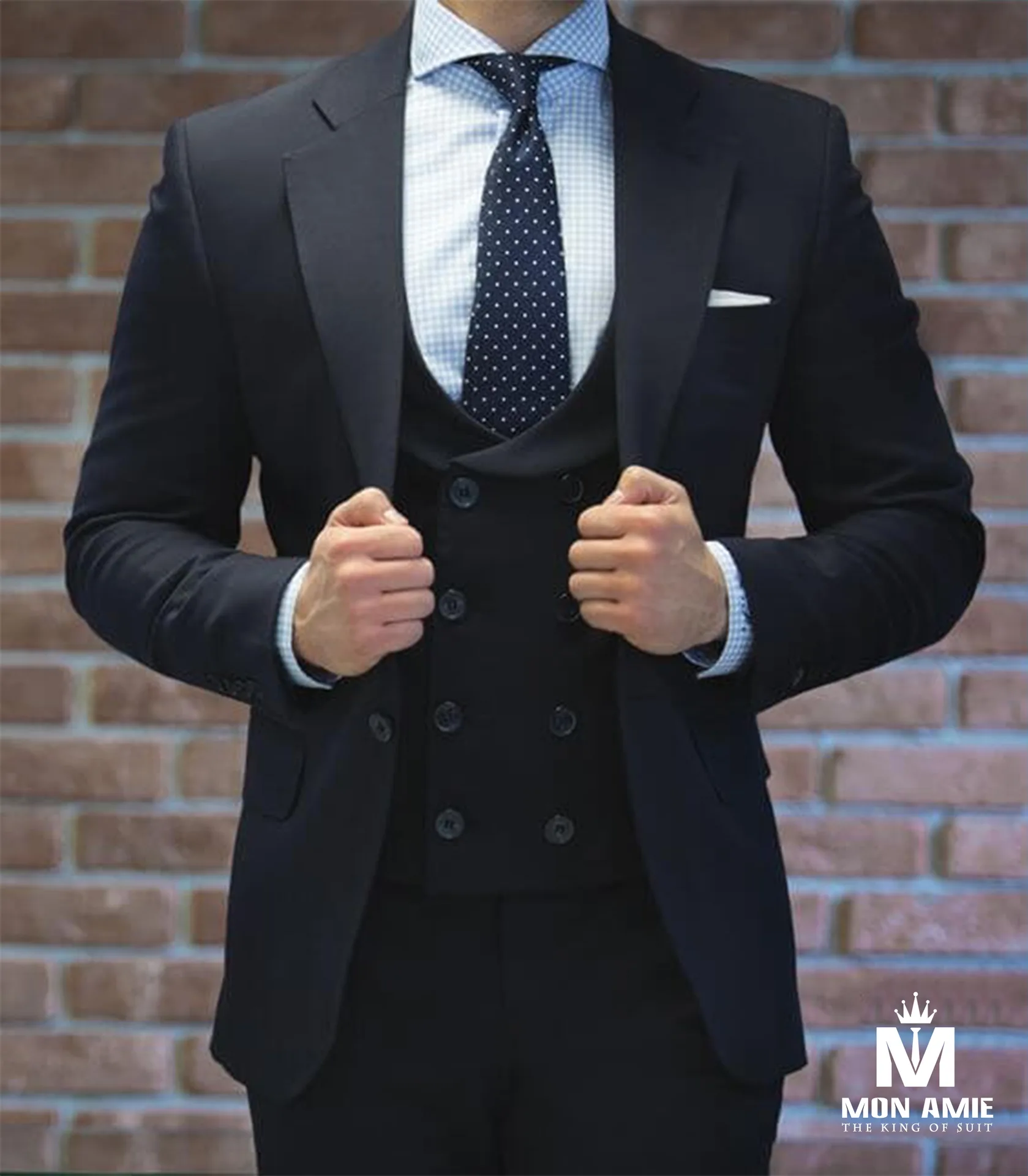
A good waistcoat depends a lot on the rise of the trousers. Low-rise trousers push the belly over the belt, which makes the waistcoat shorter against the torso and exposes the shirt. Mid- or high-rise trousers (sitting at or above the navel) let the waistcoat cover the whole waistband and make the torso look longer. Avoid a very wide belt; use a slim belt or braces if needed. If you still have doubts about shirts for a fuller figure, read how should heavier men wear shirts.
Tips from Mon Amie's master tailors
- Stand relaxed when measured; don't suck in your stomach. If you hold your stomach in when measured, then sit for an hour, the waistcoat will already be straining at the buttons. Be measured with your belly in its natural state.
- Try sitting down before you take it. Sit and see whether the waistcoat rides up, strains the buttons or squeezes the belly.
- Ask the tailor to adjust it to your belly. With a made-to-measure waistcoat, the tailor can adjust the body length, the point and the depth of the V to suit each figure. See the price of a made-to-measure men's waistcoat to decide whether to order it on its own or together with a suit.
- Measuring the waist matters most, as analysed in men's waistcoat sizes.
If you want a waistcoat that really fits, the bespoke made-to-measure service takes more than 30 measurements and includes a baste fitting before finishing, so it is well suited to a special figure.
Frequently asked questions
What kind of waistcoat should a middle-aged man choose?
Choose a single-breasted waistcoat with five to six buttons, a moderate V, wool in a muted colour and a comfortable fit. Pair it with a light shirt and a tie in the same tone. Avoid a waistcoat that is too close-fitting or has many patterns.
Does a double-breasted vest for big and tall men suit a tall, large man?
It does if the torso is long enough and the shoulders broad enough. A double-breasted waistcoat creates width, so it needs a precise cut and a long peak lapel. If the belly is full, a single-breasted waistcoat is still safer.
What should a heavier man look out for in a good-looking waistcoat?
A fit at the waist, enough length to cover the waistband, a pointed bottom, a moderate V, plain dark cloth and a back strap that is not cinched. High-rise trousers help the waistcoat cover the whole waistband.
Does a waistcoat really slim the belly?
Yes, if it fits. A waistcoat creates a flat surface and draws the eye vertically. A tight one, on the other hand, strains the buttons, leaves creases and makes the belly more obvious than if you were not wearing it at all.
Closing thoughts
A plus-size men's waistcoat is not the enemy of the fuller man; it is only demanding of waistcoats that are the wrong size. Choose the right length, V neckline, fabric and back strap, and you will have a garment that is both neat in shape and refined. When you would like to try one on a real body and have the tailor adjust it to each measurement, we invite you to book a measuring appointment at a showroom.