
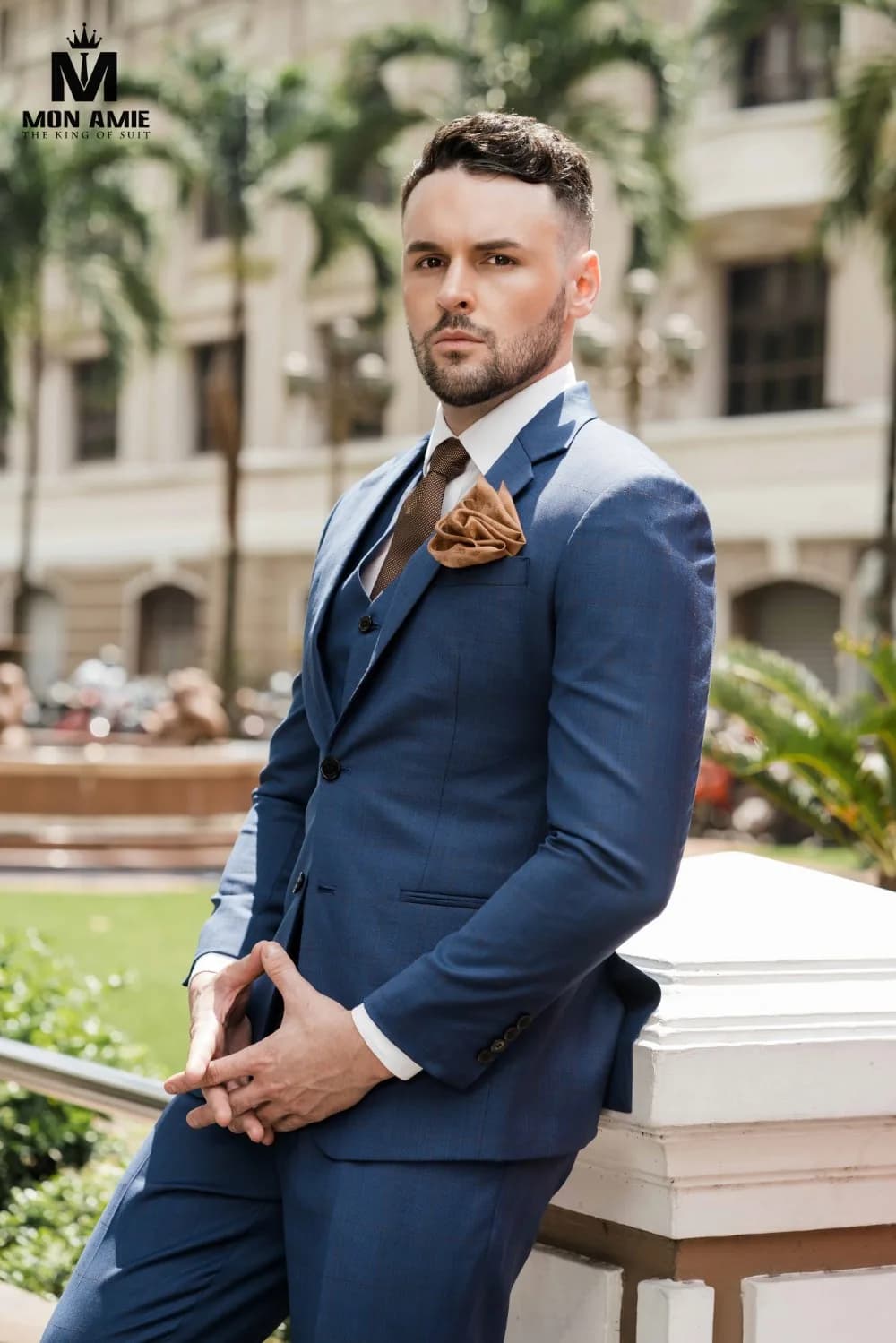
A master tailor does not begin looking at a suit jacket with the buttons, the colour or the label. They begin with the shoulder. If the shoulder is right, the rest can be adjusted. If the shoulder is wrong, the whole jacket is as good as written off. So what should you look at to judge a good men's suit jacket? Mon Amie boils it down to eight criteria, with a 60-second mirror test so you can score a jacket yourself before deciding whether to buy or have one made.
Quick answer
A men's suit jacket is good when all eight points are right: a flat shoulder that matches your own shoulder point, a collar that hugs the neck, a lapel that rolls naturally, a chest without creases, a waist fitted just enough, a balanced hem, sleeves ending at the wrist bone, and clean finishing details. The jacket that looks best is the one that fits its wearer most closely.
Eight criteria for judging a suit jacket
1. The shoulder line
The shoulder point of the jacket must coincide with your own shoulder point, neither jutting out nor pulling in. The top of the shoulder lies flat, with no bumps, no hollows and no creases pulling from the neck to the shoulder. This is the first criterion because the shoulder is the one part that can almost never be altered after making.
2. A collar that hugs the neck
The jacket collar must sit snug against the shirt collar, with no gap opening at the back of the neck. If the collar springs away or wrinkles into a horizontal crease, the jacket does not yet fit the back or the shoulder. Tailors call this a “collar gap”.
3. A lapel that rolls naturally
The lapel is the part across the chest running down from the collar. A good lapel rolls softly and lies flat, without lifting or twisting. An even roll line is a sign of good interlining and workmanship. If the lapel is flat and stiff like a sheet of cardboard, or wrinkled and lifting, the interlining is not right.
4. A flat chest with no X-shaped creases
When buttoned, the chest of the jacket must be flat. If an X-shaped crease appears around the button, the jacket is tight across the chest or stomach. Conversely, if the chest billows open, the jacket is too loose across the chest. A correct chest lets you fasten the button while the front panels still lie flat.
5. A waist fitted just enough
The waist of the jacket is lightly shaped to follow your natural waistline, neither constricting nor bulging. Try sliding one hand, held flat, between the jacket and your stomach when buttoned: a hand's fit is the right snugness for a business suit.
6. A balanced hem
Standing straight, the hem of the jacket follows the hip, neither flaring out at the back nor curling up at the front. The correct length is when the hem reaches about the knuckle of your thumb as you let your arm hang straight, just covering the seat.
7. The sleeves
The sleeve ends at the wrist bone, showing about 1–1.5 cm of shirt cuff. The sleeve hangs naturally, without twisting. The sleeve seam (where the sleeve joins the body) must be smooth, with no creasing at the underarm when you let your arm hang.
8. Finishing details
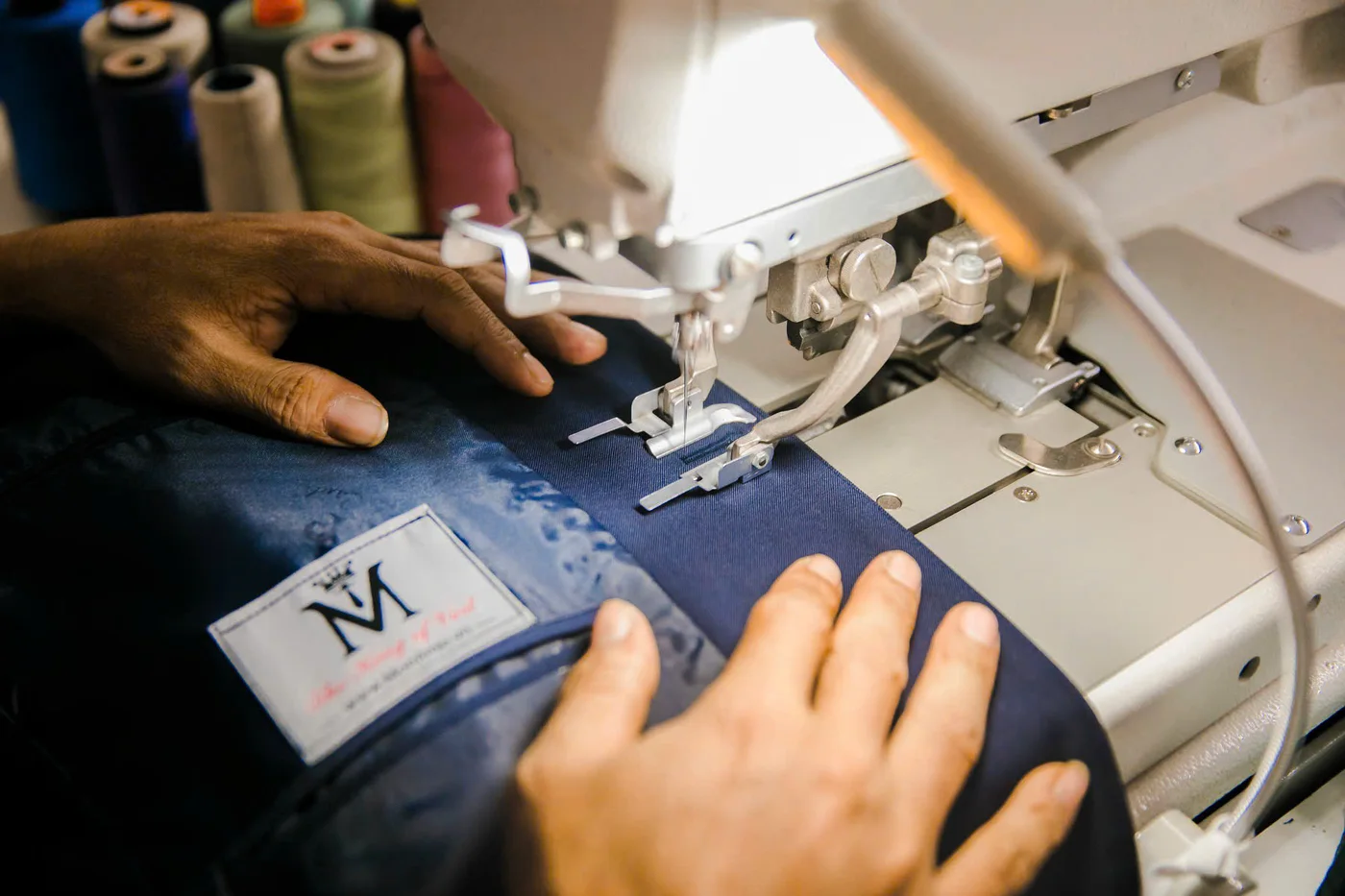
Scrutinise the details: stitching straight and even, buttonholes neat, buttons firm, lining flat, and check or stripe patterns matching at the pockets, lapel and sleeves. A suit whose pattern is out of line at the pocket was almost certainly cut in a hurry.
The 60-second mirror test
You do not need to be a tailor to assess a suit jacket. Stand in front of a mirror and do the following six things:
- Stand straight with your arms down: look at the shoulder, collar and hem.
- Button up: look at the chest, waist and any X-shaped creases.
- Raise both arms to shoulder height: the jacket should not ride up too much, and the collar should not leave your neck.
- Fold your arms across your chest: the back of the jacket should not strain or split.
- Sit down: are the hem and button comfortable?
- Turn your back and ask someone to look: the back should be flat, with no horizontal creases at the neck.
If it passes all six steps, you have a jacket that fits well.
Cloth and interlining: the beauty a photo cannot capture
Two things decide whether a suit still looks good after a year of wear: cloth and interlining. Finely woven wool with a matt sheen and a natural drape is good cloth. Plastic-shiny, coarse cloth that creases easily is poor cloth. The interlining sits between the cloth and the lining and holds the shape of the shoulder and chest. A hand-built canvas interlining is soft and moulds to the wearer's figure over time. A fused interlining is stiffer and cheaper but easily bubbles or peels if washed or pressed wrongly.
When buying or having a suit made, ask the tailor which interlining is used. You can read about further signs in the article premium men's suits: spotting them through 10 details.
The “most stylish men's suit jacket right now”: does it exist?
You often see people search for “the most stylish men's suit jacket right now”. To a master tailor, this question is like asking “which pair of shoes is the most beautiful”: there is only the pair that fits the foot most closely. Trends change by season: wide or narrow lapels, heavily padded or soft shoulders, high-rise or low-rise trousers. But the eight criteria above never change. A good men's suit has a correct shoulder, a neat chest, a fitted waist and sleeves of the right length; colour and pattern are only decoration.
So, if you can, choose the cut that fits you first, beautiful cloth second, and trends last.
Common mistakes when choosing a good men's suit
- Choosing by colour and advertising photos. Photos are shot from chosen angles in chosen light, with the jacket pinned at the back of the model.
- Choosing by the size on the label. The shoulder is what you should choose by, not height or weight.
- Thinking the shoulder can be altered. It almost cannot, especially once the interlining is set.
- Forgetting to sit down. A jacket that fits standing but is tight sitting has not passed.
- Trying it on with the wrong kind of shirt. Try the suit with a shirt whose collar and sleeves you normally wear.
A tip from Mon Amie's master tailor
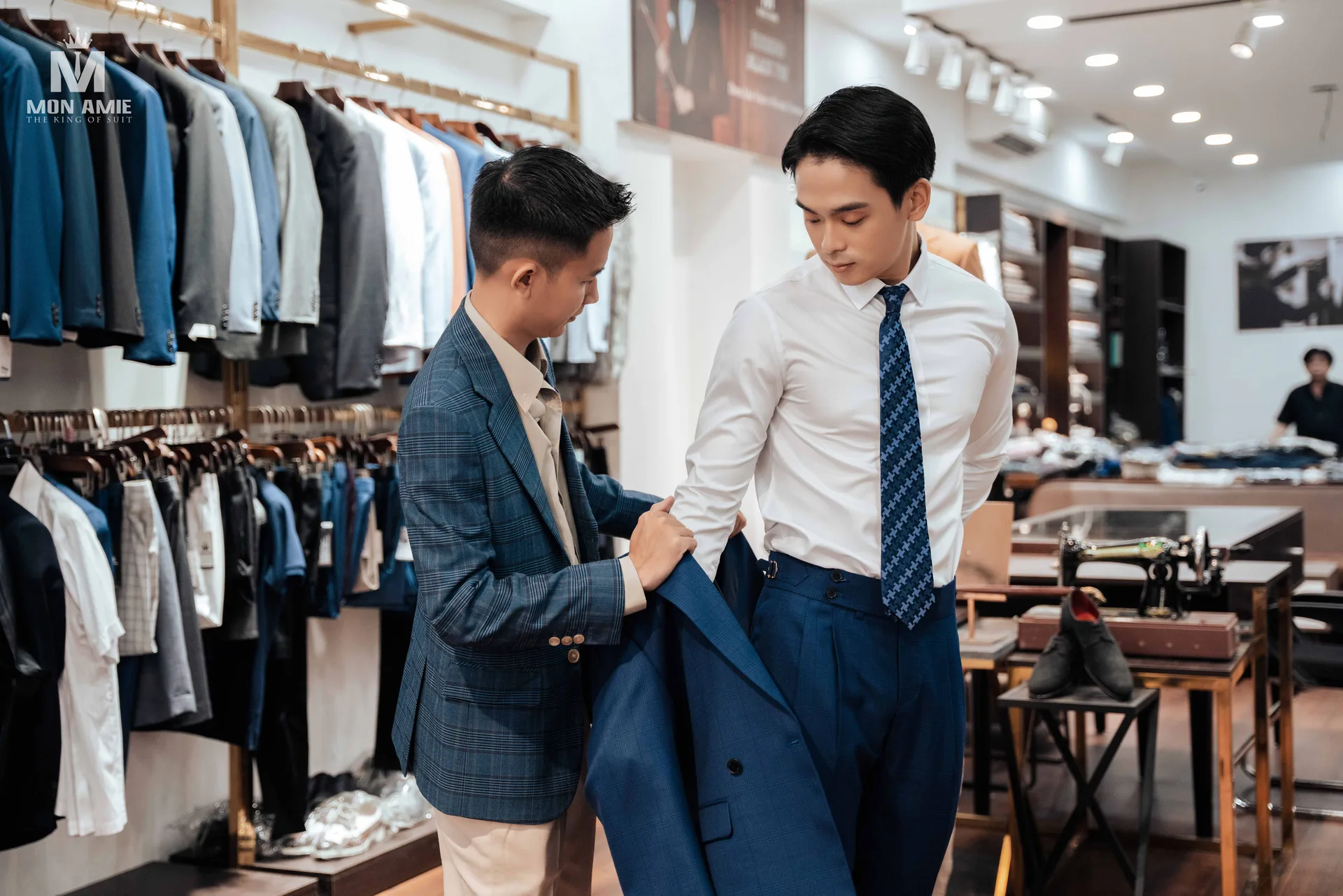
When trying on, have the tailor address the shoulder first. If the shoulder does not fit, do not adjust other parts to rescue it; choose another size or cut instead. With made-to-measure, you can be measured at more than 30 points, and the tailor will keep them for life in the bespoke tailoring journey. The article how a suit should fit: a 10-point check is a complementary checklist if you want to go deeper.
Frequently asked questions
What factors decide whether a men's suit jacket is good?
Eight: the shoulder line, collar, lapel, chest, waist, hem, sleeves and finishing details. Of these the shoulder matters most, because it can almost never be altered after making.
Does a good men's suit have to be expensive?
No. A well-fitting suit in sound cloth, cleanly made at a moderate price, still looks better than an expensive one that is too wide in the shoulder. Price rises mainly with cloth and labour, while fit lies in the measurements. Reference prices for a full set are on the price list.
How can I tell whether a suit jacket fits across the shoulder?
From the front, the shoulder point of the jacket meets your real shoulder point and the top of the shoulder does not bump. From behind, the shoulder seam does not drag into creases down the back. Raise your arm to shoulder height, and the jacket is not pulled up too much.
Is a great-looking men's suit always in the most expensive cloth?
Not necessarily. Expensive cloth gives fineness and a beautiful drape, but if the shoulder and cut are wrong, no cloth can rescue it. Put the cut first, then the cloth.
Does a great-looking men's suit need a hand-built canvas?
A hand-built canvas gives a durable cut that moulds to the body over time, so it is usually found in premium suits. However, a good-quality fused suit still looks good, provided it is cleaned and pressed correctly.
A measuring session to see a jacket properly
To find out which cut suits your figure, book a measuring appointment, let the master tailor measure your shoulder, chest and waist, and go through the made-to-measure process with you, from choosing cloth to the baste fitting. A good suit always starts with being measured carefully.