
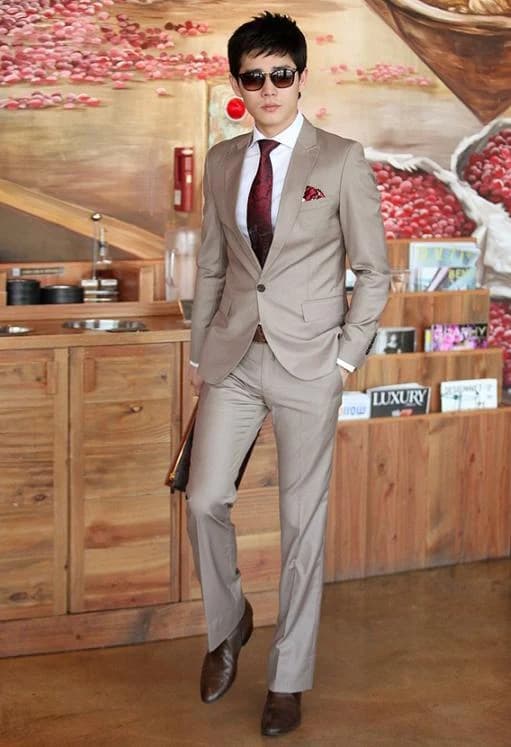
About a centimetre and a half. That is how much shirt cuff should show beyond the suit sleeve, and it is a figure stylists often mention in the very first fitting. The suit rules for men are small like that: so small the wearer barely notices, but the person across from you sees at once. The five rules below are enough to walk into a meeting room, a wedding or a business meeting without having to look back to check where you went wrong.
Quick answer
Five rules: button in order (buttoned standing, open when sitting, bottom button left open); shoulders that fit and sleeves showing 1–1.5 cm of shirt; trousers touching the shoes, with a belt matching the shoes; a tie reaching the waistband and a pocket square that doesn’t exactly match the tie; then choose colour by occasion.
1. Button in order: buttoned when standing, open when sitting, bottom button left open
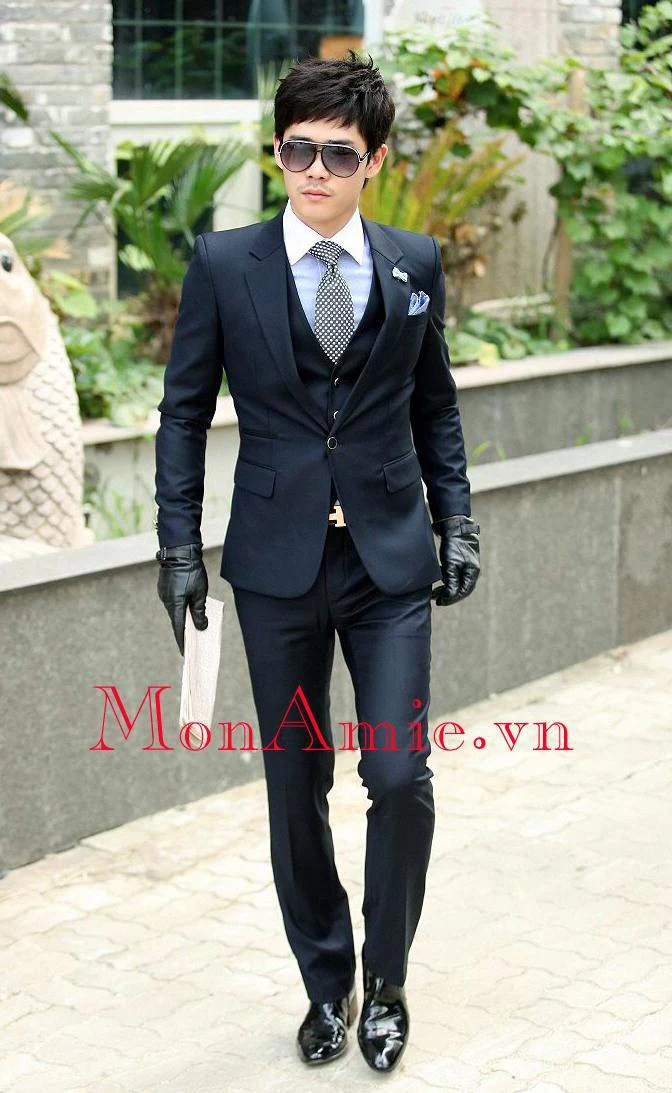
A two-button suit: fasten only the top button and leave the bottom one open. A three-button suit: fasten the middle button; the top one may be fastened or open depending on the jacket style, and the bottom one is always open. The reason is practical: the jacket is built to hang from the top button, and fastening the bottom one pulls the front into an X shape and makes the hem flip up. A double-breasted suit is different: fasten the buttons meant to be fastened when standing, and you may undo them when seated. For a three-piece suit with a waistcoat, the bottom button of the waistcoat is also left open. When you sit down, unbutton the jacket; when you stand up, fasten it again. Do this until it becomes reflex and no one can tell you are “remembering a rule”. The three-piece suit in the photo is the Men’s Navy Three-Piece Suit, an example with a waistcoat where you need to watch the bottom button.
2. Shoulders that fit, sleeves that show the shirt, a hem that is long enough
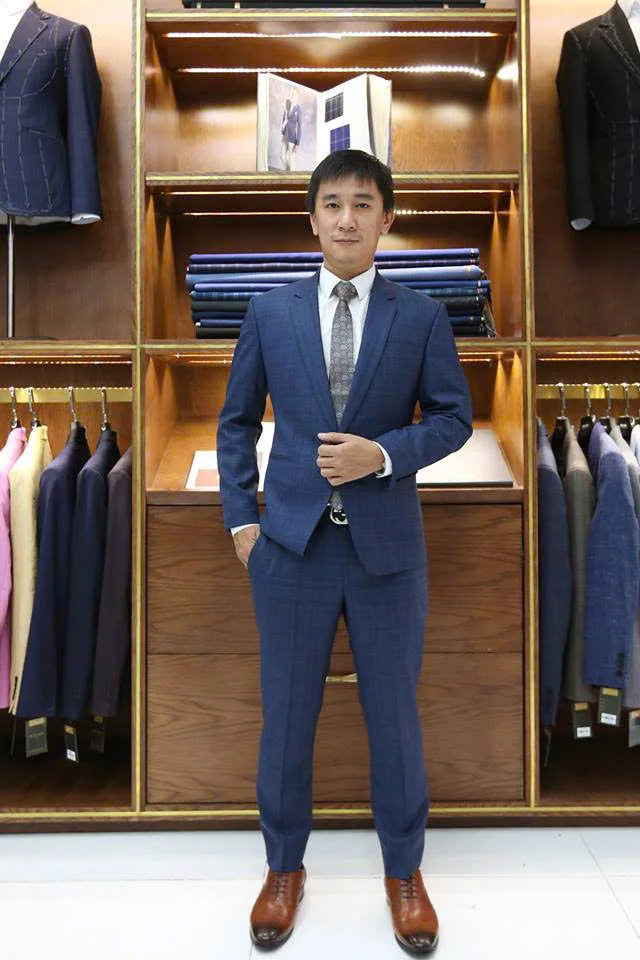
The shoulder seam must sit exactly at the shoulder bone; if the shoulder spills past it, the jacket looks borrowed from someone else, and if it is too narrow, wrinkles pull across the chest. The suit sleeve should reach the wrist bone, showing 1–1.5 cm of the shirt cuff. The jacket hem covers the seat; a quick check: let your arms hang naturally and curl your fingers, and the hem usually touches the knuckles. Shorter than that and the body of the jacket looks short; longer and it shortens the legs. Of these three points, the shoulder is the hard one to fix later, so check the shoulder first, then consider the sleeve and hem. When being measured for a made-to-measure suit, wear the very shirt you plan to pair with it, because the suit sleeve length is calculated from that shirt cuff.
3. Trousers, shoes, belt and socks working together
The trouser leg touches the instep of the shoe with a slight break, or no break if you want a cleaner line; a hem that falls onto the heel hides the leg somewhat but also drags in dirt more easily. The belt matches the shoes: black shoes with a black belt, brown shoes with a brown belt. Socks match the trousers or shoes and are long enough that when you sit and cross your legs no ankle shows. An easy rule of thumb: a formal black or charcoal suit goes with black shoes; navy, mid-grey and brown suits can take dark brown shoes. Brown shoes with a formal evening black suit is a mistake to avoid. Details by suit colour are in how to match shoes with a suit by colour.
4. Shirt, tie, pocket square: proportion and length
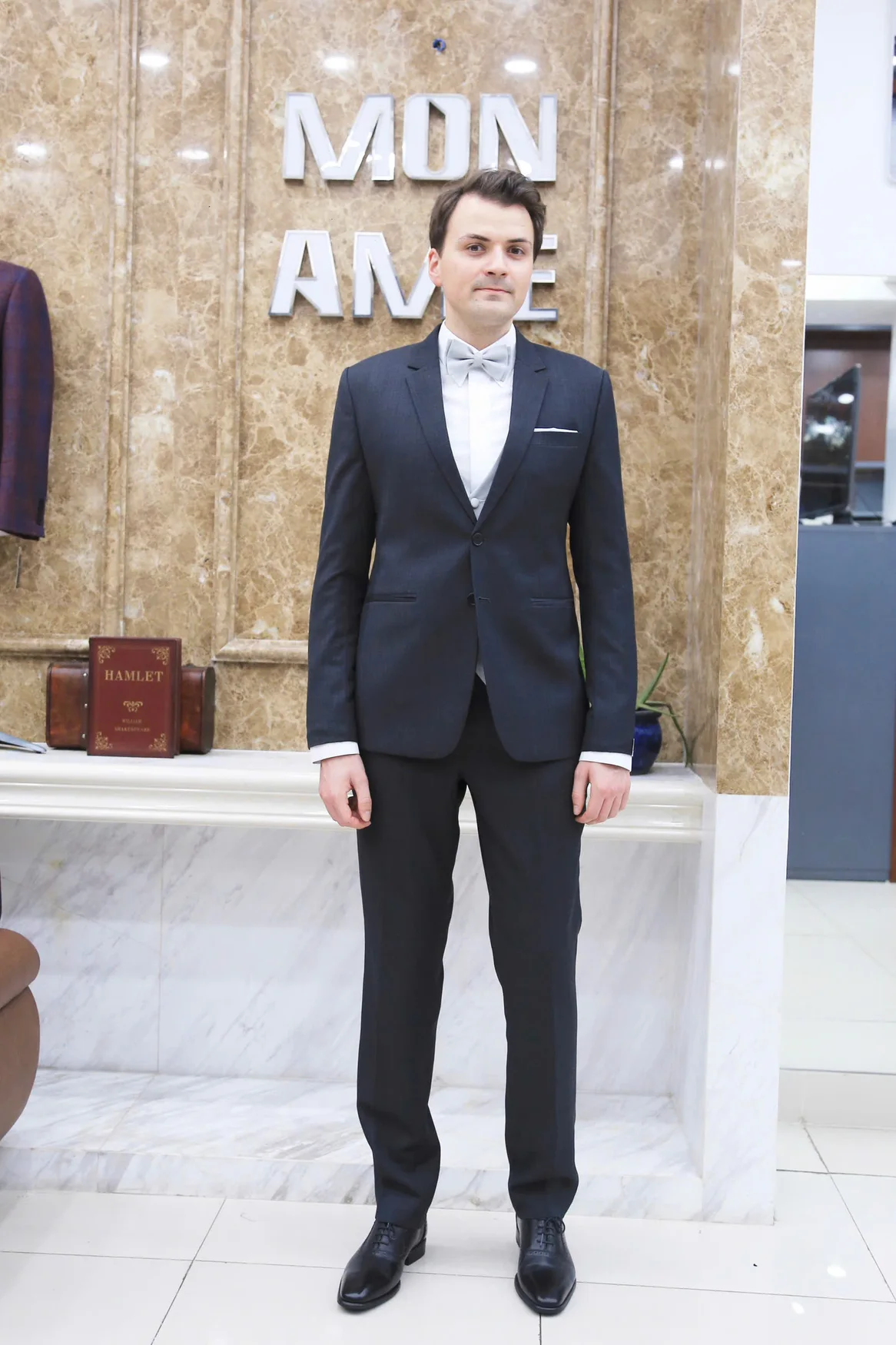
The tie should reach the waistband or the top of the belt; shorter looks short, longer hangs down to the crotch. Tie width roughly matches lapel width, usually about 7–8 cm for a business suit, so a narrow lapel calls for a narrow tie. The shirt should be one shade lighter than the suit, so the face and collar have a bright backdrop. The pocket square needn’t match the tie down to the pattern; echoing it in colour or tone is enough, like the black suit with a pocket square and a patterned navy tie in the photo. Fold the square flat and square for the office; puffed or with a few peaks for a party. Detailed guidance on accessories is in suit accessories for men: 6 pieces and the rules for using them in the right place.

5. Choose colour by occasion, no more than three colours
Daytime and the office belong to navy, charcoal and mid-grey; these pair with almost any shirt and tie. A black suit belongs to the evening and formal occasions, such as an evening wedding, an award ceremony or a year-end event. At a wedding, if you are not the groom, avoid a white or light cream suit. An easy rule for putting an outfit together: no more than three colours on the whole body, counting suit, shirt, tie and pocket square, not counting shoes and belt. The same goes for patterns: a large check calls for a plain shirt, a shirt with a fine stripe or check calls for a plain or dotted tie; two patterns of the same scale placed side by side will compete. A plain charcoal or navy suit is a safe base when you are unsure.
Quick summary table
| Rule | Suited to | Point to remember |
|---|---|---|
| 1. Buttoning | Every suit | Buttoned standing, open sitting; bottom button always open; the waistcoat too |
| 2. Shoulders, sleeves, hem | People having a suit made or buying ready-to-wear | Seam on the shoulder bone; 1–1.5 cm of shirt showing; hem covers the seat |
| 3. Trousers, shoes, belt | Office workers, party-goers | Belt matches the shoes; trousers touch the instep; avoid brown shoes with an evening black suit |
| 4. Tie, shirt, pocket square | People who often wear a tie | Tie reaches the waistband; width matches the lapel; pocket square echoes, doesn’t duplicate |
| 5. Colour by occasion | Office workers, party-goers | Daytime navy and grey; evening black; no more than three colours |
Tips from Mon Amie’s master tailors
- A new suit usually still has basting stitches at the pocket mouths and back vent, plus a small label on the sleeve. Ask the tailor to cut them off before the first wear.
- Check the mirror from the side and the back too. Every rule is only really right when your shape also looks fine from behind.
- Start with a plain navy or charcoal suit, because it is the base for learning to match ties and shoes, before trying unusual colours and patterns.
- To get a whole team to share one standard, a business can invite an expert to talk about dress code through the Dressing Etiquette workshop.
- Rules are a starting point. Once you wear a suit correctly, breaking a rule a little, like a bright pocket square, becomes style rather than a slip.
Frequently asked questions
Which button do you fasten on a two-button suit?
Fasten the top button and leave the bottom one open. Fasten when standing, open when sitting. Fastening both pulls the front diagonally and makes the hem flip up.
Do you have to button a suit jacket?
When standing, on formal occasions, you should. When sitting, unbutton so the cloth isn’t strained and the jacket doesn’t crease across your stomach. Buttoned or open is a small habit, but the person opposite reads care from it.
Can you wear brown shoes with a black suit?
By the rules, a black suit with black shoes is safe, especially at evening and formal occasions. Brown shoes suit navy, grey and brown better. If you still want to try, choose a very dark brown and skip formal occasions.
Is it OK to wear a suit without a tie?
Yes, on relaxed occasions or in a modern business style, with the shirt’s top button open, a collar that stands properly and a jacket that fits at the shoulder. On formal occasions such as a signing ceremony or an evening wedding, wear a tie or bow tie. See also 12 small rules for wearing a suit properly.
Conclusion
These five rules won’t make you someone else; they simply make the suit say what you want it to say. If you’d like to check the shoulders, sleeves and hem of the suit you already own, or have one made with the right cut from the start, book a visit to a Mon Amie showroom and a stylist will measure and advise you in person.