
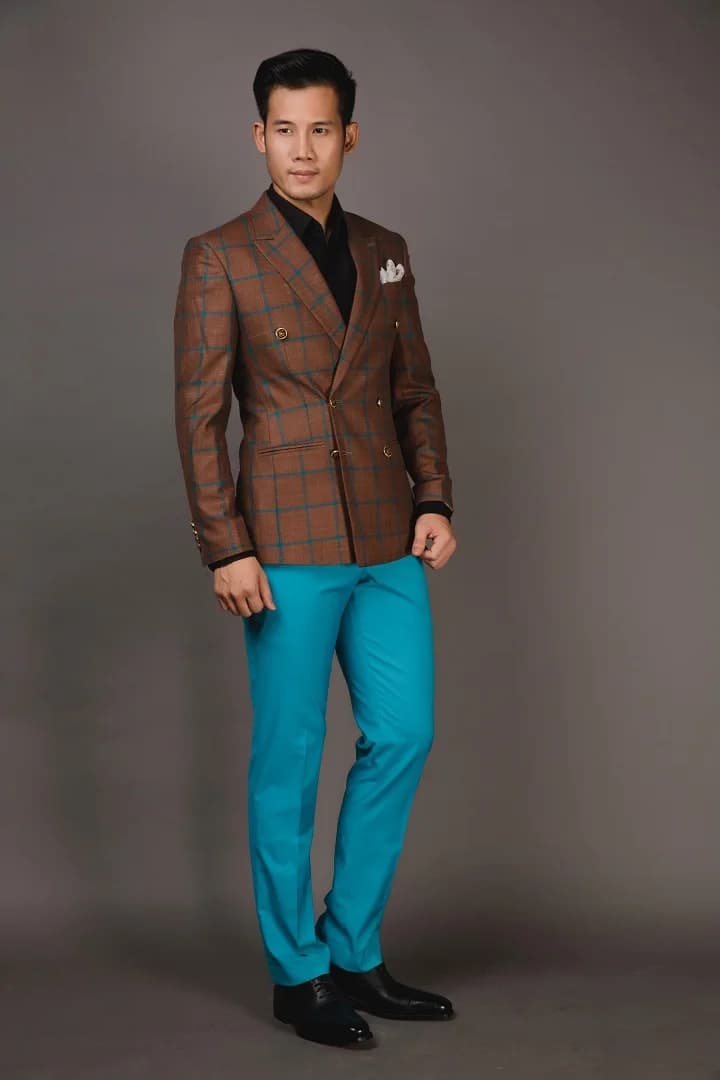
Two jackets hang side by side in the wardrobe: a navy one with gold buttons, and a grey check one in heavy cloth. Both are called blazers, yet one can go to a board meeting and the other suits only a weekend coffee. That's why you need to know the types of men's blazers before you spend any money: the same name, but very different levels of formality, occasions and ways of pairing.
Quick Answer
A blazer is a separate jacket with a structure like a suit jacket but isn't worn with trousers of the same cloth. Eight common styles: the club blazer, sport coat, unstructured blazer, double-breasted blazer, mandarin-collar blazer, velvet blazer, check blazer and linen blazer. To tell them apart quickly, look at three things: the cloth, the buttons and the stiffness of the shoulder.
How does a blazer differ from a suit jacket and a sport coat?
A suit jacket is the jacket made in the same cloth as the trousers to form a suit. A blazer is a separate jacket, designed to be worn with trousers of a different texture and color. A sport coat is a close relative of the blazer, usually thicker, more patterned and with an outdoor spirit. The lines between styles can blur, so the table below helps you place them quickly. The article how blazers and jackets differ explains more about the names.
Types of men's blazers: 8 styles and how to spot them
| Style | How to recognize it | Formality | Suited to |
|---|---|---|---|
| 1. Club blazer | Plain navy, metal buttons, often double-breasted | Medium to high | Office, light parties, meeting partners |
| 2. Sport coat | Thick wool, small patterns, horn or wooden buttons | Medium | Weekends, outings, strolling around town |
| 3. Unstructured blazer | No shoulder padding, thin lining, folds up neatly like a light jacket | Low to medium | Smart casual, hot days |
| 4. Double-breasted blazer | Two rows of buttons, overlapping front panels | High | Events, formal working days |
| 5. Mandarin-collar blazer | No lapels, low standing collar | Medium | Modern style, creative events |
| 6. Velvet blazer | Smooth velvet cloth that catches the light | High (evening) | Dinner parties, events, Christmas |
| 7. Check blazer | Large or small square patterns | Medium | Weekends, smart casual |
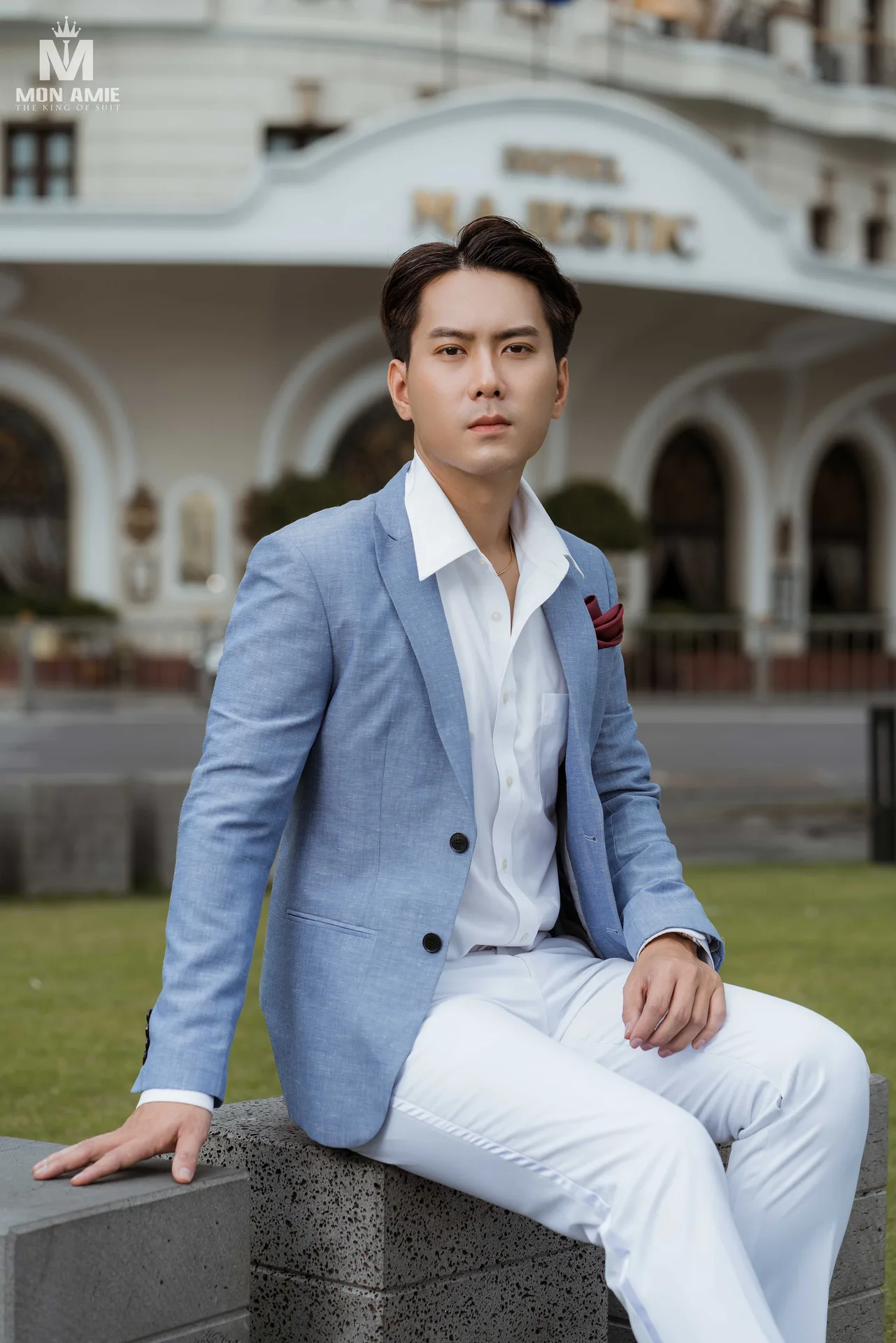
| 8. Linen blazer | Thin linen, naturally slightly creased | Low to medium | Hot season, outdoor parties |
Club blazer: the foundation piece
This is the most “true” blazer: plain navy, metal buttons, moderate lapels. If you buy only one, buy this one. It goes with grey trousers, beige trousers, white trousers and even dark jeans; it lifts an ordinary shirt to a smart level in a matter of seconds.
Sport coat: thick, textured, heavily patterned
The cloth is usually thick wool, tweed, flannel or herringbone. The buttons are horn or wood, and the pockets are patch pockets. A sport coat can be worn for outings and travel, but is rarely right for a signing meeting.
Unstructured blazer: soft, packable, easy to wear
No shoulder padding, and a thin lining or none, so the jacket follows the natural shoulder. The advantages are that it's light, breathable and easy for everyday wear. The downside is that it's less “structured,” so if you need a solemn look, choose a firmer construction.
Double-breasted blazer: standout and formal
Two rows of buttons, with the front panels overlapping, create an air of authority. This style suits those with a balanced or slim build; if you have a stomach, try it on carefully before choosing. If you're considering this cut, try it with the very type of shirt you plan to wear underneath, because a double row of buttons exposes every place the jacket doesn't fit.
Mandarin-collar blazer: modern minimalism
No lapels, and a low standing collar like a mandarin-collar shirt. The mandarin-collar blazer suits a minimalist style and is less bound by tie rules. Choose black, grey or beige for easy pairing.
Velvet blazer: for the evening
Velvet catches the light and gives color depth, so it looks better at a smart party than at work. Wine red, moss green and navy are the three easiest shades to use. Pair it with a dark or white shirt and black or charcoal trousers.
Check and linen blazers: two extremes
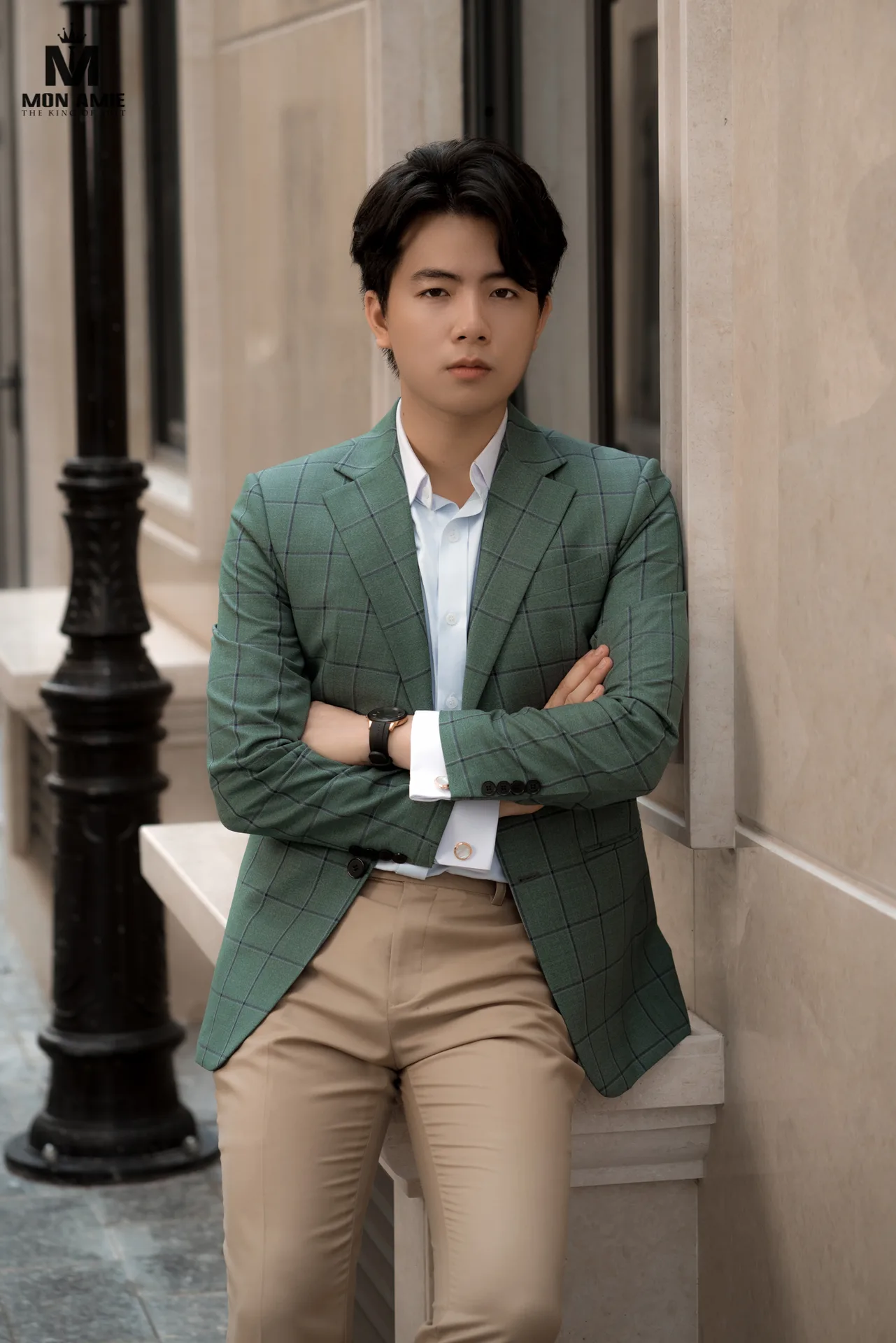
Check (squares) carries a classic English spirit and is used for weekends and smart casual. Linen is light and breathable and creases slightly, so it suits the hot season and outdoor parties. These two styles are usually made soft so they are easy to wear.
Identifying the types of men's blazers with three questions
Standing in front of a rack, you don't need to remember the whole table. Just ask yourself three questions:
- Is the cloth thick or thin, plain or patterned? Thick and heavily patterned leans toward a sport coat; plain, smooth and dark leans toward a club blazer; velvet and linen have a cloth character that is very easy to recognize.
- What are the buttons made of? Metal is a blazer in the true sense; horn or wood is a sport coat; a mandarin collar with no lapels and no prominent buttons is the modern variant.
- Is the shoulder stiff or soft? A padded, structured shoulder means a formal jacket; a soft shoulder with a thin lining means an everyday one.
Once you've answered the three questions, you almost always know which jacket you're holding and where to wear it.
Choosing a blazer by occasion
- Office work: a plain navy or grey club blazer.
- Meetings, meeting clients: a club blazer or a double-breasted blazer.
- Evening parties: a velvet blazer or a black mandarin-collar blazer.
- Weekends, travel: a sport coat, check blazer or unstructured blazer.
- Daytime weddings, hot season: a linen blazer or a light beige one.
To be sure at the choosing stage, read the article how to choose a men's blazer, with the points to check when you try one on.
Common mistakes
- Wearing a blazer like a suit jacket, with trousers in the same cloth. That turns the jacket into an “odd suit” that looks as though you've put on the wrong trousers. A blazer needs trousers of a clearly different texture or tone.
- Choosing a blazer that's too long or too short. The ideal hem covers the seat and is no longer than mid-thigh.
- Choosing a heavily padded shoulder when dressing casually. The result is neither formal nor relaxed.
- Ignoring the buttons. Metal buttons suit a club blazer; horn buttons suit a sport coat. The wrong buttons put the jacket's spirit off.
A tip from a Mon Amie master tailor: try the blazer on with the very type of shirt you intend to wear underneath. A blazer that fits snugly over a thin T-shirt may be tight when you put it over a shirt, and vice versa. The shoulder is the one thing that can't be altered, so choose by the shoulder first.
Frequently Asked Questions
How do the different types of men's blazers differ?
They differ in cloth, buttons, shoulder stiffness and formality. A plain navy club blazer is the most formal, a sport coat is thick and patterned and leans casual, and unstructured and linen blazers are the most relaxed.
What is the cut of a blazer?
A blazer's cut is the silhouette of the jacket: padded or soft shoulders, a fitted or loose body, single- or double-breasted, and the length of the hem. With the same cloth but a different cut, the feel of wearing it is completely different.
How is a blazer different from a suit jacket?
A suit jacket is the jacket of a suit, made in the same cloth as the trousers. A blazer is a separate jacket designed to go with trousers of a different texture and color. Wearing a blazer with trousers in the same cloth almost turns it into a suit jacket.
Which blazer should you buy first?
A navy club blazer, single-breasted with two buttons and moderate lapels. It pairs with most of a wardrobe and goes from the office to a light party.
Final Thoughts
Knowing the types of men's blazers helps you buy what you actually need instead of a jacket that “looks fine” and then rarely gets worn. If you'd like to see ready-made blazers and suits to picture the cut, you're welcome to visit the product collection, or book a measurement appointment to have a blazer made with shoulders and a cut that are yours alone.