
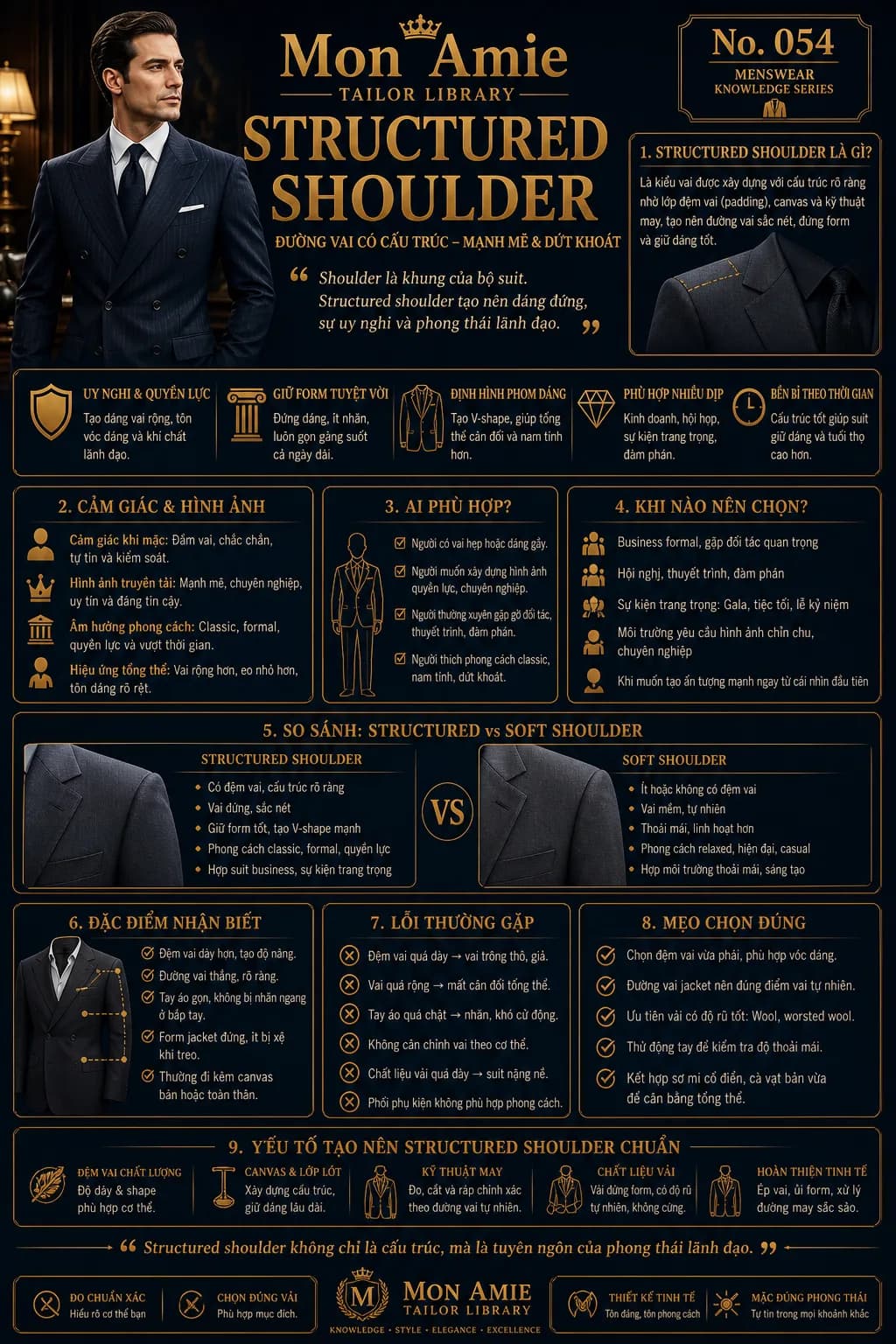
A structured shoulder is built with a clear internal architecture — padding, canvas and specific sewing techniques — producing a crisp, standing shoulder line that holds its shape. In tailoring, the shoulder is regarded as the frame of the suit, and the structured shoulder is the choice of a man who wants to convey dignity, decisiveness and the bearing of a leader.
Why the structured shoulder endures
It is no accident that the structured shoulder has been bound up with the image of businessmen and statesmen for over a century. It offers five clear qualities:
- Dignity and authority: it broadens the shoulder line and lends the wearer a commanding presence.
- Excellent shape retention: it stands cleanly, creases little and stays tidy through a long day.
- A defined silhouette: it creates a V-shape, making the whole look more balanced and masculine.
- Broad occasion range: business, meetings, formal events, negotiations.
- Durability: good structure helps a suit hold its shape and last longer.
To wear, a structured shoulder feels settled, solid, confident and controlled. To an observer it reads as strong, professional, credible and reliable — classic, formal, and outside of fashion. The overall effect: broader shoulders, a smaller waist, and a distinctly flattering line.
Who it suits, and when to choose it
The structured shoulder is especially good for:
- Narrow shoulders or a slim build, where the structure lends the figure something to work with.
- Men building an image of authority and professionalism.
- Men who regularly meet partners, present and negotiate.
- Men who favour a classic, masculine, decisive style.
As for occasions, favour this shoulder when you are:
- Dressing business formal, or meeting an important partner.
- Attending conferences, presenting or negotiating.
- Going to formal events: galas, evening dinners, anniversaries.
- Working somewhere that expects a polished, professional appearance.
- Hoping to make a strong first impression.
Structured shoulder versus soft shoulder
These are the two opposing schools of shoulder-making, each serving its own purpose:
Structured shoulder:
- Padded, with a clear internal structure.
- A standing, crisp shoulder that holds its shape and creates a strong V-shape.
- Classic, formal and commanding in character.
- Right for business suits and formal occasions.
Soft shoulder:
- Little or no padding; soft and natural.
- More comfortable and freer in movement.
- Relaxed, modern and casual in character.
- Right for easygoing, creative environments.
Put differently, the soft shoulder — associated with the Neapolitan school of Italy — prizes ease, while the structured shoulder, closer to the English tradition, prizes discipline and silhouette. Neither is absolutely correct; there is only the one that fits your environment and the image you wish to build.
How to recognise it, and what goes wrong
A jacket with a properly made structured shoulder will show: thicker padding that lifts the shoulder; a straight, well-defined shoulder line; a clean sleeve with no horizontal wrinkling at the upper arm; a jacket that keeps its shape and does not sag on the hanger; and, usually, half or full canvas construction.
That said, building a shoulder demands real skill — a small error spoils the whole. The common faults:
- Padding so thick the shoulder looks coarse and ageing.
- Shoulders cut too wide, unbalancing the jacket.
- Sleeves too tight, causing wrinkling and restricting movement.
- A shoulder not adjusted to the individual body.
- Cloth so heavy the suit feels leaden.
- Accessories that do not match the register of the style.
How to choose a structured shoulder well
- Choose a moderate padding suited to your build — the structure must serve the body, not the reverse.
- The jacket's shoulder should end at your natural shoulder point.
- Favour cloths with good drape, such as wool and worsted wool.
- Move your arms while trying it on to check for comfort.
- Pair it with a classic shirt and a medium-width tie to keep the whole in balance.
A proper structured shoulder rests on five elements: quality padding of the right thickness and shape for the body; canvas and lining that build the structure and hold it over time; precise making — measuring, cutting and assembling accurately to the natural shoulder line; cloth that holds its shape while draping naturally rather than stiffly; and refined finishing — pressing the shoulder, shaping the form and executing clean seams.
A word from Mon Amie's artisans
Our experience is that padding should never be chosen by instinct but by the body: sloping shoulders need more lift than square ones, and a few millimetres of padding changes the whole line. At your fitting, raise your arms, bend your elbows and rotate your shoulders — a well-built structured shoulder must still let you move freely, never gripping. Every Mon Amie suit comes with post-delivery alteration cover and lifetime measurement records, so the shoulder line can always be adjusted to your body as the years pass.
A structured shoulder is not merely construction; it is the statement of a leader's bearing. If you would like to experience a properly built shoulder — from the Kevinlli line, full suits from VND 4.8 million, through to Canonico, Holland & Sherry, Dormeuil and Scabal — we invite you to book an appointment at one of Mon Amie's five showrooms in Ho Chi Minh City, or to read more about the tailoring process.