
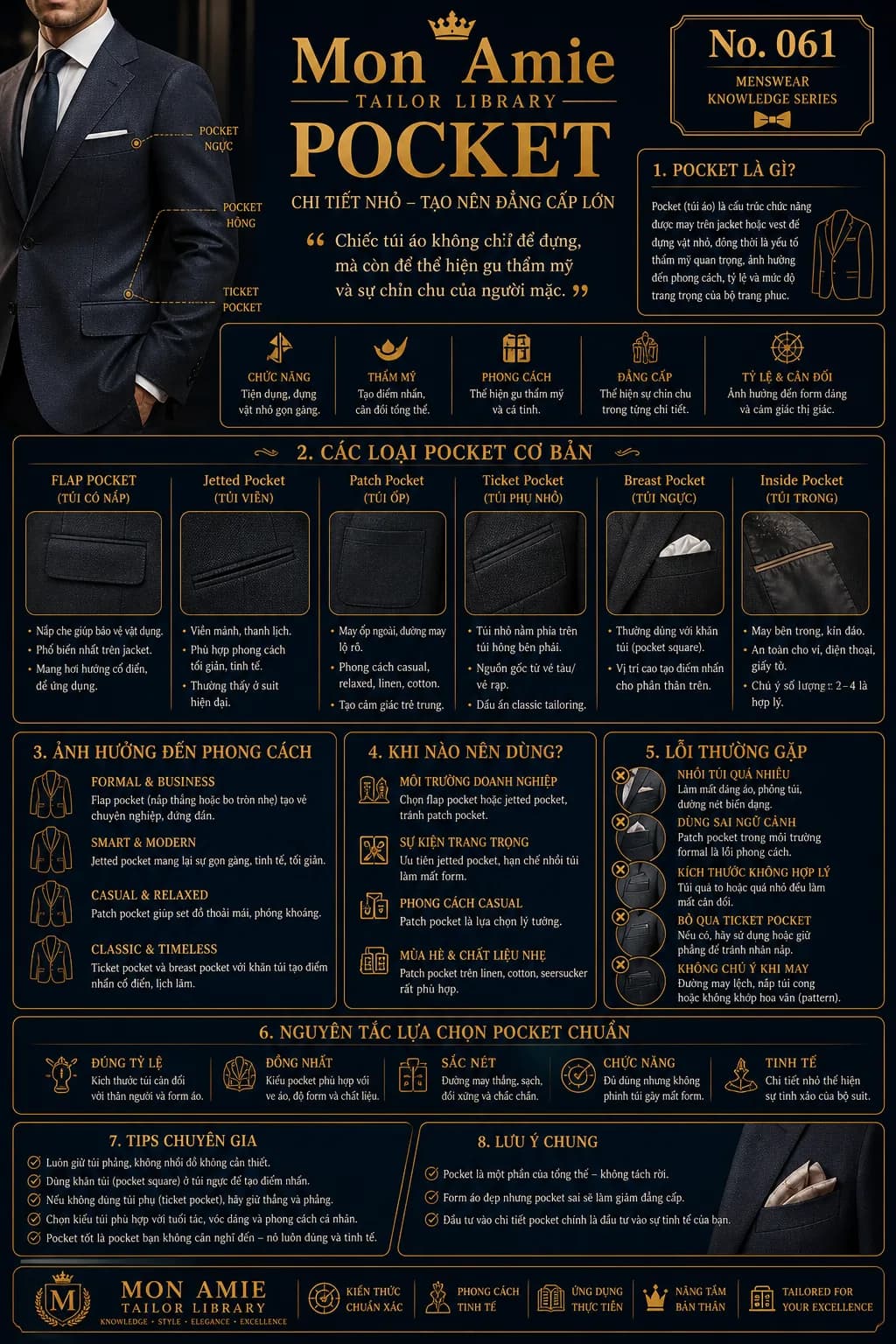
A pocket is a functional structure sewn onto a jacket or waistcoat to hold small items, but it is also a significant aesthetic element that shapes the style, proportion and formality of the whole outfit. A pocket is not only somewhere to put things; it reveals taste and attention to detail. In this article, Mon Amie walks you through the essential suit pocket types, how they define a look, and the rules every tailor observes when choosing them.
Why such a small detail matters so much
On a jacket, pockets appear in three main positions: the breast pocket, the hip pockets and the ticket pocket. Each one plays several roles at once:
- Function: practical, holding small items neatly.
- Aesthetics: creating a focal point and balancing the whole.
- Style: expressing the taste and character of the wearer.
- Refinement: true polish lives in the smallest details.
- Proportion and balance: pockets affect the silhouette and the visual weight of the entire suit.
Because they carry so much, the pocket style, its size and its stitching are things a tailor considers carefully long before the cloth is cut.
The essential suit pocket types
There are six styles you will encounter most often:
- Flap pocket: the most common on a jacket. The flap shields the contents, carries a classic air, and works in almost every setting, from the office to an evening event.
- Jetted pocket: two slim welts only, elegant and flapless. It suits a minimal, refined style and appears often on modern suits and on evening tuxedos.
- Patch pocket: sewn onto the outside of the body, its stitching plainly visible. This is the pocket of casual, relaxed dressing — perfectly at home on linen and cotton, and youthful in feel.
- Ticket pocket: a small pocket sitting above the right hip pocket, born from the English gentleman's habit of carrying train and theatre tickets. Today it is a signature of classic tailoring.
- Breast pocket: usually worn with a pocket square. Its high position draws attention to the upper body and lifts the eye towards the face.
- Inside pocket: sewn inside the body of the jacket, discreet and secure for a wallet, phone or documents. Two to four is sensible; more than that will weigh down and bulk out the jacket.
How pockets define a style
Change nothing but the pocket style and the same jacket shifts into an entirely different spirit:
- Formal and business: a flap pocket with a straight or gently rounded flap reads as professional and composed — the safe choice for the office.
- Smart and modern: a jetted pocket brings cleanliness, refinement and restraint — ideal on a slim, contemporary silhouette.
- Casual and relaxed: a patch pocket makes an outfit easy and unforced, exactly the spirit of a weekend blazer.
- Classic and timeless: a ticket pocket and a breast pocket with a pocket square create a classic, well-bred accent — thoroughly English in character.
When to use which pocket
Let the occasion guide your choice:
- Corporate settings: choose a flap or jetted pocket, and avoid the patch pocket, which is too relaxed for an office atmosphere.
- Formal events: favour the jetted pocket for its clean lines, and resist filling your pockets, which distorts the jacket.
- Casual style: the patch pocket is the natural choice.
- Summer and lightweight cloth: patch pockets on linen, cotton or seersucker work beautifully — a light pocket structure matches the drape of the cloth.
Common mistakes with suit pockets
Many fine suits lose their value simply through pockets used badly:
- Overfilling: the jacket loses its shape, the pockets bulge and the lines distort.
- Wrong context: a patch pocket in a formal setting is a stylistic error.
- Poor proportions: a pocket that is too large or too small unbalances the body of the jacket.
- Neglecting the ticket pocket: if your jacket has one, use it properly or keep it lying flat so the flap does not crease.
- Careless making: crooked stitching, a curling flap or mismatched pattern matching all betray unfinished craftsmanship.
The principles behind a well-chosen pocket
When we make to measure, Mon Amie works to five principles:
- Right proportion: the pocket size balances the body and the cut of the jacket.
- Coherence: the pocket style agrees with the lapel, the structure and the cloth.
- Precision: stitching that is straight, clean, symmetrical and secure.
- Function: sufficient for use without bulging and ruining the line.
- Refinement: a small detail that expresses the craft of the whole suit.
A word from Mon Amie's artisans
What Mon Amie has learned across thousands of suits: keep your pockets flat and carry nothing you do not need — a phone belongs in the inside pocket, not the hip pocket. Wear a pocket square in the breast pocket for a point of interest, and if you never use the ticket pocket, simply leave it straight and flat as a classic ornament. When commissioning a suit, choose a pocket style that suits your age, your build and your own manner, because a good pocket is one you never think about — it is always right, and always quietly refined.
A pocket belongs to the whole and cannot be separated from it: a beautiful silhouette with the wrong pocket still diminishes the entire outfit. Investing in this detail is investing in your own refinement. If you would like a suit in which every pocket is considered in proportion, we invite you to book an appointment with Mon Amie at one of our five showrooms in Ho Chi Minh City, or to read about the tailoring process first.