
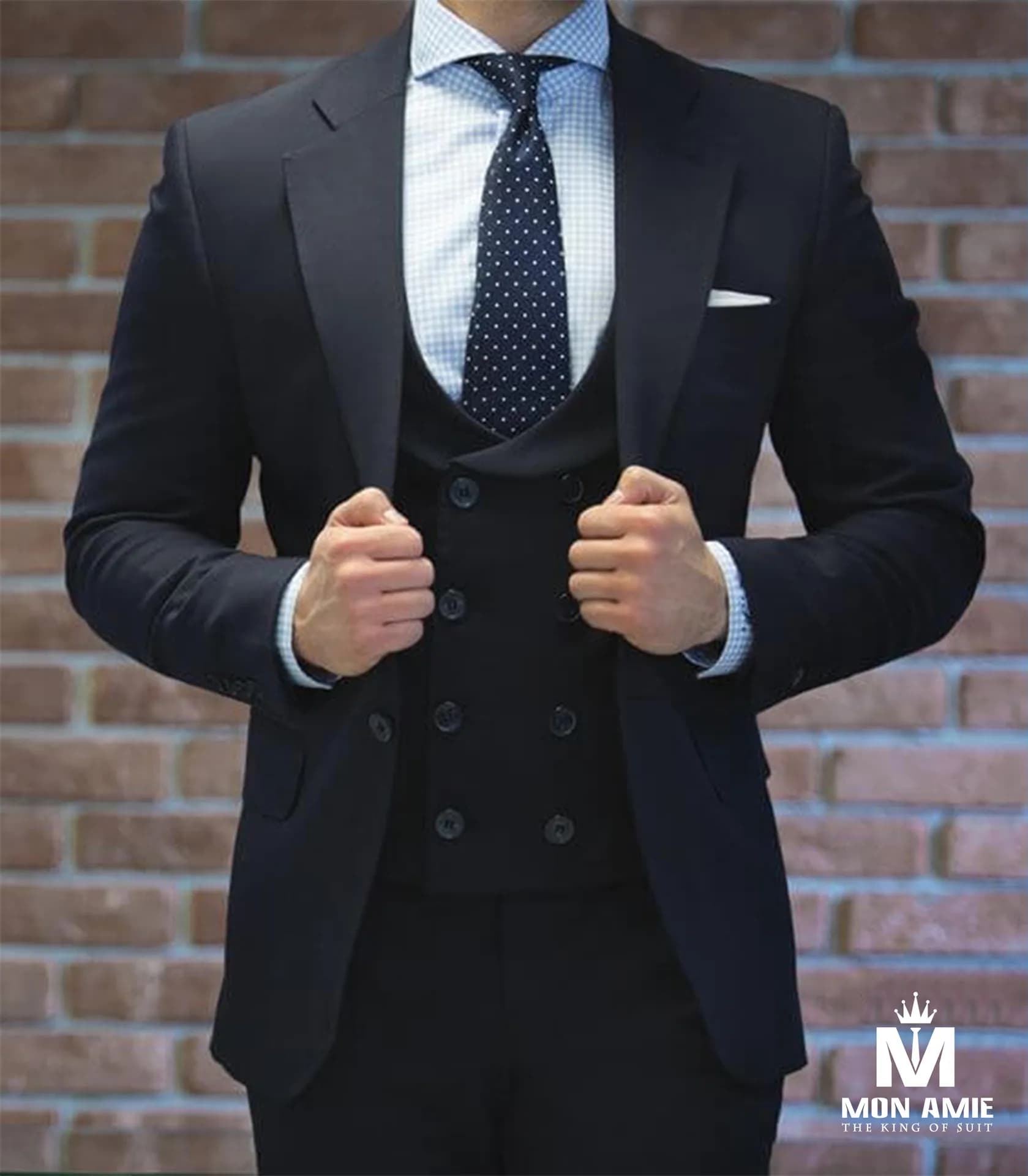
“I'd like a waistcoat, please.” It sounds simple, but at the showroom the tailor always has to ask back: single- or double-breasted, with or without lapels, a high neck or a low scoop, a back in the same cloth or in satin lining? Because a waistcoat is not a single item but a whole family of cuts, and each cut is made for a different level of formality. Once you can tell the men's waistcoat styles apart, you will choose the piece that lifts your suit instead of merely making it feel tighter.
Quick answer
Men's waistcoats are sorted by three criteria: how they button (single- or double-breasted), the neckline and lapel (V-neck, U-neck, notch lapel, peak lapel, shawl lapel) and the back material. A single-breasted V-neck waistcoat suits the office; double-breasted and lapelled waistcoats suit evening events; a waistcoat in a contrasting cloth suits a classic look.
What a waistcoat is and what it is for
The waistcoat (“gilet” in French, “waistcoat” to the British) is a sleeveless, collarless garment worn between the shirt and the suit jacket. It keeps the tie in place, covers the waistband and makes the waist look naturally neater. A suit with a waistcoat is called a three-piece suit, and the waistcoat is the part that adds polish, making the wearer look more meticulous.
What puts many people off waistcoats is the fear of being too hot and the fear of looking older. Both fears can be solved by choosing the right cut and the right cloth, as the sections below will show.
Men's waistcoat styles: 10 cuts to recognise at a glance
| # | Waistcoat cut | Quick identification | Formality |
|---|---|---|---|
| 1 | Single-breasted, V-neck, no lapel | 5 to 6 buttons, an even V neckline | Medium; suits the office |
| 2 | Single-breasted, high neck | Closed high neck, closely spaced buttons, fits snugly across the chest | Medium to high; classic English style |
| 3 | Low-cut waistcoat, U-neck | Deep U-shaped neckline, few buttons, shows a lot of shirt | High; for evening events |
| 4 | Notch-lapel waistcoat (notch) | Lapel with a notch, like the lapel of an ordinary jacket | Medium to high |
| 5 | Shawl-lapel waistcoat (shawl) | Rounded, continuous lapel, often faced in satin | Very high; worn with a tuxedo |
| 6 | Double-breasted, no lapel | Two parallel rows of buttons, fastened across | High; slightly classic |
| 7 | Double-breasted, peak lapel | Pointed lapel angled up towards the shoulder, an authoritative look | Very high; suits major events |
| 8 | Vintage waistcoat | High neck, pointed hem, tweed, check or velvet cloth | Semi-formal |
| 9 | Lined back with adjuster strap | Back in glossy lining fabric, with a buckle to adjust the waist | Traditional, formal |
| 10 | Short waistcoat, modern cut | Hem at the waistband, trim fit, few buttons | Semi-formal, youthful |
Grouped by how they button
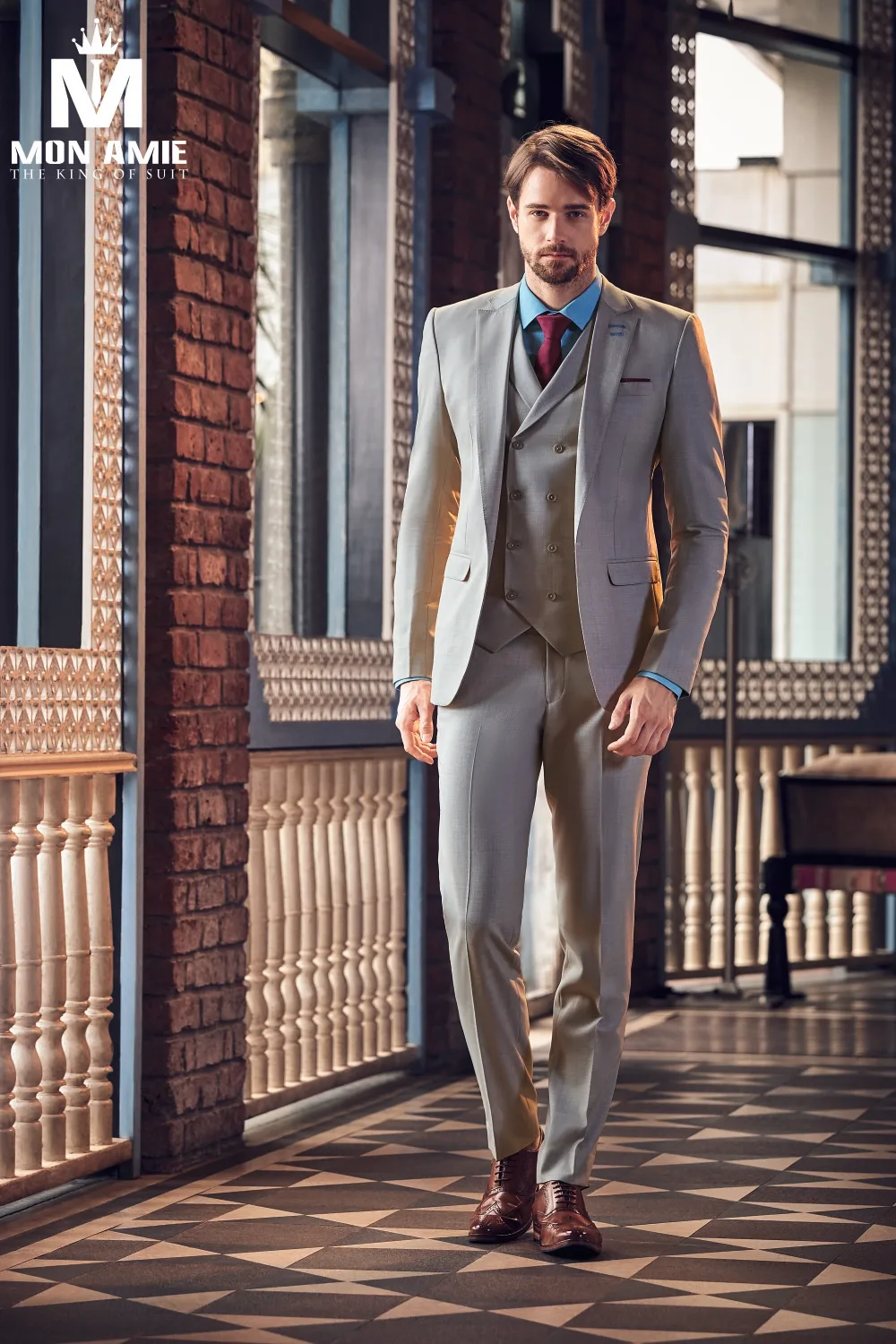
The single-breasted waistcoat is the most basic cut and suits every build. A double-breasted waistcoat adds width across the chest, so it suits slim men, while men with a fuller stomach should choose single-breasted so that the vertical line draws the figure in. One traditional rule worth remembering: the last button of a single-breasted waistcoat is always left undone.
Grouped by neckline and lapel
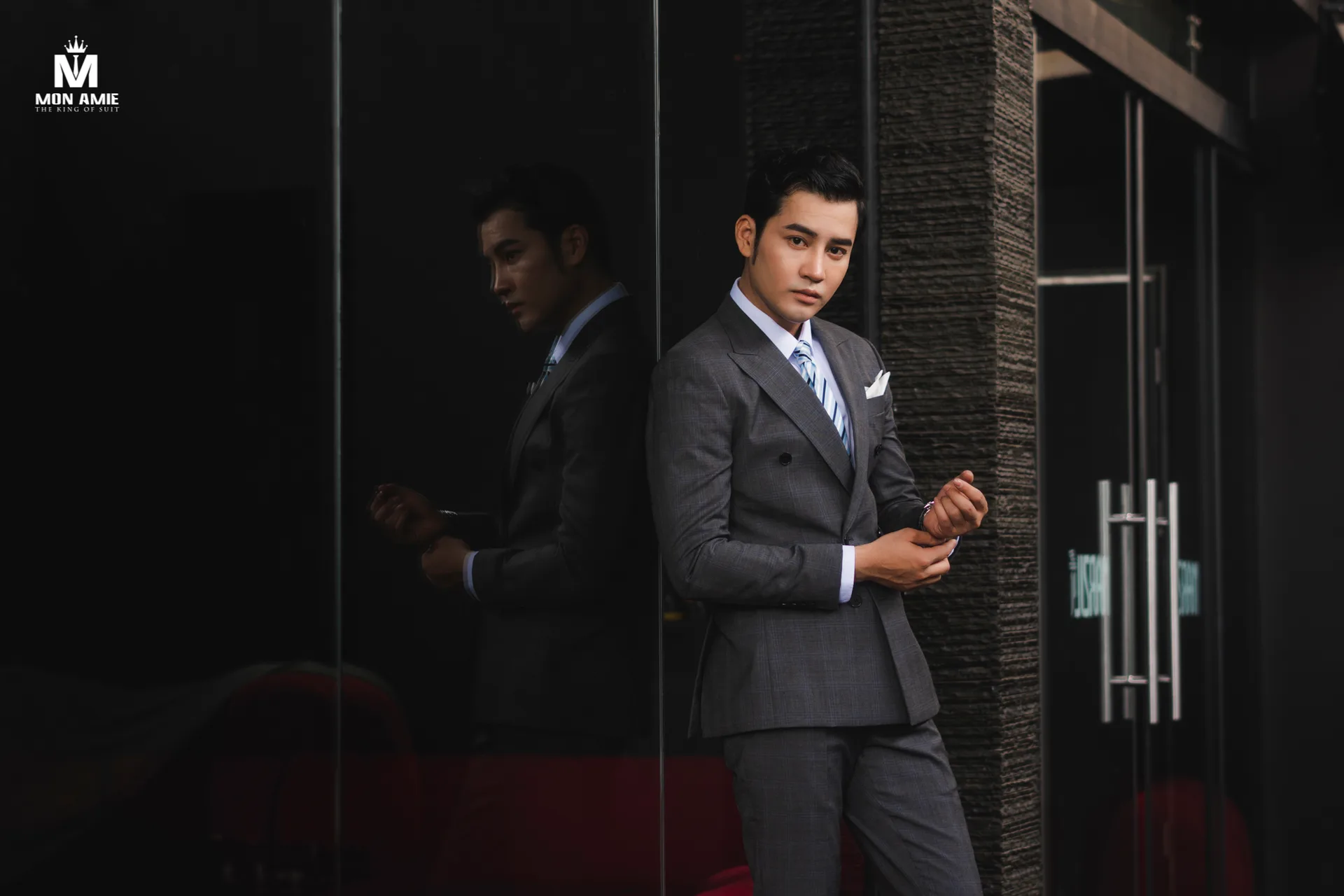
The neckline decides the level of formality more than anything else. A high V-neck covers the shirt and suits the office, while a low U-neck shows the shirt front and suits evening parties and tuxedos. A notch lapel makes the waistcoat look like a miniature jacket, a peak lapel adds presence, and a shawl lapel is soft and elegant, usually seen on formal wear.
Grouped by material and back
A waistcoat in the same cloth as the suit gives a coordinated, seamless look. A waistcoat in a different cloth or colour (light grey with a navy suit, brown with a striped suit, velvet with a blazer) is the way to make the waistcoat a focal point. As for the back, a satin-lined back with an adjuster strap is the traditional style, light and easy to adjust for a close fit; if you want to wear the waistcoat as an outer layer in hot weather, without the jacket, ask your tailor about a back in the same cloth.
How to choose a waistcoat for your suit
Three questions help you decide in a minute:
- What occasion? Everyday work: single-breasted, V-neck, in the same cloth as the suit. Evening parties and weddings: U-neck or shawl lapel. Events that call for authority: double-breasted with peak lapels.
- What build? Tall, slim men suit double-breasted; shorter men or those with a fuller stomach should choose single-breasted with a deep V-neck, in a colour matching the suit.
- Coordinated or standout? Coordinated means the same cloth and the same colour. Standout means a waistcoat in a different shade, but only one tone apart, not a whole colour family apart.
Which cloth line suits a waistcoat
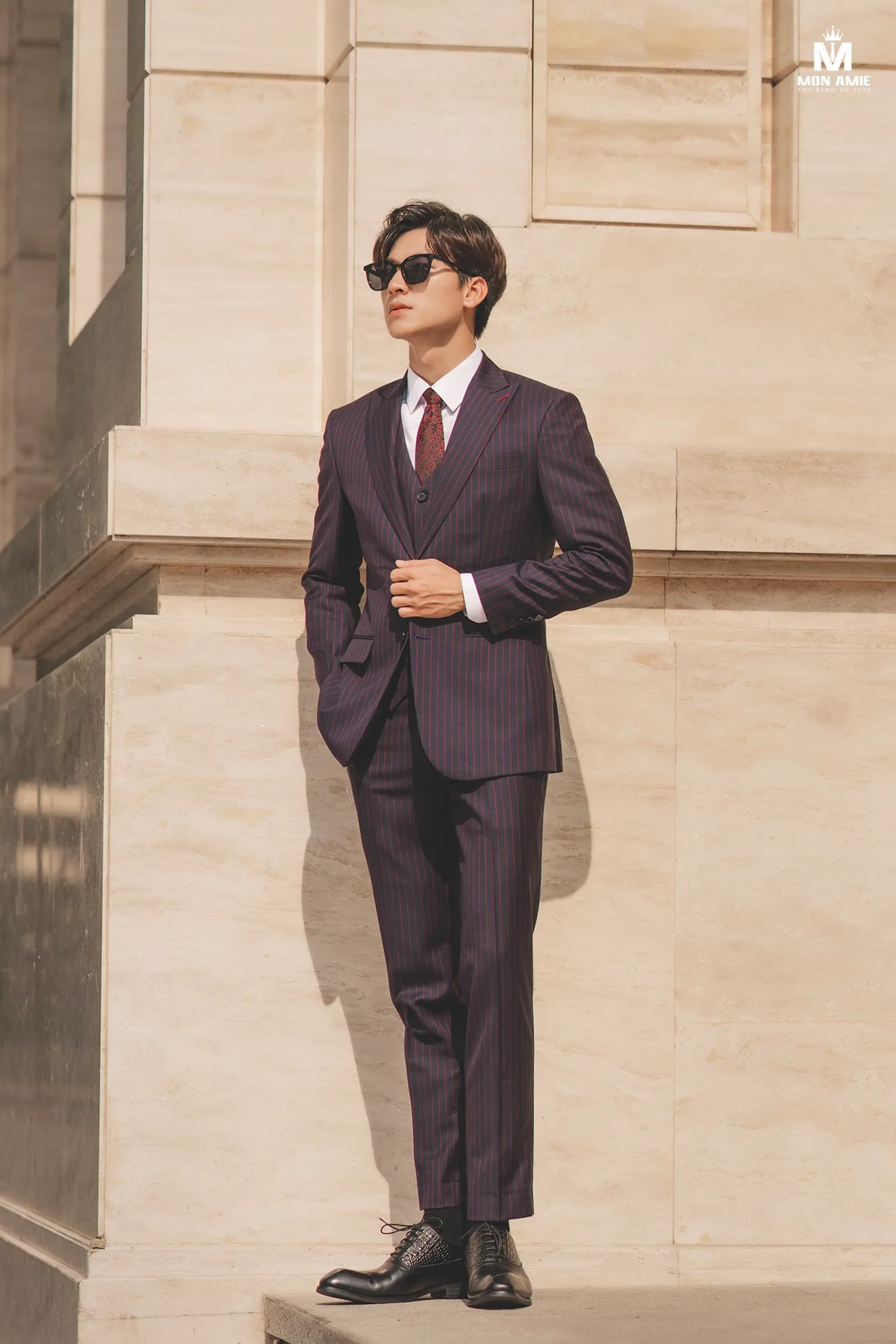
A waistcoat made from the suit's own cloth is the safest choice. With 100s to 140s wool from the Essential line, a plain waistcoat keeps the lines clean. In the Signature and Heritage lines, you have extra options such as a light stripe or a check to give the waistcoat a classic character. You can consult the made-to-measure price list to see where each cloth line sits before choosing.
Common mistakes when wearing a waistcoat
- A waistcoat that is too loose. It must fit snugly to the torso, with no slack across the back. A loose waistcoat makes the whole outfit untidy.
- A waistcoat shorter than the shirt. A shirt hem showing beneath the waistcoat looks very poor. The waistcoat hem must fully cover the waistband.
- Fastening every button. Fastening even the last button makes the waistcoat tight and ruins the shape; the last button should stay open.
- A waistcoat longer than the jacket. The waistcoat should be slightly shorter than the jacket to be in proportion, because nobody wants to see a waistcoat poking out below the jacket.
- A tie longer than the waistcoat. The tie must sit neatly inside the waistcoat; the tip of the tie reaching the waistband is right.
Tips from Mon Amie's master tailors
- The waistcoat must be measured at the same time as the jacket. The two pieces are balanced in proportion together; made separately, it is easy for the neckline and hem to be off.
- A waistcoat with spare room in the chest deflates the whole outfit. The chest and waist measurements of the waistcoat should sit closer to the body than the jacket's, because the waistcoat lies right against the shirt.
- One tone off from the suit is enough for the waistcoat colour. Navy with a light grey waistcoat, charcoal with a lighter grey waistcoat, rather than two pieces in the same tonal family but a different shade.
- If you want to see a waistcoat style before choosing, you can use Mon Amie's online suit design tool to quickly view combinations of cloth colour and style.
Frequently asked questions
How many men's waistcoat styles are there, and which should I choose?
They can be grouped into ten cuts, as in the table above, but most wearers need only three: a single-breasted V-neck waistcoat for work, a double-breasted waistcoat for parties, and a contrasting-colour waistcoat for a classic look. Choosing by occasion and build is more reliable than chasing trends.
Which waistcoat style works for the office?
Choose a single-breasted V-neck waistcoat, in the same cloth as the suit, worn with a white or light blue shirt. Navy, charcoal or ash grey are easy to pair and never go out of fashion. For more on pairing, the article on choosing a men's waistcoat to go with a suit will help.
Does a vintage waistcoat suit Vietnamese men?
Yes, as long as you choose a moderate cloth. A vintage waistcoat in thick tweed or velvet runs hot in Ho Chi Minh City, so wear it only in air-conditioned rooms or the cooler season. Thin wool or a blended cloth with a small check will be more comfortable while keeping the classic look.
How should I wear a waistcoat-and-trouser set so it looks good?
Wear the waistcoat with trousers as a matching set: a close-fitting waistcoat, the hem covering the waistband, the last button open, and a white or cream shirt underneath. You can leave off the jacket for a light party or the weekend and still look polished.
In closing
The waistcoat is a small piece, but it changes the whole character of a suit. If you are considering a three-piece suit, visit a Mon Amie showroom, where a stylist can lay each waistcoat cut next to real cloth so you can see it in person, or look at the bespoke tailoring service to learn the full measurement process. The article what to wear with a men's waistcoat is also your next stop for pairing shirts, ties and shoes.