
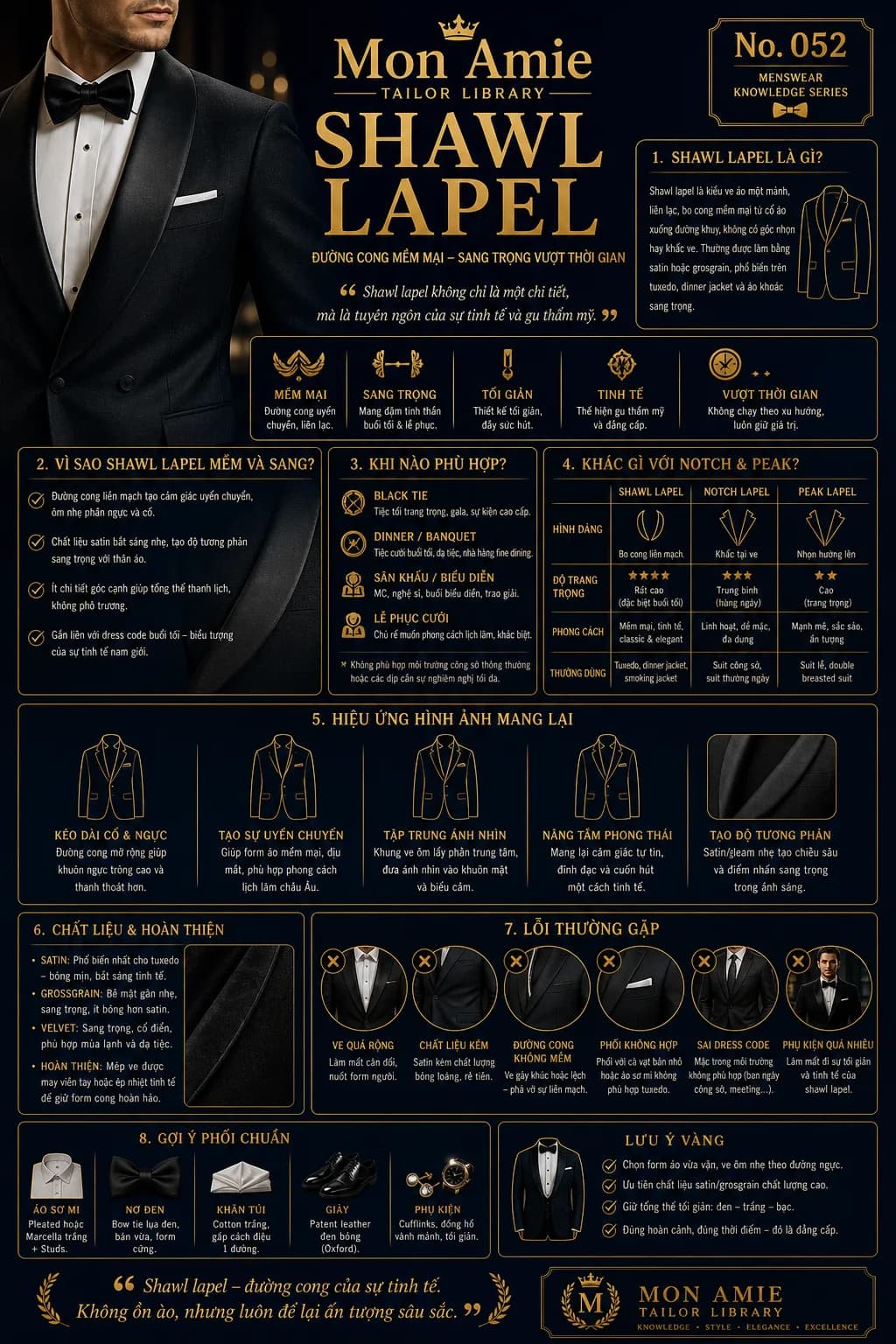
The shawl lapel is a single-piece lapel that curves smoothly from the collar down to the button stance, with none of the notches or points found on notch and peak lapels. It belongs to the tuxedo, the dinner jacket and evening dress in general, and is usually faced in satin or grosgrain to create a rich contrast against the body of the jacket. Put another way, the shawl lapel is not merely a technical detail — it is a statement about the wearer's refinement and taste.
Why a soft curve still reads as luxurious
The appeal of this lapel comes precisely from its restraint:
- The unbroken curve moves fluidly, following the chest and neck without the interruption of a notch.
- Satin catches the light gently and contrasts richly with the jacket cloth — particularly beautiful under evening lighting.
- With fewer hard angles, the whole looks elegant without display; the eye is drawn to the face and the black bow tie rather than scattered across details.
- For well over a century the shawl lapel has been bound up with evening dress codes, becoming a symbol of masculine refinement.
Because it never chased a trend, this lapel has never fallen out of favour. A well-made shawl lapel tuxedo bought today will still be correct in ten years' time.
When to wear a shawl lapel
The shawl lapel was made for formal evenings:
- Black tie: formal dinners, galas, high-end events — this is its true home.
- Dinners and banquets: evening weddings, receptions, fine dining.
- Stage and performance: hosts, performers, award ceremonies — where the lights bring out the gleam of a satin lapel.
- Wedding attire: for the groom who wants a polished look distinct from an ordinary suit.
Conversely, this lapel does not belong in an ordinary office or in settings that call for maximum sobriety. Wearing a shawl lapel tuxedo to a daytime meeting is a classic dress-code error.
How the shawl lapel differs from notch and peak
The three most common lapels differ clearly in both shape and formality:
- Shape: the shawl curves in one unbroken line; the notch has a cut where collar meets lapel; the peak has points angled up toward the shoulder.
- Formality: shawl, very high and specifically for evening; notch, moderate and suited to daily wear; peak, high and appropriate both day and evening.
- Character: shawl is soft, refined, classic and elegant; notch is versatile, easy and all-purpose; peak is strong, sharp and striking.
- Typical use: shawl on tuxedos, dinner jackets and smoking jackets; notch on business and everyday suits; peak on formal and double-breasted suits.
The visual effect of a shawl lapel
A well-cut curve does more than most people expect:
- It lengthens the neck and chest: the open curve makes the chest look taller and cleaner.
- It softens the line: the jacket reads fluid and easy on the eye, in the European manner.
- It focuses attention: the lapel frames the centre of the body and leads the eye to the face.
- It elevates bearing: it lends a quiet confidence and composure.
- It creates contrast: the satin facing catches light and adds depth and a note of luxury under the lamps.
Facings, finishing and common mistakes
There are three classic choices of facing: satin, the most common for tuxedos, smooth and softly reflective; grosgrain, lightly ribbed, refined and less shiny than satin, for those who prefer discretion; and velvet, opulent and traditional, well suited to cold weather and evening receptions. As for finishing, the lapel edge should be hand-stitched or precisely pressed so the curve holds its shape over the years.
The errors that rob a shawl lapel of its value, in Mon Amie's experience:
- A lapel cut too wide, unbalancing the jacket and swallowing the wearer.
- Poor material: cheap, glaring satin is recognisable at a glance.
- A curve that is not smooth — broken or uneven — which destroys the very soul of the style.
- Mismatched styling: a narrow tie or a shirt that does not belong with a tuxedo.
- The wrong dress code: wearing it by day, at the office or in meetings.
- Too many accessories, which undo the simplicity that defines the shawl lapel.
Styling a shawl lapel tuxedo
The safest and most correct formula:
- Shirt: a white pleated or Marcella shirt with studs.
- Bow tie: black silk, moderate width, with a crisp shape.
- Pocket square: white cotton in a simple fold.
- Shoes: black patent leather Oxfords.
- Accessories: cufflinks and a slim, understated watch.
The golden rule: keep everything within black, white and silver; choose a fit that follows the chest with a lapel lying softly against it; and insist on good satin or grosgrain.
A word from Mon Amie's artisans
With a shawl lapel, the curve must be drafted to each man's chest and shoulder slope — one pattern cannot flatter two different bodies. This is why we always recommend made-to-measure over ready-to-wear, and why we suggest trying the jacket under warm lighting similar to an event space, so you can judge how the satin catches the light. If you own only one tuxedo, make it a black shawl lapel of moderate width: it is the choice that never fails at any evening occasion.
The shawl lapel is the curve of refinement — never loud, always memorable. If you are preparing for an important evening or wedding, we invite you to book an appointment at one of Mon Amie's five showrooms in Ho Chi Minh City, or to read the tailoring process first, to see how a proper tuxedo comes into being.