
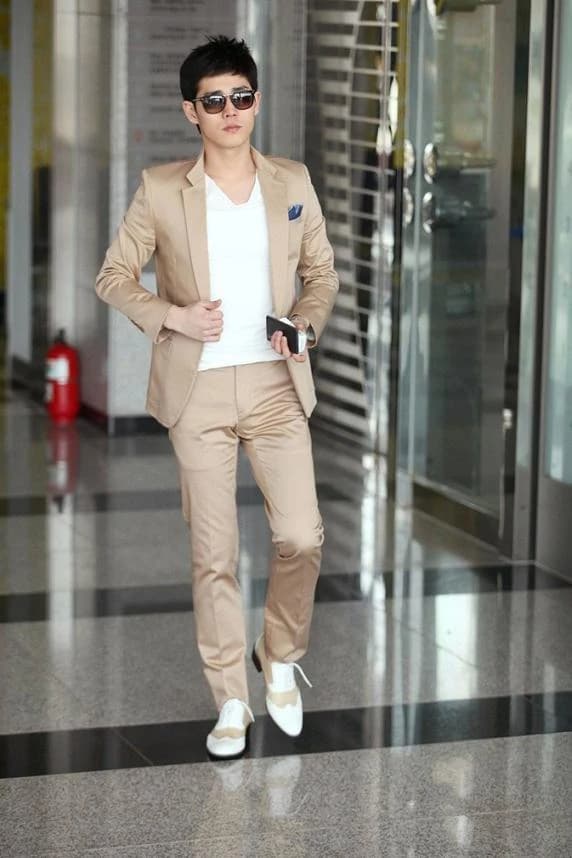
A creased linen suit is perfectly normal; it is almost the material's “signature”. A linen suit that droops at the shoulder, bags at the knee or splits at the seams after a few wears is the tailor's fault. Many men love the lightness of linen but hold back for fear the suit will only look good on the first day. When a made-to-measure linen suit is built properly, that is entirely avoidable. Here are the six points Mon Amie's master tailors always mention when they receive a length of linen cloth.
The short answer
Six things to remember when you commission a linen suit: choose a linen blend or accept natural creasing, pre-shrink the cloth before cutting, use light construction, go half-lined or unlined, reinforce the seams that bear stress, and care for it with steam instead of a hard press. Done right, the suit is both cool and shapely.
Why is linen cool, and where does it get difficult?
Flax fibre carries moisture quickly and dries quickly, so the cloth breathes very well in the hot, humid climate of Ho Chi Minh City. But the same fibre is also stiff, has little elasticity, creases easily and shrinks on contact with water. That is why tailoring linen differs from tailoring wool: less structure, more care at the points that bear stress, and an acceptance of a more “lived-in” look.
6 tips for a made-to-measure linen suit
1. Choose the right cloth: pure linen or a linen blend?
Pure linen gives the most natural, rough-hewn look but creases a lot. Linen blended with wool, silk or cotton creases less, drapes more softly and is easier to wear every day. If you wear a suit to work often, a linen blend is the practical choice. You can read more about linen-wool blend cloth and men's linen suits for hot weather to understand each blend ratio.
2. Pre-shrink the cloth before cutting
Linen shrinks with steam or washing. If the tailor cuts and sews straight away when the cloth has not been treated, the suit may come out short in the sleeves, off the pattern or puckered at the seams after its first dry-cleaning. So linen cloth should be steam-treated (pre-shrunk) to stabilise it before it is cut. It is an invisible step, but it decides durability.
3. Light construction, not stiff
A linen suit looks best when it is soft, with a little drape. Over-stiff canvassing makes the jacket like a frame, stifling and creasing all the more. Master tailors usually use light (soft) construction, a clean shoulder and little padding. The goal is for the jacket to hold its shape through cut and craftsmanship, not through heavy interlining.
4. Half-lined or unlined
A full lining makes the jacket hot and defeats the reason for choosing linen. Two common options:
- Half-lined: the lining covers only the shoulders, upper back and sleeves. The jacket still slides on easily and keeps its form.
- Unlined: the lightest, requiring the inside seams to be neatly bound. The sleeves should still be lined so the arms slip in easily.
A detailed comparison of lining styles is in the article unlined or half-lined suit jackets.
5. Seams that bear stress must be stronger
Flax fibre is dry with little give, so points that bear stress are prone to splitting: shoulders, armholes, the trouser crotch seam, knees and elbows. How to handle them:
- Small, even stitches with strong thread at the shoulders, armholes and crotch seam.
- Extra reinforcement at the pockets, vent corners and button areas.
- Patch pockets are a familiar choice, because they suit the relaxed style and also spread stress better.
- Half knee lining for the trousers keeps them from bagging at the knee after a few hours of sitting.
6. Accept natural creases
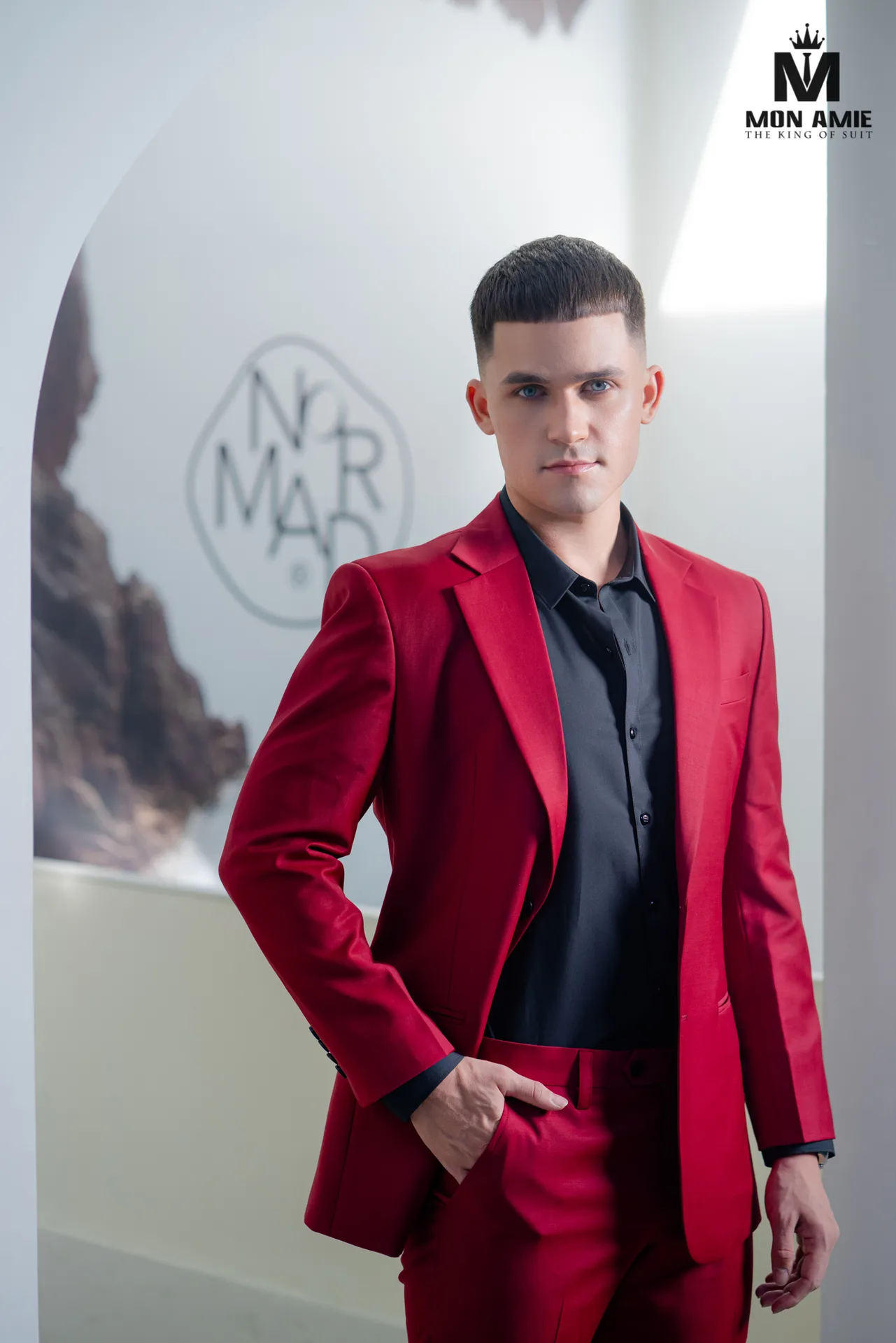
This is the most important point. Linen always has creases, and light creasing at the elbow, belly and thigh is part of the beauty of the material. If you need an absolutely crisp suit for an interview or a board meeting, choose tropical wool instead of linen. But if you are ready to embrace this easy-going look, linen will give you a feeling no other cloth can.
How to care for it so creases do not become flaws:
- Hang it up right after wearing, on a wide-shouldered hanger.
- Use steam rather than a harsh hot iron; press through a damp cloth if needed.
- Have it professionally dry-cleaned; do not hand-wash or machine-wash.
- Let the suit “rest” for at least one day between wears.
Colours and styles to choose
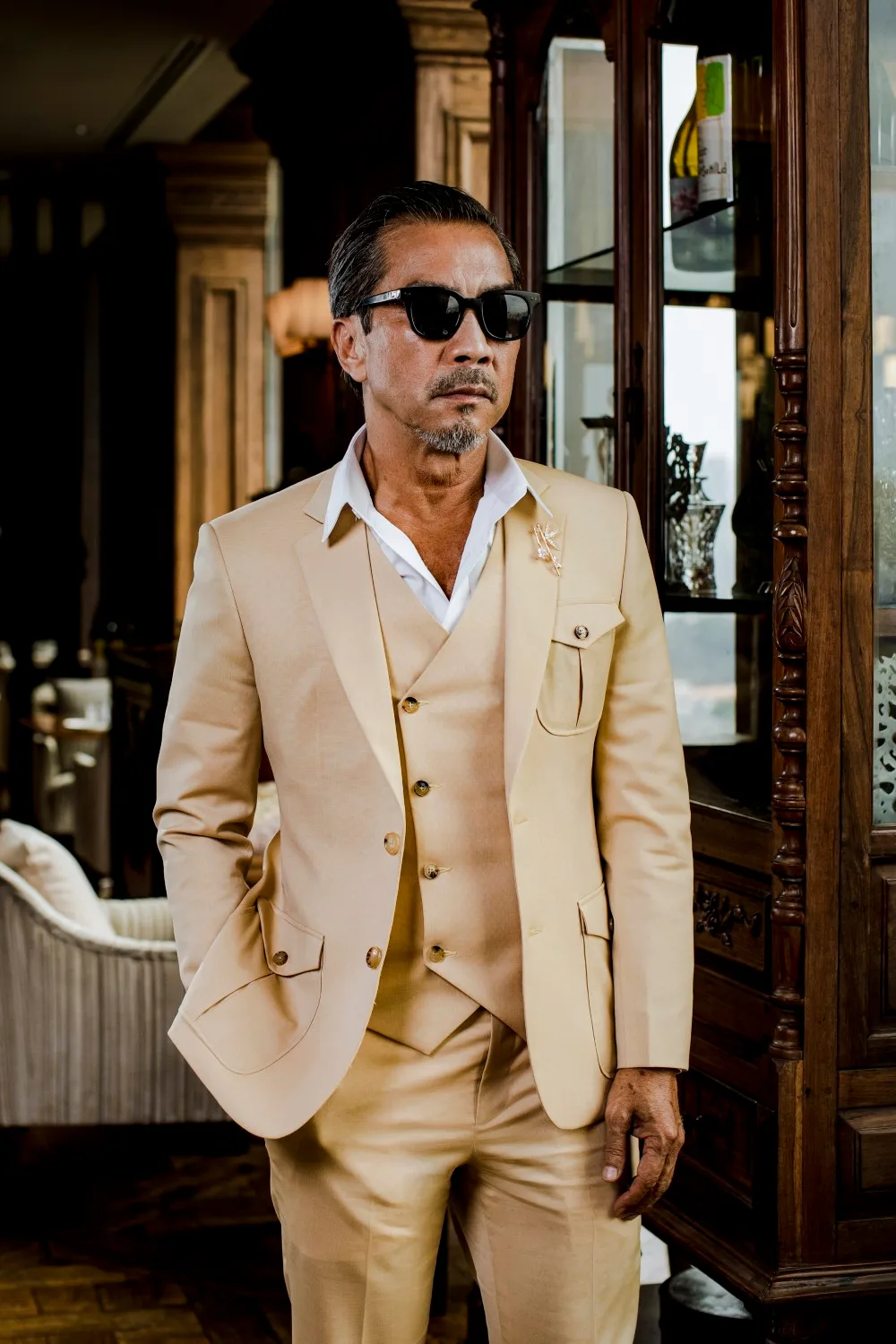
Linen looks best in light, neutral shades: cream, beige, light grey, light navy, moss green, sand brown. Black, shiny colours and very dark colours lose the natural look. As for style, a single-breasted jacket, natural shoulder, moderate lapels and patch pockets suit it best. A cream or beige suit, in particular, is a familiar colour in a summer wardrobe.
What to wear with a linen suit
- A cotton or linen shirt: white, light blue, powder pink.
- Suede loafers or light brown derby shoes. Glossy black shoes do not suit it.
- A textured-weave or matte silk tie, or skip the tie and open one collar button.
- A cotton or linen pocket square folded naturally, no need to fold it straight.
- A watch on a leather or fabric strap.
Common mistakes and tips from Mon Amie's master tailors
- Choosing pure linen for someone who dislikes creases. Choose a blend, or choose tropical wool.
- Sewing before pre-shrinking. After the first dry-cleaning, the suit goes out of shape.
- Stiff construction and a full lining. These two make linen feel like “wearing armour”.
- Leaving the suit in a plastic bag for days. Linen needs air.
- Pressing with a hot iron directly. It makes the cloth shiny and loses the natural rough texture.
A tip from the trade: if you are still hesitating between linen and another cloth, come to a showroom, touch the swatches and try on a sample jacket. The feel of wearing linen is genuinely hard to imagine from a description. You can book a fitting so a stylist can let you compare a few materials right on your body.
Frequently asked questions
Does a men's linen suit crease?
Yes. Linen always has natural creases. Linen blended with wool or cotton creases less than pure linen. If you need a crisp suit for a formal occasion, consider tropical wool.
When can you wear a men's linen suit?
Best by day: outdoor weddings, weekend events, trips, relaxed offices, get-togethers with friends. Not suited to very formal occasions such as signing ceremonies or board meetings.
Is linen a good cloth for a suit?
Good if you love breathability and accept natural creases. Linen is durable, absorbent and cool, but it demands careful tailoring and the right care. It is best to choose evenly woven cloth from a clearly identified brand. You can preview materials in the cloth library.
How do you clean a linen suit?
Professional dry cleaning is recommended to protect the shape of the jacket. At home, simply hang it in the open air and smooth it with steam. Never machine-wash, wring or twist it, or dry it in harsh sun.
Final thoughts
A properly made linen suit will be the one you wear most in the hot season, because it is both cool and full of character. If you want a made-to-measure linen suit like that, the Bespoke tailoring service lets you choose the cloth, the construction and the lining, and adjust until it looks right to you. As for the time it takes, the showroom will give a specific schedule as soon as you are measured.