
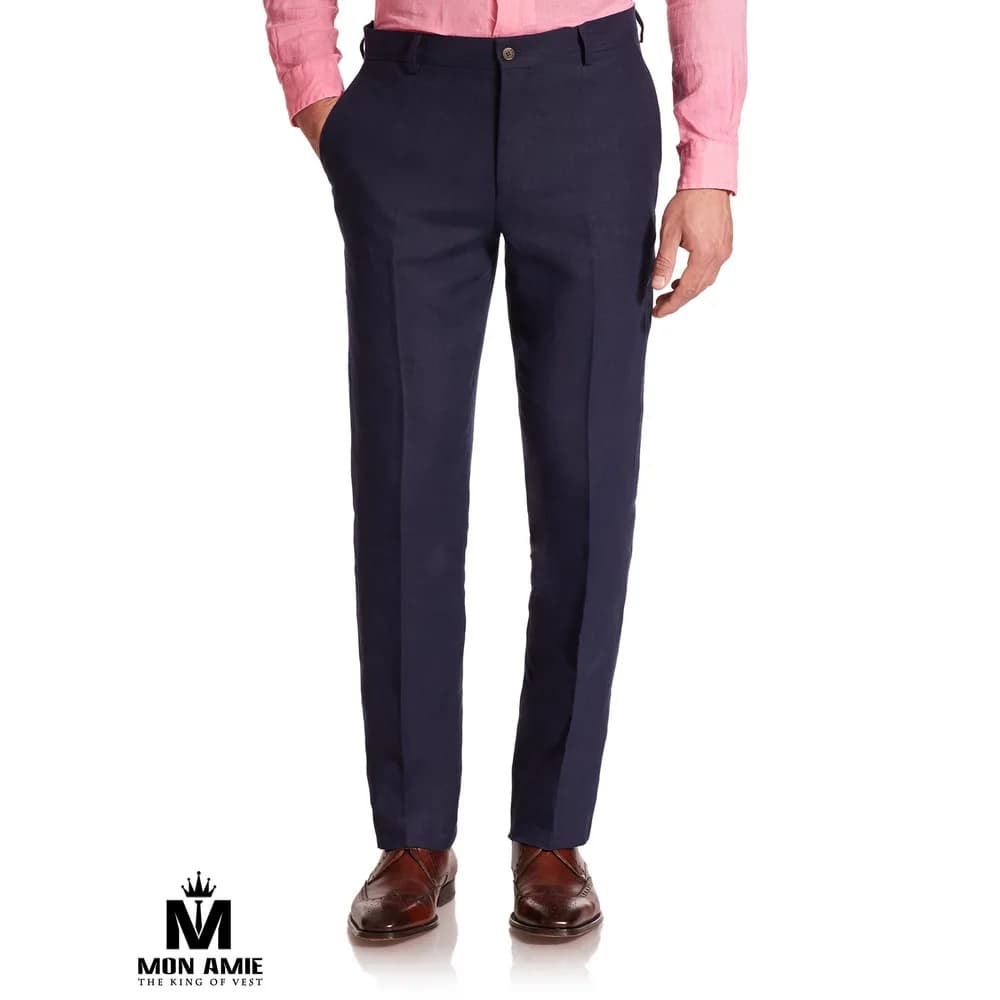
You buy a pure linen suit for summer, sit through a three-hour meeting, stand up and find both elbows and the stomach area as creased as a crumpled sheet of paper. It is a familiar story to anyone who has tried pure linen. Linen wool blend fabric exists to deal with exactly that annoyance: it keeps the dry, airy feel of linen but borrows the elasticity of wool, so the cloth creases less and holds its shape.
The short answer
Linen wool blend fabric keeps the airy, dry feel of linen, while the wool helps it crease less, recover its folds and hold its shape. It is lighter and cooler than heavy wool and creases less than pure linen. In the hot, humid climate of Ho Chi Minh City it is a balanced choice for a summer suit, wearable from the meeting room to the outdoors.
How do linen and wool differ?
The two fibres have almost opposite personalities, so placing them side by side shows why blending works:
| Criterion | Linen | Wool | Linen-wool blend |
|---|---|---|---|
| Breathability | Very breathable, dries fast | Breathable when woven thin, absorbs moisture well | Breathable, less stuffy than heavy wool |
| Creasing | Creases very easily | Resists creasing, recovers well | Light creasing, soft folds that drop out on their own |
| Drape | Stiff, dry | Soft, drapes beautifully | Moderate drape, holds its shape |
| Feel | Cool, slightly coarse | Warm, smooth | Cool, naturally slightly dry |
| Suited to | Hot season, relaxed days | All year, depending on weight | Hot season, working days |
One interesting point: pure wool woven thin (the tropical style) is cool too. But linen-wool adds the characteristic “dry” feel of linen that pure wool does not have.
Linen wool blend fabric: common blend ratios
On the market this cloth usually falls around the following levels (they can vary by mill, so always read the label):
- More wool than linen (about 60–70% wool): the cloth is soft, creases less and holds its shape well, which suits business suits.
- Half and half (about 50/50): the most even balance between coolness and shape.
- More linen than wool: dry and airy, with a more obvious “linen” character, but it creases more.
There is also a wool–silk–linen line: wool makes up most of it to hold the shape, silk makes the cloth soft with a light sheen, and linen brings a dry airiness. This is usually a premium cloth, very light to wear with a refined lustre.
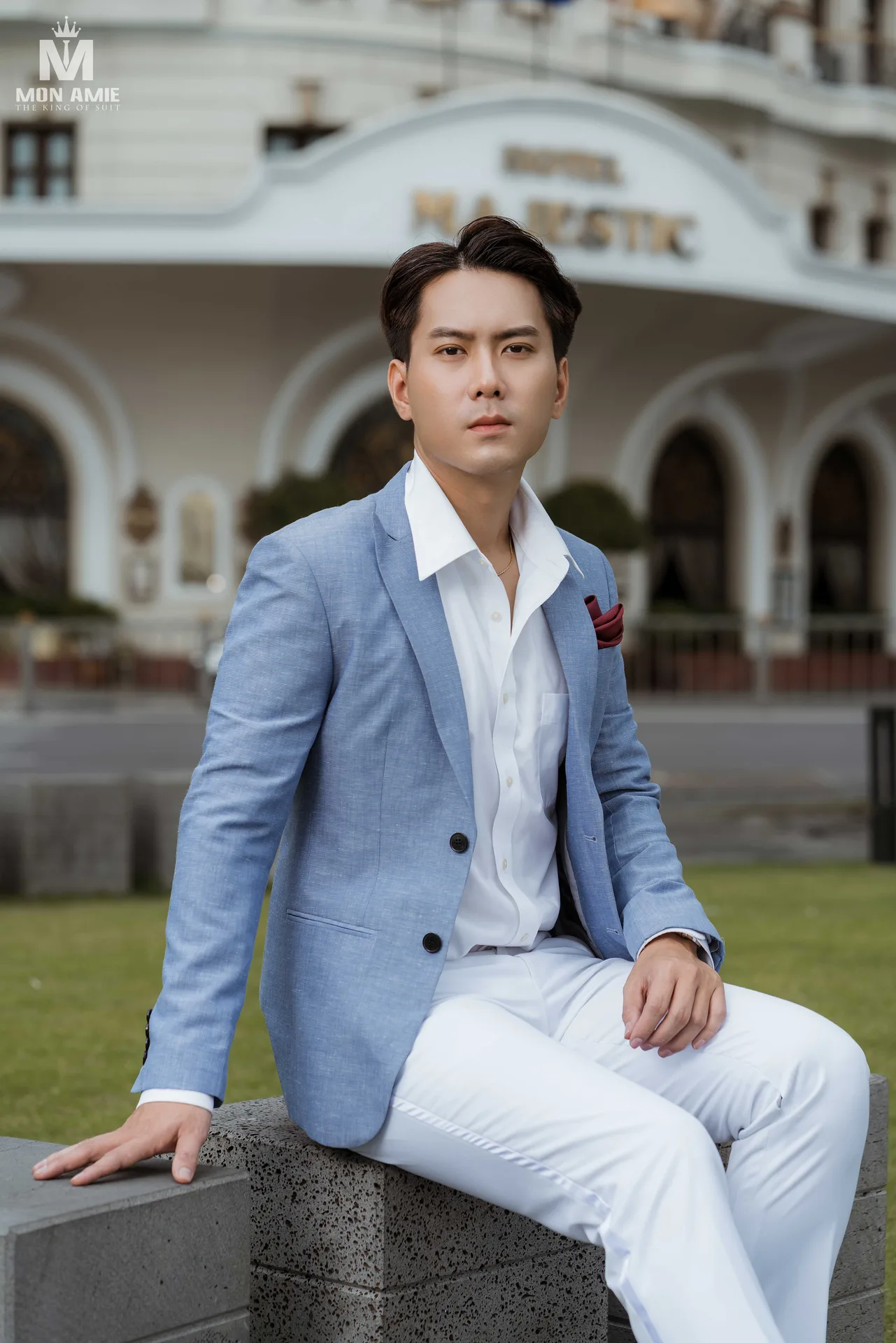
Why does it suit a hot-weather suit in Ho Chi Minh City?
The city's hot, humid climate sets two contradictory requirements: the cloth must breathe, yet the suit must still hold its shape in an air-conditioned meeting and out in the sun.
- Breathable and quick-drying: linen fibres carry moisture outward fast, reducing that stuffy feeling on your back.
- Light: blends are usually woven more openly than heavy wool, so the jacket does not weigh on the shoulders.
- Recovers its shape: the wool lets the cloth “remember” its form, and creases at the elbows drop out after you stand up.
- Has character: the natural roughness of linen keeps the suit from feeling too stiff, which suits outdoor parties and daytime weddings.
This is also why the article on men's linen suits for hot weather recommends a blended cloth over pure linen for men who wear a suit to work every day.
Drawbacks to know before you choose
A blended cloth is not a miracle. There are three things you should know:
- It still creases, just less. Linen-wool has small creases at the elbows and the waistband. That is its character, not a flaw.
- Shrinkage. Linen shrinks when it meets water, so the cloth needs to be pre-treated before cutting (a made-to-measure tailor usually does this step).
- Thin for cold seasons. A loosely woven cloth is not warm enough for winter or a very cold air-conditioned room.
How to tell a good blend
You can check in three very practical ways:
- Squeeze test: hold a corner of the cloth in your hand for a few seconds, then let go. If the creases fade, the wool is helping it recover well. If deep creases stay as they are, linen predominates.
- Hold it to the light: a good cloth is evenly woven with consistent breathability; a carelessly woven one is thick in places and sparse in others.
- Read the label: composition and weight. For a hot-weather suit, a light weight range (around 200 to 260 g/m²) is typical.
Telling it apart from imitation linen
There are quite a few polyester fabrics woven with a faux-linen texture that look fairly similar from a distance. The difference is in the feel: imitation linen is usually slick, a little stuffy and does not absorb sweat, and any creases it does get are hard and stubborn rather than relaxing. Press the cloth to your palm for a few seconds: real linen and linen-wool blends feel dry and airy, while polyester usually feels hot and slightly sticky. Always check the composition label, and ask the seller for documentation if the cloth is advertised as premium.
Choosing colour and pattern
Linen wool blend looks most natural in light, muted and natural shades: cream, beige, ash grey, light navy, moss green. Small checks or faint stripes make the cloth look less “flat”. Deep black and glossy colours generally suit it less, because they take away the natural character of the cloth.
Pairing with a linen-wool suit
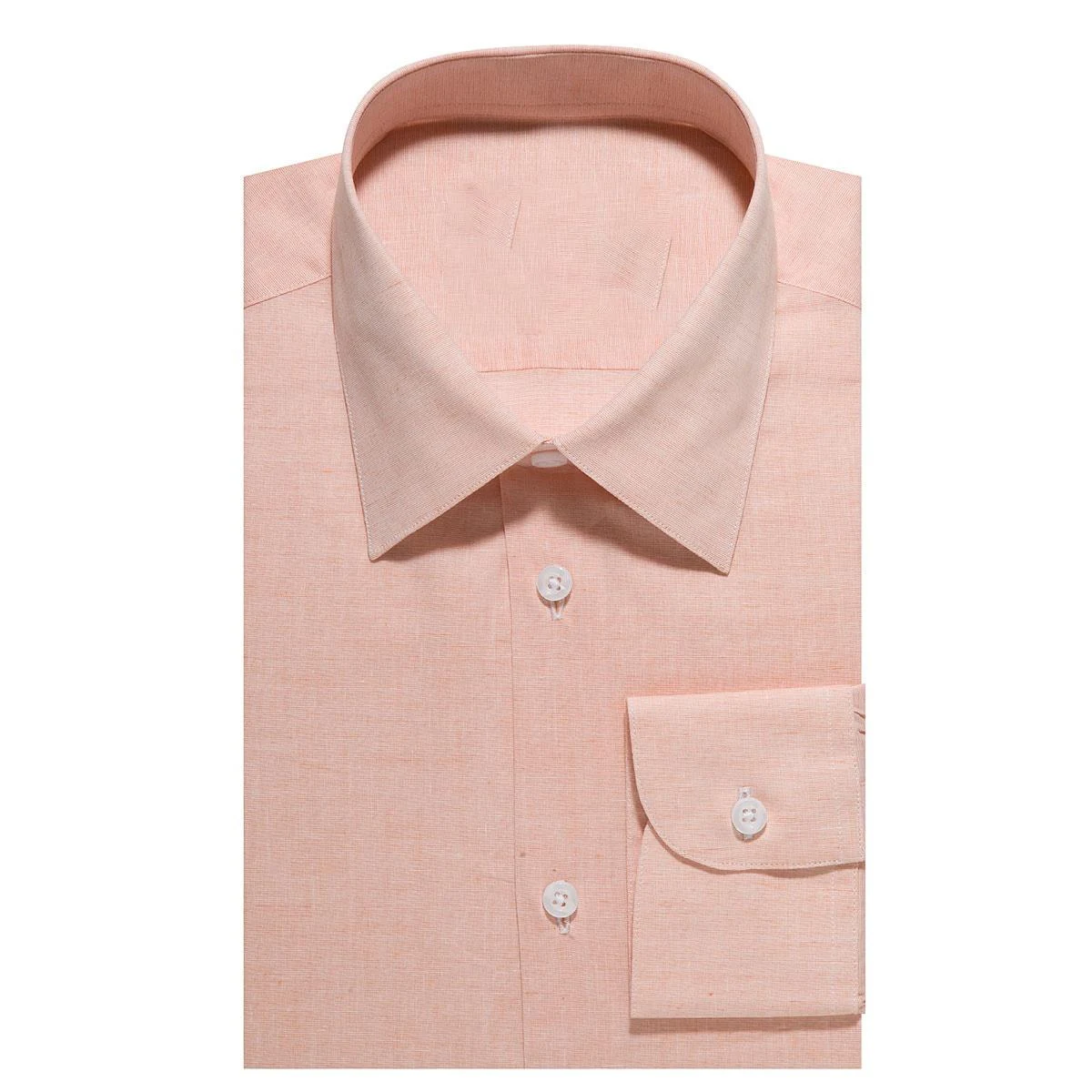
A suit in blended cloth has a relaxed look, so what you pair it with should be equally light. A white or pale blue shirt in cotton or linen is the easiest formula. Suede loafers or light brown derby shoes suit it better than glossy black shoes. If you wear a tie, choose matte silk or a rough weave, and avoid a thick wool tie, which is a little heavy for hot-weather cloth. Trousers from the same suit or in a different tone are both fine, as long as they are light enough for the legs to hang naturally.
Tips from Mon Amie's master tailors
- Light canvas, half-lined or unlined, so the jacket breathes. This detail is covered at length in the article making a linen suit: 6 things to note.
- Choose a neat but not too snug fit. Blended linen needs a little “room” so the creases fall naturally and the cloth is not stretched.
- Accept light creasing. If you need absolute flatness, choose tropical wool instead of linen.
- Hang it up right after wearing and use steam rather than a hard iron, so the weave does not turn shiny.
At Mon Amie, a stylist will let you feel each sample in the fabric library by hand and tell you which are currently in stock. You can also preview the fabric library, with its Italian and English mills, to get a sense of the materials.
Frequently asked questions
Does linen wool blend crease?
Yes, but much less than pure linen. The creases are soft and usually drop out after you stand up or hang the garment. The higher the wool content, the less the cloth creases.
What is wool silk linen fabric?
It is a cloth blended from three fibres: wool holds the shape, silk gives softness and a light sheen, and linen contributes dry breathability. It is a premium hot-weather cloth, lighter and with a better drape than ordinary linen-wool.
What season can a linen blend suit be worn in?
It suits the hot season and the first half of the rainy season most. In a sufficiently dense weave, you can still wear it in the cooler months with a thin knit underneath.
How do you wash linen wool blend?
Have it professionally dry-cleaned, since ordinary washing easily causes shrinkage and loss of shape. At home, just hang it somewhere airy and use steam to smooth out the creases.
Final thoughts
If you are weighing pure linen against pure wool for a hot-weather suit, linen wool blend fabric is often the most comfortable middle ground. You can look at the made-to-measure price list to get a sense of the fabric lines, or book a fitting to feel the cloth by hand at a showroom.