
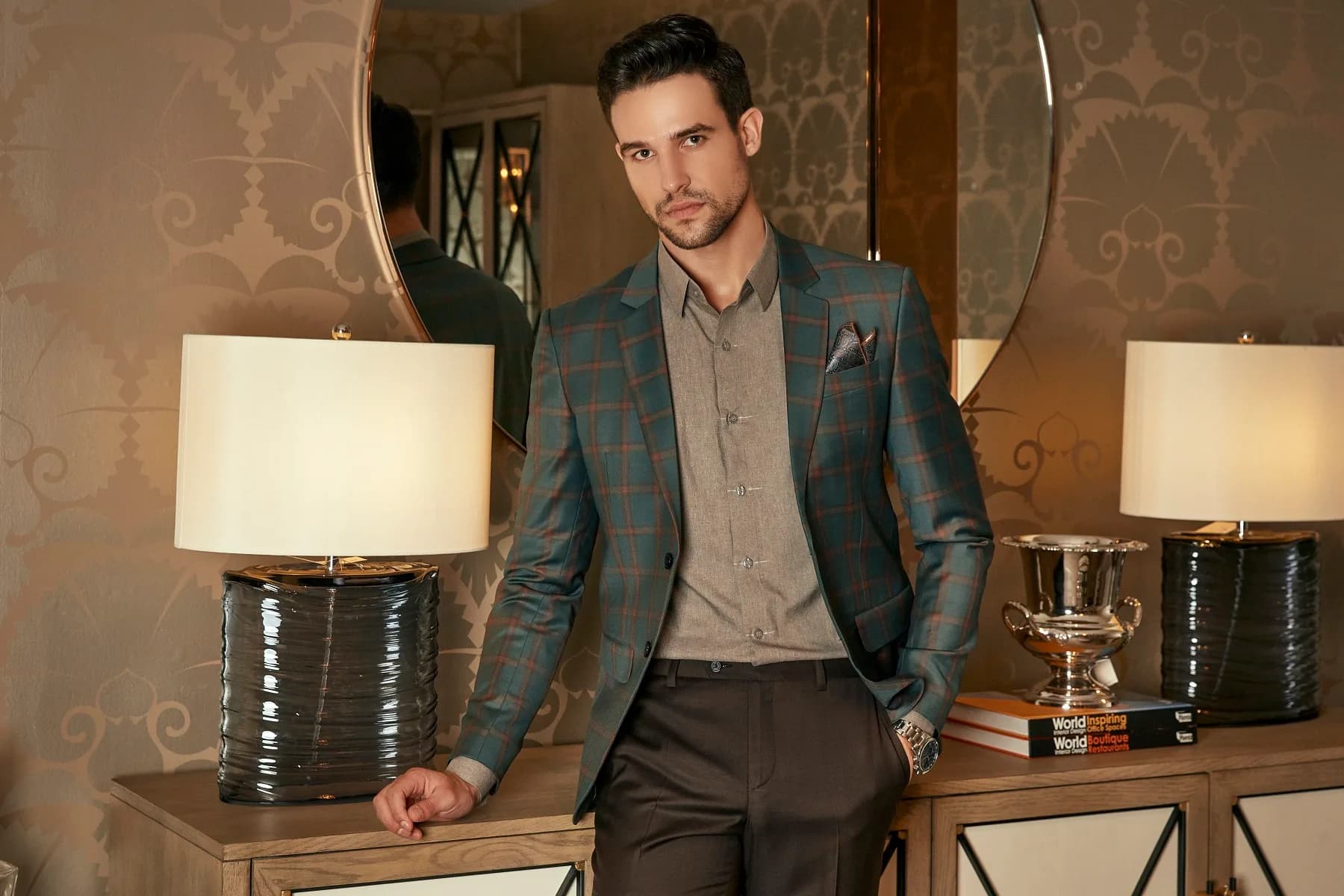
Linen and creases are an inseparable pair. So before asking whether a men's linen suit is worth making, the real question is this: can you live with the creases? If you see a few soft wrinkles as part of the relaxed, unhurried ease that linen brings, this suit will be the most comfortable jacket in your wardrobe on Saigon's muggy, sweltering days. If you can't bear a single fold at the elbow, there are other options, and this article will spell out each case.
The Short Answer
A men's linen suit is very well suited to Saigon's hot season because it is breathable, light and wicks moisture away, but it creases heavily. For fewer creases, choose linen blended with wool or silk. Go for a half-lined or unlined jacket, in beige, cream, light navy or light grey, suited to outdoor weddings, afternoon parties and daytime work.
What Linen Is and Why It Keeps You Cool
Linen is a fabric woven from flax fibres. Flax fibre has a hollow structure that absorbs moisture quickly and releases heat better than many other fibres, so the cloth feels dry and airy on the body. The surface has a natural “roughness” and the weave is never perfectly even, and that is exactly the trait that makes linen beautiful. If you would like to read more about this material, the article What Is Linen Fabric explains it in full.
Advantages and Drawbacks of a Linen Suit
| Advantages | Drawbacks |
|---|---|
| Breathable, light, wicks sweat away well | Creases heavily, especially at the elbows, seat and knees |
| A relaxed look with a refined “resort” style | Not as strictly formal as wool |
| Softens and gains character the more you wear it | Hard to keep a sharp trouser crease |
| Suits a hot, humid climate | Needs proper care and regular steaming |
| Doesn't feel stuffy or hold heat | Shrinks easily if washed in water the wrong way |
One interesting point: light, natural creasing in linen is considered part of its charm. Only when the creases are deep and run straight across the chest is it a sign that the cloth is too thin or poorly woven.
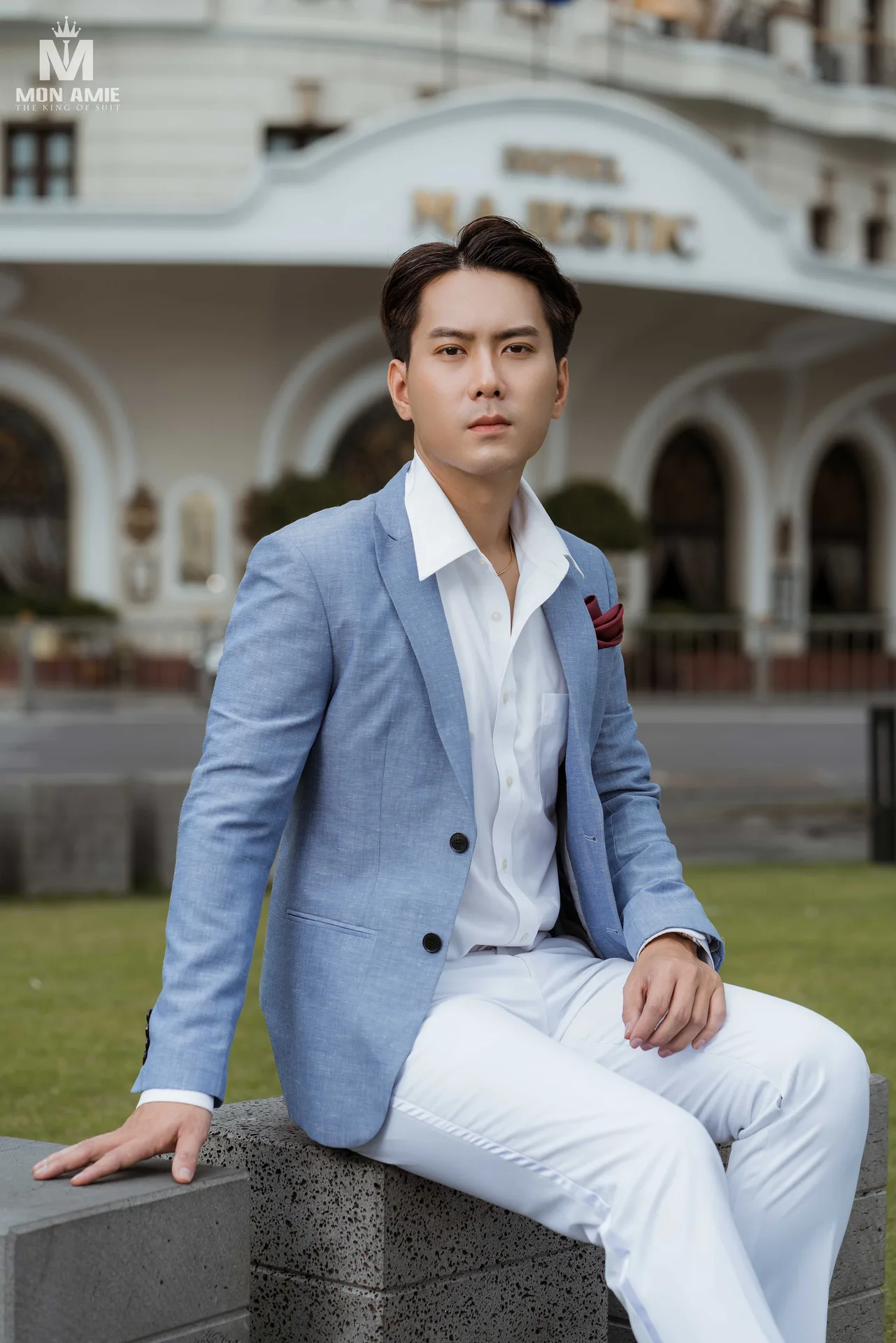
Pure Linen or a Blend: How to Choose
This is the biggest decision when making a men's linen suit:
| Fabric | Characteristics | Suited to |
|---|---|---|
| 100% linen | The most breathable, creases the most, the clearest “linen character” | Those who love a relaxed style and accept creases |
| Linen-wool blend | Fewer creases, holds its shape better, still airy | Those who need to wear it to work or meetings and want something more formal |
| Linen-silk blend | Soft, light, with a gentle sheen and a lovely drape | Afternoon parties, outdoor weddings |
| Linen-cotton blend | Softer, a friendlier price, still creases a lot | Frequent wear, a casual style |
If this is your first linen suit, Mon Amie's master tailors usually advise trying a linen-wool blend. It keeps the airy feel of linen but creases less and holds its shape better, so it also suits a relaxed office. The article linen-wool blend fabric offers a more detailed comparison.
Lining and Interfacing: The Secret of a Cool Linen Suit
The cloth may be cool, but if the whole jacket is fully lined, the suit will still be hot. What tailors usually recommend:
- Unlined or half-lined: releases heat well. The inside seams will show, so the tailor has to sew them cleanly and bind them carefully.
- A lining in a breathable material such as cupro or bemberg if you want a full lining.
- Light interfacing, a soft shoulder: no thick shoulder padding. A linen jacket needs to be soft so that it drapes naturally and feels comfortable to wear.
- Buttons and buttonholes: horn, wooden or ivory buttons suit linen better than shiny metal ones.
Colours and Patterns That Suit Linen
Linen looks its most beautiful in light, soft colours:
- Beige, cream, sand brown: the classic linen colours, relaxed and refined.
- Light navy or steel blue: elegant, suited to work.
- Light grey, pale grey: easy to pair, wearable all year round.
- Olive or moss green: characterful, suited to weekends.
- Small checks or fine stripes: add depth without looking busy.
Black or very dark colours rarely suit linen, because they lose the light, airy look that is linen's nature, and creases show more clearly on a dark ground.
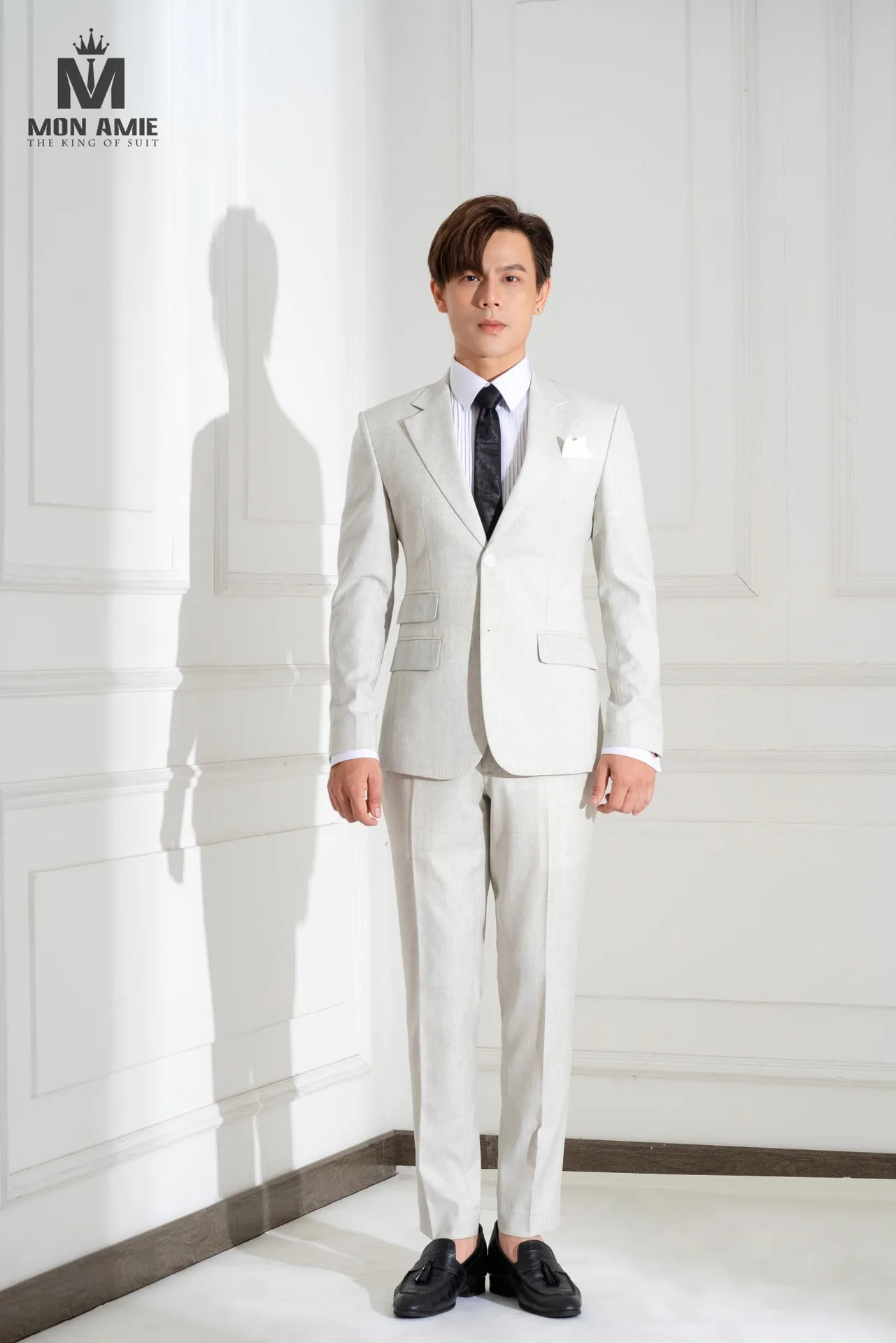
Which Occasions Suit It, Which to Avoid
Well suited to:
- Outdoor weddings, beach weddings, garden weddings.
- Afternoon parties, daytime cocktails.
- Conferences, creative events, working in a relaxed environment.
- Travel, weekend dinners.
Better avoided, or think twice:
- Very formal meetings (boardroom, major signings).
- Interviews in traditional settings such as banking or law.
- Black-tie evening events, where an impeccably formal suit is needed.
How to Style a Men's Linen Suit
- Shirt: white, light blue or cream. A linen shirt works too, as long as you accept the relaxed feel of the whole outfit.
- Tie: usually skipped, or a coarse-woven tie, a linen tie or a thin wool tie.
- Shoes: brown suede loafers, brown derbies, or minimalist leather sneakers.
- Pocket square: folded naturally, nothing elaborate, in keeping with the spirit of linen.
- Trousers: can be mixed in a different colour (white or beige trousers) for a resort look.
Caring for a Linen Suit Properly
- Steam rather than iron, because pressing it too flat takes away the soul of linen.
- Hang it up straight after wearing, on a wide-shouldered hanger, in an airy spot.
- Don't compress it tightly in a suitcase. When travelling far, fold the jacket properly or hang it in a garment bag.
- Dry-clean when needed; avoid washing in water at home, as it easily shrinks and loses its shape.
- Accept light creases. Don't try to press it perfectly flat.
Common Mistakes When Making a Linen Suit
- Choosing pure linen that is too thin, which creases deeply the moment you put it on.
- Lining the whole jacket, which throws away the advantage of staying cool.
- Cutting it too slim, so the cloth is pulled taut and creases even more.
- Pressing it perfectly flat, so the fabric loses its character.
- Wearing it to a formal meeting, where the highest level of polish is expected.
Tips from Mon Amie's Master Tailors
- Choose a comfortable cloth and cut the jacket slightly more generously than in wool, because linen has no stretch.
- Crush the cloth in your palm for a few seconds, then let go. Good linen will crease lightly and then relax on its own, while poor cloth will crease deeply and hold the fold.
- Make a linen suit before the hot season so there is time for adjustments. You can look at fabrics and ask a stylist about linen and linen-blend options in the fabric library, then book an appointment so the master tailor can measure you and do a baste fitting.
- If you want a suit made specifically for a hot climate, we invite you to explore bespoke tailoring at Mon Amie.
Frequently Asked Questions
Does a men's linen suit crease a lot?
Yes, especially 100% linen. Creases gather at the elbows, seat and knees. Linen blended with wool or silk creases noticeably less. Light creasing is regarded as a characteristic of the cloth, not a flaw.
Can a men's linen suit be worn to work?
Yes, in a relaxed office environment and if you choose a linen-wool blend in navy or grey. For formal meetings or traditional interviews, choose a wool suit.
Is a linen suit different from a suit made of “vải lanh”?
No. “Linen” is the English name and “vải lanh” is the Vietnamese name; both refer to cloth woven from flax fibre. The only difference lies in the blend: pure linen, or linen blended with wool, silk or cotton.
Which composition should I choose for a linen suit?
If you want the most breathable cloth, choose 100% linen. If you need fewer creases and wear it to work and meetings often, choose a linen-wool blend. For parties and outdoor weddings, a linen-silk blend is soft and drapes beautifully.
Does a linen suit need a lining?
Not necessarily. For a summer suit, many people choose no lining or a half lining to stay cooler. The tailor will bind the inside seams neatly so that it looks good when you take the jacket off.
A Final Word
A linen suit isn't for the absolute perfectionist, but for someone who loves an unhurried, easy air, it is the suit that is easiest to love. If you are still torn between pure linen and a blend, visit a Mon Amie showroom, feel the fabric swatches in your hand, crush them and let the master tailor answer your questions.