
Seven in the morning in a hotel far from home, with a meeting at nine. You open your suitcase and find the white shirt at the bottom, crumpled like a screwed-up sheet of paper. The hotel iron is broken, or you simply have no time. Mornings like this are what send many gentlemen looking for wrinkle-free men's shirts. The question is whether “non-iron” or “easy care” on the label is truly worth the money, or just a marketing trick.
Quick answer
Wrinkle-free men's shirts come in three main routes: blended polyester fibres, cotton treated as non-iron, and pure cotton woven in twill or herringbone. Blended fibres crease least but feel stuffy; non-iron is convenient but its finish fades over many washes; woven cotton is the most breathable. Non-iron is worth buying if you travel a lot for work and have little time to iron.
Why do shirt fabrics wrinkle?
Cotton fibre absorbs moisture. When the cloth is pressed against the body, crumpled in a suitcase, or crammed into the washing machine while wet, the fibres rearrange themselves and hold that crease as they dry. Synthetic fibres such as polyester have their own elasticity and absorb little moisture, so they hold creases less. Every “wrinkle-free” solution comes down to making the cloth hold creases less in one of three ways: blending fibres, treating the surface or changing the weave.
Four ways to make a shirt crease less
| Method | Mechanism | Advantages | Drawbacks |
|---|---|---|---|
| Polyester blend (poly-cotton) | Elastic synthetic fibres hold the shape | Creases least, dries fast | Stuffy, hotter, holds sweat odour, may pill |
| Cotton treated as non-iron (easy care) | Cotton treated on the surface to set the fibres | Keeps a cotton feel, flat after washing | The finish wears off, cloth slightly stiff, less breathable than ordinary cotton |
| Pure cotton in twill, herringbone or a textured weave | The weave structure “hides” creases | Breathable, durable, wears well for a long time | Still creases lightly, needs correct drying |
| Regenerated fibres (modal, bamboo) or cotton with a little stretch fibre | Soft fibres with slight elasticity | Soft, drapes well, creases little | Higher price, durability depends on fibre quality |
Reading the label: words to watch for when buying
When you go looking for wrinkle-free men's shirts, you will meet phrases such as “non-iron”, “easy care”, “wrinkle free” or “anti-wrinkle”. They all signal cloth that has been treated or blended to crease less. To avoid being led by labels, check:
- Fibre composition: 100% cotton, or cotton blended with what percentage of polyester. The more polyester, the less the shirt creases but the stuffier it feels.
- Weave: poplin, twill, oxford, herringbone. Twill and herringbone hold their shape better than poplin.
- Care instructions: many non-iron shirts recommend a warm wash, no hot tumble drying and no bleach.
Is a non-iron shirt worth buying?
The answer depends on how you live and work.
- Travelling for work often, living out of a suitcase: worth it. The shirt comes out of the suitcase with few creases; hang it up and it is ready to wear.
- Working outdoors or moving about a lot in the midday sun: think twice. Heavily polyester-blended fibres will feel stuffy. Cotton woven in twill suits better.
- Wearing it all day under a suit jacket: the jacket covers the torso, but the collar and cuffs still show. Pay more attention to the quality of the collar interfacing than to wrinkle resistance.
- Wanting it to last: the non-iron finish fades with each wash, especially with hot water, bleach or high-heat tumble drying. A new non-iron shirt is smooth and handsome, but after a year of regular washing it will crease almost like ordinary cotton.
A quick test right in the shop: squeeze a corner of the shirt hard in your palm for about ten seconds, then let go. If the creases mostly fall out by themselves, the cloth recovers well. If the creases stay sharply printed, the shirt will crease when you wear it.
Wrinkle-free men's shirts: choosing by circumstance
A short way to decide:
- Travelling often, many days out of a suitcase: non-iron cotton, or a fibre blend with little polyester.
- Working in an air-conditioned room, wearing it under a suit jacket: cotton woven in twill or herringbone is enough.
- In the sun, sweating a lot: pure cotton in an open weave; accept light creasing.
- Needing to be perfectly flat for an important occasion: steam it before wearing, whatever the fabric.
White wrinkle-free men's shirts: a few special points
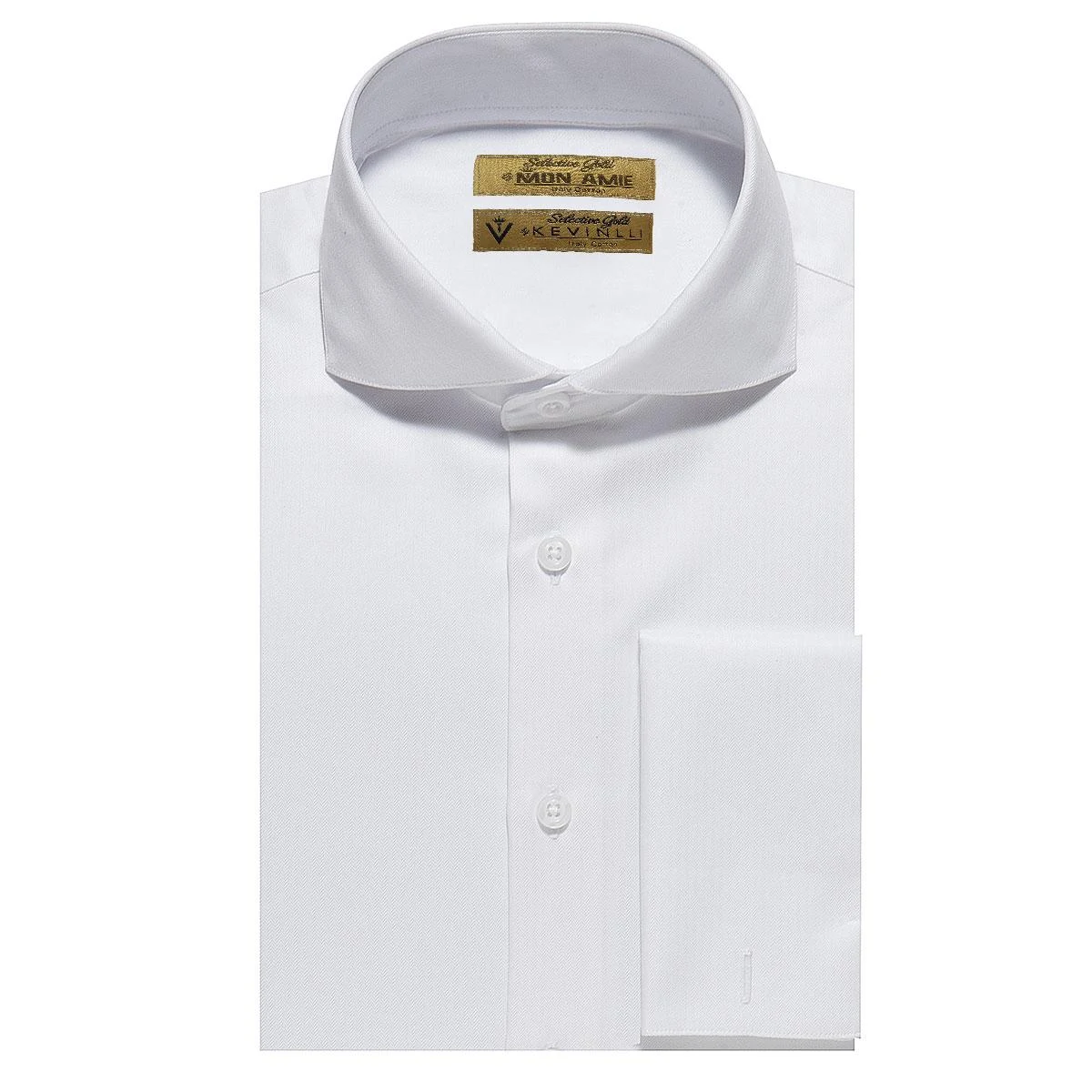
A white shirt exposes everything: creases, stains, even the undershirt beneath. So when you look for a white wrinkle-free men's shirt, prioritise:
- Twill or herringbone weave. These two weaves create a surface with a ribbed texture, so small creases are hard to see.
- Textured or oxford weave. Thicker than poplin, it holds its form and shows few creases.
- A moderate thickness. Too thin shows the undershirt and creases easily; too thick is hot in Saigon weather.
If you want to compare more options, the article how to choose a men's white shirt: 5 criteria will be very helpful.
Shirts that need no ironing: tips for keeping them flat after washing
No fabric is completely iron-free. But you can cut creases to a minimum with habits:
- Machine-wash on a gentle cycle and don't overfill, so the shirt has room to move.
- Keep the spin short, or take the shirt out as soon as the machine stops.
- Smooth the collar, cuffs and placket with your hands before drying, and fasten the top button so the collar keeps its form.
- Hang it on a shoulder hanger while still damp, smoothing the body flat; don't dry it folded in half over a line.
- In a hurry, steam it with a steam iron while the shirt is still slightly damp; it is very quick and gentler than pressing directly.
The article men's shirts that need no ironing: how to wash and dry them so they stay flat goes deeper into each step.
Tips from Mon Amie's master tailors
- Fit is the big thing. A loose shirt creases more than a well-fitted one, because the excess cloth forms creases. A shirt made to your measurements, even without a non-iron finish, still looks flatter than a non-iron one that hangs loose.
- Check the collar. A collar with good interfacing, standing flat and not warped, is what makes a shirt “look” uncreased, because the collar is where the eye goes first.
- Ask for the exact fibre composition when buying or ordering. “Cotton” on a label may be 100% cotton or cotton blended with synthetics, and this decides how to wash it and how it feels to wear.
For those far away, online made-to-measure lets you consult by video and use saved measurements to order more shirts later. The article made-to-measure men's shirts: measurements and fabric allowance explains the measurements needed.
Frequently asked questions
What fabric should a white wrinkle-free men's shirt be?
Choose cotton in twill or herringbone, at a moderate thickness. These two weaves hide creases well and stay breathable. If you need maximum convenience, non-iron-treated cotton is the second choice, while heavily polyester-blended fibres should only be used when you truly need them.
Is there such a thing as a men's shirt that needs no ironing?
No type is completely iron-free. Some crease so little that you only need to hang them up and they are ready to wear, usually non-iron or blended fibres. Combined with correct washing and drying, you can leave the iron aside on most days.
Is a wrinkle-free office shirt hot to wear?
It depends on the proportion of synthetic fibre. A shirt with a lot of polyester feels hotter and stuffier than cotton, especially in Saigon. Non-iron cotton and twill cotton are less stuffy. If you work in an air-conditioned room, the difference is not obvious.
Is non-iron durable?
It depends on how you wash it. The non-iron finish wears off with each wash, faster with hot water, bleach or high-heat tumble drying. Gentle washing, ordinary-temperature water and drying on a shoulder hanger will prolong the effect.
Conclusion
Wrinkle-free cloth is a trade-off between convenience, breathability and durability. Once you understand blended fibres, non-iron and twill weave, you can choose the shirt that fits your schedule rather than chase labels. When you want to be re-measured or to order more shirts in a cloth of your choice, book an appointment and a stylist will measure you and advise in person.