
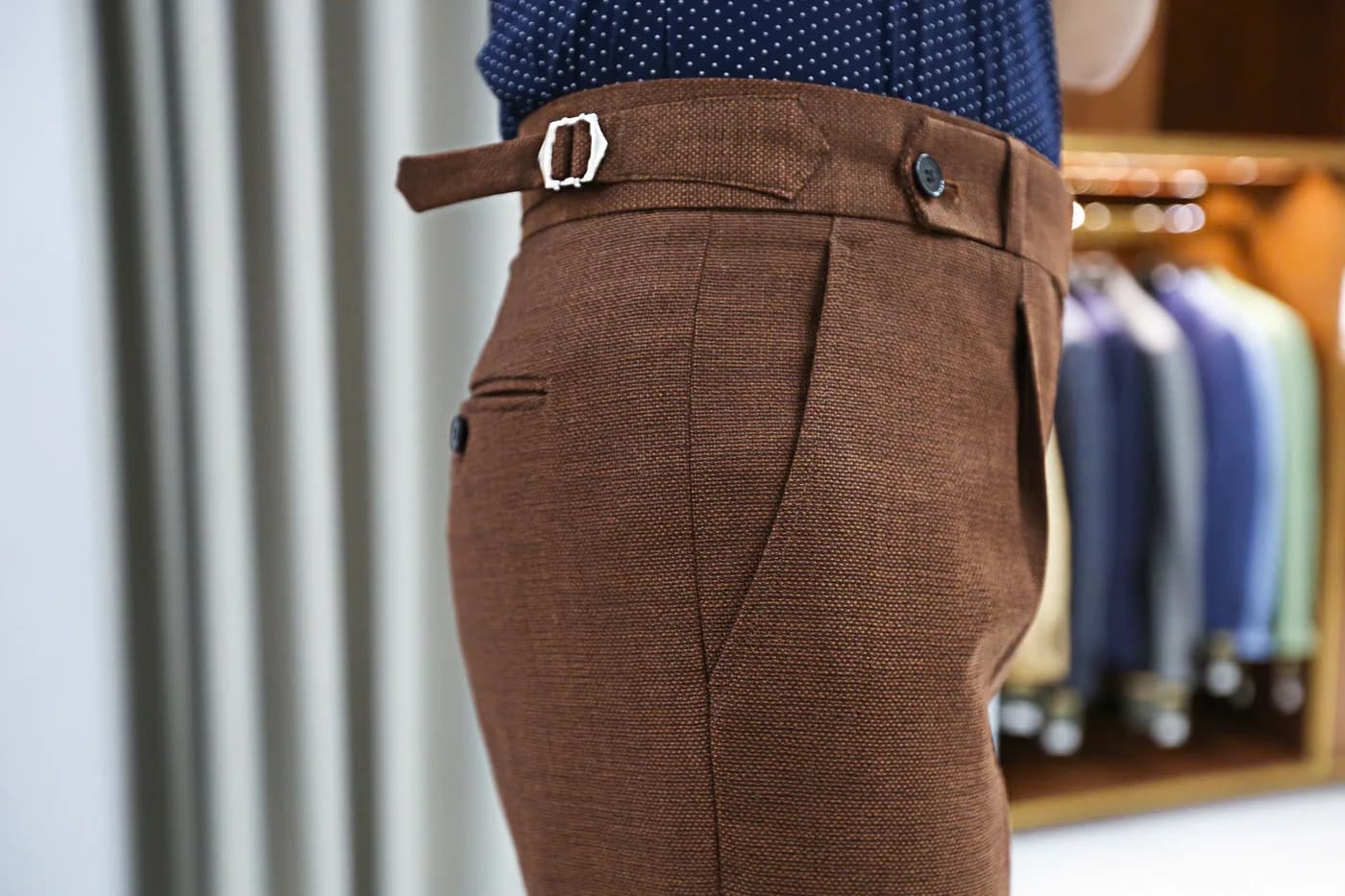
Dress trousers usually "retire" before the suit jacket from the same suit: the crotch starts to shine, the knees stay wrinkled, and the hems fray at the heel of the shoe. Meanwhile the jacket still looks new. Asking what fabric men's dress trousers are made of is really asking which fabric can stand up to sitting, standing and walking, and for how long. The answer is more than the single word "wool".
Quick answer
Men's dress trousers are usually made from worsted wool, wool blended with polyester, cotton or linen. For a durable crotch and fewer knee creases, choose wool or a wool blend in a twill weave, with yarn that is not too fine, and a medium weight. If you wear them every day, don't choose a fabric that is too soft, and have two pairs of trousers to rotate for each suit jacket.
Common men's trouser fabrics
| Material | Characteristics | Crotch durability | Knee crease resistance | Suitable when |
|---|---|---|---|---|
| Worsted wool | Drapes well, breathable, recovers its crease by itself | Fairly good, depends on yarn fineness | Good | Office work, business settings, year-round use |
| Wool blended with polyester | Durable, holds the pleat, more affordable | Good | Good | Daily wear, high frequency |
| Wool blended with silk or mohair | Beautiful sheen, light, smooth | Lower | Fairly good | Special occasions, parties |
| Cotton, khaki | Durable, breathable, comfortable to wear | Good | Poor | Smart casual, weekends |
| Linen, linen blends | Very cool, natural surface | Medium | Poor, creases a lot | Hot season, relaxed occasions |
| Polyester blended with viscose | Low price, low-crease | Medium | Good | Uniforms, limited budget |
When people say "suit trouser fabric", tailors usually mean the group of wools and wool blends at the top of the range. These are also the materials used for suit jackets, so the whole suit can come from the same bolt. To go deeper into wool, read wool fabric for dress trousers.
Why do trousers wear out faster than the suit jacket?
It isn't because the fabric is poor. Trousers simply take more friction than a jacket:
- Crotch. The inner thighs rub against each other with every step, along with heat and sweat. This is where shine and wear appear first.
- Knees. Every time you sit, the fabric is stretched and then contracts. Knee creases are the result of fabric not recovering in time.
- Seat. Sitting all day on a chair, the fabric takes continuous friction and heat.
- Hems. They touch the heel of the shoe, and fray as you walk or when they are stepped on.
- Waistband and pockets. Belts, wallets and phones in the pockets rub against the fabric.
A suit jacket, by contrast, sees little friction and doesn't carry the body's weight the way trousers do. So don't be surprised when the trousers need replacing first. Many tailors advise: one suit jacket should go with two pairs of trousers, worn in rotation so each pair has time to recover.
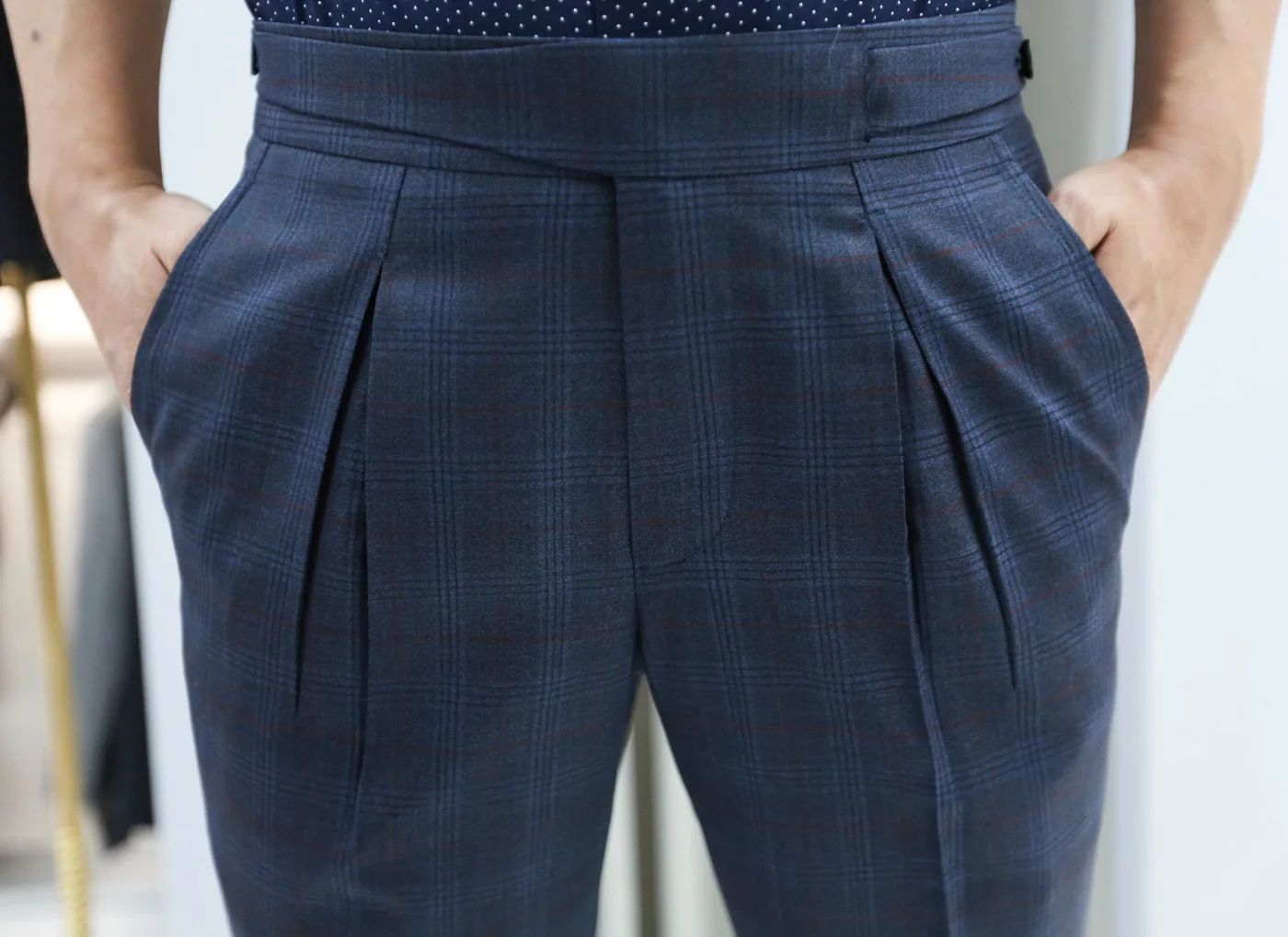
How to choose men's trouser fabric that is durable at the crotch and low-crease at the knees
There are six criteria. You don't need to remember them all, just ask the stylist these questions.
- Weave. Twill and gabardine weaves are durable, resist wrinkles and drape well. A thin plain weave is light but wrinkles more easily.
- Yarn fineness. The higher the "s" number, the finer and softer the yarn, but also the more fragile it is under friction. For trousers worn every day, a moderate yarn is more durable than one that is too fine. For example, Mon Amie's Essential line uses Kevinlli fabric with 40–70% wool from 100s to 140s; you should ask the stylist which bolt in that range suits how often you will wear them.
- Blend ratio. Blending in some synthetic fiber increases durability and reduces wrinkling, at the cost of a slightly less breathable surface. Pure wool or a high wool content is more breathable and more luxurious, but needs more careful care.
- Fabric weight. The heavier the fabric, the more stable it is and the less it wrinkles, but the warmer it is. In Saigon, choose a medium or light weight, unless you work in a very cold air-conditioned room.
- Lining. Half-knee lining reduces friction and creasing at the knees. Ask your tailor about this detail.
- Crotch seam. The crotch needs a strong, well-reinforced seam. This is the detail a master tailor always checks first.
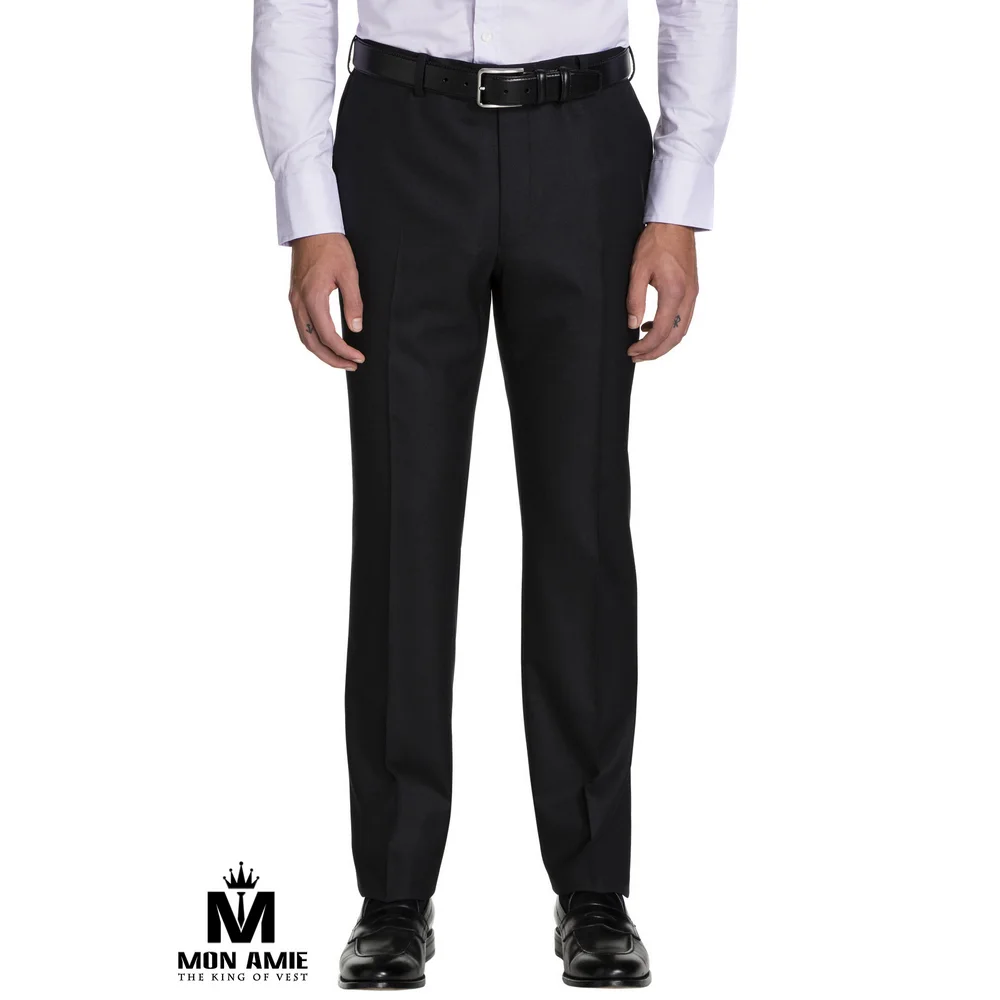
Thick or thin fabric for men's dress trousers?
The keyword "thick-fabric men's trousers" is searched for a lot because people think thick means durable. In reality:
- Thick fabric holds its shape and resists wrinkles, suiting the cooler season or cold air-conditioned rooms. Its downsides are that it is heavy, hot, and stuffy when you move a lot.
- Thin fabric is light and breathable, suited to hot climates, but wrinkles at the knees more easily, shows pocket lines and wears faster if the yarn is too fine.
- Medium-weight fabric is the most balanced choice for Saigon: dense enough to hold its crease, breathable enough to wear all day.
A small tip: take a fabric sample, clench it in your palm for ten seconds, then release. If the fabric springs back almost flat, it resists wrinkles. If it keeps deep creases, the trousers will wrinkle at the knees when you sit.
Choosing men's trouser fabric by how often you wear it and your budget
| How often you wear them | Suggested fabric | Notes |
|---|---|---|
| 4–5 times a week | Wool blend or medium-weight wool, yarn not too fine | Make two pairs to rotate; prioritize durability |
| 2–3 times a week | Worsted wool, twill weave | One or two pairs are enough |
| Occasionally, events | Fine wool or wool-silk blend | You can choose premium fabric, as there is little wear |
| Weekends, relaxed | Cotton, linen blend, khaki | Light creasing is acceptable |
On budget: Mon Amie's price list for a complete made-to-measure set (jacket + trousers) is divided into three lines: Essential from VND 4.8 to 10 million, Signature from VND 10 to 20 million, and Heritage above VND 20 million. For everyday trousers, many men start with Essential or Signature and add a second pair in the same fabric to rotate. The specific option and the price of an extra pair of trousers will be quoted by the showroom at the measuring. You can see the fabric lines in the fabric library and the price tiers in the price list.
Common mistakes and tips from Mon Amie's master tailors
- Choosing the smoothest fabric for everyday trousers. Smooth fabric looks good but is fragile. For trousers worn to work every day, prioritize durability.
- Wearing one pair of trousers continuously. Wool needs at least a day of rest to recover its shape. Rotating two pairs extends their life considerably.
- Frequent cleaning. Too much dry cleaning makes wool stiff and loses its drape. Clean only when needed; normally, hang them in a ventilated place and steam lightly.
- Ironing directly on the fabric. Place a damp cloth between the iron and the trousers so the fabric doesn't get shiny.
- Ignoring the lining and the crotch seam. You can't see these two details in the shop, but they decide how long the trousers last.
Tip from the master tailor: have the trousers measured while you are sitting, not only standing. A pair that fits when you stand but binds at the thigh when you sit will wear out at the crotch twice as fast. You can also read made-to-measure trousers: measurements and fittings to know what to prepare.
Frequently asked questions
What fabric are men's dress trousers made of?
Most commonly worsted wool, wool blended with polyester, cotton and linen. Quality office trousers usually use wool or wool blends because they drape well, resist wrinkles and hold a pleat well.
What is a good fabric for men's dress trousers?
Worsted wool in a twill weave, with a smooth surface and a slight sheen, hanging straight and resisting creases. For special occasions you can choose a wool-silk blend. For daily office wear, a medium-weight wool or wool blend is a durable and easy-care choice.
Is suit trouser fabric the same as dress trouser fabric?
Almost the same. Suit trousers are the trousers that come with the suit jacket, so they use the same fabric. Separate dress trousers may use wool from the same group or a lighter fabric, as long as the tone matches and it holds its shape.
Are thick-fabric men's trousers hot?
Yes, if the fabric is too heavy. In Saigon choose a medium or light weight, or a linen-wool blend. Choose thick fabric only if you work mostly in a cold air-conditioned room or wear them in the cooler season.
In closing
Knowing what fabric men's dress trousers are made of also tells you how long the whole suit will last, because the trousers are always the first piece to wear out. If you would like to feel the fabric surface and ask the stylist about the durability and breathability of each type, we invite you to book a measuring appointment or find out about the journey of bespoke tailoring at Mon Amie. If you are weighing up trouser styles, styles of men's dress trousers will help you compare straight, tapered and wide legs.