
Đũi is cool to the touch, rustic, airy as if a breeze threads through every fiber, and it creases the first time you sit down. Anyone who has worn đũi knows that feeling. So with a linen-style suit in đũi fabric, a garment that normally goes hand in hand with a flat, crisp finish, do the two really go together? Our answer: yes, but only if you understand clearly what you are choosing and accept a little “imperfection” as part of its beauty.
Quick answer
A linen-style suit in đũi fabric is cool, airy and naturally rustic, suited to travel, garden parties, café days and the hot days of Saigon. The drawback is that it creases easily: you need to accept light creasing as a personal touch. Choose a blended đũi, light structure and a thin lining or none, and avoid wearing it to formal meetings.
What is đũi, and how is it different from linen?
The words “đũi” and “linen” are often treated as the same thing, but they are not entirely alike.
- Đũi (in the traditional sense): usually refers to fabric woven from coarse silk yarn, with a naturally nubby, slubby surface, feeling rustic and cool. Silk đũi is a familiar feature of Vietnamese handcraft weaving.
- Đũi in the fabric market today: often a general name for fabric with a raised-slub yarn, such as “đũi xước” and “đũi cotton,” which may be cotton, viscose or a blend and is not necessarily silk.
- Linen (flax): woven from the fibers of the flax plant, durable and breathable, with its characteristic creasing, and softer with every wash.
| Type | Fiber source | Feel | Creasing | Suited to a suit as |
|---|---|---|---|---|
| Silk đũi | Coarse silk yarn | Rustic, cool, slightly soft | Moderate to heavy | Relaxed jackets, a rustic style |
| Đũi xước, cotton đũi | Mostly cotton | Soft, absorbent, textured surface | Heavy | Casual blazers, hot days |
| Linen (flax) | Flax fiber | Dry, airy, slightly stiff at first | Heavy, characteristic | Blazers, summer suits |
| Linen blended with wool, cotton or viscose | Blend | Softer, less creasing | Less creasing | Summer suits for work, more formal occasions |
Because names in fabric markets are not standardized, do not trust the word “đũi” alone: ask about the composition and look at a real sample. If you are interested in the linen family, read our article What Is Linen Fabric? and Men's Linen Blazers: Choosing Fabric, Color and Keeping the Shape.
Should you have a đũi suit made? Pros and cons
Pros:
- Breathable and cool. The coarse yarn leaves plenty of gaps for air, which is ideal for a hot, humid climate.
- A natural look. The textured, slubby surface gives depth without needing a pattern.
- Light. The jacket does not cling or weigh on the shoulders, which suits days with a lot of movement.
- Goes with a relaxed style. It suits travel, beach weddings and cafés.
Cons:
- Creases easily. After just one car ride, creases show at the elbows, the knees and the stomach.
- Less formal. It does not suit board meetings or major interviews.
- Needs proper care. Washing, pressing and storing are all different from a wool suit.
- Many different kinds of “đũi.” Quality is uneven if you do not ask about the composition.
When to wear a đũi suit
- Travel, resorts: a light đũi blazer, chinos or linen trousers, loafers. Light and airy.
- Garden parties, outdoor or beach weddings: a đũi suit in beige, cream or light moss green suits spaces with plenty of sun and wind. If you are a groom who wants a relaxed style, you can look at groom's wedding suits to choose a material that suits your concept.
- Cafés, weekends, outings: a đũi blazer with a T-shirt or a shirt, chinos or jeans.
- Relaxed office (casual Friday): a blended đũi blazer in a neutral color with a plain shirt.
To avoid: important interviews, board meetings, formal evening parties, and occasions that call for a perfectly flat look.
Accepting the creases: how to make them look good
The creases of đũi and linen are not a defect but part of the fabric. But if you want them to show less, you can:
- Choose dark colors, or colors with texture and weave. Creases show less on a busy surface than on a pale plain color.
- Choose a blend. Blends with wool, quality cotton or viscose help the fabric recover its shape better.
- Wear it fitted, but not too close. A close cut creates many horizontal creases across the back and stomach when you sit.
- Hang the jacket as soon as you arrive. Do not leave it folded in a bag for hours.
- Use steam rather than hard pressing. Hang the jacket in a steamy bathroom or use a steam iron held at a moderate distance.
- Accept the creases as a personal touch. A lightly creased đũi blazer looks more natural than a stiffly pressed one.
Choosing the lining and structure: the lighter, the better
A đũi suit should be made soft, with light structure, half-lined or unlined to preserve its airiness. A thick, full lining loses the cooling advantage of the material. If you want a lining, choose thin cupro or viscose, and choose a lining color that harmonizes with the outer fabric. The article Unlined or Half-Lined Suit Jackets: Staying Cool in Summer explains the choice in detail.
For a đũi jacket, patch pockets, a soft cut and natural shoulders are suitable details, creating a relaxed feel that is true to the spirit of the material.
Pairing with a đũi suit
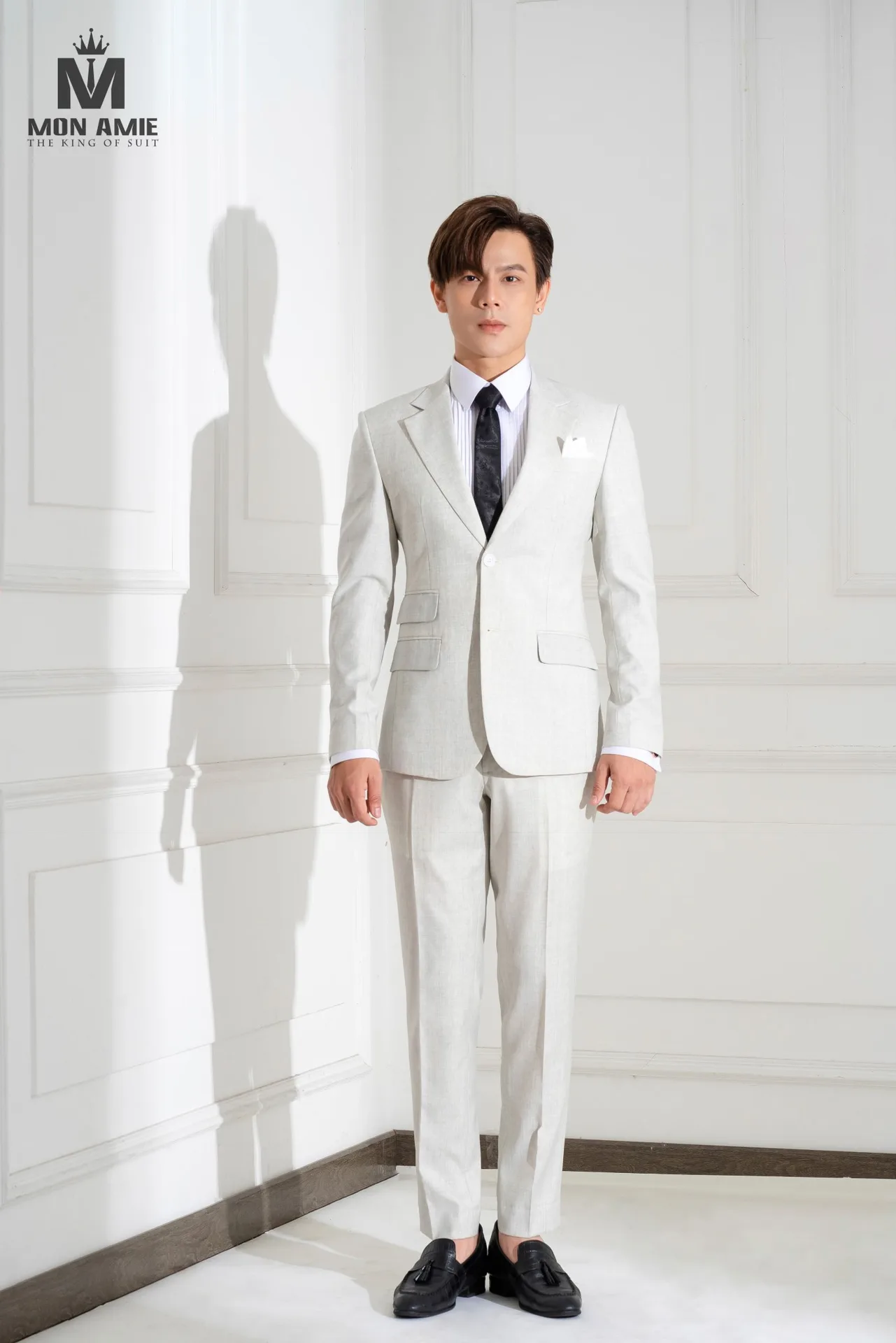
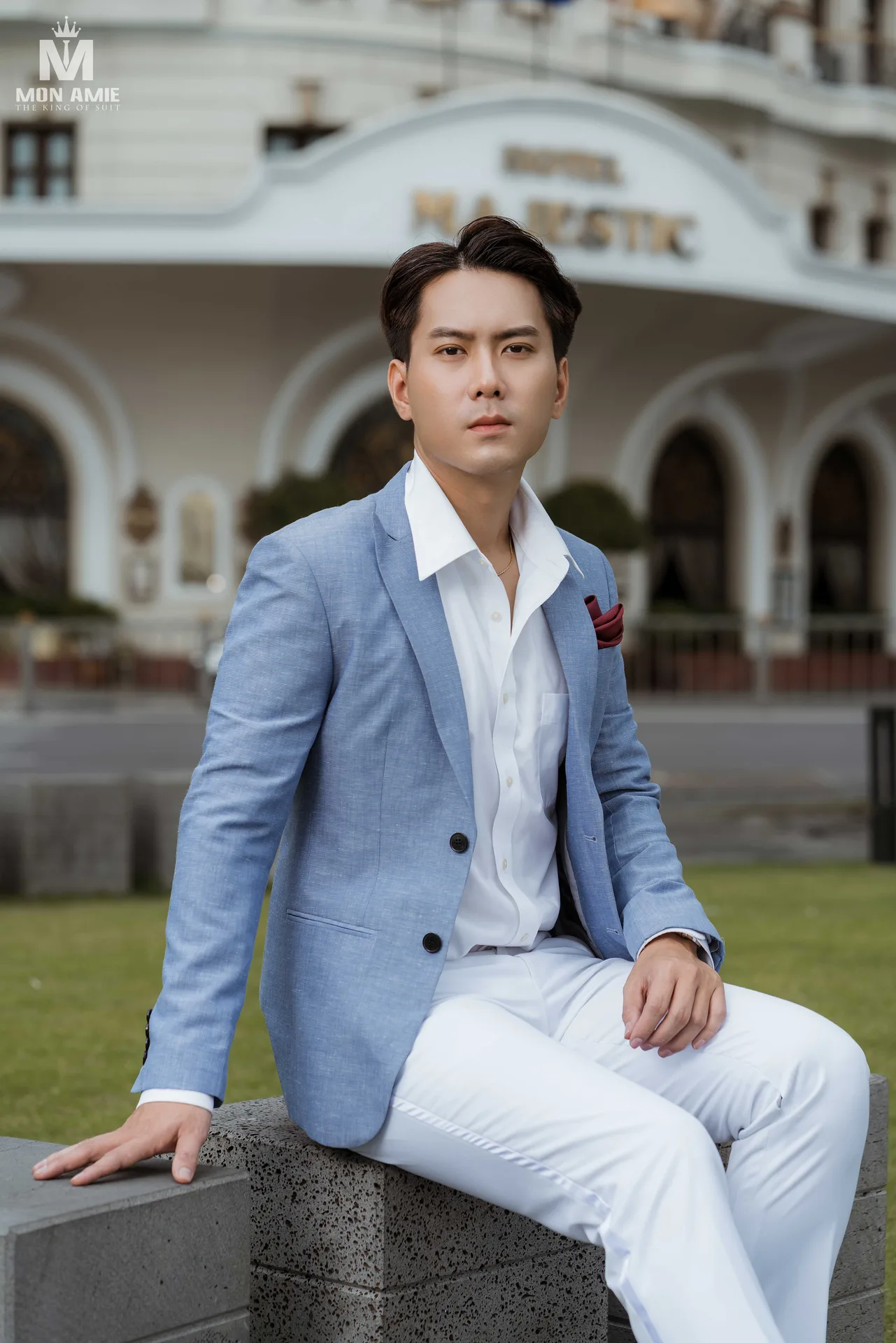
- Suit color: beige, cream, smoke grey, moss green, light navy and off-white are the colors that suit đũi fabric.
- Shirt: white, light blue, cream; or a T-shirt or knit polo.
- Trousers: chinos, linen, light-colored dress trousers; light blue jeans for the weekend.
- Shoes: loafers, suede or soft-leather derbies; avoid overly formal glossy black shoes.
- Accessories: a cotton or linen pocket square, a matte leather belt.
Caring for a đũi suit
- Professional dry cleaning for jackets with structure and lining; do not machine wash.
- Press at a temperature suited to the material, ideally with steam and on the reverse side.
- Store with good ventilation. Saigon's rainy season is prone to damp and mold, so hang the jacket in a ventilated place, keep a moisture absorber in the wardrobe, and do not seal it in nylon.
- Rotate your jackets. Let the fabric rest between wears so the fibers can recover.
Common mistakes
- Buying “đũi” for the price and not asking about the composition. You can easily end up with a stuffy or pilling kind.
- Choosing too close a cut. It leaves heavy creases at the stomach and upper arms.
- Using a thick, full lining. It loses breathability and is hotter to wear than expected.
- Wearing it to an occasion that is too formal. The rusticity of đũi does not suit a serious meeting room.
- Folding the jacket for hours in a suitcase. On arrival, the fold lines are very hard to remove.
Tips from Mon Amie's master tailors
Before deciding to have one made, squeeze a fabric sample tightly in your hand for several dozen seconds, then let go. If the fabric springs back partly and the creases look “even” and “soft,” that is a kind of creasing that is easy to accept. If the creases are hard and sharp, consider a blend. You can try real samples in Mon Amie's fabric library to choose by touch, or look at the bespoke tailoring journey for advice on choosing a material by occasion.
Frequently asked questions
Is a men's đũi suit hot to wear?
Usually it is airy and cool, especially with light structure and a thin lining or none. With a thick, full lining or a fabric with a lot of polyester, breathability drops. Check the composition and how it is made.
How is a men's đũi blazer different from a linen blazer?
Đũi is the common name for a coarse-yarn fabric with a textured surface; linen is fabric woven from flax fibers. Many “đũi” products on the market are actually cotton or blends. In feel and creasing the two are quite similar; the difference lies in the fiber source and durability.
Can a men's đũi suit be worn to a wedding?
Yes, if the wedding is outdoors, in the daytime, or at the beach or in a garden. For an evening reception in a hotel, a wool suit or a tuxedo is usually more suitable.
How should a đũi suit be washed?
It should be professionally dry-cleaned because of the structure and lining. If it is only lightly creased or has picked up an odor, steam it and air it in a ventilated place rather than washing it. Avoid soaking it or wringing it hard.
Closing thoughts
A đũi suit is not for every occasion, but in the right place it looks good in a way that a wool suit can hardly manage: light, natural and comfortable. Choose a fabric with a clear composition, light structure and a thin lining, and accept the creases as part of its character. If you would like to feel the real fabric, visit the Mon Amie showroom.