
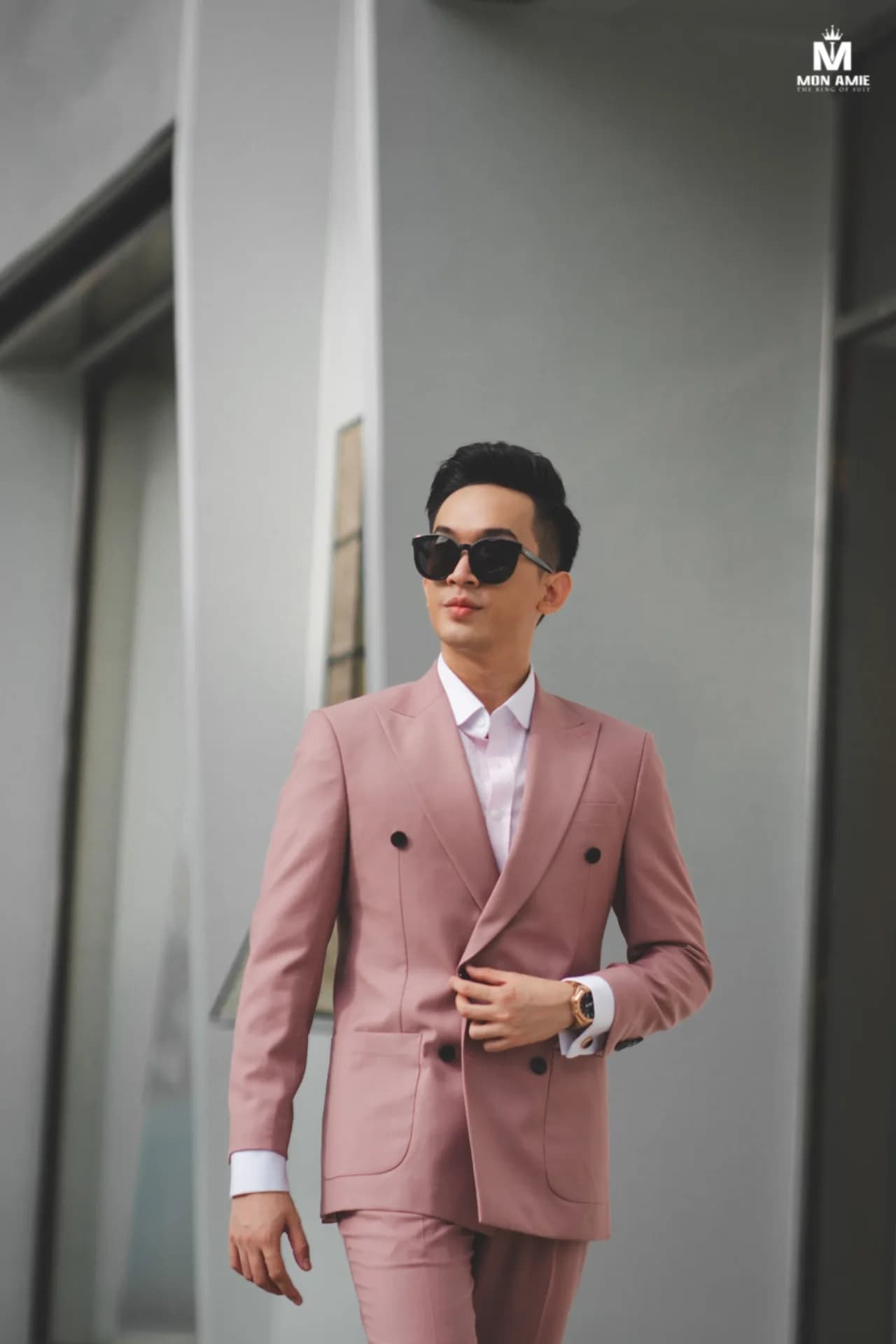
The label says collar 40, yet all through the meeting you keep reaching up to tug at your collar, as if someone were gently tightening a hand around your neck. It is a familiar story for anyone who wears ready-to-wear shirts, and it is why many gentlemen turn to a made-to-measure men's shirt. A shirt looks simple, but a collar that is off by two centimetres, or a cuff off by one, and the whole suit worn over it loses its polish.
Quick answer
A made-to-measure men's shirt needs at least eight main measurements: neck, shoulders, chest, waist, hips, body length, sleeve length and wrist. Each shirt typically uses around 1.6 to 2.2 metres of fabric 1.45 metres wide, depending on build. Make one sample shirt to try on first, and make the full batch only once it has been adjusted.
Which measurements does a shirt need?
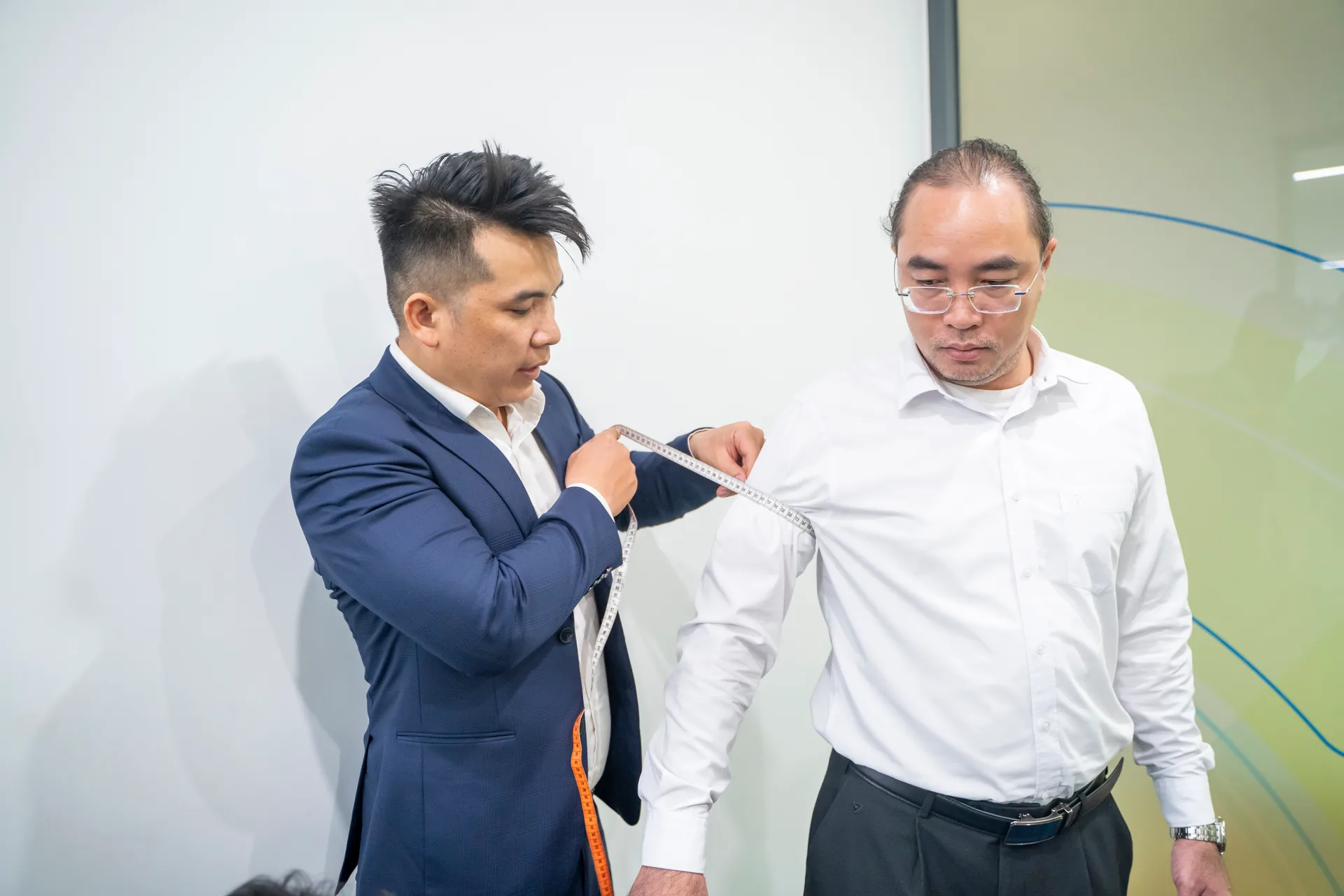
A shirt's measurements are quite different from a suit jacket's. A shirt sits close to the skin, so even a small error is felt at once. Tailors usually take the following:
| Measurement | How it is taken | Why it matters |
|---|---|---|
| Neck circumference | Around the base of the neck, leaving room for one finger | Decides whether the collar chokes or gapes |
| Shoulder width | From the left shoulder point to the right across the back | An off shoulder is the hardest fault to fix |
| Chest circumference | Across the fullest part, arms relaxed | Decides how comfortable you are when you move |
| Waist circumference | Level with the navel, without pulling in your stomach | Shapes the taper of the shirt body |
| Hip circumference | Around the fullest part | Keeps the shirt tails from riding up |
| Body length | From the nape of the neck down to the base of the seat | A shirt worn tucked in needs to be longer than one worn out |
| Sleeve length | From the shoulder point down to the wrist bone | Measured with the elbow slightly bent |
| Wrist circumference | Around the wrist bone, with enough room for a watch | Decides whether the cuff slips or pinches |
Beyond these eight, the master tailor also studies how you stand: which shoulder sits lower, whether the back has a slight stoop, whether the stomach protrudes. None of this appears in the table, yet it decides whether the finished shirt will “sit” well.
Collar and cuffs: the two places that cannot be wrong
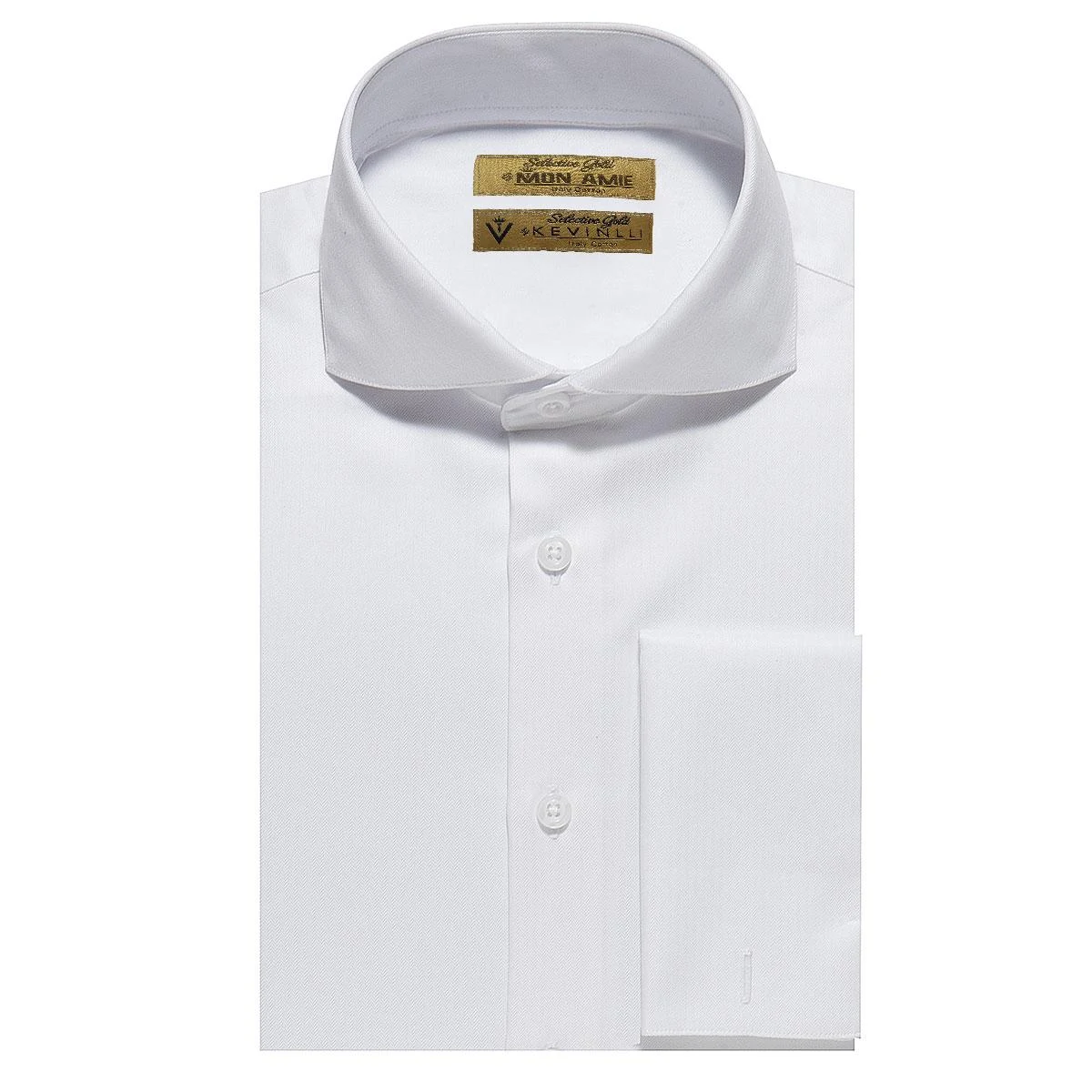
On a shirt, the collar and cuffs are the first things the person facing you sees. The rules of the trade are clear:
- Collar: buttoned all the way, you should be able to slide one finger between your neck and the collar. Two fingers is loose; none is tight. When you wear a tie, the collar must hug the tie with no gap.
- Cuff: the cuff (the band at the end of the sleeve) should sit close to the wrist bone, wide enough for your hand to pass through but not so loose that it slides down over the hand.
- How much shows beyond the jacket sleeve: when worn with a suit jacket, the shirt sleeve should show about one to two centimetres. A small detail, but it says the wearer knows how to dress.
If you usually wear a watch, tell the tailor from the start. The cuff on the watch-wearing wrist should be slightly wider than the other.
Fabric requirement: how many metres does one shirt take?
Many people ask this when they buy cloth themselves and take it to a tailor. For fabric 1.45 to 1.5 metres wide, the reference amounts are as follows:
| Build | Fabric required (approx.) |
|---|---|
| Slim build, short arms | 1.6 – 1.8 metres |
| Average build | 1.8 – 2.0 metres |
| Tall, broad-shouldered, long arms | 2.0 – 2.2 metres |
| Large build or very long arms | Over 2.2 metres |
Three factors make the figures above vary:
- Pattern: striped or checked cloth must be matched across the pocket, collar, placket and both sleeves, so allow roughly an extra 10 to 20 centimetres.
- Style: a long-sleeved shirt needs more cloth than a short-sleeved one, and a shirt with a chest pocket or a yoke (the panel across the shoulders) also uses more.
- Shrinkage: cotton can shrink after the first wash. Tailors usually leave a little extra so the shirt still fits after laundering.
These figures are a reference based on the general experience of the trade. When you have a shirt made at Mon Amie, you don't need to work out the metres yourself, because your stylist will cut the correct amount for each person after taking measurements.
Fit of the shirt: slim, regular or relaxed?
Your body measurements are not yet the shirt's measurements. A shirt always needs some extra room (tailors call it ease) so the wearer can move:
- Slim fit: about 8 to 10 cm of ease at the chest, with the body tapered at the waist. Suits an athletic or slim build.
- Regular fit: about 12 to 16 cm of ease, with a straighter body. Suits those who want comfort, sit a lot, or carry a slight belly.
- Relaxed fit: even more ease, better suited to a weekend shirt than an office one.
A practical piece of advice: if you wear the shirt under a suit jacket, choose slim or a trim regular. A body that is too loose creates creases under the jacket's armholes and the shirt balloons at the stomach when you sit.
Why make a sample before making the batch?
If you plan to have several shirts made at once, the master tailor will always advise one thing: make a sample shirt first. The reasons are very practical.
- Measurements on paper differ from how the shirt feels when worn. A collar of 39 on paper can still be uncomfortable if the collar style is taller than usual.
- Each fabric drapes on the body differently. A thin poplin is unlike a thick twill, which is unlike a coarse oxford.
- A sample lets you adjust the collar, sleeves and body length once, then apply the changes to the whole batch.
A sensible process usually consists of one fitting of the sample shirt, noting the alterations, and only then making the batch. For someone whose measurements are already on file, later orders can go much faster. Mon Amie keeps your measurements on record so your next order does not require measuring from scratch, even when you order through the online made-to-measure service.
Common mistakes when having a shirt made
- Measuring your own neck while wearing a high-collared shirt: the figure comes out off. Measure directly against the skin.
- Pulling in your stomach when measuring the waist: the shirt will feel tight the moment you relax.
- Ignoring uneven shoulders: many people have one shoulder lower than the other; if you don't tell the tailor, one side of the shirt will always pull.
- Choosing fabric that is too thin for everyday work shirts: a thin white shirt easily shows the undershirt and loses its shape after a few washes.
- Making ten shirts at once: if you haven't tried a sample first, this is the surest way to repeat the same flaw ten times.
A tip from Mon Amie's master tailors
A collar can be let out slightly, but the shoulders of a shirt cannot be altered. So when choosing a style, get the shoulders right first, then think about the collar and sleeves. You should also be measured in the afternoon, when the body is at its most natural state of the day. And if you can, wear your familiar shirt to the measuring session so the tailor can see exactly what bothers you.
To learn more about collar styles that suit your face, you can read types of men's shirt collars. And if you are considering your first white shirt, see also how to choose a men's white shirt.
Frequently asked questions
How is a made-to-measure shirt different from a ready-to-wear shirt?
A ready-to-wear shirt follows standard sizes, whereas a made-to-measure shirt is cut to each person's own measurements: collar, shoulders, sleeves, length and fit. What you get is a shirt that fits your own build, instead of choosing the nearest size and putting up with whatever doesn't match.
How many metres of fabric does a men's shirt need?
With fabric 1.45 to 1.5 metres wide, each shirt typically uses about 1.6 to 2.2 metres, depending on build. Striped or checked cloth needs a little extra to match the pattern. If you have it made at Mon Amie, your stylist will work out the exact amount after measuring.
How much fabric does a shirt need for a tall, large build?
Someone taller than 1.80 metres, with broad shoulders or long arms, usually needs from 2.0 to over 2.2 metres. Long arms add the most fabric, because the body and both sleeves all have to be long enough.
Do you need to try a shirt on before ordering in large quantities?
Yes. A sample shirt helps you catch problems early, such as a collar that is too high, sleeves too short or a body too slim, and fix them once for the whole batch. It is the step that saves the most time and money, especially when you order many shirts at once.
An invitation
If you would like to see shirt fabrics in person and have all of the measurements above taken, book a measuring appointment at one of our five showrooms in Ho Chi Minh City, or browse the fabric library first to choose a material. You can also experience the full measuring process in the bespoke tailoring service.