
If you recorded a wedding-suit consultation at the showroom, you would hear five questions repeated in almost the same order, whoever the groom is and wherever the wedding. These questions about a made-to-measure wedding suit are not naive; they touch exactly the points that decide whether the suit holds up on the big day. Below are the five questions and how Mon Amie's master tailors answer them.
Quick answer
The five questions grooms most often ask about a made-to-measure wedding suit are: which colour and style suits me, when should I start, when should I be measured if my weight is changing, which cloth and construction will survive a whole wedding day, and how to handle the groomsmen and accessories. The short answer: settle the concept first, get measured early, and be honest about your weight.
1. Which colour and style of suit should the groom choose?
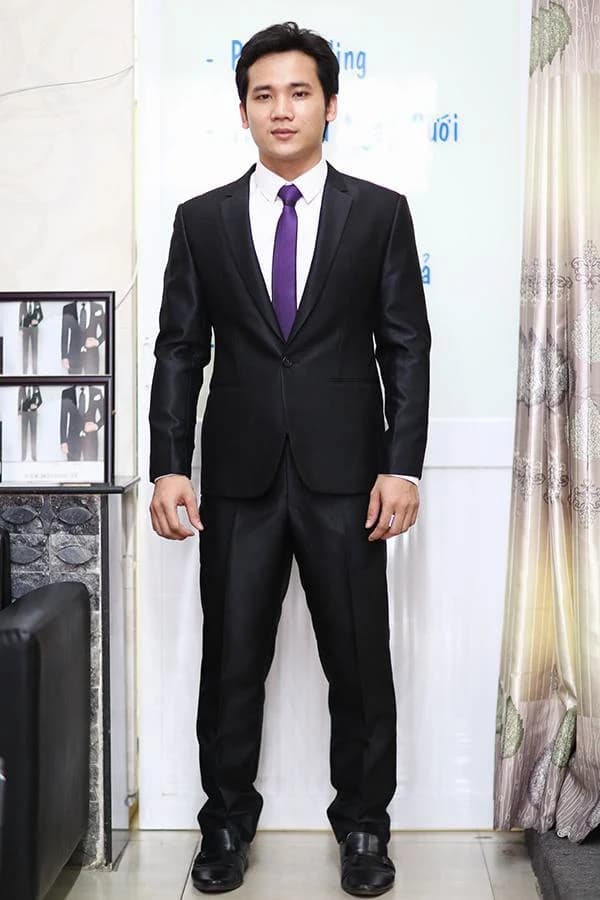
Start with three things: whether the wedding is outdoors or indoors, a daytime or evening reception, and whether you want to wear this suit again after the wedding. If you do, navy, grey and black are the three colours that are easiest to reuse; white and ivory are lovely for a daytime ceremony but offer few chances to wear again. A notch lapel (the lapel with a small notch where the collar meets the lapel) suits a business-suit style, a peak lapel is more formal, and a tuxedo with satin lapels is for an evening that is truly black tie.
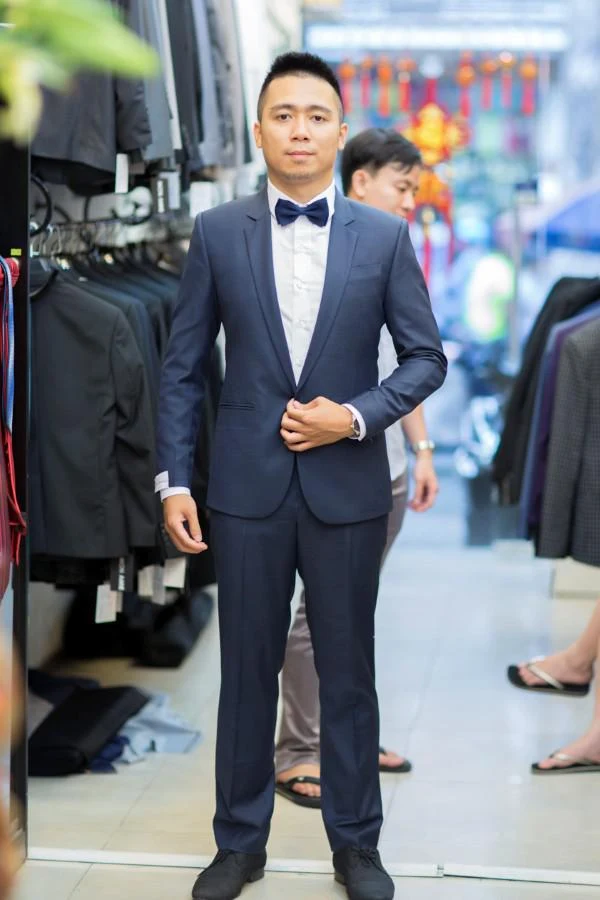
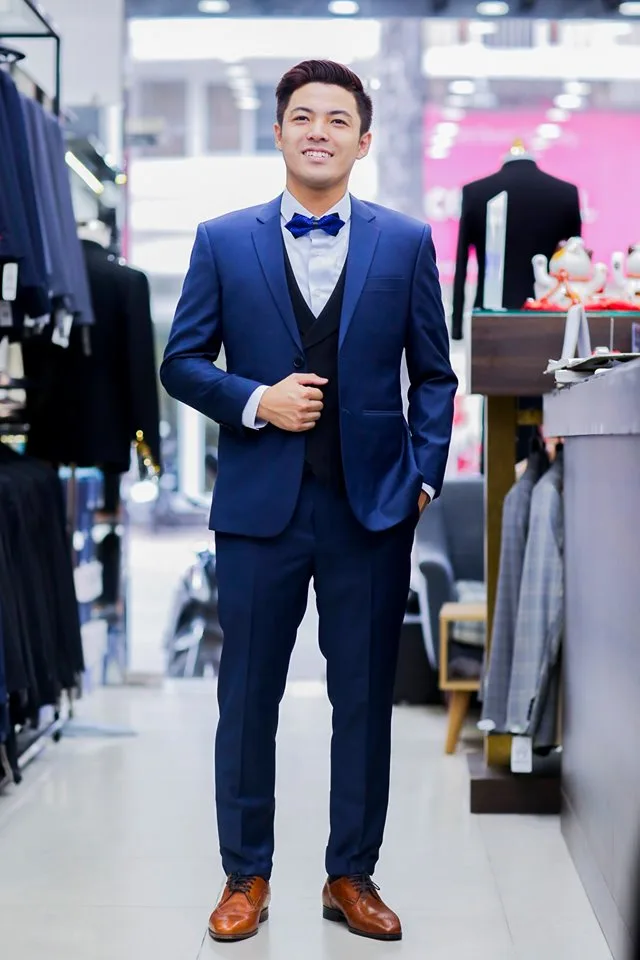
A common mistake is choosing from whatever reference photo is trending while ignoring your own build. The Navy Wedding Suit with Bow Tie in the photo below is an example of a deep navy palette, suitable for an evening wedding and for wearing again to receptions. If you are still undecided, a consultation before having a wedding suit made is the place to settle the direction before choosing cloth.
2. When should you start having the wedding suit made?
The earlier the more comfortable, because a wedding suit goes through all the steps: choosing cloth, taking measurements, baste fitting, adjustments, the final fitting, and sometimes a pre-wedding photo shoot that needs the suit before the main day. Count back from the wedding date, and in the first session tell the showroom both the wedding date and the photo-shoot date, if there is one. The end of the year is wedding season, so showroom schedules are usually fuller; booking early lets you pick an unhurried time slot.
Mon Amie schedules fittings counting back from the wedding date as part of the Groom Styling package, and the specific schedule is given at the measuring. What you should do in the first session is bring the wedding date, the venue, the main colour of the reception and reference photos. That little information is enough for the stylist to filter cloth and style in the right direction.
3. If you are losing weight or going to the gym before the wedding, when should you be measured?
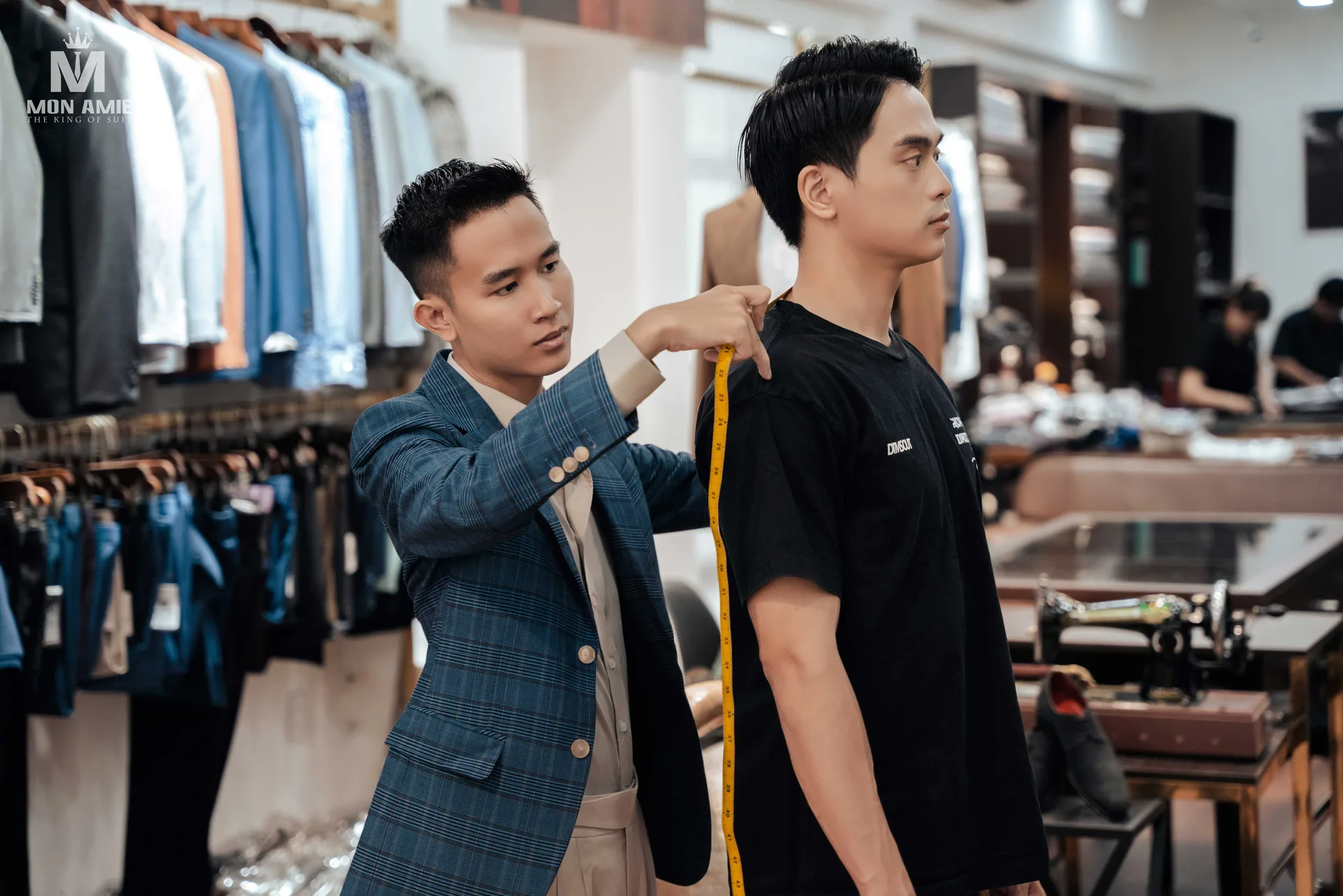
This is an honest question, and it deserves an honest answer: tell the tailor clearly from the first session. If your weight is fairly stable, be measured as usual. If you are still losing weight or building muscle, the tailor can leave room to let out the side seams and the waistband, or schedule the final measurements closer to the wedding date, then use the baste fitting to catch the last changes.
Don't starve yourself the weekend before the wedding to "fit" the suit, because a made-to-measure suit is cut to your real body, not to a target number. Mon Amie keeps more than 30 measurements for life, so if your weight changes a lot, an update session is quicker than a completely new measuring. The final fitting is the last check on every small detail.
4. Which cloth and construction will survive a whole wedding day?
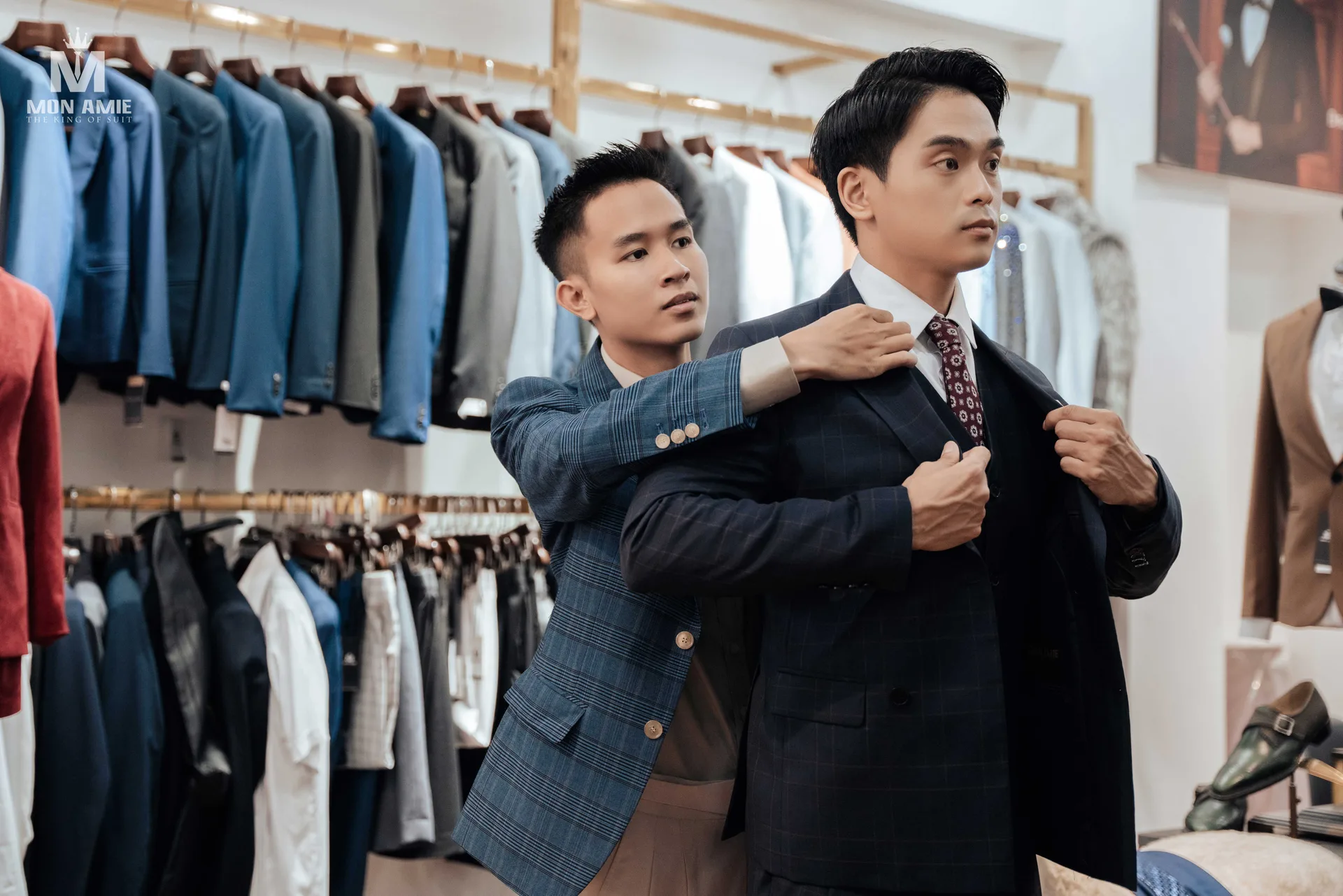
A wedding day in Saigon usually involves the bride's procession, the ceremony, photos and the reception, meaning you wear the suit for many hours in the heat and spend a lot of time on your feet. Wool in the 100s – 150s range is the comfortable zone for this climate: thin enough to breathe, firm enough not to crease too quickly. Mon Amie's Signature line uses Kevinlli 80 – 100% wool 140s – 150s, Dolce & Taylor, Luciano, Salford and Vercelli; the Heritage line uses Canonico, Holland & Sherry, Dormeuil and Scabal for those who want cloth from Italian and English mills.
As for construction, full canvas uses a hand-sewn interlining that follows the chest, so it holds its shape and breathes better; half canvas builds the canvas into half of the front; fused uses a heat-bonded interlining, lighter and neater. Each has its place; the comparison of full canvas, half canvas and fused explains it in more depth. And if you are weighing the higher tier, premium men's wedding suits shows where the money goes.
5. How to handle groomsmen, shoes and accessories?
There are two ways: the groomsmen wear the same suit as the groom, or the same tone but one detail simpler than the groom, for example dropping the waistcoat, swapping the bow tie or changing the lapel. The second approach is usually preferred because the groom stands out while the whole party stays harmonious. Accessories include a tie or bow tie, a pocket square and cufflinks; settling them at the same time as the suit is less confusing than buying them piecemeal at the end.
The Groom Styling package at Mon Amie includes a made-to-measure groom's suit, a plan for the groomsmen and accessories coordinated to the concept. For groomsmen who don't want to have a suit made, Mon Amie rents suits by occasion at the showroom, together with dress shoe rental to complete the set; rental prices are quoted by design on contact. Let the groomsmen try on early so there is time to change sizes.
Quick summary table
| Question | Suited to | What to remember |
|---|---|---|
| 1. Colour and style | Grooms who haven't settled on a concept | Think about re-wearing; don't choose from reference photos alone |
| 2. When to start | Every groom | Count back from the wedding date; mention the photo-shoot date too |
| 3. Changing weight | Those losing weight or training at the gym | Be honest with the tailor; use the baste fitting to catch up |
| 4. Cloth and construction | Long wedding days, hot weather | Wool 100s – 150s breathes; choose construction by budget and durability |
| 5. Groomsmen, accessories | Parties of two or more groomsmen | Same tone, one detail simpler than the groom |
Tips from Mon Amie's master tailors
- Say it in the first session: wedding date, photo-shoot date, whether you will wear the suit again. These three pieces of information steer almost every decision on cloth and style.
- Wear the suit for a whole evening the night before the final fitting: sit, raise your arms, bend over. The pinch points only show up when you move.
- Bring the exact shoes and shirt you will wear on the wedding day to the fitting, so the trouser hem and collar are set on them.
- Show the bride the cloth samples, especially when the wedding dress has an ivory or cream tone; the tone of the suit may need to follow.
- If your weight is still changing, let the tailor keep the extra allowance at the side seams until the final fitting, then take it in.
Frequently asked questions
How much does a wedding suit cost?
Prices are by cloth line for a full jacket-and-trousers set: Essential VND 4.8 – 10 million, Signature VND 10 – 20 million, Heritage above VND 20 million, before VAT; the stylist confirms the exact price at the measuring. A tuxedo is priced by cloth line like a suit, plus a finishing surcharge of VND 2,500,000 per set. See the price list for details.
Can a wedding suit be worn again for work or parties?
Yes, if you choose well from the start: navy, grey or black, a notch or classic peak lapel, few decorative details. The waistcoat, bow tie and pocket square are for the wedding day only; the jacket and trousers can still go to work or to a party.
How do I have a wedding suit made if I live far from Ho Chi Minh City?
Mon Amie offers online made-to-measure: consultation and measuring guidance by video call, cloth selection through a detailed photo library, and delivery to your door nationwide. You can use measurements already on file if you have had a suit made at Mon Amie before.
What is the final fitting?
It is the last time you try on the suit once it is finished, to check the shoulders, sleeves, collar and length before the wedding. If anything still needs adjusting, the tailor will make the change at this session.
Conclusion
If you arrive already knowing the answers to these five questions about a made-to-measure wedding suit, a long consultation becomes a short, focused one. When you are ready, you can book an appointment at the showroom so the stylist can start from your wedding date and concept, or read more about the red wedding suit if you want to take a different step.