
“These two look almost the same, so why does that one cost three times as much?” This question comes up at the showroom nearly every week, usually from grooms standing in front of two suits hanging side by side. The honest answer is that from the outside the difference is tiny. What makes a premium wedding suit for men is found in the things you have to touch, turn over and ask about.
The short answer
The value of a premium wedding suit for men lies on three levels: the cloth (the mill, the fineness of the yarn), the interlining (the structure inside the jacket) and the craftsmanship (measuring, baste fitting, hand stitching). If your budget is limited, put accurate measurements, careful fittings and good cloth first, before thinking about decorative details.
Level one: how much of the value is in the cloth
Cloth is the largest item in the price of a suit, and also the thing a camera “sees” most clearly. A well-woven wool has depth of colour, drapes softly and doesn't glare under a flash. Poor cloth tends to show creases right after the ancestral altar ceremony.
At Mon Amie, cloth is divided into three lines, and the price covers the whole suit, jacket and trousers:
| Line | Made-to-measure price, full suit | Cloth |
|---|---|---|
| Essential | VND 4.8 – 10 million | Kevinlli 40–70% wool (100s–140s) |
| Signature | VND 10 – 20 million | Kevinlli 80–100% wool 140s–150s, Dolce & Taylor, Luciano, Salford, Vercelli |
| Heritage | Over VND 20 million, up to VND 60 million per suit | Canonico, Holland Sherry, Dormeuil, Scabal |
For a wedding suit at this level, most grooms land in Signature, where the cloth is handsome enough for photographs and durable enough to be worn again after the wedding. Heritage is for those who want Italian or English mills of renown and see the suit as something to keep for many years.
There is one point that is often misunderstood: the Super number (100s, 140s, 150s) tells you how fine the yarn is, not that “higher is better”. The finer the yarn, the softer the cloth, but also the more delicate in everyday wear. For a wedding day, 140s–150s cloth is lovely; if you plan to wear the suit to work every week, consider a slightly lower number. You can see each material in person in the Mon Amie cloth library.
Level two: the interlining, hidden deep inside the jacket
Between the outer cloth and the lining sits an interlining, the skeleton of the jacket. There are two main families:
- Canvas interlining: a stiff layer of cloth (usually horsehair or natural fibres) that is stitched to the outer cloth. It is elastic, moulds to the wearer's body over time, and lets the lapel roll softly and naturally.
- Fused interlining: the interlining is bonded to the cloth with heat-activated adhesive. It is fast and economical, but tends to go flat and stiff, and can bubble after repeated dry-cleaning or steam pressing.
To check any suit, pinch the cloth at the chest between two fingers. If you feel the layers slide slightly over each other, that is a sign of a stitched interlining. If the whole chest area is stiff like a single board, it is usually fused. In a wedding suit, the chest looks better in photographs thanks to this “life”, especially when the groom raises a hand to greet guests or embraces the bride.
When choosing where to have a suit made, ask directly: which type of interlining does this suit use, and why? A tailor confident in his craft will answer clearly.
Level three: measurements, fittings and hand stitching
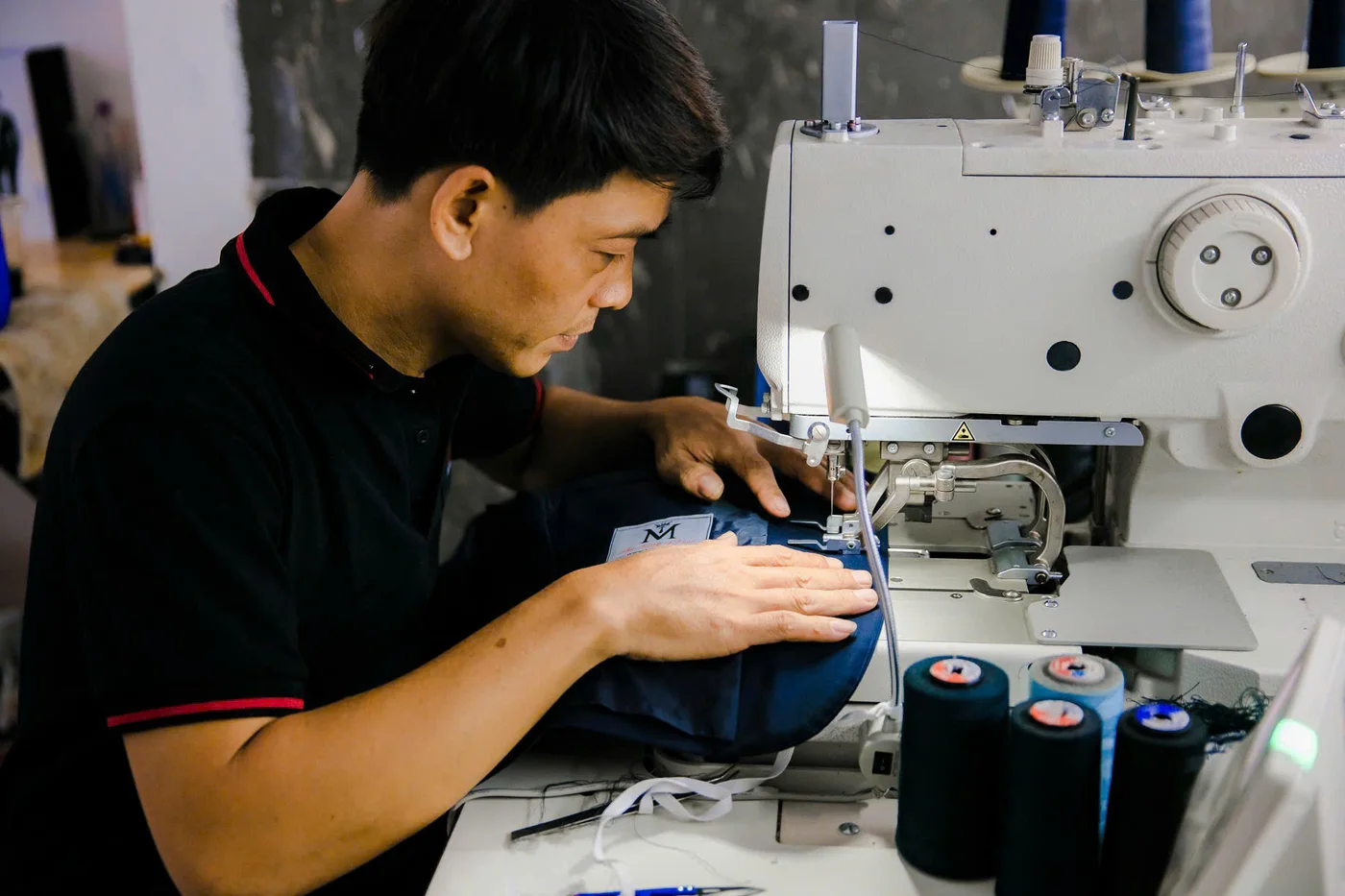
Two suits in the same cloth with the same interlining can still be worlds apart in value if they differ in craftsmanship:
- Measurements: bespoke tailoring at Mon Amie takes more than 30 measurements and stores them for life, which means that if you later have another suit made, the tailor already has your data.
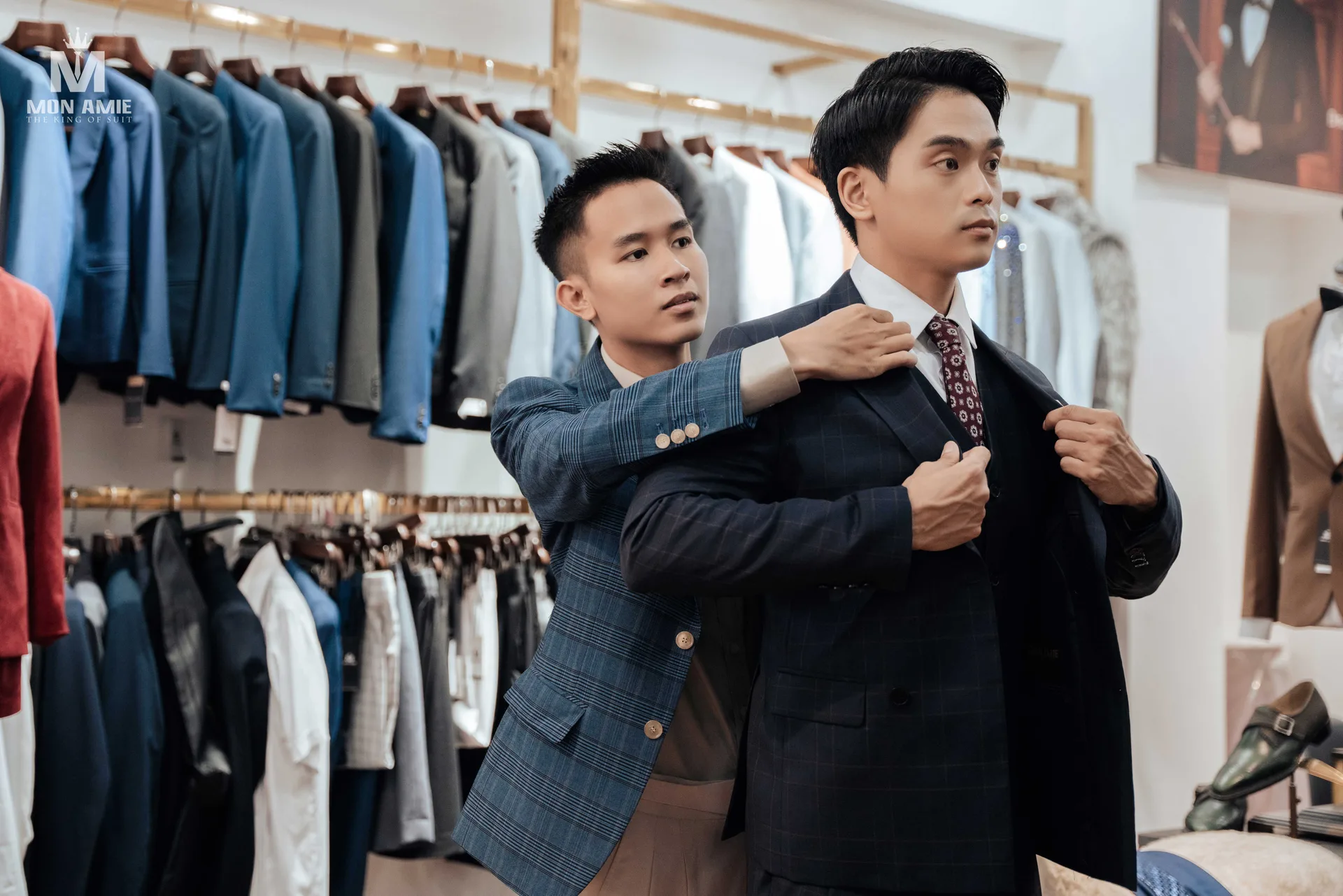
- Baste fitting: the suit is tried on while still in its basted stage, so the shoulders, chest and sleeve length can be adjusted. This is a step that buyers of ready-to-wear suits never get.
- Hand stitching: in details such as buttonhole edging, lapels and sleeve buttons, hand stitching gives a softness that machines rarely achieve.
- Long-term alteration warranty: if after the wedding you gain or lose a few kilos, the suit can still be adjusted.
Where to put your money if the budget is limited
For a groom who has to divide money between the banquet, the rings and the photographs, the order of priorities when choosing a wedding suit should be:
- Measurements and baste fitting. A very expensive cloth with crooked shoulders is still a ruined suit. This is the item not to cut.
- Cloth right for the season and the tone. Good cloth, but suited to the venue: an outdoor reception in the heat needs breathable cloth, while an air-conditioned indoor reception can take a heavier one.
- Structure and interlining. If you can, choose a better interlining for the chest.
- Small details. Horn buttons, patterned lining, a name embroidered inside the jacket: lovely, but they can come last.
For more specific costs, read how much does a wedding suit cost, and if you are torn between a tuxedo and a regular suit, ask the stylist to lay out two models side by side so you can compare on the spot.
Common mistakes when buying a premium wedding suit
- Comparing only price, not what is inside the price. Two equal quotes are not necessarily the same cloth, the same interlining or the same number of fittings.
- Choosing too close to the wedding date. A premium suit needs at least two fittings for adjustment. Plan the fitting schedule backwards from the wedding date.
- Choosing by social-media colours and ignoring reality. A colour that looks beautiful in a photo can reveal flaws under banquet lighting.
- Buying a loose suit “for comfort”. A wedding suit should fit closely enough to look neat in photographs, yet leave enough room to bow, hug and dance.
Tips from Mon Amie's master tailors
Before cutting the cloth, our master tailor often asks the groom one question: “What will you be doing most in this suit?” Some need to stand greeting guests for three hours straight; others must raise a glass at dozens of tables. The answer determines the chest width, the armhole and the button position more than any catalogue. The most valuable wedding suit is the one that makes you forget you are wearing a suit.
Frequently asked questions
How much does a premium wedding suit cost?
At Mon Amie, a made-to-measure full suit (jacket and trousers) starts from VND 4.8 million in the Essential line, VND 10 to 20 million in Signature and over VND 20 million in Heritage, with some suits reaching VND 60 million depending on the cloth. Most grooms choose Signature for the wedding day.
How is a men's suit for a wedding guest different from a groom's wedding suit?
Structurally they are the same. The difference lies in how they are chosen: a groom's wedding suit usually puts weight on colour, cloth that photographs well and matching accessories, while a men's suit worn to a wedding as a guest is more discreet so as not to upstage the groom.
Can a wedding suit be worn again as an everyday suit?
Yes, if you choose a two- or three-piece suit in navy, grey or charcoal and avoid shiny cloth or overly bold patterns. A tuxedo is narrower in occasion and suits only evening events.
How long before the wedding should you order?
The earlier the better, so there is time for at least two fittings and alterations. Mon Amie plans your fitting schedule backwards from your wedding date.
In closing
A premium wedding suit for men doesn't need to show off its value; it shows in the drape of the cloth, in shoulders that fit exactly and in how comfortable you feel throughout the reception. If you would like to begin, see the groom's wedding suit service, browse the made-to-measure price list or book an appointment so a stylist can measure and advise you in person.