
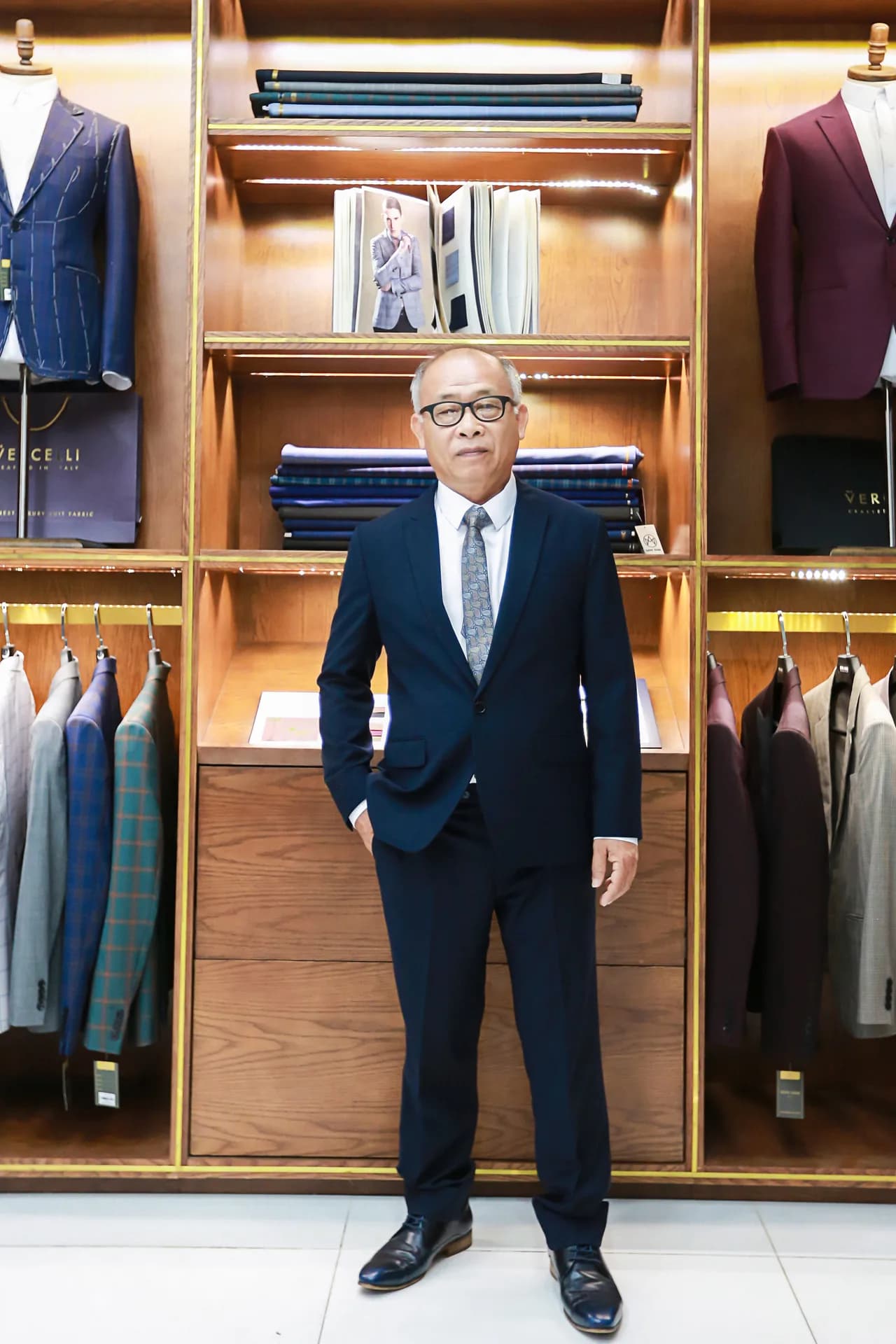
“What Super is this fabric?” is something our stylists hear every day when a client stands in front of the cloth cabinet. That number is part of the story, not all of it. Premium suit fabric for men is also decided by the type of fibre, the weave, the weight, and where and in what climate you wear it. The five fabrics below are worth considering, from everyday wool to blends made for special occasions.
Quick answer
The five premium suit fabrics for men: Super 100s–150s wool for everyday suits, ultra-fine Super 160s and above for occasional wear, wool-silk blends for parties and weddings, wool-mohair blends for hot and humid climates, and wool-linen blends for sunny days. Choose by occasion and weather, not just by the Super number.
1. Super 100s–150s worsted wool: the foundation of an everyday suit
Worsted is combed wool with long fibres, woven into a smooth cloth that gives crisp seams. The “Super” number (100s, 120s, 150s) tells you how fine the fibre is: the higher it goes, the softer and lighter the cloth but the more easily it wears. Within the 110s–150s range, the cloth is still durable enough for regular wear while keeping a smooth hand.
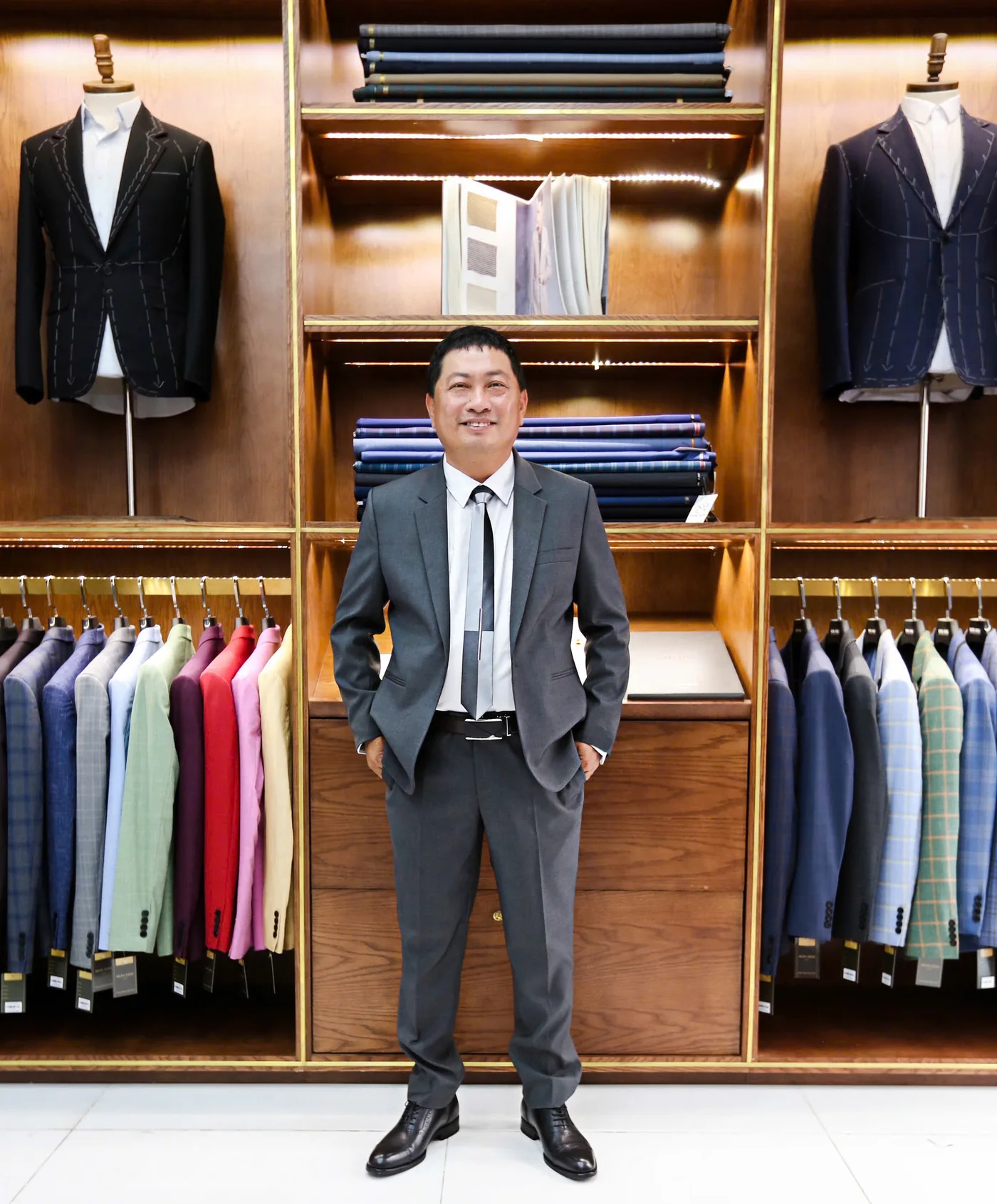
At Mon Amie, the Signature line (VND 10–20 million per suit) uses Kevinlli 80–100% wool 140s–150s alongside cloths from Dolce & Taylor, Luciano, Salford and Vercelli; see the price of each line on the made-to-measure price list. Note: a higher number doesn't mean better. A 150s suit worn three days a week at the office will go shiny at the elbows and seat sooner than a 120s one; if you wear your suits often, put durability first.
2. Ultra-fine Super 160s and above: silk-soft, for select occasions
The fibre is so fine that the cloth drapes softly, with a faint sheen, and feels weightless when you put the jacket on. This suit is right for the occasions when you want to feel different: signings, award ceremonies, evening events, weddings. Because the fibre is fine, the cloth creases more easily and wears sooner at the elbows; it shouldn't be your everyday work suit.
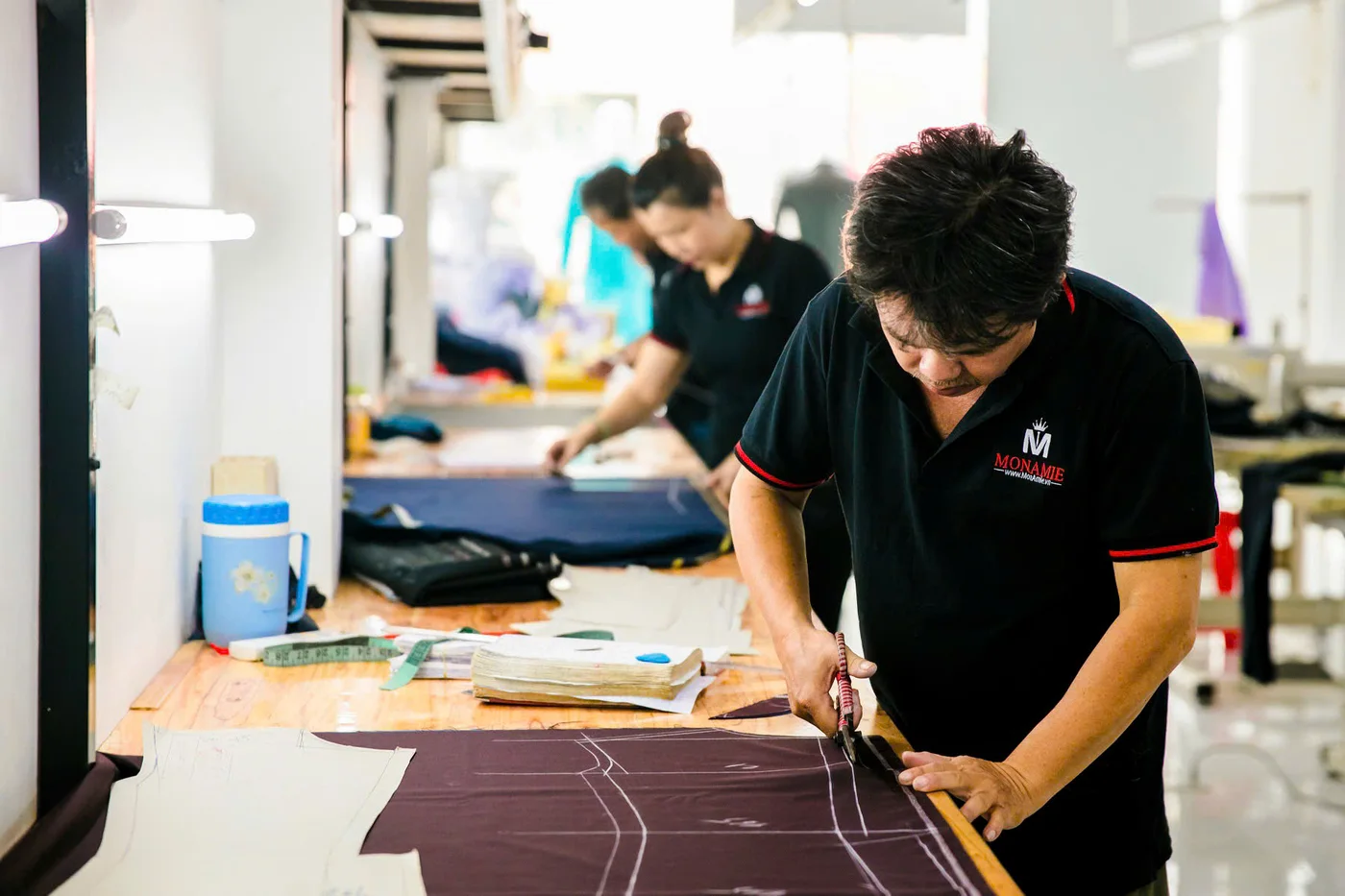
In the ultra-fine segment, the names of European mills often come up: Vitale Barberis Canonico (Biella, Italy, since 1663), Holland & Sherry (London, 1836), Dormeuil (Paris, 1842), Scabal (Brussels, 1938). Mon Amie's Heritage line, from above VND 20 million up to VND 60 million per suit, uses cloth from Canonico, Holland & Sherry, Dormeuil and Scabal. Fine cloth needs a precise cutting hand, like the artisan in the photo, because one slip of the shears ruins a whole metre of cloth.
3. Wool-silk blends: a glossy sheen for parties and weddings
The silk added to the wool gives the cloth a smooth drape, a gentle glow under lights and a cool hand. This is the cloth of the evening: parties, weddings, events, where artificial light brings the surface to life.
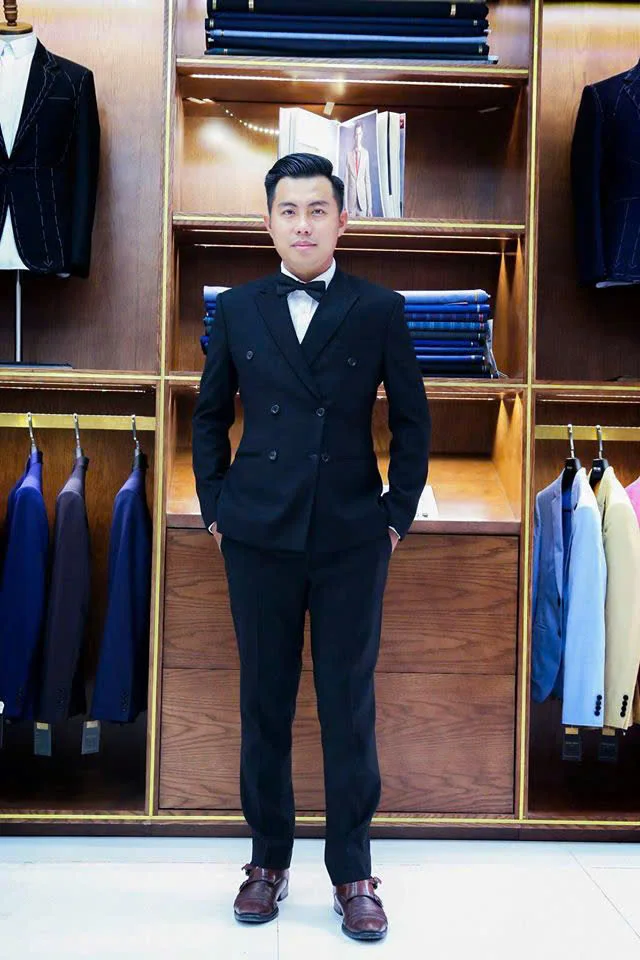
A black double-breasted suit for an evening party, as in the photo above, is where the sheen of a wool-silk blend comes into its own; at the office, by contrast, it can look too shiny. Note: silk is less durable under friction, so a backpack strap or seat belt rubbing at the shoulder for long will wear it faster than pure wool. Keep it in the wardrobe for memorable occasions, not for every day.
4. Wool-mohair blends: holds its crease, breathable, suited to hot and humid climates
Mohair is the fleece of the Angora goat, with long, sturdy fibres. Blended with wool, it gives a cloth that resists creasing, breathes and holds a firm crease, with a slight lustre on the surface. That is why wool-mohair blends suit men who are on the move a lot: business flights, back-to-back meetings, hot and humid days in Ho Chi Minh City when you still want the suit not to crumple by the end of the day.
A light weight, typically around 220–260 g/m for a suit worn all year round in the South, is sensible. Note: the cloth has a sheen, so it suits dark colours such as navy, charcoal and black better than light ones. If you prefer a matte surface, pure worsted wool will please you more.
5. Wool-linen blends: light, deliberately creased, for sunny days
Linen added to wool gives a light, breathable cloth with a natural raised texture. Creasing is a trait of this cloth, not a flaw: light creases at the elbows and thighs are considered part of the look. It suits outdoor weddings, beach parties, travel and summer days.
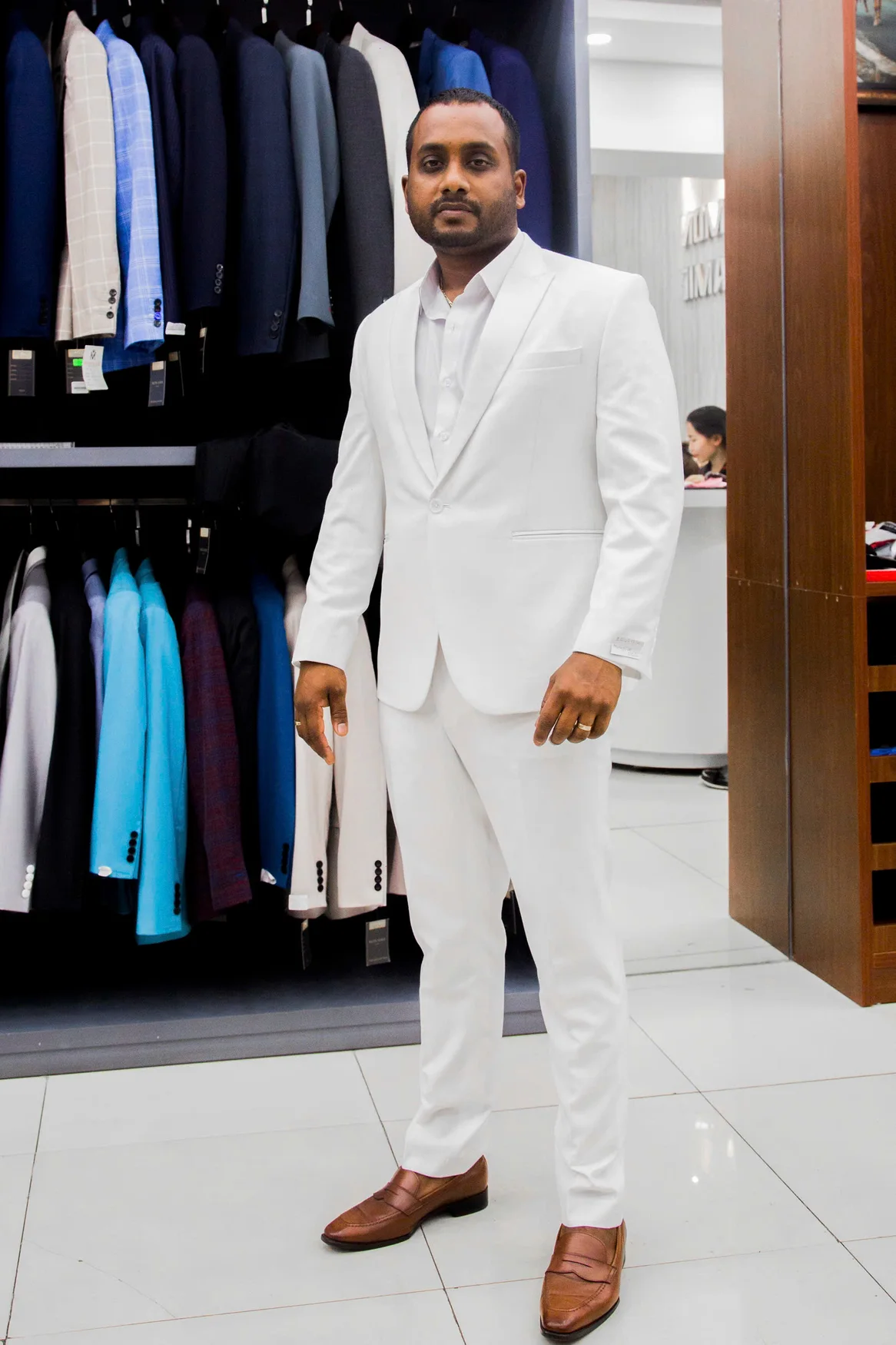
Light shades such as beige, cream, white, pale grey and bright navy, like the white three-piece suit in the photo, are the home ground of wool-linen blends. Note: if you sit in air-conditioned meetings every day and need a crisp, flat look, this cloth will frustrate you. It is meant for occasions when you want to be comfortable, not as a replacement for your meeting suit.
Quick summary table
| Fabric | Best for | Key point |
|---|---|---|
| 1. Super 100s–150s wool | Everyday suits, businessmen | A higher number doesn't mean more durable |
| 2. Super 160s and above | Important occasions, worn rarely | Soft, creases and wears easily; rotate |
| 3. Wool-silk blend | Evening parties, weddings | Slight sheen; avoid backpack-strap friction |
| 4. Wool-mohair blend | Frequent travel, hot and humid climates | Suits dark colours; slight sheen |
| 5. Wool-linen blend | Outdoor weddings, travel | Deliberate creasing; not for meetings |
Tips from Mon Amie's master tailors
- Ask for both the Super number and the weight. The Super number speaks to fibre fineness; weight (g/m) speaks to thickness. For the climate in the South, choose lighter cloth. The touch, crush and light tests you can do right in the showroom are in the article how to recognise premium suit cloth.
- Don't just buy cloth. Beautiful cloth with poor interlining and stitching still becomes a poor suit. At Mon Amie, artisans from Huế with more than 30 years of craftsmanship take over 30 measurements and do a baste fitting until the jacket fits.
- Rotate your suits. A wool suit needs a day or two of rest between wears so the fibres recover their shape; hang it on a wide-shouldered hanger.
- Keep the cloth code. When you have extra trousers or a waistcoat made for the same suit, the cloth code helps you find the exact same roll.
Frequently asked questions
Which fabric should you choose for a premium men's wedding suit?
A wedding suit suits plain-coloured Super 120s–150s wool, or a wool-silk blend for an evening wedding. In hot weather and at outdoor weddings, lean toward lightweight wool or a wool-linen blend. The article premium men's wedding suits: is the money in the cloth, the interlining or the stitching analyses this spending in detail.
How do you choose premium fabric for a business suit?
Choose Super 110s–150s worsted, in navy, charcoal or a fine stripe, at a medium weight. Two to three suits in rotation will last longer than one worn continuously. Mon Amie also has the Essential line from VND 4.8 to 10 million per suit, in Kevinlli 40–70% wool (100s–140s) cloth, for those who want to get started.
Is good women's suit fabric the same as men's suit fabric?
They share a wool base, but women's suits tend to favour softer, more fluid cloth, with more patterns and lighter colours. The article premium women's suit fabrics covers how to choose them specifically.
Where can you view men's suit fabric swatches?
You can view swatches in the cloth library on the website, or visit Mon Amie's 5 showrooms to touch them and see them under real light. Mon Amie's Italian–English cloth library is divided into three lines: Essential, Signature and Heritage.
Cloth is the foundation, but a truly premium suit lives where the cloth meets the right stitching, by the right person. Once you lean toward one or two fabrics, book a measuring appointment so a stylist can let you touch each swatch and have a baste fitting before you decide.