
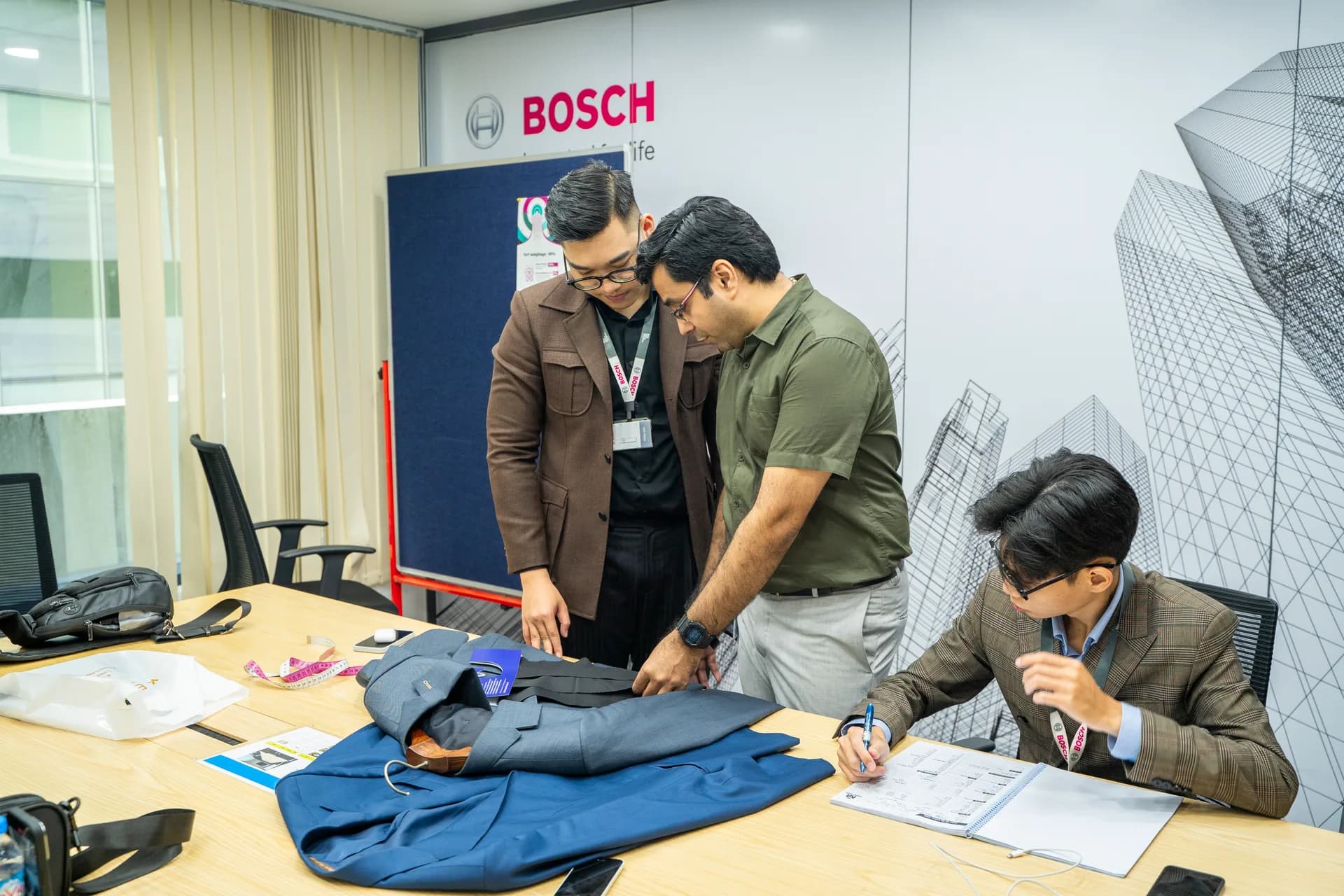
A common mistake when having a suit made for hot weather is choosing thin cloth. Thin isn't necessarily cool: a thin cloth that is tightly woven, or blended with a lot of synthetic fibre, still holds heat and traps moisture just the same. What makes a suit comfortable is the fibre, the weave and how the jacket is made. The five summer suit fabrics below are all familiar faces in a made-to-measure tailor's swatch book, and all suit a city that is hot almost all year round, like Saigon.
Quick answer
The five summer suit fabrics worth choosing are high-twist wool (fresco), linen, a wool–silk–linen blend, mohair blended with wool, and cotton (including seersucker). For a low-crease work suit, favour high-twist wool or a mohair blend; for a relaxed weekend look, choose linen or cotton.
1. High-twist wool (fresco): cool, yet it still holds its shape
High-twist wool (people in the trade often call it fresco or tropical wool) is tightly spun and then woven slightly open, so there are gaps between the yarns for heat to escape. It feels a little dry and rough to the touch, which is a good sign, not low quality. What makes this cloth worth the money is that it is both breathable and springs back after creasing, so it suits men who have to wear a suit all day, moving between air-conditioned rooms and the street.
It suits office workers and businessmen meeting partners. When choosing, look for samples under about 250 g/m, in navy or mid-grey. Note: open-weave cloth easily shows the lining, so ask the stylist about how the jacket is lined. Mon Amie's Essential line uses 40–70% wool cloth and the Signature line 80–100% wool; if you tell us clearly where you usually wear it, the stylist will point to the right sample in the cloth library.
2. Linen: breathable, and creasing is part of its beauty
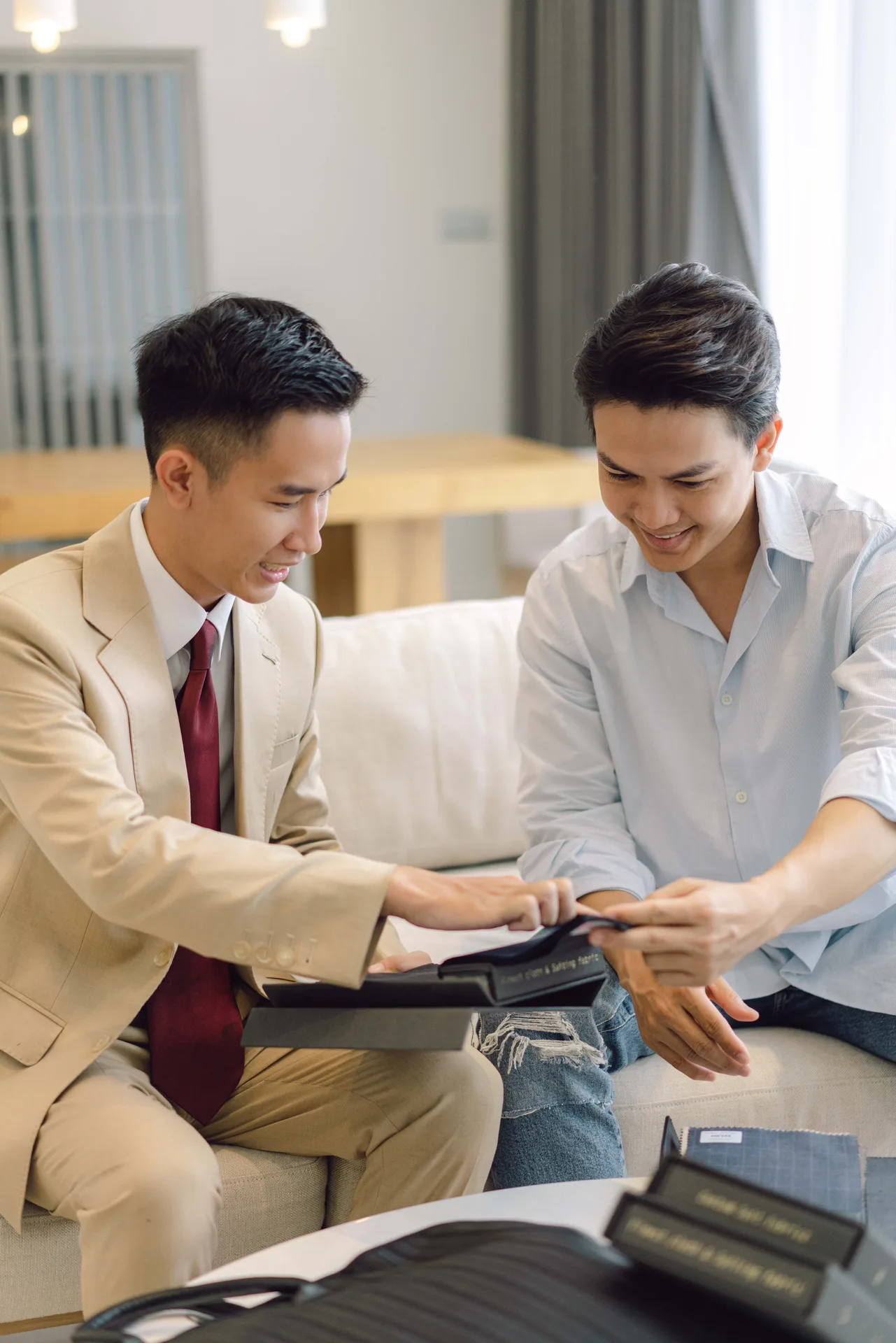
Linen is a plant fibre that conducts heat well and dries fast, so wearing it feels almost never stuffy. The price you pay is creases: after a short ride in a car you have creases across the belly and knees. With linen, creasing is a trait of the cloth, not a tailoring fault, and many men like precisely that easygoing look.
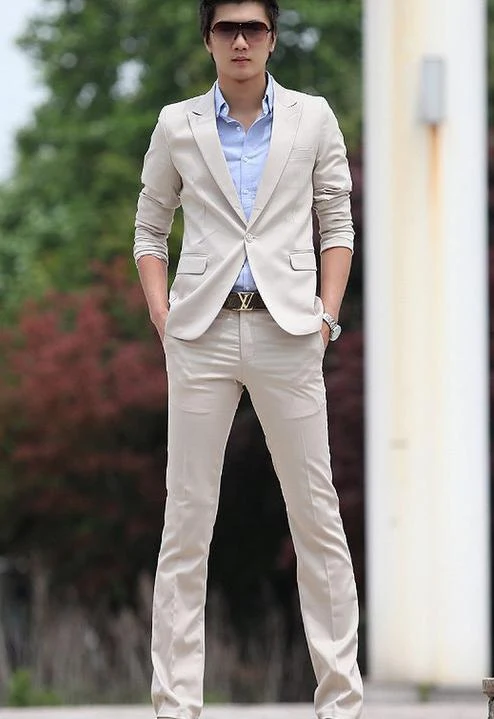
Linen suits outdoor parties, daytime weddings, weekend coffee, and meetings that don't demand formality. It doesn't suit a signing or an event that needs a crisp, flat look. A common mistake is choosing 100% linen for a work suit and then ironing it every morning; if you want less creasing, choose a linen-wool or linen-cotton blend. A light palette, as in the Sandstone Cream Suit for the Sunny Season, shows how beige and cream tones look light and easy on the eye in the sun. The article men's linen suits for hot weather analyses how to wear it in more detail.
3. Wool–silk–linen: three fibres blended for balance
In this three-fibre blend, wool provides the frame that holds the shape, silk adds smoothness and a gentle sheen, and linen gives a dry breathability. The result is a cloth that is soft to the hand, creases less than pure linen, and has a slightly grainy surface texture characteristic of the blend. It is worth considering if you like the look of linen but don't want your suit looking as though it just came out of a suitcase.
This cloth suits men who need one suit for both work and parties, especially evening outdoor parties. Colours to choose: light navy, smoke grey, beige. Note that blend ratios differ from sample to sample, so ask for the exact composition; and because it contains silk, this suit should avoid rain, since silk easily shows water stains.
4. Mohair blended with wool: dry, breathable and low-crease
Mohair is a wool fibre from the Angora goat: sturdy, lightly lustrous and breathable. Blended with wool, the cloth has a crisp, dry hand and very little creasing, which is why people in the trade often recommend it to those who travel a lot. The mohair surface has a faint sheen, so a suit looks brighter and sharper under party lights than ordinary wool.
It suits men who are on the move a lot, airports, corporate parties. Note: mohair's sheen is quite pronounced, so colours that are too light can look glittery; favour navy and charcoal. Don't add a glossy satin shirt or a glossy silk tie, because the two layers of sheen will clash. On mohair cloth, a wool tie or a matte-woven silk tie looks more refined.
5. Cotton and seersucker: light, simple, suited to weekends
Cotton is a plant fibre from the cotton boll, with good absorbency. Seersucker is a cotton woven with small puckers in stripes so the cloth doesn't cling to the skin and feels airy when worn. Cotton suiting is usually light and smooth to the hand, suited to casual suits, but holds its shape less well than wool and creases easily when you sit for long.
It suits trips, garden parties, daytime outdoor weddings, and young men who like a comfortable look. It doesn't suit occasions that call for authority. Beige, light blue or small stripes are safe choices. A tip is to pair it with a polo or cotton shirt instead of a silk tie, so the whole outfit shares the same natural texture, and ask the stylist about the lining to make the jacket lighter.
Quick summary table
| Material | Best for | Key point |
|---|---|---|
| 1. High-twist wool (fresco) | Office workers, businessmen | Choose a weight under about 250 g/m, ask how the jacket is lined |
| 2. Linen | Outdoor parties, weekends | Creasing is a trait; blend with wool for less creasing |
| 3. Wool – silk – linen | Work and parties in one suit | Ask for the blend composition, avoid rain |
| 4. Mohair blended with wool | Frequent travellers, corporate parties | Pronounced sheen, favour navy and charcoal |
| 5. Cotton, seersucker | Travel, garden parties | Holds its shape less well than wool, suits casual suits |
Tips from Mon Amie's master tailors
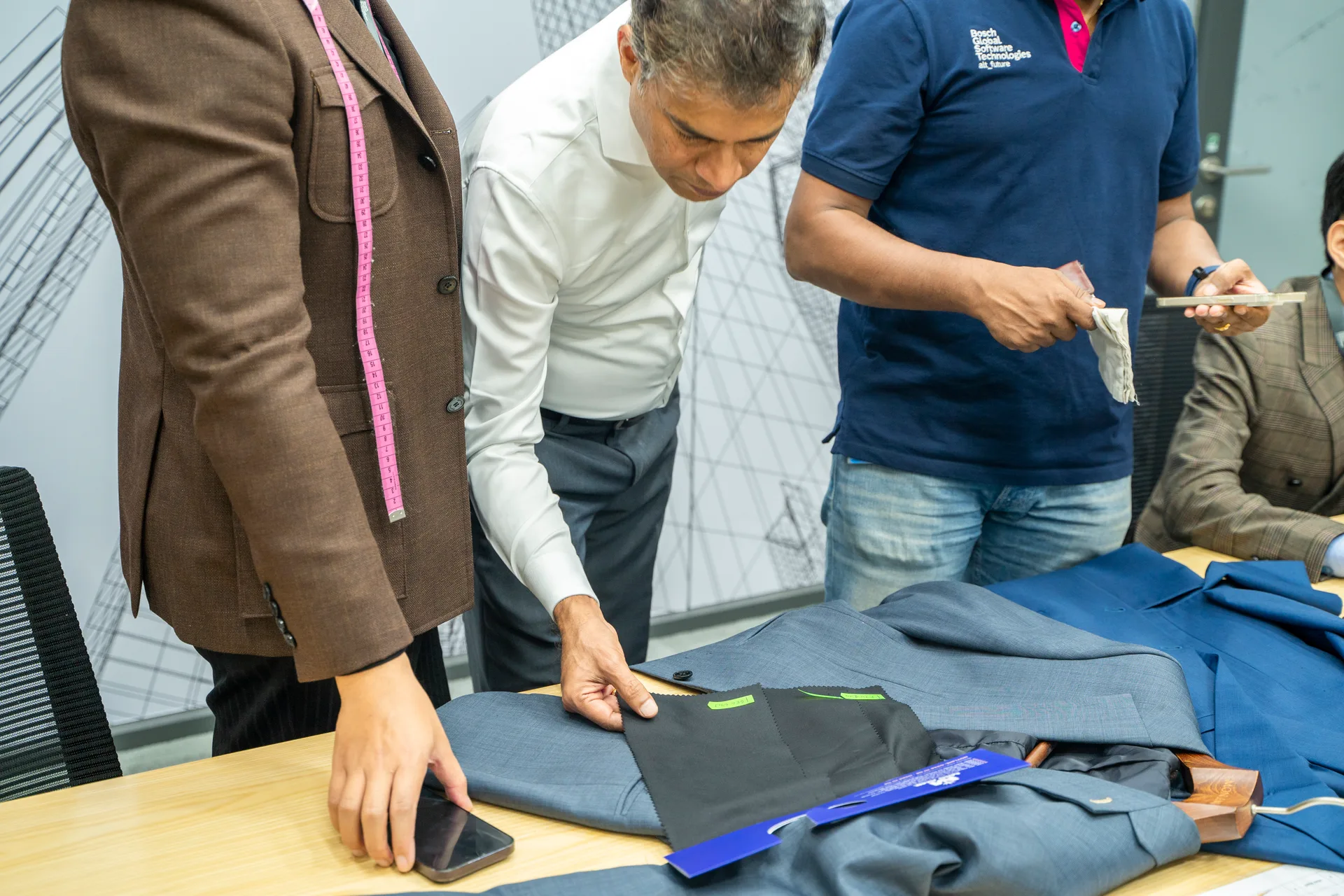
- Test the creasing on the spot. Hold a corner of the swatch in your palm for about five seconds and release: creases that spring out quickly are a good sign; creases that stay put mean the suit will crease when you sit in a car.
- Ask about how the jacket is lined. The lining holds heat too, not just the outer cloth. Tell the stylist you often wear it outdoors so they can advise on a suitable lining.
- Colour matters too. Deep navy and black absorb more heat than mid-grey, beige or light blue. If you spend a lot of time in the sun, choose a moderately light shade.
- The shirt needs to breathe too. A breathable suit with a thick poplin shirt is still stuffy; pair it with a thin cotton or linen shirt.
- With measurements on file, making another suit is easy. Mon Amie takes more than 30 measurements and keeps them for life, so a second summer suit doesn't need measuring again from scratch.
Frequently asked questions
Which summer suit fabric should office workers choose?
High-twist wool (fresco) or mohair blended with wool, because they are both breathable and low-crease when you sit all day. Linen and cotton suit days off and outdoor parties better than a meeting room. The article wearing a suit in summer without overheating has more tips for getting around in the sun.
Is thin cloth always cool?
No. Coolness comes from the fibre and the weave: an open weave, tightly spun yarn or plant fibre is what lets heat escape. A thin cloth that is tightly woven is still stuffy, especially when blended with a lot of synthetic fibre.
Is a suit with a high polyester content OK for hot weather?
Synthetic fibres are durable and low-crease, but they usually absorb poorly and so feel stuffy outdoors in the sun. If you need a suit to wear regularly, ask the stylist about samples with a higher wool content.
How much does a summer-fabric suit cost to make?
Price is set by cloth line rather than by season: Essential VND 4.8 to 10 million, Signature VND 10 to 20 million, Heritage above VND 20 million for a full jacket + trousers set. See more on the price list; a stylist quotes the exact price at the measuring.
Closing thoughts
Choosing a summer suit is choosing between breathability, low creasing and formality; no single fabric wins on all three, only the one that fits how you live a day. You can book an appointment to hold each swatch at a Mon Amie showroom and test the creasing right in your hand.